The live animal export trade has ballooned in Europe while the commission fails to enforce its own regulations, MEPs have told the Guardian.
A second attempt to set up an inquiry committee to look into the handling of the problem is now underway, after an earlier proposal was dismissed in 2018.
In the past 20 years the EU has become one of the global centres for animal export. Within the bloc animals are travelling ever-longer distances, and a steadily increasing number are now being exported to non-EU countries.
The EU has long prided itself on its high animal welfare standards, and has had legislation on animals during transport since 1991. In 2005 the commission introduced regulations on animal transport that were far ahead of the rest of the world at the time. A European parliamentary resolution last year stated: “The EU is where animal welfare is most respected and defended, and it is an example for the rest of the world.”
But in 2018 Jørn Dohrmann, a Danish MEP, was asked to check how well the 2005 regulations were being implemented. His findings were damning. The parliamentary resolution that followed his report listed rough handling, inappropriate vehicles, overcrowding, high temperatures, failures to feed and water, uneven reporting and inspections, widely varying punishments for infringements (10 times higher fines in some states than in others), and no centralised record of operators that perpetrate systematic breaches of regulations.
Dohrmann’s findings were just the latest of many investigations (including some by the commission) to find that regulations were being breached all over the place
Read more
“We have known for decades that something is wrong,” Dutch MEP Anja Hazecamp told the Guardian. “We really thought that with the new transport regulations things would start to change. But we see the same old problems as we saw in the 90s.
“The member states say they want to do something, but they want a level playing field. And the commission says that they need member states to take action. So the same old status quo continues. This is why I am working together with other members of the Animal Welfare Intergroup to get an inquiry committee set up, to look into what is happening. We cannot wait for two more decades for things to change.”
“The commission is not doing its job,” Catherine Rowett MEP said. “It is true that quite a lot of good practice does happen as a result of the regulations, but they are not good enough – and they are not being enforced enough. Yes, it will mean more bureaucracy – but that’s what you have to have in order to make sure that profits don’t take precedence over welfare. It is absolutely crazy, it is bizarre that we can’t get this right.”
“What is lacking is political will at European commission and member state level to reconfigure the EU livestock sector to avoid long journeys,” said Peter Stevenson, chief policy adviser at Compassion in World Farming.
Over two decades the trade has mushroomed at an alarming pace. The EU’s rapporteur states that “long and very long journeys are increasing”. The value of live animal exports across and out of the EU has trebled from $1bn (£763m) in 2000 to $3bn in 2018, according to UN Comtrade data.
The reasons for this growth are complex. The liberation of cross-border trade in Europe, and the growing fragmentation of the farming system has meant that food producers have increasingly taken advantage of cost variations in different countries.
So, for example, the Danes can produce piglets more cheaply than the Poles (they have bred their sows to give birth to more piglets than other countries) – but the Poles can rear them more cheaply (their labour costs and welfare requirements are both lower). The result is that five million piglets were trucked from Denmark to Poland in 2018 to be turned into Polish sausage.
On top of this the EU has expanded east to include countries that have big rural populations and farming sectors, but limited processing facilities. The EU stamp has made their animals even more attractive to buyers, and Romania, Slovakia, Latvia and the Czech Republic are among those that have built up useful export sectors.
The trend for fewer but bigger slaughterhouses is also a key factor. Last year Eurogroup for Animals looked into the sector as part of their call for a shift to a trade in meat and carcasses, rather than live animals. They found there were no centrally held figures – but that where numbers were available the pattern was clear.
It’s a similar trend to the US – where the shift to larger slaughterhouses occurred much earlier. According to the Animal Welfare Institute, the number of slaughterhouses fell from nearly 8,000 in 1970 to just under 3,000 in 2018. And in the UK, where the Sustainable Food Trust has been monitoring the situation, the number of red meat abattoirs has fallen from about 1,900 in 1971 to 249 in 2018.
But industry figures say that the costs involved in mobile slaughterhouses will make them impossible, given the expectations of the modern shopper. “People aren’t going to buy meat which is three times more expensive – and the labour costs for mobile slaughterhouses will be very high,” Rupert Claxton of international food consultancy Gira told the Guardian.
“If you are a big commercial farmer wanting to put lamb into a supermarket chain, you need to keep the bacteria count down on the meat so you can have the shelf life that allows the long supply chain to work, so people can take it home and put it in their fridge for a week or 10 days before they want to eat it. In which case you’ve got to go to a big modern plant that can guarantee all those steps have been regulated and put in place. On-farm kill is not a realistic option in this country, or for most of Europe.”
The modern shopper’s expectation of cheap meat, plus issues around labour shortages and regulatory demands, put huge pressure on producers, said Claxton, pointing out that in at least one supermarket chain you can currently buy a chicken for about £1.90 a kg.
If you or someone you know has expertise in this field, we would like to hear from you. You can get in touch by filling in the form below, anonymously if you wish. Only the Guardian can see your contributions and one of our journalists may contact you to discuss further.
Hazekamp agrees. “As long as we continue to think that the production of food can’t cost anything, we will not solve this problem.”
She is currently pushing for a full official inquiry into the issue. In 2018 Hazekamp and colleagues asked for an inquiry committee to investigate whether the regulations were working. But, despite gathering more than the required number of signatures, the Conference of Presidents instead commissioned the implementation report.
But she believes things will be different this time. “The climate has certainly changed,” she told the Guardian. “Animal welfare is no longer a minor issue that can be ignored.”
Campaigners believe that under the new commission, headed by Ursula von der Leyen, things look different. “The new team are very different from their predecessors,” points out Joe Moran at the Eurogroup for Animals. “We are obviously dismayed at the growth of this trade, but we are also now more optimistic that new measures will be brought forward by the commission that will begin to address this problem.”
A spokesperson for the European commission for health and food safety told the Guardian: “The issue of animal transport is of a major concern for the European commission. Over the past three years the commission has audited member states on road and sea transport to non-EU countries, issued recommendations and is following up on the action plans presented by member states. The commission services are ultimately building evidence to move, if necessary, towards possible proceedings against member states who have systematic non-compliances.”
PETITION TARGET: Sudan Ministry of Tourism and Wildlife
Emaciated lions, locked in cages with concrete floors that have no resemblance to their natural habitat, are sick and starving to death at a Sudanese animal park.
The malnourished lions’ hips and spines are nearly poking through their skin, and they look weak and lethargic, as Osman Salih’s Facebook post shows.
The park claims the wildlife police are directly responsible for the ongoing lack of sufficient food or medicine, as the park’s monthly income is not enough to feed one lion for one week.
“Food is not always available,” said Essamelddine Hajjar, a park manager, “so often we buy it from our own money to feed them.”
Tragically, one of the female lions died last Monday.
Animals forced to live in captivity are incapable of fending for themselves, making those holding them captive responsible for their wellbeing. Every day, innocent lions are needlessly wasting away. This is a life-or-death situation.
Please, sign this petition urging Sudan’s wildlife officials to find these lions the care they need before it’s too late.
Attempts to create a GoFundMe campaign have been blocked due to the United States’ sanctions on Sudan. In the meantime, Salih’s efforts have generated a rapidly growing online campaign. You can get involved by following the hashtag #SudanAnimalRescue
Posted on January 25, 2020 by Serbian Animals Voice (SAV)
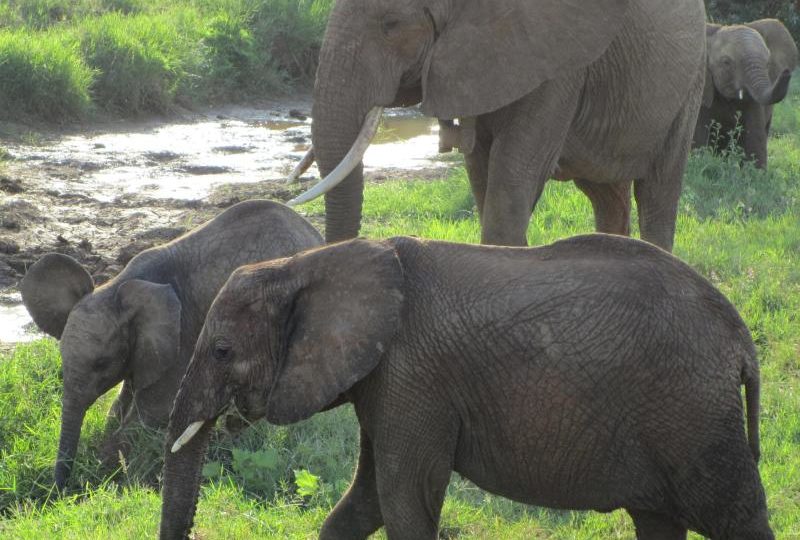
More than 350 pygmy elephants still live on the Kinabatangan River. However, a road construction project threatens their living space.
The bridge had sparked international protests, and even the famous rainforest protector Sir David Attenborough raised the alarm. After Sabah’s government changes, the danger is acute again.
So far, elephant poaching has been almost unknown in the species-rich rainforests of Sabah, where rhinoceros, malay bears and orangutans live.
However, criminals have discovered the Malaysian state for themselves in recent years.
They are now not just about ivory, but also about the skin, nails and other body parts of the animals, with which a lot of money can be earned on the Chinese market.
Between 2010 and autumn 2019 alone, 145 killed elephants were registered by the wildlife authorities in Sabah. The elephants were poisoned, shot, or caught in snares. If this continues, the species will soon be eradicated.
Saba Pygmy elephant baby tries to wake his dead mother
But the bloody craft of the poachers could even be eased if the government pushes the construction of a bridge over the Kinabatangan River.
It is only the first section of a new road through the forest of the Tabin Wildlife Reserve, which was previously difficult to access. A gateway for poachers, but also for illegal settlers, wood thieves and the palm oil industry.
The walking routes of more than 350 elephants would be cut up and the herds crowded into ever smaller fragments of their original habitat. The animals would increasingly invade villages and plantations and many would be killed when crossing the new streets.
The construction project should officially serve the economic upswing of the region. In addition, some politicians apparently promise personal benefits. In the meantime, it damages the currently developing ecotourism beyond nature.
Please help protect the elephants and other endangered species in Sabah and sign our petition!
And I mean…For once again we have to reanimate our hope and optimism that with this petition some peaceful animals keep what belongs to them and some criminals lose the chance to destroy all life.
Posted on January 25, 2020 by Serbian Animals Voice (SAV)
Hummus does not form a separate category in the vegan food pyramid, but it is hard to imagine everyday life for every gourmet. Unfortunately, our beloved dip has had a cruel connection to animal abuse.
The Strauss Group is the second largest food and beverage company in Israel and the parent company of the Sabra Hummus brand, which is also popular in Germany.
After discussions with PETA USA, the Strauss Group has now published a new company policy that experiments on animals are now a thing of the past.
Hummus fans can therefore be happy!!
The purchase of Sabra-Hummus will no longer help to starve, poison and kill animals.
In the past, experimenters funded by the Strauss Group at the Hebrew University in Jerusalem had conducted various animal experiments.
Mice were fed a low-fat, high-fat or ketogenic diet and had to starve for 12 hours at the end of the trial before being killed and dissected.
Some animals starved the experimenters 20 hours a day for eight weeks.
Instead of animal experiments, animal-free methods could also have been used for the desired findings, and studies with volunteers also make sense here. The tests were only about common, non-toxic food ingredients – various studies carried out in this way have already been published.
PETA appeals to all food and beverage manufacturers who still rely on cruel, archaic animal experiments to follow the pioneering example of the Strauss Group.
There are far better methods out there than these cruel practices.
With the decision against animal testing, the Strauss Group is now part of a growing list of dozens of large food companies that have also ended the horror in the laboratory in cooperation with PETA USA.
PETA USA contacted many of these companies because documents showed that animals were starved, poisoned, mistreated and killed. In such cruel experiments, thousands of animals have suffered and died over the decades. And all that so that companies could advertise with certain marketing terms. The products for which animal experiments were made ranged from pasta and chocolate bars to breakfast cereal or alcohol.
And I mean … The laboratory industry has not let animal testing out in any field. And in the case of foodstuffs in particular, it should be taken for granted that the results are not transferable.
Aspirin was developed 100 years ago, and if it were tested on animals today, it would fail. Because it causes embryonic damage in dogs, cats, monkeys, mice and rats.
The penicillin that saved humanity would not get approval even after animal experiments today, because it is deadly for guinea pigs and other nail animals.
Animal experiments feign security that does not exist.
Most experimenters still adhere to the stupid teaching of the French philosopher René Descartes (1596-1650), who became known with the motto “cogito ergo sum” = I think therefore I am.
He claimed that animals are senseless and insensitive reflex automatons. He explained cries of pain from animals with mechanical processes like the squeaking of a machine!!!
Today, we know that there is no direct relationship between animal testing and saving a human being.
Animal experiments are false science and senseless cruelty.
Posted on January 24, 2020 by Serbian Animals Voice (SAV)
The famous Italian philosopher Umberto Ecco says: “If you have the media on your side, you don’t need tanks”.
The United States will not invade China in the near future, but they can do so with Iran.
And this is where the dirty game of the mass media finds its function: They tell us to care about China, but not about with the impending Third World War, which the USA and its accomplices want to start in the Arab world !!
China tortures dogs? Dogs eat? This is “sick” and “perverse” and “not normal”. We only eat the right animals: cattle, chickens, pigs …
China lets pigs fly from high towers?? This happens because China does not have our Animal Welfare Act, which after the recent undercover investigation in Europe has shown that it does not work at all.
China is a budding world power, and as such, Trump is expected to be concerned.
However, the United States has had the best experience of dealing with potential competitive competitors for years.
The politicians of this country know how to manufacture consent and how to unleash the full force of the mass media against the designated enemy.
In our times, there is a great deal of interest in animal welfare and, above all, in climate protection, and it grows more every day.
That is why the media focus their propaganda on China’s nonexistent animal welfare law, on dogs and cats eating, on pigs flying off skyscrapers, on lung viruses that are said to be an extremely dangerous plague, on the ban on freedom of expression in the country internally and much more more that currently occupies ALL media and Facebook pages.
For us and for this blog, it is very important not only to report the truth about the daily violation of animal rights, but to maintain political correctness and neutrality in the reports.
For us there are no first and second categories of countries that are portrayed as unjust or biased as sinners just because they are small, poor countries or – conversely – because they have long since bought their superiority in the media landscape.
Before we start reporting, we take into account the conditions that exist in a country.
Of course, this “understanding” is not a relief from guilt when crimes against animals take place.
Like recently in the Sudan Zoo, for example, where lions die of hunger and need. We actually find that terrible.
However, Sudan has a primary existential problem for its population, which other countries, that do the same, do not have.
So it is shameful to condemn Sudan in all blogs because it tortures the animals in the zoo when the Germans collect 1.4 million donations for the new home of the primates in the Krefeld zoo, where 30 monkeys were burned alive on January 1st.
We consider it as a moral trap to post reports of cruelty to animals, which serve a political purpose and not the enlightenment or the information on a logical and objective basis.
And we will not go with the flow of media propaganda, but we will continue to work to reveal this propaganda because we believe that animal welfare is only done right if you have the right political education .
We consider half-truths, or mixtures of lies and half-knowledge, to be dangerous and we will avoid them.
Posted on January 24, 2020 by Serbian Animals Voice (SAV)
Teach your children the right thing!
The sooner our youth learns to perceive brutality against animals as reprehensible, the more they take care that playing and dealing with animals does not turn into torture, the sooner they will understand in adults what is right and what is wrong for animals.
“The child will first show mercy or cruelty to the animal, and then, when grown up, will be merciful and helpful, or relentless and selfish to others.” “Friedrich Froebel”
Posted on January 23, 2020 by Serbian Animals Voice (SAV)
In early 2019, observers attended seven jallikattu events in the following locations: Alanganallur, Avaniapuram, and Palamedu in Madurai district; Keelapanaiyur and Viralimalai in Pudukkottai district; Ulagampatti in Dindigul district; and Alagumalai in Tiruppur district.
The eyewitnesses confirmed that bulls are poked and jabbed with sticks and sickles, hit, jumped on, tackled, bitten, and otherwise mistreated.
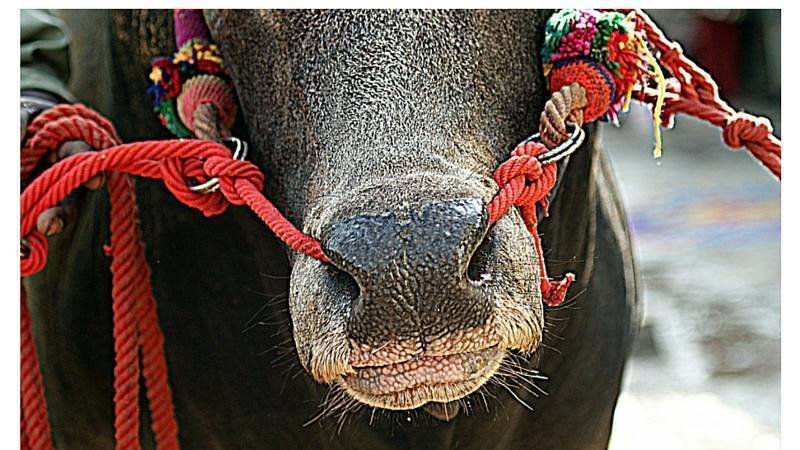
Exhausted and dehydrated animals were forced to participate in jallikattu after standing in queues overnight – for as long as 16 hours – without adequate shelter or sufficient water or feed. They were yanked roughly by nose ropes, causing their nostrils to bleed, and many collapsed from exhaustion and dehydration after the events.
The mental and physical torture bulls are subjected to are in apparent direct violation of many regulations.
Nobody wants to kill the bull here, as is the case with the Spanish Corrida. Nevertheless, the animals suffer a lot. In order to make the bulls aggressive, they are sometimes given alcohol or rubbed with chilli in the eyes. Bulls have even been tortured with electric shocks to the testicles.
The well-known animal rights activist and politician Maneka Gandhi said: “The bulls are kept in dark rooms for weeks, they are given alcohol to drink and beaten. When released into an arena, dozens of drunken young men throw themselves at them and try to tear their horns away. Bulls are killed. People die”!
In 2014 the Jallikattu were banned by the Indian Supreme Court, at the request of animal rights activists.Two years ago, the state government reintroduced the tradition after thousands of people protested!! Things have changed, because under the pressure of the Tamil people from the same court it was canceled.
In January 2018, the AWBI issued guidelines for the conduct of jallikattu events and shared them with Tamil Nadu officials, advising them to share the guidelines in turn with authorities throughout the state.
Rules listed under the Tamil Nadu PCA (Conduct of Jallikattu) Rules, 2017, and the AWBI’s 2018 guidelines are brazenly violated.
Exacerbating the problem is the fact that none of the regulations hold jallikattu organisers or bull abusers suitably accountable or liable for punishment. This loophole in the legislation gives them a free pass to continue abusing bulls and putting humans in harm’s way.
The documented findings and evidence of abuse prove that no amount of regulation can prevent cruelty to bulls during jallikattu events.
The mental and physical torture bulls are subjected to are in apparent direct violation of many regulations.
Documented photographs by PETA India from Avaniapuram, Palamedu, Alanganallur, Thirunallur and Maravapatti show how brutal it was. The video shows how bulls are pulled by ropes in their noses until they bleed.
The organizers beat the animals, bite them and break their bones. And that’s just the part that happens outside the arena.
It’s not hard to see that bulls used for jallikattu don’t race for fun. The spectacle relies on physical and psychological abuse to instigate bulls – who are naturally nervous prey animals and not anatomically suited to running – to spar or race.
All one has to do is look at photographs or videos from jallikattu events to understand how vicious the practice is. Shouting mobs of participants beat, bite, and whip bulls so that the animals sprint to escape the violence – and spectators often hit them as they flee, too.
An explanation is given for this! – Indian bullfighting today also reflects the contrast between powerful landowners who breed the bulls and send them into battle, and poor peasant boys who, in this way, protest as fighters against the traditional social order.
At Jallikattu, bulls are let into an arena where people pounce on them to hold on and sit on them. It was only five years ago that the highest court in India banned this practice because it violated the Animal Welfare Act. But in 2017, the state of Tamil Nadu decided to allow Jallikattu again, so it took place in several locations again in January.
Since the Prevention of Cruelty to Animals (Tamil Nadu Amendment) Act 2017 was passed, at least 43 humans (including 11 spectators), 14 bulls, and one cow have been killed during these events.
Deliberately tormenting bulls – who are nervous prey animals – is inhumane. During jallikattu events, participants poke and jab bulls with sticks and sickles and stab, hit, bite, jump on, and tackle them. Many bulls sustain broken bones and severe injuries, collapse from exhaustion and dehydration, and even die.
The Supreme Court recognises that using them for spectacles like jallikattu and races – forcing bulls to run for their lives by frightening and hurting them – is inherently cruel, and it rightfully upheld a ban on their use in performances in 2014.
Yet the torture and abuse continue to this day, despite a public outcry, animal protection laws, and the threat to both animal and human safety.
Now help us stop the cruelty to animals at Jallikattu. Sign the PETA India petition and tell everyone!
My Comment: I purposely posted the video (above) from the San Fermin bull rush in Pamplona. Because I immediately thought of this bull rush when I saw the video from India.
Terrifyingly similar! obviously globalization also exists in cruelty to animals.
It is not a tradition! it is the other word for cruel mass entertainment as we know it in many countries.
Anyone who tortures or murders animals in the name of tradition still lives on the trees, and this means at least half of the world’s population.










 Serbian Animals Voice (SAV)