In China and Argentina, trade officials are planning to turn Argentina into a pork powerhouse to replace some of China’s 300 million pigs killed by, or euthanised to stamp out African Swine Fever (ASF). 55% of surveyed farmers in China have abandoned plans to ever raise pigs again.
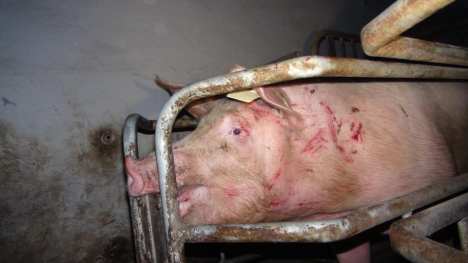
The plan is to invest £2.7 billion to build 25 factory pig farms in Argentina, each of them cramming 12,500 sows into unhealthy, overcrowded and barren sheds, to supply China’s growing appetite for pork.
This would practically double Argentina’s pig production from 8 to 15 million pigs per year requiring thousands of additional hectares of soy and maize for feeding, devastating ever more of their fragile native Gran Chaco forest, the second largest forest in South America after the Amazon.
WWF have published a report that supports the UN and WHO in warning that if we fail to protect natural habitats from wildlife exploitation and unsustainable food systems, we increase the probability of new human pandemic diseases. Factory farms themselves are also breeding grounds for human pandemics like the H1N1 Swine Flu virus that first appeared in factory pig farms in North Carolina in the late 1990s before emerging in 2009 as a global pandemic near a Smithfield-owned factory pig farm in Mexico.
So on top of putting pigs in Argentina at an increased risk of an African Swine Fever outbreak, the population there would be ever more exposed to dangerous pathogens, bacteria and viruses that can pass from animals to humans. To add to their nightmare would be the huge increase in pig waste which causes air, water and soil pollution and sickens local residents. Conveniently for China, Argentina does not have a national environmental law and experts believe that the weak regional laws are not up to the task of imposing regulations on giant agri-industrial corporations in a political battleground where gunmen terrorise and kill local environmentalists.
Collusion between the Chinese and Argentine governments to build these massive pig factories is generating unprecedented resistance among the so-called beneficiaries – the Argentine general public. Combined, their petitions have gathered almost 400,000 signatures; please sign and support!
It is not impossible to stop these factory farms getting permission and even closing them once built. One of the episodes in our Farms Not Factories’ country specific film series, #PigBusiness in Chile, recorded the success of the neighbouring residents in their battle with Government police that achieved the closure of the corporate pig factory giant AGROSUPER on safety grounds. It is in all our interests to campaign against the expansion of factory pig farming, not least because this summer, Chinese scientists reported a pervasive new H1N1- G4 virus in China’s vast pig factory operations which contains “all the essential hallmarks” of a virus that can potentially cause a new human pandemic.
Amongst the many pig factories being opposed by local residents across the world, we must include those in the UK that such as Aldoborough, Norfolk where local residents have mounted a campaign against plans to build 2 factory pig farm sheds just outside the village within 250 metres of 26 residential properties that would inevitably be affected by toxic emissions, stench, light pollution and noise. The decision, in spite of a formidable legal challenge, might be made as early as 17 September, and the consultation period has now closed. We will keep you posted on this.
The solution is to buy local food from high welfare farms. This week we interviewed Anthony Davison, creator of BigBarn, the UK’s no.1 local food website. Anthony tells us about the importance of having access to local food networks and thereby finding healthy food at a fair price to both producer and consumer by cutting out the middlemen, not least supermarkets. By using the power of our purse, we can halt the horrors of global trade and help UK farms survive without becoming animal factories.
Posted on August 22, 2020 by Serbian Animals Voice (SAV)
For the past fifteen years, my work as an animal photojournalist has taken me through the world of dairy production, far beyond the marketing campaigns, and taught me an entirely different story about milk.
When I was a kid in the ‘80s, cow’s milk was ubiquitous in school life. Parents paid a token amount so that their child could have a personalized carton of milk every day at lunch. We needed cow’s milk so that our bones would have a fighting chance at growing strong, and preventing later-life diseases such as osteoporosis. Since 1942, Canada’s Food Guide promoted milk and dairy products as a standalone food group that we should consume, ‘as available.’
However, in early 2019 sweeping changes to the Canada Food Guide provided an evolved understanding of our nutrition needs; gone are the pictures of milk and dairy products floating across the food guide rainbow, and they are no longer included in the long list of healthy options for school snacks. Milk and milk products are now lumped into the ‘protein’ food group and surrounded by disclaimers: “Among protein foods, consume plant-based more often”, and “Make water your drink of choice.”
Today, Dairy is still the largest sector of agriculture in Ontario, where I live, and according to the Dairy Farmers of Ontario, the elementary school milk program serves 70% of Ontario schools.
For the past fifteen years, my work as an animal photojournalist has taken me through the world of dairy production, far beyond the marketing campaigns, and taught me an entirely different story about milk.
In my twenties I took a deep dive into understanding animal use and food production, but even then, dairy was not on my radar. I understood dairy to be healthy all around; that no one was hurt in the making of it and certainly no one died. I had absorbed pictures of dairy cows living in pastures from the side of milk cartons and on TV, and had fond memories of meeting cows on a visit to The Central Experimental Farm in Ottawa. I was an animal lover from a young age, and my family is particularly fond of this photo of me, aged three, admiring the Jersey cows.
I had been a vegetarian for a few years before I decided to do a one-month internship at Farm Sanctuary in Watkins Glen, New York. The Farm was the first of its kind: a sanctuary for animals who had been rescued from all areas of factory farming.
Interns at Farm Sanctuary are asked to participate in a vegan lifestyle out of respect for the animals. I felt that this was extreme, but I’d do it, and resume vegetarianism upon my return to Toronto.
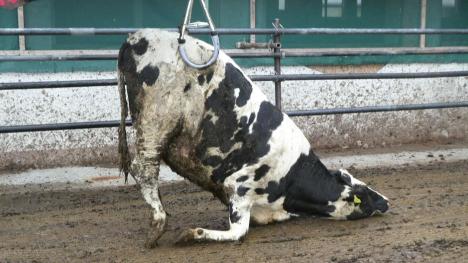
It was there where I learned that animals do get killed in the dairy industry. Cows are killed when their bodies are broken down, or “spent”, from the constant cycle of pregnancies, and then typically slaughtered for cheap hamburger before the age of six. I learned that a healthy cow can live twenty and even thirty years, but that their health, and therefore milk productivity, declines with each pregnancy until they are replaced by younger cows. Cows are also incredible mothers. When given the chance to stay together, they share an unbreakable bond for life.
And about that pregnancy. I believed that dairy cows just produced milk. I didn’t consider the baby involved.
Posted on August 22, 2020 by Serbian Animals Voice (SAV)
WAV Comment – Wow ! – double wow ! – what a truly fantastic lady. A dream; a vision to help and protect animals; now put into practice. We fully support her vision for the future and wish her and her team the very best in promoting animal welfare and veganism in Bangladesh. Animal protection is now an issue for many across the world; and we (WAV) have seen recently from our Clustrmap (global visitors – https://clustrmaps.com/site/1a9kn ) that people are visiting us from places we never dreamt of in the past to read and learn about protecting animals; and for us, this can only be seen as the very best news.
On the days when I feel like I don’t want to do this anymore because it’s too hard, I remind myself that there was a time when I didn’t do anything, and I wasn’t happy. Even the worst day of doing something is better than the best day of doing nothing.”
“No matter how absurd an idea may seem, if you put your mind to it, you can.”
“EVEN THE WORST DAY OF DOING SOMETHING IS BETTER THAN THE BEST DAY OF DOING NOTHING.”
Ask Rubaiya Ahmad about her proudest achievement on behalf of animals, and her answer is immediate.
“Stopping dog culling in Bangladesh,” she says.
Seven years ago, Dhaka, Bangladesh’s capital and largest city, was a different world for free-roaming dogs. They were almost constantly hunted by government cullers as part of an ineffective bid to control the country’s rabies problem.
Friendly dogs, including beloved pets, were the easiest targets, sauntering over to anyone who stretched out a hand. Savvier victims were caught using badger tongs, devices on poles that clamped around dogs’ heads inside their mouths, causing excruciating pain. Cullers typically then injected dogs with poison and cut off their tails as proof of the kill. To inflate their numbers, cullers sometimes cut single tails into several pieces to turn in to their overseers.
One night, this happened to Kashtanka, a light brown, grinning dog who Ahmad had cared for since she was a puppy. Kashtanka was one of three street dogs Ahmad began looking after when she returned to her native Bangladesh in 2006 after a decade living in the United States. She was renting a tiny studio apartment at the time and felt it would be cruel to keep the dogs inside. But she’d had them vaccinated and sterilized, had bought them collars and fed them every day, and all of her neighbors knew they were Ahmad’s.
Two of the dogs, including Kashtanka’s mother, Rosha, were able to escape. But Kashtanka was young and trusting and likely greeted the cullers who grabbed and poisoned her. Ahmad remembers it like yesterday. She got a call from her building’s night guard saying that Kashtanka was being taken. She chased after the cullers and found Kashtanka in the back of their truck, lifeless, still wearing her collar, on top of a pile of other dogs.
“Even the worst day of doing something is better than the best day of doing nothing. It’s more difficult to do nothing.”
It was an experience that changed her life’s focus. Ahmad founded Bangladesh’s first animal welfare organization, Obhoyaronno – which roughly translates to “Sanctuary” – in 2009. In 2012, after Obhoyaronno launched a program to sterilize and vaccinate free-roaming dogs in line with World Health Organization protocols for rabies control, Dhaka city agreed to end dog culling. In 2014, Obhoyaronno successfully petitioned Bangladesh’s high court for a national injunction against culling, as well as against animal sports such as bull and cock fighting. There are still occasional incidents of dog culling outside of Dhaka, but today, for the most part, the practice has ended across Bangladesh.
“Whenever people tell me that what I do is really difficult and that they could never do it, I just tell them the same thing I tell myself when things get difficult: that it’s more difficult to do nothing,” says Ahmad, formerly an IT consultant. “On the days when I feel like I don’t want to do this anymore because it’s too hard, I remind myself that there was a time when I didn’t do anything, and I wasn’t happy. Even the worst day of doing something is better than the best day of doing nothing.”
“Any platform that allows me to talk about veganism, I take that opportunity.”
With Obhoyaronno’s clinic and spay-neuter program going strong, Ahmad has turned her focus to promoting veganism. Because of her work, local schools have adopted Meatless Monday, popular hotels and restaurants have added veg choices, and Bangladesh’s top-ranking grocery store chain has installed vegan sections. Ahmad gives talks on animal welfare and vegan eating almost anywhere she is asked, shares information and recipes on social media, and writes a regular column, A Vegan’s Diary, in Bangladesh’s largest English-language newspaper. She holds vegan brunches and recently launched a new online vegan food delivery platform, The Bangu Vegan. The venture delivers vegan meals every Monday, hosts supper club events and supplies vegan food items to local retailers. Ahmad also uses The Bangu Vegan to do advocacy and offer cooking courses.
“Any platform that allows me to talk about veganism, I take that opportunity,” Ahmad says.
In Bangladesh, even things as simple as vegan menu options are a breakthrough, she notes. She says figuring out the right messages and how to present them has been difficult, but it’s also been a big key to her success.
“We got our way by speaking in a language they understood.”
“We’ve focused very much on the scientific approach to things, as opposed to being emotionally driven,” Ahmad explains. “When we started talking about our dog population management program, we didn’t talk about animal welfare. We talked about rabies control and how many kids were dying of rabies in Bangladesh. We showed the government that how they’ve been killing dogs for 50 years has not changed the rabies situation – it escalated it, if anything. And in the end, they stopped killing dogs. We got our way by speaking in a language they understood.”
Obhoyaronno’s spay-neuter program has now sterilized more than 16,000 free-roaming dogs, and the organization recently entered into a partnership with Dogs Trust International that has allowed Obhoyaronno to expand its clinic and gain critical surgical training.
Ahmad has also taken a science-based approach in her efforts to reduce animal-product consumption.
“The less you create the divide of us versus them, the better, because no one likes to be judged or told what to do.”
“We focus primarily on the health aspect. Eventually, at the right time and with the right platform, we’ll bring in animal welfare, like we do with our dog work now. We openly talk about how inhumane it is to kill dogs, and no one questions that now.”
She says it’s important, too, for activists to see themselves as part of the communities they work in.
“The less you create the divide of us versus them, the better, because no one likes to be judged or told what to do. It helps me to remember that I couldn’t care less about animals when I was young, and I ate meat until I was 30 years old.”
The progress she sees, even when it’s incremental, motivates her to keep going.
“It’s the changes in the community, the changes in mindset – every time an animal is saved or someone chooses a vegetarian meal because of what I posted on Facebook,” Ahmad says. “It’s so funny, I’ll post something, and two or three people will comment, and I’ll think no one cares. And then the next week, five messages will show up with pictures of vegetarian food, saying, ‘Because of what you wrote last week, I cooked this.’”
As for what’s next, Ahmad plans to focus on legislative reforms to help Bangladesh’s animals. She knows it’s a tall order, but so was ending dog culling, and she says that’s been the biggest lesson her work has taught her – that nothing is impossible.
“No matter how absurd an idea may seem, if you put your mind to it, you can.”
And I mean …When human animals are in need, refusing to help is a criminal offense.
But this only applies to our fellow species.
It does not apply to the other animal species, they have no rights, so we have decided it.
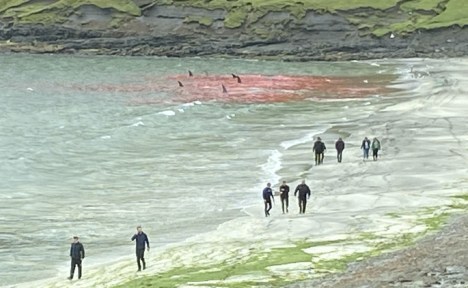
The whales are left in their tragic fate, and many of the native human animals have collected some Judas Silver for the cut meat.
This is the glaring example of human superiority.
The whales, like all animals in the world, from mussels to primates, have no rights, we have determined it thus, we human animals, those who think and act in a fascist way.
And that’s why so many natives of the Faroe Islands people, with the intellectual potential of a bookkeeper, try to justify this negligent murder with outrageous comments on the in.fo link above.
Posted on August 21, 2020 by Serbian Animals Voice (SAV)
In 600 PMU farms in the USA and Canada, around 75,000 mares live cooped up on factory farms.
The estrogen-rich urine of pregnant mares (PMU = Pregnant Mare Urine) is a lucrative source of income for the 600 PMU animal factories.
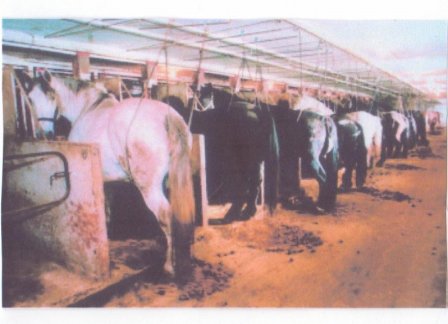
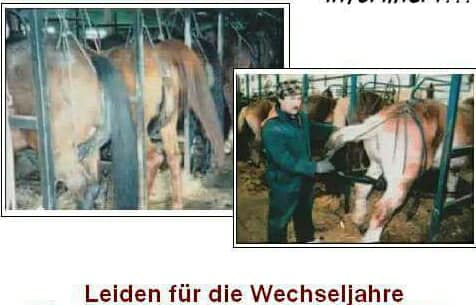
The 75,000 mares in these PMU animal factories spend the majority of their long pregnancies tied up in small boxes, connected 24 hours a day to a device that collects their urine. The mares can barely move, lie down comfortably, roll on their side or lay their head on the ground and rest.
Many mares have to be slaughtered because they become lame as a result of the lack of exercise.
Suffering for menopause
Pregnant mares have to stand in very narrow stall compartments of about one and a half meters wide and two meters high to collect their urine. Between the third and ninth month of pregnancy, the urine of mares contains a particularly high amount of estrogens.
A rubber collecting container is attached to the vulva of each mare and collects the urine. The urine flows through a hose into a plastic canister. The mares are tied up in the stable compartments and can hardly move.
The mares have to stand there for up to six months. The urine collection device causes inflammation, chafing, and open injuries. Due to the permanent standing, the mares suffer from severe pain and even bone changes.
Thousands of horses around the world are tortured for the pharmaceutical industry.
Hormones, so-called “conjugated estrogens”, are extracted from their urine for the treatment of symptoms during and after the menopause. Most of the approximately 75,000 foals that are born each year are taken from their mother gone after four months.
The foals are sold at meat dealers or fattened on the farm and later brought to the slaughterhouse
Autorided by Martina Kummer
——————————————————————————————————–
My comment: A few years ago, most of the production farms were still in Canada and the United States. There are now only a few left there. A large part of the production was relocated to other countries with presumably even lower control frameworks, for example to China or India.
Hormone preparations made from mare urine such as “Premarin” have been on the market since 1942, although the equal effectiveness of herbal substances and various alternative treatment methods have been known for many years.
Since then, pharmaceutical companies have made billions in sales.
When it became known in 2002 that the drug “Premarin” significantly increased the risk of cancer, heart attacks and strokes in women, demand initially collapsed. In 2012, it was also determined that taking PMU preparations can promote breast cancer.
The patent holder of this active ingredient, Pfizer,the world’s second-largest pharmaceutical company, has responded very cleverly to public concerns and is back in the PMU business thanks to a new drug.
“Duavive” (in the USA “Duavee”) is the name of the “magic drug” that is supposed to prevent osteoporosis in addition to menopausal symptoms such as hot flashes and sleep disorders.
In truth, however, it is just a PMU drug with the same composition as Premarin.
In Germany, the preparation is sold under the name “Presomen”. Online providers even sell the “good old” Premarin without a prescription. The mare urine business is still worthwhile for the pharmaceutical industry.
But women who need something like this can do without PMU-containing medication since PMU preparations are referred to as “conjugated estrogens” on the package insert. When hormone treatment is essential, there are numerous preparations that can do without PMU.
Put your doctor under pressure to prescribe preparations that are not produced with the suffering of other mothers.
Posted on August 20, 2020 by Serbian Animals Voice (SAV)
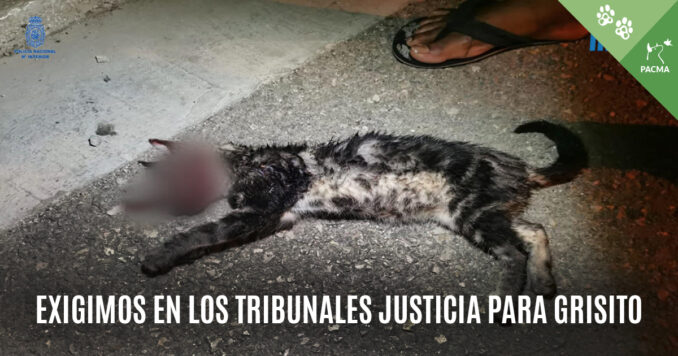
GRISITO was one of those cats that live on the street, of those that are part of our landscape, of those that are ignored by the institutions, the same ones that should take care of and protect them.
The same ones that have legal responsibility for them. He didn’t even have a name, now, yes, Grisito.
(translated text of the petition) :
He was one more neighbor of Manacor, a noble cat whose only crime was living on the street and looking for life as he could.
The street is hard, seldom friendly, and almost always cruel to the most defenseless, but the street, let’s not forget, we are all.
At dawn on Saturday, August 9, 2020, he had the misfortune to run into some young residents of Manacor, who, bored with his bland life, tortured him savagely to death, with a brutal disregard for his life, the nameless cat, the invisible one, nobody’s, every one, also a neighbor of Manacor by right, suffered until his death.
They are accused, among other things, of removing one eye from the animal with their fingers and then killing it.
A neighbor in the area did not look the other way and thanks to that, 2 of the alleged perpetrators were arrested and the next day they were released pending trial (!!!)
The town of Manacor expresses its most energetic rejection of these events, we want Grisito’s cruel death not to go unpunished, we want our cat to be honored with a change in that obsolete Law, that they are never again considered objects, if not sentient beings because Grisito felt …
He felt fear and pain until his death. For this reason, we demand a review of the penal code to apply improvements in it. We also demand improvements in all municipal ordinances. We demand that the authorities fulfill their competences just as we demand effective awareness campaigns.
We are all gray, a society cannot shelter, normalize and protect such despicable acts towards a defenseless being, facts like this are the beginning of a threat to the integrity of all, we must tackle the root problem.
That is why we ask that these “beings” be applied to the maximum legal penalty and do justice for Grisito. His death cannot be in vain … but the beginning of a change.
May their suffering help other “Grisitos” to get rights and laws that protect them so as not to end their days in the worst way inside a garbage container.
And I mean…From the PACMA website: “These sadistic people caught this cat in the wee hours of the morning, tied it up, and tortured it for fun, gouging out one eye amid the desperate howls of the animal.
They beat him and threw him several times to the ground until he ended his life, leaving his corpse in the street as if it were a loot”.
(the photos are from twitter)
(translated from Spanish): “Now @damiaaalexandre and her killer friend and cat torturer @joancarralero try with whole stories to run over and run away, to avoid facing the fact that they are shits who do not deserve the air they breathe. You are garbage”.
The data are personal but not secret.
We know who they are because they are part of the Partido Popular (PP) lists, if it weren’t for that, we would be cursing them without knowing their identity since the laws protect the criminal …
That is, “thanks” to the PP they are fully identified … After this, they will no longer go on any list of any political party, they are already on the BLACKLIST.
What right to privacy can have a human carbage? Which is the right to the integrity of criminals and what is the priority of right to the save of innocents???
This is to protect criminals, it has no other name.
The name, lineage, profession, and photo of thieves, killers, animal and/or human abusers, and other slags must always be published.
Since justice does nothing, let it be society itself that can judge and know who is his neighbor.
Several animalistic associations have called a demonstration in rejection of the death of ‘Grisito’, in Manacor. The protest, which was originally scheduled for August 22, will finally take place on September 5, at 7:00 p.m., in the Plaza Ramon Llull in Manacor.
Everyone has to go!
More than 41,000 signatures, on the way to 50,000 and that in just one week. The Mallorca parties take place without them!
The news appeared in the BILD newspaper in Germany. Manacor becomes famous thanks to these two killers.









 Serbian Animals Voice (SAV)