Posted on February 29, 2020 by Serbian Animals Voice (SAV)
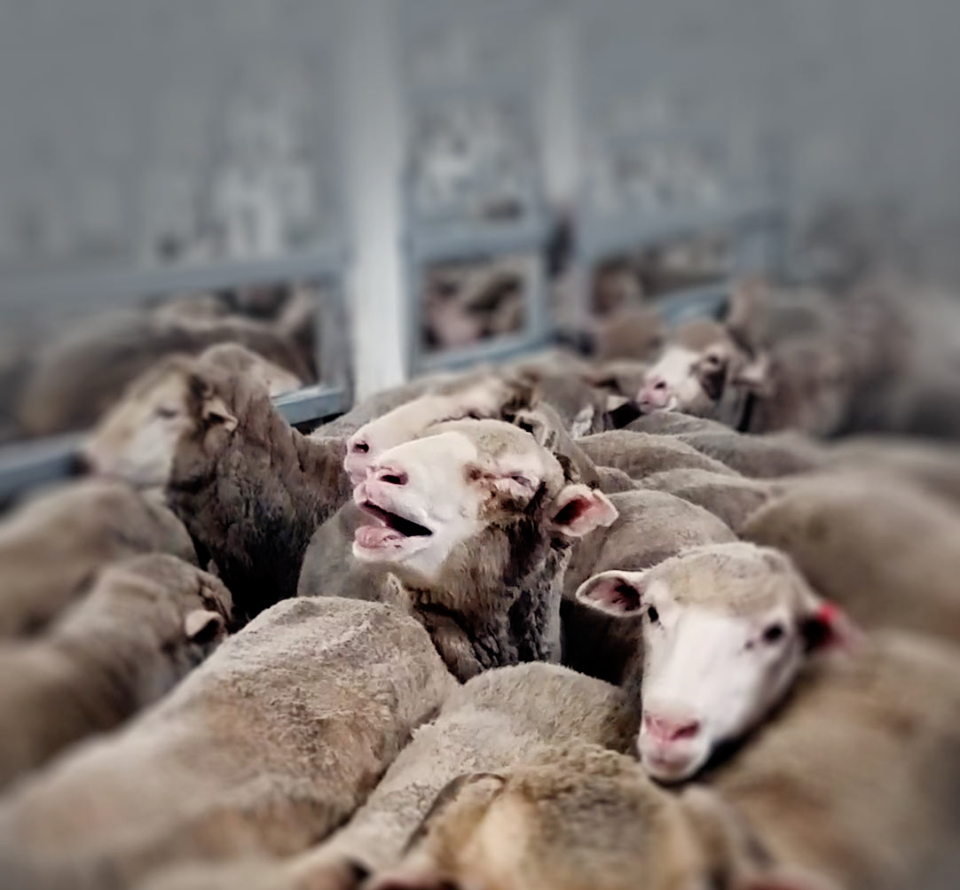
Business model “animal cruelty”: In the global livestock trade, only profit counts. For weeks, cattle or sheep suffer painfully on ships before they come ashore to die – on broken legs if necessary.
This footage was taken in July 2019 and is no exception. It is the everyday reality of live transport in Europe.
Only this time an investigating team was following trucks.
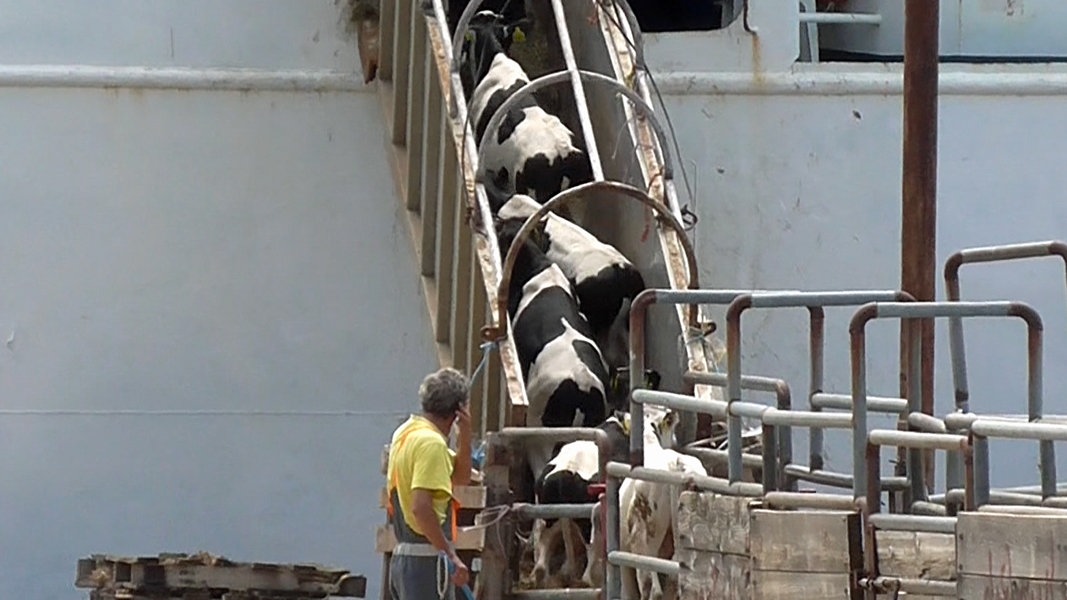
The investigators from the Animal Welfare Foundation(AWF) and Israel Against Live Shipments (IALS) were trailing calves all the way from Lithuania to their destination in Israel over two weeks.
Only the road part of the journey is as much as 1.700 kilometres.
For several hours, investigators from AWF were following two trucks on their route from Lithuania. Suddenly, they notice a leg sticking out from the truck and immediately call ITD, the Road Traffic Inspection (road police) in Poland.
The officials are speechless by the conditions they see inside the trucks.Veterinary inspectors are called who find multiple legal violations, with calves transported in extremely overcrowded conditions, lying in a thick layer of manure, suffering from high ammonia level, heat and extreme thirst.
These conditions caused the death of some animals, but also made other animals so exhausted that they had to be dragged by their legs from the trucks.
Nevertheless, after a 24-hour-long rest at a stable, the animals are carried further on to the ports of Koper (Slovenia) and Raša (Croatia).
This time on three trucks instead of only two, but investigators of IALS observe again some terribly weak and exhausted calves at the arrival of the trucks in the ports.
From here, the transport continues by sea and the animals are loaded on the livestock vessels with destination Israel.
Our experience shows that sick animals are usually left untreated and their dead bodies are regularly dumped into the Mediterranean Sea.
It is common practice to simply throw sick or dead animals overboard. Many even alive.The ear tag is removed beforehand so that the place of origin cannot be located.
After arrival at Israel Shipyards located in Haifa, the journey of these animals is not over yet. The investigators from IALS find “our” calves, beside many others, loaded on small trucks and carried further on to quarantine stables.
During this stage of transport, the temperature measured inside the trucks exceeds 37 degrees Celsius. The calves will be kept in quarantine for a month due to local potential illnesses in the area, before they are sent to fattening farms.
These findings illustrate the failure of the industry, EU Member States and the EU Commission to protect the welfare of animals during long distance transports to non-EU-countries. The suffering of animals on long journeys is inevitable and thus the European Union must stop this cruel and archaic trade involving sentient beings.
Please share this video and help us expose the truth behind the horrors of live transport. And the sign + share the petitions to stop this cruel trade.
And I mean… With the failure of the 8-hour campaign (the initiative of 1.2 million EU citizens to limit animal transport to 8 hours), animal suffering during animal transport has remained the same, if not worse.
A catastrophic consequence of globalization or world trade is the increase in animal transport and the extension of transport distances. This enables the animal industry to market animals internationally.
Around 3.8 million animals are transported every day in the EU alone. That is 1.4 billion animals a year.
In the EU, producers and processors have long since recognized animals as general cargo and are treated like “export goods”. The steps in meat production are separate: breeding, husbandry and fattening concentrate where the feed and wage costs are low.
Many animals do not survive the cruel transports or they collapse due to exhaustion after days of torture.
These cases are clearly violations of applicable EU animal welfare law, but are rarely punished.
The ruling of the European Court of Justice in April 2015 clearly defines the legal situation: “EU Animal Welfare Ordinance No. 1/2005 must be complied with until the animals’ final destination, even if it is outside the EU.”
In reality, however, every right ends as soon as the EU borders are reached.
And because the EU Commission is the strongest and worst agricultural lobby, it does not see this as its duty to impose sanctions on lawbreakers.
The violation of the animal transport law is the rule in the EU and not the exception.
They are images that shock deeply and shake even strong nerves. Sheep, cows, calves and lambs crammed together in ships’ overheated storage rooms and then mistreated.
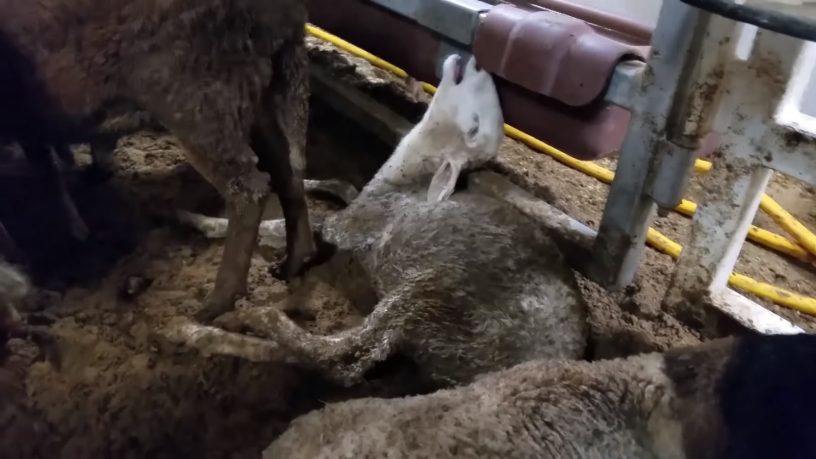
Sick and dead animals lie around, smeared with excrement and blood. Many suffer injuries and broken bones.
As in all other sectors of the economy, “livestock farming” is all about money.
That is why animal transports go where the highest profits are – even if it is over thousands of kilometers.
The main thing is that every meat eater gets his cheap daily meat and the second thing is the meat industry makes its billions with the suffering of animals and the support of the EU.
Posted on February 29, 2020 by Serbian Animals Voice (SAV)
Does anyone remember the tragic fire on New Year’s Eve in Krefeld Zoo, Germany?
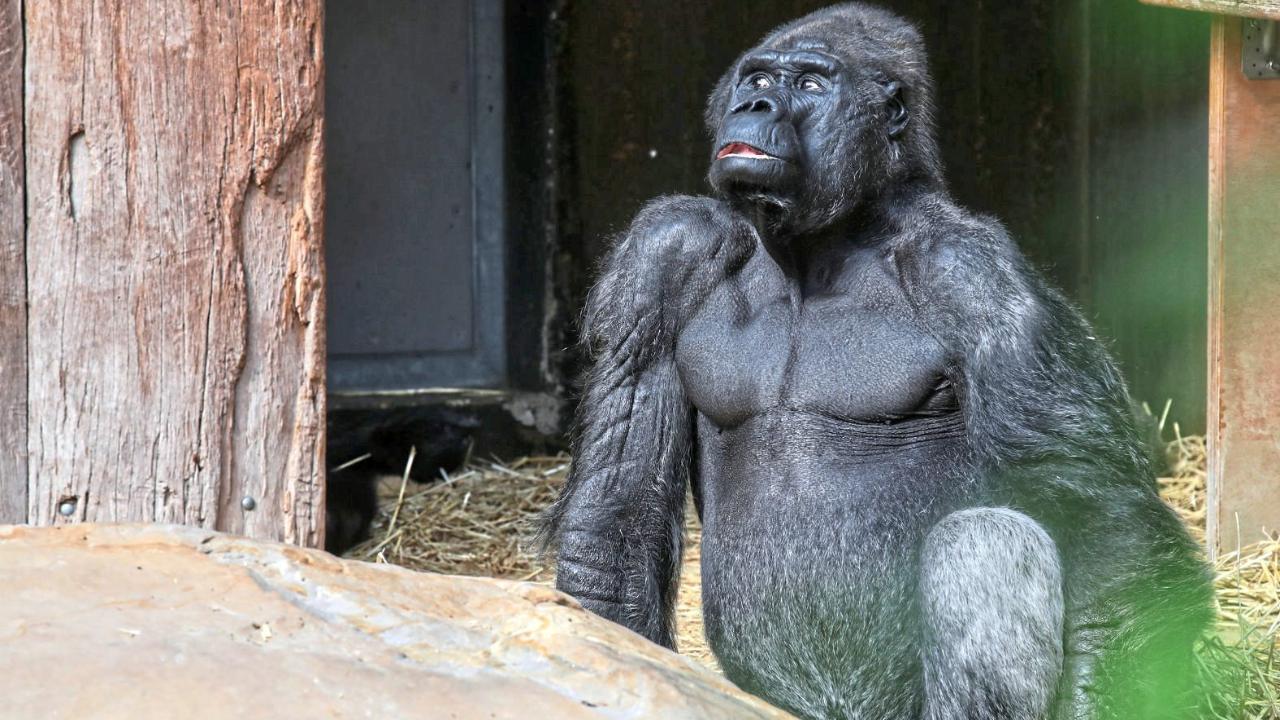
In the monkey house of the Krefeld Zoo, the imprisoned monkeys died on New Year’s Eve in a fire. They never had a chance to survive. In front of the burning building, police officers with machine guns were ready to shoot those fleeing the flames.
30 monkeys died, there were no fire alarms or sprinklers in their prison.
Now comes the news in the media that have taken on the role of collaborator in this case:
“The willingness to help is huge: Since the fire in the monkey house at the beginning of the year, the Krefeld Zoo has received donations totaling 1.43 million euros!
Friedrich Berlemann, the chairman of the zoo friends, said that there were also many small donations at a public solidarity meeting in front of the town hall.
Well over 500 people were there.
Krefeld- City Hall
“The many fundraisers are overwhelming”, said Berlemann. “The amount would be the first basis for financing a new monkey house”.
The supervisory board has already decided to build and keep apes in the zoo.
According to a spokeswoman, planning should begin quickly: “We want to make visits to zoos this year that are characterized by their innovative and exemplary apes attitude. The new ape house should be more beautiful, modern and species-appropriate than ever before”(!!!)
My comment: The power of the media has won again.
They manipulated the masses in such a way that the new construction of the monkey house should not only appear as a matter of course but as a referendum. “We decided that the zoo would keep its monkeys.”
One can already understand the joy of city politicians when they can relieve their coffers with such a large sum of 1.4 Milion euros and without having to force anyone to do so.
Such a well-manipulated basis of democracy is very welcome for corrupt politicians, zoo directors and heads of state!
Posted on February 28, 2020 by Serbian Animals Voice (SAV)
There are just no words to truly describe the sweetness in this photo.
The gratitude of the animals you give them a home is so limitless.
They are full of love that they generously give you, and those of us who are lucky enough to be on the reception side learn a lot from real feelings.
We hope this photo will inspire more people to visit an animal shelter and choose a loving, loyal, and devoted creature to live with.
❤️ Save a Life – Adopt a creature today that wants to live with you so much❤️
Posted on February 28, 2020 by Serbian Animals Voice (SAV)
SUCCESS: Kenya bans donkey killing for Ejiao after PETA pressure!!
After almost two years of pressure from PETA, Cabinet Secretary of the Kenyan Department of Agriculture, Peter Munya, has finally banned donkey slaughterhouses in the country.
The ban should come into force in March 2020.
So far, at least 1,000 donkeys have been slaughtered in Kenya every day to be exported to China. There their skin is boiled down to Ejiao, an ingredient for medicines, cosmetics and sweets. Many thanks to the over 10,000 supporters who signed our online petition.
Original article:
In 2017, a PETA investigation revealed massive animal cruelty on Chinese donkey farms. As the pictures showed, workers hit the donkeys on the head with a sledgehammer, then they cut the animals’ throats with a knife.
The background to this cruelty to animals is the production of “Ejiao”, a traditional Chinese “medicine” in which the donkey skin is boiled down to gelatin.
Now, a new PETA video reveal has revealed unspeakable cruelty in donkey slaughter in Kenya. The animals are also being killed there to meet Chinese demand for Ejiao. The photos show workers beating asses that are completely scared.
The cruelty to animals occurred in state-approved slaughterhouses!!
Transport for days to the slaughterhouse
Kenya has opened three donkey slaughterhouses in the past three years. The animals are transported in trucks from neighboring countries to Kenya, because in many African countries, including Ethiopia, Tanzania and Uganda, the cruel slaughter is already prohibited by law.
The painful journey to the slaughterhouse in Kenya can take several days.
Injuries and deaths during transportation
Eyewitnesses came across dead donkeys that had not survived the painful transport. The animals were simply dumped in front of the slaughterhouse.
The eyewitnesses also saw a donkey who was apparently injured and could not get up. Workers dragged him out of the truck and left him at the front gate.
Apparently the animal did not receive any medical treatment – they just left it to its suffering.
Kenya must ban this cruel practice
Many African countries have already banned the export of donkey skins or closed Chinese-owned slaughterhouses, including Botswana, Burkina Faso, Mali, Niger, Senegal, Tanzania and Uganda. Even the official Chinese National Health and Family Planning Commission warns that donkey skin gelatin is really nothing more than “overcooked donkey skin”.
However, donkeys are still being slaughtered in countries like Kenya to meet Chinese demand for Ejiao.
There is no law against animal abuse in farms or slaughterhouses in Kenya. From a legal point of view, therefore, not one of the acts seen in the recordings is punishable.
PETA and PETA’s international partner organizations have contacted numerous authorities, companies and consumers worldwide and asked them not to support this cruel industry.
There are several alternatives to Ejiao, for example modern medicines or herbal substances, which in contrast to Ejiao are really effective and do not cause animal suffering.
My comment: Ejiao is considered an extremely popular medication for a variety of complaints in China and is used in particular as a blood tonic: Ejiao is said to heal skin aging, infertility and impotence (!!!) The demand from China is high.
According to Chinese media, the price is $ 780 per kilo. Animal welfare organization The Donkey Sanctuary estimates that the Ejiao industry needs five million donkey skins each year.
China’s own donkey population has shrunk from 11 million animals in 1992 to 4.6 million animals in 2018, according to the UN. Therefore, African donkeys must now serve.
That is why China buys donkey skin from African countries.
But Kenya has finally realized that this miserable business must end.
It was no accident that in September and at the Africa Animal Welfare Conference in Ethiopia’s capital, Addis Ababa, there was sharp criticism of Kenya for the mass slaughter of donkeys.
And now the new “ivory” is over!
The Chinese should look for herbal remedies for their potency.
And make sure they don’t overdo it, because the more the potency increases, the more damage is done to the planet.
And that applies not only to the Chinese, but to global growth.
Back in September, you helped us reach our crowdfund target for the production of our vital documentary which follows the story of Hogwood Farm and exposes the concerted efforts to silence us.
The Launch
The launch will be attended by politicians, journalists and supporters — as well as Jerome Flynn and the producers of the documentary, who will be taking part in a Q&A following the screening.
Narrated by Game of Thrones star, Jerome Flynn, the documentary takes you beyond the factory farm walls and sheds new light on the truth behind the labels.


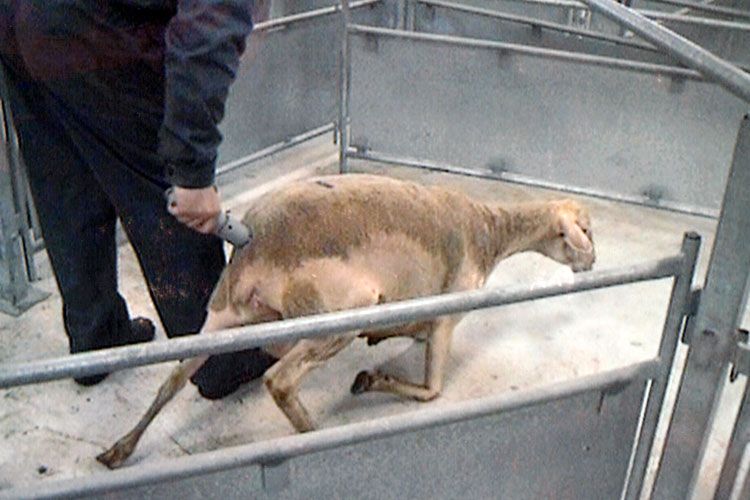
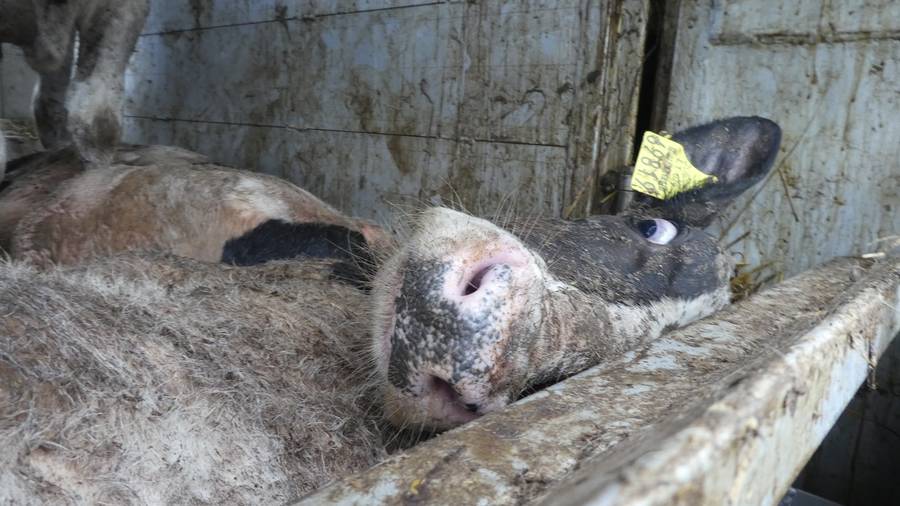

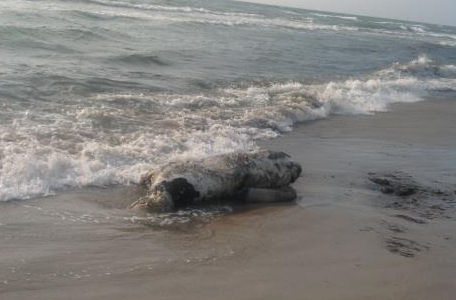 It is common practice to simply throw sick or dead animals overboard. Many even alive.The ear tag is removed beforehand so that the place of origin cannot be located.






 Serbian Animals Voice (SAV)