USA: The Trump administration has reauthorized government officials to use controversial poison devices – dubbed “cyanide bombs”.

Image result for trump clown


https://worldanimalsvoice.com/2019/08/10/usa-the-trump-administration-has-reauthorized-government-officials-to-use-controversial-poison-devices-dubbed-cyanide-bombs/

Image result for cyanide bomb

The Trump administration has reauthorized government officials to use controversial poison devices – dubbed “cyanide bombs” by critics – to kill coyotes, foxes and other animals across the US.

The spring-loaded traps, called M-44s, are filled with sodium cyanide and are most frequently deployed by Wildlife Services, a federal agency in the US Department of Agriculture that kills vast numbers of wild animals each year, primarily for the benefit of private farmers and ranchers.

In 2018, Wildlife Services reported that its agents had dispatched more than 1.5 million native animals, from beavers to black bears, wolves, ducks and owls. Roughly 6,500 of them were killed by M-44s.

On Tuesday, after completing the first phase of a routine review, the US Environmental Protection Agency announced that it would allow sodium cyanide’s continued use in M-44s across the country on an interim basis.

Yet the traps are facing increasing opposition, and have, in the past, led to the inadvertent deaths of endangered species and domestic pets and caused harm to humans.

Image result for cyanide bomb

In 2017, a teenage boy named Canyon Mansfield was hiking with his dog in the woods behind his family’s home in Pocatello, Idaho when Mansfield’s dog triggered a cyanide trap that sprayed a plume of poison dust into the air. The dog died on the spot and Mansfield was rushed to the hospital, where he ultimately recovered. His parents are suing Wildlife Services over the poisoning.

Read more about it here:

https://www.nationalgeographic.com/news/2017/04/wildlife-watch-wildlife-services-cyanide-idaho-predator-control/

Mansfield’s case made national headlines and has fueled opposition to M-44s. In May, in response to advocacy by environmental groups, Oregon’s governor Kate Brown signed a ban on the use of the traps in the state. In 2017, Wildlife Services agreed to temporarily halt the use of M-44s in Colorado after environmental groups sued. The agency also stopped using them in Idaho after the Mansfield case came to light.

In the months before the EPA announced the reauthorization, conservation groups and members of the public flooded the agency with comments calling for a complete national ban on the predator-killing poison. According to an analysis provided by the Center for Biological Diversity, which is a leading opponent of M-44s, 99.9% of all comments received by the EPA opposed the reauthorization of sodium cyanide for predator control purposes.

Although the agency took a different view, it did impose new restrictions on the use of M-44s. Among other things, the agency will now prohibit government officials from placing M-44s within 100 feet of public roads or trails. The agency’s reauthorization decision is only an interim one and a final decision on the matter is expected to come down after 2021.

Brooks Fahy, the executive director of the environmental group Predator Defense and a leading opponent of M-44s, denounced the EPA’s decision.

It is a “complete disaster”, he said. “[The EPA] ignored the facts and they ignored cases that, without a doubt, demonstrate that there is no way M-44s can be used safely.”

In response to the Guardian’s request for comment, the EPA referenced the documentation of the decision on its website.

https://www.theguardian.com/environment/2019/aug/08/trump-authorizes-cyanide-bombs-wildlife-services?CMP=share_btn_tw

Romania: Exporting 100,000 Sheep Per Month to Iran ?

Read the full post at:

https://worldanimalsvoice.com/2019/08/10/romania-exporting-over-100000-sheep-to-iran-per-month-after-al-shuwaikh-we-are-interested-in-the-current-situation/

As regular visitors to this site will know, we have been tracking the export of Romanian sheep to the Middle East in recent weeks. You can see all our articles on this, along with other live export posts at:

https://worldanimalsvoice.com/category/live-transport/


February – Romania will once again be able to export sheep and sheep meat to Iran, according to an announcement made by the Romanian Ministry of Agriculture and Rural Development (MADR).

Following the opening of this market, the Ministry declared that Romania will export nearly 800,000 sheep in the first six months.

The export market for (Romanian) sheep with the Republic of Iran has been opened due to the diplomatic efforts and the Government of Romania. In January 2019 the export certificate model was agreed between the National Veterinary Sanitary Authority and Food Safety in Romania (ANSVSA) and the Veterinary Organization of Iran, due to the ban on live sheep and goat exports to Iran being suspended.

To get things started, on 4/2/19 a shipment of 20 tonnes of sheep meat from Romania reached Iran. The export company Agricola International, from Bacau, Romania, is in talks to send an estimated 1,000 tonnes on a monthly basis to this country. Agricola International Bacau has unveiled plans to invest €9 million to upgrade its facilities and expand its output capacity by up to 30 per cent.

The Romanian Ministry is said to welcome this success. A very high demand in Iran of sheep and sheep meat in live is ever increasing, in a field where Romania has ample possibilities.

WAV Comment:

As an organisation which campaigns against all live animal exports; and which has recently reported in the issue of 70,000 live Romanian sheep being exported to the Middle East in temperatures up to 46 degrees; we have vey strong concerns for the welfare of any livestock being exported from Romania to Iran. Especially as the Romanian Ministry declared that almost 800,000 sheep would be exported in the first 6 months. We are currently unaware of what percentage has been exported as ‘dead’ meat, and what amount has been exported live.

As Romania is a Member State of the EU, when the EU politicians return from their Summer holidays in the fall, we will be writing to them and asking more about this. To date, requests about animal welfare have been ignored by the Romanian authorities; and the EU does not appear to be very quick in taking any action against them regarding this.

So; what is the situation for any sheep exported live from Romania to Iran ? – are we going to hear just more words from the EU that are just ignored by member states; or are we actually going to see the EU do something about it all ?


Italy: right populists approve the bird cutch


Committee against the bird murder e.V.
5 August 2019

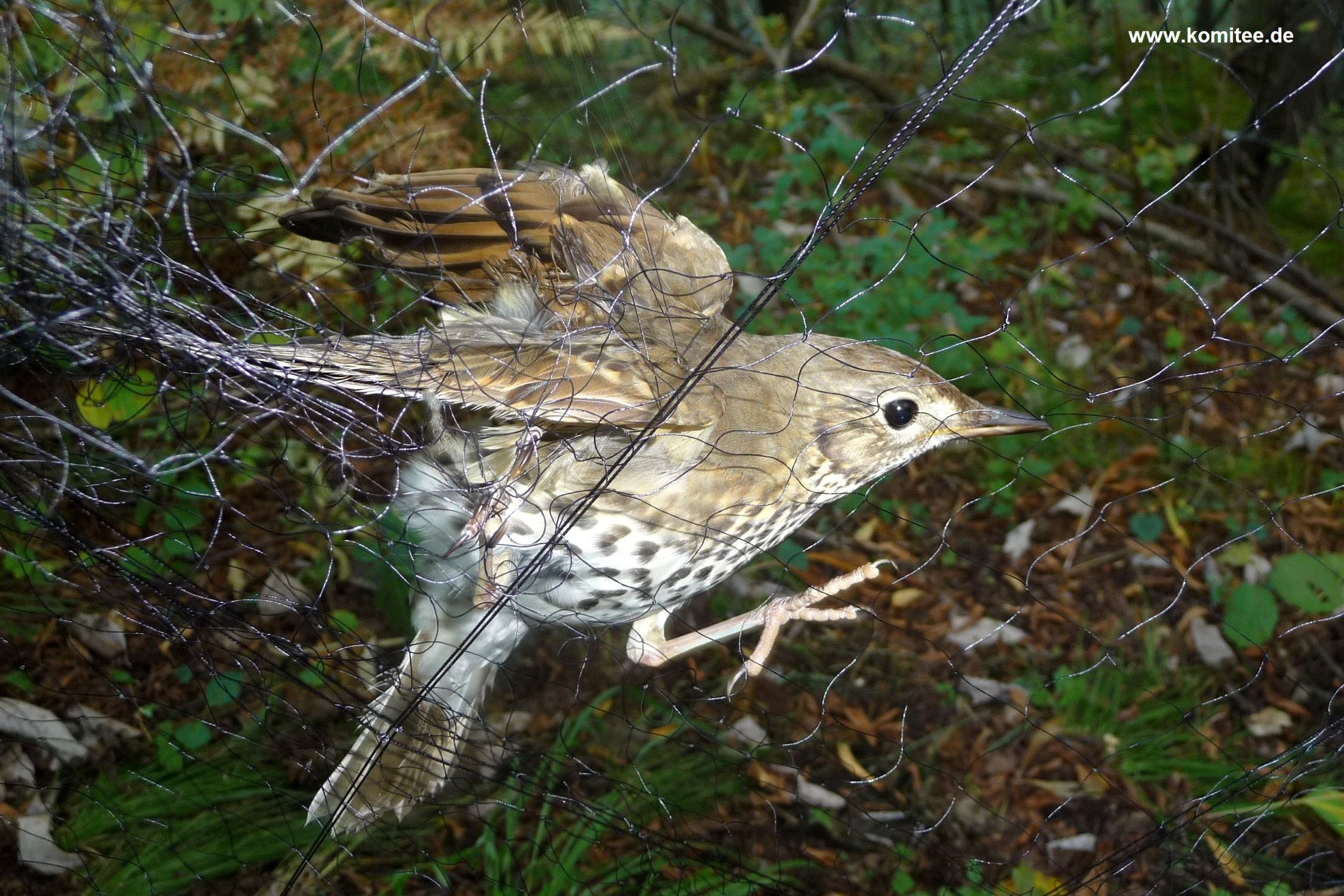
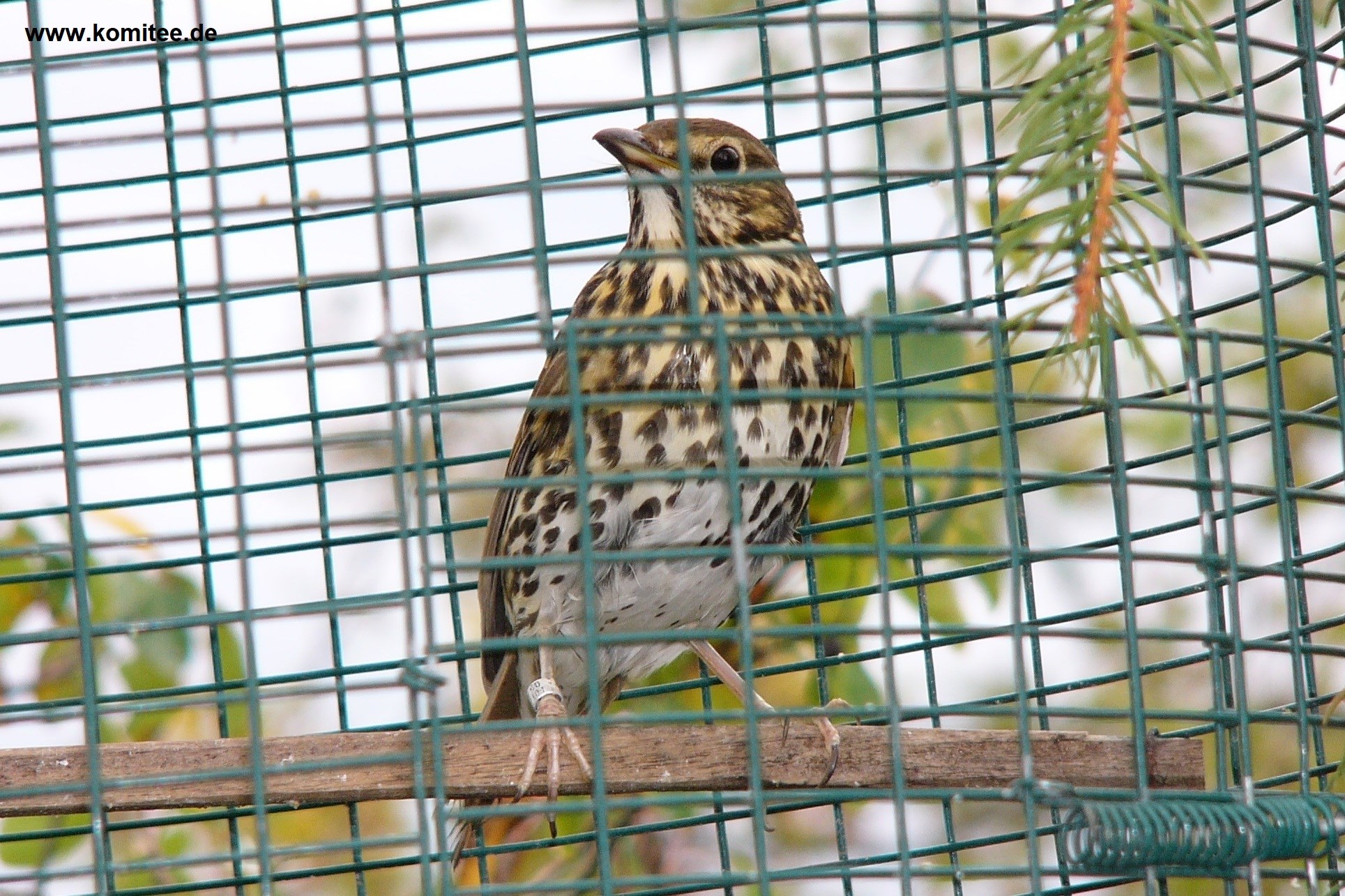
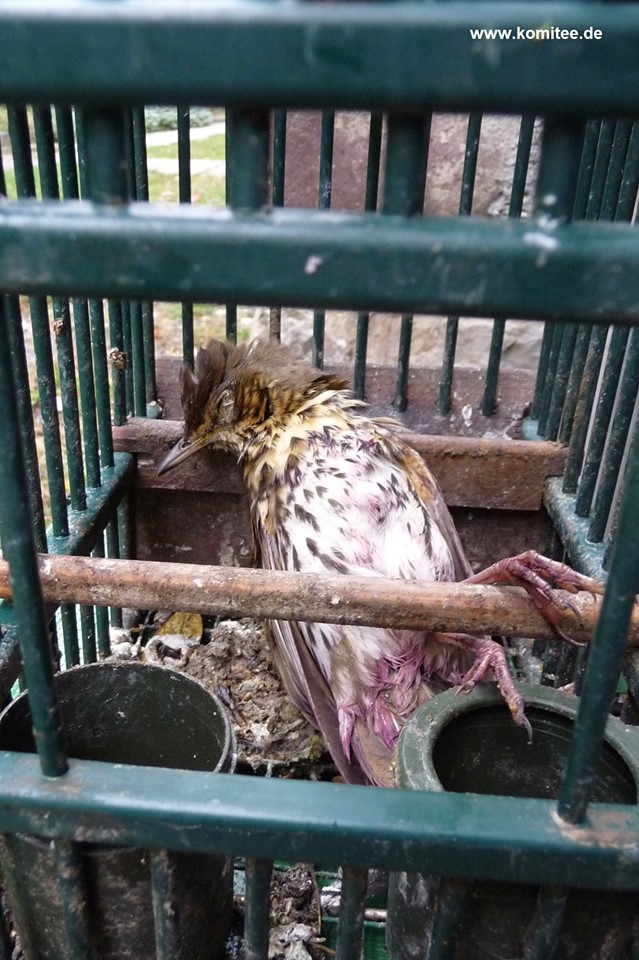
Italy is making a dramatic turnaround in bird conservation: the Lombardy regional government – led by the right populist Lega, which also ruled in Rome – has announced that it will allow bird trapping in the fall with nets.

A total of 12,700 blackbirds, red, singing and juniper chokes with miles of nets are to be caught in 24 major catching facilities!
The animals are to be used as live decoys in songbird hunting.

In the EU, bird catching has actually been completely banned since 1979, in Italy it was restricted in 1992, but finally abolished in 2014 at the instigation of the Committee against the Birds Murder and its Italian partner associations.

With renewed approval, the Lega makes one of its campaign promises to brainless hunters true and undermines efforts for sustainable bird conservation in Europe. The committee is already in contact with the EU Commission and is preparing a major complaint – Brussels is the only body that can put a stop to the plans of Lombardy.


https://www.facebook.com/Komitee.CABS/


My comment: We wish the Committee against Bird murder good luck in the negotiations with the EU Commissioners.

Yes! It is true that Brussels is the only body that can abolish this crime.
This, and some others, such as animal transports to third countries, animal transports taking place at temperatures above 35 degrees, and above all, animal transports taking place over 8 hours in EU.

For the last, 1,270,000 people had signed by March 2012, and with the support of 395 EU parliamentarians, the campaign thus achieved more than the required majority. In a resolution in December 2012, the European Parliament called on the Commission to implement the eight-hour limit.
However, EU-Commissioners decided that a maximum transport time of eight hours alone would not be enough to improve animal welfare.
Thus, the way is blocked for a change in the law of EU transport to 8 hours.

And on the highways and ships by the sea, blood still flows from the trucks that carry thousands of animals for days.

So much for Brussels, EU Commissioners and other political plagues!


My best regards to all, Venus


USA: Harvard Law School Debuts Program That Trains Students to Fight For Animal Rights.

Harvard Law School Debuts Program That Trains Students to Fight For Animal Rights

Led by animal-rights experts, the ivy league’s new Animal Law & Policy Clinic will focus on issues affecting farmed animals, wildlife, and animals in captivity with the aim of creating lasting legal change for all life forms.


Source – https://vegnews.com/2019/8/harvard-law-school-debuts-program-that-trains-students-to-fight-for-animal-rights

This week, Harvard Law School (HLS) announced the launch of a new program that will train its students to advocate for animals.

The Animal Law & Policy Clinic will be part of HLS’ Animal Law & Policy Program (ALPP) and will focus on issues affecting farmed and captive animals, wildlife, climate-change related topics, worker exploitation in animal agriculture, and other topics with the goal of creating future leaders in the animal protection movement. “The Animal Law & Policy Clinic at HLS will train and prepare our graduates to embark on careers in the animal protection field, produce impactful litigation and policy analysis to benefit the animal protection movement, and provide an internationally renowned platform for educating the broader public about the many pressing issues involving animal law and policy,”

ALPP Faculty Director Professor Kristen Stilt said. The new clinic will be led by Visiting Assistant Clinical Professor Katherine Meyer (who founded leading animal-protection law firm Meyer Glitzenstein & Eubanks 26 years ago) and Clinical Instructor Nicole Negowetti (a nationally recognized food systems policy expert). “I am honored to help launch the Animal Law & Policy Clinic at Harvard Law School,” Negowetti said. “The clinic will provide outstanding training for a new generation of advocates as we identify and pursue high-impact legal strategies to achieve a resilient, healthy, and just food system—for the benefit of human and non-human animals alike.” The clinic will give students a hands-on experience in litigation, legislation, administrative practice, and policymaking, both in the United States and internationally. “Animal law is a vitally important and rapidly growing field,” HLS Dean John F. Manning said. “Our new Animal Law & Policy Clinic will give students real-world experience in this burgeoning field, build on Harvard Law School’s long tradition of innovative pedagogy, and prepare future graduates to address significant societal challenges.”

HLS is one of 167 law schools in the US that now offer an animal-law course—an increase from just nine schools that offered such courses in 2000. 


Humanity: a killer machinery


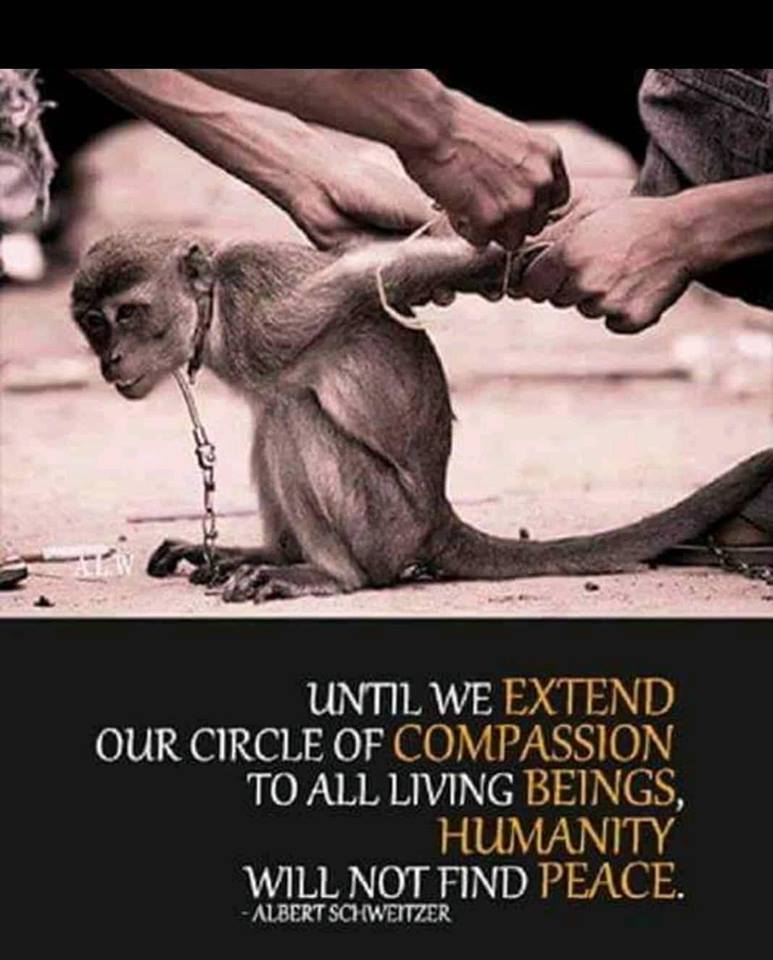
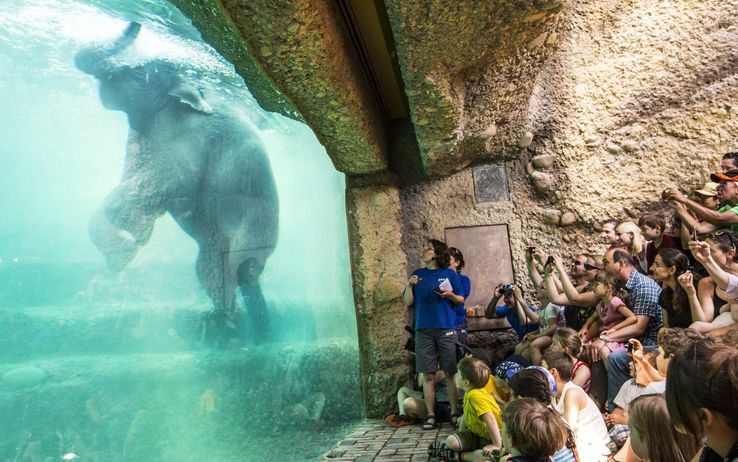
There are millions of wild animals in captivity worldwide – in zoos, theme parks, sanctuaries, dolphinaria, circuses and elephant camps.


There are also many other individual captive animals exploited for human entertainment. Many of these animals are kept in poor conditions – neglected, suffering or abused.


We want to prevent the suffering of wild animals in captivity and encourage people like you, whether in your home country or overseas, to look out for captive wild animals and flag your concerns.

You can report your concerns, highlight animal welfare issues, share information, and provide advice and guidance – here: bornfree.org.uk. 

Learn how to take action to help animals.

https://www.bornfree.org.uk/raise-the-red-flag

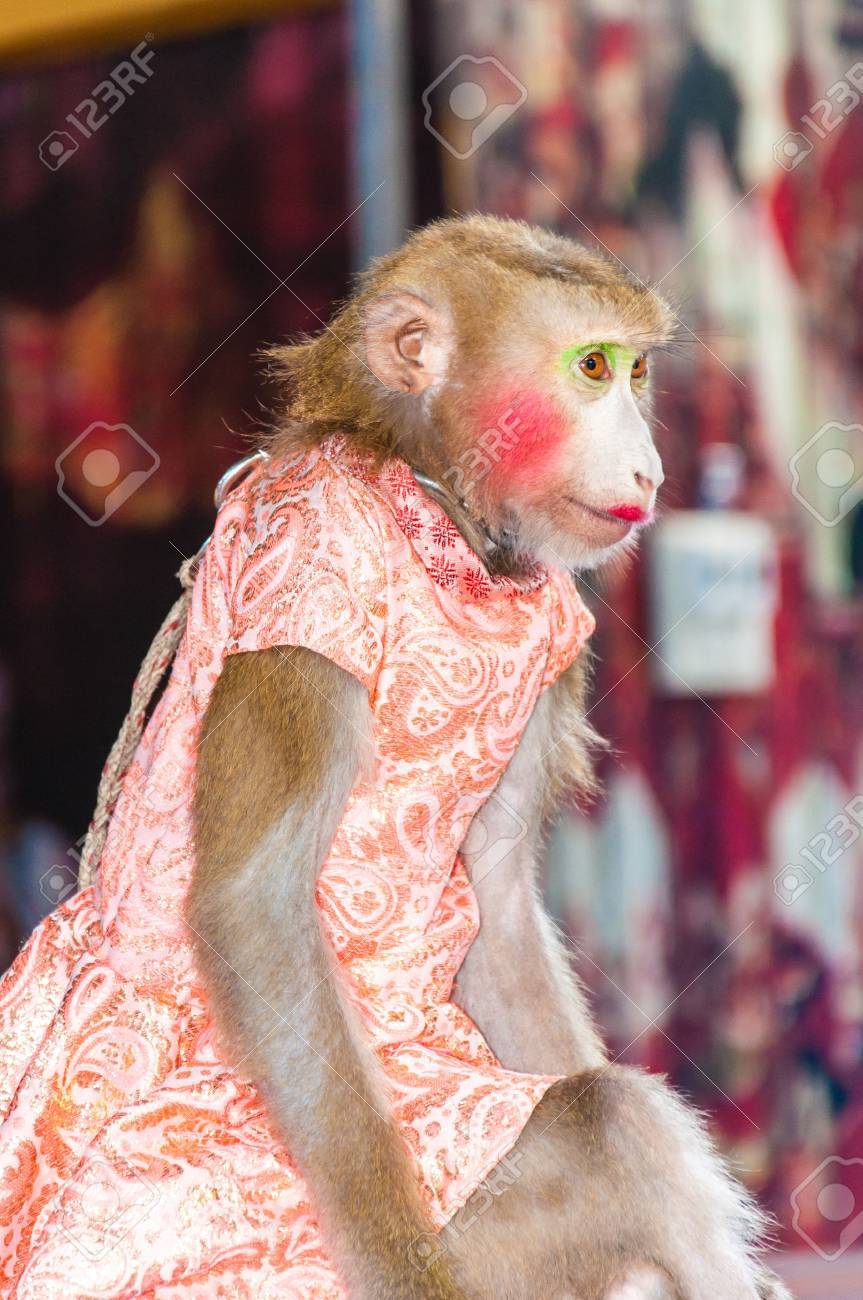
Many of these animals are kept in poor conditions – neglected, suffering or being abused.

The illegal trade, for example, with monkeys is a billion dollar business.


For more…at: https://worldanimalsvoice.com/2019/08/08/humanity-a-killer-machinery


My comment: The fundamental rights of life, liberty and bodily integrity – rights that every person reading this piece demands or takes for granted –are created by humans and only exclusive for human animals.

People can fight for their freedom, animals can not. That is the big difference between all liberation movements in relation to humans and the liberation of animals.

Today, we live in the largest system of apartheid of all time, under the most intensive use of all technical and scientific possibilities: everything for the welfare of the people and everything for the exploitation of the animals.

And on the other hand, the flood of humanity is spreading like an all-consuming plague … it’s a criminal world we live in!

My best regards, Venus


England: Sealed ‘Box’ Animal Trailers; How the Industry Dodges Identifying What they Carry – and the EU Does NOTHING About It.

Read the full article, complete with pictures and the report, ay:

https://worldanimalsvoice.com/2019/08/08/england-sealed-box-type-animal-trailers-how-the-industry-dodges-identifying-what-they-transport-and-the-eu-oks-it/ 


zerissene EU-Flagge am Stock

eu crisis 2

From Mark – This is not going to be short – but I will aim to keep it that way if possible.

Now that we are covering a lot at present with regard live animal exports; I have decided to go public with some work which I did back in 2012 regarding live British sheep being exported by Dutchman ‘Onderwater’ on his ship, the ‘Joline’.

The main issue of this report which I produced was to show up (yet again) the complete inconsistencies of the EU and the non adherence to the regulations set in animal transportation protection order EU Regulation 1/2005.

The regulations say that (animal) transporters should be clearly ‘signed’ to alert people that live animals are being carried. Ok, you can see this is not necessary with a ‘normal’ tiered livestock transporter, but with the ‘box’ type transporters which are used in Europe, we enter a different region where the carrying of live animals in a vehicle is not clear at all. This for example, is how Onderwater (the Dutch livestock haulier) deceived the UK authorities by making it look like he was carrying boxed / chilled meat in a ’box’ type animal trailer, when actually it was carrying live animals (sheep).


Read all about it at:

https://worldanimalsvoice.com/2019/08/05/england-the-onderwater-facts-from-campaigner-jane/

https://worldanimalsvoice.com/2019/05/28/england-i-went-to-europe-and-all-i-got-was-slaughtered-who-am-i-david-or-goliath/


Would you be aware if you were driving on the motorway that this truck is NOT carrying chilled produce, but instead is full of live animals ?

article 2

See my report photographs (taken by Valerie) which actually show the rear doors of the ‘box’ open and live sheep standing within. If the system allows, I will reproduce one here:

We even gave the EU some suggestion as to how the type of signage which we suggested should be carried on all box type trailers; on the top, bottom, sides and rear. Here is the example of a sign we gave, written in both English and German; for emergency services to read when applicable.


We put forward suggestions of box trailer labelling for several reasons:


  • If, for example, the truck was involved in an accident and was turned onto its side; then our wonderful emergency services would see the signage and know that live animals were being carried. Consequently, they could immediately access the live by the rear doors, cutting into the roof etc. My argument was that without clear signage, emergency services, like many people; may wrongly think that chilled foodstuffs were only being carried, and hence not worry about trailer access.
  • EU Regulation 1/2005 for the ‘protection of animals in transport’; makes it clear in the legislation that labelling is to be shown on vehicles which provides this info to emergency services. Very sadly, as you will read in my report; many animal carrying box trailers are going all over Europe carrying live animals; but without any labelling to make this clear.
  • We have no faith in the EU enforcing anything; so we, (animal welfare organisations) have to act independently to be a voice for the animals and get them the justice they deserve.


I put forward my report t the EU on this issue and how we exposed that ‘live animal’ labels were being covered up whilst the vehicle was on the road. My report gives and example and shows exactly how the labelling is covered up; yet can very easily be removed by the driver when he is going to the authorities at a port for inspections.

In their typical way, the EU authorities were fully of words about how things should be done; but when presented with information on how the rules are broken; as detailed in my report; the EU did its normal and turned the other way.

Cut to now – August 2019; animal carrying but un identified ‘box’ trailers are still being hauled all over the EU. So still, in the event of any accident; emergency services are still completely unaware that live animals are being transported within the trailer. Another issue is access and ventilation. There is obvious lack of access to sick or injured animals in a ‘box’ type trailer so that they can be identified and removed. How can a driver see that animals are ‘ok’ when they are concealed behind the solid walls of a box type trailer ? – and even if he could, which he cannot, how would sick animals be removed from the trailer ?

Livestock carrying trailers have airflow, be it through the tiered vents or via fan systems which are integral to the trailer design. Sealed ‘box’ type trailers have neither. There is usually only a small (30cm) vertical opening at the rear of the trailer through which outside air passes. Is this sufficient for a trailer full of animals ? – I personally think not; but bthe EU authorities allow it, and seem to turn blind eyes to all the anti evidence provided.

So; here s my report on how very small labelling is covered on the road; and quickly removed by the driver once in port going for inspections. Has anything changed over they years ? – NO. Our labelling system was ignored by the EU, and emergency services attending and incident are still none the wiser if live animals are being carried and may require very quick attendance and help.

For me personally, this again shows how the EU preaches one thing in its Regulations, but does not actually give a damn in reality. It is wrong and unjust; and is exactly the reason why I fight to give animals a voice. They do not deserve to be abused like this – I wont give up trying to help those who suffer in silence.


Regards Mark.


Switching to a plant-based diet can help fight climate change, UN experts have said.

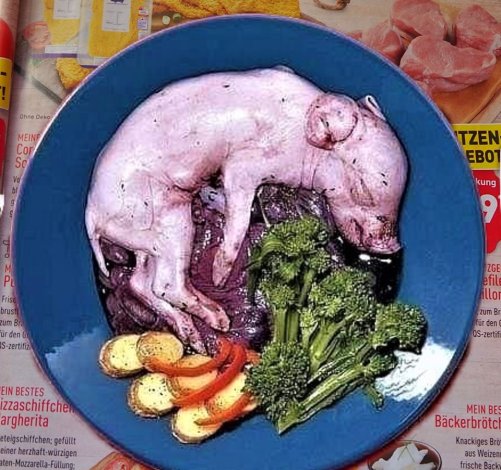
ferkel am Tellerjpg


https://www.bbc.co.uk/news/science-environment-49238749


Switching to a plant-based diet can help fight climate change, UN experts have said.

A major report on land use and climate change says the West’s high consumption of meat and dairy produce is fuelling global warming.

But scientists and officials stopped short of explicitly calling on everyone to become vegan or vegetarian.

They said that more people could be fed using less land if individuals cut down on eating meat.

The document, prepared by 107 scientists for the UN’s Intergovernmental Panel on Climate Change (IPCC), says that if land is used more effectively, it can store more of the carbon emitted by humans.