Our new undercover investigation released today (22 July) exposes the grim reality for millions of dairy calves across the EU. Separated from their mothers shortly after birth and confined in small, individual pens, these dairy calves are deprived of their natural behaviours and social interaction.
The investigation film – which contains new footage obtained from five Polish dairy farms as well as footage from other EU countries (Netherlands, Germany, Italy, Czech Republic and Denmark) – exposes further welfare concerns; hungry calves repeatedly attempting to suckle an investigator’s hand as well as evidence of poor hygiene and inadequate protection from cold temperatures. Additionally, there were incidents of EU law infringement: with calves completely unable to see and touch each other; and calves around three to four months old being kept illegally in pens that were too small for them.
Best estimates suggest that in the European Union as a whole, over 60% of dairy calves – in total over 12 million each year – are similarly restricted during the first few weeks of their lives.
“This investigation reveals the cruel reality for millions of dairy calves in Poland, and across the EU” says Malgorzata Szadkowska, Head of our Polish office. “Thesecalves are separated from their mothers hours after birth, and spend their first eight weeks in isolation, away from the comfort and support that close companionship can provide to social animals like them. This is a completely barbaric and unnecessary practice.”
Our new investigation proves once again what we have documented on multiple occasions: caged systems used in many EU countries, including the UK, are equally cruel.
Emma Slawinski, our Director of Campaigns and Communications says: “It is hard to comprehend that a vulnerable young calf is kept isolated for weeks. Worse still, EU legislation allows this, despite evidence that alternative practices can provide welfare and health .”
You can join the fight to End the Cage Age. Please take action today.
“The plight of the 70,000 sheep on the shipment from Romania to the Persian Gulf continues, with the vessel entering Shuwaikh port in Kuwait yesterday in temperatures that were reported to have reached 47°C.
It is day 19 for the remaining animals on board the Al Shuwaikh, owned by the Kuwaiti company Livestock Transport & Trading (KLTT). The ship is now heading to Hamad, Qatar, following previous stops in Jeddah on 21 July and Port Jebel Ali on 29 July.
Eurogroup for Animals’ member organisation Animals International, who are following the shipment’s progress, report that each stop adds additional heat stress, because the breeze of the sea is absent when the vessel reduces speed or is moored.
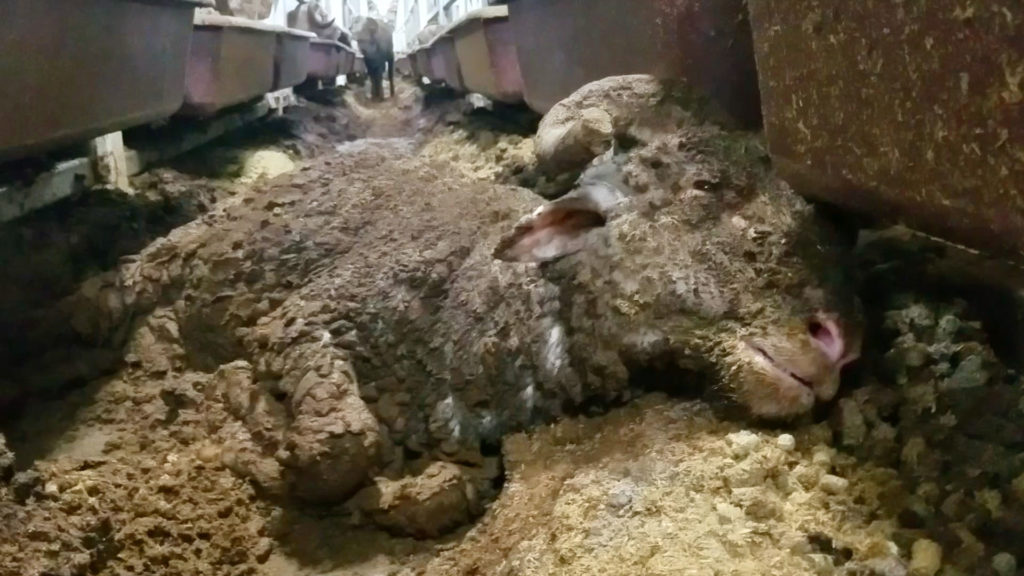
In 2018 animals on KLTT vessels were found baking in their own skins, gasping for air, smothered in faeces and unable to lie down to rest or even reach food or water. During such voyages, heat and humidity combinations reach levels that cause heat stroke, resulting in sheep literally cooking alive in the holds of vessels.
“We are devastated that this hellish journey has been allowed to go ahead, despite our pleas to the Romanian minister and even the intervention of Commissioner Andriukaitis,” said Reineke Hameleers, Director of Eurogroup for Animals. “Even if these animals survive these horrendous temperatures, a horrible end awaits them, as they will be slaughtered without stunning for the festival.”
“I think that my home country, Romania, has no shame and is deliberately breaking the laws and disregarding all warnings,” stated Gabriel Paun,EU Director of Animals International.“The Government will continue to do so until the EU Commission starts infringement proceedings.”
WAV wants to record the following points in this statement:
After almost three weeks’ drive, it is not yet known how many animals died miserably and painfully on board.
After all, everyone is devastated as the scale of this tragedy escalates.
But that does not help, because animals are saved with actions and deeds, not with sentimentality.
Even less credible is the indignation of the members of the Eurogroup, for one simple reason: we missed their appearance in Midia Harbor!
MEP Anja Hazenkamp was there with all her heart and dedication and more than present.
From the case of “Al Shuwaikh”(the largest in the animal transport history with 70,000 living animals), the Eurogroup should have learned two important lessons:
Animal transports to this extent must be prevented before they take place.
This must be prevented on the spot, not from the desk, not by e-mail, not verbally. This direct help on the spot should be a matter of course for the Members of Eurogrup for animals!
The second lesson for the Eurogroup is even more bitter.
Many EU countries have understood that the EU animal transport law has no binding effect, as violations are not punished.
For this reason, nobody takes the EU seriously, even the responsible Commissioner Andriukaitis is ignored by Romania.
This has fatal consequences for both, the animals and the animal rights activists, who want to achieve a better status for all animals with the help of EU law.
At this year’s Meeting of Agriculture Ministers in Brussels, Commissioner Andiukaitis has officially announced that there are no grounds for an infringement procedure against Romania, even though Romania repeatedly violates the EU Animal Transport Law in the past!
As in the previous year, for example, when the animals were transported across the border with Turkey and were exposed to high temperatures.
At this meeting, Minister Daea’s representative considered that “a tolerance margin of 5 ° C should be maintained at the upper limit of 30 ° C”. In addition, Daea points out that “the animals from the southern countries are better used to high temperatures than those from the northern countries”.
Perhaps the director of Animals International, Gabriel Paun, has not yet heard this view of his countryman, Minister Daea.
In this special transport “Al Shuwaikh”it was shown that this upper limit reaches the deadly temperature of 47 ° C, which is why it can be assumed that thousands of animals have suffered a painful death during transport. How many, is unknown until today!
Then a logical question arises: why do we still need the EU if every transport company or every minister of agriculture do what they want?
EU laws on animal transport are intentionally very vague and penalties almost unknown.
Even if some commissioners want to do their work conscientiously, the work processes take so long that even important cases quickly become forgotten.
We would like to ask the Director of Animals International, Gabriel Paun, to consider this case as a personal challenge and to inquire about the death toll.
While this will not save the remaining victims, this is the only hope for infringement proceedings against his home country, Romania!
Posted on August 7, 2019 by Serbian Animals Voice (SAV)
This is the dirty secret they do not want you to know.
For over 40 years, Animal Liberationhas been published. Such transparency is the only way consumers can align their morals with their actions.
Without it, informed and compassionate choices would be impossible.
In general, Australians care about animals and how they are treated. To make their own products by claiming to be “strict welfare policies” and using words like “humane” to sanitize the horrors of slaughter.
Yet, they never actually show what this means. This is where we come in.
The following exposé shows what happens to unwanted dairy calves at the award-winning, inner-Melbourne slaughterhouse, Cedar Meats.
Animal Liberation NSW and Leaked.com.au received the footage anonymously and is currently being reviewed by the relevant authorities.
In regards to animal welfare, Cedar Meats claims… “Our employees involved in livestock handling are fully trained in all aspects of animal welfare. Cedar Meats as a company is regarded as the standard to which others should strive for in animal welfare principles.”
My comment: The site of the world’s largest private livestock farm, “S. Kidman & Co Ltd”, covers eleven million hectares!!!
For example, Switzerland would fit this area three times.
They hold 185,000 cattle and sell meat to Japan, the US and Southeast Asia.
After a month-long “sale battle”, the S. Kidman & Co. farm, with 185,000 cattle and a total area of 10 million hectares,was sold to the Australian billionaire Gina Rinehart and the Chinese investor group Shanghai Creedin 2016 for approximately 243 million euros. The new owners want to buy another 20,000 cattle.
In 2018, the Consolidated Pastoral Company (CPC), owned by British investment company Terra Firma, was also up for sale.
It includes 16 cattle farms with almost 400,000 animals including about 5.5 million ha of land.
And just when such mega-deals come to the public, then, the extent of modern slavery makes us, Europeans, speechless.
We do not have to wait for politicians or laws. We can always start to create real animal protection by denying our money to animal exploiters. Where there is no demand, there is no production and if there is no production, there are no more suffering animals and no Dachau farms for them.
Posted on August 6, 2019 by Serbian Animals Voice (SAV)
Like all other “useful” animals, camels are also transported: to markets, slaughterhouses or racing camels for sporting events.
The animals are exposed to terrible suffering during transport. Their protection plays almost no role.
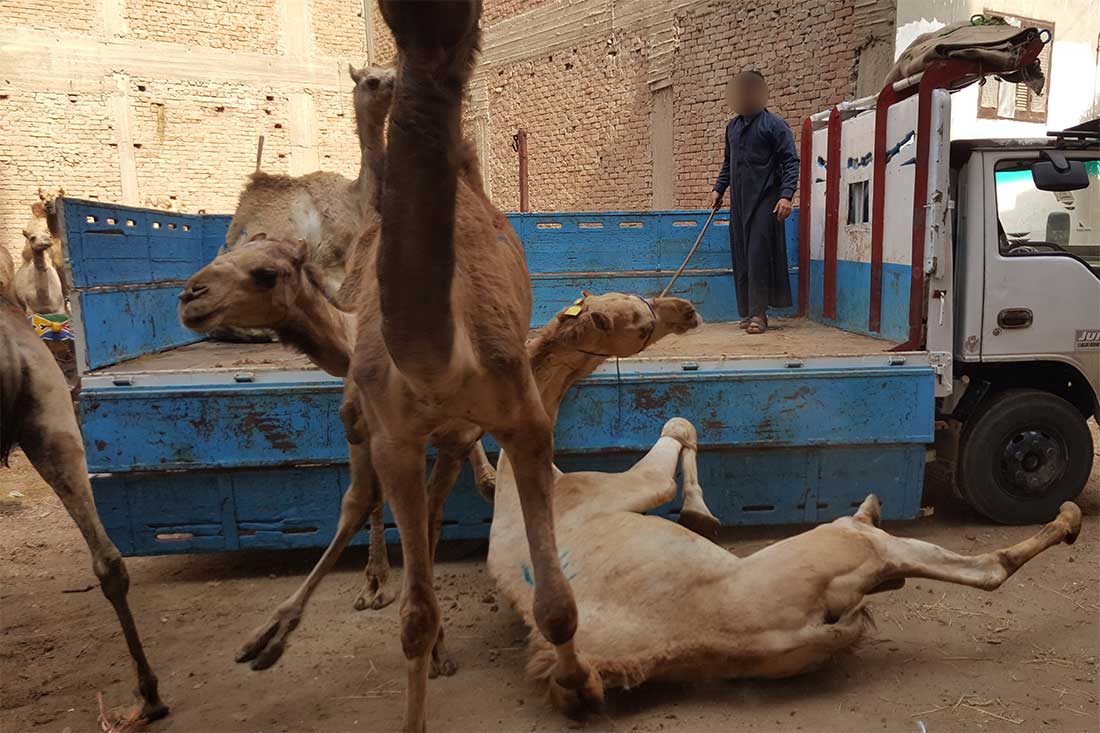
Image: Animals Angels-When unloading without a ramp, the danger of falling is great.
Camels are brutally exploited as ‘racing’ camels in sport and as ‘farm animals’ for the production of milk, meat and leather.
Just like all other useful animals, camels are also in terrible conditions transported.
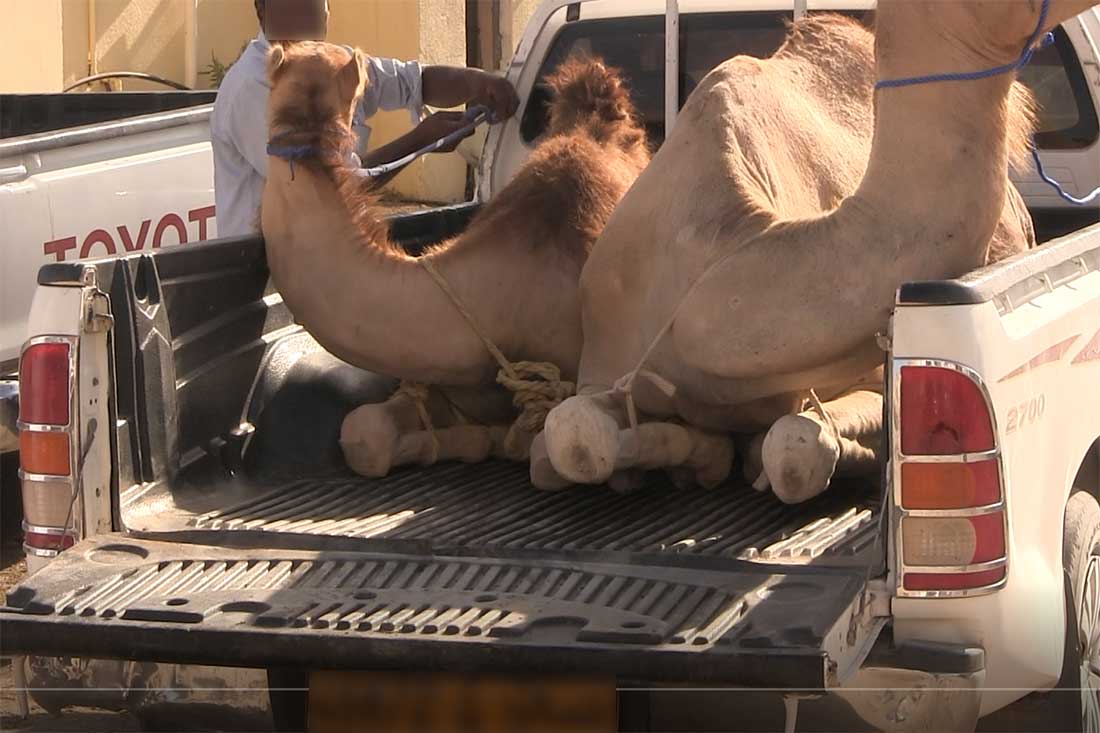
Image: Animals Angels-Often extremely overloaded vans: The camels are transported tied up in a sitting position and can not move, partly for trips of more than 30 hours.
In addition to short-distance transports, the animals are also transported between countries by truck or ship over long distances.
Some transports take several days and some of the camels have to travel long distances on foot. International animal welfare standards are ignored.
The camels are beaten on the transporters, pulled from their trucks by the lugs, ears or tails and thrown.
Since 2017, Animals’ Angels has been uncovering catastrophic conditions in many countries in the Middle East and advocating changes in the camel theme internationally.
Here is the last report from Egypt:
My comment: Around 6,000 BC, people in lesser populated Egypt started livestock farming.
Today they do the same thing, after 6000 years, and not just the Egyptians.
But Egypt is the country with one of the oldest civilization history, which it sells very well as a tourist attraction today.
And that is the tragic: to still sell the “pyramids” to the tourists as a wonder of the world, and not to realize that the greatest wonder for Egypt is their own society, which has still remained in horse and camel slavery, as in ancient times of the pharaohs.
Officials in Indonesia have pledged to end the nation’s dog meat trade, a move which will save up to 2,000 dogs from slaughter and human consumption per month.
The regency of Karanganyar in Java pledged the action following a shocking investigation by Dog Meat Free Indonesia (DMFI), which uncovered evidence of dogs being bludgeoned and blow-torched alive in animal markets.
The victory has been welcomed by Ricky Gervais and actor Peter Egan, both of whom are celebrity ambassadors for DMFI and who thanked the head of district, Bupati Juliyatmono, for his role in the pledge.
The plan to end the horrifying trade includes closing every stall selling dog meat in the regency, as well as the creation of alternative livelihoods for those currently reliant on income from trading in dog meat.
Investigations by DMFI – a coalition between several animal protection organisations such as Change For Animals Foundation and Humane Society International – showed dogs being beaten and strung upside down to bleed out, all the while still conscious and in full view of other terrified dogs.
Campaigners are hopeful this new pledge will mark the start of a nationwide movement to tackle this dangerous and illegal trade, although they say the governor of North Sulawesi, Olly Dondokambey, refuses to act.
The province of North Sulawesi is currently central to dog and cat meat trade activity, with approximately 200 ‘extreme’ animal markets operating each day.
Wendy Higgins from Humane Society International, a DMFI coalition member group, said:
Indonesia is a popular tourist destination for millions of travelers including about 360,000 Brits each year, but the country’s natural beauty is hiding an ugly secret that many tourists will be unaware of.
Visiting local markets is often promoted by tour guides but innocent travelers could be exposing themselves to horrific scenes of animal cruelty as well as dangerous diseases like rabies.
The national government has issued a crackdown but for as long as local regions like North Sulawesi simply ignore that, the killing and the risk to tourists continues.
Although dog meat is only consumed by seven per cent of Indonesia’s entire population, the trade remains a significant threat to public health – particularly with regards to the transmission of rabies.
Rabies, a viral, and potentially fatal, disease that infects the central nervous system is a serious threat worldwide with 55,000 deaths per year – more than 50 per cent of which are in Asia, according to the Food and Agriculture Organization of the United Nations (FAO).
Currently, 24 provinces in Indonesia are Rabies endemic, with those with the greatest demand for dog meat among those with the highest prevalence of the disease. According to DMFI, the North Sulawesi Province has some of the highest numbers of human deaths attributed to rabies in the country.
Despite the lack of action in North Sulawesi, the progress being made in Karanganyar and Yogyakarta is enough to give DMFI campaigners cause for hope.
In Karanganyar, every one of the estimated thirty dog meat-selling stalls throughout the regency will be closed, with the local government already hosting a meeting with the traders to announce the ban and to discuss alternative livelihood opportunities.
The Yogyakarta Provincial Government separately drafted a Mayor’s Regulation for approval, through which a ban on dog meat would be implemented.
You can sign the petition to ban the dog meat trade throughout Indonesiahere.
Posted on August 6, 2019 by Serbian Animals Voice (SAV)
Washington state is moving forward with yet another kill order to slaughter more wolves. Now the state wants to kill up to eight members of the Old Profanity Territory pack, including pups born this spring.
All this is happening at the behest of a powerful rancher grazing his cattle on prime wolf habitat — and we need your help to stop it.
It’s likely the state will once again use aerial snipers in helicopters to gun down these wolves — at least one of which is collared — following up with on-the-ground kills of wounded animals. This asymmetrical warfare against wild creatures is sick.
Last fall they killed the pack’s breeding female and a 4-month-old pup, leaving behind only the father wolf and a pup. New wolves have joined this family unit, and more pups were born.
But in early July Washington gunned down the father wolf, and now they aim to kill as many as they can, up to eight more wolves, including the new pups.
Washington state has a long history of gunning down wolves within its borders. Since 2012 Washington has killed 23 state-endangered wolves, 19 of which were killed for the same livestock owner who is trying to eliminate the Old Profanity Territory pack.
The Center’s litigation to shut down Washington’s disgraceful kill protocol is still playing out in court. The state has no business gunning down wolves and destroying packs on public lands.




 Serbian Animals Voice (SAV)