New Zealand: We achieved victory for mother pigs, now we need Government action – Your Support Required.

17/12 – We have had the following in to us from SAFE, New Zealand. 

They have achieved major wins legally for animals over the last few weeks; now it is time to ramp up the pressure even more and get the government to act.

From SAFE:

Kia ora Mark

We achieved victory for mother pigs, now we need Government action 

Today SAFE and the New Zealand Animal Law Association (NZALA) have published a full-page open letter in the New Zealand Herald, asking the Prime Minister to appoint a Commissioner for Animals. 

Last month, the High Court found that the Minister of Agriculture and his advisors from the National Animal Welfare Advisory Committee (NAWAC) acted illegally when they failed to phase out farrowing crates and mating stalls for mother pigs. 

Now that the Government has accepted the Court’s decision, it is time to take animal welfare seriously. We need you to add your voice to ensure this happens. 

TAKE ACTION – Demand the government now has a commissioner for animals.

The High Court has ruled that the Minister of Agriculture and his advisors from the National Animal Welfare Advisory Committee (NAWAC) acted illegally when they failed to phase out farrowing crates and mating stalls for mother pigs.  

The Court’s decision shows that NAWAC did not perform its legal duty well and was biased, consciously or unconsciously, towards industry interests. It also highlights that although New Zealand has some of the best animal welfare laws in the world, there are significant shortcomings with regulation and enforcement of the law. 

The Government has accepted the Court’s decision, and we are now asking for some essential changes, starting with the appointment of a Commissioner for Animals. 

A Commissioner for Animals should be appointed to oversee NAWAC, advocate for animals and ensure that NAWAC is accountable. 

The Government must now take the Court’s decision seriously and show respect to animals and our animal welfare laws. With the appointment of a commissioner for Animals, New Zealand could once again be a world leader in animal welfare.

ACT NOW:  Go to –

Demand a Commissioner for Animals and an independent NAWAC – SAFE | For Animals

Demand a Commissioner for Animals

Write a polite email to Prime Minister Rt Hon Jacinda Ardern and Agriculture Minister Hon Damien O’Connor telling them why you want a Commissioner for Animals.

Key points you can make:

  • Following the High Court’s decision on farrowing crates, it’s time for the Government to take animal welfare seriously and appoint a Commissioner for Animals.
  • New Zealand needs a Commissioner for Animals to oversee NAWAC, advocate for animals and ensure that NAWAC is accountable. 
  • New Zealand has some of the best animal welfare laws in the world, however we need to ensure that these laws are properly enforced.  
  • If New Zealand wants to consider itself a world leader on animal welfare, then it’s clear that NAWAC needs oversight from an independent commissioner that reports directly to Parliament. 
  • NAWAC must undergo structural and cultural changes to be able to exercise its legal duty, starting with a Commissioner for Animals to oversee NAWAC and ensure the needs of animals are met.   

Thanks – it time for action and demands to be met;

WAV.

India: ”Not one slaughterhouse fulfilled the legal requirements”

In India, 1.3 billion people are affected by the curfew due to the corona pandemic. Also in Bantala, where millions of people work in the leather industry.

Leather is the skin of animals, which is chemically preserved through tanning. The chemicals come from China and, like in China, dogs are also to be slaughtered here for the leather industry.

Although China is the largest leather producer and exporter itself, it imports cheap leather from India.

In the end, it is no longer possible to determine where the leather really comes from.

India is the largest producer of cheap leather in Asia.

From here, a great demand for finished leather and leather goods is exported to Japan, Germany, Italy, Spain, and France. And for the neighboring countries of Bangladesh, Pakistan, and Sri Lanka, the leather comes from India.

Since India exports leather worth billions of euros, cows are simply caught on the streets, but so are dogs.

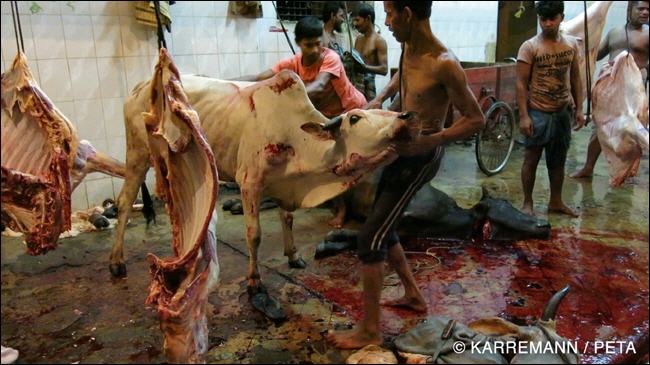
Since everything has to happen very quickly, their legs are chopped off so that they can no longer run away. Then the skin is torn off their bodies while they are alive.

The fact that dogs and cats are also slaughtered for the leather industry in India was rather unknown, especially since dog and cat meat are prohibited. But after the police in Calcutta confiscated 20 tons of dog and cat meat, there is great fear that this meat will also be sold in restaurants.

Slaughtering cows is legal in Kerala and West Bengal. Therefore the animals are carted there.

Excruciating transport

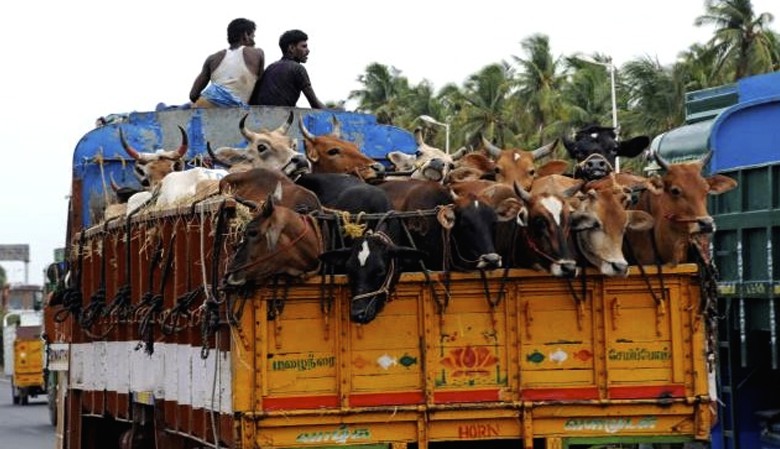
At the markets, the animals are given liters of water before they are sold so that they look plump and can be sold for more money. Cows and calves that are far too young are also sold to traders, contrary to the law, and crammed onto overcrowded trucks to the slaughterhouse.

This often leads to the animals falling on top of one another, trampling on one another, or injuring one another with their horns. Cows that collapse on a march are rubbed chili in the eyes, hit with sticks, or their tails are broken to get them to stand up again.

Ingrid Newkirk, President of Peta, followed one of the caravans of cattle stumbling towards Kerala.

“It’s a hideous journey,” she writes “To keep them moving, drivers beat the animal across their hip bones, where there is no fat to cushion the blows. The cows are not allowed to rest or drink.

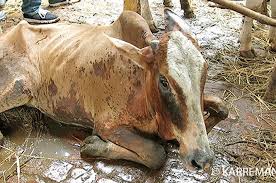
Many cows sink to their knees. Drivers beat them and twist their battered tails to force them to rise. If that doesn’t work they torment the cows into moving by rubbing hot chili peppers and tobacco into their eyes.”


Millions of cows are imported into Bangladesh from neighboring India every year. Although these are “sacred” in India, the workers there quickly forget and kill the cows on the street or in slaughterhouses – without prior anesthesia.


For more…at https://worldanimalsvoice.com/2020/12/17/indianot-one-slaughterhouse-fulfilled-the-legal-requirements/


And I mean…There is hardly a well-known brand that does not have its products manufactured in India. Around 90 percent of Indian leather ends up in the European Union; Germany is the second most important sales market.

Over 90% of the leather products marketed today are tanned with chrome, one of the most dangerous and toxic substances in the world.

Extreme animal suffering, systematic harm to people and above all to children in the production countries such as Bangladesh, unimaginable environmental pollution, and health hazards from wearing leather products are the diabolic cycle of the leather mafia.

The barbaric treatment of these animals has been hidden too long, but the truth is:
“Sacred” cows, allowed to run around anywhere, are stolen even on the street. It is estimated that there are around 30,000 illegal and unlicensed slaughterhouses that kill and skin cows or calves at night and in fog. Workers often cut the animals’ throats without anesthesia.

The Indian tanneries have no systematic control over the real origin of all rawhides. The illegal butchers simply sell the hides as buffalo hides to avoid persecution by the Indian authorities.

Yet greed, poverty, ignorance, and the absence of regulation and supervision have brought India’s cows to the point where their treatment is on the threshold of becoming a major international scandal.

Militant animal rights activists have now declared war on local butchers and tanneries.

My best regards to all, Venus

Animal welfare victory: 17/12/20 – the CJEU ruling confirms Member States right to introduce mandatory pre-slaughter stunning.

Animal welfare victory: the CJEU ruling confirms Member States right to introduce mandatory pre-slaughter stunning

17 December 2020

Today is a historic day for animals, as the Court of Justice of the European Union (CJEU) clarified that Member States are allowed to impose mandatory pre-slaughter stunning.

The case raised from the ban adopted by the Flemish Government (BE) in July 2019 which made stunning compulsory also for the production of meat by means of traditional Jewish and Muslim rites.

The verdict ruled that the EU Governments can legitimately introduce mandatory reversible stunning in the framework of Art. 26.2(c) of the Council Regulation 1099/2009 (Slaughter Regulation), with the aim to  improve animal welfare during those killing operations carried out in the context of religious rites.

It clearly states that the Slaughter Regulation “does not preclude Member States from imposing an obligation to stun animals prior to killing which also applies in the case of slaughter prescribed by religious rites” .

 This judgment considers the latest development onreversible stunning as a method that successfully balances the apparently competing values of religious freedom and animal welfare, and it concludes that “the measures contained in the (Flemish) decree allow a fair balance to be struck between the importance attached to animal welfare and the freedom of Jewish and Muslim believers to manifest their religion”.

Eurogroup for Animals has followed the Court case closely and in October it released an opinion poll showing that EU citizens do not want to see animals slaughtered while fully conscious.

“It is now clear that our society doesn’t support animals to unduly suffer at the most critical time of their lives. Reversible stunning makes it possible to successfully balance the apparently competing values of religious freedom, and the concern for animal welfare under current EU law. Acceptance of pre-slaughter stunning by religious communities is increasing both in EU and non-EU countries. Now it’s time for the EU to make pre-slaughter stunning always mandatory in the next revision of the Slaughter Regulation” commented Reineke Hameleers, CEO, Eurogroup for Animals

Throughout the years, experts have raised concerns about the serious animal welfare implications of killing without pre-cut stunning (FVE, 2002; EFSA, 2004; BVA, 2020), as acknowledged by the Court itself, in another case (C-497/17).

The case will now go back to the Flanders’ constitutional court which will have to confirm and implement the CJEU’s ruling. Furthermore, the imminent revision of the Slaughter Regulation, as announced by the European Commission in the framework of the EU Farm to Fork strategy, gives the chance to further clarify the matter by making pre-slaughter stunning always compulsory and move towards a Europe that cares for animals.

ENDS

Notes

Opinion poll on slaughter 

Summary of the Court of Justice of the European Union (CJEU) case C-336/19

Amicus Curiae on CJEU case

Advocate General opinion

Additional from WAV:

Electrical stunning

An electrical stunning device (applied to the head only) must pass sufficient current through the brain of the animal to interrupt normal brain activity and render the animal immediately unconscious. Electrical stunning (or electronarcosis) is reversible as it disrupts normal brain function for a short time only. An electrical stunning system requires the correct voltage, current and application time to be delivered for the stun to result in instantaneous and painless unconsciousness.

Italy: the Hunter Website takes a break

Received anonymously from Frente de Liberación Animal:

The official website of the Italian Hunting Federation <www.federcaccia.org> has been hacked by the Animal Liberation Front.

ALF Hacks Italian Hunting Federation Website (Italy)

We wish the hunters a lot of fun repairing the hacked page.

Especially now in Corona times, you have to employ hunters, otherwise, they will come up with stupid ideas

Regards and good night, Venus


WHO scientists will travel to Wuhan in January 2021 to investigate origins of Covid-19.

WHO scientists will travel to Wuhan in January to investigate origins of Covid-19 after months of negotiating with China for access

  • The coronavirus pandemic is believed to have originated from Wuhan in China
  • A year on from the start of the pandemic, the mission is expected to visit the city
  • U.S. has called for a ‘transparent’ WHO-led investigation and criticised its terms
  • Specifically, it was unhappy that Chinese scientists did the preliminary research

Read the full article at:

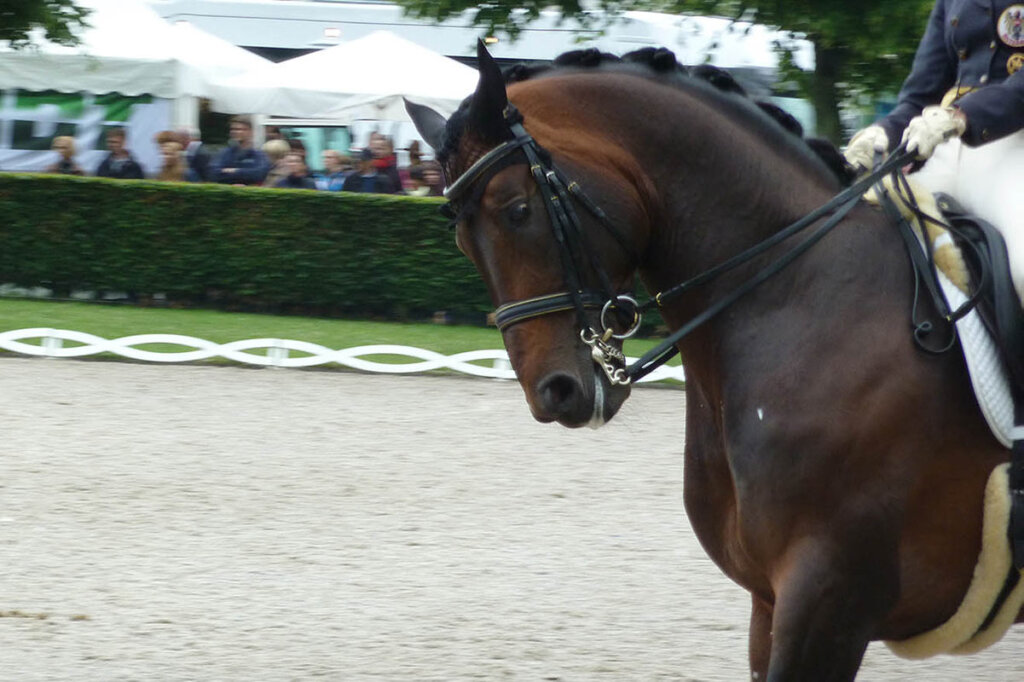
Totilas, the “miracle stallion” is dead!

Totilas was considered a “miracle stallion” and record breaker in dressage riding and was the most expensive dressage horse in the world. His life in equestrian sport was marked by agony and suffering.

Now Totilas died on the evening of December 14, 2020, at the age of just 20 years.

Nach einem Leben voller Qualen: „Wunderhengst“ Totilas gestorbenTotilias

A painful death ends his painful life

Totilas died of complications from colic. After an operation, the otherwise healthy stallion got up again but eventually succumbed to the disease.

Animal rights activists mourn the death of the long-suffering animal, which symbolized the pain and suffering of the equestrian sport like no other.

“Totilas is, on behalf of thousands of other horses that are abused as sports equipment, the best-known example of a reprehensible and criminally driven sports business.” (Dr. Edmund Haferbeck, PETA Germany)

Tortured with cruel training methods

Totila’s life clearly shows that in dressage only success counts and that horses are misused as expensive sports equipment.

After Totilas broke all records in dressage at the 2009 European Championships, he was bought for an estimated 10 million euros by entrepreneur and showjumper Paul Schockemöhle and the Linsenhoff-Rath family.

But the hoped-for successes mostly failed to materialize

In order to achieve the calculated victories in the future, Totilas has been trained with the cruel “roll cure”, especially since spring 2012.

The horse’s head is pulled down so hard that the neck is systematically overstretched. This is incredibly painful for the animals.

Totila’s trainer has been investigated for yearsThe application of the Rollkur at Totilas could be observed at many tournaments.

Almost everyone looked away when the stallion was harassed on the dressage arenas during and before the competitions.

For more…at https://worldanimalsvoice.com/2020/12/16/totilas-the-miracle-stallion-is-dead/


And I mean...Between 2011 and 2013, 46 horses died directly on German horse racing tracks; worldwide there were 735 deaths for gallop and trotting.

This system serves barbaric sensational lust and it is still about the big win, about splintering bones and high stakes … it is what it is: pure cruelty against doomed horses and the complete disregard for life and suffering.

Anyone who earns money in this system can be described as an animal abuser.

It is permissible to keep a horse without access to pasture, to beat it, and to discipline it.

Stress, beatings, brute force, coercion, and fear as well as physical and psychological overload. Horses are chastened, humiliated, broken, locked up, intimidated, threatened, and deprived of their natural needs by force.

This is certainly not the case always and everywhere, but too often and, above all, too naturally.

There are a lot of vets who speak out against racing, but many behind closed doors. It just takes courage to openly attack colleagues and the sport. There is a financially strong lobby on the other side.

Horse racing is a billion-dollar business, it is a tradition and a lot of money is made internationally with it. Worldwide sales are around 90 billion euros, not including the number of unreported cases of “black bets”.

My best regards to all, Venus


England: London – SPANA; the Society for the Protection of ANimals Abroad. Helping Working Animals and Their Owners Overseas Free of Charge.

England: SPANA – Society for the Protection of Animals Abroad – Helping Working Animals Around the World. – World Animals Voice

SPANA (Head Office – London) – helping the working animals of the world who may otherwise not get any support.  https://spana.org/

Established in 1923, SPANA’s goal is simple: to improve the welfare of working animals in the world’s poorest communities. Through three key areas – treating, training and teaching – we’re inspiring others to act in the best interests of working animals while also providing practical, professional and sustainable solutions today. We recognise that the fortunes of working animals and people go hand in hand: in the developing world, just one working animal can support an extended family of up to 30 people. SPANA’s work improves the lives of working animals while supporting the communities that depend on them. We rely entirely on our loyal supporters to help us in our huge but vital task.

WAV Comment – we are very happy to give a monthly donation to SPANA to help relieve the suffering a little of so many working animals.