Posted on December 26, 2019 by Serbian Animals Voice (SAV)
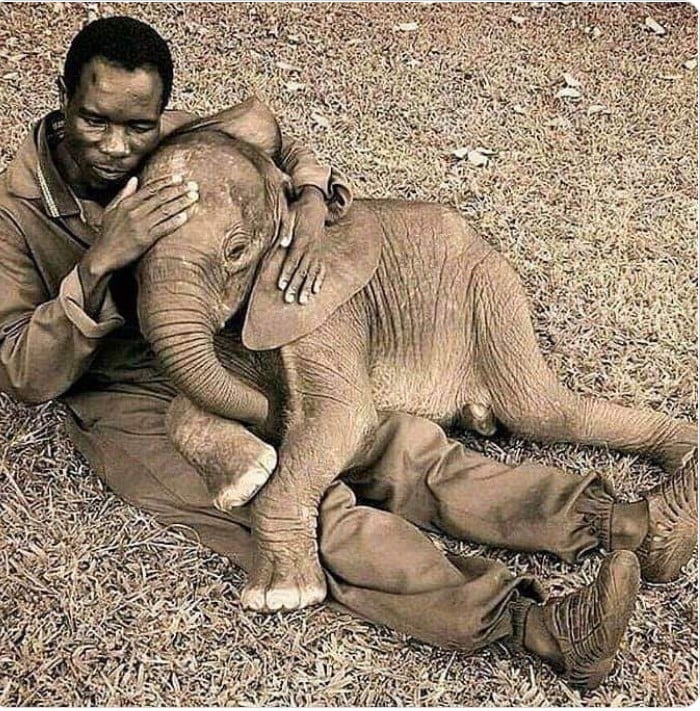
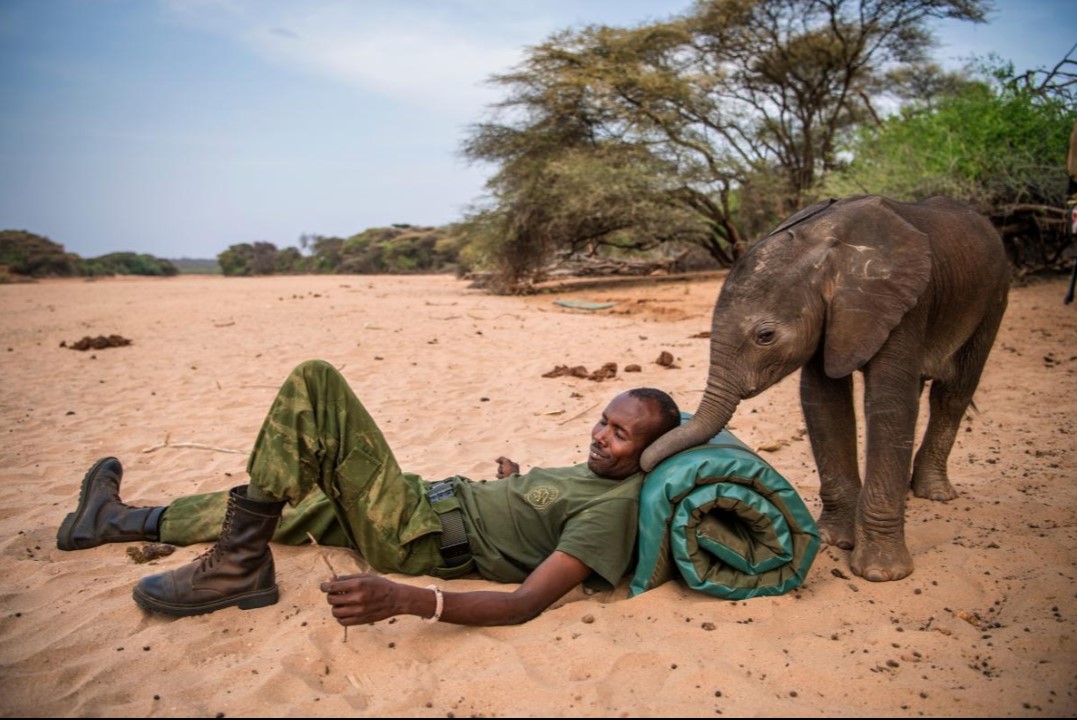
When a picture says more than just a thousand Words, then is this one 💖!
The kind of treatment that EVERY animal deserves.💚
Did you know that Botswana, Zimbabwe and Eswatini (formerly Swaziland) have legalized trade in ivory and animal skins?
In many African countries, the elephant is almost extinct.
But there is a tribe in northern Kenya who want to prevent this.
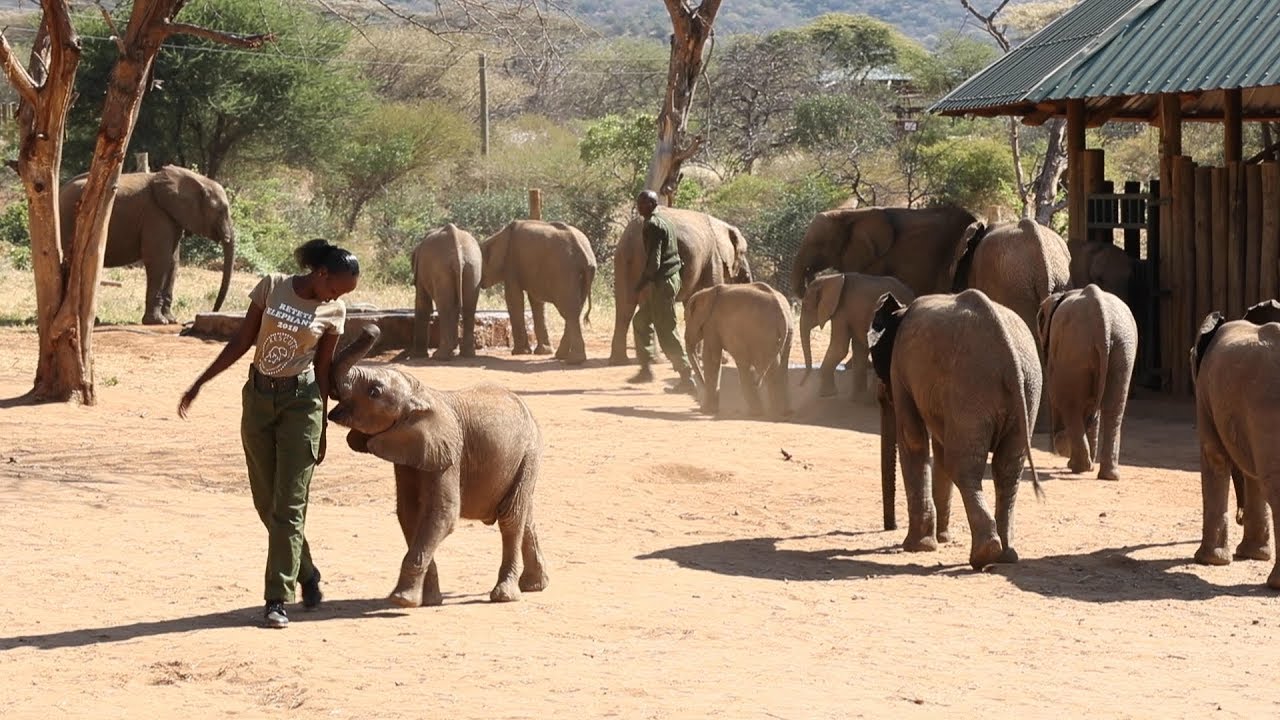
Years ago, these warriors were afraid of elephants. But now they even have an orphanage for little elephant babies.
Innovative Samburu communities in northern Kenya have come together to save orphaned elephants.
The region is home to Turkana, Rendille, Borana and Somali as well as the Samburu – ethnic groups that once fought for the country and its resources until death.
Now they are working together to strengthen their communities and protect the estimated 6,000 elephants that live with them!
The elephant orphanage Reteti, nestled in the gorge next to a crescent-shaped mountain range, is located in a 975,000 hectare thorny bush in northern Kenya and is known as the Namunyak Wildlife Conservation Trust – part of the ancestral home of the Samburu.
It was founded in 2016 by the Samburu. Funding comes from Conservation International, San Diego Zoo Global and Tusk UK. The Kenya Wildlife Service and the Northern Rangelands Trust provide ongoing support.
The 6,000 elephants in this part of Kenya form the second largest population in the country.
Black rhinos are starting to return – a small, carefully guarded population that has been reintroduced to the Sera Conservancy, adjacent to Namunyak, from parks and reserves across Kenya.
Warthog, impala, little kudu, buffalo, leopard, cheetah and reticulated giraffe are also on the rise.
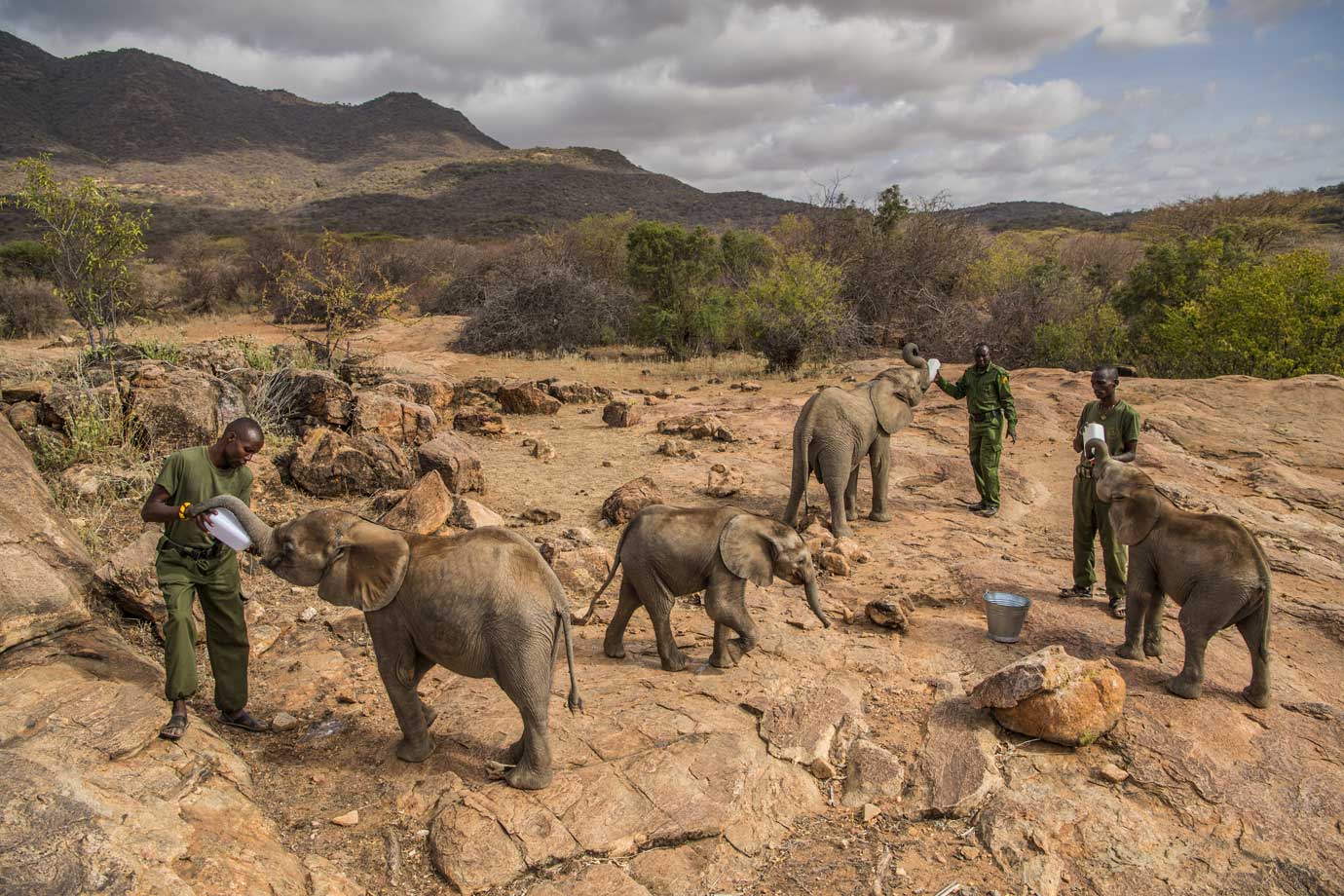
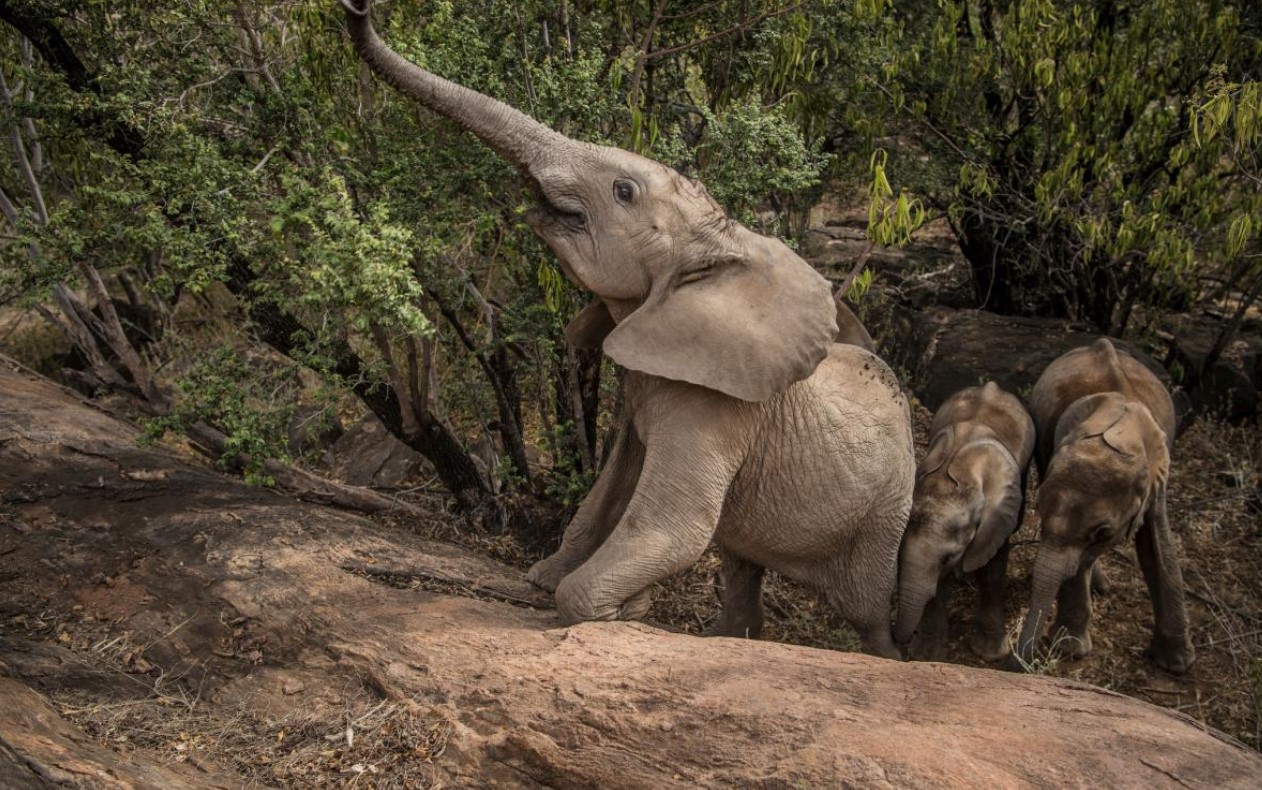
This is Shaba, almost two years old today, the acting matriarch of Reteti’s younger orphans, and she teaches them how to look for food in the wild.
Under the supervision of caregivers, she leads her small herd into the bush outside the protected area, pulls leaves, tastes bark, presses down small trees and takes mud baths (Photo: Ami Vitale, National Geographic)
What happens here in Reteti without much fuss is nothing less than the beginning of a transformation in the way Samburu relate to wild animals that they have long feared.
This oasis, where orphans grow up and learn to be wild so that they can one day return to their herds, is as much about people as it is about elephants.
Yes, they still exist those who protect elephants.
And I mean...Projects like this fill us with joy. Whenever possible, we want to finally see these animals in freedom and joy.
Our great lesson in animal welfare is collaboration and continuity. To be successful, we need to invest in long-term, trustworthy relationships. If an initiative is not strengthened by many groups, the work will not be successful.
Posted on December 26, 2019 by Serbian Animals Voice (SAV)
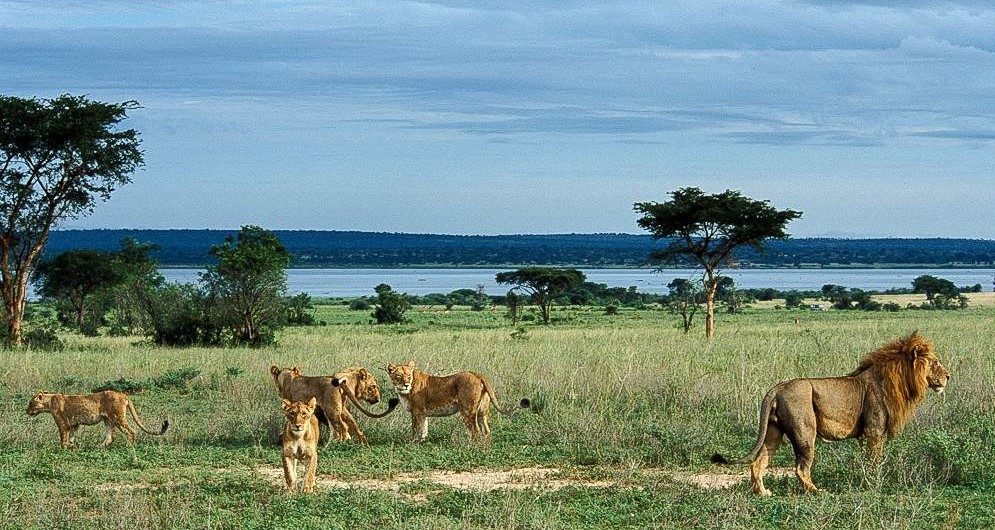
Uganda sits on vast oil resources, and three companies are ready to drill – in of all places, Murchison Falls National Park. A Chinese construction company is already expanding a road that cuts through the protected area.
Speak out against this disaster in the making!
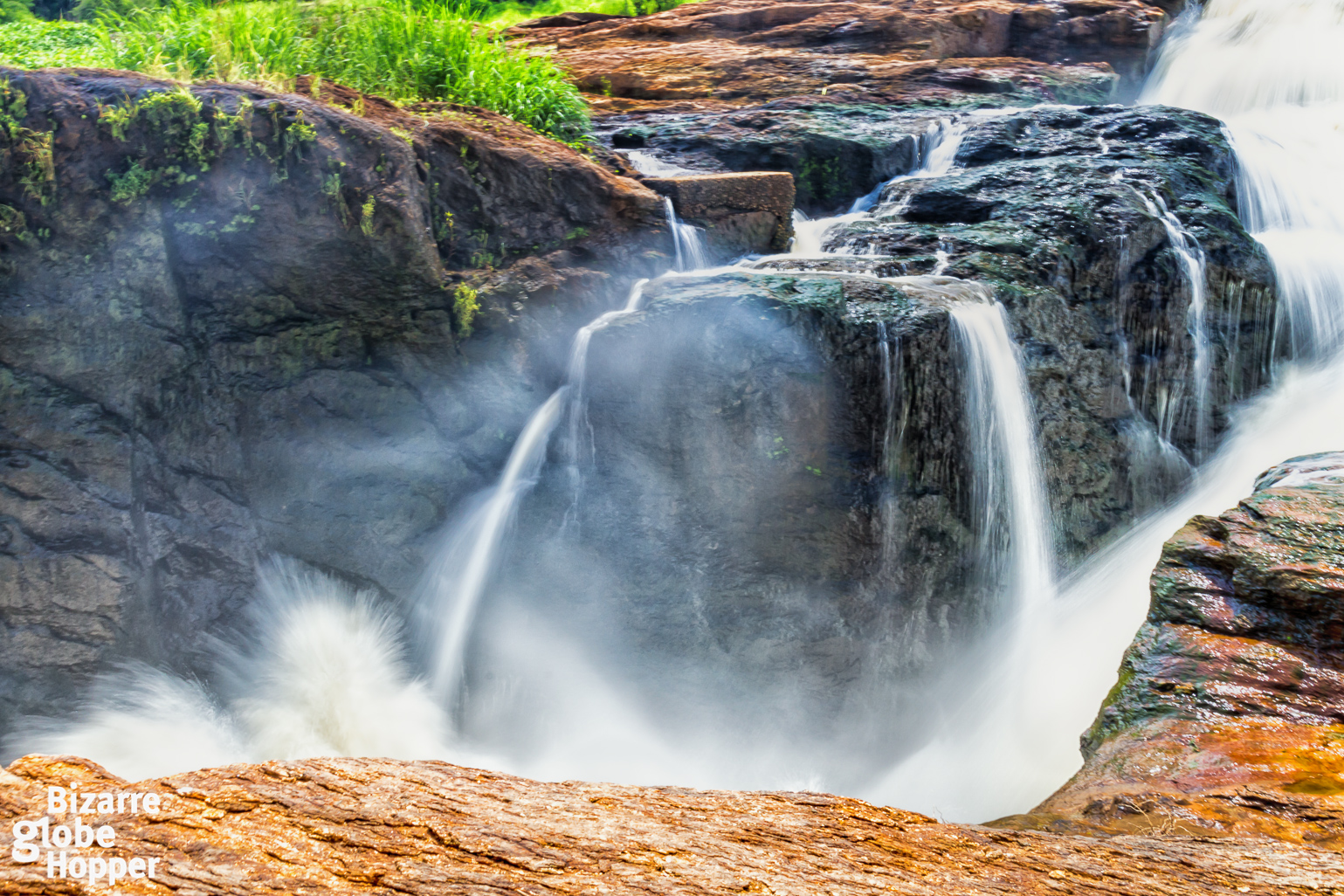
Murchison Falls National Park is one of Africa’s jewels. Every year, thousands of nature lovers come from all over the world to enjoy the spectacle of the Victoria Nile thundering down the cliffs of a narrow gorge.
This could soon be history if France’s TOTAL, UK-based Tullow Oil and China National Offshore Oil Corporation (CNOOC) were to drill 419 wells in the region and extract 200,000 barrels a day. T
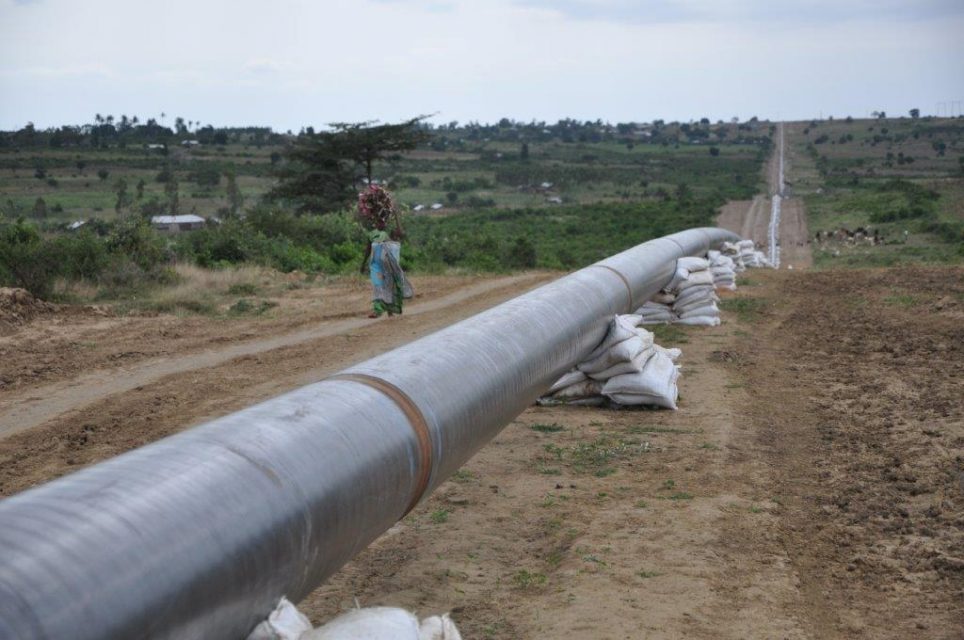
hey would also build a refinery, an industrial zone and a 1,445-kilometer pipeline-the longest in the world-to the harbor of Tanga in Tanzania.
Tullow confirmed the commercial viability of the oil blocks in 2006 but a final investment decision has been delayed multiple times.
In early 2019, China Communications Construction Company(CCCC) started expanding a dirt track through Murchison Falls National Park used mainly by safari tourists, widening and paving it for heavy vehicles. The road expansion will fragment the national park and cut off wildlife corridors.
Environmental activists are convinced that the only possible purpose for the road is to serve the oil industry.
CCCC is one of the biggest construction companies globally. Its projects are textbook examples of how China initiates, finances and realizes major undertakings that run roughshod over the local environment in numerous countries.
Resistance is growing in Uganda: environmentalists and civil society are calling on the government to protect the environment and the livelihoods of ordinary Ugandans from the fossil-fuel industry.
International pressure can be successful, as the cancelation of a hydroelectric dam project close to Murchison Falls has shown. Now our aim is clear: Save the Murchison Falls region – tell Uganda to keep the oil in the ground!
Murchison Falls National Park was established in 1952 and covers an area of 3,878 square kilometers.
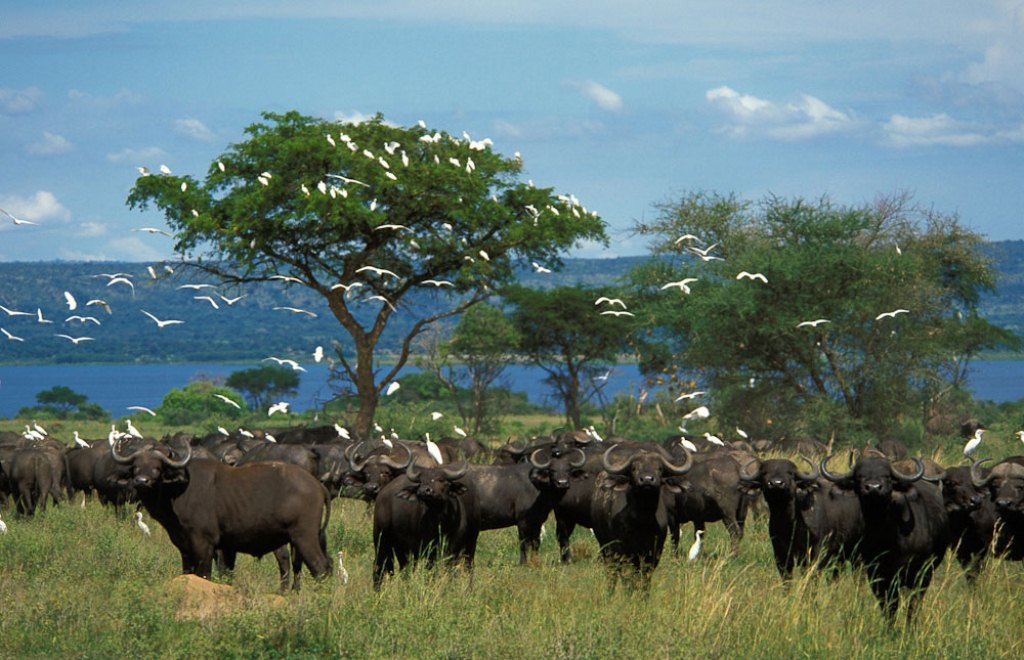
Scientists have counted 144 mammal, 51 reptile and 755 plant species in the region’s savanna ecosystems, which also includes the Budongo, Bugoma and Wambabya protected areas.
Oil in Murchison Falls National Park – the companies involved
The oil reserves are estimated at 6.5 billion barrels. Between 2011 and 2012, TOTAL and CNOOC each acquired a 33-percent share from the stakeholder, UK-based Tullow Oil.
A number of nature conservation and human rights organizations are already fighting against TOTAL, complaining of land grabbing, the loss of the livelihood of many local people and impoverishment.
Les Amis de la Terre France and others are filing a lawsuit against the oil company in Paris, referring to a law on corporate responsibility that also applies to foreign subsidiaries.
Tullow Oil, based in London, which bills itself as “Africa’s leading independent oil company”, is active in 15 countries in Africa, South America and off Jamaica. Its main business activity is the exploration of new oil and gas fields on land and offshore.
China National Offshore Oil Corporation (CNOOC) is the third largest oil company in the People’s Republic of China. It mainly operates in Africa, Iran and more recently in Europe and North America. The company is 70 percent state-owned.
China Communications Construction Company (CCCC) is one of the largest construction groups in the world. In Uganda, it built the 40-kilometer expressway between Entebbe Airport and the capital city, Kampala.
The Export Import Bank of China is involved in the destruction of the Murchison Falls National Park as a financier. The cost for the construction of three “national oil roads” has been estimated at around €485 million, of which 85 percent (€410 million) will be covered by a loan. In addition to CCCC, two other Chinese companies are involved.
According to environmentalists, the start of construction by CCCC is illegal. For example, it is unclear whether an environmental impact assessment has been carried out. During two public hearings on the Tilenga project, it became apparent that numerous regulations had been violated.
Environmentalists compare the construction of roads to opening a Pandora’s box of environmental evils and draw parallels to the spread of cancer cells. Satellite images show how, after a road is opened between population centers, numerous side roads soon branch off into the countryside in a herringbone pattern.
These are both official and unofficial roads, some of which are built by logging companies.
Roads open previously inaccessible areas to agriculture (farms, plantations, cattle feedlots), logging, mining, poaching and settlement. Many of the threats to rainforests are associated with the construction of roads. In the tropics, 95 percent of all deforestation takes place within five kilometers of the nearest road.
Uganda already confirmed the existence of huge commercially usable oil reserves around Lake Albert along the western border in 2006.
Tullow Oil, listed on the British stock exchange in France, and the China National Offshore Oil Corporation jointly control three oil blocks in Lake Albert, a huge stretch of water on the Ugandan border with the Democratic Republic of the Congo.
That would be enough to make Uganda an important player in the African oil industry. At least that is the hope of the Ugandan government wich says: “The discussions on ton the various issues are ongoing and we hope to reach an agreement very soon.”
But 13 years after the first discoveries were made, Total said it was stopping technical work on the oilfield and pipeline project following the collapse of a deal to buy additional equity from Tullow and the failure of talks with the Ugandan government to agree legal terms for the investment.
Now the pressure of the public has to be intensified so that this project, which has been postponed several times, does not arise.
Because from our experience in exploiting this continent by white collar criminals from abroad, we know, that the “man on the street” in Uganda – as happened in Nigeria and Angola – will be exploited and bled.
Posted on December 25, 2019 by Serbian Animals Voice (SAV)
(FOX 2) – A multi-millionaire in Michigan is offering to donate money to Wayne State University– but the money comes with a big ask. The donor is asking the university to end all testing on animals.
Meanwhile, philanthropist Thomas Mackey has already made a difference in the lives of thousands of animals through his donations to animal shelters across metro Detroit.
Tom made his money over 52 years as an investment banker. He loved his work but animals stole his heart at a young age. He’s already donated many millions to help animals and his latest proposal keeps with the theme.
In a handwritten letter to Wayne State University, Tom is offering to donate $1 million to a scholarship program for Detroit kids. The caveat – in exchange he’s asking Wayne State end its animal testing, including cardiovascular research still being done on dogs.
“If people knew that their tax money that they pay is going to the government and the government, both state and federal, is paying Wayne State to torture dogs there would be a lot more outcry,” he says.
The university tests mostly on mice, but since 1991 they’ve done heart failure research on dogs.
A group that works to end animal research, Physicians Committee for Responsible Medicine, says the dogs undergo multiple surgeries and have as many as nine devices implanted in their bodies with wires coming out of their skin. Then they’re run on treadmills to gauge how their bodies react.
The group reports dogs typically die after five months.
Wayne State said in a statement toFOX 2 they use “the highest level of care for animals used in research (!!!)” And animal research plays a vital role in virtually every major medical advancement in the last century.
“Anybody that has seen a dog in pain or in discomfort knows that they’re hurting,” Tom says.
As far as Tom’s offer, the university says “Wayne State does not accept gifts that stipulate changes to or that contradict, institutional policies or its mission.”
Tom says he will keep pressing on. But he’s already left a legacy, although he doesn’t like that word.
He’s donated money for a new, upgraded facility at the Grosse Pointe Animal Adoption Society in Harper Woods, aptly named Thomas A. Mackey Animal Adoption Center.
“There are no words to convey what he’s done for us, there’s just no words,” says Corinne Martin, the facility’s executive director.
And, you’ll start to see a trend here – Tom also donated funds to the Michigan Humane Society and has been the backbone behind a new state-of-the-art facility in Detroit, also aptly named the Mackey Center for Animal Care.
“I can probably make a shorter list of what he hasn’t had a hand in, than what he has,” says president and CEO of MHS, Matt Pepper.
“We didn’t have to force him but we really had pry to get him to let us put his name on the building. He doesn’t do this for recognition.”
A photo of Michigan Humane Society’s Mackey Center for Animal Care in Detroit, Mich.
“Tom’s philosophy is that he’s going to do everything he wants to while he’s on this earth and not after he’s gone,” Martin says.
“There is no limit to the number of the lives he’s saved; I couldn’t put a number on it. It’s countless,” Pepper says.
Tom knows he’s is in his twilight but while he’s here, it’s all about the animals.
“I like to think I made a difference, a little tiny difference,” he says.
Tom isn’t the only one that wants to end animal testing. There is currently a bill moving through Lansing right now that would stop animal testing at public universities that causes the animal any harm.
My comment: So … Wayne State University sees Thomas Mackey’s offer as an immoral offer!! “Wayne State does not accept gifts that stipulate changes to or that contradict, institutional policies or its mission.”
What the university calls a “mission” is no different than collecting 204 million dollars a year in grants to secure its own status and to safeguard the careers of its employees through publications on “research” work in renowned journals.
The $ 1 million offer offends the researchers’ “work ethic”, but $ 204 million annual budget to torture animals senselessly is officially approved for “research work”!!
This is the language of professional animal torturers.
We see in the offer from Thomas Mackey an excellent example of how effective money can be for animals if it is invested correctly.
We thank him very much for that.
Not every multi millionaire is a capitalist asshole!
Posted on December 24, 2019 by Serbian Animals Voice (SAV)
While the fir trees are shining all over the world, the world is on fire.
The earth is burning and that is not an exaggeration. The forests of this earth are burning worldwide.
Whether in Latin America, Africa, Australia, Asia or in Europe.
In Latin America,471,000 hectares of forest were burned within five days.
From January to August 2019, a total of 75,336 fires broke out in Brazil.
Indonesia continues to burn – According to the Indonesian Civil Protection Agency, more than 400,000 hectares were burned this year alone, just to grow more palm oil!
The forests are also burning in Africa – Uganda loses an average of 100,000 hectares of forest area per year.
Hundreds of thousands of fires were counted in Angola or in the Democratic Republic of the Congo – because palm oil is also cultivated here and raw materials are harvested.
And in Australia, Sydney disappears in the smoke and thousands of hectares of forest have been destroyed. An end is not visible – because while winter has started here, summer begins in Australia.
With these many global fires, many animals and people lost not only their lives, but also their homes.
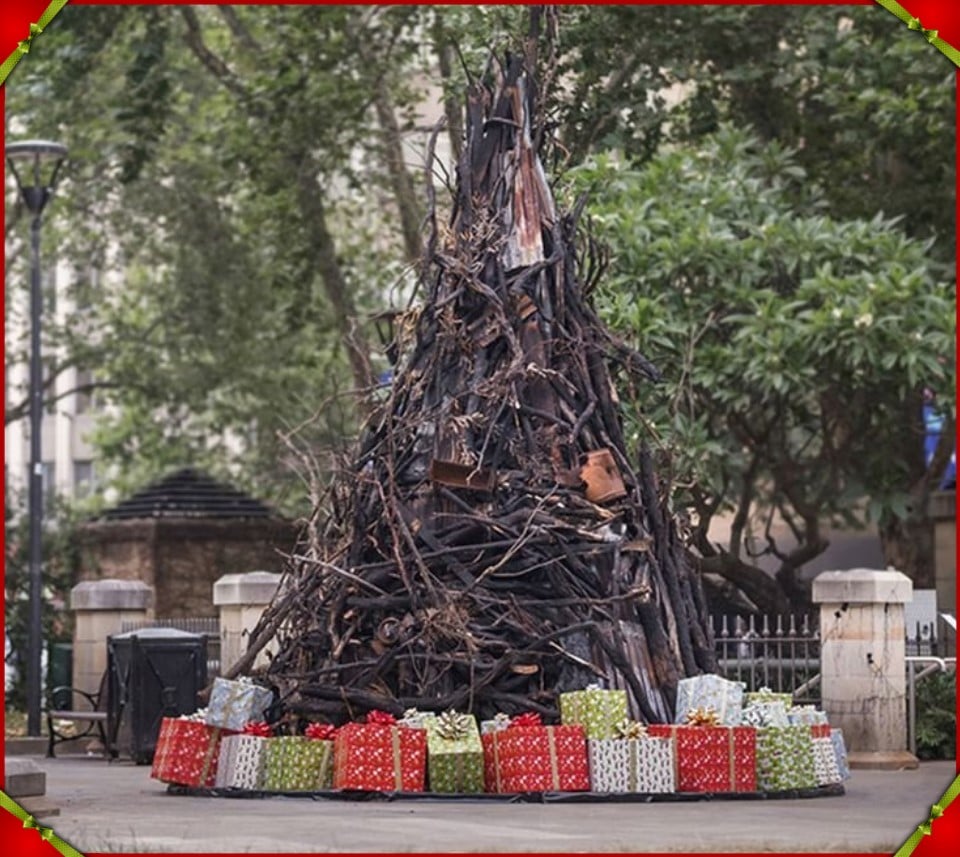
The Christmas tree became a symbol of the burning forest!
A moving art installation in the heart of Sydneysupports the victims of bushfires before a very challenging Christmas.
It was made from materials collected in the fire-destroyed New South Wales.
It consists of tree branches, a burned bike, a destroyed fire alarm and other debris left behind by the fatal fires.
The artist James Dive designed the artwork, which is surrounded by colorful gifts.
And I mean..The earth burns, animals burn and scream and are slaughtered millions of times, but on this holy night we thunder our chorals next to the crib and pray to God for peace and joy, as if we were not the ones responsible for the destruction of the earth and animals.
Oh! you silent, holy night and your hypocritical servants …
Posted on December 24, 2019 by Serbian Animals Voice (SAV)
Despite EU-wide official protection status, wolves have to fear for their lives in many countries. How could Germany be missing from the list?
To protect sheep and other farm animals, wolves will be easier to shoot in the future. This is provided for in a grand coalition bill that the federal government passed after a long dispute.
According to the plan by Environment MinisterSvenja Schulze, it should also be possible to launch it in the future if it is unclear which wolf attacked a flock of sheep, for example.
It should be possible to shoot wolves in the area until there are no more attacks – even if an entire pack is killed. However, the state authorities have to approve each shot individually. In addition, hunters should be regularly involved in advance.
The wolf enjoys a high level of protection through international and national regulations. The EU’s central nature conservation law is the Fauna-Flora-Habitats Directive, or FFHfor short.
The focus is on the species and habitats listed in various appendices.
For the wolf,this means not only a basic prohibition of killing, but also more extensive prohibitions of disruption.
In Germany, the requirements are implemented via the Federal Nature Conservation Act.
Wolves are strictly protected throughout Germany. In the event of violations, the public prosecutor’s office takes action. Depending on the offense, fines of up to five years’ imprisonment or high fines are possible – but they are almost never imposed.
“No understanding of wolf romance”
After the wolf was considered extinct in Germany, it has spread more strongly again in recent years. According to the Federal Agency for Nature Conservation, between 275 and 300 adult animals currently live in Germany.
The increased attacks by protected wolves on sheep and other livestock have long caused heated discussions between farmers and conservationists.
639 Wolf attacks, 2067 animals were torn nationwide last year (!!!), said christian democratic union(CDU) MP Hermann Färber. Most of them are sheep or goats.
In total, around 1.6 million sheep are kept in Germany.
“The protection of the wolf is also important to us. But it must have limits,” said Union faction vice president Gitta Connemann of the news agency dpa.
“In densely populated and economically used areas, conflict-free living with the wolf is not possible. For good reason nobody has understanding for wolf romance there”!
Cracks now threatened livelihoods, shepherds would have to give up (!!!)
My comment: The problem with German politicians is not only that they are outrageous agricultural lobbies, but that they want to sell us all for stupid.
Speaking of “problem wolf”: So if a wolf eats a certain number of sheep to survive, is it a “problem”?
Then how do we define people who, for sheer pleasure, first torture millions of animals in animal factories to brutally kill and eat them? And as I said, even optional!
Furthermore, the entire discussion is hypocritical and systematically initiated by the hunters. There is a competitive situation for hunters and wolves. Around 1,300 wolves currently live in Germany.
According to the German Hunting Association,840,000 people have a hunting license. Everyone wants to keep it and enjoy their roast game. Where’s the wolf’s livelihood?
Of course, then he has to fall back on the grazing animals.
Human being, as a rationally reflecting individual can assess the consequences of his actions (killing). The wolf can’t do that. So I don’t know why these animals should be killed because they kill animals.
But the reason is somewhere else: there are countless politicians with a hunting license or they are happy to be invited to hunt. Then it goes without saying that this shameful, underhanded and fundamentally illegal law is approved drawn beforehand.
Hunters and Peasants: Be honest at least once: you take care of your meat and if an animal competitor defends your economic interests, of course it must be eliminated.
And then the life of other creatures just has no value for you. Both that of the sheep and that of the wolf.