Posted on July 2, 2015 by Serbian Animals Voice (SAV)

Dear friends,
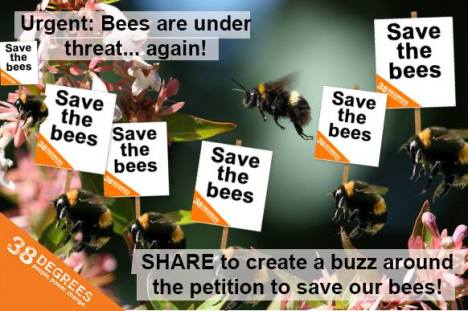
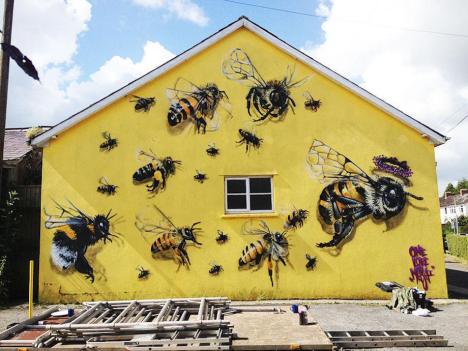
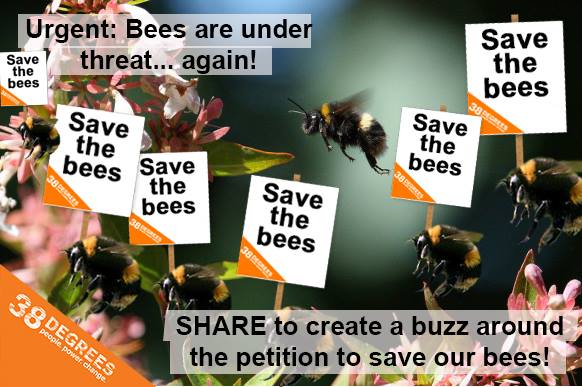
Our bees are in danger again.
Toxic chemical companies are trying to get their banned pesticides back on UK fields.
The UK government are currently considering an application to lift the ban on bee-killing chemicals for some crops planted this autumn. [1]
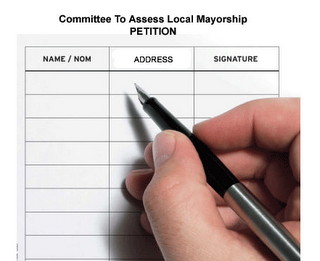
Please can you sign the petition right now demanding that we keep the ban on bee-killing pesticides?
The powerful pesticides which Europe banned last year are called neonicotinoids – and they pose a huge risk to bees. Last month an influential group of scientists concluded that these banned pesticides don’t just kill bees, they wreak “havoc” with other insects and plants in the countryside too. [2]
A huge petition will make it clear to the environment minister, Liz Truss, that she still needs to protect our bees, not the toxic profits of bee-killing chemical companies.

Thanks, I hope you can be involved.
PS: Bees pollinate apples, cucumbers, strawberries, tomatoes, cauliflowers, onions, cabbages, broccoli, carrots and many, many more of our fruit and veg.
Without bees, we wouldn’t last very long!

NOTES
Thanks – Mark – This is very important
– bees are little folk, but they are a vital cog in the machine !

We have always tried to help bees.
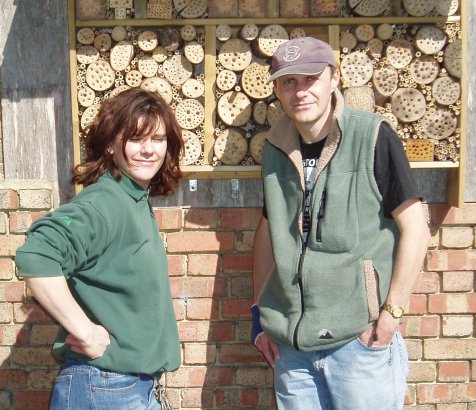
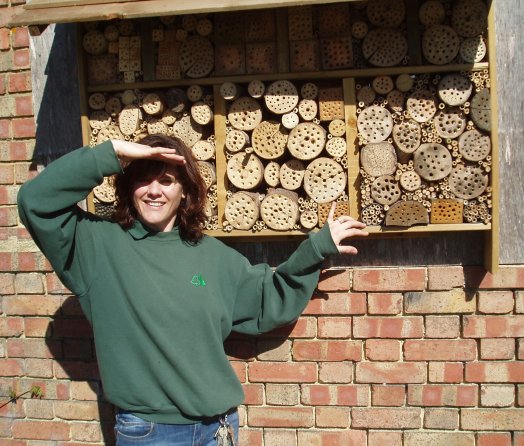
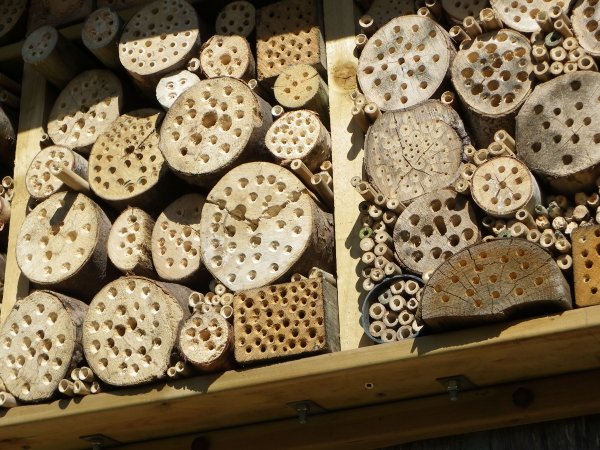
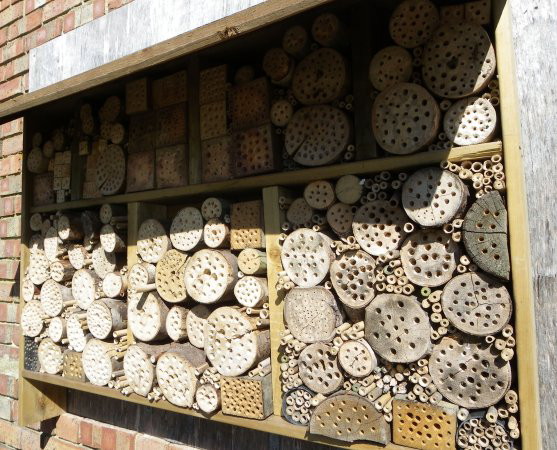
A few years ago we made a large ‘Bee Hotel’ (as we called it) to encourage bees to produce new offspring using our special facility. The hotel was made from old logs; every one drilled out many, many times to make individual tunnels or chambers into which a bee could enter and lay an egg. Different sized chamber holes were drilled for the many different bees we hoped would pay us a visit. The adult Bee when had entered the chamber and laid an egg then left some food inside the chamber for the youngster when it hatched; and the entrance was sealed up by the adult after egg lay with mud. When it was ready, the youngster broke its way out of the chamber by smashing away at the mud – then it was ready to fly off and pollinate all the plants and trees.
As you can see from the pictures, ours was quite large; but it became very busy and “buzzing with activity” (I know, terrible pun) within a few days, and it has been used continually over the last few years by thousands of bees since its conception. It took lots of time to cut the logs to a rough length and to spend hours (many hours !) drilling out all the individual (egg) chambers into each log; but when we finished and saw the results; which was thousands of new visitors to our ‘Hotel’; we both agreed that it was a job well worth doing.
To give an idea of the size, you can see Denise and myself standing by the hotel on the day we finally set it all up after many weeks of preparation; ready for the grand opening ! – and a sunny day in England – Wow Bonus !!!.
Some of the other views will give you an idea of what the project involved.
Why not try to build one yourself and encourage more bees into your patch.
Regards Mark and Denise.
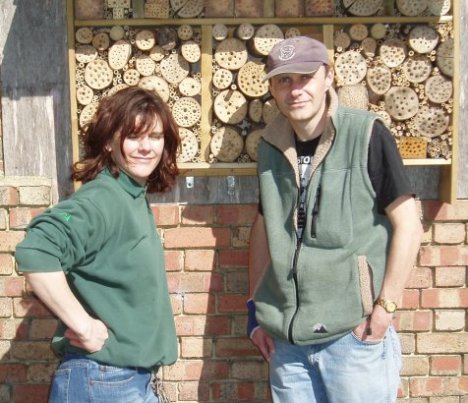
I am the bad looking one on the right getting over a busted right hand.
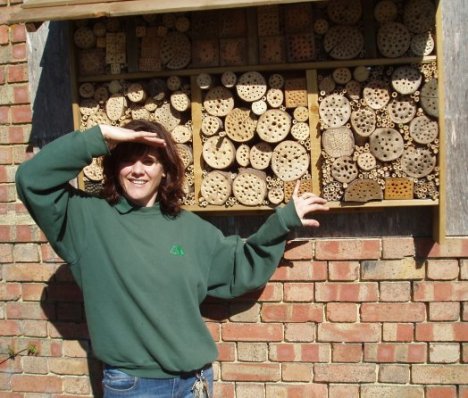
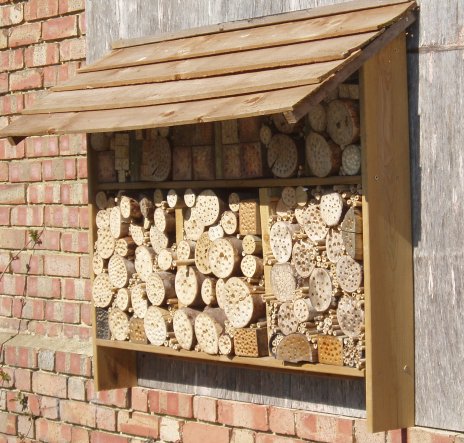
All the logs in place ready for the opening
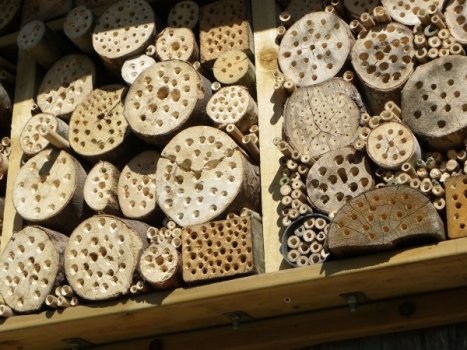
Above – different sized chambers for the many different sized bees.
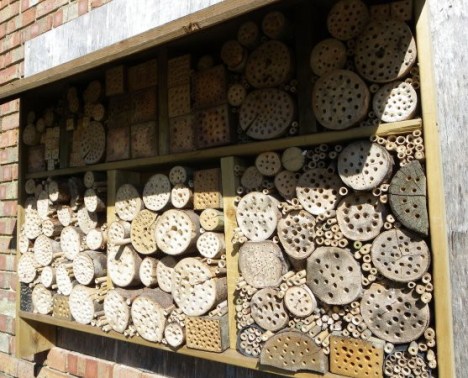
Happy Bees – That’s What We Want !
Please sign the petition (link given above)
and help protect the little guys – Thanks.
Filed under: GENERAL NEWS - International / National / Regional, GLOBAL PETITIONS - Anything Animal, Anywhere !, The "Serbian Animals Voice (SAV) ALLIANCE | Leave a comment »
Posted on July 1, 2015 by Serbian Animals Voice (SAV)

We have been involved with Slavica in Serbia regarding the future production of fur and fur farming in Serbia. We have concerns about fur farming as Serbia is currently seeking EU membership (accession) and effectively it could pick up the trade which is greatly reducing in other parts of the EU. There is NO EU wide restrictions on fur bearing animals in the EU; it is left to individual member states to act as they see appropriate. For example, here n the UK; and EU member state, we have banned fur farming. Some other EU nations also have, along with others that have not. The issue of seal skins into the EU is another issue; and the EU has legislation regarding seal skin import bans.
Our good colleagues at ‘Animal Friends Croatia’, in Zagreb, Croatia, (already an EU member nation) have been very active in supplying us with the situation within Croatia. We (at SAV) have learnt a great deal from the research undertaken with their help and the information kindly provided by others.
Here in the main section below are a few important points which need to be considered very carefully in relation to the fur farming industry – much of which the fur producers wish to keep very quiet about; but us being us, we are gonna shout about it !. We have given references as necessary to support our evidence.
We have had some great input from our friends in Croatia. We understood that Croatia was currently going through a phase out of fur production there; commencing in 2007 with a 10 year phase out period; eventually leading to a ban which would be in line with some other EU nations (such as us here in UK). But things appear to be less simple than just a straight move towards a ban in Croatia; is this not always the case ?.
It would appear that both the fur industry and politicians are trying to impose changes which would have a major influence on Croatian fur farming; and which would be very much in opposition to the Croatian public who very much support a ban on fur and fur farming. You can read more from ‘Animal Friends Croatia’ at the end of this post; but the information they are currently providing to us is as follows:
Hi all,
unfortunately, due to fur lobbying of fur farmers both fur farming in Croatia and Serbia are in great danger (perhaps Bosnia as well, we’re awaiting info).
In Croatia we managed to get the fur farming ban in 2007 with phasing out period until 2017. However, our Minister of Agriculture plans to make an exception for chinchillas who are, paradoxically, only animals kept for fur in Croatia.
We are lobbying towards politicians to get support and keep the ban as it is. It’s a rather complex situation, but in short: we’ve gone public last week (now a few weeks ago – SAV) with info on real possibility that our fur farming ban gets dropped.
We at SAV would suggest that this is read as it is very informative –
We have written argumentation against fur farming which is now online: http://www.prijatelji-zivotinja.hr/index.en.php?id=1765
At this point, we don’t have our press release translated to English, only the argumentation, but we have it in Croatian -: http://www.prijatelji-zivotinja.hr/index.hr.php?id=2732
We are in contact with some Serbian organisations who informed us on the situation there and will continue correspondence. The situation is very similar. Although we (Croatia) are part of EU, since the EU itself didn’t issue the ban of fur farming, our Ministry of Agriculture is using that as an excuse.
We’re struggling with time and money but doing all we can to keep the ban. To make things worse, our Ministry of Agriculture is trying to legalize hunting with bows an arrows (which is currently not permitted) so we have been working so far on that issue as well: http://www.prijatelji-zivotinja.hr/index.en.php?id=1755
We wanted to give you all info on situation on Croatia.
Best regards,
AFC.
————————–
Some general information relating to fur production that we at SAV have found whilst doing our research:
Environmentally harmful products including chromium and formaldehyde are used in the processing of real fur garments to keep them from rotting. Many fur farmers and processors have been fined for releasing toxic waste into the environment. Far from being “natural, renewal resources,” real fur products consume more of our precious and irreplaceable energy resources than do those made from synthetic materials.
TOXIC FUR: The Impacts of Fur Production on the Environment and the Risks to Human Health
A 2009 study by the Humane Society of the United States addresses the fur industry’s claims that fur is green and demonstrates how the use of animal fur by the fashion industry is far from environmentally friendly. Rather, the production of fur for fashion imposes significant adverse impacts on both the environment and human health.
How serious is the pollution generated by the fur industry?
The 2003 European Commission Integrated Pollution Prevention and Control Bureau “Reference Document on Best Available Techniques for the Tanning of Hides and Skins ”recognizes the tanning industry as “a potentially pollution-intensive industry.”
The Industrial Pollution Projection System rates the fur dressing and dyeing industry one of the five worst industries for toxic metal pollution to the land.
And in 1991, the U.S. Environmental Protection Agency (EPA) fined six fur processing plants $2.2 million for the pollution they caused, citing them for hazardous waste violations and stating that “the solvents used in these operations may cause respiratory problems, and are listed as possible carcinogens.”
The Chinese government is also notably concerned about the pollution caused by fur dyeing factories. In December 2007, a fur trade publication, The Trapper & Predator Caller, reported that China was considering imposing a punitive tax on the fur dressing and tanning industries as part of an attempt to penalize “industries causing excessive pollution.”
Energy consumption.
Energy is consumed at every stage of fur production. This is in addition to the energy costs of transporting the animal pelts and finished fur garments around the globe, throughout all the stages of fur production—beginning with transporting feed to fur farms or trappers setting and checking their trap lines, then shipping the animal pelts to international auctions and on to dressers, dyers, manufacturers, wholesalers, retailers and finally to the consumer.
In describing the energy input required to run intensive animal farming operations, The Pew Charitable Trusts and Johns Hopkins Bloomberg School of Public Health note in a2008 report that such systems are “almost entirely dependent on fossil fuels.”
A tremendous amount of gasoline is used by trappers to check their miles of trap lines on a regular basis, to remove dead and dying animals, and to reset the traps. In many of the highest-volume trapping states such as Michigan,
Ohio and Wisconsin, trappers are required to check their traps every day for the three to four month duration of the trapping season. This is done with gasoline-burning vehicles including trucks, snowmobiles, four-wheelers and even airplanes.
And when trapping in inaccessible areas of Alaska, “many gallons of expensive gasoline must be freighted in” simply to operate snowmobiles.
Because they use so much gasoline, a steep rise in price per gallon may lead many trappers to reduce or eliminate how many traps they set.
To account for the amount of energy required to operate tanneries, the European Commission maintains “it is necessary to record the energy consumption for electricity, heat (steam and heating) and compressed air, particularly for the units with highest consumption, such as waste water treatment and drying procedures.”
In Mink Production
A “manual for fur breeders,” the Danish Fur Breeders Association fur discuss the energy consumed during the pelting and drying process: “A pelting plant is not complete without a storeroom in which the temperature can be kept between 10 and 12oC…and the humidity at about 70-80%.” The suggested drying room similarly requires a constant temperature and an energy-powered system for discharging a controlled amount of water.
Chemical processing of fur
As soon as the pelt is removed from the animal it begins to decay. Chemicals such as formaldehyde are needed to prevent the animal skins from rotting. One of the first signs is hair loss as individual hairs begin to fall off the skin.
It’s pretty obvious really, since fur is part of a dead animal it needs protection from attack by natural decay agents including insects, bacteria and fungus.
In fact, a cocktail of harmful and toxic substances are used to process and protect raw fur skins. These include surfactants and fats, solvents, acids, tannins, biocides, fungicides, dyes and bleaches.
Workers in the industry are at risk from acute and chronic effects ranging from skin complaints and eye irritation to cancer and even death. Risks to the environment include toxicity to aquatic organisms, as well as air pollution.
Much of the fur processing industry has moved to developing countries such as China due to their lower environmental standards and cheap labour. However it still takes place in a number of European countries including Italy, Greece, Germany.
A 2003 European Commission Integrated Pollution Prevention and Control study on Best Available Techniques for the Tanning of Hides and Skins recognizes the tanning industry as “a potentially pollution-intensive industry.” The Industrial Pollution Projection System rates the fur dressing & dyeing industry one of the five worst industries for toxic metal pollution to the land.
In 1991, the U.S. Environmental Protection Agency (EPA) fined six fur processing plants $2.2 million for the pollution they caused, citing them for hazardous waste violations and stating that “the solvents used in these operations may cause respiratory problems, and are listed as possible carcinogens.”
But now, even the Chinese government is becoming concerned about the pollution caused by fur dyeing factories. In December 2007, one of the fur trade’s publications, The Trapper & Predator Caller, reported that China was considering imposing a punitive tax on the fur dressing and tanning industries as part of an attempt to penalize “industries causing excessive pollution.”
After animals have been killed on fur factory farms or on trap lines, their skins are pulled off the animals’ bodies. Now referred to as a “pelt,” the animal’s skin with the hair still attached is sent to be tanned (or “dressed”) and perhaps dyed, bleached, or otherwise treated.
Two of the main methods for dressing fur skins involve chemicals that are listed as carcinogens and are toxic to humans.
Formaldehyde is used during dressing and dyeing, as already mentioned, to protect fur follicles. Formaldehyde is on every major list of toxic substances, including the EPA (US Environmental Protection Agency) Toxics Reporting Industry (TRI) list of reportable toxic chemicals, the American Apparel and Footwear Association Restricted Substances List (AAFA-RSL) and the California Proposition 65 Super List of chemicals known to cause cancer. According to the International Agency for Research on Cancer (IARC), “this chemical is carcinogenic.” This expert working group of 26 scientists from 10 countries determined in 2004 that “there is now sufficient evidence that formaldehyde causes nasopharyngeal cancer in humans” and strong evidence that formaldehyde causes leukemia.
Chromium is used in the “chrome tanning” process – a common method for dressing fur skins. It is widely considered to be toxic, and even carcinogenic in some forms. In 2003, children’s toys and other retail items made with dog and cat fur and sold in Australia and Europe were found to contain toxic levels of chromium. Chromium is on the EPA TRI List of reportable toxic chemicals and the California Proposition 65 list of chemicals known to cause cancer or reproductive effects.
Other chemicals that may be used or emitted in the fur dressing and dyeing processes and that appear on one or more US government lists of toxic chemicals include aluminium, ammonia, chlorine, chlorobenzene, copper, ethylene glycol, lead, methanol, naphthalene, sulfuric acid, toluene and zinc.
Of these typical tannery pollutants, the National Toxicology Program (NTP) recognizes toluene and lead as chemicals that are “reasonably anticipated to be a human carcinogen.” This is echoed by the IARC which classifies lead as “probably carcinogenic to humans” and toluene as “possibly carcinogenic to humans.”
Naphthalene-which may be used during the dyeing and finishing stages, as a component of the oxidation dyes- is also listed as an OSHA carcinogen.
Ethylene glycol, lead, toluene and zinc are among the chemicals used known to be developmentally and reproductively toxic to men and women. The Encyclopaedia of Occupational Health and Safety (4th ed.) states that “various chemicals used in the fur industry are potential skin irritants.” Furthermore, a 1998 study of workers in the American Journal of Industrial Medicine found that women employed as leather and fur processors may be associated with an increased risk of breast cancer.
Furthermore, the European Commission considers air pollution to be one of the chief environmental concerns of the tanning process, whereby toxic and odorous substances are typically emitted during normal tannery operations.
The chemicals listed in the section above are just a sample of all those used in fur dressing and dyeing, and all furs are dressed in order to be used for fashion. Dressing is important as it prevents fur from biodegrading. In the pre-dressing preservation process, “common salt is used to remove moisture from the skin, inhibiting putrefaction.” This is the explicit purpose of subjecting fur garments to a dressing process before they can be sold-to stop the natural process of biodegrading.
Filed under: CAMPAIGNS - Global Animal Welfare Issues, CROATIA (Capital - Zagreb), GENERAL NEWS - International / National / Regional, SERBIA (Central Serbia: Capital - Belgrade) and (Serbia, The "Serbian Animals Voice (SAV) ALLIANCE | Leave a comment »
Posted on June 28, 2015 by Serbian Animals Voice (SAV)
Although I do not really use Twitter anywhere as much as I should; I had an e mail come in today informing me that a lady named Twyla Francois was now following me on Twitter.
So by pure chance, I decided to look a bit deeper; and was very pleasantly surprised at what I came upon.
It turns out that Twyla has dedicated her life’s work to being an animal advocate in many different ways; Twyla is also a great artist, which she uses to raise awareness on the plight of today’s farmed animals in a more gentle, but hopefully equally compelling, way.
You can view her excellent work by visiting this page of her site; and if you scroll over any of the images you will find write ups by Twyla on the inspiration for the artwork or some general words on the subject matter.
You can visit and have a look at much of Twyla’s work via the following link – http://www.twylafrancois.com/
I was very pleasantly surprised to have firstly had a notification that Twyla was following me on Twitter and then to see her art website and all the past and current work she is doing to help and save animals.
As everything Twyla shows in her art is based on a great many issues of animals and the cruelty inflicted on them; I very much would suggest that you visit her site when you have the chance.
Regards Mark.
Filed under: GENERAL NEWS - International / National / Regional, SUPPORTERS, The "Serbian Animals Voice (SAV) ALLIANCE | Leave a comment »
Posted on June 21, 2015 by Serbian Animals Voice (SAV)

GAR Greek Animal Rescue,=
DUSTY WAS RESCUED FROM A RUBBISH TIP IN GREECE BY DIANE, A TRUSTEE OF GREEK ANIMAL RESCUE (GAR)
THIS POOR DOG NEEDS OUR HELP SO PLEASE MAKE IT POSSIBLE FOR HER TO COME TO THE UK (SEE THE FILM)
Watch the very moving video here on Youtube –
PLEASE CIRCULATE WIDELY AND PUT ON FACEBOOK, TWITTER ETC. AND SHARE – THANK YOU
If you want to give a donation to help pay for Dusty to move to a forever home in the UK, then please click on the following:
Daniel Turner was not asked to set up a fundraising page – what a star he his – one of GAR’s youngest fundraisers must be about 13 now and has been doing sponsored silence and walks for years
Dusty is currently with GARs best foster carer in Athens and is doing really well!
Message from GAR:
Following the video that Gar uploaded to Facebook regarding a recent trip where a lovely dog named dusty was saved!!! I think we should all club together and help pay towards her flight over to the uk when she is fit and ready! So please if you can donate and help dusty.
P.S. When you make a donation, don’t forget to check the Gift Aid box if you’re a UK taxpayer as then your charity can claim an extra 25% from the government!
Filed under: Animals Requiring Adoption or Homes - Worldwide, CAMPAIGNS - Global Animal Welfare Issues, GENERAL NEWS - International / National / Regional, SHELTER - Information, The "Serbian Animals Voice (SAV) ALLIANCE, VIDEOS | Leave a comment »
Posted on June 20, 2015 by Serbian Animals Voice (SAV)



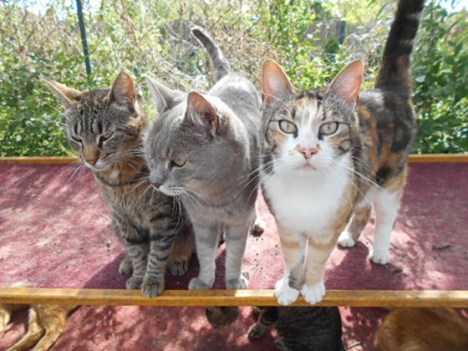
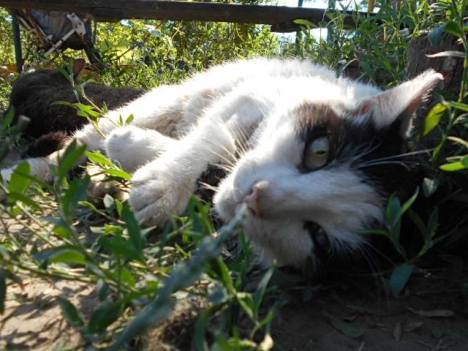
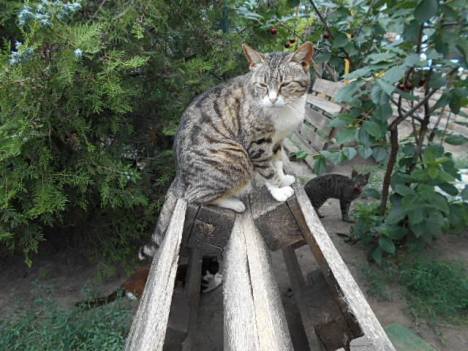
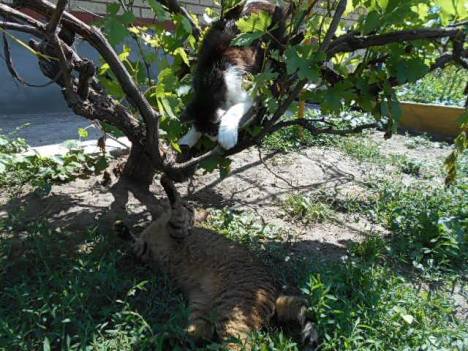
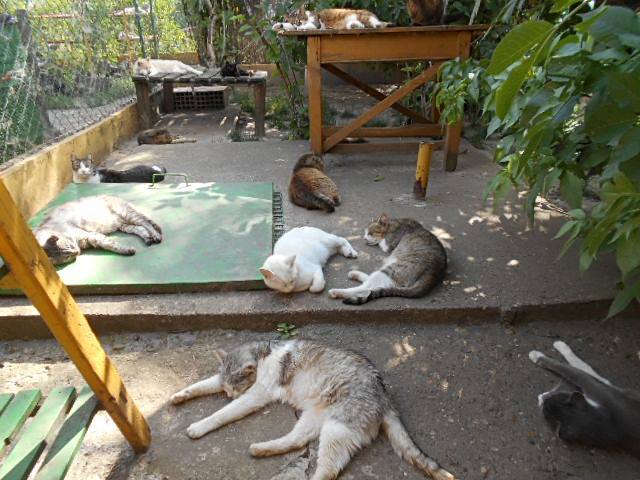
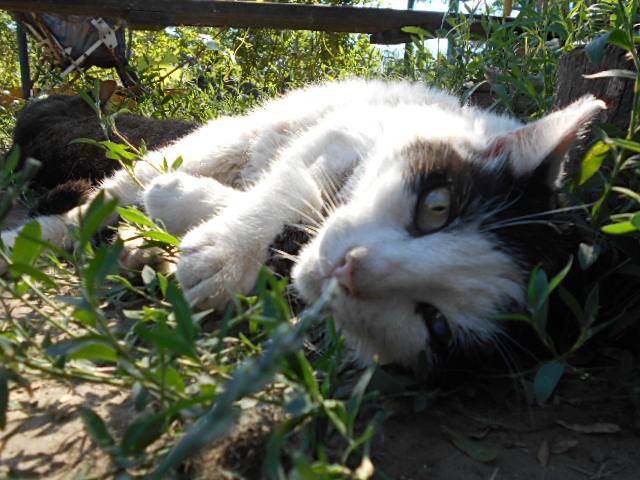
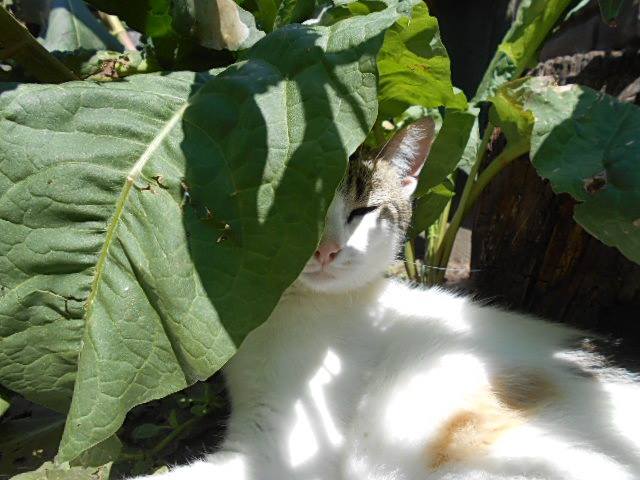
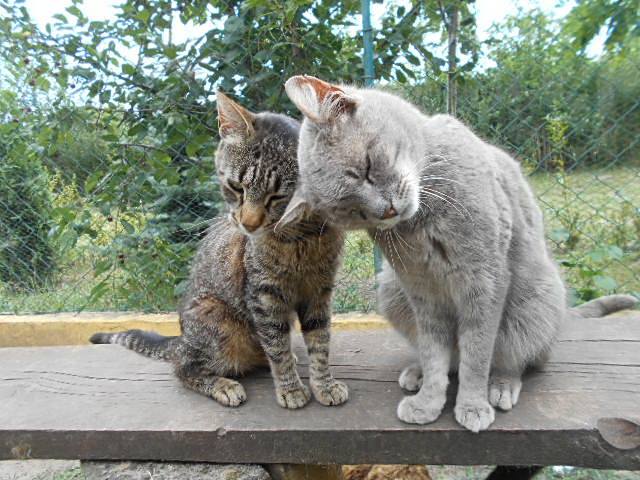
With the summer heat in full swing, life at the shelter seems quite uneventful as most of the kitties are spending their days passed out all over the place, rightfully feeling it’s too hot to even move around. However, it’s not only that their needs remain the same, but now is also the time to start and finish all of the minor repairs at the shelter.
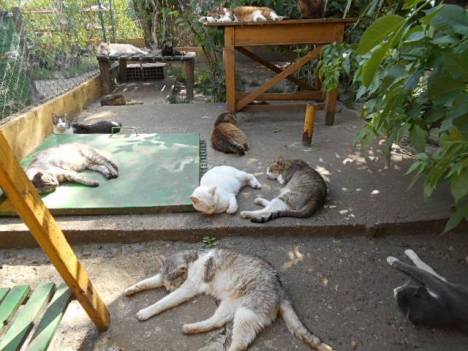
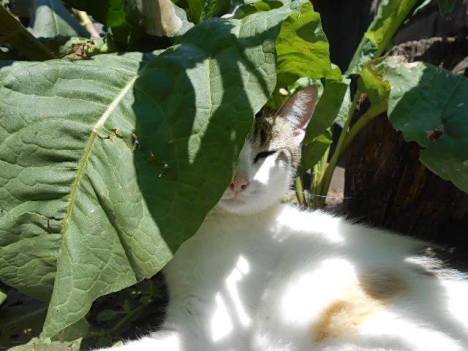
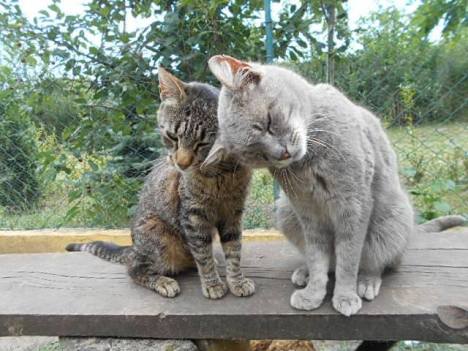
Almost all of the platforms, ladders and wooden wire spools the cats are having so much fun with while playing in the yard need to be replaced now, after being exposed to all kinds of weather over the last few years.
Autumn rains and the winter cold have taken their toll and no matter how well these wooden items were protected by paint or stain, they can’t last forever. And our kitties just love them all big time!

The old outdoor fence which became wobbly three years ago is miraculously still holding up, but the posts keep crumbling and deteriorating with every passing day and it’s been ages since we could close the gates properly. It would be fabulous if this summer we could manage to raise the funds to rebuild the brick-made pillars and the small wall between them, clean and polish the old iron fence above and replace the sheet metal part of the gates. It’s got to be done this summer before the rotten posts completely fall apart and the whole fence goes down, that is…
And last but not the least, not by a long shot – the kitties must eat every day and now the time is rapidly coming for the mandatory yearly vaccinations against rabies.
The problem is that donations regularly slow down as summer approaches and while we totally understand everyone’s busy planning their vacations, our situation is always unenviable at this time of year. The same thing has been happening forever; when the weather is nice, we’re barely keeping afloat, and when we have enough funds to do something, it’s impossible to work outside due to the weather conditions.
We should’ve gotten used to it by now, I guess…
Anyways, if you have a little extra you could spare to help us out please do so!
Even the smallest donation means a lot, as they all add up and get us closer to our goal. A three-digit number of lazy, relaxed kitties and a couple of their tired humans will be immeasurably grateful for your vital help!
Filed under: Animals Requiring Adoption or Homes - Worldwide, CAMPAIGNS - Global Animal Welfare Issues, GENERAL NEWS - International / National / Regional, SERBIA (Central Serbia: Capital - Belgrade) and (Serbia, SHELTER - Information, The "Serbian Animals Voice (SAV) ALLIANCE | Leave a comment »
Posted on June 17, 2015 by Serbian Animals Voice (SAV)

SAV Comment
We are giving donations to a lot of appeals all the time from our own pockets – we ask for no money on this site; instead that people donate directly to the groups and by pass ourselves. Sadly many people do not bother to give anything, although a lot of very small donations add up to a large amount that often meets the appeals need.
We are a volunteer run organisation – self funding even for this sites upkeep; we do not have loads of cash stored away to help every appeal that goes out.
Sadly, when the required funds are not met; the worst happens. The message in red below is from Lina in her own words. This is the sad reality of some animal ‘welfare’. We try to put appeals out well in advance, as this appeal was no exception. There was very little in the way of support or donations, so now the dogs will be turned back onto the streets probably to be rounded up by the Shinters.
For them there is no hope after all… They are forgotten, rejected … Nobody want to adopt them , nobody want to help them to stay on safe .. After all , they will go to street , right to death…
To donate –
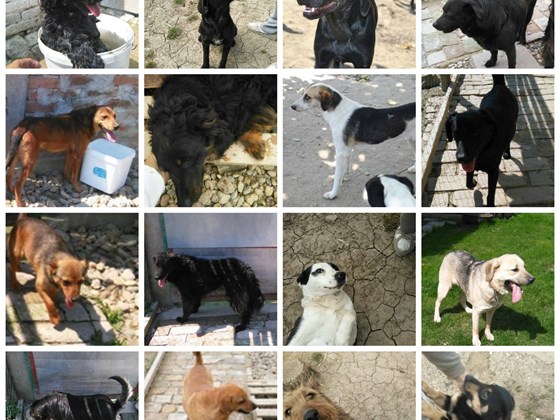
Lina’s Animal Rescue is organisation for animal welfare from Serbia . . We have 23 dogs in small private unfinished shelter, 20 dogs in 2 boarding kennels and 20 kitties in one rescuers home. Funds are desperately needed to pay the boarding kennel fees. We have debt for April 510€ and for May 960€ . We are desperate , those dogs can not go again on the street. The life of street dogs everywhere is difficult, but here in Serbia the dog catchers kill them rather than rescue them.Those dogs urgent need help . Each dog’s boarding fees are 60€ per month ( 40 boarding kennel + 20 food ) .With 20 dogs currently in boarding facilities, the debt is too great to even think about renovating our shelter. They depend only on help from good people. Please share our story and donate , this is URGENT APEL ! Thank you !
Filed under: Animals Requiring Adoption or Homes - Worldwide, GENERAL NEWS - International / National / Regional, SERBIA (Central Serbia: Capital - Belgrade) and (Serbia, SHELTER - Information, The "Serbian Animals Voice (SAV) ALLIANCE | Leave a comment »
Posted on June 12, 2015 by Serbian Animals Voice (SAV)

















 Serbian Animals Voice (SAV)