For non UK visitors – we have a General Election here on 8/6/17 to elect a new government.In the UK we have 2 main political parties – Conservative and Labour.The Conservatives are basically the same as Republicans in the US – all about money, their interests and very little else.Labour is a ‘normal mans’ party.The Conservatives are currently the government under the PM Mrs. May.
Labour was the party that introduced the hunting ban around 11 years ago.May and Tories now want to try and bring it back – hence the demo in London on 29 and the several references to ‘May’ – this being T. May, the Prime Minister.
David Cameron (remember him ?) was the Conservative PM before Mrs May.Cameron was a hunter; and the Tories are always really viewed as the hunting party of British politics.Most now ask; with the hunt ban in place for 11 years; why do the Conservatives want to try and bring it back ?
Because Conservatives are looked on as the upper class; the land owners with a blood lust for hunting innocent wild animals.Labour have pledged to fight to keep the ban, and improve legislation even more if necessary.Labour is led by Mr. Corbyn.
So now we are into the last 2 weeks before the election.A few months ago the Conservatives were way ahead, but now Labour are steadily catching up.The Conservatives (Tories) have done a U turn on Ivory for example – https://serbiananimalsvoice.com/2017/05/26/uk-conservatives-to-u-turn-on-ivory-ban-please-take-action-before-the-8th-june-election/— and are not at all animal welfare friendly.Labour are the very positive.Hunting of British wild animals is just one of many issues, but an issue that the British public feel very strongly about.It will be interesting to watch how the parties progress over the next few weeks and who comes out eventual winner.Many pundits say it will be the Conservatives, but they are very un popular because of a lot of their views on certain things.
We shall see and will report the result on this site.
London anti hunt demo on 29/5 newspaper links – note that articles may be biased depending on which political party the newspaper supports !
Posted on May 29, 2017 by Serbian Animals Voice (SAV)
CHARLESTON
What in the world is going on in Charleston?! On Thursday morning, May 25th, once again a horse spooked and bolted. The driver was unable to control him and fell out of the carriage, suffering severe injuries. He was hospitalized. Although the horse crashed into a car, he is said to be doing fine. This is media speak and we do not believe it — but these are the reports. Charleston media is obviously trying to protect this industry from well deserved criticism.
This is one of the first articles about the accident. Click Here.
A local resident who witnessed the accident told us: “The horse [Luke] was running at full gallop, passengers screaming like they were on a roller coaster. All the horse was trying to do was ‘run home.’ He was terrified, so he ran to where he knows. Hitting all the parked cars and then finally being stopped by running head on into a parked car.” It is bad enough that Charleston has punishingly hot heat and humidity, but it seems their drivers do not know how to handle huge draft horses. We say once again that horses do not belong on the crowded streets of any city — especially Charleston. Because of their sensitive nature, they can spook at the slightest provocation and bolt into traffic, causing injury or death to themselves, their passengers and driver or unsuspecting passersby. These large, powerful animals can weigh between 1,500 to 2,000 pounds and can become unwitting weapons when they try to run away from their source of fear.
Why is the City of Charleston continuing to allow this dangerous and frivolous business to continue? How will this touristy city handle it when a tourist gets killed or very seriously injured? Will they continue to make excuses or will they finally put an end to this business as they did recently in Mumbai, India and other cities around the world.
NOTE: for those who missed our recent issue about Charleston carriage horses, Click Here.
MELBOURNE, AUSTRALIA
The City of Melbourne is trying to reign in its carriages. This is a weak attempt but at least it is something. NYC has done nothing to deal with crowded streets, u-turns and overloaded carriages.
A bizarre accident in India resulted in the death of two horses who were pulling an empty carriage. Warning: graphic video may be disturbing. Click Here.
WHY WE SHARE THIS NEWS?
Horse-drawn carriages that engage in hack line trade in busy cities are inhumane, unsafe, antiquated and frivolous. There have been activist campaigns in many cities all over the world to ban horse-drawn carriages. Only a few have been successful. It is a very difficult task because it is institutionalized cruelty and in many cases, supported by the local media and politicians who have questionable honesty and ethics. But is is important to share these accidents with the world. This is not about horses doing noble work. When used up and no longer wanted, the horses often go to auction and slaughter.
Henry Beston, a writer and naturalist, eloquently said this about animals in the Outermost House, published in 1928,
“For the animal shall not be measured by man. In a world older and more complete than ours they move finished and complete, gifted with extensions of the senses we have lost or never attained, living by voices we shall never hear. They are not brethren, they are not underlings; they are other nations, caught with ourselves in the net of life and time, fellow prisoners of the splendour and travail of the earth.”
The Coalition to Ban Horse-Drawn Carriages P.O. Box 20247 | Park West Station | New York, NY 10025
Posted on May 28, 2017 by Serbian Animals Voice (SAV)
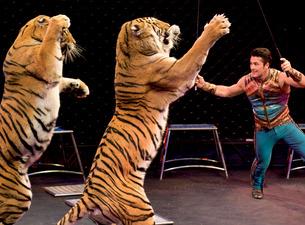
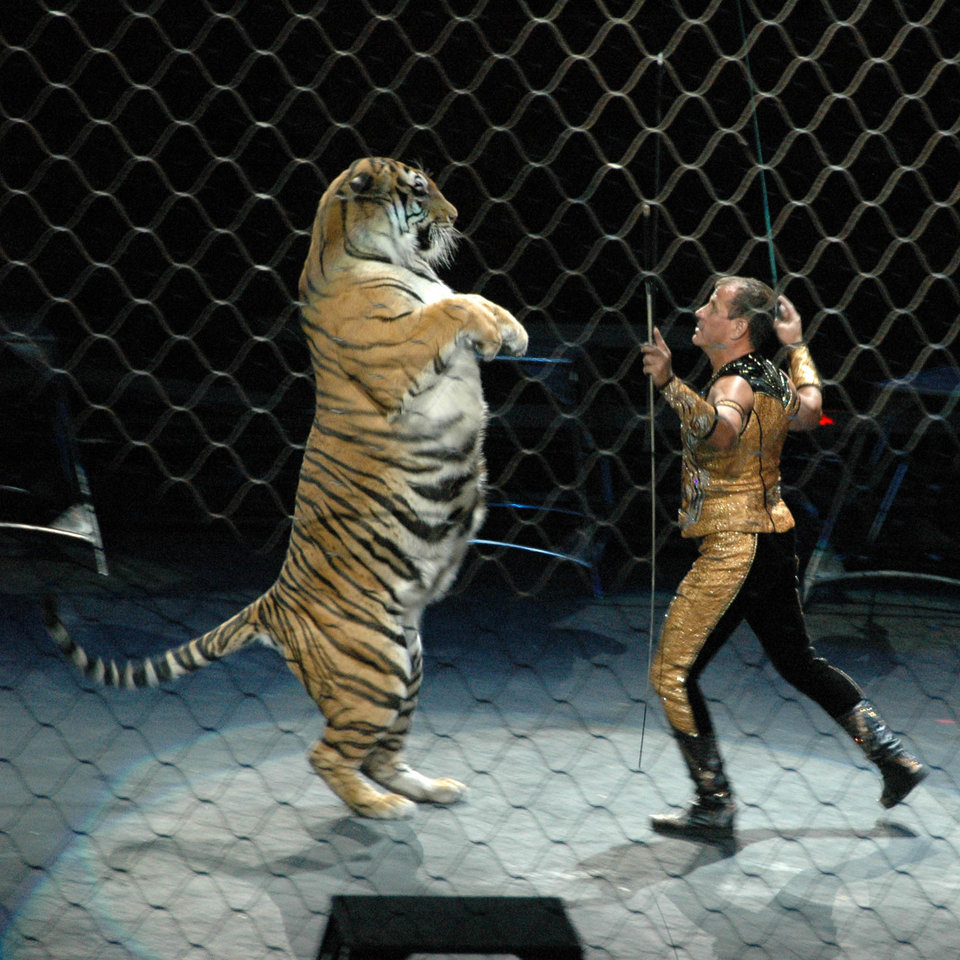
BREAKING: Ringling Bros. Plans To Ship Its Tigers To German Circus
Ringling Bros. and Barnum & Bailey Circus just held its last show ever on Sunday — but life could be getting even worse for the circus’ tigers.
Feld Entertainment, the parent company behind Ringling Bros., has applied for a permit to ship eight of its tigers overseas to a circus in Germany instead of retiring them to a sanctuary, according to documents provided to The Dodo by the Animal Legal Defense Fund (ALDF).
In the notice, Ringling claims the tigers would serve “to enhance the propagation or survival of the species,” a requirement put in place by the U.S. Fish & Wildlife Service (USFW) to ensure endangered species, like tigers, are only shipped for conservation purposes. But according to ALDF, this requirement doesn’t always receive the scrutiny it deserves.
“The U.S. Fish and Wildlife Service has historically taken a controversial ‘pay-to-play’ approach to the enhancement requirement, often rubber-stamping permits for objectionable uses of endangered species so long as the applicant makes a nominal donation to a conservation program,” ALDF said in a statement. “It is well-established that use of tigers in circuses fails to educate the public and has no nexus to legitimate species conservation. In fact, many experts opine that the use of exotic animals for entertainment acts and other traveling shows is harmful to their wild counterparts.”
The announcement comes as a blow to animal lovers throughout the country, many of whom hoped that Ringling’s January decision to close its doors for good would mean its animals would finally be able to retire to more natural lives after years of mistreatment.
But while most of the public attention has focused on the plight of Ringling’s elephants, the circus’ big cats were living an equally depressing life.
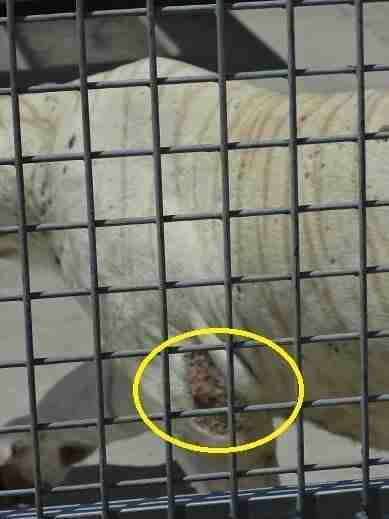
An undercover report published last year described life as a “nightmare” for the tigers. They spent most of their lives packed into tiny cages in parking lots or behind buildings, devoid of water to swim in or room to run. Tigers are solitary, and this closeness led to frequent fighting — many tigers were covered in scars, and others had cracked paws or pressure wounds from living on the unnatural concrete.
Jay Pratte, an animal trainer with 25 years of experience who conducted the investigation, said he saw tigers display signs of mental distress, such as compulsively over-grooming themselves until their skin cracked or pacing their cages obsessively.
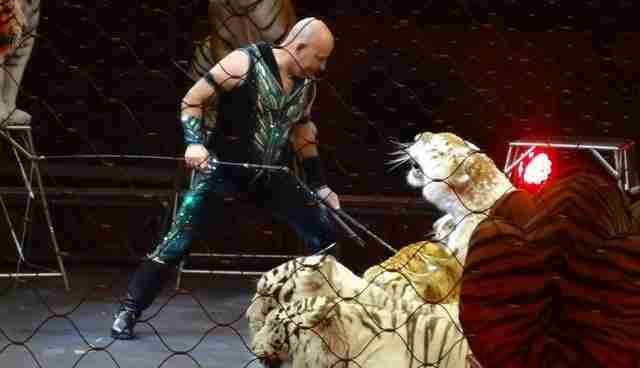
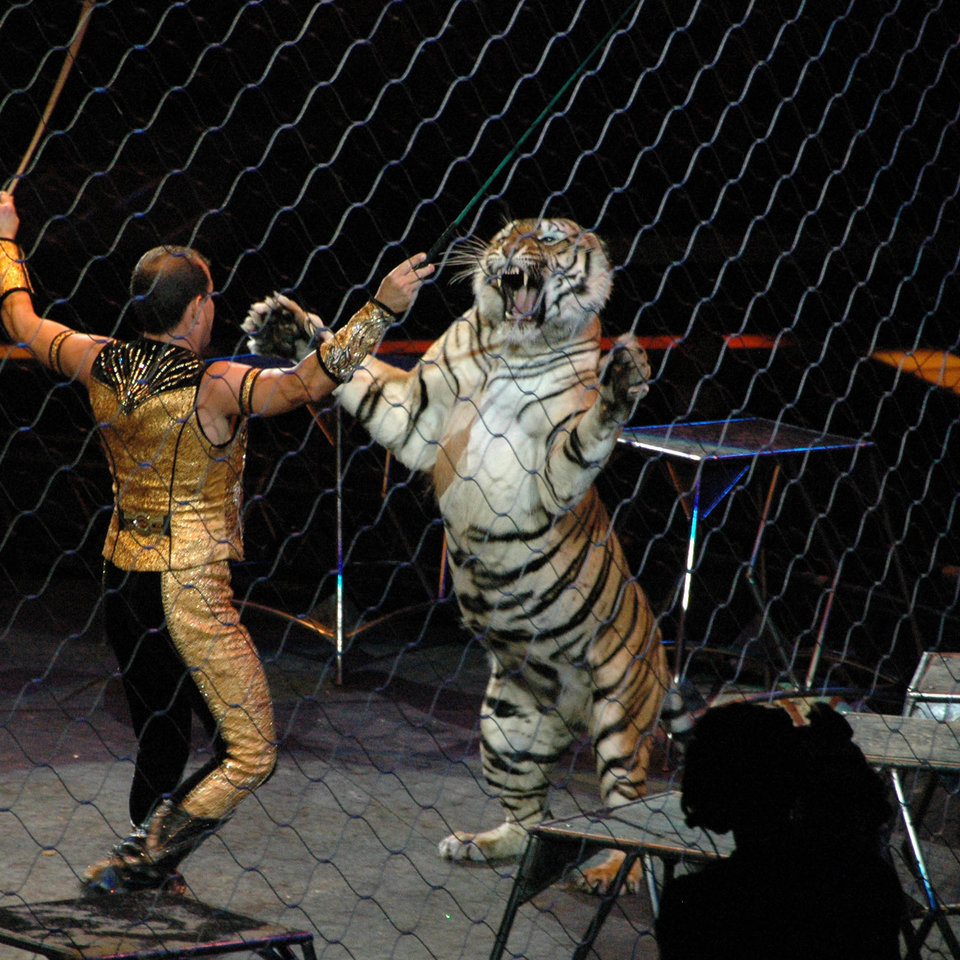
In the circus ring, tigers were trained using whips and prods, and their fear was palpable, according to Pratte. “When the goads or whips are raised, the cats flinch and shy back every time,” he said. “The cats know only fear, dominance and punishment.”
When Ringling’s elephants were retired last year, they were sent to the circus’s Center for Elephant Conservation in Florida, the controversial breeding and training ground where many of Ringling’s alleged abuses took place. It’s still unclear what life is like for the elephants there, or if they will continue performing in some capacity.
But now it seems the tigers’ future is even more murky. If the permit is approved, the eight tigers will be sent to Zirkus Crone, a circus in Munich that’s had its own share of abuse accusations — including claims that many of the circus’ animals, similarly to Ringling, are suffering from arthritis and mental distress and are denied proper living conditions.
In a statement, ALDF said it “strongly opposes Ringling’s effort to condemn these tigers to continued exploitation for ‘entertainment’ when there are humane options for the endangered animals.” For now, the best hope is that public outcry will prevent USFW from approving the permit request — which will be open for public comment for 30 days beginning on Friday — and save the tigers from years of further performances
“The curtain has come down on Ringling Bros. and an enlightened public is turning away from the outdated notion that it’s acceptable to use endangered species as entertainment props,” Stephen Wells, executive director of ALDF, said in a statement. “After spending years being carted around in cramped transport cages for 50 weeks of the year, it’s time for Ringling and trainer Alexander Lacey to let these tigers live out their lives at a reputable sanctuary where they can experience the space, habitats and peace they need and deserve.”
Jason Gillespie, who was just signed by Kent’s coaching team after overseeing Yorkshire’s back-to-back titles in 2014 and 2015, is now also coaching fans on the benefits of plant-based eating.
In a new video for PETA, the cricketer reveals the documentary that made him go vegan – Earthlings – and shares his thoughts on the rise of the “meat-free athlete”:
Athletes are increasingly coming to the correct conclusion that you can get all the nutrients you need from a whole-food plant-based diet, and they’re recovering better, they’re feeling good, they’re feeling fit and strong.
There’s nothing macho about treating animals terribly, and there’s nothing macho about putting your health at risk. There’s nothing macho about polluting the Earth. We’re all here on this one marble, and we just got to work together.
In 2015, veterinarians and a scientist from PETA India, as well as other experts, inspected ten facilities that produce antitoxins and antivenins.
With the exception of one that outsources its work, all the facilities extract large volumes of blood from horses, donkeys, or mules. The inspectors documented many distressing problems, including the following:
·Animals were suffering from anaemia, bleeding and infected wounds, and other serious health problems.
·Other common physical problems included diseased hooves, malnourishment, infections, parasites, swollen limbs, abnormal gaits, and eye conditions, such as blindness.
·The facilities often used painfully large needles in order to collect blood more quickly.
·Many horses were fearful and anxious and struggled to get away when approached by humans.
·Animals were typically kept in crowded, barren paddocks and often tied with ropes that severely limited their movement.
·Many were forced to stand and lie in their own urine and faeces, and some suffered from “capped elbow”, a painful inflammation and swelling of the joint caused by lying on hard floors.
·Basic husbandry procedures such as dental care and hoof trimming appeared to be ignored, and improper tools were used for grooming.
·There were numerous apparent violations of laws and guidelines, such as the failure of facilities to be registered to conduct these procedures on animals.
Indian law requires people who are responsible for animals to take all reasonable measures to ensure their well-being and to prevent unnecessary pain or suffering – in stark contrast to the abuse and neglect documented at these facilities.
Please speak out for these animals! Ask Indian authorities to close these cruel facilities
Exposed: Young Ostriches Butchered for ‘Luxury’ Bags
Never-before-seen footage shows how birds are shoved into boxes and have their throats slit at slaughterhouses that supply Hermès, Prada and other “luxury” fashion houses.
In September 2015, PETA US investigators travelled to South Africa to document what happens inside the largest ostrich slaughter companies in the world, including the exclusive supplier of ostrich skins for Hermès Birkin bags. Investigators saw workers force terrified ostriches into stun boxes – causing many to slip and fall – and then slit their throats. The ostriches next in line watched helplessly as their flockmates were killed right in front of them.
Workers were caught on camera striking ostriches in the face during transport, and when ostriches stumbled over a collapsed flockmate outside a slaughterhouse, a plant director joked, “I’ll call the animal welfare officer just now”.
These slaughterhouses supply ostrich skins to Hermès, Prada, Louis Vuitton and other top European fashion houses. Feathers, some of which are ripped out of the ostriches’ skin while they are fully conscious, are used in costumes for the Moulin Rouge and festivals like Brazil’s Rio Carnival as well as in feather dusters, boas and accessories. Ostrich meat is also sold throughout South Africa and exported primarily to Europe.
South Africa: The Ostrich Killing Capital of the World
The Western Cape of South Africa is home to the largest ostrich slaughter companies in the world, which supply “luxury” ostrich skins to Hermès and other major fashion houses.
PETA US investigators saw the juvenile birds tightly packed into open-topped vehicles for the terrifying journey to slaughter. Once they reach the slaughterhouse, workers forcibly restrain each bird, electrically stun them and then cut their throats. Moments later, the feathers are torn off the birds’ still-warm bodies, they are skinned and dismembered.
The Intelligent Ostrich
While ostriches can live for more than 40 years, farmed ostriches are slaughtered when they are just 1 year old. And while young ostriches typically stay with their parents for up to three years, ostriches raised on factory farms will never even get to meet their parents.
In the wild, these intelligent birds share parental duties, with the camouflaged mother taking care of the eggs during the daytime and the father, who has black feathers, taking night-time duty. One farm manager told our investigators that he has seen ostriches take turns fanning each other on hot days, remarking, “I have a lot of respect for ostrich”.






















 Serbian Animals Voice (SAV)