EU; More Promises for Animal Welfare – Dont Hold Your Breath !

Korruption

Donald Tusk & Jean-Claude Juncker

https://worldanimalsvoice.com/2019/10/09/eu-more-promises-for-animal-welfare-hmm-no-breath-held/


WAV Comment – the EU Commission has always been a slave to the meat mafia; and regardless of what EU citizens and the EU Parliament ask for in the way of change; the Commission does nothing thanks to the meat mafia lobby. Do we actually expect changes now ? – watch this space !


https://www.eurogroupforanimals.org/find-out-whats-on-the-horizon-for-animals-at-the-ep-this-week

Did you know that hundreds of millions of animals in the EU are still kept in cages, either for their entire lives or prolonged periods of time? That more than 11 million animals are used in research every year with no guarantee that the experiments translate to better healthcare? That huge numbers of animals – 4 million cows and 28 million pigs in 2019 alone – are transported on journeys of more than eight hours, often without food or water?

All this and more will be at “What’s on the Horizon for Animals?”, an exhibition co-hosted by Eurogroup for Animals and the Intergroup on the Welfare and Conservation of Animals, which will be on display at the European Parliament from 8th-10th October.

The exhibition will take visitors on a journey through the situation for animals in Europe today, which isn’t a happy one. The problems hampering the welfare of farm animals, equines, cats and dogs, wildlife, animals in science and traded animals as diverse as animals are themselves.

While the Treaty of Lisbon acknowledges the sentience of animals, current legislation is inefficient and ineffective in ensuring their welfare. The last Commission failed to adopt any new legislation, despite repeated calls from civil society and MEPs. Major negative effects for animals weren’t the only result of this stagnation; it also affected citizens’ confidence in the functioning of the EU. In surveys and the Future of Europe consultation, the people of Europe have stated time and time again that they want better welfare for animals.

With a parliamentary term, though, the future could look brighter – but only with the help of our new MEPs. The exhibition will invite MEPs to take the Act4Animals commitment: fourteen realistic, measurable solutions to achieve better welfare. We’re looking forward to seeing the 117 elected MEPs who earlier this year signed our VoteforAnimals2019 pledge return and deliver on their promise and turn words into action, and to welcome other new MEPs who also want to make a change for animals, perhaps by even joining the Intergroup.

The exhibition will launch on 8th October with an event co-hosted by MEPs Pascal Durand (Renew, FR), Tilly Metz (Greens/EFA, LU), Anja Hazekamp (GUE/NGL, NL), Sirpa Pietikäinen (EPP, FI), Maria Noichl (S&D, DE), Jadwiga Wiśniewska (ECR, PL), Emil Radev MEP (EPP, BG), and Younous Omarjee (GUE/NGL, FR) which will feature talks and round table discussions.

“The aim of today’s event is to show a groundswell of support towards the new European Commission to reverse the tide and deliver positive change for animals,” says Reineke Hameleers, Director of Eurogroup for Animals. “Solutions exist for animals, and with political will from the Commission and the support of MEPs in the Intergroup, we could be in a much more positive situation in five years than we are now.”

England: Badger culling may increase spread of tuberculosis, say researchers.


For pictures and other past links:

https://worldanimalsvoice.com/2019/10/09/england-badger-culling-may-increase-spread-of-tuberculosis-say-researchers/

Badger culling may increase spread of tuberculosis, say researchers

Culls cause badgers to roam further, potentially worsening risk of disease in cattle

start to roam much further afield when culling starts nearby, research has found, potentially increasing the spread of bovine tuberculosis, the disease culling is meant to control.

The findings raise questions about the government’s culling strategy, begun in 2011 and intended to reduce the harm to dairy herds from a rising incidence of bovine TB in hotspots around the country. Last month the government announced a major extension.

However, farmers disputed the findings and the Department for Environment, Food and Rural Affairs (Defra) said the cull had been shown to be effective.

Surviving badgers in populations that were culled covered nearly two thirds more land each month than they did before the culling began, and the likelihood of a badger visiting neighbouring territories each night increased twentyfold, according to the study from the ZSL’s Institute of Zoology. The increase in badgers’ range came despite the animals being less likely to leave their setts overall in the aftermath of a cull, making them less visible to the marksmen carrying out the culls.

The study, published in the Journal of Applied Ecology, covered 67 badgers on 20 cattle farms in areas of Cornwall both with and without culling, from 2013 to 2017.

Lord Krebs, whose landmark review of the science of bovine TB in the 1990s resulted in a 10-year trial of culls, said: “This research shows how important it is to find out about badger behaviour. It shows that culling badgers can cause surviving individuals in an area to move around more, and as a result they could come into contact with infected cattle and help to spread TB. The ill-thought-out plan to control TB by killing badgers could therefore backfire.”

The National Farmers’ Union said the ZSL study was small and covered only one county, and that it was “vital” the cull should continue to be rolled out across the country.

Stuart Roberts, the vice president of the NFU, said: “Culling badgers has a proven impact on TB outbreaks among cattle – the aim must be to get rid of this awful disease. Previously published peer-reviewed research, and anecdotal evidence from farmers in these areas, indicates strongly that TB is being reduced as a result of controlling the wildlife which carry and spread the disease.”

He added: “We do not see similar convincing outcomes from vaccination. Vaccination may have a role to play in areas where TB hasn’t taken hold but it cannot cure a sick badger so, in areas where TB is endemic, culling is vital.”

Nearly 33,000 cattle were slaughtered in England last year because of bovine TB, and 3,600 farms were newly affected by the disease, according to the NFU.

Bovine TB is the greatest threat to animal health in the UK, according to Defra. A spokesperson said the culling policy already took into account the potential increase in badger movement, by intensively culling across a given area, and that research showed it was effective. “Bovine TB [costs] taxpayers over £100m a year and causes devastation and distress for farmers and rural communities,” they said. “There is no single measure that will provide an easy answer and we are pursuing a range of interventions to eradicate it by 2038, including tighter cattle movement controls, regular testing and vaccinations.”

Defra’s research has found a 58% reduction of bovine TB in the area culled in Gloucestershire, compared with unculled areas, while there was a reduction of a fifth in Somerset, after two years.

TB bacteria can remain viable over long periods in the environment, meaning that if infected badgers are roaming further after a cull, as ZSL found, this could create new sources of infection for months afterwards. The changes in behaviour were noted by the researchers as soon as the cull started in a given population, meaning even badgers that are subsequently killed in the cull could have spread the disease much further than if they had remained undisturbed.

Arthur Thomas, the campaigns manager at the International Fund for Animal Welfare, said: “This report raises serious concerns about the effectiveness of the badger cull policy. We believe that the evidence against the culling of badgers as a response to bovine TB is well established and overwhelming. Government must act quickly to put a stop to an ineffective and inhumane practice.”

https://www.theguardian.com/environment/2019/oct/09/badger-culling-may-increase-spread-of-tuberculosis-say-researchers

Past links on this issue:

https://worldanimalsvoice.com/2019/09/12/england-bovine-tb-up-by-130-higher-than-when-badger-culls-began-badgers-being-killed-to-pacify-farmers-while-they-take-no-responsibility-for-biosecurity/

https://worldanimalsvoice.com/2019/09/09/england-badger-cull-vet-says-badger-culls-caused-immense-pain-bovine-tb-rates-have-increased-in-some-areas-where-culling-is-done-thus-probably-not-effective-other-solutions-needed/

https://worldanimalsvoice.com/2019/01/13/england-positive-news-for-badgers-the-national-trust-will-not-allow-culling-on-its-land/

https://worldanimalsvoice.com/2018/12/20/england-scientists-accuse-officials-of-cherry-picking-data-to-defend-badger-cull/

https://worldanimalsvoice.com/2018/09/30/england-secret-filming-reveals-hidden-cruelty-of-licensed-badger-culls/

https://worldanimalsvoice.com/2018/10/21/england-that-the-bovine-tb-government-strategy-is-working-called-untrue-by-vets-and-animal-specialists/


USA: ‘Zombie’ Deer Disease. Threatening to Invade USA.


https://news.sky.com/story/zombie-deer-threatening-to-invade-us-state-11830346


https://www.telegraph.co.uk/news/2019/10/07/nevada-seeks-block-spread-zombie-deer-disease-experts-warn-could/


A “zombie” disease which makes deer become emaciated and more aggressive may sound like the opening to a horror film. 

But experts have warned the deadly disease has already affected 24 US states – and could spread to humans next. 

Nevada has now become the latest US state attempting to block the highly contagious disease from taking hold with experts warning the outbreak could destroy deer and elk populations.

Chronic wasting disease (CWD), as it is officially known, makes deer drastically lose weight, struggle to walk, more aggressive and less afraid of human contact.

The illness has been compared to mad cow disease because it is also spread by pathogenic proteins called prions and cause a range of symptoms that resemble dementia and ultimately death. 

Prion diseases belong to a family of rare brain diseases that affect both humans and animals, including mad cow disease in cattle and variant Creutzfeldt-Jakob disease in humans.

The US Centers for Disease Control and Prevention has raised concerns that CWD may also pose a risk to humans.

So too has Doctor Michael Osterholm – the American expert who warned the British government of the risks of mad cow spreading to people in the late 1990s. 

Dr Osterholm, who is director of the Center for Infectious Disease Research and Policy at the University of Minnesota, told lawmakers that laboratory research suggested it was “probable” that human cases of CWD would occur in future. 

Discussing his experience of mad cow disease being transmitted to humans, he said it was likely CWD would also occur through eating contaminated meat. “It is possible that the number of human cases will be substantial and will not be isolated events,” he told a hearing with lawmakers. 

He added: “If Stephen King could write an infectious disease novel, he would write about prions like this”.

CWD can incubate for more than a year before animals display the symptoms, so US officials recommend that deer hunters test meat before consuming it.

Wildlife experts have warned that while still rare, the disease is virtually impossible to contain because the disease is neither viral nor bacterial and can remain in the environment for several years. 

Peregrine Wolff, a Nevada Department of Wildlife veterinarian, said the state’s officials have taken to testing corpses and monitoring migratory elk and deer at the state line with neighbouring Utah for signs of the sickness.

Nevada also introduced a ban earlier this year on bringing certain animal body parts into the state, including the brain and the spinal cord that can contain large concentrations of prions.

But Ms Wolff said despite those efforts, the disease is unlikely to stop at the Nevada state line.

“It’s not a matter of if, it’s a matter of when,” she said. “We know that we can’t wrap Nevada in a bubble.” 


The documentary “Dominion” – an excellent movie!


The documentary “Dominion” (2018)  is a sequel to “Lucent,” released in 2014, which features the dark side of the Australian pig breeding industry in feature film length.
“Dominion” goes further and gives a comprehensive insight into the different livestock industries in Australia.

Worldwide attention caught on Australia’s Animal Welfare business model in 2018 after shocking pictures were released showing sheep being crammed together on a ship from Australia to Qatar, Kuwait and the United Arab Emirates, dying painfully. Then there were protests against the unspeakable animal transports worldwide.


How to finance a documentary that reveals the reality of the meat industry?

The film aims to present facts about the way animals are used. “Dominion” was written and directed by Chris Delforce and co-produced by Shaun Monson, director of “Earthlings” in 2005.

The documentary is told by vegan celebrities such as Joaquin Phoenix, Rooney Mara, Sia, Sadie Sink and Kat Von D. This film was financed by donations.

And there is one man who has a big stake in making such films financially possible.


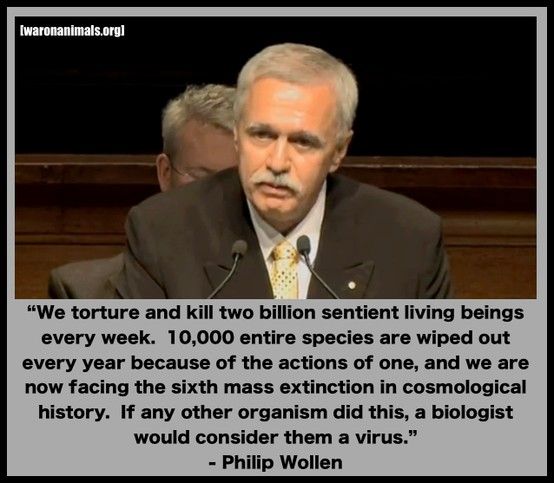
Philip Wollen


Philip Wollen

He was a successful investment banker and even became the vice president of Citibank and general director of Citicorp at the age of 34. Oh, a banker? Yes, and what for one! He was even named one of the Top 40 Most Influential Leaders by Australian Business Magazine.

Then came the turning point in his life that was to change everything.
His rethinking should have taken place after visiting a slaughterhouse of one of his customers. He then researched and knew that there would be no going back to his ordinary life as he had led it.

He sponsors the anti-whaling ship Sea Shepherd and the South Australian Children’s Ballet Company and has built schools, orphanages, lion parks and much more.
His Winsome Constance Kindness Trust supports more than 400 projects in 40 countries.

Wollen says his goal is to die broke and to give away all he has with “warm hands” and that he is on the right track. Incidentally, he also financed the “Earthlings” trilogy and thus made it possible.

The wish of Philip Wollens came true because the film has sparked national protests against Australian livestock.


Meanwhile, “DOMINION” is even free, which means that everyone has the opportunity to look at this documentation. Website: dominionmovement.com


https://netzfrauen.org/2019/10/05/dominion/#more-66355


And I mean…Not everyone who earns, or has earned a lot of money is automatically a capitalist asshole.
We need money for our fight, and above all to keep up  the competition with the conventional media.

If the money comes from people who also ideologically support our fight and stay behind the idea of animal liberation, the better.

My best regards to all, Venus


Canada: Flushing Environmental Protection Down the Toilet – Literally !


Dear Mark,

There’s no if’s, and’s, or but’s about it: We are flushing Canada’s Boreal Forest, one of the earth’s greatest defenses against climate change, down the toilet.

The majestic boreal forest stores huge amounts of our climate-busting carbon pollution, but it’s being cut at a dizzying rate — much of it for toilet paper.

Toilet paper brand Charmin uses absolutely no recycled paper in its toilet paper… just 100% virgin forest fiber from the boreal forest. This destroys its trees, hurts the livelihood of hundreds of Indigenous communities, and threatens the iconic boreal caribou, billions of songbirds, and other wildlife that call this ancient forest home.

All to make a product that people use once before they flush it away. This has to stop.

Hundreds of thousands of people have called on Charmin’s manufacturer, Procter & Gamble (P&G), to stop this “tree-to-toilet pipeline”. And on Tuesday, October 8th, NRDC will be on the ground at P&G’s annual shareholder meeting, demanding they listen to our collective voice. Will you add your voice as well?

As P&G holds its shareholder meeting, send the company a message that you won’t let them continue flushing our forests down the toilet!

Here’s the deal: every American uses nearly 3 rolls of toilet paper a week on average, and much of the pulp for toilet paper and other tissue products come from the boreal forest.

This very forest holds more than 300 billion tons of carbon in its soils, plants, and wetlands — making it one of our planet’s best natural defenses against climate change.

But the roughly one million acres of land being logged every year puts the hundreds of Indigenous communities’ way of life and the survival of threatened boreal caribou in peril.

P&G should be using more recycled paper in its products. It should not be putting Indigenous communities, our climate, and boreal caribou on the line to make a product that’s used once, then flushed down the toilet. So, while NRDC will be at their shareholder meeting demanding they dramatically reduce the virgin pulp content in its products and increase the use of recycled materials, we need you to share your demands as well:

Sign the petition and show P&G that the world won’t let them accelerate climate change just for profit.

Thank you for being with us on this important issue.

Shelley Vinyard
Boreal Corporate Campaign Manager, NRDC


Victory for Whales and Dolphins! TripAdvisor Stops Selling SeaWorld Tickets.

Victory for Whales and Dolphins! TripAdvisor Stops Selling SeaWorld Tickets


Victory for Whales and Dolphins! TripAdvisor Stops Selling SeaWorld Tickets

Posted by Cassandra Cyphers | October 3, 2019

In a landmark move, travel giant TripAdvisor and its subsidiary Viator announced the end of all commercial relationships with entities involved in keeping dolphins and whales in captivity.

After a thorough evaluation of scientific research on the well-being of captive cetaceans (dolphins, whales and porpoises), TripAdvisor and Viator will discontinue advertising for companies that breed or import these animals.

“Whales and dolphins do not thrive in limited captive environments, and we hope to see a future where they live as they should—free and in the wild,” said President of TripAdvisor Experiences and Rentals Dermot Halpin.

In recent years, companies like SeaWorld have come under fire for their captive orca programs in particular. The documentary “Blackfish” highlights the suffering of SeaWorld’s killer whales, trapped in the wild and ripped from their families. In their natural habitat, the highly intelligent creatures swim dozens of miles daily. In captivity, they live much shorter, sicker and more stressful lives.

“The ‘Blackfish Effect’ continues,” said Animal Welfare Institute marine mammal scientist Dr. Naomi Rose. “As more companies such as TripAdvisor reflect the growing public consensus that using captive whales and dolphins to entertain people is anachronistic and inhumane, at some point the marine theme park industry will have to get on board. Cetaceans do not belong in captivity.”

TripAdvisor joins the ranks of travel companies like AAA Northeast, Virgin Holidays, Southwest Airlines, and others that no longer promote captive whale and dolphin entertainment.

The company hopes to promote the eventual end to dolphin and whale captivity by supporting “seaside sanctuaries” as an alternative way to experience marine mammal wildlife.

“Seaside sanctuaries have enormous potential, but they need more backing from the tourism industry,” said Halpin. “As long as facilities with captive whales and dolphins continue to profit from keeping these animals in smaller, cheaper and less natural living environments, then they don’t have enough incentive to adopt serious change. We hope our announcement today can help turn the tide.”

UK Set toOutlaw Import of Hunting Trophies.

See pictures:

https://worldanimalsvoice.com/2019/10/07/uk-britain-set-to-outlaw-import-of-hunting-trophies/


Condemning the hunting of endangered animals as “morally indefensible,” the UK Government has announced it will set out new rules to protect animal welfare, claiming: “There is no place in this country for animal cruelty.”

The government has pledged to significantly strengthen wild animal protections by holding a consultation to prohibit the import and export of trophy hunting souvenirs gained from the vile slaughter of endangered animals.

The move could help save thousands of endangered species globally – including lions, tigers, elephants and rhinos – from being killed for “sport” by ruthless trophy hunters.

Image result for zac goldsmith

Animal rights advocate and recently appointed Minister for International Wildlife, Zac Goldsmith (Above), announced the good news ahead of the Conservative Party Conference on 29 September.

“The fight against trophy hunting of endangered animals matters,” said Goldsmith. “It is clear that it is morally indefensible and that is why I am delighted that the Conservative Government will consult on a ban on the import of these trophies. By placing a higher value on animals alive rather than dead, we will begin to turn back the tide of extinction.”

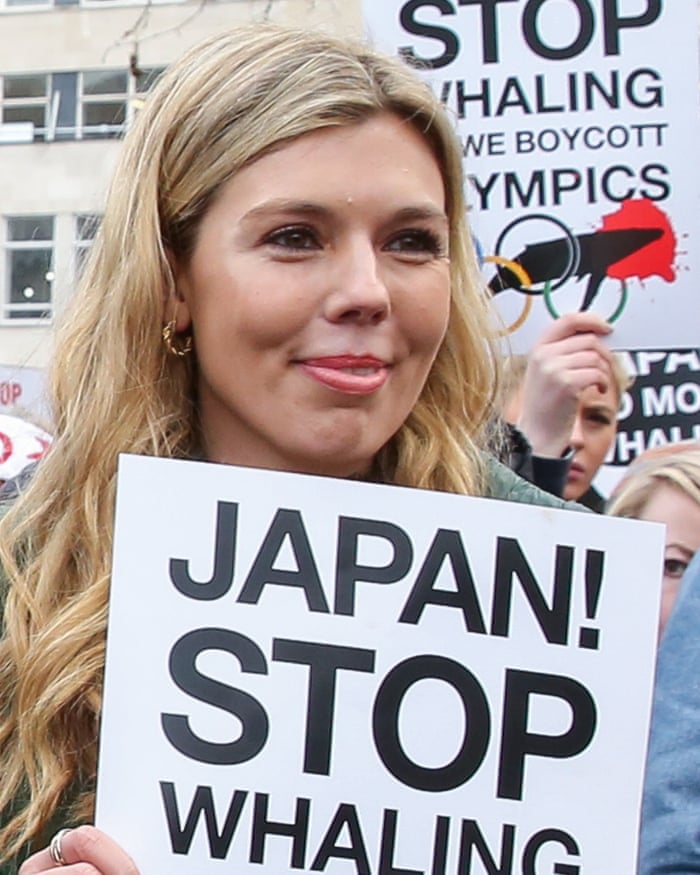
Goldsmith’s appointment by Prime Minister Boris Johnson marked a significant step forward for animal rights in the UK. Johnson’s partner Carrie Symonds (Below) has long campaigned against trophy hunting, and Johnson himself recently tweeted: “We must end this barbaric practice.”

Image result for Carrie Symonds anti hunt

It is anticipated that the ban will be passed by parliament following the consultation and will come into effect as either primary or secondary legislation. The new rules will relate to animals listed on the Cites Appendix I and II lists, and on the I UCN list.

This is a very welcome move, especially considering that over the past ten years, 2,242 body parts taken from murdered animals – 15% of which were endangered – have been imported into the UK.

Other measures announced by the Government include looking at prohibiting the importation of exotic animal rugs and furs, a total ban on keeping primates as pets and ending all live exports for slaughter.