The Court of Session has, instead, chosen to double the court time available for our case – and the hearing is now expected to take place in October.
The battle against cruelty isn’t over yet, but we’ve secured a first, big victory. A huge thank you to everyone who has backed this campaign so far. If you haven’t already done so, please:
Take action – Call on the Scottish Government to drop their defence of the appalling live export trade.
Donate – 100% of your gift will support Compassion’s work in the UK.
Spread the word to fight live exports, using ciwf.org.uk/JusticeForCalves
Thank you! Together, we will keep up the fight for #JusticeForCalves.
With best wishes,
Nick
STUCK ON A TRUCK
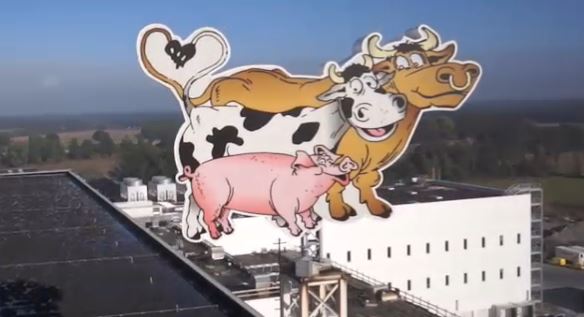
Every year, thousands of unweaned calves are sent from Scotland to fattening farms in Spain. These vulnerable, young ‘by products’ of the dairy industry suffer journeys that are both horrific and, we believe, illegal.
Animal transport law states that unweaned calves cannot travel for more than 8 hours – unless, after a maximum of 9 hours’ transport, they are rested, given water and, “if necessary”, fed.
In reality, the ‘rest’ usually just means the lorry stops moving for an hour. And, because milk substitute can’t in practice be provided on the trucks, calves may go as long as 23 hours without food. They must be stressed, exhausted, and desperately hungry.
Whilst they’re on British farms, these young animals must legally be fed twice a day. Yet the transporters think it’s not ‘necessary’ to feed them until they’re first unloaded in Northern France!
Posted on June 29, 2020 by Serbian Animals Voice (SAV)
Hundreds of new corona cases were registered this week in a slaughterhouse of the Tönnies company in Germany.
At the Tönnies headquarters in Rheda-Wiedenbrück, around 5,300 employees will have to be tested in the next few days.
As a result, all schools and daycare centers in the Gütersloh district were closed again. Around 7,000 people are now in quarantine around the company.
Federal Labor Minister of GermanyHubertus Heil called the situation “shocking”.
For him, one of the main problems in the industry is that work in slaughterhouses is increasingly done with employment contracts and subcontractors, so that workers, most of whom are from Eastern Europe, are “not treated fairly”.
He now wants to end this “basic evil”, said Heil in the state television channel ARD.
But is that it?
The meat industry has other problem areas:
1. Too much manure
More animals also mean more animal excretions.
But where to put the manure? A large part of it ends up in the meadows and fields of farmers – and thus contaminates soil and groundwater with nitrogen.
Agriculture is responsible for around 57 percent of the nitrogen that is released into the environment in Germany, according to the Federal Environment Agency.
And I mean…According to market observers, the temporary closure of Tönnies’ largest German slaughterhouse in Rheda-Wiedenbrück will not lead to supply shortages.
“Meat is not scarce in Germany, not even pigs,” the Agrarmarkt Information Society in Bonn reassures us.
Thank God! Our daily meat is secured, corpses are still produced in accord.
Posted on June 29, 2020 by Serbian Animals Voice (SAV)
Breaking News – Animals Asia – 29/6/20
Vietnam – Bear ‘Cotton Blossom’ Will be rescued tomorrow from her life of bile farming.
Rescue team are finally on their way after earlier preventions due to Covid.
Dear Mark,
We’ve finally received the go-ahead to rescue a lonely moon bear in desperate need of love and care.
Our emergency response team are on their way right now.
We were first alerted to her plight back in March. But due to the Covid-19 outbreak causing widespread travel restrictions in Vietnam, and this poor bear being held in the border region of Gia Lai province, over 700 miles away from our sanctuary, we couldn’t reach her.
But we didn’t forget.And we’ve been preparing for her arrival ever since. Her house has been cleaned, her bed made and a delicious feast is being prepared for arrival. But that’s not all…
Back in March, the spring sunshine was warming the air, and the magnificent red cotton blossoms were blooming. Though we couldn’t rush to her aid there and then, we remained hopeful that her many years of darkness were coming to an end and she would soon blossom at our life-saving sanctuary. To mark her eventual arrival we planted a Cotton Blossom tree. And in honour of the bear you’ll help us rescue, we’ve named her Cotton Blossom.
Currently, we know precious little about her. What we do know is that she’s been forced to endure painful bile extraction and we can almost be sure that she’ll have serious health issues as a consequence.
She’ll need special ongoing care and treatment for the rest of her life. Which we hope could be another 15 years or more. Hopefully, with enough love and time, all of the pain, anger and fear she feels will fade into distant memories.
In these dark times, will you be the ray of sunshine she’s been waiting for?
Our rescue team plans to arrive tomorrow morning. In the meantime, we’ll do our very best to keep you updated, and I hope to bring you more information soon. For live updates, and to see your kindness in action, please be sure to follow us on Facebook, Twitter and Instagram.
As always, thank you from the bottom of my heart for being there for Asia’s animals when they need you most.
With bear hugs of gratitude and of hope,
Jill Robinson MBE, Dr med vet hc, Hon LLD
Founder and CEO, Animals Asia
Posted on June 29, 2020 by Serbian Animals Voice (SAV)
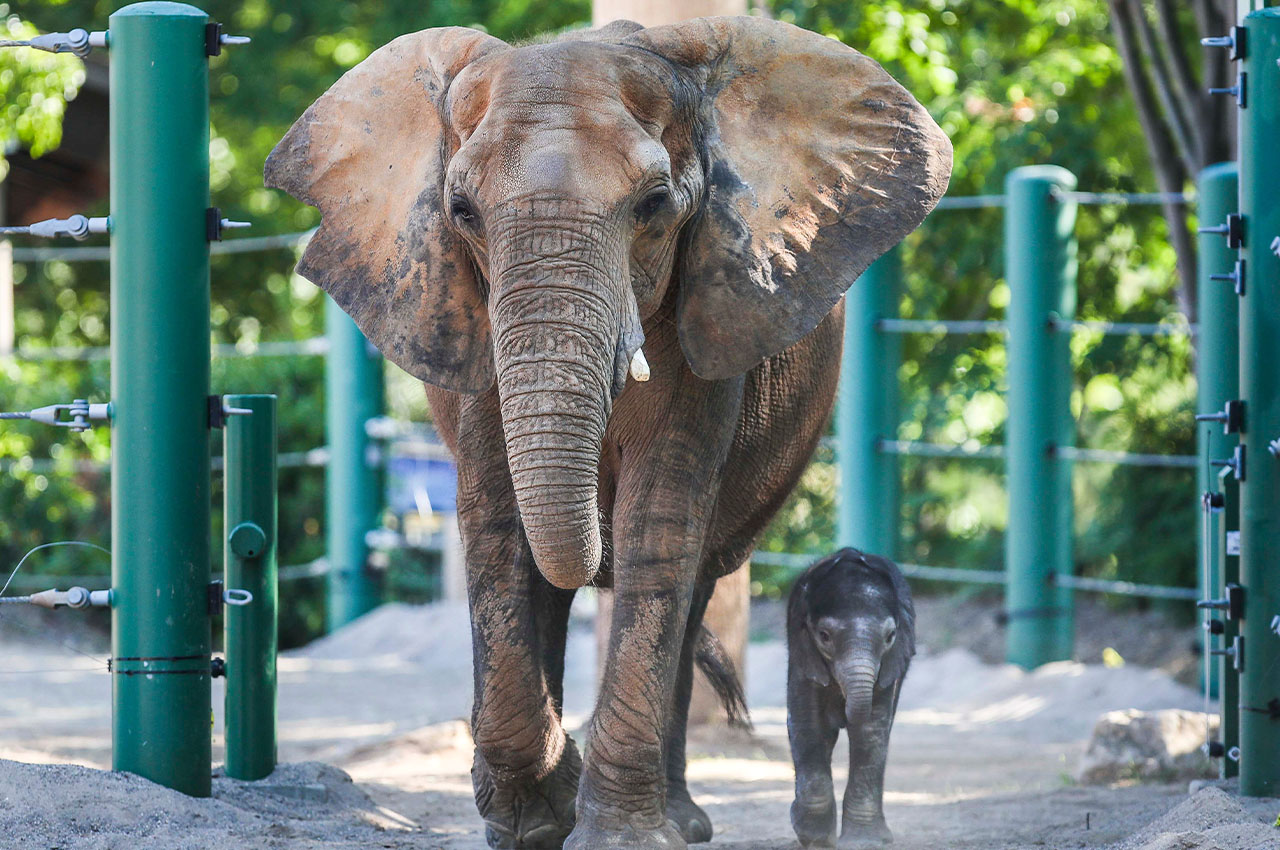
Louisville Zoo,Kentucky, USA, continues to hold three elephants captive in a cramped exhibit. A mother elephant, her young calf, and their one companion named Punch — all held in a cramped enclosure in order to generate profits from paying customers.
Louisville Zoo forces Mikki to endure a bittersweet motherhood
Credit: Matt Stone/Courier Journal, Louisville Courier-Journal via Imagn Content Services, LLC
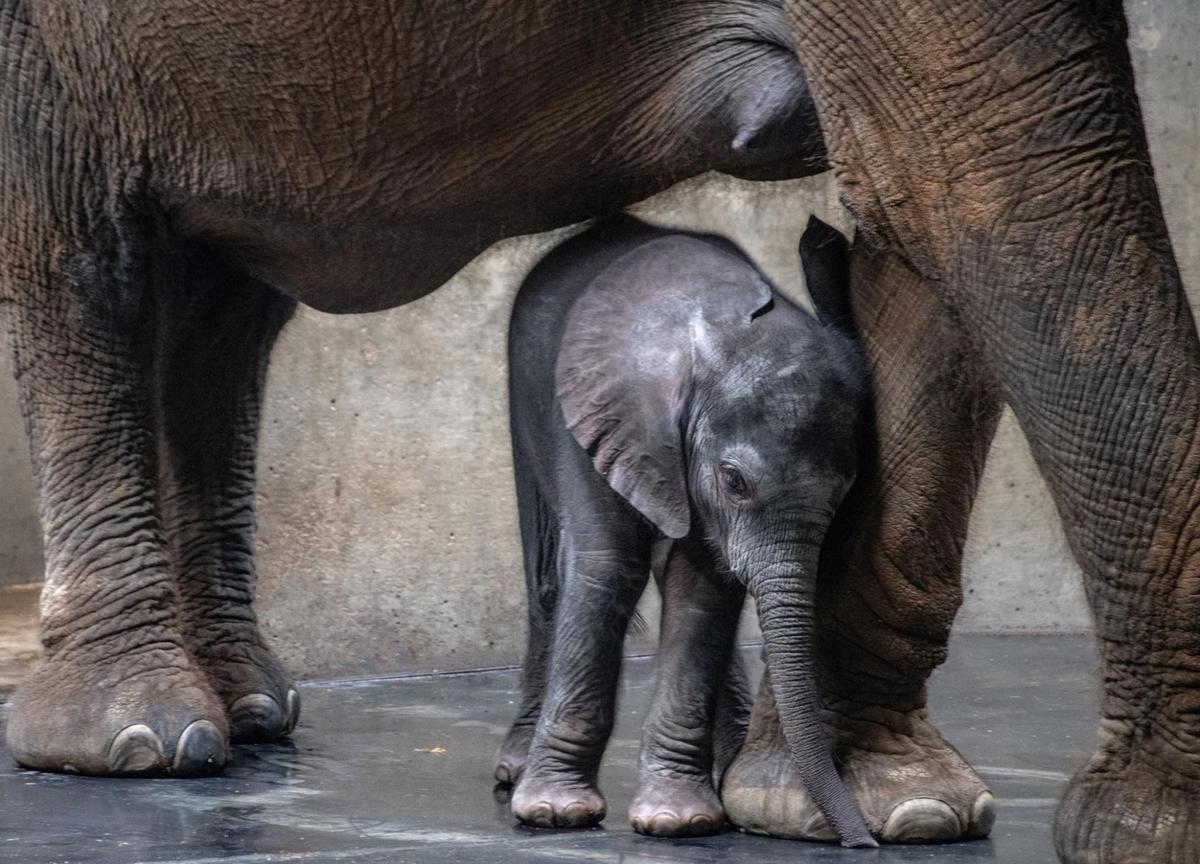
After seven years of repeated and failed artificial insemination attempts by Louisville Zoo staff, 35-year-old African elephant Mikki finally gave birth to a calf this year.
Baby Fitz is the Louisville Zoo’s second elephant birth in its fifty-year history. In 2010, Mikki’s calf named Scotty died at age three from colic.
Like his mother, Mikki, and cell-mate Punch—who were both taken from the wild—Fitz will be robbed of the relationships he would naturally form with other elephants including other family members near his own age.
Artificial insemination is the process used to produce babies for the zoo industry.
It’s an unnatural, invasive, and likely traumatic experience for elephants, often requiring their legs to be chained down—indicating that individuals like Mikki would flee the procedure if given the choice.
Still, the Zoo forced Mikki to undergo six artificial insemination procedures in 2016 alone.
Baby Fitz and his mother Mikki in the captivity of Zoo
Your voice is needed now to ask Louisville Zoo to close its elephant exhibit for good and to send Mikki,her calf Fitz, and companion Punch to an accredited sanctuary where they can live the rest of their lives in peace.
Posted on June 28, 2020 by Serbian Animals Voice (SAV)
In this document, report the victims of the TGN1412 human test report.
TGN1412 led to a drug scandal by many in 2006.
TGN1412, which is used to treat I .a. Leukemia, arthritis, and multiple sclerosis led to permanent damage such as multi-organ failure and amputations for six subjects in the phase I trial.
Only a few minutes after the award, the subjects reported symptoms such as headache, severe hot flashes, and fever, followed by vomiting, severe pain, and symptoms of a severe inflammatory reaction. The subjects reported a feeling of “burning all over their bodies”.
They received only 1/500 of the dose that was found to be harmless in animal experiments (macaques).
This example shows that in human experiments after animal experiments we always start from zero.
That is why we call for animal-free and human-based research, e.g. with the multi-organ chip and a phase 0!
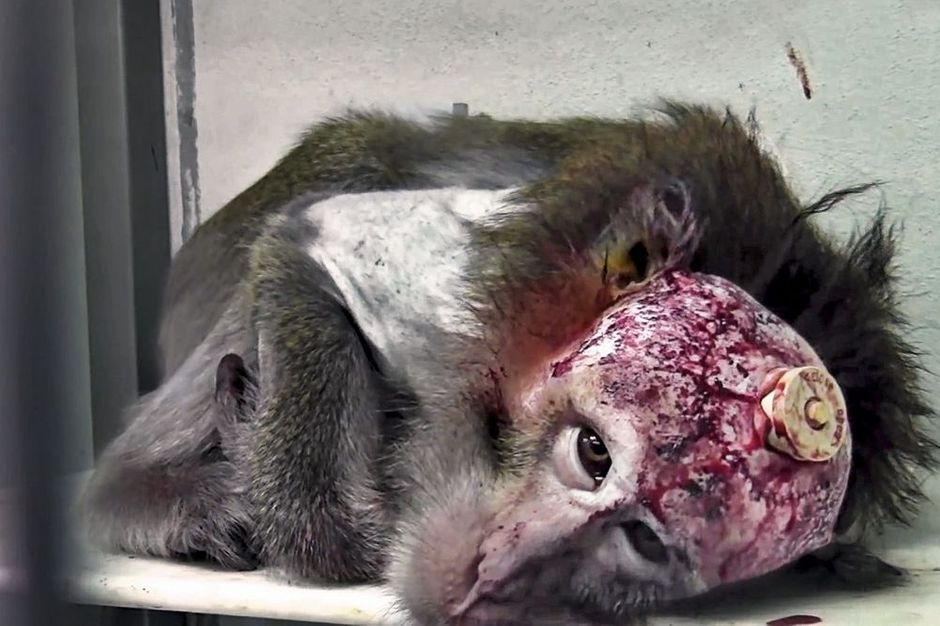
And I mean…Animals are used for experiments because they cannot defend themselves in an organized manner and therefore they are on humans delivered.
That is the ethical basis for all animal experiments.
The life of a human being is no higher than that of an animal. There is no evidence or reason for this.
Anyone who claims that animals in captivity and experiments do not suffer is either clueless or makes money from it.
The main difference between humans and animals is that humans are able to feel pity. The person who does not have this quality towards animals is de facto an asshole.
The alone fact that experimenters are able to keep and torture animals at will, is a crime against any moral base.
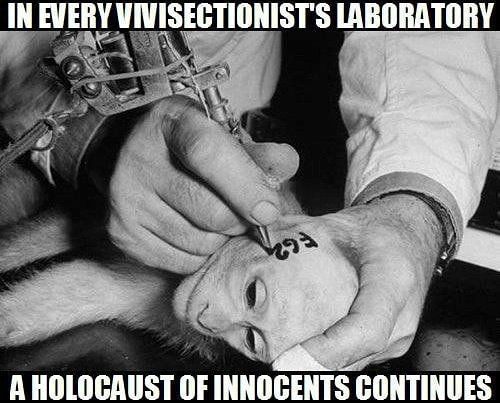
Anyone who knows and has studied the history of the Nazi-Era knows how the animal experimenters tick. Their actions correspond 100% to the mass murderers of the time. In every detail.
Even Zyklon B is still used to kill experimental animals.
It is not possible to keep behaviorally disordered people out of this area; therefore names, addresses, photos, and the crimes of the “researchers” must be made public.









 Serbian Animals Voice (SAV)