Posted on April 26, 2020 by Serbian Animals Voice (SAV)
Pig reportedly shot in the face 4 times at the slaughterhouse deserves justice – Petition.
Target: Martin Dooley, President of JBS USA Pork
Goal: Terminate slaughterhouse workers who allegedly shot an incapacitated pig four times in the head and face.
A pig suffered needlessly when slaughterhouse workers allegedly shot the animal four times in the head and face. The pig was already under control, per reports, and posed no threat or struggle. Demand that JBS USA Pork immediately terminate those who inflicted this apparent cruelty.
At Iowa’s Swift Pork Company’s slaughterhouse, one pig was reportedly shot four times in the head and face before being rendered unconscious. The pig sustained wounds an inch from the right eye, in the forehead, and at the base of an ear. During this time, the worker allegedly left to retrieve more bolt charges and allowed the pig to continue suffering.
This is an unacceptable way to treat an animal, even one intended for slaughter. Humane methods of slaughter are possible and those who do not follow them should not be tasked with taking innocent lives. Sign below and demand that the workers responsible for this apparently inhumane treatment are terminated at once.
PETITION LETTER:
Dear Mr. Dooley,
A pig apparently endured horrific suffering and cruelty at the hands of Swift Pork Company’s workers. Per reports, the pig was shot four times in the face and head before being rendered unconscious- an inch from the right eye, twice in the forehead, and once at the base of an ear.
Pigs are extremely intelligent creatures who are said to value their lives as intensely as humans. Slaughtering them is cruel enough, but they should never be made to suffer needlessly during their transition. I demand that any worker who is proven to not utilize humane methods of slaughter be terminated at once for the benefit of these innocent animals.
Sincerely,
[Your Name Here]
Filed under: GENERAL NEWS - International / National / Regional | Leave a comment »
Posted on April 26, 2020 by Serbian Animals Voice (SAV)

Watch the 3 rescue videos here:
Very sadly, it was known that a 4th bear had recently died at the same facility.
But we have great news for the remaining bears.
Yesterday our amazing team saved three bears from a cruel & illegal bile farm. Sadly #Covid19 restrictions meant we couldn’t reach the farm before a fourth bear died. But today is the beginning of Alice, Bân and James’ happily ever after.
In March Animals Asia was approached by the Nam Dinh Province Forest Protection Department (FPD) to urgently rescue four moon bears who were discovered on an illegal farm. However a small rise in coronavirus cases in Vietnam led to a country-wide lockdown that delayed our chance to rescue these bears. Tragically, during this time one of the four bears on the farm died of unknown causes while the FPD was processing the case leading us to call upon the local FPD ranger’s station to take the remaining three bears into their custody to ensure their safety.
While waiting for the lockdown to be lifted the rescue team closely monitored the coronavirus situation and fortunately there were no reported COVID19 cases in Nam Dinh province leading to restrictions being loosened. Nam Dinh was classified as medium COVID19 risk, which meant that the rescue could be carried out with restrictions, including mandatory masks and a limit on the numbers of people in the rescue team. Other precautions included having the team’s temperatures taken and foreign staff needed to bring their passports to show they had not recently been overseas.
At the crack of dawn on Tuesday our team left the Vietnam Bear Rescue Centre (VBRC) in Tam Dao and drove for three hours to meet the FPD Director in Nam Dinh city at around 8am. The FPD director sent officials to accompany the rescue team to the Giao Xuan Hai FPD ranger station which is roughly another 45km from Nam Dinh FPD in Nam Dinh city.
Our rescue team consisted of our Vietnam Director Tuan Bendixsen, Vet and Bear Team Director Heidi Quine, Senior Vet Surgeon Shaun Thomson, Vet Nurse Kat (Sarah) Donald, Bear Team Supervisor Dao Chau Tuan and Tran Thi Gai, Cao Manh Tien from our Vietnam PR team, and External Affairs Ung Toan The.
Life had been no fairy tale for these three bears, and it was clear by their symptoms of stress when we arrived that they had suffered quite some trauma while captive on the illegal bile farm and possibly in their capture. On inspection they appeared to be quite young bears, leading us to believe that they were captured from the wild and possibly witnessed the death of their mother while cubs.
As there were three bears and they had clearly not lived the fairy tale lifestyle of their storybook counterparts, it was decided to give them meaningful names from fairy tales. The bear in the leftmost cage was named James after James and the Giant Peach who overcame cruelty to find friendship and security. The bear held in the middle cage was given the name Bân after Princess Ban from the Vietnamese fairy tale about the clumsy daughter of the King of heaven whose warmth of love and care extends to everyone on unexpectedly cold days. Last but not least in the rightmost cage was the calmest bear Alice, whose time in a nightmarish Wonderland was coming to an end.
It took some time to persuade the bears to enter our transport cages. Alice was enticed by some sweet honey offered on a long spoon, but for James and Bân, it was the desperate desire for a drink of cool, fresh water that finally brought them in. This could indicate that when they were on the farm their access to water was limited, which could explain why it was the key motivator in helping them choose to enter our transport cages.
Once they were safely stowed on our transport truck it was just over four hours drive before they arrived at their forever home at Vietnam Bear Rescue Centre, where they will begin a vital 45 day period of quarantine, and for the first time receive a properly balanced diet and enrichment to stimulate their minds after years behind the bars of a barren cage.
Most of us have been in quarantine, isolation and lockdown for several weeks now. It’s not been pleasant, has it? Now imagine living this way for years while having an unnecessary and dangerous medical procedure forced on you. That’s precisely what’s happened to these poor bears. They have been robbed of so much of their lives.
Their grim story is over now and with your help we can give James, Bân and Alice the happily ever after they dearly deserve.
Please donate and help us change their lives forever. The only cure is kindness.
#ThreeBearsRescue
Filed under: GENERAL NEWS - International / National / Regional | Leave a comment »
Posted on April 26, 2020 by Serbian Animals Voice (SAV)
This video comes from a pig farm in the USA and was shot by the organization Toronto Pig save.
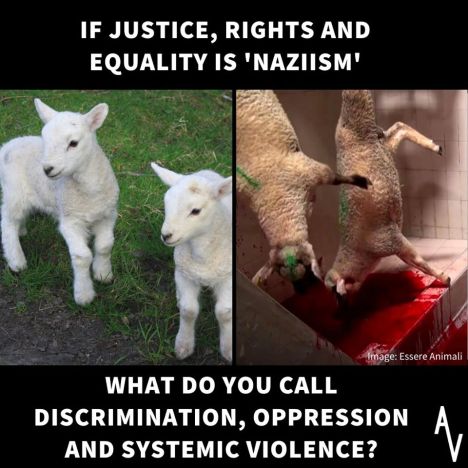
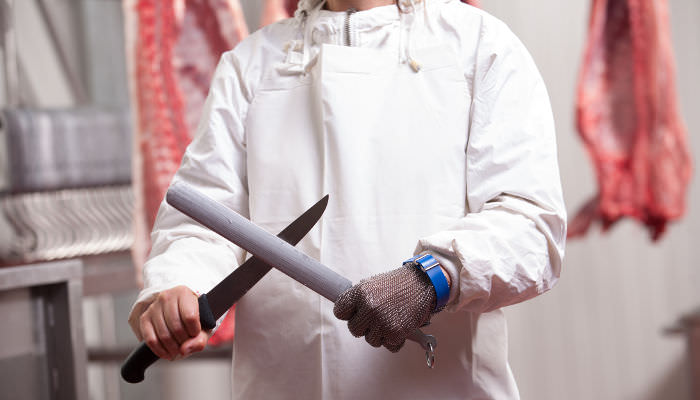
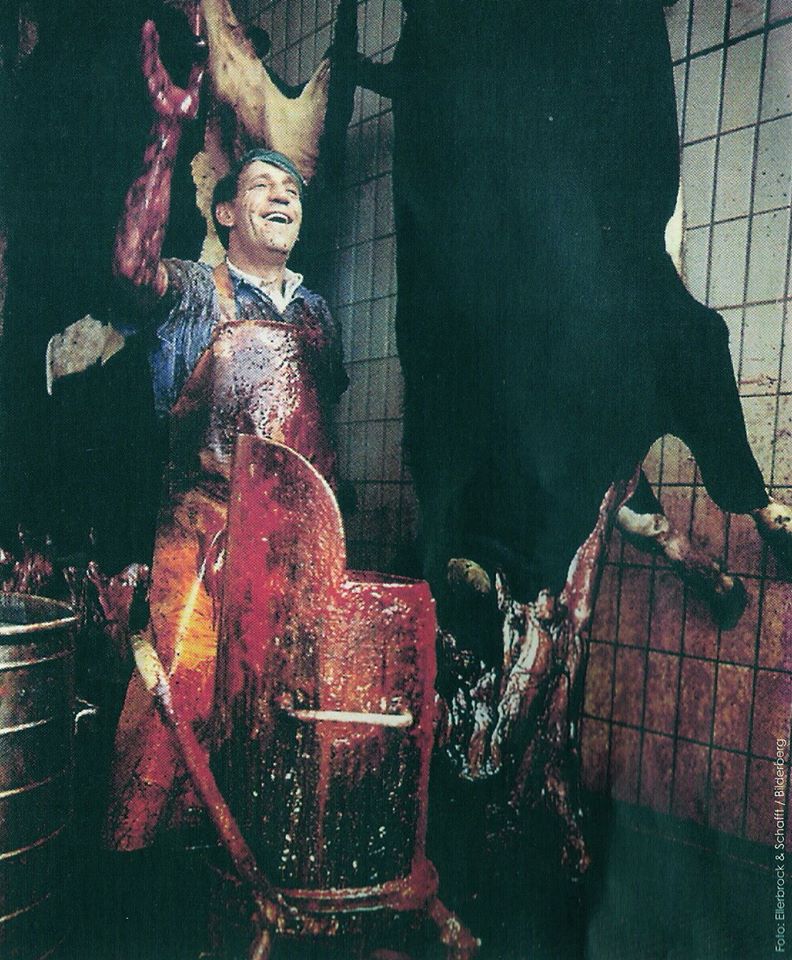
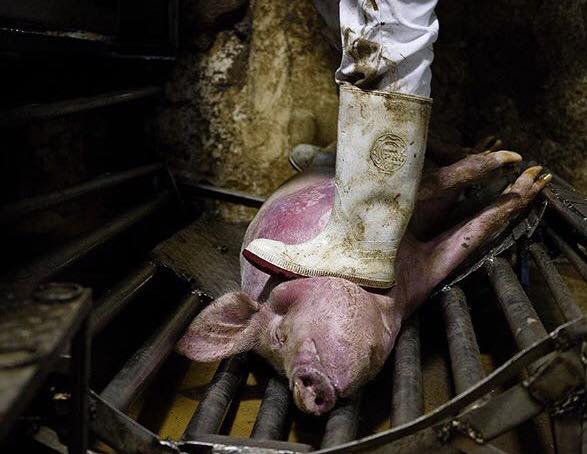
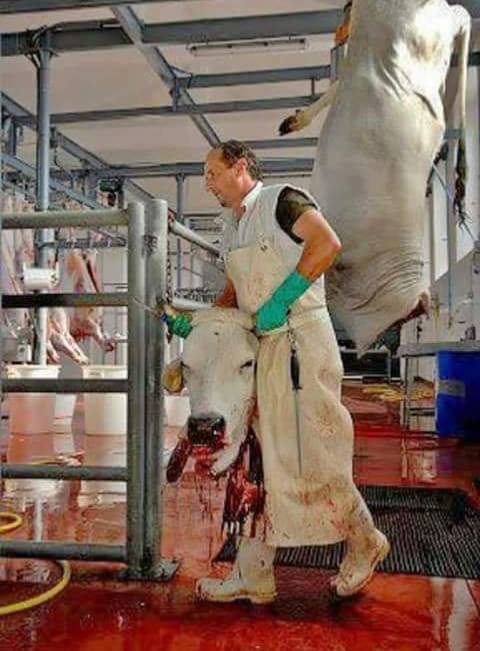
The pictures could come from anywhere, the violence and sadism of workers in animal farms and slaughterhouses is (almost) the same everywhere.
The question arises, how is it possible that a normal person becomes a cold sadist and torturer?
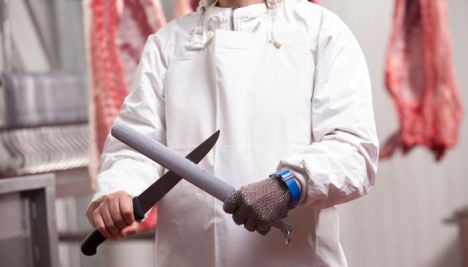
The subject of “psychology of the perpetrators of violence” had been occupying psychologists in the previous century, but the – often senseless – violence of the slaughtered workers deserves a special look.
First of all, it has to be said that many workers in the meat factories in the USA are illegal immigrants from Latin America and Asia who receive little or no training.
In Germany, slaughterhouse workers mostly come from Eastern Europe and are not employed on a regular basis.
The percentage of the core workforce in German slaughterhouses is only 10%, which is why Belgium submitted an official complaint about social dumping to the EU Commission in April 2013.
Certainly some slaughterhouse workers are already -by entering the industry-, people who are socio-sociopaths, that is: people who are antisocial and “conscience-free” in the clinical sense, and who often enjoy making others suffer.
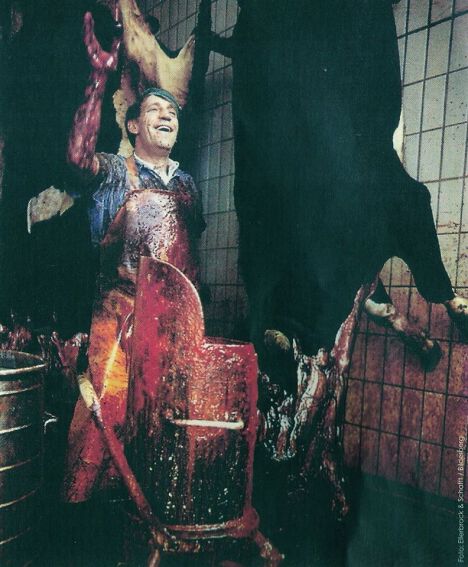
In any case, this activity is mostly practiced through “learning by doing”, which means that one looks how the others do it and also does it that way.
Given the brutality of the slaughter process and (as can be seen in the video) the brutal handling of defenseless animals, it is easy to think that people whose work is killing animals are sadists or mentally disturbed.
There are many explanations as to why someone chooses this job.
The socio-political one who says that they are normal people, but have no professional training and do this to feed their family and themselves. Marxist ideology even classified them as victims of the system.
The other explanation is that they are predisposed people, who are prone to violence and abuse of others – people or animals.
And there is also a third explanation that sees slaughterers and farm workers as the product of “group dynamics”.
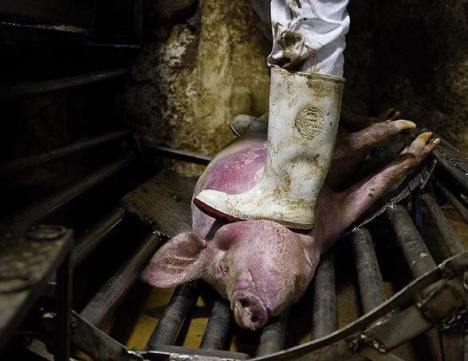
It says that the extremely irrational and violent behavior arises as an obligation to adapt and to obey in a violent environment, that of other colleagues. Anyone who rejects violence against animals as immoral and inhumane practice is ridiculed by the group as a weakling, and excluded from the group’s collective gatherings in the beer garden.
According to the third aspect, a slaughterer’s room for maneuver is limited to a predetermined aggressiveness, relentlessness, which the group shows and demands.
And so at some point, the same people who originally rejected violence and felt uncomfortable, get used to participating in this violence themselves.
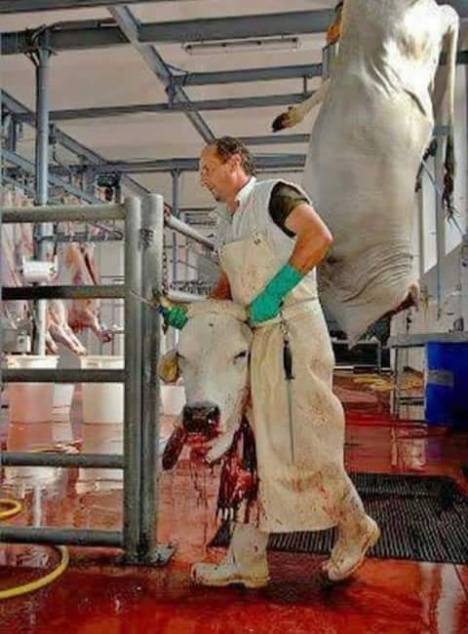
And the more they become desensitized, the more psychological stress increases because most people endure violence to a certain point.
The contact and use of violence has profound effects on the psyche, as has been found in war veterans.
You become increasingly violent, both towards animals and humans, and often develop addictive behavior.
A slaughterhouse worker said: “I often had the idea of hanging the foreman upside down on the belt and stabbing him.
Because I wasn’t allowed to do that, I left out the pressure and frustration of working at the animals …
Most of the stabbers have been arrested for assault. Many have alcohol problems, they have to drink, otherwise they cannot cope with killing live, wriggling animals all day.
Some will abuse their women at some point because they “cannot get rid of these feelings”.
(Quotes from the book by Melany Joy: “Why We Love Dogs, Eat Pigs, and Wear Cows”).
Finally, one wonders, what kind of a criminal industry is it that tolerates an extremely violent, aggressive and anti-social human potential and generates it in the real sense.
My best regards to all, Venus
Filed under: GENERAL NEWS - International / National / Regional | Leave a comment »
Posted on April 26, 2020 by Serbian Animals Voice (SAV)
Coronavirus: Australia urges G20 action on wildlife wet markets
The Australian government is calling for the G20 countries to take action on wildlife wet markets, calling them a “biosecurity and human health risk”.
Australia is not yet calling for a ban – but says its own advisers believe they may need to be “phased out”.
“Wet markets” are marketplaces that sell fresh food such as meat and fish.
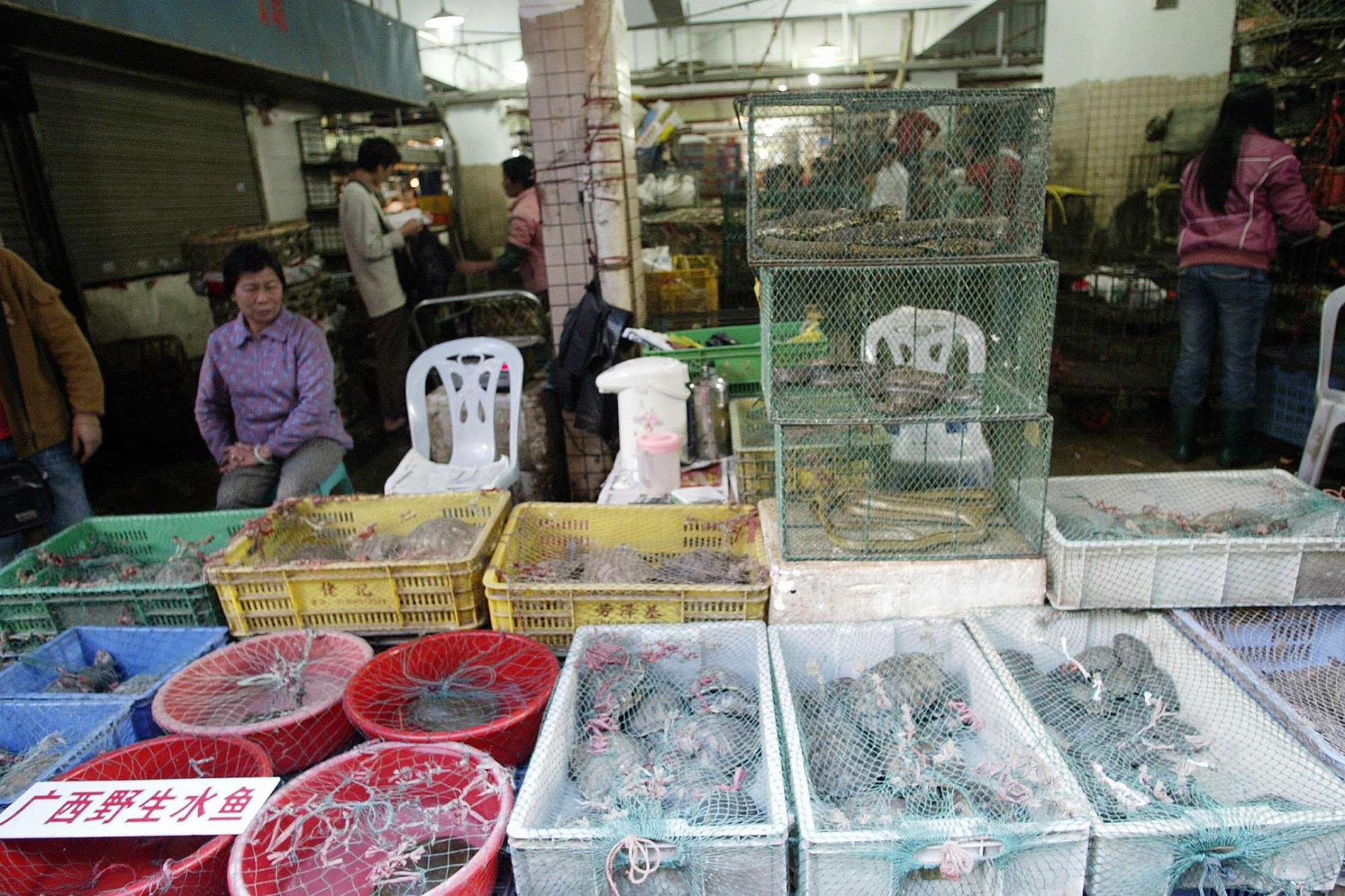
But some also sell wildlife – and it’s thought the coronavirus may have emerged at a wet market in Wuhan that sold live, “exotic” animals.
The Huanan market in Wuhan reportedly offered a range of animals including foxes, wolf cubs, civets, turtles, and snakes.
What did Australia say?
The Australian government called for an investigation into wildlife wet markets after a meeting of G20 agriculture ministers.
“A wet market, like the Sydney fish market, is perfectly safe,” he said.
“But when you add wildlife, live wildlife, exotic wildlife – that opens up human risk and biosecurity risk to the extent we have seen.
“And in fact, China themselves reported this to the World Organisation for Animal Health, that that was the cause of Covid-19.”
Mr Littleproud said he wanted to “get the science” first, but said: “Even our chief veterinary officer is telling us that he believes they [wildlife wet markets] may need to be phased out.”
What is the risk of wildlife wet markets?
The exact origin of the new coronavirus is not known, but the evidence suggests it came from an animal.
According to the World Organisation for Animal Health, Covid-19 is a “close relative” of other viruses found in horseshoe bats.
So the virus could have passed from bat to human, or via an “intermediate host” – one theory is bat, to pangolin, to human.
The Sars coronavirus is thought to have emerged in bats before passing to civets and then humans. The Mers coronavirus passed from camels to humans, after probably emerging in bats.
What has China done so far?
In January, China issued a temporary ban in the trade in wild animals, as it did during the Sars outbreak.
A month later, the government “thoroughly banned the illegal trading of wildlife” and “eliminated the consumption of wild animals to safeguard people’s lives and health”.
But since then, a number of reports have said wildlife is still being sold in markets in China and elsewhere.
More recently, the head of the World Health Organization said all governments must “rigorously enforce bans on the sale and trade of wildlife for food”.
WHO head Tedros Adhanom Ghebreyesus said: “When these markets are allowed to reopen, it should only be on the condition that they conform to stringent food safety and hygiene standards.”
Filed under: GENERAL NEWS - International / National / Regional | Leave a comment »
Posted on April 26, 2020 by Serbian Animals Voice (SAV)
‘Filthy bloody business:’ Poachers kill more animals as coronavirus crushes tourism to Africa
Key Points
-
As the coronavirus pandemic halts tourism to Africa, poachers are encroaching on land and killing rhinos in travel hot spots now devoid of visitors and safari guides.
-
In Botswana, at least six rhinos have been poached since the virus shut down tourism there. In the northwest South Africa, at least nine rhinos have been killed since the virus lockdown.
-
“It’s a bloody calamity. It’s an absolute crisis,” said Map Ives, founder of Rhino Conservation Botswana, a nonprofit organization.
Ryan Tate is supposed to be in South Africa right now helping to fight off poachers who hack horns off rhinos and kill elephants for their ivory tusks.
But since the country announced a national lockdown in March to slow the spread of the coronavirus, Tate is stuck in the U.S. He can’t join his team out in South Africa’s wilderness and can’t meet with private donors in the U.S. for his anti-poaching nonprofit organization, which is seeing donations dry up.
“It’s a helpless feeling,” said Tate, a 35-year former Marine and the founder of VetPaw, a group of American military veterans who fight poachers in a remote private reserve in the far north of South Africa.
“Poaching doesn’t stop just because there’s a virus — if anything, it picks up,” he said.
Although poaching is not uncommon in Africa, poachers during the coronavirus pandemic have encroached on land they wouldn’t normally visit and killed rhinos in tourism hot spots now devoid of visitors and safari guides.
In Botswana, at least six rhinos have been poached since the virus shut down tourism. Botswana’s security forces in April shot and killed five suspected poachers in two incidents. In northwest South Africa, at least nine rhinos have been killed since the virus lockdown. All the poaching took place in what were previously tourism areas that were safe for animals to roam.
“It’s a bloody calamity. It’s an absolute crisis,” Map Ives, founder of Rhino Conservation Botswana, a nonprofit organization, said of poaching across the continent.
There are still rangers in the African reserves, but the loss of tourist vehicles in parks provide poachers a significant advantage.
“The poachers have been emboldened because the playing field is in their favor and they won’t have as many problems moving around,” said Ives, who has lived on the Okavango Delta in northern Botswana for four decades but is stranded in South Carolina due to travel restrictions.
Highly organized illegal poaching threatens to send black and white rhinos, elephants and other African wildlife into extinction over the next several decades. The black rhino population has plummeted 97.6% since 1960 and the lion population is down 43% in the last 21 years, according to the World Wildlife Fund. At least 35,000 African elephants are killed each year and roughly only 1,000 mountain gorillas and 2,000 Grevy’s zebras remain on the continent.
“They are professional and adept at running off with rhino horns in minutes and dodging security forces. They are masters at evading detection,” he said. “It’s a filthy bloody business.”
Since Botswana’s booming tourism industry collapsed because of the virus lockdown, Ives has seen an anecdotal rise in rhino and bush meat poaching incidents. His company is running short of cash as donations dry up amid the global lockdown, and that may result in reduced patrols as a result.
“We lost hundreds of sets of eyes and ears in the delta,” Ives said. “I’m sure poachers know this — they watch these camps closely and see tourism activity.”
Africa’s $39.2 billion tourism industry is also vital in funding wildlife conservation efforts across the continent.
Africa received 62.5 million visitors, creating 9.1 million direct jobs in travel and tourism sectors in 2015, according to estimates from the African Development Bank.
Funding from sources like national park fees and safari rides are vital to wildlife conservation in Africa.
But now people working in tourism are being laid off because of the pandemic and national parks that provide wildlife a safe place from poachers are losing revenue. All three national parks in Rwanda have temporarily closed, along with Virunga National Park in the Democratic Republic of the Congo and Kruger National Park in South Africa.
“There’s a lot of people struggling in Africa, a lot of private reserves that have helped save a few species including rhinos,” said Tate. “Now they don’t have that ecotourism they depend on, it’s gone. There’s going to be a lot of damage done from this.”
There’s also a major concern that as the coronavirus harms African economies and sharply raises unemployment levels, people will become desperate for income streams and pursue poaching to make a living.
Africa reported a 43% jump in coronavirus cases over the last week, according to Africa Centers for Disease Control and Prevention. The World Health Organization has warned that the continent of 1.3 billion people could become the next epicenter of the outbreak, potentially pushing 30 million people into poverty.
Conservationists expect that in addition to professional poachers killing more animals, countries across Africa will experience a massive surge in bush meat poaching by average people since it’s cheaper to kill animals for meat than to buy it.
“Why do criminals commit acts of crime? They do it because they’re desperate and it’s a quick easy means for money,” Ryan said. “Poaching is no different. There’s a lot of desperate people out there because of the virus and [poaching] will absolutely pick up.”
Filed under: GENERAL NEWS - International / National / Regional | Leave a comment »
Posted on April 25, 2020 by Serbian Animals Voice (SAV)
Titanic travel – service

…Where can we go this summer?
Regards and good night from Venus
Filed under: GENERAL NEWS - International / National / Regional | Leave a comment »
Posted on April 25, 2020 by Serbian Animals Voice (SAV)
Pandemics like the present are a consequence of our dealings with animals and the environment. If we do not change this, the next catastrophe will not be long in coming.
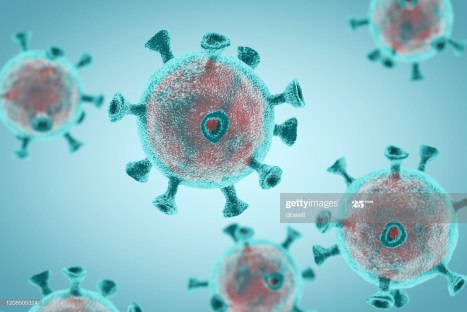
Imagine that while your country is practicing social distancing, tens of thousands of citizens are crowded together in gyms in a neighboring country.
Imagine that this neighboring country is also carrying out genetic and pharmaceutical interventions that help its citizens maintain productivity under such adverse conditions, but with the unfortunate side effect of destroying your immune system.
To finally accomplish this dystopian vision: Imagine that your neighbors had reduced the number of doctors tenfold at the same time.
Such measures would radically increase the number of deaths not only in your neighboring country, but also for you. Pathogens do not respect national borders.
They are neither Spanish nor Chinese.
Pathogens also do not respect the boundaries between different species. Flu and corona viruses move fluently between human and animal populations, just as they move fluently between nations.
There is no separate animal and human health in pandemics – just as there is no Korean and French health.
Social Distancing only works if everyone practices it – including animals.
We actually know that
The meat we eat today comes mainly from genetically homogeneous, immunocompromised and permanently medicated animals, tens of which are housed in buildings or stacked cages – no matter how the meat is labeled in the end.
We know that.
And most of us would very much wish it was different. But there are many things in the world that we want – but unfortunately they are different.

But for most of us, the future of livestock farming is pretty low on their priority list, especially in the current situation. It is understandable that we are most concerned with ourself in such a situation.
The problem is that we are not particularly good egotists.
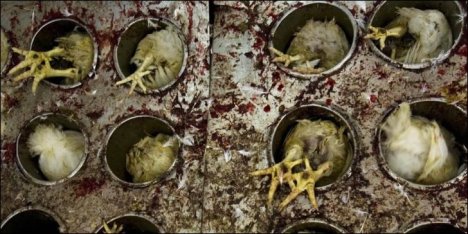
We do not yet know the entire history of the development of Covid-19, the strain of the coronavirus that threatens us today. But given the recent threat from influenza viruses such as H1N1 (swine flu) or H5N1 (avian flu) and pandemic viruses, there is no doubt that these viruses have emerged in large chicken and pig farms.
Genetic analysis has shown that critical components of H1N1 have emerged from a virus that circulates in North American pigs.
But it is the commercial poultry farms that appear to be the Silicon Valley of viral development.

Of 16 strains of novel influenza viruses currently classified by the Centers for Disease Control and Prevention (CDC – an agency of the United States Department of Health) as “particularly worrying”, including H5N1, 11 are from H5 or H7 viruses.
In 2018, a group of scientists analyzed the 39 antigen shifts, also known as “conversion events,” which we know have played a key role in creating these particularly dangerous strains. Their results demonstrate that “all but two of these events have been reported in commercial poultry production plants.”
The abbreviation CDC stands for an authority in the USA, whose name is actually Centers for Disease Control and Prevention.
We are dropping prevention from the acronym because it already sounds innocent enough. But we also tend to dismiss serious discussions about prevention in favor of reactive strategies.
This is understandable – especially in the middle of a pandemic – but in a dangerous way irresponsible.
We are concerned with the production of face masks, but apparently we do not care about the companies that cause pandemics.
The world is on fire and we are always reaching out for new extinguishers while the petrol soaks the tinder at our feet.

To reduce the risk of a pandemic for ourselves, our focus must be on animal health.
When it turned out that a number of people had become infected with the virus after visiting a wet market in Wuhan, where the virus was probably transmitted to humans by bats via an intermediate host, China closed 19,000 wildlife farms and banned wild meat from wet markets.

In the case of farm animals, however, the lack of public understanding has enabled unscrupulous corporations to steer politics in exactly the wrong direction.
Across the world, corporations have managed to implement policies that use public funds to promote industrial agriculture. A study suggests that the public is providing $ 1 million a minute in global agricultural subsidies, mostly used to support and expand the current broken model.
The same $ 1 million a minute that fosters industrial agriculture also increases the risk of pandemics.

The consequences of a mortality rate of one to two percent are omnipresent: half of the world lives under house arrest, one generation faces economic bankruptcy.
Are we able to imagine the impact of a 60 percent death rate?
Try to imagine that half of the people you knew who had the flu last year would now die. If you have children, how many of them had the flu in the last year? Force yourself to imagine these things, and then ask yourself: How much would it be worth sacrificing now to avoid that?
All of this leads to the most important question: What can we do?
The link between factory farming and increasing pandemic risk has been scientifically well documented, but the political will to contain this risk has been lacking in the past.
Now is the time to let this will arise.
It is very important that we talk about it, share our concerns with our friends, explain these problems to our children, think together about how we should eat differently.
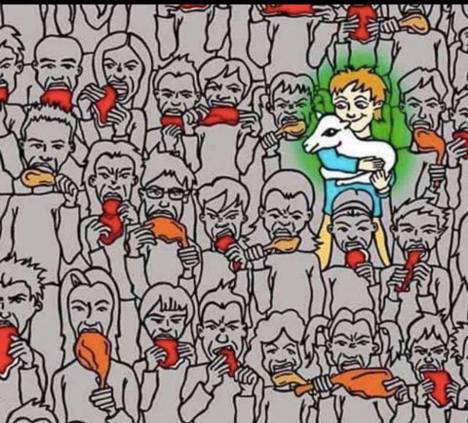
Changing one of the most powerful industrial complexes in the world – factory farming – cannot be easy, but at this moment, with what is at stake, it may be possible for the first time in our lives.
And I mean…I read this article in the “Friday” newspaper and think it is very good. A very complex topic is presented in simple words.
I only disagree with the author on one point: “But for most of us, the future of animal husbandry is pretty low on their list of priorities, especially in the current situation. It is understandable that in such a situation we are most concerned about ourselves take care of yourself.”
We put the misery of animals and the dangers that come from factory farming, not only since yesterday at the end of the list of our interests.
We always did this on principle, and most don’t associate the pandemic with meat consumption.
Because they don’t want to see the reality, they deny it.
The meat eaters believe that this is a temporary problem, so they don’t worry about how to solve it.
And none of them thinks questioning a system that creates pandemics and dangers through factory farming.
Because this system thinks for them.
We can only protect ourselves against viruses and epidemics if this system no longer exists – the animal production system.
My best regards to all, Venus
Filed under: GENERAL NEWS - International / National / Regional | Leave a comment »








 Serbian Animals Voice (SAV)