Posted on August 17, 2020 by Serbian Animals Voice (SAV)

Where has all the money gone ? – Canadian taxpayers handing out millions to failing fur factory farms.
New from ‘Respect for Animals’, Nottingham, England.
The financial crisis enveloping the fur trade has been closely monitored by Respect for Animals over recent years. North America’s fur trade has been particularly hit. Last year the North American Fur Auction (NAFA) had been taken over by Finnish fur group Saga Furs, having descended into near financial ruin. You can read the latest on Saga’s own troubles here: http://www.respectforanimals.org/desperate-saga-furs-moves-fur-auction-online-with-humiliating-results/ .
Now an in-depth report by Canadian news outlet CBC has revealed the astonishing extent of taxpayers’ money being wasted on failed attempt to prop up a cruel and unnecessary industry:
A CBC News analysis of bankruptcy and government records suggests that, since 2014, upwards of $100 million in provincial and federal money has been spent in Canada trying, often unsuccessfully, to keep individual mink farms afloat, or is tied up in loans by Crown agencies that will likely never be repaid.
The bulk of the money spent on the industry appears to have come through Agristability, a program jointly funded by the provinces and Ottawa that amounts to a disaster relief subsidy for farmers who suffer large income declines.
But so long and steep has been the fall of the mink sector that the bailouts dwarf what the industry is now worth. Last year, farms across Canada sold just $44 million worth of pelts, down from $254 million at the peak of the boom in 2013, according to Statistics Canada.
The precise amount of public money that’s been spent trying to rescue the mink industry after global prices took a nosedive in 2014 remains secret, however.
The federal Department of Agriculture refuses to release information on payments to the sector, even under access-to-information laws, citing among other things “international affairs” and “economic interests of certain government institutions.”
Not content with merely perpetuated a trade built upon inherent the suffering of animals, the remarkable actions of some fur farmers to seize profits was also disclosed.
The owners of a fur farm called Silver Hill had claimed that they had, over one March weekend, taken 20,000 mink from their cages and slaughtered them at their farm in western Prince Edward Island. The pelts were estimated to be worth up to $1 million to Asian fashion houses.
However, the fur farmers claimed that somehow all of those pelts had been ruined, meaning their income would suffer and their many creditors could not be paid. In a gruesome image of the fur industry’s environmental disregard, CBC reports that ‘looking for a way to dispose of the rotting pelts, the farm said they put the lot through a meat grinder and flushed it all down pipes and into the Gulf of St. Lawrence’.
Courts records, however, exposed the truth. The pelts were not destroyed but were instead transported to a freezer off-island, ‘apparently away from the prying eyes of creditors’.
Unsurprisingly this farm has received lavishly large sums of public money — up to $8 million in government loans and bailout payments.
This is a damning indictment of the fur industry and another example of why taxpayer money should not be used to prop up one of the world’s most inhumane industries. Fur factory farming should be allowed to die out and farmers supported to diversify into sustainable agriculture that does not rely upon terrible conditions for its profit margins.
It is clear that the Canadian fur factory industry is financial unviable and a disastrous failure for animals, unable to meet even the most basic standards of animal welfare. Respect for Animals hopes that Canada soon joins the UK and many other countries by introducing a fur farm ban once and for all.
-
You can read the CBC report here
-
Read more about the fur trade’s financial woes here
Filed under: GENERAL NEWS - International / National / Regional | Leave a comment »
Posted on August 17, 2020 by Serbian Animals Voice (SAV)
https://news.sky.com/story/greenlands-ice-has-melted-beyond-return-study-suggests-12049724
Greenland’s ice has melted beyond return, study suggests
It will now gain mass only once every 100 years, and if all the ice melts, it would push sea levels up by roughly six metres.
Greenland’s ice sheet may have melted beyond the point of return, with the ice likely to disappear no matter how quickly the world reduces climate-warming emissions, research suggests.
Ohio State University scientists studied 234 glaciers in the Arctic territory for 34 years until 2018.
They found that annual snowfall was no longer enough to replenish glaciers of the snow and ice being lost to summertime melting, which is already causing global seas to rise about a millimetre on average per year.
If Greenland’s ice goes, the water released would push sea levels up by an average of six metres – enough to swamp many coastal cities around the world.
Co-researcher and glaciologist Ian Howat said Greenland “is going to be the canary in the coal mine, and the canary is already pretty much dead at this point”.
Scientists have long worried about Greenland’s fate, given the amount of water locked into the ice.
The Arctic has been warming at least twice as fast as the rest of the world for 30 years, while the polar sea ice hit its lowest extent for July in 40 years.
Through studying satellite images, the new study found the territory’s ice sheet will now gain mass only once every 100 years.
Co-author and glaciologist Michalea King said the sobering findings should spur governments to prepare for sea-level rise, adding “things that happen in the polar regions don’t stay in the polar regions”.
But she said containing the global temperature rise can still slow the rate of ice loss.
Greenland is far from the only country rapidly losing its glaciers and moisture.
Canada’s last intact ice shelf broke apart into hulking iceberg islands in late July due to a hot summer and global warming, scientists recently revealed.
Satellite images showed that about 43% of the 4,000-year-old Milne Ice Shelf on the northwestern edge of Ellesmere Island had snapped off.
Meanwhile, scientists have warned that summer heatwaves and minimal rainfall have sucked eastern Germany’s lakelands dry, harming fish and plants.
Seddiner Lake, in the state of Brandenburg, south-west of Berlin, has sunk 60cm annually on average over the past few years, with local geographer Knut Kaiser calling it the “beginning of the end for the region’s lakes”.
Filed under: GENERAL NEWS - International / National / Regional | Leave a comment »
Posted on August 16, 2020 by Serbian Animals Voice (SAV)
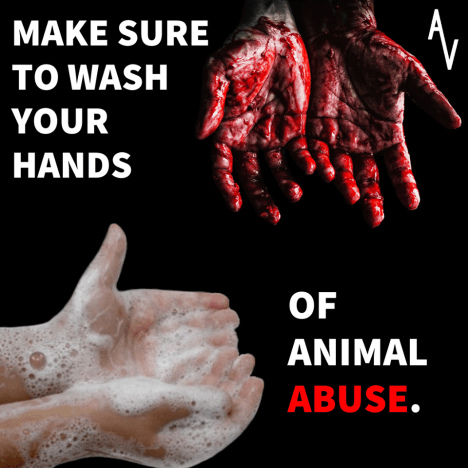
Otherwise, the meat mafia takes care of your brainwashing..
Regards and a good night from Venus
Filed under: GENERAL NEWS - International / National / Regional | Leave a comment »
Posted on August 16, 2020 by Serbian Animals Voice (SAV)
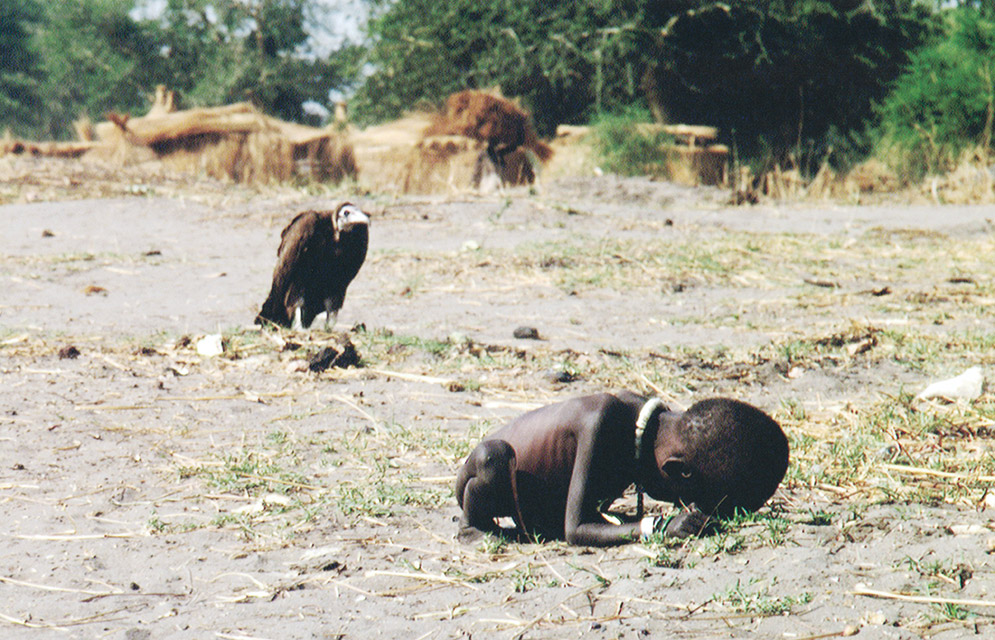
Kevin Carter is the author of a photo that has become a symbol of an emaciated continent: for “The vulture and the little girl”, the member of the famous Bang Bang Club was awarded the 1994 Pulitzer Prize.
A few weeks later, Carter is dead.

In April 1994, 14 months after capturing that memorable scene, Carter walked up to the dais in the classical rotunda of Columbia University’s Low Memorial Library and received the Pulitzer Prize for feature photography.
The South African soaked up the attention.
What was the occasion?
A monumental photo from Sudan, March 1993.
A starved little girl crouches on the floor of the Sudanese steppe, watched by a vulture that just seems to be waiting for the child to stop moving.
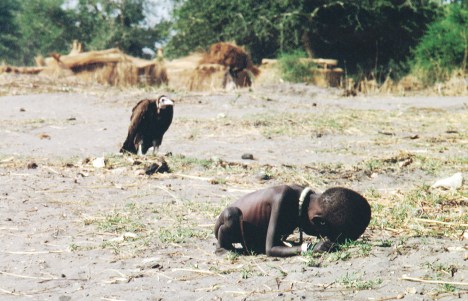 This photo of Kevin Carter’s photo was published in the New York Times on March 26th.
What happens after Kevin Carter’s photo is published in the New York Times on March 26th far exceeds any hope of donation aid.
It becomes a symbol of an independent continent, donations reach unimagined heights, hardly a humanitarian appeal for donations in the following years gets along without this motif.
Shortly after the picture appeared, the newspaper received numerous questions about the girl’s further fate. The Times slips an editor’s note, which can be summed up as follows: We don’t know anything more precise.
Kevin Carter himself reports that the little one has regenerated and found her way back to the village a few minutes after being admitted.
Critics accuse Kevin Carter of failing to provide assistance. Others go a little further: the real vulture was lurking on the other side of the viewfinder. Even some of Carter’s friends wondered aloud why he had not helped the girl.
Carter was painfully aware of the photojournalist’s dilemma. “I had to think visually,” he said once, describing a shoot-out.
“I am zooming in on a tight shot of the dead guy and a splash of red. Going into his khaki uniform in a pool of blood in the sand.
My God.!! But it is time to work. Deal with the rest later. If you can’t do it, get out of the game.
Every photographer who has been involved in these stories has been affected. You become changed forever. Nobody does this kind of work to make themselves feel good. It is very hard to continue.”
The following year, in April 1994, Kevin Carter received the Pulitzer Prize.
The award does not silence the criticism, on the contrary: Carter is accused of having exploited the girl’s suffering for his fame as a photographer.
In the same month, his friend and work colleague Ken Oosterbroek was fatally wounded during an operation in South Africa.
A few weeks later, on July 27, 1994, Kevin Carter was also dead. He died of carbon monoxide poisoning, he gas himself to death. It was suicide.
In his suicide note, he wrote among other things … “I am haunted by the vivid memories of killings & corpses & anger & pain . . . of starving or wounded children, of trigger-happy madmen, often police, of killer executioners . . .”
Information: It was not until 2011 that Spanish journalists managed to locate the family. It turned out that the little girl was really a boy. Kong Nyong, the boy’s name, died in 2007, just of legal age, with malarian fever.
And I mean…The Kevin Carter case is very interesting for us animal rights activists because we often get the same moral accusations from others who only hear about animal suffering while they are sitting in front of their television.
We are also often accused of “only” documenting as if we had promised to save all animals in the world and have betrayed this mission.
When undercover videos come from laboratories or stables, it is a reason for many people to blame why the animal rights activists did not rescue or take the animals away.
We, in our struggle for the animal’s rights, are also “haunted by the vivid memories of killings & corpses & anger & pain” that we experience every day through the videos (or often life, in actions), which we have to endure only with good nerves if we want to fulfill our mission.
And our mission is objective information, education, documents of the truth about animal suffering, and the crime it causes.
In our private life, it burdens us very much that most people can only criticize, reproach, give advice.
If all of these would actively participate in our struggle, then today there would be no more or fewer pictures of dying children, suffering animals, and injustice in the world.
Kavin Carter paid for his guilty conscience with his suicide. It was a mistake to do so, after all, he was responsible for documenting the suffering in Sudan and making it known around the world.
The billions of people who drove him to suicide with their criticism did not tell us what kind of humane aid they provided to Sudan.
This is a lesson for us animal rights activists: we should know our limits, must remain active, and not expose ourselves to the risk of breaking under the moral pressure that we get every day from a vulture society.
My best regards to all, Venus
Filed under: GENERAL NEWS - International / National / Regional | Leave a comment »
Posted on August 15, 2020 by Serbian Animals Voice (SAV)
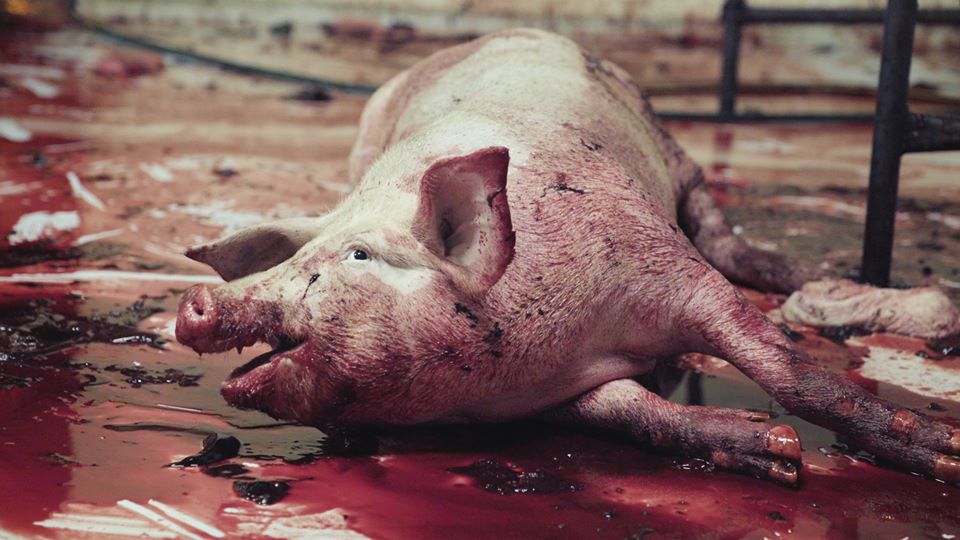
Two former butchers and a sociologist explain how animals are transformed from living creatures into row materials in professional, industrialized slaughtering, and what helps butchers to cope with their work emotionally.
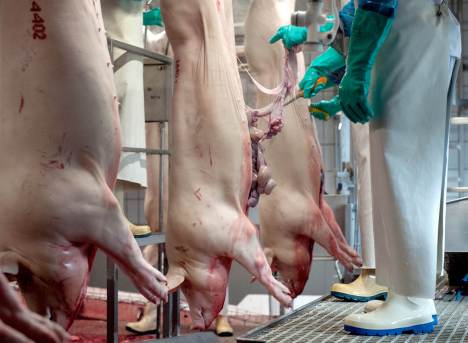
“That was actually pretty abnormal,” says Thomas Schalz today, about his work in a slaughterhouse.
He worked there for 17 years, in all areas: driving, stunning, killing, and cutting the animals. The slaughterhouse in which he worked developed over the years into a large-scale slaughterhouse specializing in pigs.
Up to 3,500 pigs were slaughtered every day.
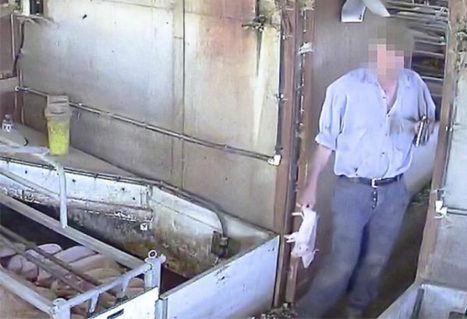
Above all, the anesthesia of the pigs with CO2, which happens before they are actually killed, is what Schalz still follows in his mind today.
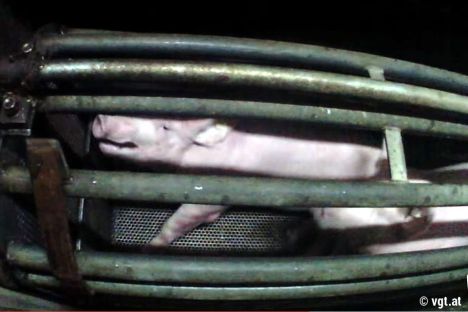
“The pigs go down in a gondola in over 90 percent CO2 gas. It usually takes 20 to 30 seconds until the animals are unconscious.
And yes, they just can’t breathe anymore. There is no longer any oxygen they can breathe.
The strongest animals try to climb over the others and stretch their trunks up out of the mesh basket to breathe oxygen. But there is no oxygen, ” says Schalz, describing the stunning process.
Peter Hübner also worked in a large slaughterhouse – as part of his apprenticeship as a butcher.
Like Schalz, he is also a dropout. He remembers: “You saw this fear in their eyes, you saw this helplessness and you deliberately drove the animals to their death.”
Looking back, he says: “That was incredibly difficult.”
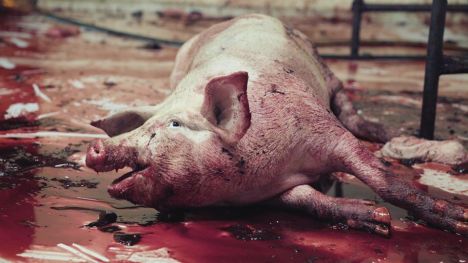
How did Hübner manage to drive so many animals to their death back then?
How did Thomas Schalz manage to drive thousands of pigs down into the CO2 pit at the push of a button over the years, knowing full well what was going on there?
How do slaughterhouse employees deal with slaughtering hundreds of animals on an assembly line every day?
How does the killing of animals become business as usual?
And I mean…In a slaughterhouse, group morale applies, that is, whoever plays the tough guy wins respect and recognition in the group.
That actually forces one to suppress emotions or inhibitions (if he has any) against the slaughter.
There are many explanations of how to become a slaughterhouse worker.
I say it very clearly! that is primarily poverty.
Capitalism is merciless towards the poor.
Anyone who no longer knows how to survive chooses the easy solution and goes to the slaughterhouse.
Despite this bitter reality: That is not why we would “understand” the slaughterhouse worker’s job, which in other words means to forgive him for doing this job.
There are also other job alternatives, garbage collectors, postmen, cleaning workers.
If you really can’t stand using electric pliers or nail guns to shot defenseless animals, slit animals’ necks to death in accord tempo, you get out and do something useful.
My best regards to all, Venus
Filed under: GENERAL NEWS - International / National / Regional | Leave a comment »
Posted on August 15, 2020 by Serbian Animals Voice (SAV)

UPDATE: Lion Cub with Legs Broken for Selfies Is Off to Sanctuary!
Simba Is Headed to Sanctuary in Africa!
More than 40,000 of you signed Lady Freethinker’s petition for justice for Simba, a lion cub who had his back legs deliberately broken to keep him still during tourist selfies.
And now, we have a heartwarming update: Simba is headed to an animal sanctuary in Africa, where he can live out the rest of his life in peace!
Innovative surgery helped the innocent lion cub learn to walk again, but he will forever remain scarred by his abusers, who have yet to be identified.
They must not get away with abusing a baby lion. If you haven’t yet, Sign the petition now to urge authorities to find and charge the perpetrator(s) who brutally snapped Simba’s legs.
Please sign the petition now to bring his abusers to justice:
Simba suffered unimaginable pain at the hands of his abusers, who put profit over his life. He endured beatings so bad his spine was severely injured, and after he got sick from lack of care, his captors dumped him in an old, dirty barn to die.
Rescuers found him literally wasting away, riddled with pressure sores and intestinal obstructions. It’s a miracle he’s alive today.
Simba deserves more than just his freedom — he deserves justice. Sign the petition for justice for Simba.
Thank you for adding your voice to help stop animal cruelty.
Nina – Lady Freethinker.
Filed under: GENERAL NEWS - International / National / Regional | Leave a comment »
Posted on August 15, 2020 by Serbian Animals Voice (SAV)




 Serbian Animals Voice (SAV)