SAV Comment – the UK had already banned ‘modern’ ivory; but old ivory selling was allowed. Now this should stop ALL ivory trade – great !
Two more nations this week announced their decision to come down hard on commercial sales of elephant ivory, further strengthening the global campaign to save these gentle giants from poachers and wildlife traffickers.
On Tuesday, the United Kingdom said it will introduce what Prime Minister Teresa May described as “one of the toughest bans on ivory sales in the world.” On the same day, on the other side of the world, the government of Taiwan announced its intention to ban all commercial sales of ivory products, starting 2020.
Britain’s announcement follows a swell of public opinion against elephant ivory — when the U.K. government solicited public input last December, 88 percent of respondents supported a ban on ivory sales. HSI sent a detailed submission to the government on behalf of 19,623 of our supporters who agreed that only the strictest regulation would be acceptable. Foreign Secretary Boris Johnson, a vocal proponent of the ivory ban, applauded the public support, stating that it is “vitally important that we reverse the tragic decline in elephant populations.”
The U.K. still needs to codify this proposal into law, and we hope it will do so as soon as possible, to ensure that unscrupulous dealers do not have an opportunity to dump their illegal or questionable stockpiles onto the marketplace before the ban takes effect. But the U.K. announcement is also crucial because it ramps up pressure on the European Commission, which is the world’s largest exporter of legal ivory.
The EU has been examining restrictions on the import, export, and sale of elephant ivory in its member countries, and we hope that it too will act immediately to reduce its prominent role in the global trade in ivory. The majority of EU ivory exports are destined for China and Hong Kong, whose ivory markets have been fueled by illegal imports for decades. For their part, China and Hong Kong have already taken steps to address the threat to elephants posed by the trade, with China prohibiting all domestic sales of elephant ivory starting January 1 this year, while Hong Kong will prohibit commercial ivory sales by 2021.
It is now up to the EU to ban the ivory trade and make sure it does not fall behind in the global war on ivory. Because legally acquired ivory is very difficult to distinguish from illegal ivory, continued trade in ivory in the EU perpetuates demand for ivory and undermines efforts to combat wildlife crime.
Taiwan’s announcement, we hope, will similarly add pressure on Japan, which has more ivory manufacturers, wholesalers, and retailers than any other country, and which trades tens of millions of dollars worth of ivory annually. Taiwan is seeking comment on its proposed ban, and HSI will soon submit a response in support of such a ban.
Our teams at HSI and The HSUS have been at the forefront of the work to end the ivory trade. Here in the United States, federal law prohibits most import, export, and interstate sales of elephant ivory, and seven states have recently passed additional safeguards and prohibit the sale of elephant ivory and rhino horns. Similar legislative campaigns are underway in New Hampshire, Massachusetts, and Pennsylvania. North of the border, HSI/Canada is keeping up the pressure to address that country’s ivory market.
In Asia, HSI last month launched a “No Ivory” campaign video featuring Yoh Daikan, an outfielder with the Yomiuri Giants, a legendary baseball team in Japan. Yoh was born and raised in Taiwan, and with assistance from Taiwan SPCA, he recorded public awareness videos for both Japanese and Taiwanese audiences, becoming the first celebrity in Japan to speak out for elephants. The Yomiuri Giants shared the press conference on multiple social media platforms, making it possible for Yoh’s message to reach the Japanese public on this important topic.
Protecting elephants is an issue that resonates with animal lovers around the world. They are sentient beings with emotions and social behaviors evocative of humans, and they are synonymous of Africa’s natural wonders and heritage. The announcements from Taiwan and the United Kingdom give us heart at a time when elephants face critical threats to their very survival and need all the help they can get.
Posted on April 6, 2018 by Serbian Animals Voice (SAV)
SAV Comment – Don’t really know what to say about this. One of Team Trump obviously trying to make a name for himself – for what ? – are there any personal interests in attempting to introduce this legislation again ? – otherwise, what is the real point ? – vested Republican interests ?
This is really now down to the good people of the USA to stop this. Under Trump; animals are getting a bad time;
The world is watching this and it is fully aware of the frightening situation.
MAGA ? – NOT when it comes to environmental issues that include animal welfare and protection.
America – the world is watching
– if you really want to even attempt to MAGA, then get this farce stopped and stopped now. We are in the UK and like the world, watching your every move !
Don’t Let Them Destroy Animal Protection Laws
If a devastating measure from Rep. Steve King (R-Iowa) passes, animal protection laws that activists have worked decades to achieve could be nullified in an instant.
Trigger Happy Steve King out on a hunt.
Says it all really !
Dog meat bans could be overturned in states like New York and Georgia.
California’s ban on cruel foie gras could become void.
Hens could be forced to live in filthy, disease-ridden battery cages in states where such confinement is now outlawed.
And puppy mills that sell sick, abused dogs could be unstoppable.
??? – By Doing This ??
We must fight back against King’s deceptively titled Protect Interstate Commerce Act (HR 4879/HR 3599), which would block states’ authority to enact their own laws against animal cruelty and unsafe food in agriculture. Don’t let this terrible measure pass!
Then, call your representative and state senators at (202) 224-3121 to respectfully tell them you are a concerned constituent and urge them to stand against HR 4879/HR 3599 and instead support laws that protect animals from abuse.
Oxford University researchers demand: We should test heart medicines on “virtual humans” in the computer instead of tormenting animals for it. How far is research here now?
Computer simulations are a faster, cheaper and more effective alternative to animal testing and will soon play an important role in the early stages of drug development, “Elisa Passini, Senior Research Associate at the University of Oxford, said in a detailed article on the latest findings in the field.
Millions of animals have to suffer – but computers deliver the better results.
To develop new medicines that can save lives, we find ourselves in a moral conflict: how to determine the risk of a new substance for humans?
So science relies on animal experiments, with all its consequences. This could one day end, because fortunately, computer systems and software are developing so rapidly that they provide increasingly better results in virtual experiments – even better than the questionable animal experiments.
Studies on new drugs and their potential effects on the human heart are 75 to 85 percent accurate in animal studies – that’s good, but far from optimal.
The latest research by the University of Oxford with computer simulations of the “virtual man”, however, come to 89 to 96 percent accuracy.
Conclusion: better results, better medication, no suffering animals.
Computer instead of animal experiments: where is the “catch”?Although computers are becoming more and more powerful, research on drugs is also pushing modern systems to their limits. While the simulation of a single (heart) cell requires a few minutes, in a 3D model of the entire heart it would be considerably more complicated. “The simulation of a heartbeat can take about three hours in a supercomputer with nearly 1,000 processors,” says Passini.
There will be limitations and hurdles in the future: The human body is complex and has evolved over millions of years – so hoping for a quick miracle in the form of the complete abolition of animal testing should not be expected. “The complicated interaction within the human organism can not be broken down so easily on a computer simulation or a chip,” said Gilbert Schönfelder of the Federal Institute for Risk Assessment (BfR) recently compared to the “world”.
So we are still at the very beginning of a development, which, after all, has already been proven in small areas.
Sources: The Conversation, Federal Ministry of Food and Agriculture (BMEL), Welt.
This is an issue that is very close to us. Please give an extra big chunk of support to Marisol in getting masses of signatures on this petition to help stray animals in Morocco. Thanks – SAV.
This is the wording of the petition to His Royal Highness, King Mohammed VI:
————————————————————————-
Your Royal Highness,
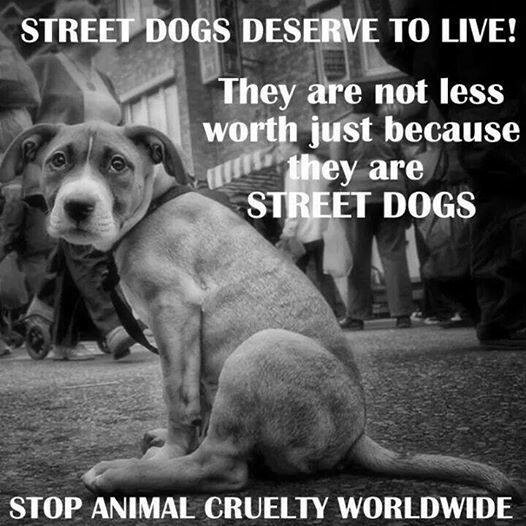
I witnessed a large population of stray dogs and cats living under extremely harsh conditions. Attached is one photo taken during February 2018 near Ouarzazate in the Atlas Mountains region showing a stray dog’s life conditions.
These sentient animals are always starving and often harmed , and are continually exposed to extreme weather conditions, without having access to shelter.
I wanted to seek your Majesty King Mohammed VI’s involvement in the following resolutions:
1.Support the prompt deployment of the Trap-Neuter-Release Pilot Program in Rabat, and oversee the expansion of the program throughout the country in the near future. This program aims to reduce the population of stray dogs and cats by inhibiting continual reproduction of these animals. Furthermore, this program promotes the health of these animals and the general population through the implementation of general check-ups and vaccinations of the former.
2.Endorse a National Domestic Animal Sterilization Program through which veterinarians promote the sterilization of pets to prevent unwanted reproduction of the animals and an increase in the stray dogs and cats population. Subsidies to cover the cost of this procedure would enable low-income pet owners to sterilize their pets and contribute to the solution of this problem.
3. Endorse education programs for both adults and children that promote treating dogs, cats and sentient beings with the respect, love, and dignity any living creature deserves, emphasizing the importance of keeping these animals inside homes as pets.
4. Condemn dog shootings, and impose legislation to prohibit this activity.
5. Endorse the installation of eating dispensers throughout the cities with food for dogs and cats. Two different options:
· A machine that is currently working in some countries such as Turkey where once someone deposits their bottle at the top, food is released at the bottom. “The Pugedon Smart Recycling Boxes” operate at no charge to the city, and the recycled bottles cover the cost of the food. Above is a link to a video where you can see the machine.
Once you shoot a selfie with a predator – Thailand holidaymakers can fulfill this wish in zoos. How much the wild animals are suffering, has revealed our reporter in Tiger Park Pattaya.
See in the video how dangerous the contact with the big cats can be.
After ten days, the tiger babies are taken away from the mother.
The tigers in the Tiger Park Pattaya roam freely, apparently lamb-like.
Every visitor can touch the cats, pet them, take a picture with them.
But how do the animals get so tame?
Animal park operator Rustem Isliamov explains it to reporter this way: “From the tenth day of life on, we train them to deal with the many visitors daily, and that they do not incur or bite them.”
He does not tell the reporter how he trains the tigers.
The Tiger wildlife expert Valeria Goller of the animal welfare organization PETA recounts: “The young tigers are regularly beaten to break their will, and only if they have no will, they can later guarantee a safe handling of the audience. The older ones get medication to keep them calm and docile. And all this works only until the tigers become five years old.
Afterwards they are sorted out and kept in cages for the rest of their live or are or are killed for the “traditional” Chinese medicine”.
The fact that a cat follows their instincts is shown by an incident four years ago in the Tiger Temple in Kanchanaburi, Thailand. The 19-year-old Isabelle Brennan was attacked by a tiger and seriously injured.
Since the tigers were not kept appropriately and illegally, the authorities closed the tiger temple.
The attitude of the animals in the Tiger Park Pattaya is not species-appropriate, says the wildlife expert.
She wants to turn on the authorities now.
Translation: Venus
Comment: While I was translating the report, I had an idea: the zoo keepers could interrupt the medication for the tigers!
Just as a test, to see if the number of visitors automatically reduces, and if the park closes tomorrow.
Yours sincerely,
Cordelia Britton
Head of Programmes
FOUR PAWS UK
P.S. We’ll be sure to send a reminder closer to the date, but you can watch the debate live on 4 June 2018. Thanks again for making this debate possible!














 Serbian Animals Voice (SAV)