
China: 800 Caged Cats Rescued Successfully in Tianjin China

Tianjin Cat Rescue – 800 caged cats rescued successfully in Tianjin China

On August the 31st , 800 cats were successfully rescued in Tianjin, China.

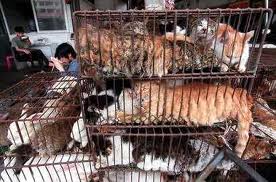
In the early morning, volunteers of Tianjin Stray Animal Rescue Group discovered a place where cat-nappers were keeping stolen cats waiting to be transported. Through social networking like Weibao, more volunteers were able to get to the location and the police were called to help rescue the cats.

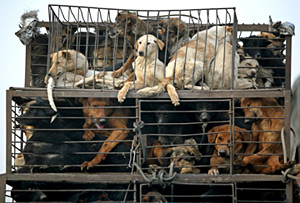
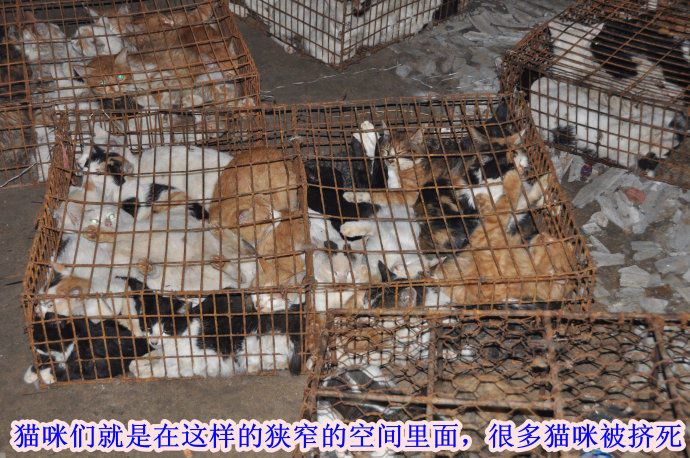
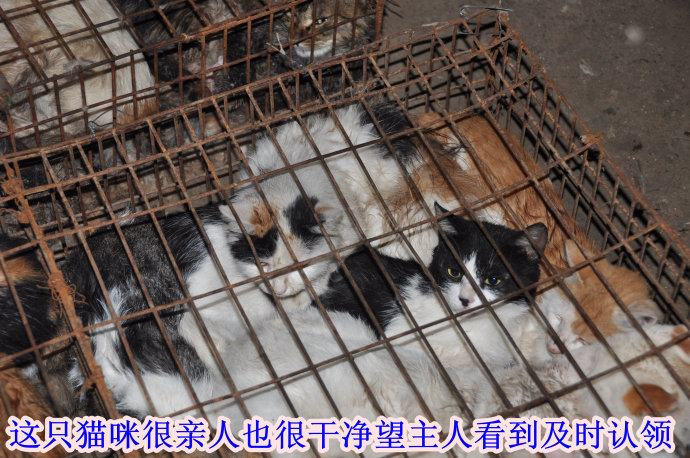
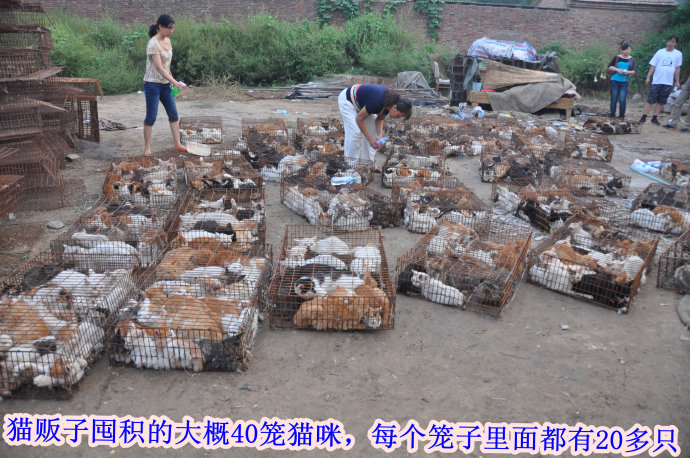
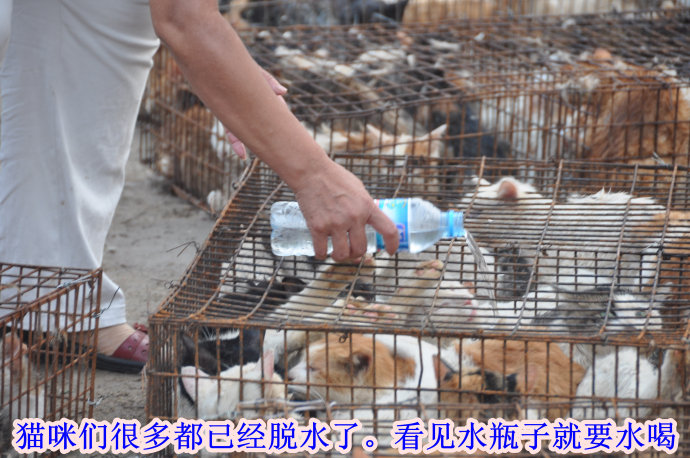
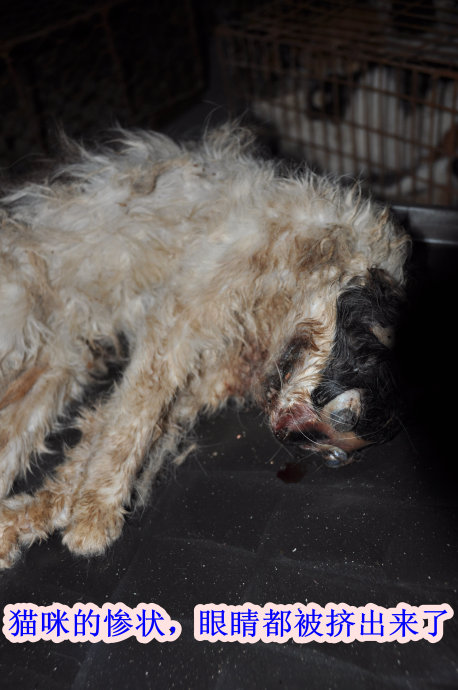
The police came in the afternoon. There were 40 cages, with over 20 cats in each cage. Some cats had already died due to the horrible conditions; some had given birth to babies, all of which had died. They were cramped inside small cages without any food and water. In the end, more than 50 cats had already passed away over the whole ordeal.

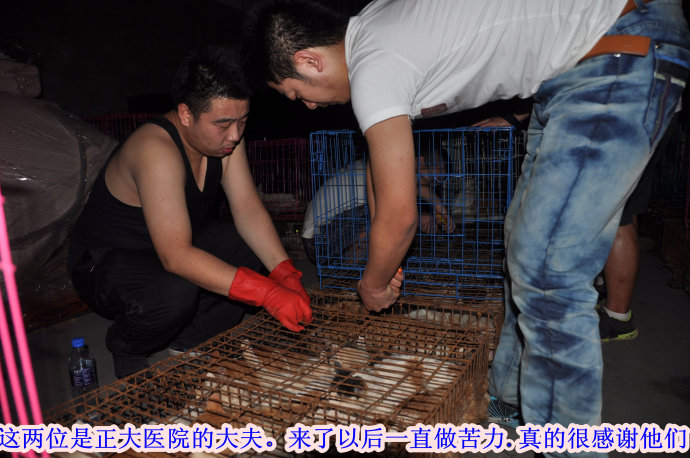
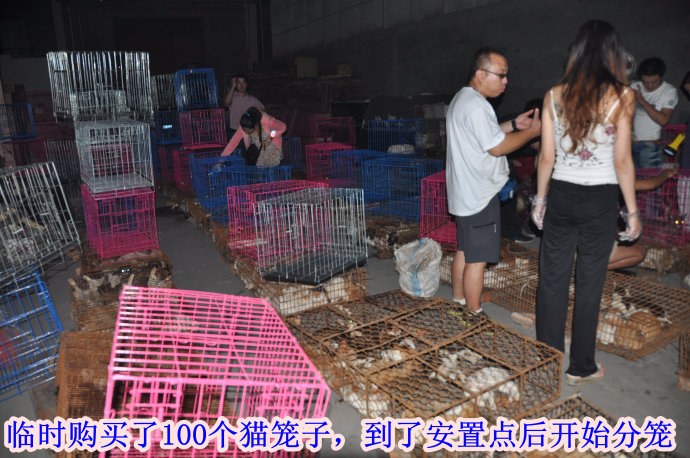
After negotiations between the police and local animal quarantine officers, all of the cats were released to the volunteers. They were moved with the volunteers to a shelter, where they were switched into more than 100 larger cages with water and food. The volunteers worked tirelessly over night and over the next few days.

Our thanks and appreciation goes towards all volunteers and helpers in this rescue; it’s wonderful to see almost all of the stolen cats be saved. Thanks to the local police and animal quarantine officers and media for their support in helping the volunteers save the cats. There is still a lot of work to go; and food and medication has been donated from loving individuals for the cats.

Many thanks again to everyone involved.

Brief translated by Joy Gao

8.31 Tianjin Cat Rescue- Hard forgotten 800 caged cats rescued successfully in Tianjin China

http://blog.sina.com.cn/s/blog_a0c6229f01019r4t.html

Italy: 2,500 Beagles To Be Found New Homes After Greenhill Vivisection Facililty Closes Down.

Great news for all animal lovers!

2,500 dogs that were destined for scientific experimentation are being rescued from the notorious Green Hill breeding facilities in northern Italy.

Although slated to be shut down, Green Hill hasn’t legally closed yet, but for now campaigners have the task of removing 2,500 beagles from the farm in less than 10 days, beginning on Friday, July 27.

With over 2,000 requests for adoptions already being processed, it seems that this will not be a problem.

The announcement was made by Italy’s State Forest Police, who also said that 50% of the confiscated beagles are 3-8 months old, and many are pregnant as adult females have been used to produce puppies for research.

From Animal Equality:

The dogs were seized during inspections last week, in preparation for the closure of the facility, which is owned by the multinational company, Marshall Farms – a commercial breeder of animals for vivisection based in the States.

Police have also said that three managers at the facility are under investigation for animal cruelty following their inspections.

But Marshall Farms is appealing to the courts, so there is a risk that the dogs may still be returned to the facility.

A little background here. According to PetPardonsNews, Green Hill consists of five buildings where 2500 adult dogs and several litters are housed. They are kept in small closed cages without natural light or air. Dogs grow in rows and rows of cages before being shipped to laboratories.

The company profiting from the pain of these animals is Marshall Bio Resources, an American firm located in North Rose, New York. Marshall’s dogs are shipped all over the world, but since the company’s purchase of Green Hill as its European headquarters and the construction of a huge farm in China, Marshall is attempting to monopolize the market.

Today’s announcement comes after many protests by scores of animal activists including, most notably, last April, when thousands of protestors marched on the company asking for the immediate release of all 2,500 dogs locked up in the facility.

Thirteen protestors actually made it inside the buildings where they opened cages and took beagle puppies and pregnant female dogs. The animals were handed over the fence to protestors waiting on the other side amid cheers and applause, with 30 beagles in all rescued.

Let’s hope Green Hill remains shuttered, dealing a blow to the horrible practice of vivisection.
Read more: http://www.care2.com/causes/2500-beagles-slated-for-vivisection-are-freed.html#ixzz21p0tWYaj

SAV Previous Link:

https://serbiananimalsvoice.wordpress.com/2012/05/07/italy-activists-the-86-rescue-beagles-destined-for-vivisection-from-breeding-facility/

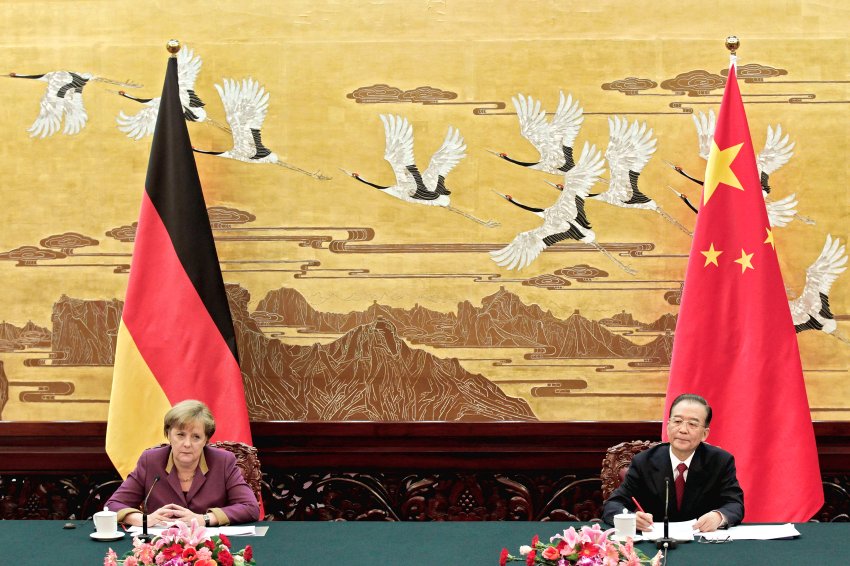
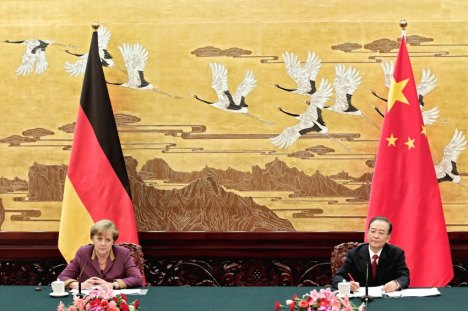
Germany: Merkel in China – Berlin’s Cozy New Relationship with Beijing. To Hell With Animal Welfare.

08/29/2012

Merkel in China Berlin’s Cozy New Relationship with Beijing

By Markus Deggerich, Ralf Neukirch and Wieland Wagner

German Chancellor Angela Merkel and much of her cabinet are headed to Beijing on Thursday for a two-day diplomatic offensive. China has quickly become one of Germany’s key partners, but several heated disagreements remained to be solved.

The quality of the relationship between two world leaders isn’t revealed in official appearances, military parades and festive dinners that have been planned down the very last detail. Instead, it is reflected in the small gestures and conversations that take place on the sidelines of the main events, especially when unexpected problems arise.

That was the case in February, when German Chancellor Angela Merkel was last in China. The Chinese authorities had prevented human rights attorney Mo Shaoping from attending Merkel’s reception at the German Embassy in Beijing. Merkel could have scored points with voters back home by issuing in sharp protest. But it would have also complicated her foreign-policy mission.

Instead, the chancellor took Chinese Prime Minister Wen Jiabao aside during the dinner and suggested that he consider how much damage China was doing — especially to its reputation — by barring Mo from the event. In fact, she said, the incident was already dominating coverage of her trip in the German press.

Wen could have bridled at Merkel’s attempt to intervene in China’s internal affairs, as Chinese politicians tend to do in response to reproaches from the West. Instead, he listened quietly to what Merkel had to say, and she got the impression that he at least understood her argument.

Such quiet crisis diplomacy shows how far the German-Chinese relationship has come in recent years. Almost unnoticed by the general public, German foreign policy has undergone a remarkable transformation. China is no longer seen as merely a market for German goods and supplier of cheap products. For the German government, Beijing is now one of its most important political partners outside the Western alliance. Conversely, the Chinese leadership sees Merkel as its central point of contact in Europe.

Pivoting from Moscow to Beijing

Just how close the relationship between the two countries has become will be evident this Thursday, when Merkel travels to Beijing for two days of intergovernmental consultations accompanied by nine cabinet ministers and two parliamentary state secretaries. It’s an important political gesture seeing that the German cabinet only meets regularly with select partners. China does not have a similar arrangement with any other country.

Merkel’s shift toward China isn’t just a result of close economic integration between two of the world’s largest exporting nations. Germany does not buy more goods from any country. Germany ships 6 percent of its exports to China, or almost twice as much as it did only three years ago. China is one of the most important markets for machine-builders and automakers. The Chinese, for their part, need German know-how to continue modernizing their country.

China also has an interest in the survival of the euro. In the long term, Beijing wants to establish its own currency, the renminbi, as the global reserve currency, next to the US dollar. It needs the euro to break the dominant position of the American currency in the long run. Thus, for as long as the Germans support the euro, the Chinese will also do so. They recently promised, without further ado, to contribute an additional $40 billion (€32 billion) to the coffers of the International Monetary Fund (IMF).

In fact, Merkel reportedly plans to directly ask China for aid in combating the ongoing euro debt crisis in Europe. Senior government officials say she will bring up the issue of whether the Chinese would like to directly purchase sovereign bonds of Spain and Italy, the two major ailing euro-zone countries, arguing that their high yields makes them an attractive investment.

Berlin’s interest in China, however, goes well beyond economic relations. Since China is one of the five veto powers on the United Nations Security Council, Beijing plays a decisive role in the central issues that, besides the euro crisis, are currently important for German foreign policy.

The Chinese are as important a factor in the negotiations over the Iranian nuclear program as in the discussions over Syria’s future. Only a few years ago, when voting in the Security Council, China took its cue from Russia on matters that did not directly affect its own interests. When the West wanted to assert important positions, it had to appeal to Moscow and not Beijing.

But now foreign policy experts in Berlin assess the situation differently. On the Syria question, for example, it appears that China is more open to taking a constructive approach. As a result, the discussion over how the world community should deal with the regime of Syrian President Bashar Assad will play a central role during Merkel’s talks in Beijing.

Until now, the Chinese have blocked all attempts by the West to adopt a Security Council resolution against Assad. But the Germans now hope that Beijing’s position could change. It is encouraging that China has announced plans to provide aid for Syrian refugees, says a senior government official in Berlin.

The Chancellor’s newly strengthened emphasis on China also has to do with changes in Russia. The Russian approach to the West has become more rigid since Vladimir Putin returned to the Kremlin as president in May. Merkel has given up hope of being able to convince Putin to agree to compromises on important issues, such as the Syrian conflict. Officials in Berlin also fear that Moscow could veer away from the collective position in the Iran negotiations. Under these conditions, Germany’s pivot toward Beijing is also a turning away from Moscow.

Merkel’s Changed Stance on China

A few years ago, this sort of policy would have been inconceivable. At the beginning of her chancellorship, Merkel still used the German-Chinese relationship to bolster her own domestic profile. At the time, she sought to portray herself as a staunch advocate of human rights, much to the chagrin of then-Foreign Minister Frank-Walter Steinmeier, a member of the center-left Social Democratic Party (SPD), Merkel’s coalition partner at the time.

But the strategy was popular with the general public. She met with the Dalai Lama, the spiritual leader of the Tibetans, at the Chancellery in September 2007. Opinion polls showed that it was a very popular decision. Beijing, however, perceived the chancellor’s behavior as a provocation, especially as Merkel had met with the Chinese prime minister a short time earlier, without telling him about her plans. The mood did not improve when she declined to attend the Beijing Olympics in 2008.

But that was yesterday. These days, Merkel addresses human rights issues much more quietly. Last spring, the Chancellery denied reports that Merkel had urged the Chinese leadership to release jailed artist Ai Wei Wei — even though the reports were true.

“Merkel is far more reserved on human rights issues than she used to be,” says Eberhard Sandschneider, director of the German Council on Foreign Relations. “She has a new, more pragmatic approach to Beijing. Now she is more likely to be motivated by classic power politics. The days of reprimands are over.”

Merkel’s view of China has also changed. She is fascinated by the Chinese leadership’s attempt to economically transform their enormous country while avoiding social unrest. Despite all criticism of political conditions, she is impressed by how quickly the Chinese have catapulted their country to global preeminence, both economically and politically.

The international political situation has also changed in a fundamental way. When Barack Obama was elected US president, it initially seemed like Chinese-American relations were on the mend. But that is no longer the case. The US’s traditional allies in the Pacific, most notably Japan, view China’s growing power with concern. The Americans now leave no doubt that they want to curb China’s regional ambitions.

Part 2: A Strengthening Partnership

Germany could end up running away with the bone as the third dog in this conflict. During her conversations with Chinese leaders, Merkel has often been told that they don’t want a bipolar world dominated by China and the United States. But the Chinese government does have an interest in seeing Europe retain its strength as an important international political player.

In this context, the Chinese see Merkel as their most important European partner. Beijing considers her to be a politician who keeps her promises, unlike former French President Nicolas Sarkozy, for example. As he did during her last visit, Chinese Prime Minister Wen Jiabao will also accompany Merkel when she visits a second Chinese city. After Beijing, she will travel to the nearby city of Tianjin, Wen’s hometown. It is a rare diplomatic honor.

It was also Wen who pushed to have the intergovernmental consultations take place before the change in leadership this fall. He apparently wanted to ensure that the talks become established before Beijing’s new leaders assume office.

Many Chinese look to Germany as a role model for internal reforms. Despite the euro crisis, the country boasts historical record values in all key economic indicators, concludes the first “Germany Development Report” completed at Tongji University in Shanghai. The study, the results of which were reported throughout the country by the party newspaper People’s Daily, will reanalyze the situation in Germany every year from now on.

Remaining Problems

As good as relations between Berlin and Beijing may have become, the remaining problems are also considerable. In addition to the critical human rights situation, the biggest strain on the partnership is Chinese attempts to hijack German know-how.

During Merkel’s last visit to China, German business owners complained to her about the Chinese authorities’ notorious “certification process” for German goods and plants. They described it as an especially perfidious form of institutionalized industrial espionage.

German investors in China constantly complain about how brazenly their local partners siphon off Western knowledge. For instance, Volkswagen recently learned that the state-owned auto giant FAW, VW’s joint venture partner in China, is apparently copying transmissions and engines for its own models. But rather than jeopardize its position in China, its most important overseas market, the German automaker has declined to level public accusations against the Chinese.

Classic espionage also continues to be a strain on relations. Berlin is irritated by the audacity with which China spies on both German companies and the government.

Indeed, although Germany and China are economically dependent on each other, they remain bitter competitors. And as members of the German parliament, the Bundestag, experienced last week, they are also two partners with completely different systems. The German-Chinese Parliamentary Friendship Group had planned to fly to China two Saturdays ago for meetings with Chinese politicians, trade-union officials and business representatives.

On August 14, four days before the group’s scheduled departure, SPD parliamentarian Johannes Pflug sent an urgent email to his fellow Bundestag members. The Chinese parliament, the National People’s Congress, had informed him that it was “not in a position” to issue the invitation to the group of German lawmakers.

The Chinese offered no explanation, but the Germans believe they know why they were disinvited. The Chinese were apparently offended that Bundestag President Norbert Lammert had not met “officially” with the chairman of the National People’s Congress in Berlin but, rather, had merely invited him to an official dinner.

In addition, the Chinese authorities apparently wanted to prevent the German lawmakers from meeting with representatives of the Uyghur ethnic minority. The Germans now expect the government to address the issue in Beijing this week.

It isn’t the only problem Merkel is expected to solve. A group of some 30 China correspondents with German media organizations, including SPIEGEL, wrote a letter to Merkel asking her to address deteriorating working conditions for foreign journalists during her visit “at the highest level” and to request that China offer them the same working conditions to them that Chinese journalists enjoy in Germany.

“The police and state security officials continue to interfere with our work,” the letter reads. According to the journalists, the authorities openly threaten to refuse to extend visas when journalists report on “sensitive” issues and either prevent or strongly discourage sources from speaking with them.

Uncertain Futures

These problems suggest that it is still unclear whether Merkel’s China diplomatic offensive will be a success. No one can predict how reform-oriented the future Chinese government will be. The gap between rich and poor is widening, and the economy is no longer growing as strongly as it was a few years ago. In fact, it is quiet possible that a worsening economic situation will lead to more repressive domestic policies.

This would also affect foreign policy. At the moment, the Germans are betting that Beijing will become more open to Western arguments in the UN Security Council. But this is still little more than a hope, given that the Chinese leadership has not shown any evidence of a new posture.

“We talk about partners,” says one German official, “but exactly when the Chinese will become true partners is in the stars.”

Translated from the German by Christopher Sultan


SAV Comment:

And now, as for animal and human suffering in China; just like human rights issues; Merkel turns in the other direction.
England UK: Petition Calling for Much Better Signage on ‘Sealed Box’ Live Animal Transporters Within The EU.

Subject: Petition for Better Signage on Sealed Box Type Animal Transporter Trailers.

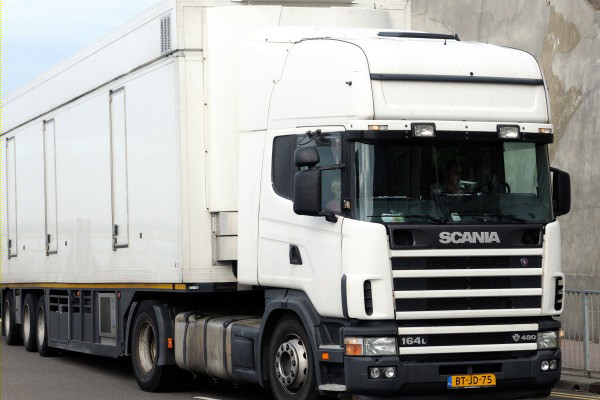
This is a sealed box type  trailer which is sometimes used to carry live animals around Europe;

NOT clearly identified for doing this as can be seen.  There are around 300 live sheep in this trailer.

Would  you know it ? – do emergency services know it ? – If not, please sign the petition.

Petition Link:

http://www.thepetitionsite.com/740/060/667/better-identification-for-box-type-livestock-carrying-vehicles-throughout-the-eu/ 

Dear all;

I undertake live animal transport investigation work in addition to SAV.  In relation to live animal campaigning, I have created a petition associated with live animal transport in sealed ‘Box’ type trailers as sometimes witnessed at Ramsgate port in England, UK.  This type of trailer is used much more in mainland EU than in the UK.  I am calling for much better signage on all trailers that operate in this way throughout the  EU, especially should the vehicles become involved in any type of accident.  Emergency services attending from whatever national rescue service need to be informed that live animals are being carried – and  this is far from clear at the moment as can be seen from Valerie’s photos.

This is initially aimed at the responsible Commission (for animal welfare legislation) at the EU, and once completed, will then be diverted to Minister Jim Paice to simply ask him and the UK government to take action on this issue within the UK – to enforce better UK legislation.  This will all happen before the Euro Elections which will take place next summer.   From how Mr Paice, the Conservative Minister at Defra acts (or does not), we can obtain a view on the Conservative policy on this issue and live animal transport in general (if we dont already know !) and then decide on our voting route for the 2013 euro Elections; a system that elects Members of the European Parliament (MEPs).

I hope that you can give your support and signature to this. YOU DO NOT HAVE TO BE AN EU CITIZEN TO SIGN THIS – SIGNATURES FROM ANYWHERE IN THE WORLD ARE WELCOME.

The above Care2 link should take you to the petition.

Thanks

Mark. – Founder SAV.

————————-

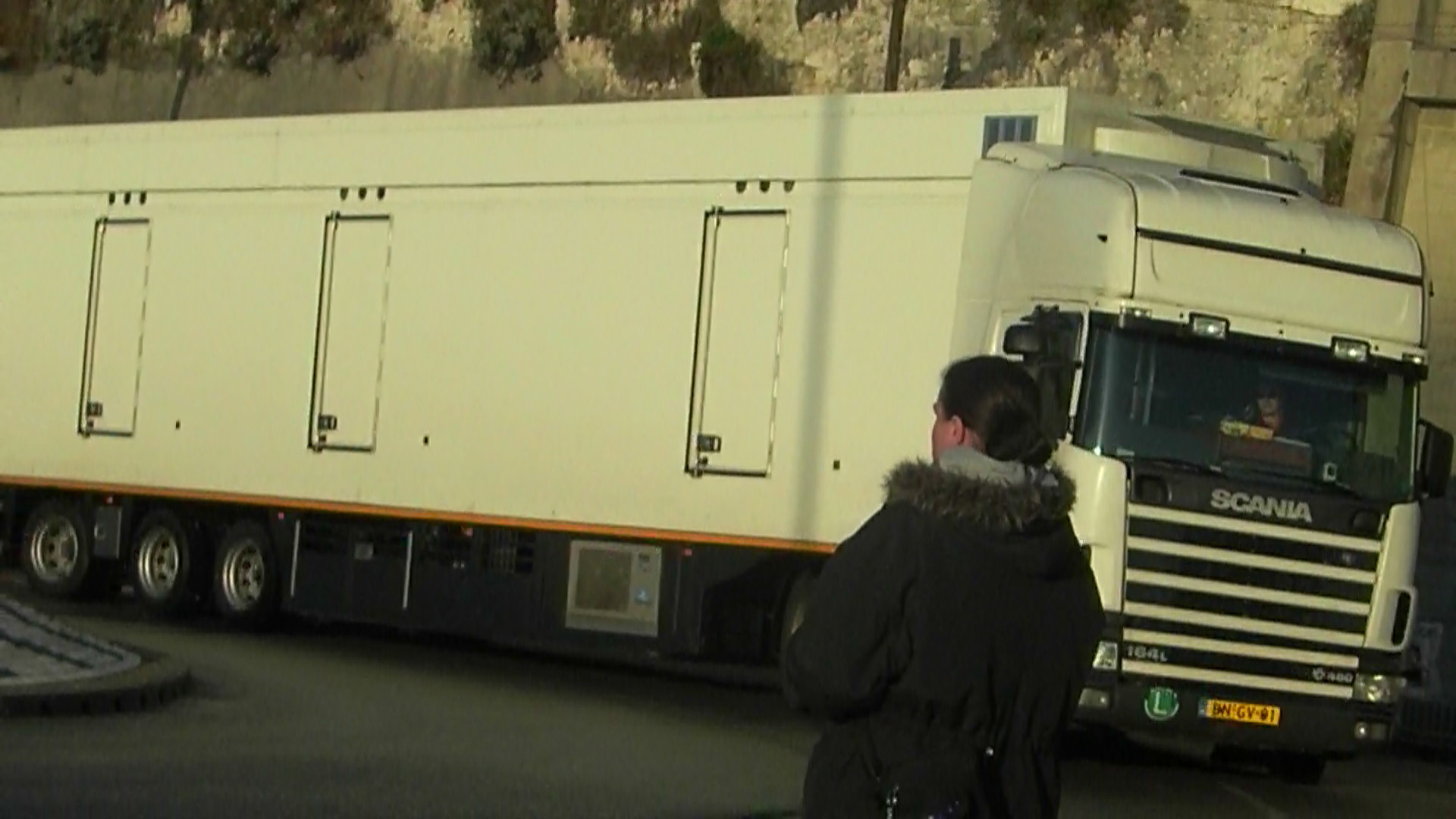
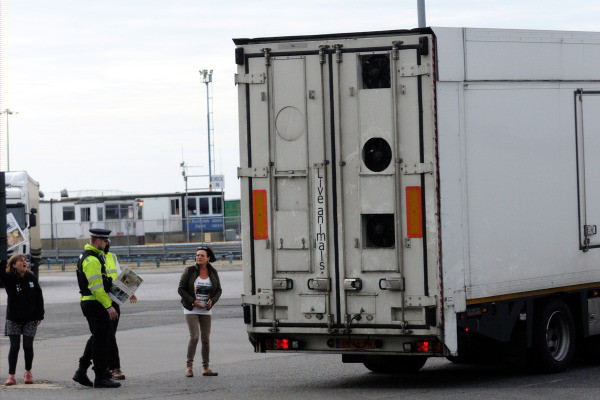
The wording of my petition is as follows and attached you will see a photos by Valerie Cameron and Bill of exactly this type of Dutch registered trailer carrying live animals out of Ramsgate port, Kent, England.:

Not all animals being transported by road across the EU go in ‘conventional’ livestock trailers which have exterior air vents fitted to each tier, providing air to the animals.  Some trailers are completely sealed as shown in the photograph (this truck has several hundred sheep in its trailer) giving most outside observers the conception that anything other than live animals are being carried within it.  We feel that this should be made much more evident to outside observers and especially emergency services should an accident occur.

Chapter II Para 2.1 of Council Regulation (EC) 1/2005 on the protection of animals during transport and related operations (and amending Directives) simply declares that:

“vehicles in which animals are transported shall be clearly and visibly marked indicating the presence of live animals, except when the animals are transported in containers marked in accordance with paragraph 5.1 – a sign indicating the top of the container”.

Observations taken in the UK by animal welfare campaigners have noted that with sealed ‘Box’ type articulated trailers which are sometimes used for the transportation of livestock such as sheep and calves, there is (very) insufficient exterior identification on these vehicles to identify that livestock is even being transported within them.

This is completely unsatisfactory.  Should any one of these sealed ‘box’ type trailers ever be involved in a road accident anywhere within the EU; there is currently very little possibility that (national) emergency / rescue services personnel would even know that live animals are being transported within the trailer.  From observations in the UK, clear and visible marking declaring ‘live animals carried’ on all parts of the box trailer does not exist !

Without this information that live animals are being carried / transported, the same animals may be left within the enclosed trailer should it become involved in an accident on the highway.  In addition, as the trailers are sealed and only use electrical power for (internal) animal ventilation; should this be cut off as the result of any accident, many animals may be suffocated and die as a result.  Time is of the essence here – emergency services need to be informed that live animals are within the trailer and to be able to gain access to them as soon as possible in order to prevent deaths.

This petition calls on the EU Director General of Health and Consumers (SANCO); who is responsible for ensuring good animal welfare, along with all EU national animal welfare government ministers to undertake the necessary legislation changes to:

Ensure that Council Regulation (EC) 1/2005 on the protection of animals during transport is much updated through formal document legislation to ensure that clearly visible evidence is provided to outside observers that live animals are being transported within these (sealed) ‘box’ type trailers

Ensure that emergency services personnel from any EU member state are able to visually identify that the trailer concerned IS carrying live animals – something which is NOT obvious to outside observers with current sealed ‘box’ trailers

Ensure that all sealed ‘box’ type trailers carrying live animals are identified as ‘carrying live animals’ by way of:

Large, clear WARNING SIGNS showing that live animals are being transported within the trailer(s) in question, and that these warning signs are fitted on:

  • The sides of the trailer – in at least 3 positions
  • The front and rear of the trailer – in at least 2 positions
  •  The roof of the trailer – in at least 3 positions
  •  The underside of the trailer – in at least 2 positions

All these positions would ensure that in the event of any major accident or overturn, emergency services attending would be clear of the trailer content – live animals.

In addition, a warning sign fitted on both the sides and rear of the trailer must identify to emergency rescue personnel that:

 ‘in the event of an accident, the air ventilation power system to the sealed trailer may be disrupted; and that animals contained within the trailer should be provided with fresh, externally sourced air as soon as possible to avoid their suffocation’.  Basically; the trailer doors must be opened.

Signage should be in at least two main European languages – English and French and / or German for example.

Vehicles carrying live animals in sealed ‘box’ trailers on the roads of the EU at present are VERY inadequately identified as doing such; they can easily be mistaken for refrigerated trailers rather than those transporting live animals, as can be seen in the photograph associated with this petition.  It is time for this to be rectified with the use of good, clear and adequate signage all exterior faces of the trailer, including – top, bottom, front, rear and both sides.

As an animal welfare organisation within the UK, we immediately call on the Director General of Health and Consumers (SANCO) to ensure that this becomes urgent legislation to ensure that live animals are given better protection during transport by the use of large, clear and easily identifiable signage applied to all sealed ‘box’ trailers.  This update must be applied to Council Regulation (EC) 1/2005 on the protection of animals during transport and related operations which is applicable throughout the EU.


 Note one pathetic vertical sign saying ‘Live Animals’ at the rear – this is not good enough; clear signage is a must.

Please add your name to the petition. Thank You.

Petition Link:

http://www.thepetitionsite.com/740/060/667/better-identification-for-box-type-livestock-carrying-vehicles-throughout-the-eu/  


Charmaine Tham: Recruit dogs to prevent rabies – continual killing is NOT the answer.

Excellent video link: 

http://talentsearch.ted.com/video/Charmaine-Tham-Recruit-dogs-to;TEDSydney

Charmaine Tham: Recruit dogs to prevent rabies

Charmaine Tham, the Vice President of Vets Beyond Borders, has worked as a veterinarian and educator on several dog health programs. She has worked on a project to reduce human rabies deaths in India.
Note: We want you to see these talks exactly as they happened!

SAV CommentPlease pass on to ignorant Serbian politicians – even those who have a vested interest in making money out of continually killing dogs.  As the video shows; killing is not the answer; it does not work !

USA: Cows Electrocuted, Abused at California Slaughterhouse

Cows Electrocuted, Abused at California Slaughterhouse

by Piper Hoffman   – August 21, 2012 – 6:00 pm

After seeing an undercover video of shocking cruelty to cattle at California slaughterhouse Central Valley Meat Company, the USDA shut the plant down, according to the Associated Press and National Public Radio. At least two USDA inspectors worked on-site at the facility; both have been suspend

View a four-minute excerpt of the video here .

Compassion Over Killing taped the torture at Central Valley Meat Company over the course of two weeks this summer. It showed workers abusing cows who could not walk by shocking them with electric prods, shooting them repeatedly with captive bolt guns, kicking them, pulling them by their tails, and prodding them with forklifts. Workers also killed conscious animals, leaving them to bleed to death while hoisted in the air by one ankle.

The USDA visited the slaughterhouse after receiving the video from animal advocacy group Compassion Over Killing and found “egregious inhumane handling and treatment of livestock.” According to the USDA, this means “an act or condition that results in severe harm to animals,” and it includes seriously repulsive conduct:

1. Making cuts on or skinning conscious animals;

2. Excessive beating or prodding of ambulatory or nonambulatory disabled animals or dragging of conscious animals;

3. Driving animals off semi-trailers over a drop off without providing adequate unloading facilities (animals are falling to the ground);

4. Running equipment over conscious animals;

5. Stunning of animals and then allowing them to regain consciousness;

6. Multiple attempts, especially in the absence of immediate corrective measures, to stun an animal versus a single blow or shot that renders an animal immediately unconscious;

7. Dismembering conscious animals, for example, cutting off ears or removing feet;

8. Leaving disabled livestock exposed to adverse climate conditions while awaiting disposition, or

9. Otherwise causing unnecessary pain and suffering to animals, including situations on trucks.

Slaughterhouse owners Brian and Lawrence Coelho denied any wrongdoing. According to the Better Business Bureau, Central Valley Meat Company has been in business since January 1989.

Central Valley Meat Company provides ground beef to the USDA for its food programs, including school lunches. The cows it slaughters are dairy cows who no longer produce enough milk to be profitable to their owners. Dairy cows make up approximately 2.8 million of the 150 million cattle who are slaughtered for meat each year in the United States.

It is illegal to slaughter sick cows for human consumption. The USDA’s investigation of the slaughterhouse includes ascertaining whether the cows abused because they could not walk were weak from illness.

Compassion Over Killing’s undercover investigators have documented abuses of animals raised for food at many facilities, including those producing chicken, eggs, turkey and foie gras.

http://www.care2.com/causes/cows-electrocuted-abused-at-california-slaughterhouse.html

http://www.huffingtonpost.com/john-robbins/central-valley-meat_b_1821942.html

Could Anyone Find This Animal Abuse Tolerable?

Posted: 08/22/2012 1:09 pm

Yesterday, the USDA shut down operations at Central Valley Meat Co. in Hanford, Calif. The facility, located at the center of California’s dairy industry, slaughters California dairy cows when their milk production declines and sells their meat to make hamburger for the school lunch program. Federal regulators took the action after receiving undercover footage taken at the slaughterhouse by an animal welfare group, Compassion Over Killing.

Central Valley Meat Co. is owned by Brian and Lawrence Coelho. Asked for a comment, Brian Coelho said: “Our company seeks not just to meet federal humane handling regulations, but exceed them.”

Meanwhile, the California Milk Advisory Board tells us that “Happy Cows Come From California.” In fact, the agency has just this past week once more cranked up the ad campaign with a new twist. Titled “Friends,” the new ads use a happy and talkative cow to convey the unmistakable feeling that by eating California cheese and drinking California milk, you are expanding your family to include friendly cows. The tag line is “Make us part of your family.”

Factory farm dairies have long employed the PR tactic of telling consumers that they treat their animals “just like members of their own families.” Considering the footage provided by Compassion Over Killing, I hope that isn’t true. It shows dairy cows bleeding and thrashing painfully after being repeatedly shot in the head with a pneumatic gun in bungled efforts to render them unconscious prior to killing them. One cow is shown still conscious and flailing as a conveyor lifts her by a single leg for transport to the area where her throat will be slit.

If you’ve eaten at In-N-Out Burger recently, you may have eaten a burger made from the flesh of a cow killed at Central Valley Meat Co. The burger chain has regularly obtained meat from this slaughterhouse but severed ties with the company yesterday after learning of the current situation. After seeing the footage, USDA officials began investigating whether beef from sick cows has reached the food supply and should be recalled. The practice of sending meat to market from sick animals is illegal.

How often are dairy cows treated this badly in today’s slaughterhouses? It’s anybody’s guess. The industry has gotten legislation passed that makes it illegal to take undercover footage of cruelty to farmed animals, so undercover investigators risk years in prison to do so.

The industry considers people who take footage like this to be criminals and wants them jailed. I consider them heroes who are trying to return our society to a semblance of morality in the way we treat dairy cows and other livestock. Either way, I find it difficult to imagine anyone who could watch this footage and find it tolerable.

Here is the footage. Please be prepared if you watch it. It’s grotesque. I don’t think anyone with a heart could possibly find this tolerable.

WARNING: Video contains graphic content.

******************************

http://beefmagazine.com/beef-quality/addressing-emotion-animal-welfare

Addressing The Emotion Of Animal Welfare

Aug. 22, 2012 3:57pm

During a recent meeting in Nebraska, a slide depicted two photos. One was of caged laying hens, and the other was a small cage containing two parrots. The message was obvious – why do so many of the public oppose the housing situation for the laying hens, but see no problem with the quality of life of the parrots?

Candace Croney, a Purdue University associate professor of animal behavior and well-being, recently addressed Nebraska producers about the role of ethics in current farm animal welfare debates.

“Looking at these two photos, many people see no problem with the level of inconsistency in their thought process,” she says. “People don’t like to look at what they’re doing in their own backyard. It’s much easier to tell someone else how they should be doing things. When we think about animal welfare, everyone has a different idea of what that means.”

Livestock producers and consumers agree they want food that’s safe, palatable, affordable and accessible. However, some consumers question the methods by which their food is produced. As a result, a gap is forming between rural and urban dwellers regarding animal welfare and its regulation.

BEEF Daily Blog: Is It Animal Rights or Animal Welfare? For Me, It’s Animal Care

Animal welfare isn’t top of mind to most consumers, Croney says. “However, when negative things happen, or you have a negative story in the media regarding animal welfare, people’s attention is quickly drawn to the issue.

“Everyone agrees it’s our moral obligation to do right for the animals under our care,” Croney continues. “But, what does it mean to ‘do right’ by our animals? This is a big debate that animal rights activists have tapped into with the public, trying to force them to form an opinion on these issues. They’re also using their influence to impact policy regarding animal welfare.”

Animal welfare has different definitions to different people. For many, particularly producers, it’s providing good animal husbandry, and taking care of the physical needs of animals for food, water and shelter. However, others feel the biological and behavioral needs of the animal should also be considered.

Closer Look: Animal Science Or Animal Emotionalism?

Animal activists are successfully influencing the consumer’s view of animal welfare by appealing to the core values people believe in, such as compassion, justice, fairness and freedom, she adds. Activists also highlight issues easily grasped by consumers, like housing, handling and pain; they then develop modest appeals for change by adopting a high moral ground or even using religion.

As an example, Croney points to farrowing crates to contain sows. “The activists say, ‘Can’t we give this pig just a little more room to turn around?’ That sounds completely reasonable, but the urban consumer doesn’t understand how a sow behaves. They don’t understand it’s not that easy. Their opinion is ‘What’s the problem? Just do it.’”

With a vast majority of U.S. consumers far removed from agricultural production, their main contact with animals is via pets, zoos and mass media. “More people are thinking about animals in human terms. We don’t see animal welfare conversations happening in developing countries where people are still struggling to put food on the table. In the U.S., the way many people think about their companion animals starts to color how they think food animals should be treated,” she says.

Reaching out to consumers

Animal agriculture needs to do a better job reaching consumers through Extension, outreach groups, teachers and education, she says.

“People not connected to the farm are interested in what happens on the farm. Even though producers are busy, they should take the time to open their doors and show others what they do, and why and how they do it,” she says.

Often, agriculture’s response on housing issues is that change isn’t really necessary, and then they go on to respond with food safety, nutrition, affordability, food access, and sometimes environmental stewardship explanations that don’t really address the question at hand, she says.

“We are being challenged on animal welfare, and responding with food safety, which just upsets the consumer. We need to address each issue instead of being like politicians at a political debate who give canned answers to issues they are challenged about,” she says. “When we do this, it makes consumers think there is a reason we are not answering the question.”

Rather, Croney recommends explaining to consumers that today’s food challenges require maximizing the use of land and space. “We also need to mention that it requires us to grow and finish a lot of animals quickly. In the case of sows, we need to show the public how they are fed, and that they are housed in a way to protect workers and other animals,” she says. “The attention span of the American public regarding these issues is about two minutes, so we need to develop a quick and effective way to address these concerns,” she says.

Croney adds that it is more expensive to ignore animal welfare issues than to address them. “If you don’t address these issues, you will get left behind and you can’t afford that. If there’s anything done on the farm that causes pain and can be filmed, be sure you can explain why it is necessary and what is being done to control that pain.”

And when something bad happens that has to do with animal welfare, producers should address that it was bad, she advises. “And be sure people understand you don’t do that and what you do instead to protect the welfare of your animals. Take the high moral ground.”

Most of all, Croney encourages producers to find their voice, and not let others, such as activists groups, speak for them.

“Make sure people know no one is more concerned about our animals than us, and that we are committed to their health and welfare,” she says. “Develop a statement committed to animal welfare, and put it out there where people will read it. Actions speak louder than words, but words can be very effective when people don’t know you or what you do.”

Spain: ‘Ouch !’ – Bullfighter is Gored By A Bull, Madrid – The Bull Did Not Survive.

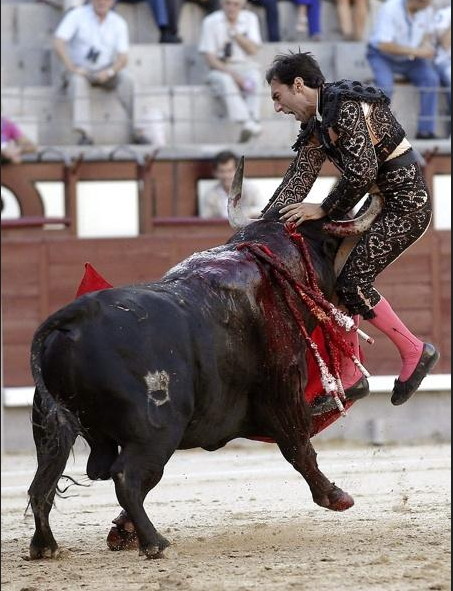
Subject: bullfighter Fernando Cruz is gored by a bull
 
Spanish bullfighter Fernando Cruz is gored by a bull at Las Ventas bullring in Madrid, Spain.