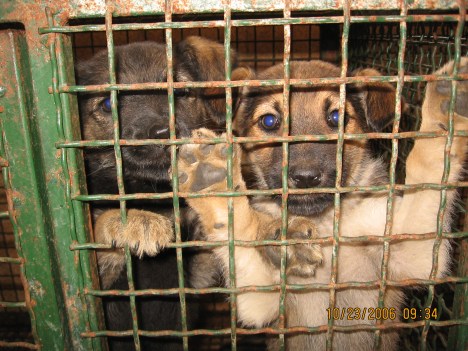
Victory in Europe: EU Makes Good Start to 2009 With Ban on the Import, Export and Trade of Cat and Dog Fur !

December 31, 2008

Get an in-depth report on the cruel dog and cat fur trade, and how you can help stop it. [pdf]


Today, Humane Society International/ UK and The Humane Society of the United States welcome a European Union ban on the import, export and trade of cat and dog fur that will become effective on Jan. 1.

The ban, spurred by international outrage about images of dogs and cats being callously killed for their fur, was passed by a unanimous vote of the European Parliament on June 19, 2007.


WARNING: contains graphic footage

“Every year, the fur of millions of cats and dogs in China and other parts of Asia is made into garments and exported for sale in other countries,” said Mark Glover, director of Humane Society International in the United Kingdom. “The ban will ensure that EU citizens are not unknowingly contributing to this gruesome and cruel practice.”

In the late 1990s, Humane Society International and The HSUS conducted an 18-month investigation into China’s fur industry. Evidence was obtained that the fur of dogs and cats were used to make garments that were exported to foreign markets. Investigators captured unsettling images that included a German shepherd dog being skinned alive in public view and cats being slowly strangled to death in front of their terrified cagemates.

HSI/HSUS investigators found garments made with dog or cat fur on sale in Australia, Europe and the United States; these were often falsely labeled (as other animals or even as “fake fur”) likely because consumers would refuse to purchase the fur of companion animals.

The import, export and sale of dog and cat fur was banned in the United States in 2000 as a result of the undercover HSI/HSUS investigations, and Australia followed with its own ban shortly thereafter.

In China, a country which has no animal welfare laws, dogs, cats, raccoon dogs and other animals are openly and legally slaughtered often in cruel ways. China is the largest exporter of fur in the world. By closing foreign markets for dog and cat fur, Chinese fur businesses will have fewer places to market their products.


Get an in-depth report on the cruel dog and cat fur trade, and how you can help stop it. [pdf]

CHINA: Terrible Suffering Inflicted On LIVE Cats – Please Read On and Take Action !

cat2


cat1


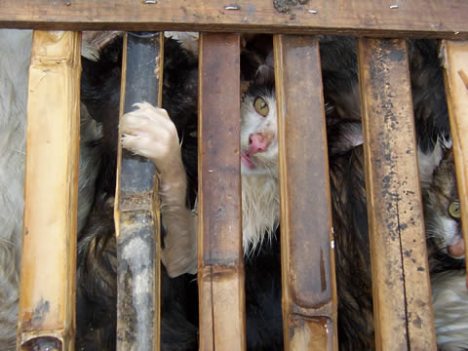
CRATED CATS WAITING FOR DEATH – PLEASE READ ON:


Source:  http://www.antifursociety.org/


THE CHINESE NEW YEAR WILL BRING UNIMAGINABLE SUFFERING TO CHINESE CATS AS THEY ARE BEING SKINNED & BOILED WHILE STILL ALIVE IN SOUTH OF CHINA. CAT OWNERS ARE TERRORIZED BY CAT NABBERS.


PLEASE TAKE ACTION!


Cats are skinned and boiled while still alive in Guandong, a south of China province. For full story, please read this latest news, and  take action for the defenseless which are suffering unspeakable pain and agony.  For more info, and updates, check this link:   http://www.antifursociety.org/ActionAlert.html

Please write to the Guandong authorities (cc to the Chinese Embassy) asking them to stop this horrific practice.


Your message will be more effective if you fax it or send it by snail mail in addition to emailing it. Regardless, please send them a message of disapproval.  NOTE: Since this information may bring emotions to a high level, it is very important to keep it to polite messages or efforts to help those most unfortunate beings maybe in vain.  Feel free to use the letter below, edit it or write your own.  The important thing is to make it sincere and polite on behalf of the defenseless.


*************************************************************************

OPEN LETTER TO THE AUTHORITIES OF THE GUANDONG PROVINCE IN CHINA
(with copy to a Chinese Embassy nearest you)

PLEASE COPY THE FOLLOWING AND MAIL/ FAX TO THE E Mail ADDRESS / FAX Number GIVEN BELOW

**************************************************************************


Guangdong Foreign Affairs Office

Tel: (8620) 81218888   

Fax: (8620) 81218569    

Email: webmaster@gdfao.gov.cn


Dear Sir or Madam,


Newspapers worldwide are reporting about the extreme torture of cats that are skinned and then boiled alive by butchers in Guandong. Thousands of cats are sold to the Guangdong restaurants, and most of these cats come from other provinces where cat nabbers have become infamous all over China, terrorizing cat owners who fear that their cats may be stolen to be sent to Guandong restaurants.  The shocking side of this story that’s making human beings all over the world shiver with indignation is that cats are skinned and dismembered alive, and still alive when thrown into boiling water to finally finish a most hellish suffering with their last breath. 


It is with profound distress that I am writing to you regarding this most Inhumane treatment of cats and ask you wholeheartedly that you put a stop to it immediately.  The West is horrified by so much vileness, and this will certainly not be a postcard that China would want for the world to see.  It is because of these practices of a minority that the important and rich Chinese culture and history have become so stained and repudiated by most countries which have adhered to humane laws to protect the most defenseless members of our planet:  the animals.  It will not be difficult for China to adjust to this new era since most Chinese people abhor these extreme cruelties. The minority in your society who delight themselves on this type of cruel bloodshed are a few and they will only destroy China’s respectability around the world.  Surely, not all Cantonese are proud of the smell of blood tainting their culture and history.


Quoting General Secretary Hu Jintao on December 18, 2008 commemoration of the 30th anniversary of the reform:  “the spiritual poverty is not socialism,” can be translated also for non-humans as these practices are certainly a great poverty of spirit and one that will bring shame to the Chinese civilization.  It is now a good oportunity to follow on his Excellency Hu Jintao’s footsteps to a rich and spiritual socialism.


Respected Guangdong Provincial party committee, the provincial government, Guangzhou Municipal party committee, the municipal government leads:  These acts have driven people around the world beyond their limits of forbearance. There is nothing that should justify such horror, let alone something as selfish as the culture of food based on the suffering of the innocent and the defenseless.


I appeal to your conscience and the compassion that you surely have in your hearts, to put an end to so much suffering inflicted upon the most defenseless members of your society:  the animals.   Please make it illegal for butchers to inflict so much pain and agony on the voiceless and defenseless animals.  Please investigate these atrocities, and  forbid any food and beverage that is based on cruelty, and capture and destroy the suppliers and sales of live animal companions for food, immediately.   Modern laws and regulations must be instituted immediately to avoid this type of traffic and the extreme suffering involved with it.    No nation should have to be embarrassed of their own country because of a minority that can only bring shame and disgrace upon itself.  It would be to the great advantage of China to put an end to this horrific treatment of animals to show the world that it is also compassionate and civilized, and has the ability to be an effective part of the third Millennium.


Sincerely,


Full name

Website and group name if any

Country, city


European (EU) Citizens: Please Act Now and Contact Your MEPs Regarding Serbian Strays and Roaming Animals. MEP’s Need Your Votes in June 2009.

*** To all European Union (EU) supporters and citizens ***.


sombor-11

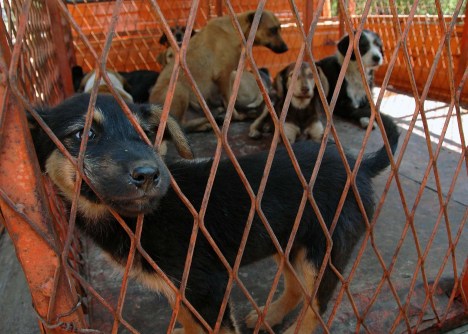
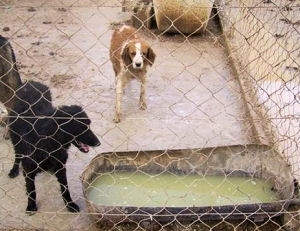
Sombor, Serbia: Captured Stray Dogs Waiting to be Killed.

We need to keep pressure on all current Members of the European Parliament with regard to Serbia applying for EU candidate status in 2009.


We suggest that this should only even be considered by the EU Commission / Parliament, if Serbia firstly produces written evidence from the Serbian Parliament that it WILL BE introducing a National, Humane, No Kill strategy for ALL Stray and Roaming (Owned) Animals throughout Serbia.


Please write to your national European MEPs using the country breakdowns given in the links below.


Find your EU country, copy the mail addresses for all your national MEPs, and then write to them about the situation in Serbia.  Ask that without a Serbian Government approved proper and documented national stray animal management programme, Serbia should not be allowed to gain accession (membership) of the EU.


EU MEP elections are to be held in June 2009; and so ask your MEPs to act for Serbian strays if they want you to vote for them at the elections !


Please see the following links for national indexes and further information:


https://serbiananimalsvoice.wordpress.com/2008/12/27/serbia-eu-membership-member-of-the-european-parliament-listings-part-1-please-write-now/


https://serbiananimalsvoice.wordpress.com/2008/12/27/serbia-eu-membership-member-of-the-european-parliament-listings-part-2-please-write-now/


https://serbiananimalsvoice.wordpress.com/2008/12/27/serbia-eu-membership-member-of-the-european-parliament-listings-part-3-please-write-now/


https://serbiananimalsvoice.wordpress.com/2008/12/27/serbia-eu-membership-member-of-the-european-parliament-listings-part-4-final-part-please-write-now/


This information will be repeated on SAV at regular intervals as a reminder to all;

Thank You.


 dog-62

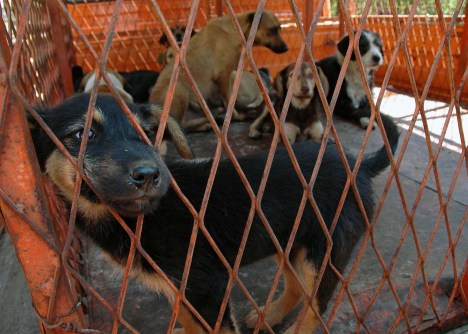
Stray and Roaming Dogs Which have Been Captured by Shinters – Next Stop; the Local Pound and then Death

GO ‘NO KILL’


Canada: Now They Claim That Fur Production is Green, – We say Fur Production is Red; BLOOD RED !

The Fur Council of  Canada are now advertising the industry on MYSPACE:

http://www.furcouncil.com/Ecological.aspx

claiming that they are a ‘Green’ industry.

We say they are a Red industry, blood red from the skins of millions of abused animals.
 
CHECK HERE TO SEE JUST HOW GREEN the ‘Green’ fur industry really is!
Contact them direct by e mail at:
See the result of the fur industry abuse of beautiful animals at:
Please also check out Uk anti fur organisation ‘Respect for Animals’, at:
Canada is a beautiful country – it is just the blood red of the ice that ruins it; and always will.

Serbia: EU Membership – Member of the European Parliament Listings (Part 4 FINAL PART) – Please write now

http://www.europarl.europa.eu/president/defaulten.htm?cabinet


EUROPA is the portal site of the European Union (http://europa.eu). It provides up-to-date coverage of European Union affairs and essential information on European integration. Users can also consult all legislation currently in force or under discussion, access the websites of each of the EU institutions and find out about the policies administered by the European Union under the powers devolved to it by the Treaties.

Using the links below you can obtain answers to the most common questions about the EUROPA site (FAQ). You can also consult recent statistics on the use of EUROPA and the results of surveys conducted among its users:

The European Parliament


Hans-Gert Pöttering is the President of the European Parliament

The European Parliament (EP) is elected by the citizens of the European Union to represent their interests.

Its origins go back to the 1950s and the founding treaties, and since 1979 its members have been directly elected by the people they represent.

Elections are held every five years, and every EU citizen is entitled to vote, and to stand as a candidate, wherever they live in the EU. The latest elections were in June 2004. Parliament thus expresses the democratic will of the Union’s citizens (more than 490 million people), and represents their interests in discussions with the other EU institutions. The present parliament has 785 members from all 27 EU countries. Nearly one third of them are women. In principle, the number of Members of the European Parliament shall not exceed 736 from the next parliamentary term on (i.e. 2009 – 2014). Since Bulgaria and Romania joined the Union in the course of the 2004-2009 parliamentary term, the current maximum number of 732 seats in the EPwill be temporarily exceeded.

Members of the European Parliament (MEPs) do not sit in national blocks, but in seven Europe-wide political groups. Between them, they represent all views on European integration, from the strongly pro-federalist to the openly Eurosceptic.

Hans-Gert Pöttering was elected President of the EP in 2007 and is to hold that post until the 2009 elections. 

Number of seats per political group, as at 1 September 2007

Political group

Abbreviation

No. of seats

European People’s Party (Christian Democrats) and European Democrats

EPP-ED

278

Socialist Group

PES

216

Alliance of Liberals and Democrats for Europe

ALDE

104

Union for Europe of the Nations

UEN

44

Greens/European Free Alliance

Greens/EFA

42

European United Left – Nordic Green Left

EUL/NGL

41

Independence/Democracy

ID

24

Identity, Tradition and Sovereignty

ITS

23

Non-attached members and temporarily vacant seats

NI

13

TOTAL


785


Number of seats per country (2009 – 2014 parliamentary term)

(in alphabetical order according to the country’s name in its own language).

Austria

18

Latvia

9

Belgium

24

Lithuania

13

Bulgaria

18

Luxembourg

6

Cyprus

6

Malta

5

Czech Republic

24

Netherlands

27

Denmark

14

Poland

54

Estonia

6

Portugal

24

Finland

14

Romania

35

France

78

Slovakia

14

Germany

99

Slovenia

7

Greece

24

Spain

54

Hungary

24

Sweden

19

Ireland

13

United Kingdom

78

Italy

78

TOTAL

785


Where is Parliament based?

The European Parliament has three places of work: Brussels (Belgium), Luxembourg and Strasbourg (France).

Luxembourg is home to the administrative offices (the ‘General Secretariat’). Meetings of the whole Parliament, known as ‘plenary sessions’, take place in Strasbourg and sometimes in Brussels. Committee meetings are also held in Brussels.


What does Parliament do?


Parliament has three main roles:

  1. Passing European laws – jointly with the Council in many policy areas. The fact that the EP is directly elected by the citizens helps guarantee the democratic legitimacy of European law.
  2. Parliament exercises democratic supervision over the other EU institutions, and in particular the Commission. It has the power to approve or reject the nomination of commissioners, and it has the right to censure the Commission as a whole.
  3. The power of the purse. Parliament shares with the Council authority over the EU budget and can therefore influence EU spending. At the end of the procedure, it adopts or rejects the budget in its entirety.

These three roles are described in greater detail below.

1. Passing European laws

The most common procedure for adopting (i.e. passing) EU legislation is ‘codecision’. This procedure places the European Parliament and the Council on an equal footing and it applies to legislation in a wide range of fields.

In some fields (for example agriculture, economic policy, visas and immigration), the Council alone legislates, but it has to consult Parliament. In addition, Parliament’s assent is required for certain important decisions, such as allowing new countries to join the EU.

Parliament also provides impetus for new legislation by examining the Commission’s annual work programme, considering what new laws would be appropriate and asking the Commission to put forward proposals.

2. Democratic supervision

Parliament exercises democratic supervision over the other European institutions. It does so in several ways.

When a new Commission takes office, its members are nominated by the EU member state governments but they cannot be appointed without Parliament’s approval. Parliament interviews each of them individually, including the prospective Commission President, and then votes on whether to approve the Commission as a whole.

Throughout its term of office, the Commission remains politically accountable to Parliament, which can pass a ‘motion of censure’ calling for the Commission’s mass resignation.

More generally, Parliament exercises control by regularly examining reports sent to it by the Commission (the annual general report, reports on the implementation of the budget, etc.). Moreover, MEPs regularly ask the Commission questions which the commissioners are legally required to answer.

Parliament also monitors the work of the Council: MEPs regularly ask the Council questions, and the President of the Council attends the EP’s plenary sessions and takes part in important debates.

Parliament can exercise further democratic control by examining petitions from citizens and setting up committees of inquiry.

Finally, Parliament provides input to every EU summit (the European Council meetings). At the opening of each summit, the President of Parliament is invited to express Parliament’s views and concerns about topical issues and the items on the European Council’s agenda.

3. The power of the purse

The EU’s annual budget is decided jointly by Parliament and the Council. Parliament debates it in two successive readings, and the budget does not come into force until it has been signed by the President of Parliament.

Parliament’s Committee on Budgetary Control (COCOBU) monitors how the budget is spent, and each year Parliament decides whether to approve the Commission’s handling of the budget for the previous financial year. This approval process is technically known as ‘granting a discharge’.


How is the Parliament’s work organised?

Parliament’s work is divided into two main stages:

  • Preparing for the plenary session. This is done by the MEPs in the various parliamentary committees that specialise in particular areas of EU activity. The issues for debate are also discussed by the political groups.
  • The plenary session itself. Plenary sessions are normally held in Strasbourg (one week per month) and sometimes in Brussels (two days only). At these sessions, Parliament examines proposed legislation and votes on amendments before coming to a decision on the text as a whole.

Other items on the agenda may include Council or Commission ‘communications’ or questions about what is going on in the European Union or the wider world.


City of Nis, Serbia.


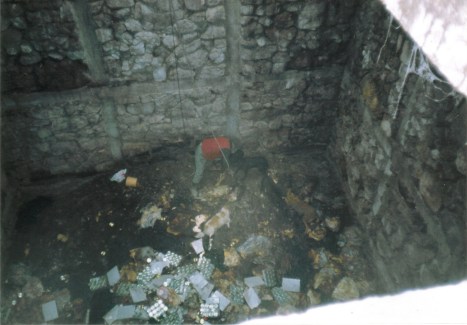
Serbian treet dogs are have been captured by shinters, thrown into the city pound and have now been slaughtered.


Please call or write to the Mayor of Nis, Milos Simonovic, and tell him you have seen the footage of the dogs in the pound.  Please ask him to implement no kill sterilization strategy for the city and inform him that you are informing all your national EU MEP’s about the killings which have happened at Nis.


Please call +381 18 504411 


E mail:  mayor@ni.rs


PLEASE SEE THE VIDEO OF THE CAPTURED (AND NOW DEAD) DOGS IN THE CITY POUND ON YOUTUBE !!!


http://www.youtube.com/watch?v=ha10UMwdpLw


This footage and information is being sent immediately (17/12/08) to the EU in Brussels.


Without a national No Kill Sterilisation, Vaccination and Identification (Microchipping) programme, Serbia should NOT be welcomed for membership  of the EU.


Please contact your MEP’s immediately.  You need them to act for you and the animals of Serbia, and they need your votes to remain an MEP at the next euro elections in June 09.


And so now, they need to raise the issue of Serbian accession, stray animals and adoption of a No Kill programme throughout Serbia and the Balkans states.


Thank You.

***

bankovac-5
masovna-grobnica-na-smetlistunis
ovca-111

IMPORTANT NOTE – All data and information given in the four SAV Posts titled :

Serbia: EU Membership – Member of the European Parliament Listings (Part xx) – Please write now

Comprising a total of 4 Parts, has been produced using information given and publically available data from sites produced by the European Union.  References to these sources are provided wherever possible.

“Serbian Animals Voice”

Campaigning for a Humane and (Better) LIFE for all Serbian Stray Animals.

GO NO KILL !


Serbia: EU Membership – Member of the European Parliament Listings (Part 3) – Please write now

For full details of this campaign please go to part 1 of these posts at:

https://serbiananimalsvoice.wordpress.com/2008/12/27/serbia-eu-membership-member-of-the-european-parliament-listings-part-1-please-write-now/

For full national MEP lists regarding each current member state, please access the following:

http://www.europarl.europa.eu/members.do

Serbia to apply for EU candidate status in 2009


Belgrade, Dec 18, 2008 – Deputy Prime Minister for EU Integration Bozidar Djelic today stated that Serbia will apply for EU candidate status in 2009, a step which it will make with the cooperation of its EU partners.


Djelic told the press that the EU is to assess the implementation of the Stabilisation and Association Agreement in order to consider the country’s candidacy.

Therefore, we will begin implementing the SAA from January 1, so that when the time comes the European Commission will positively assess Serbia’s application, he said.

Djelic also noted that Serbia will continue with its efforts and activities aimed at persuading the Netherlands to change its stance and give its consent for the application of the implementation of the Transitional Trade Agreement in Serbia.

He reiterated that Serbia is doing its best to locate the remaining two Hague indictees, voicing his hope that the Netherlands will be faced with more and more evidence of Serbia’s efforts to successfully conclude its cooperation with the Hague tribunal.


For full national MEP lists regarding each current member state, please access the following:  http://www.europarl.europa.eu/members.do?language=EN

To save all of you (specifically) european campaigners for Balkans animals a lot of work, we at SAV have undertaken most of it for you. 

Please read on: 

Below you will find full MEP contact details given on a current EU member state by member state basis.  You can copy and paste all your national contacts for the country in which you live.


Member of the European Parliament (MEP) CONTINUED – National Lists – Block listings to Copy and Send


Portugal


paulo.casaca@europarl.europa.eu,  carlos.coelho@europarl.europa.eu,  assuncao.esteves@europarl.europa.eu,  edite.estrela@europarl.europa.eu,  elisa.ferreira@europarl.europa.eu,  ilda.figueiredo@europarl.europa.eu,  vasco.gracamoura@europarl.europa.eu,  joel.hasseferreira@europarl.europa.eu,  joao.pinheiro@europarl.europa.eu,  jose.ribeiroecastro@europarl.europa.eu,  manuel.dossantos@europarl.europa.eu,  jose.silvapeneda@europarl.europa.eu,  sergio.sousapinto@europarl.europa.eu, 


United Kingdom


roger.helmer@europarl.europa.eu,  bill.newtondunn@europarl.europa.eu,  glenis.willmott@europarl.europa.eu,  andrew.duff@europarl.europa.eu,  richard.howitt@europarl.europa.eu,  rwsturdy@btconnect.com,  eastern@ukip.org,  thomas.wise@europarl.europa.eu,  john.bowis@europarl.europa.eu,  robert.evans@europarl.europa.eu,  mary.honeyball@europarl.europa.eu,  skamall@europarl.eu.int,  jean.lambert@europarl.europa.eu,  sarah.ludford@europarl.europa.eu,  claude.moraes@europarl.europa.eu,  charles.tannock@europarl.europa.eu,  fiona.hall@europarl.europa.eu,  stephen-hughes@btconnect.com,  ratsmep@sir-robertatkins.org,  chrisdaviesmep@cix.co.uk,  den.dover@europarl.europa.eu,  sajjad.karim@europarl.europa.eu,  briansimpson.labour@virgin.net,  gary.titley@europarl.europa.eu,  jim.allister@europarl.europa.eu,  bairbre.debrun@europarl.europa.eu,  elspeth.attwooll@europarl.europa.eu,  ian.hudghton@europarl.europa.eu,  john.purvis@europarl.europa.eu,  struanmep@aol.comm  cstihler@cstihlermep.freeserve.co.uk,  ASHWORTH Richard James,  sharon.bowles@europarl.europa.eu,  mail@danhamilton.co.uk,  jelles@europarl.eu.int,  daniel.hannan@europarl.europa.eu,  caroline.lucas@europarl.europa.eu,  ashley.mote@europarl.europa.eu,  emma.nicholson@europarl.europa.eu,  peter.skinner@europarl.europa.eu,  mrgrahambooth@aol.com,  giles.chichester@europarl.europa.eu,  glyn.ford@europarl.europa.eu,  caroline.jackson@europarl.europa.eu,  roger.knapman@europarl.europa.eu,  neil.parish@europarl.europa.eu,  graham.watson@europarl.europa.eu,  eluned.morgan@europarl.europa.eu,  philip.bradbourn@europarl.europa.eu,  philip.bushill-matthews@europarl.europa.eu,  michael.cashman@europarl.europa.eu,  malcolm.harbour@europarl.europa.eu,  elizabeth.lynne@europarl.europa.eu,  richard@richardcorbett.org.uk,  timothy.kirkhope@btinternet.com,  linda.mcavan@europarl.europa.eu,  edward.mcmillan-scott@europarl.europa.eu,  diana@dianawallismep.org.uk, 


Ireland


proinsias.derossa@europarl.europa.eu,  gay.mitchell@europarl.europa.eu,  eoin.ryan@europarl.europa.eu,  liam.aylward@europarl.europa.eu,  avril.doyle@europarl.europa.eu,  mairead.mcguinness@europarl.europa.eu,  marian.harkin@europarl.europa.eu,  jim.higgins@europarl.europa.eu,  colmburke@colmburke.eu,  briancrowleymep@eircom.net, 


PLEASE SEE PREVIOUS OR FURTHER POSTS FOR OTHER NATIONAL MEP LISTINGS IF YOUR COUNTRY IS NOT DETAILED ABOVE.

dog-61


Serbia: EU Membership – Member of the European Parliament Listings (Part 2) – Please write now

For full details of this campaign please go to part 1 of these posts at:

https://serbiananimalsvoice.wordpress.com/2008/12/27/serbia-eu-membership-member-of-the-european-parliament-listings-part-1-please-write-now/

For full national MEP lists regarding each current member state, please access the following:

http://www.europarl.europa.eu/members.do?language=EN

To save all of you (specifically) european campaigners for Balkans animals a lot of work, we at SAV have undertaken most of it for you. 

Please read on: 

Below you will find full MEP contact details given on a current EU member state by member state basis.  You can copy and paste all your national contacts for the country in which you live.

Following this is a full, complete block listing of EVERY Member of the European Parliament (MEP) for every member  state nation which can be copied and sent.

Mr. Hans-Gert Pöttering, President of the European Parliament

declares on his Europa web site that:


The European Parliament (EP) is elected by the citizens of the European Union to represent their interests

You as a european citizen, have an ‘interest’ that you wish the EU Parliament to investigate and report on – to ‘represent your interest’ about current Serbian animal welfare procedures, such as rounding up strays and killing, which is in direct opposition to existing Serbian national legislation – and ask as a euro citizen that

a requirement for Serbia to either implement a national No Kill, humane, chip and vaccination program for stray animals and become an EU member state, or for them to continue the killing of strays as they currently do, and for them consequently to be excluded from future EU membership.

No Kill Sterilisation = EU Membership,

Round up and inhumanely kill (as currently undertaken) = NO EU Membership


Member of the European Parliament (MEP) – National Lists – Block listings to Copy and Send


Member of the European Parliament (MEP) CONTINUED – National Lists – Block listings to Copy and Send


Slovakia


peter.baco@europarl.europa.eu,  edit.bauer@europarl.europa.eu,  irena.belohorska@europarl.europa.eu,  asistent.benova@strana-smer.sk,  mgala@europarl.eu.int,  jan.hudacky@europarl.europa.eu,  milos.koterec@europarl.europa.eu,  sergej.kozlik@europarl.europa.eu,  vladimir.manka@europarl.europa.eu,  miroslav.mikolasik@europarl.europa.eu,  zita.plestinska-assistant@europarl.europa.eu,  anna.zaborska@europarl.europa.eu, 


Hungary


etelka.barsi-pataky@europarl.europa.eu,  zsolt.becsey@europarl.europa.eu,  alexandra.dobolyi@europarl.europa.eu,  szabolcs.fazakas@parlament.hu,  kinga.gal@europarl.europa.eu,  zita.gurmai@europarl.europa.eu,  andras.gyurk@europarl.europa.eu,  gabor.harangozo@mszp.hu,  gyula.hegyi@europarl.europa.eu,  edit.herczog@europarl.europa.eu,  livia.jaroka@europarl.europa.eu,  magda.kosanekovacs@europarl.europa.eu,  viktoria.mohacsi@europarl.europa.eu,  peter.olajos@europarl.europa.eu,  csaba.ory@europarl.europa.eu,  pal.schmitt@europarl.europa.eu,  gschopflin@clara.co.uk,  laszlo.surjan@europarl.europa.eu,  jozsef.szajer@europarl.europa.eu,  istvan.szent-ivanyi@europarl.europa.eu,  csaba.tabajdi@europarl.europa.eu, 


Slovenia


mihael.brejc@europarl.europa.eu,  mojca.drcarmurko@europarl.europa.eu,  romana.jordancizelj@europarl.europa.eu,  jelko.kacin@europarl.europa.eu,  ljudmila.novak@europarl.europa.eu,  borut.pahor@europarl.europa.eu,  alojz.peterle@europarl.europa.eu, 


Romania


robertaalma.anastase@europarl.europa.eu,  office@danescu.ro,  victor_bostinaru@yahoo.com,  nicodim.bulzesc@europarl.europa.eu,  cristiansilviu.busoi@europarl.europa.eu,  titus.corlatean@psd.ro,  corina.cretu@europarl.europa.eu,  cetatenieuropevi@gmail.com,  magorimre.csibi@europarl.europa.eu,  office@constantindumitriu.eu,  sorin.frunzaverde@europarl.europa.eu,  monicamaria.iacobridzi@europarl.europa.eu,  marian-jean.marinescu@europarl.europa.eu,  neccatalin@yahoo.com,  feaa@uaic.ro,  ioanmircea.pascu@europarl.europa.eu,  maria.petre@europarl.europa.eu,  rovana.plumb@europarl.europa.eu,  mihaela_popa7@yahoo.com,  nicolaevlad.popa@europarl.europa.eu,  dacianaoctavia.sarbu@europarl.europa.eu,  adrian.severin@europarl.europa.eu,  silviaadriana.ticau@europarl.europa.eu,  adinaioana.valean@europarl.europa.eu,  iuliu.winkler@europarl.europa.eu,  marian.zlotea@europarl.europa.eu, 


Bulgaria


marielavelichkova.baeva@europarl.europa.eu,  slavi.binev@europarl.europa.eu,  filizhakaeva.hyusmenova@europarl.europa.eu,  ilianamalinova.iotova@europarl.europa.eu,  rumiana.jeleva@europarl.europa.eu,  metinhusein.kazak@europarl.europa.eu,  evgeni.kirilov@europarl.europa.eu,  marusyaivanova.lyubcheva@europarl.europa.eu,  nickolay.mladenov@europarl.europa.eu,  atanas.paparizov@europarl.europa.eu,  bilyana.raeva@europarl.europa.eu,  petya.stavreva@europarl.europa.eu,  dimitar.stoyanov@europarl.europa.eu,  vladimir.urutchev@europarl.europa.eu,  kristian.vigenin@europarl.europa.eu,  dushana@yahoo.com, 


Greece


emmanouil.angelakas@europarl.europa.eu,  stavros.arnaoutakis@europarl.europa.eu,  katerina.batzeli@europarl.europa.eu,  costas.botopoulos@europarl.europa.eu,  giorgos.dimitrakopoulos@europarl.europa.eu,  georgios.georgiou@europarl.europa.eu,  ioannis.gklavakis@europarl.europa.eu,  rodi.kratsa-tsagaropoulou@europarl.europa.eu,  stala@politicalforum.gr,  diamanto.manolakou@europarl.europa.eu,  maria.matsouka@europarl.europa.eu,  manolis.mavrommatis@europarl.europa.eu,  marie.panayotopoulos-cassiotou@europarl.europa.eu,  dimitrios.papadimoulis@europarl.europa.eu,  georgios.papastamkos@europarl.europa.eu,  anni.podimata@europarl.europa.eu,  margaritis.schinas@europarl.europa.eu,  antonios.trakatellis@europarl.europa.eu,  evangelia.tzampazi@europarl.europa.eu,  nikolaos.vakalis@europarl.europa.eu, 


Cyprus


adamos.adamou@europarl.europa.eu,  panayiotis.demetriou@europarl.europa.eu,  ioannis.kasoulides@europarl.europa.eu,  yiannakis.matsis@europarl.europa.eu,  kyriacos.triantaphyllides@europarl.europa.eu, 


Italy


roberta.angelilli@europarl.europa.eu,  alessandro.battilocchio@europarl.europa.eu,  carlo.casini@europarl.europa.eu,  alessandro.foglietta@europarl.europa.eu,  lilli.gruber@europarl.europa.eu,  umberto.guidoni@europarl.europa.eu,  luisa.morgantini@europarl.europa.eu,  pasqualina.napoletano@europarl.europa.eu,  guido.sacconi@europarl.europa.eu,  luciana.sbarbati@europarl.europa.eu,  antonio.tajani@europarl.europa.eu,  stefano.zappala@europarl.europa.eu,  giuseppe.castiglione@europarl.europa.eu,  giusto.catania@europarl.europa.eu,  raffaele.lombardo@provincia.ct.it,  n.musumeci@inwind.it,  vincenzo.aita@europarl.europa.eu,  beniaminodonnici@virgilio.it,  giuseppe.gargani@europarl.europa.eu,  vincenzo.lavarra@europarl.europa.eu,  aldo@patriciello.it,  umberto.pirilli@europarl.europa.eu,  gianni.pittella@europarl.europa.eu,  salvatore.tatarella@europarl.europa.eu,  armando.veneto@europarl.europa.eu,  riccardo.ventre@europarl.europa.eu,  donatotommaso.veraldi@europarl.europa.eu,  marcello.vernola@europarl.europa.eu,  gabriele.albertini@europarl.europa.eu,  info@vitobonsignore.eu,  mario.borghezio@europarl.europa.eu,  giulietto.chiesa@europarl.europa.eu,  carlo.fatuzzo@europarl.europa.eu,  monica.frassoni@europarl.europa.eu,  jas.gawronski@europarl.europa.eu,  romano.larussa@consiglio.regione.lombardia.it,  c.muscardini@tin.it,  marco.pannella@europarl.europa.eu,  guido.podesta@europarl.europa.eu,  francescoenrico.speroni@europarl.europa.eu,  patrizia.toia@europarl.europa.eu,  info@sergioberlato.it,  giovanni.berlinguer@europarl.europa.eu,  iles.braghetto@europarl.europa.eu,  renato.brunetta@europarl.europa.eu,  marco.cappato@europarl.europa.eu,  paolo.costa@europarl.europa.eu,  michl.ebner@europarl.europa.eu,  donata.gottardi@europarl.europa.eu,  sepp.kusstatscher@europarl.europa.eu,  vittorio.prodi@europarl.europa.eu,  amalia.sartori@europarl.europa.eu,  mauro.zani@europarl.europa.eu, 


Austria


herbert.boesch@europarl.europa.eu,  wolfgang.bulfon@europarl.europa.eu,  harald.ettl@europarl.europa.eu,  othmar.karas@europarl.europa.eu,  eva.lichtenberger@gruene.at,  office@hpmartin.net,  a.moelzer@aon.at,  christa.prets@europarl.europa.eu,  reinhard.rack@europarl.europa.eu,  karin.resetarits@europarl.europa.eu,  paul.ruebig@europarl.europa.eu,  karin.scheele@europarl.europa.eu,  agnes.schierhuber@europarl.europa.eu,  richard.seeber@europarl.europa.eu,  hannes.swoboda@spoe.at, 


Czech Republic


tvosecka@euparlament.com,  brezina@janbrezina.cz,  cabrnoch@cabrnoch.cz,  petr.duchon@europarl.europa.eu,  hynek.fajmon@europarl.europa.eu,  richard.falbr@europarl.europa.eu,  miroslav@ouzky.cz,  zuzana.roithova@europarl.europa.eu,  libor.roucek@europarl.europa.eu,  ris.olonz.ods@volny.cz,  oldrich.vlasak@europarl.europa.eu,  jan.zahradil@europarl.europa.eu,  tomas.zatloukal@europarl.europa.eu,  vladimir.zelezny@europarl.europa.eu,  info@zieleniec.cz,  jaroslav.zverina@europarl.europa.eu, 


ovca-15


PLEASE SEE FURTHER POSTS FOR OTHER NATIONAL MEP LISTINGS IF YOUR COUNTRY IS NOT DETAILED ABOVE.