How the Trump administration is sidelining science and favoring industry over farmers and the public.
The USDA should rely on science to help farmers and meet the nation’s food needs. Instead, under Secretary Sonny Perdue, it’s more like the Department of Agribusiness.
Posted on June 10, 2018 by Serbian Animals Voice (SAV)
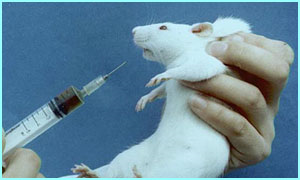
A female scientist at the Department of Dermatology at Münster University has been banned from keeping and caring for animals. These animals have been bred and kept for animal experiments.
This follows from an ordinance order of the city of Münster, which the administrative court of Münster has provisionally confirmed (Ref .: 1 L 2222/17).
The court’s press release described frightening details about how experimental animals were handled earlier in the lab.
So to the details of the case: After an anonymous tip, the university had on June 20, 2017 at the Veterinary Office of the city of Münster, a self-indictment reimbursed, on an unauthorized livestock in the basement of the Department of Dermatology of the University of Medicine. In a check on the same day by two official veterinarians, 36 cages with a total of 77 mice were discovered in a cellar room of the skin clinic.
Three mice had to be killed to end their suffering.
According to the veterinarians, three of the mice were in a general condition that required their immediate killing.
One of these mice apparently was in the state five to seven days after a surgical procedure.
The animal had already suffered significant pain and suffering in the long term.
Another animal had high-grade stereotypes, which had expressed itself in the form of “running in circles “and could not be interrupted by external stimulus.
The third animal had a thumbnail-sized, necrotizing skin lesion in the neck area and lay in laterally curved posture with narrowed eyelids.
Most of the animals could be assigned to a female scientist.
After further investigations could be assigned to a female scientist 22 boxes with 40 of the 77 mice. The woman had the animals taken from the approved animal husbandry department of the dermatology clinic and had them transported to the relevant cellar room. By decree of 11 December 2017, the city of Münster then prohibited the scientist from holding and looking after animal experimental animals and ordered the immediate execution of this order.
Scientist defends herself in court – for the time without success.
The woman defends herself against this measure.
Their application for provisional legal protection, the administrative court Münster has now dismissed.
In essence, the court essentially stated:
The attitude prohibition as well as the supervision ban is obviously legitimate.
As a keeper of animal experimental mice, the woman has grossly violated animal welfare requirements and has given the mice significant and prolonged pain and suffering as well as considerable damage.
The female scientist, as the previous holder of the mice, is the right addressee of the animal keeping ban, the court said. The animals were assigned to her.
This is shown by the inscription of the cage boxes, from which the test houses were taken, and the information given in the documents.
According to current judgment of the court, she has also been the one who has given the instruction whether, when and which animals should be brought into the basement room.
Judges talk about illicit animal husbandry for years
Conclusion of the judges: The entire behavior of the female scientist is characterized by a significant deficiency of justice.
Her unlawful acts have apparently happened repeatedly for years.
It is about unauthorized livestock from the background and in a basement room.
The person concerned may appeal this decision within two weeks of being notified to the Higher Administrative Court for the State of North Rhine-Westphalia.
University set up commission of inquiry – First Results
After the allegations became known, the university also responded and convened a commission of inquiry.
Their results were presented one day before the publication of the court order and summarized by the “Rheinische Post”: “All animals were used only for approved animal experiments. However, because it was more convenient for the researchers, the animals had been kept in an unauthorized room for at least ten years. As a result, they were deprived of control. With the exception of six animals, all mice were in good condition when they were discovered. “
In addition, a responsible of the University is quoted as saying: “Some of the involved employees may no longer to the animals – for researchers whose career is linked to animal experiments, a very harsh penalty.” Further consequences under the law were examined. In addition, they wanted to “enforce a changed culture in dealing with experimental animals: Everyone from the zoo keeper to the professor must always be aware of his responsibility and wonder if everything is done properly.”
My comment:
I find it idiotic and outrageous to call the torture and murder of laboratory animals “culture in dealing with experimental animals”.
Really! an expression for idiots!
It’s always about the career, not the research.
The quality of research is not measured by how many people are helped by experiments.
But in the number of publications in renowned magazines.
The level of subsidies also depends on this.
The results of the animal experiments are never published. Only the name of the sadist or the psychopath who conducts the experiments is published.
And on this way do psychopaths career.
Until one covers, and brings them to trial, as in the case of the animal female torturer in the Münster lab.
Serbia latest: ‘Make Fur History’ event in Belgrade boosts keep the ban campaign
Respect for Animals Campaigns Director, Mark Glover, has today (7 June 2018) been in Belgrade countering the misinformation from fur industry lobbyists, who are desperately seeking to delay or cancel the upcoming fur farming ban in Serbia. Along with local campaigners, Mark presented the Fur Free Alliance’s Make Fur History exhibition to political figures and media representatives. Mark was joined by Stevan Lilic, Ljibjana Gledic, as well as Tamara Jevtovic, Snezana Milovanovic and Maida Sabeta from Freedom for Animals.
Serbia had already passed legislation banning fur farming due to come into effect in January 2019, but the ban is now at severe risk. On Tuesday, the agricultural committee decided to proceed with the deletion of the existing Serbian fur farming ban after a discussion full of false information supplied by fur trade lobbyists. In sensational and outrageous scenes, animal advocacy organisations were shockingly banned from proceedings. This decision will go to the Ministry for further procedure. The Ministry will create the ‘proposal’ which will then be delivered back to the parliament, probably in the early autumn.
The Make Fur History event was quickly considered to have been a success. Genuine political and media interest was generated and the misinformation by the fur trade comprehensively exposed.
The Make Fur History exhibition was launched earlier this year in the European Parliament by the Fur Free Alliance and Eurogroup for Animals. The exhibition exposes the facts about how real fur is produced and explains why more national bans on fur factory farming are needed across Europe.
Chinchillas are the only animals kept for fur in Serbia. The intense battery cage system used on fur farms deprives chinchillas from the opportunity to express their natural behaviour – such as running and jumping – and causes severe welfare problems. International studies have shown behavioural disorders, such as stereotypies, pelt-biting and infant mortality, are highly common on chinchilla fur farms. Learn more about welfare problems on chinchilla fur farms.
Mark Glover said:
This exhibition allows us to reveal the reality on fur factory farms, to present the facts about the animals bred and killed for their fur and to show why the fur industry belongs in the past. I strongly urge the Serbian government to keep the ban, due to come into effect in January 2019.
Posted on June 9, 2018 by Serbian Animals Voice (SAV)
Incredible recovery of dog dying in gutter: Phoenix’s Story
We got an urgent call that a dog was laying in a sewage ditch.
When our rescue team arrived they saw that she was only in a foot of water, but was actually starting to drown. Her nose dipped wearily into the water. Bubbles were emerging. If we had arrived even 5 minutes later, it’s possible she would have drowned.
When we lifted her out we could see that she had a completely fractured leg, hanging only by loose tissue. Maybe she had been hit by a car, was confused, lay in the water in a desperate effort to stop the bleeding or ease the pain.
Once back in Animal Aid we determined that she was in shock–her pulse was weak and she was hypothermic. We feared we might lose her. She urgently needed an amputation but was too weak to withstand surgery. So we spent several days stabilizing her–a balancing act between strengthening her, and holding the infection and pain at bay.
Her operation took place 3 days later and now–it’s like a miracle–meet Phoenix!
A dog lay in a coma by the side of a busy road, completely unresponsive.
We gently lifted him and rushed him to Animal Aid. We examined him from head to toe but found no sign of broken bones and suspected a head injury, so we treated him with a medicine that reduces brain swelling.
He didn’t awaken for 24 hours. And by the third day he—well, watch and see for yourself what Roxy’s pure radiant joy looks like today.
Posted on June 9, 2018 by Serbian Animals Voice (SAV)
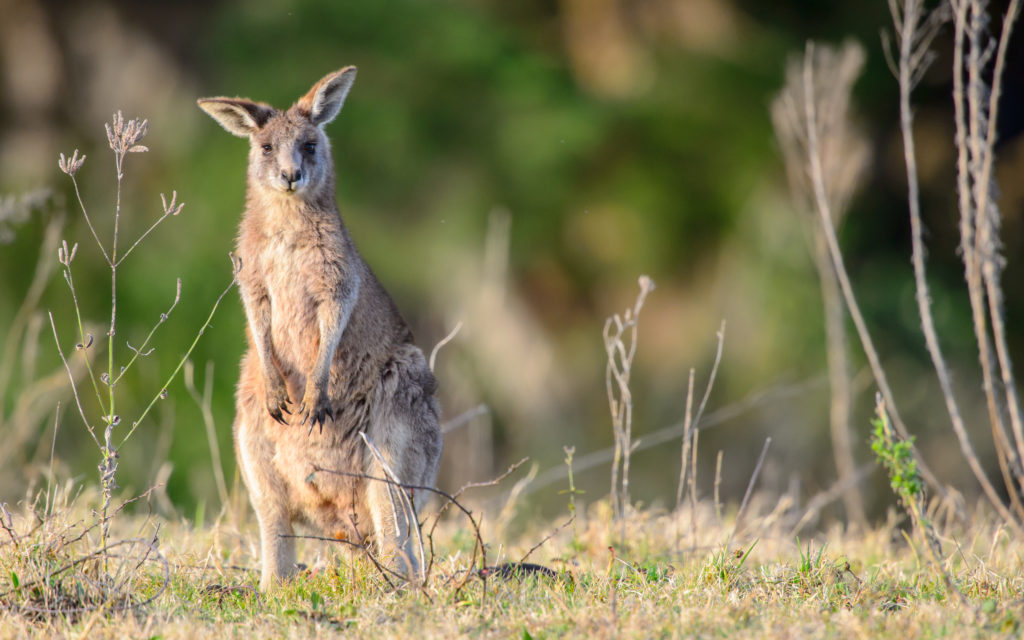
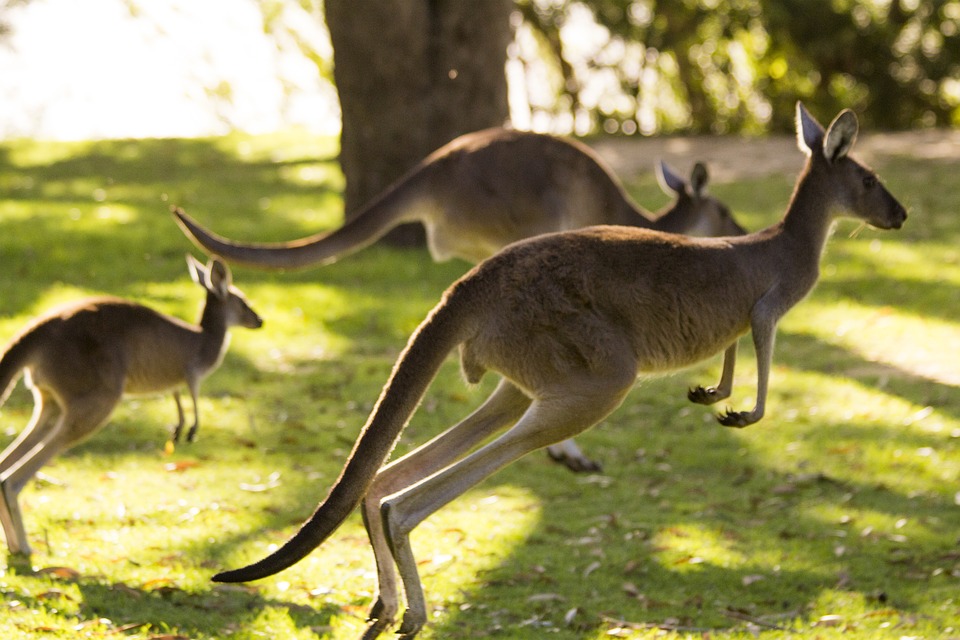
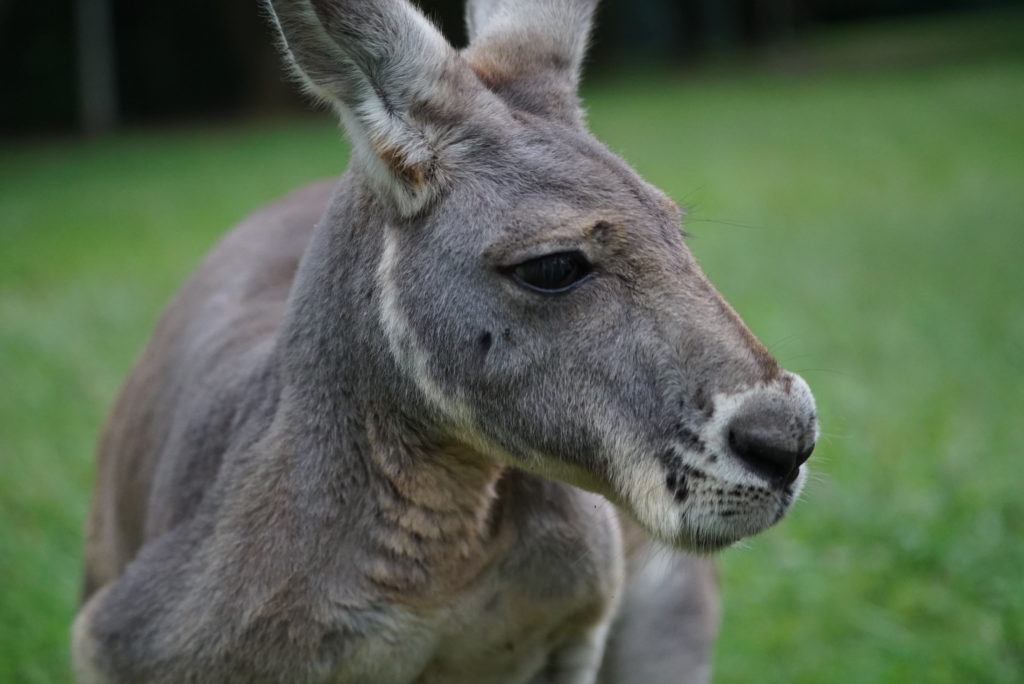
Kangaroos are one of the most famous marsupials and are typical representatives of the Australian fauna. Farmers and landowners, however, claim they are pests and are cruelly slaughtered to secure farmland and feed for millions of livestock in the arid landscape. The killing of Australian kangaroos is the largest massacre of wildlife in the world: 1.5 million kangaroos are legally and systematically shot every year by the Australian Kangaroo Industry (Kangaroo Industry Association of Australia). Meat, skin and leather are traded internationally. There are also illegal killings by farmers, who see the animals as competitors. Especially the red giant kangaroo, eastern and western gray giant kangaroos and mountain kangaroos are hunted.
Germany as a market for kangaroo products
About 40 percent of the kangaroo meat is exported abroad and offered there either as a pet food or as an exotic delicacy. In the period from 2013 to 2016, Germany was the world’s third largest importer of kangaroo meat and leather, making it one of the kangaroo industry’s leading trading partners. Germany imported 19 percent of the world’s meat during this period. It is offered in well-known supermarket-chains such as Lidl, Netto, ALDI, Hit, REWE, Metro and Fressnapf as well as in restaurants predominantly as steaks or as dog food. In addition, Germany imports 10 percent of imports of kangaroo apparel and leather, as well as 14 percent of kangaroo skin used by, among others, Adidas, Nike and Puma for football boots or sold by companies other than outdoor and motorcycle clothing.
In 2016, about 1.5 million animals were legally killed, according to data from the Australian government. Scientists and animal rights activists in Australia complain about the extinction of populations from formerly rich areas. They fear that the mass killing endangers the long-term survival of the kangaroos. In large areas of Australia, such as Tasmania or Victoria, the stocks have fallen significantly: In 2010, the Red Kangaroo had disappeared in 56 percent of its original range, the gray giant kangaroo even in 69 percent.
There are fewer and fewer kangaroos
Exact population numbers are missing.
The official estimates of the government, according to experts are greatly inflated. But only on this official basis the shooting rates are calculated.
Thus, counts are made selective in areas of high population densities or low kill rates.
Environmental impacts, increasing habitat loss, and illegal shooting by farmers and landowners are not taken into account in the state-sanctioned pursuit of kangaroos:
Between 2001 and 2010 stocks fell dramatically, from an estimated 57 million to 34 million. Kangaroos are severely affected by environmental factors such as drought and exposed to ever-increasing pressure. Their habitat has already been drastically decimated in recent years, mainly due to urban development and increasing agriculture. Kangaroos are reproducing very slowly and the juvenile mortality rate is very high at more than 73 percent.
Cruel hunt at night
Notwithstanding all risks and criticisms, the Kangaroo Industry Association of Australia continues to promote the expansion of international trade in kangaroo products.
The killing of the kangaroos is extremely cruel: the animals are mostly shot in the dark of the night in remote desert regions. The Australian government’s regulations require killing adult animals with a direct headshot in order to save them unnecessary suffering. But this is very often not the case. Investigations by animal rights activists in Australia have shown that not all shot kangaroos are killed by the head, but at night precise targeting is difficult anyway. Countless animals suffer a long death struggle by neck or body shots. Even pregnant and breastfeeding mothers are hunted, the killing or the unprotected leaving the young animals tolerated as collateral damage. According to the rules of the procedure, kittens are to be beheaded from the mother’s pouch or killed by a blunt brain trauma, but in reality, young animals are often left behind and starve to death or are hit with their heads against a car. It is estimated that about 800,000 juveniles whose mother was killed die each year.
The killing is also often under unhygienic and health-related conditions that challenge the processing into meat: The marsupials are often gutted without controls and by insufficiently trained personnel in the field and uncooled on open vehicles without protection against flying or dirt at large Heat transported. 75 percent of human pathogens originate from wild animals, and kangaroos also carry many parasites and diseases. Tests in retail and supermarkets often show high levels of coliform and salmonella. Also impurities by shot cartridges are not uncommon.
Russia therefore stopped importing kangaroo meat in 2014.In 2015, California also stopped importing all kangaroo products. Meanwhile, there are synthetic alternatives for the coveted kangaroo leather, which unfortunately is still used by many manufacturers, as in Germany for example, where the trade in kangaroo products is still booming!
In order to remove the lucrative basis for the cruel death of millions of kangaroos, import bans from other countries and the renunciation of kangaroo’s meat and leather are urgently required.











 Serbian Animals Voice (SAV)

