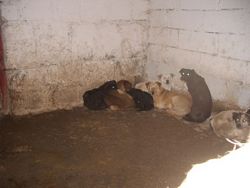
Spain: Save the Cadiz Cats – Sample Letter to Copy and Send

—– Original Message —–

From: Iris Gallegos

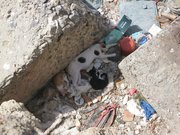
Please forward to the moon, 8 years ago this that is about to happen happened, it was a cruel and sadistic massacre,  the kittens were trampled to death. Now they plan to poison them because access to the sea cliffs is difficult.

The volunteers are risking life and limb to rescue them but time is against them!  The wonderful organization Cadiz Felina has been feeding this colony for 15 years and now the Mayor wants to clean the cliffs but instead of just cleaning the mess that humans have left behind she wants to kill the innocent cats!

Please write your protest to the addresses below.

For donations to help this very difficult rescue:   La Caixa (bank)
IBAN ES06 2100 3942 2801 0022 6582 
BIC: CAIXESBBXXX

In response to the threat of Cadiz City Council led by the Partido Popular Mayor, Teófila Martinez, to allegedly remove the cats of the Campo del Sur, Cadiz, SPAIN
SEND LETTERS TO:


gabinete@presidencia.gob.es ; informac@mapa.es ; informacion@congreso.es ; informacionmma@mma.es ; jlrzapatero@presidencia.gob.es ; partidopopulardecadiz@gmail.com ; gabinete.prensa@cadiz.es ; sugerencias@cadiz.es ; atencion@pp.es ; gabinete.alcaldia@telefonica.net


Send the letter below or your own letter (Subject: No al exterminio de gatos)
SUGGESTED LETTER (Subject:No al exterminio de gatos)


Estimada señora alcaldesa Teófila Martínez:

Me dirijo a usted para expresarle mi total indignación ante la noticia de la Matanza de Gatos del Campo del Sur que va a realizar el Ayuntamiento de Cádiz que usted preside.

Esta zona ha sido utilizada durante años por los vecinos de la zona como vertedero de basura, muebles, escombros de obras efectuadas en la zona ocasionando un ambiente de mal olor y suciedad producto de una actitud incívica y en ese estercolero tambien han abandonado los gaditanos a los gatos caseros que ya no querían dejando una muestra de su falta de sensibilidad, pero no en vano fue Cádiz la primera ciudad de Occidente donde apareció el gato animal que acompañaba siempre en sus viajes a nuestros colonizadores fenicios y estos gatos gaditanos abandonados a su suerte han sabido cumplir a la perfección su función de plagicidas ecológicos, librando al caletero barrio de la Viña de ratas y cucarachas tan propias de barrios costeros.

Ahora se les premia con la muerte, las primeras personas que estamos en contra de la sobre población de gatos callejeros somos los que los amamos y por eso luchamos para encontrarles un hogar y sacarlos de la calle, eso nos parece bien al igual que la Campaña que sabemos que tiene su Ayuntamiento de castración que es la manera más inteligente y europea de paliar este problema, para algunos de salud y para otros de humanidad.

Existen muchas ciudades en el mundo donde sus Ayuntamientos han convertido la abundancia de gatos callejeros en una colonia controlada y saludable que cumple su función de raticida ecológico a cambio de comida suministrada y controlada por el consistorio, convirtiéndose en una atracción turística más de la localidad así en París, Túnez, Lamú, San Francisco, Los Angeles, San Diego por no hablar de las ciudades de Reino Unido donde se cuenta con más de veinte años de experiencia en este sentido los gatos lejos de ser cruelmente exterminados efectúan su trabajo día a día.

No pretenda vendernos que la situación de los gatos del Campo del Sur tan gaditanos que hasta autores del Carnaval como Julio Pardo o Martínez Ares han escogido como tipo para sus agrupaciones, sólo puede usted resolverla con un masivo asesinato.

El poder no la hace más poderosa señora alcaldesa sino más responsable, somos muchas las personas que estamos en contra de esta masacre que usted pretende realizar y que contamos con la ayuda de protectoras y animalistas de toda España y del extranjero, usted decide que imagen dará de Cádiz la de las ciudades que han sabido tratar el problema con inteligente humanidad o la de un Ayuntamiento que imita el error de la crueldad medieval cuando los gatos fueron asesinados y como consecuencia las enfermedades plagaron las ciudades.

Atentamente,

Name

Country

SWAP team UK have provided a brief Google translation below in English so you know what you are sending!

  
Dear Madam Mayor Teófila Martínez:


I am writing to express my total outrage at the news of the massacre Gatos Campo del Sur to be undertaken by the City of Cadiz which you preside.

This area has been used for years by locals as a garbage dump, furniture, debris from work done in the area causing an atmosphere of bad smell and dirt product of antisocial attitude and in that hotbed also to have abandoned the people of Cadiz household cats no longer wanted to leave a sample of their lack of sensitivity, but not in vain was the first city of Cadiz in the West where it appeared the animal cat that always accompanied on his trips to our Phoenician settlers and these cats stranded Cadiz have been able to fulfill perfectly their role as ecological plaggic, ridding the area of Vine caletero rats and cockroaches so characteristic of coastal districts.

Now they are rewarded with death, the first people who are against the population of feral cats are the ones we love and why we struggle to find a home and remove them from the street, well that sounds like the Campaign we know to have your City of castration is the most intelligent and European remedy this problem, for some health and other humanity.

There are many cities in the world where their municipalities have become the abundance of feral cats in a controlled and healthy colony is fulfilling its ecological role of rat poison in exchange for food provided and controlled by the municipality, becoming a tourist attraction in the town and Paris, Tunis, Lamu, San Francisco, Los Angeles, San Diego not to mention the cities of the United Kingdom that has over twenty years of experience in this regard cats cruelly exterminated far from carrying out work on a daily basis .

Do not try to sell the cat situation as Campo del Sur Cadiz Carnival that even authors such as Julio Martinez Ares Pardo or have chosen as a standard for their groups, only you can solve it with a mass murder.

The power does not make it powerful but responsible Madam Mayor, we are many people who are against the slaughter that you intended, and that we have the help of protective and animals from all over Spain and abroad, you decide that image will Cadiz in the cities that have managed to treat the problem with human intelligence or a municipality that mimics the medieval cruelty error when the cats were killed and consequently the disease plagued the cities.

Spain: Please Take Action Now Against the Bull Killing Festival in September

Please go to the following for sample letter:

http://action.peta.org.uk/ea-campaign/clientcampaign.do?ea.client.id=5&ea.campaign.id=4535

Picture the scene: you’re tired and debilitated, and a huge crowd of people are stabbing spears into your body to drain you of your blood and kill you. You have no escape, and you eventually die after your tail has been cut off.

This is the scene every year in Castilla y Léon, Spain, at the Toro de la Vega “festival”, where a bull is tortured in the name of “entertainment”.

Take action NOW against this cruelty by writing to the mayor of the autonomous region and the tourism board today.

Don’t let more bulls die for “entertainment”. Please help stop this.

http://action.peta.org.uk/ea-campaign/clientcampaign.do?ea.client.id=5&ea.campaign.id=4535

Sweden: The Horror of Sweden’s Fur Farms Exposed – Take Action Now – Sample Letter and Contacts Included


The Horror of Sweden’s Fur Farms Exposed –

Take Action Now!!!

The Animal Rights Alliance in Sweden have just released the shocking
results of their 18 month investigation in to the Swedish Mink Farming
Industry, including sick and injured animals, stereotypical behaviour and
cannibalism.

Full details of the investigation can be found here:–
 
http://www.sveketmotminkarna.se/horror-revealed-swedish-fur-farms

With a General Election in Sweden only weeks away, one of the major topics
of the election campaign is a potential ban on all fur farms in Sweden.

Please support the campaign to end fur farming in Sweden by emailing Swedish Embassies worldwide to demand a complete ban on fur farming,

(Emails and Sample Letter below).
 

The Animal Rights Alliance reveals major animal abuse – Minks have been let down for 22 years!

For the past year-and-a-half, the Animal Rights Alliance investigation unit has been mapping out the Swedish fur industry. We have combed through environmental inspection protocols, court documents and research reports and what’s more – we have visited one-fifth of the 75 mink farms in Sweden to see them for ourselves. We have discovered major environmental violations by an industry that is already highly-criticized. Above all we have discovered the mink. Clever, beautiful wild mink imprisoned in shed after shed, housing row after row of small dirty cages. Mink that will never see any water beyond what comes out of a water nipple, even though they are hunters that naturally spend half of their life in water. Mink that express so-called stereotypical behavior, endless repetitive motion without purpose, a feeble attempt at dealing with stress and frustration.

     We already knew that this would be the case. We were prepared for meeting curious eyes behind bars from animals that are so psychologically-broken that they incessantly circle their cages. We knew that it would be bad, but reality on the farms was worse than we could have ever imagined.

     We understood that the mortality rate would be high. Several reports show that one out of every four or five animals die before they reach 6 months of age. But we didn’t know how they die – and how they suffer. Now we know. We have seen pups chewing on their dead littermates, entire litters where every animals has had its ear bitten off; young animals with gaping wounds on their heads; and fully-grown mink that twist and turn in agony, screaming in panic from pain and illness that minutes later ceases but only with their death.

     It has been terrible to see all of this without being able to do anything about it. On our worst days, we felt completely powerless. But we’ve been driven to continue toward our goal – to make public the horrific animal cruelty that occurs on the farms. This animal cruelty cannot continue in silence.

     The fourth paragraph of the Animal Welfare Act clearly states that all animals must be allowed to express their natural behaviours and that they must be protected from unnecessary suffering. But Sweden continues to allow mink to be bred and kept in mesh cages that are no bigger than 30 x 90 centimeters before being killed to produce an unnecessary luxury product that nobody needs. In 2003, the Swedish Commission of Inquiry into the Fur Industry gave Swedish fur farms until 2010 to comply with the Animal Welfare Act.  Seven years later we can conclude that the Swedish fur industry has done nothing to improve conditions for mink on fur farms. It is high-time that the fur industry is made history.

   
The Animal Rights Alliance
    The Animal Rights Alliance is a not-for-profit campaigning group that speaks for the animals. Founded in 2005, we have since then brought about the criminalization of bestiality, organized five veggie food conventions and exposed the Swedish pork industry through undercover investigation. Our work for the animals is completely dependent on donations, supporting members and active volunteers.

STEREOTYPICAL BEHAVIOR
    “Animals shall be kept and maintained in an environment that furthers their good health and allows them to behave naturally”.  – Animal Welfare Act (1988:534), 4 §
    We have filmed evidence of stereotypical behavior on thirteen of the fifteen farms that we visited. The stereotypes, by which we mean incessant repetitive motion that serves no purpose, is a feeble attempt by the mink to deal with stress and frustration. It is a common symptom of an animal’s natural needs not being met.
     “The majority of mink show typical signs of derangement that animals express when confined to areas that are too constrictive” – Sverre Sjölander, Professor in Zoology.

SICK AND INJURED ANIMALS
    “A sick or injured animal shall be given necessary medical attention, if the illness or injury isn’t severe enough to justify the animal being put down immediately”.
    Animal Welfare Act (1988:534) § 9.
    We have found sick animals with infected eyes and ear; unconscious, convulsive and dead animals were found on two-thirds of the farms. Maimed, bleeding animals with torn-off ears, large gaping head wounds and missing limps were found on eleven of the fifteen visited farms. The horrific injuries are the result of fights caused by crowding in shockingly small cages – in the wild mink interact only to mate – but the injuries are also oftentimes caused by self-mutilation. According to 2 § of the Animal Welfare Act, animals are to be “treated well and are to be protected from unnecessary suffering and illness”.
     “If a cow becomes sick, then we’re called immediately. But the mink are so many that if one animal becomes sick, then we’re not called – the animal has too little economic value for the farmer. We only get called if there is an epidemic. But every animal has an intrinsic value and the Animal Welfare Act clearly states that if an animal becomes sick, then it must be treated or euthanised. Large farms like mink farms have so many animals that it can take time before illness is discovered”
     – My Leffler, District Veterinarian who used to work on mink farms.

DEAD ANIMALS IN THE CAGES
    On 80% of the farms, we found dead animals in the cages – in most cases, the carcasses were left among other living animals. In many cases, the carcasses had been half-eaten by their mother and siblings.
     “ In the natural world, it isn’t normal for a mink to be forced to be around another dead mink.  When it happens on a farm, it can lead to cannibalism because they are so under stimulated and don’t know how to react to the situation” – Mark Collins, Veterinarian

DIRTY CAGES
    On 67% of the farms, we found cages where large amounts of faeces had piled up, oftentimes in thick layers. Mink avoid their own feces so when the cage fills up with waste, an already small space becomes even smaller.

ILLEGAL SEWAGE RUNOFF
    Manure runoff could be documented at 80% of the farms. Mink manure contains high levels of nitrogen and phosphorus and causes contamination of water and soil if leaked out into the environment. Mink farms are therefore classified as environmentally-hazardous operations. By law, manure must be stored in such a way that it is sheltered from rain while preventing soil seepage.

ILLEGAL HANDLING OF CARCASSES
    “Carcasses awaiting transport shall be stored in such a way that disease cannot be spread through contact with wild animals. The waste shall be stored separate from living animals” – Board of Agriculture Regulations 2009:6, section K 14.
    Dead mink that had been left to rot throughout and around the farm property, or were otherwise disposed of improperly, were found on 73% of the farms, even though all carcasses must be immediately removed and stored, preferably frozen. Many carcasses had been left to rot for at least 6 months, since the pelting season last November.

CANNIBALISM
    We have documented cannibalism on half of the farms. Mink females that kill their young and littermates that kill and eat one another is more the rule than the exception. Cannibalism is caused by stress and lack of stimulation. The mink have no release for their hunting instincts and those mink that fall victim to attack have no possibility to take flight or cover in their tiny cages.
    “Animals on fur farms have high levels of stress and this can cause cannibalism” –  My Leffler, Veterinarian.

Emails; (6 Blocks of 20):–

 ambassaden.kampala@foreign.ministry.se,
ambassaden.hanoi@foreign.ministry.se, ambassaden.zagreb@foreign.ministry.se,
swedish.embassy@zg.htnet.hr, ambassaden.lusaka@foreign.ministry.se,
ambassaden.tallinn@foreign.ministry.se,
ambassaden.athen@foreign.ministry.se, conswed@cwpanama.net,
erika.domann@rieder.net.py, ambassaden.abudhabi@foreign.ministry.se,
moscow.sweinfo@foreign.ministry.se, ambassaden.moskva@foreign.ministry.se,
ambassaden.kiev@foreign.ministry.se, visa.kiev@foreign.ministry.se,
ambassaden.washington@foreign.ministry.se,
ambassaden.washington-info@foreign.ministry.se,
ambassaden.abudhabi@foreign.ministry.se,
ambassaden.washington-visum@foreign.ministry.se,
ambassaden.harare@foreign.ministry.se, consuladogensuecia@cantv.net

 sweden@un.int, newyork@consulateofsweden.org,
representationen.strasbourg@foreign.ministry.se,
ambassaden.madrid@foreign.ministry.se,
generalkonsulat.st-petersburg@foreign.ministry.se,
generalkonsulat.st-petersburg-visum@foreign.ministry.se,
ambassaden.bukarest@foreign.ministry.se,
ambassaden.bukarest-visum@foreign.ministry.se,
ambassaden.lissabon@foreign.ministry.se,
ambassaden.warszawa@foreign.ministry.se,
ambassaden.bangkok@foreign.ministry.se,
ambassaden.bangkok-visum@foreign.ministry.se,
ambassaden.oslo@foreign.ministry.se, ambassaden.mexico@foreign.ministry.se,
ambassaden.riga@foreign.ministry.se, embassy@swedemb.or.kr,
sydkorea@swedishtrade.se, info@sweden.or.jp,
generalkonsulat.jerusalem@foreign.ministry.se,
ambassaden.amman@foreign.ministry.se

 nato-delegationen.bryssel@foreign.ministry.se,
ambassaden.jakarta@foreign.ministry.se,
ambassaden.new-delhi@foreign.ministry.se,
ambassaden.new-delhi-visum@foreign.ministry.se,
generalkonsulat.hongkong@foreign.ministry.se,
ambassaden.london@foreign.ministry.se,
ambassaden.london-visum@foreign.ministry.se,
ambassaden.london-pass@foreign.ministry.se,
ambassaden.berlin@foreign.ministry.se, dl.sweden@unesco-delegations.org,
info@amb-suede.fr, ambassaden.helsingfors@foreign.ministry.se,
ambassaden.kopenhamn@foreign.ministry.se,
generalkonsulat.shanghai@foreign.ministry.se,
generalkonsulat.shanghai-visum@foreign.ministry.se,
ambassaden.dhaka@foreign.ministry.se, sweden.ottawa@foreign.ministry.se,
sweden@iimetro.com.au, ambassaden.canberra-visum@foreign.ministry.se,
ambassaden.canberra-pass@foreign.ministry.se

 ambassaden.kabul@foreign.ministry.se, swedishoffice.tirana@sida.se,
ambassaden.alger@foreign.ministry.se, ambassaden.luanda@foreign.ministry.se,
ambassaden.buenos-aires@foreign.ministry.se,
ambassaden.wien@foreign.ministry.se, ambassaden.minsk@foreign.ministry.se,
ambassaden.bryssel@foreign.ministry.se,
ambassaden.sarajevo@foreign.ministry.se,
ambassaden.pretoria@foreign.ministry.se, sweden@iafrica.com,
ambassaden.brasilia@foreign.ministry.se,
ambassaden.sofia@foreign.ministry.se, ambassaden.peking@foreign.ministry.se,
ambassaden.santiago-de-chile@foreign.ministry.se,
ambassaden.bogota@foreign.ministry.se, embsueca@cable.net.co,
ambassaden.havanna@foreign.ministry.se,
ambassaden.nicosia@foreign.ministry.se,
ambassaden.kinshasa@foreign.ministry.se

 ambassaden.prag@foreign.ministry.se, info@swedalex.org,
ambassaden.kairo@foreign.ministry.se,
ambassaden.addis-abeba@foreign.ministry.se,
ambassaden.addis-abeba-visum@foreign.ministry.se, sverige.kons@aland.net,
ambassaden.guatemala@foreign.ministry.se,
ambassaden.budapest@foreign.ministry.se, mission.sweden@bluewin.ch,
ambassaden.bagdad@foreign.ministry.se,
ambassaden.teheran@foreign.ministry.se,
ambassaden.teheran-visum@foreign.ministry.se,
ambassaden.rom@foreign.ministry.se, ambassaden.nairobi@foreign.ministry.se,
ambassaden.tokyo@foreign.ministry.se, swedishoffice.pristina@sida.se,
ambassaden.pyongyang@foreign.ministry.se,
ambassaden.vilnius@foreign.ministry.se,
ambassaden.skopje@foreign.ministry.se,
ambassaden.kuala-lumpur@foreign.ministry.se

 ambassaden.rabat@foreign.ministry.se,
ambassaden.maputo@foreign.ministry.se, ambassaden.haag@foreign.ministry.se,
ambassaden.abuja@foreign.ministry.se,
ambassaden.islamabad@foreign.ministry.se,
ambassaden.islamabad-visum@foreign.ministry.se,
ambassaden.riyadh@foreign.ministry.se,
ambassaden.riyadh-visum@foreign.ministry.se,
ambassaden.belgrad@foreign.ministry.se,
ambassaden.belgrad-visum@foreign.ministry.se,
ambassaden.singapore@foreign.ministry.se,
ambassaden.khartoum@foreign.ministry.se,
ambassaden.damaskus@foreign.ministry.se,
ambassaden.dar-es-salaam@foreign.ministry.se,
ambassaden.ankara@foreign.ministry.se,
ambassaden.ankara-visum@foreign.ministry.se,
generalkonsulat.istanbul@foreign.ministry.se,
generalkonsulat.istanbul-visum@foreign.ministry.se,
ambassaden.bern@foreign.ministry.se

 Sample Letter:–

For the attention of the Government of Sweden,

 I’m writing to you today to express my horror at the shocking animal
welfare standards on Swedish mink farms that have been exposed in a recent
investigation conducted by the Animal Rights Alliance in Sweden.

 Full details of their investigation can be found here:–
 http://www.sveketmotminkarna.se

 As I’m sure you will be aware, in 2003 the Swedish Commission of Inquiry
into the Fur Industry gave Swedish fur farms until 2010 to comply with the
Animal Welfare Act (1988:534), however seven years later we can conclude
that the Swedish fur industry has done absolutely nothing to improve
conditions for mink on fur farms in that time!

 It is evident that the Fur Industry and Animal Welfare are completely
incompatible, and therefore I urge you in the strongest possible terms to
ensure that both the Swedish Animal Welfare Act (1988:534) is properly
enforced and that the decision of the Swedish Commission of Inquiry into the
Fur Industry is acted upon.

 Sincerely,

 YOUR NAME / YOUR COUNTRY

Australia: Let your voice be heard regarding live animal exports

Be Heard This Election

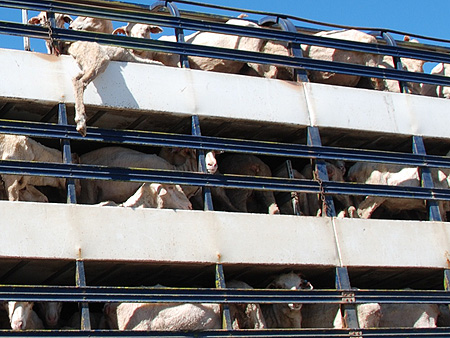
Its election time, let your voice be heard regarding live animal exports.

There are a few ways you can get involved.

You can jump on the WSPA Humane Chain Election website and help put live exports on the agenda in the media.  It only takes a few minutes and a couple of clicks.  Simply click here 

You can also go to the Animals Australia website and let the major parties know that animal welfare is important to you.  It also only takes a few minutes. Simply click here. 

In regards to local WA issues, we urge you to contact both your Federal MP and candidates and let them know that animal welfare issues, specifically a phase out of live exports, is important to you. This is  especially important if you live in the marginal seats of Hasluck, Cowan, Canning, Swan and Stirling. 

To find out who your candidates are, the ABC has an excellent website at:

http://www.abc.net.au/elections/federal/2010/guide/ 

If you aren’t sure which electorate you are in, go to
http://apps.aec.gov.au/esearch/            
  
For an overview of the candidates in Fremantle see below:

  • Melissa Parke, Labour – supports an end to live exports 
  • Kate Davis, Greens – supports an end to live exports 
  • Matt Taylor, Liberal – awaiting response

For an overview of the candidates in Brand see below (there is a push to move live exports to Kwinana, so this area is also important)

  • Dawn Jecks, Greens – supports an end to live exports 
  • Gary Gray, Labour – agrees with live exports
  • Donna Gordin, Liberal – agrees with live exports

If you would like some assistance, or would like further information on other candidates, please contact Jodie by replying to this email.

You Can Make A Difference

Thank you for your support!

Stop Live Exports

(formerly People Against Cruelty in Animal Transport)

pacat@iinet.net.au 

www.stopliveexports.org 

PO Box 499, Fremantle WA 6959

Phone: (08) 9430 8839 – Fax: (08) 6270 4489

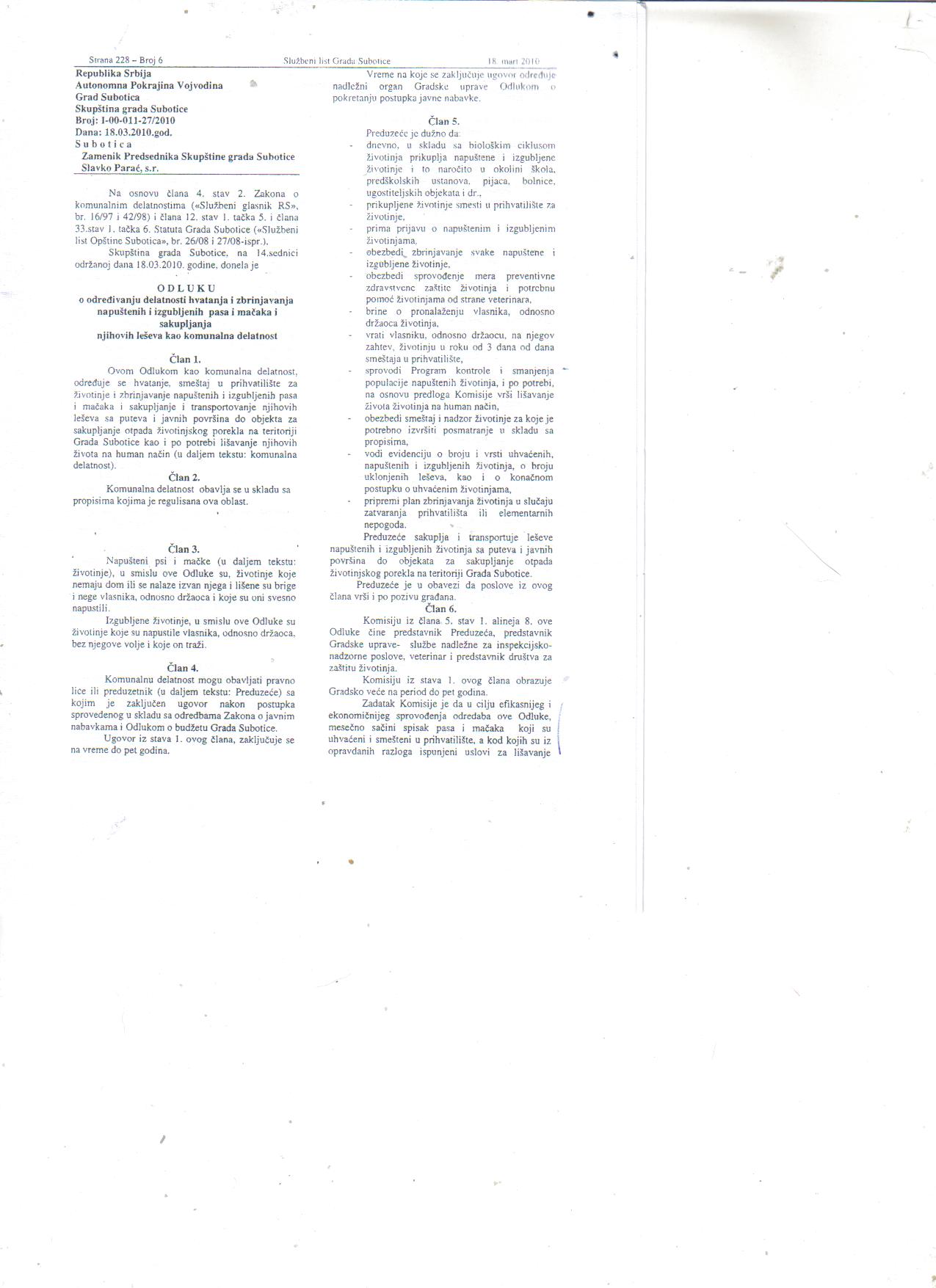
Serbia: PART 1 – Subotica City ‘Public Competition To Control Stray Animals’ Update – Corrupt and Authority Organised As Always – So Whats New ?

https://serbiananimalsvoice.wordpress.com/2010/06/09/serbia-subotica-city-public-tender-update-090610/

https://serbiananimalsvoice.wordpress.com/2010/06/03/serbia-now-that-stray-animal-control-programmes-go-to-public-tender-authorites-cut-budget-by-two-thirds-to-ensure-animal-welfare-proposals-fail/

https://serbiananimalsvoice.wordpress.com/2010/06/02/serbia-subotica-city-now-stray-animal-control-is-opened-up-to-public-competition-including-welfare-organisations-suddenly-the-budget-for-same-is-drastically-reduced-the-closed-shop-big-money-w/

https://serbiananimalsvoice.wordpress.com/2010/05/29/serbia-public-competition-by-law-may-now-enable-animal-welfare-groups-to-present-proposals-to-authorities-for-their-no-kill-stray-animal-numbers-control-programmes/

At the end of May we started a series of posts – see above, in which the Constitutional Court of Serbia declared that there must be a Public Competition – Tendering for the catching of stray dogs and cats in Subotica city.

We declared in our posts that Subotica city is finally starting to / having to act in agreement with the court, by allowing public competition for the process of catching and thereafter caring strays in the city.

From the beginning of June animal welfare campaigners eagerly awaited the formal publication of the tendering process to be published in the press, as they would have a chance to tender for this.

The immediate reaction of the Subotica authorities, knowing that animal welfare organisations and the public were now going to be allowed to tender for the task, was to cut the financial budget allocated by around two thirds !

This shows the closed loop ‘look after ourselves’ attitude which the authorities have had in the past.  Money in the budget is not spent on animal welfare, but it is spent on other things not directly associated with animals.

*** Update 18/07/10   Update 18/07/10   Update 18/07/10   Update 18/07/10 ***

Some two months after being informed that the Subotica strays programme was to put out to public competition, there is still no further news or publication of the programme in the press on which the public are able to base their tender.

Originally, welfare organisations were informed that they had 30 days from 12/06/10 in which to submit their full stray control programme to the Commission of Public Competition.  On the 12/07/10 the public competition would be closed and after a review of the tenders and a further 20 days later, the Commission would decide on the winner and all participants would be informed.

And so, by the 02/08/10 all the participants in the public competition would be informed of the results.

Well, that was the schedule and plan that anyone involved and wishing to participate in was informed by the Subotica authorities.  We understand that from 30/06/10 the Subotica authorities have paid the media ready for the competition to be published, but it has not happened for almost 3 weeks since.

It appears now that prior to this whole pack of lies from the authorities, on the 18/03/10 the Subotica authorities made a new decision independently, declaring that the (stray) animal killings would only be undertaken once a month.  It appears that the listing of animals will be compiled by 4 members of a ‘Commission’; a group which has been formed to authorise the killings.

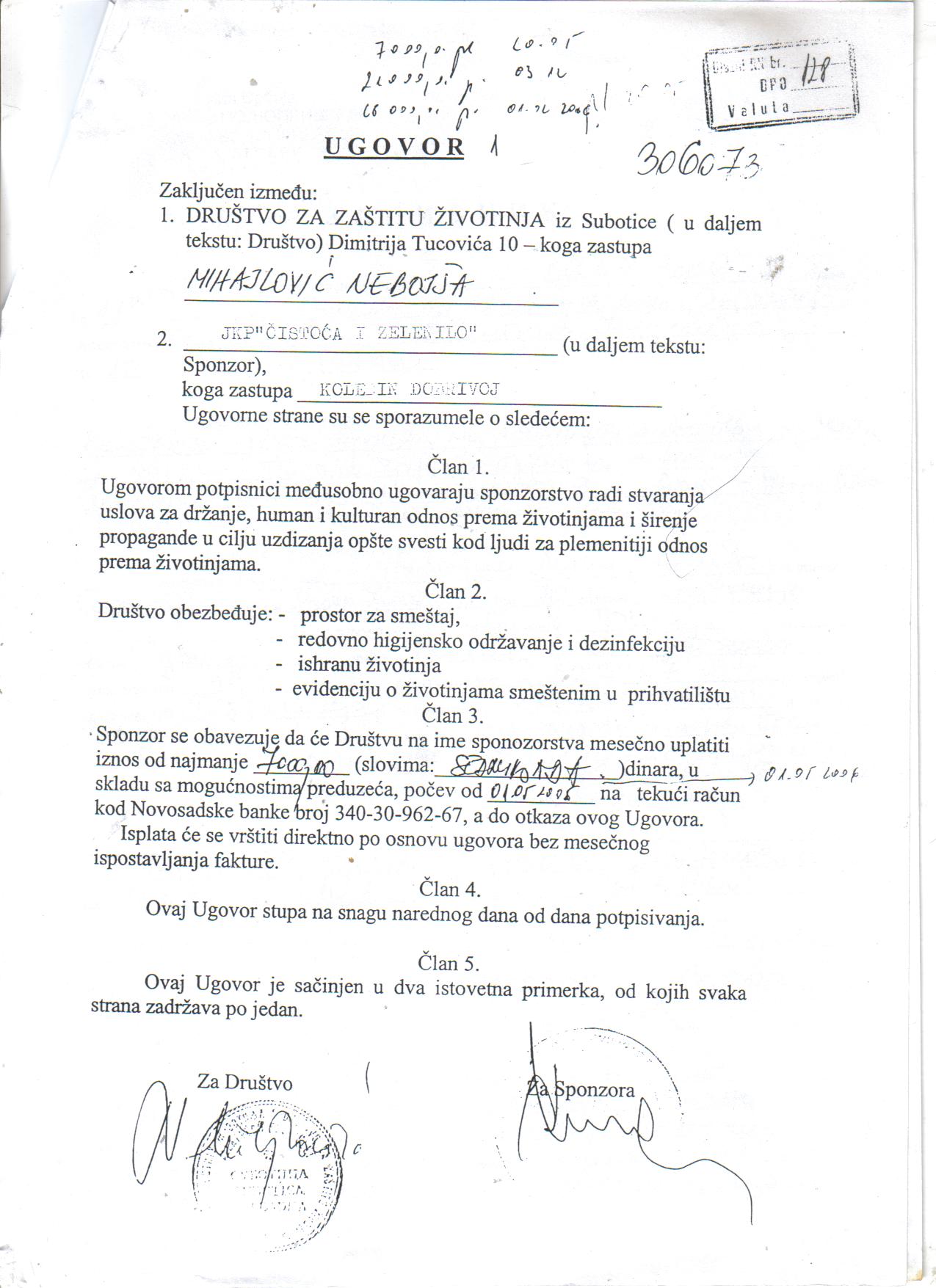
The declarations can be seen in the following documents.


This system and the killings are ILLEGAL and a VIOLATION OF THE CONSTITUTIONAL COURT VERDICT.

We understand that the members of the ‘Commission’ which decides the fate of the animals is made up of;

One veterinarian;

one person directly involved with the city authorities;

one person from a ‘dogcatching’ firm; and

one person from an ‘animal protection’ organisation.

We can confirm that neither Slavica nor any other representative of SAV or EPAR will be involved with this Commission.  It appears the animal protection representative is from an organisation called ‘APS Subotica’ who it seems have one small shelter of 70 to 100 animals and who always appear to have collaborated with the city authorities, by whom they have always been funded.  Is it any wonder that any other animal organisation is not involved ? – the Commission animal welfare rep is from an authority funded organisation.  A do as we say type approach ?

Their (APS Subotica) position is based on 1)  education and on 2)  the humane putting to sleep of animals.  We are simply of the view that the killing of strays is their overall position and is the only way they consider controlling dog and cat populations.  Same as the authorities – what a coincidence !

Their (APS Subotica) President, Mr. Nebojsa Mihajlovic, has for many years received money from the city budget for his ‘collaboration’.  We understand that this figure is around 30,000 to 100,000 dinar per month.  Money to simply continue to give the green light for the continued killing of dogs and cats.

Mr. Nebojsa Mihajlovic appears to have established a contract with dog killers in the past.  It is alleged that in 2004, 2005 and 2006, 7,000 dinars per month was given to (Subotica) dogcatchers.  Many hundreds of animals were caught and killed, whilst the Subotica general public were told / misinformed  that the animals were being cared for at the shelter.  In fact, the animals were being killed immediately after capture.

We call this hypocrisy.  It is alleged that Mr. Nebojsa Mihajlovic always spoke about education regarding strays; but here he actually did nothing; there was never any  public education in Subotica about stray animals.

We understand that in their first article associated with this new decision, the Subotica city authorities have written declaring that the killing of dogs and cats only (not more than) once a month is ‘communal intervention’.

We declare that the illegal (Veterinary law 2005) killing of dogs and cats is euthanasia, which is ‘medical’, and not a ‘communal intervention’ policy. 

Please refer to ‘Part 2’ in another post (to be issued soon) for a continuation.


Romania: Hells Basement for Animals – Video Link, Sample Letter and Contact Details Provided – Please Act TODAY to Close This Animal Abuse Establishment DOWN


SAV Comment

Please click on the link directly below to see the video footage which has been taken of this Hells Basement for Animals.

http://ourcompass.wordpress.com/2010/07/11/romania-hells-basement-for-animals/

After the video, please act and send the sample letter given to all the contacts given in the block listing below.

For EU citizens, if you wish to contact your own MEP’s about this issue, then click on the following link – select your nation and then move on to find all your national MEPs.

http://www.europarl.europa.eu/members/public/geoSearch.do?language=en 

———————————————————————————-


Sent: Monday, July 12, 2010 2:20 PM

Subject: Romania: Hell’s Basement for Animals (Enfer pour les chiens dans un refuge en Roumanie) (letter)

http://ourcompass.wordpress.com/2010/07/11/romania-hells-basement-for-animals/

Because compassion directs us …

Please send SAMPLE LETTER (below) to email block; I do not know who wrote this letter for credit as it was on the original alert. Also PLEASE NOTE that I have removed five invalid addresses from the original alert, including one for the mayor, but more may refuse letters so it is possible you will receive additional address failures. Thank you.

Simulposted with Save the Dogs

Three months were needed of waiting and investigations to show what everyone knew for a very long time: the public dog pound in Costanza, managed by the company Alfmob srl, is nothing more than a big slaughterhouse for stray dogs. The images posted next to the dog pound, clearly show healthy animals injected in the thorax by someone looking like a veterinarian, placed in line on the ground dead and in a plastic bag. The bodies are then transported to an incinerator in a nearby region, an incinerator financed with European funds.

In the video material gathered by Save the Dogs, one can also see the captures in Cernavoda, the prohibited hygienic conditions in the Costanza dog pound and the large pincers (banned by the Romanian law – like the killing of healthy animals) used to seize the poor animals. Save the Dogs has sent a series of images to all the major Romanian television stations and the press, as well, the members of the local council of Cernavoda, asking to immediately interrupt their contract with Alfmob. Moreover, a legal action as been undertaken against the company and the vet who undertook the killings. To view the press release, click HERE.

ADDITIONAL PHOTO EVIDENCE can be found by clicking HERE

WHERE TO SEND YOUR LETTERS OF PROTEST (copy/paste into your TO: and hit one carriage return):
primarie@primaria-constanta.ro , radu@radumazare.ro , consjud@cjc.ro , relatii_publice@cjc.ro , cancelarie@prefecturaconstanta.ro , mircea_gj@yahoo.com , primaria@cernavoda.ro , info@romaniatourism.com , mircea_gj@yahoo.com , cp06@cdep.ro , sulfina.barbu@cdep.ro , dusa_mircea@cdep.ro , mapostolache@cdep.ro , attila.korodi@cdep.ro , marin.bobes@cdep.ro , victor.boiangiu@cdep.ro , dan.bordeianu@cdep.ro , cristian.buican@cdep.ro , ion.calin@cdep.ro , gheorghe.ciocan@cdep.ro , relu.fenechiu@cdep.ro , vasile.gherasim@cdep.ro , ghervazen.longher@cdep.ro , costica.macaleti@cdep.ro , antonella.marinescu@cdep.ro , marius.neculai@cdep.ro , cristinadumitru@mail.com , dumitru.pardau@cdep.ro , ioan.oltean@cdep.ro , cornel.pieptea@cdep.ro , neculai.ratoi@cdep.ro , denes.seres@cdep.ro , szilagy@rmdsz.ro , soporan.vasile@cdep.ro , nicolae.stan@cdep.ro , claudiu.taga@cdep.ro , radu.timpau@cdep.ro , ecu777@yahoo.com , lucia.varga@cdep.ro , varga.lucia@yahoo.com , aurel.vladoiu@cdep.ro , sorin.zamfirescu@cdep.ro , portal@santos.sp.gov.br , info@rotterdam.nl , contact@brest-metropole-oceane.fr , contact@mairie-brest.fr , mayor@cityofmobile.org , turun.kaupunki@turku.fi , webmaster@comune.sulmona.aq.it , urp@comune.perugia.it , comune.perugia@postacert.umbria.it , presidenza.consiglio@comune.trapani.it

*** SAMPLE LETTER ***

 (as provided in initial alert, thank you to whomever wrote it):

To whom it may concern,

“The GREATNESS and the MORAL PROGRESS of a nation can be judged by the way its animals are treated.” ( M Gandhi )

I am outraged by the terrifying news about the way animals are treated in your country. It is beyond human comprehension to understand how it is possible such barbaric acts happen every day, all over your country, and more, the perpetrators are not punished in accordance with the full extent of the law for the protection of animals and also based on the Principles of the European Convention For the Protection of Companion Animals ( Strasbourg Nov.13, 1987.)

Please stop the slaughter of dogs in CONSTANTA…and defer to justice those who killed helpless, defenseless , healthy dogs….There is a criminal who ORDERED this massacre and he must legally punished for this…

Romania is a beautiful country; it used to have a good reputation around the world. I am afraid that, due to the horrifying cruelty shown by many Romanians against animals, due to the lack of action from the authorities supposed to implement the law, due to the fact that many perpetrators are even those hired by local authorities…Romania’s and Romanian people’s reputation has been badly tarnished.

I will not visit your country any time soon and I will inform my relatives and friends not to visit either, until all those who committed crimes against animals are punished at the full extent of the law and until the Law for the protection of animals is IMPLEMENTED and applied to everybody, including the officials who did not observe it. I will avoid buying any product of Romania, until animals are treated with respect and dignity and fully protected by the LAW.

The public dog pound in Costanza, managed by the company Alfmob srl, is nothing more than a big slaughterhouse for stray dogs:

http://www.savethedogs.eu/2010/07/masacru-la-ecarisajul-bio-baza-din-constanta-odata-adunate-probele-std-trece-la-atac/lang-pref/en/

http://www.adevarul.ro/locale/constanta/Constanta-_Maidanezii_din_Cernavoda-masacrati_la_adapostul_legii_0_294570633.html

http://www.click.ro/actualitate/din_tara/VIDEO_Constanta-_Un_film_despre_modul_in_care_sunt_ucisi_cainii_din_Cernavoda_ii_socheaza_pe_romani_0_988701296.html

How the public dog pound really looks like and what happens in there. In those areas, dogs are left to starve …no water either…for one week….then they are killed. As simple as that.

http://www.protectiaanimalelor.ro/caini/caini_constanta.html

Mangalia public pound finally closed ….does it look HUMAN to you ?

http://www.protectiaanimalelor.ro/caini/caini_mangalia.html

Thank you for your attention.

YOUR NAME and Nationality


Serbia: Time to Now Ask the OIE for the Balkans Regions About Rabies in Serbia – SAMPLE LETTER to be Sent Before 27/07/10 Please – ACT IMMEDIATELY to Stop Mass Animal Killing

The B92 news situation item given later in this post is a summary of recent events relating to Serbia and the OIE – the OIE being the World Organisation for Animal Health.

Whilst we welcome the move by the OIE to hold an international seminar in Belgrade relating to veterinary medicine which can do nothing but move Serbia a step forward in animal welfare terms from its current dark ages perspective / philosophy towards policies and goals of the 21st Century, we still have very many concerns that the OIE are not being given the full facts by Serbia when it comes to disease control policy.

In other words, we still feel that inaccurate or even non existent alleged Rabies outbreaks in the country are constantly, and misleadingly, being used as an excuse by the Serbian authorities to allow them to continue to undertake mass killings of stray animals, regardless of any disease detection or not.  As we show in the data below, the Veterinary Law of 2005 which is fully supported by the Serbian Constitutional Court, FORBIDS the killing of animals (strays); instead they must be given care. 

This is a policy which we feel the Serbian authorities to do not wish to undertake; in their misguided attitude, killing stray animals is esier than population management programmes.  There is no forward vision by the authorities that a sterilisation prgramme over time will dramatically reduce stray animal numbers; killing strays only continues a current policy of pouring water into a bottomless barrel; un-sterilsed strays produce more strays as offspring. 

Only when the authorities actually understand the reality and accept that stray sterilisation programmes are the way to reduce stray numbers in Serbia, will we ever see a reduction in populations and a long term saving in costs.

The only exception to this case of providing care to stray animals, is when it is applied to Rabies infected areas, which then allows animals, including strays, to be killed.  If there is no rabies in an area, then the demands of the legislation as directed by the Serbian Constitutional Court must be applied, and this declares that stray animals must be protected.

So we ask, is a national widespread rabies outbreak a simple invention of the government and authorities so that they can continue to kill and yet appear to be within the law ?, or is it a reality ?

It is time that the OIE were informed about the views of the animal welfare organisations once again. 

 Personnel who should be asked at the OIE include –

Dr Nikola T. Belev – Regional Representative

Dr Stanislav Ralchev – Technical Assistant

Dr Anatoliy Vlasov – Regional Expert

Dr Caroline Planté – Sub-Regioanl Representative

Dr Jean-Pierre Vermeersch – Project Manager.

We are perfectly within our rights as world citizens to ask the OIE – the world orgainsation for animal health, to consider our view that Serbia may be inventing rabies outbreaks to allow the continued killing of stray animals, rather than taking time and including financial investment to reduce stray numbers by sterilisation, vaccination, microchipping and a public education programme targeted at responsible owned (pet) animals.

At the end of this post you can find a sample letter which can be copied and sent by yourself to all the above representatives of the OIE, expressing your concerns about what we view as the continued ILLEGAL killing of stray animals in Serbia.

At the Belgrade veterinary meetings scheduled for the end of July, we require the representatives of the OIE to put on the agenda the issue of stray animal killings right across Serbia; especially when associated with the alleged mass Rabies outbreaks that appear nationwide as declared by the government and authorities.

Is this simply a license to continue killing strays by the government ?

We want answers from the OIE and from the Serbian government; and the Belgrade meetings are an ideal situation for this all to be provided to a global audience – and that is us.

We hope that by copying and sending the sample letter (provided below) to the very personnel involved with the OIE in Serbia, some note may be taken of our requests and that the Serbian government may be held to account in Belgrade at the end of July for its continued illegal killing of stray animals.

Past SAV posts relating to the above:

https://serbiananimalsvoice.wordpress.com/2010/05/27/serbia-rabies-across-the-nation-legally-allows-animals-to-be-killed-but-has-the-oie-been-informed-by-the-serbian-ministry-of-these-alleged-nationwide-outbreaks-or-just-a-creational-excuse/

https://serbiananimalsvoice.wordpress.com/2010/05/16/serbia-sample-letter-to-send-to-the-government-the-eu-commission-and-to-the-world-organisation-for-animal-health-the-oie-serbia-must-change-its-attitude-towards-stray-animals-and-willingless-to/

As we say in one of our posts given above, and what we consider a very important fact that must be remembered and which is given again here:

It should be remembered that the original (old) legislation to allow stray killing – named Pravilnik 29/94, was overwritten by Article 168 of 2005, the result being that all killing of animals was forbidden apart only from cases for Rabies infected areas, which were covered by application of Articles 64 and 65 of the Veterinary Law.

*** This is the important point, that animal killing is illegal apart only from cases for Rabies infected areas, which were covered by application of Articles 64 and 65 of the Veterinary Law ***.

It would seem strange that there are alleged mass outbreaks of rabies across Serbia now.

In effect, Article 168 of 2005 which does not allow animal killing is replaced by legislation that DOES ALLOW animal killing, simply because there is allegedly rabies in areas.  The word ‘rabies’ being the one which specifically gives right to animal slaughter rather than animal protection.

Even more strange that rabies is supposedly breaking out right across Serbia; which therefore allows all strays and wildlife to continue to be killed by ‘by-passing’ legislation of Article 168 of 2005 – the no kill animal legislation

No rabies in area = legislation Article 168 = NO animal killing, only animal care.

Rabies in area = Articles 64 and 65 of the Veterinary Law = allows Mass animal killing, including wildlife.

So, we suggest that a national rabies outbreak has suddenly arrived en masse, even been invented, devised etc in order that the continued mass slaughter of all animals, including strays and wildlife, can continue, when in fact, Article 168 which should allow for the care of animals, is very conveniently being by-passed 

The 2005 Veterinary Law Article 168 demands the care of animals, not the killing.

This has recently been verified to Serbian animal campaigners by the Constitutional Court of Serbia as being the legislation which should be applied. 

———————————————————————————————–

News B92 Tv station :

Belgrade, 8 July 2010 –

Serbian Prime Minister Mirko Cvetkovic and Minister of Agriculture, Forestry and Water Management Sasa Dragin met today with President of the Regional Commission of the World Organisation for Animal Health (OIE) for Europe Nikola Belev.

Cvetkovic and Dragin thanked the OIE for the decision to hold an international seminar on veterinary medicine products in Belgrade on 26–28 July, as well as for its continued support to Serbia’s veterinary sector.

Belev delivered greetings from OIE Director General Bernard Vallat and voiced his pleasure at Serbia’s exceptional progress in veterinary medicine and food safety over the last few years.

He underlined the importance of permanent control and supervision over contagious animal diseases, which can jeopardise animal and human health, as well as threaten the environment and the country’s economic development.

Belev especially pointed out the economic underside of contagious animal diseases to any country, as well as the current dangers threatening the region, such as African swine plague, rabies, foot-and-mouth disease and foot-rot.

He said he is pleased that new regulations regarding disease control have been adopted over the last year in Serbia and voiced his full confidence in Serbia’s capacity to control these diseases.

He shared the expectation of the OIE and the EU concerning the establishment of an appropriate structure of veterinary services for their member states and providing financial and administrative capacity for these services.

The President of the OIE Regional Commission for Europe confirmed that he was very pleased with the way Serbia established its veterinary system, as well as with our country’s communication and cooperation with the OIE and the EU.

He outlined that the meeting in Belgrade will gather approximately 50 participants from European countries – members of the OIE, as well as representatives from international organisations.

The seminar will be organised by the OIE in collaboration with the Ministry of Agriculture, Forestry and Water Management and the Ministry’s Veterinary Administration.

The conference is of great importance not only in terms of improving the registration and quality control and operations of veterinary medicines and medical supplies, treatment and control of infectious animal diseases, but also from the standpoint of food safety.

——————————–

** SAMPLE LETTER **  ** SAMPLE LETTER **  ** SAMPLE LETTER **

Block e mail listing to send to:

rr.easteurope@oie.intr.kostova@oie.ints.ralchev@oie.inta.vlasov@oie.inta.vlasov@oie.intjp.vermeersch@oie.intpredsednikvladesrbije@gov.rskabinet.zpv@gov.rskabinet.potpredsednika@gov.rsoffice@minpolj.gov.rsgeneralni.inspektorat@minpolj.gov.rsinfo@ekoplan.gov.rsgoran.milosev@minpolj.gov.rszoran.marinkovic@minpolj.gov.rszoran.micovic@minpolj.gov.rscab-rehn-web-feedback@ec.europa.euoie@oie.int

Letter to copy and send:

Dear regional representatives of the OIE for the Balkans states;

Whilst I welcome the move by the OIE to hold an international seminar in Belgrade at the end of July 2010 relating to veterinary medicine, I also wish to express my views and concerns to you in advance of this meeting, with the hope that you will quesion both Serbian Prime Minister Mirko Cvetkovic and the Minister of Agriculture, Forestry and Water Management, Mr. Sasa Dragin on what I have to say.

My concerns include:

the original (old) Serbian legislation to allow stray animal killing – named Pravilnik 29/94, was overwritten by Article 168 of the new Serbian Veterinary Law in 2005, the result being that the killing of all animals was forbidden apart only from cases for Rabies infected areas, which are covered by application of Articles 64 and 65 of the Veterinary Law.

Under the existing Veterinary Law, as supported by the Serbian Constitutional Court,  it is now the national Serbian law that animals, including stray animals, must be given care rather than be killed.

Serbian authorities and government are not enforcing this existing Serbian legislation.  I now feel that with the sudden drastic increase in alleged Rabies outbreaks right across Serbia, the authorities are simply using rabies as an excuse to detour around the existing animal protection law of 2005  (the Veterinary Law) – where rabies can still be used as a legitimate reason for continuing to kill animals.

I feel this is a deliberate attempt by the Serbian authorities to continue their policy of killing stray animals regardless of what existing Serbian legislation requires.  I go as far as to say that I feel that rabies is being used by the autorities throughout Serbia to continue with their killing frenzy rather than adopting the legal national requirement of caring for stray animals.

I also have concerns that you, the OIE, who are responsible for ensuring global disease control and recording global disease outbreaks, are not actually being informed of all these alleged rabies outbreaks by the Serbian authorities, quite simply, because they do not actually exist.  They are simply an excuse to allow the continued killing of stray animals, which is against existing Serbian national legislation.

I also have large concerns that there is no real programme for the future by Serbian authorities to make any long term attempt at stray animal population reduction.  A programme which would include sterilisation, vaccination and microchipping for both stray and also pet (owned) animals is the only way that Serbia can ever hope to reduce the vast numbers of animals which it currently has on the streets.  Public education is required here also, and again the Serbian authorites are showing no attempt to become involved in this.  Serbian autorities are interested in one approach to stray animal control only; and that is to kill everything.  This is doing nothing to reduce stray animals numbers and in the 21st century, is simply not acceptable to normal decent global citizens.

Serbia is wishing to become a future member of the European Union (EU).  In her Issue 1, June 2010 newsletter,  Paola Testori, the EU Director General for Health and Consumers; who is responsible for animal welfare, declares:

“The Treaty of Lisbon, which came into force last December (2009), has created an explicit duty regarding animal welfare under EU law.  Article 13 of the Treaty speaks of animals as “sentient beings” that must be respected in the EU decision-making process”. 

My current opinion is that Serbia is not showing any attempt to enforce its own national animal welfare legislation, that it certainly does not comply with the requirements of the Treaty of Lisbon, and that in no way does it show that it (Serbia) accepts animals as sentient beings.  One only has to witness their treatment of stray animals over many years to support this view.

As a global animal welfare campaigner, I am asking you, the OIE, the World Organisation for Animal Health, to step up onto the stage at the Belgrade meetings this July and acting on my behalf, demand a proper response from the Serbian authorities as to why they are continuing to use the rabies threat as an excuse to detour around caring for animals under existing Serbian legislation as they are required, and that in my opinion, with their current global status of being a nation of stray animal killers, what they aim to do about it prior to any membership of the EU.

Until the Serbian authorities change their attitude to stray animal population controls through a no kill, sterilisation strategy, which I trust you as the OIE, an animal welfare defending global organisation will support, I have no alternative but to continue campaigning for the protection of Serbian stray animals as endorsed by the Serbian Constitutional Court.

It is the Serbian authorities and government who need to move from a Dark Ages approach to animals and progress into the 21st Century; no one else.

I trust that you will make my views on Serbian animal welfare policy, or the lack of it in the 21st Century, clear to the Serbian authorities at the July, Belgrade meetings.

Respectfully yours;

 ***Name and nationality***.