Uk: Does Anyone Know Who These Are ?

Re: League’s image of hunters –

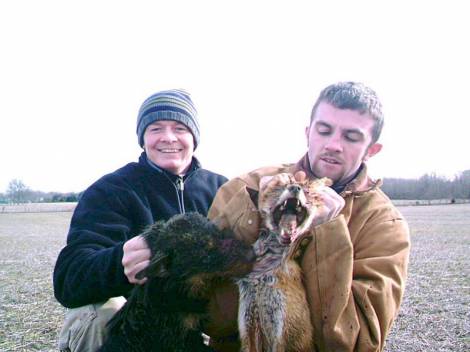
Does anyone know who these
 ******* are?

The League Against Cruel Sports would love to have any information.


If you do, then please contact the LACS using any of the contact links below.


LACS Contact Links:

http://www.league.org.uk/content.aspx?CategoryID=72&ArticleID=271

Telephone: 01483 524 250
Office hours: 9.00am – 5.00pm, Monday-Friday

Email: 
 info@league.org.uk 
(please include full name and contact details)

Press Office:
Telephone: 01483 524 250 (24 hours)
Email:  press@league.org.uk.

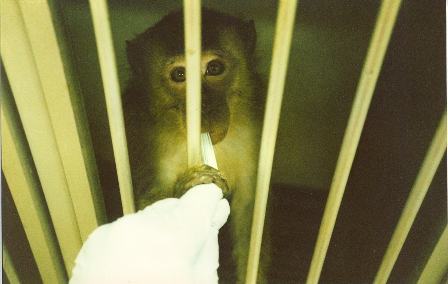
International / Malaysia: Animal Groups Unite on World Day for Animals in Laboratories to Stop the Construction of an Animal Testing Laboratory (in Malaysia)


Animal groups unite on World Day for Animals in Laboratories to stop the construction of an animal testing laboratory in Malaysia

Photo – BUAV – http://www.buav.org/home

Posted by: “Sarah Kite”  sarah.kite@buav.org
Fri Apr 23, 2010 12:56 am (PDT)

News Release
For immediate release

23rd April 2010

http://www.buav.org/a/2010/04/23/320

Animal groups unite on World Day for Animals in Laboratories to stop the construction of an animal testing laboratory in Malaysia.

To mark World Day for Animals in Laboratories (April 24th), a coalition of animal protection groups has launched an international effort to stop the construction of an animal laboratory at the Masjid Tanah Industrial Park in Malacca, Malaysia. The proposal, which has only recently come to light, is a result of collaboration between the Indian contract testing company, Vivo Bio Tech, and the State government-owned Melaka Biotech.

The coalition, which includes the Society for the Prevention of Cruelty to Animals (SPCA) Selangor, the British Union for the Abolition of Vivisection (BUAV) and the European Coalition to End Animal Experiments (ECEAE), which represents animal protection organisations from 17 countries, has written to the Government urging it not to allow this facility to go ahead on humanitarian grounds. Also to be considered is the impact that allowing such a facility will have upon Malaysia’s international image in the world. A meeting to discuss the coalition’s objections in full has been requested.

Disturbingly, Malaysia currently has no legislation governing the use of animals in research. According to the company’s website (www.vivobio.com), Vivo Biotech carries out extensive animal research, including toxicity testing on a variety of species for a number of purposes, including the controversial use for cosmetic products. It has also been reported that primates could be sourced locally in Malaysia. The government of Malaysia made an important stand by re-instating the ban on the export of primates for research in 2008. Should the animal laboratory be allowed to be set up in Malacca, immense suffering, misery and death will be inflicted on thousands of animals, and potentially facilitate the trade in wild-caught macaques within Malaysia.

The coalition opposes the construction of this facility for both ethical reasons and the lack of scientific validity of using animals in testing. It argues that there is a large range of non-animal techniques that, as well as being a more humane approach to science can also be cheaper, quicker and more effective. These include cell, tissue and organ culture; micro-organisms such as bacteria; molecular research; studies with post-mortem tissues; computer simulations, population studies (epidemiology) and ethical clinical research with human volunteers.

Coalition spokesperson, Christine Chin, SPCA stated:  “We are calling on animal groups and others around the world to join us in urging the Government of Malaysia to dissociate itself from a proposal that will not only involve the suffering and death of thousands of animals every year, but also will undoubtedly have a negative and detrimental impact on Malaysia’s image overseas.”

ENDS

For further information, please contact Jacinta Johnson, SPCA Selangor at jacinta.spca@gmail.com or Telephone +60 3 4256 5312/ 3 4253 5179
or Sarah Kite at sarah.kite@buav.org or Telephone +44 207 700 4888 begin_of_the_skype_highlighting              +44 207 700 4888      end_of_the_skype_highlighting begin_of_the_skype_highlighting              +44 207 700 4888      end_of_the_skype_highlighting.
www.spca.org.my
www.buav.org
http://www.eceae.org/
—————————————————————————————————————–

Action Alert
Please support the international campaign to stop the development of an animal testing laboratory in Malaysia

We are writing to request that you join with us in opposing the development of an animal testing facility at the Masjid Tanah Industrial Park in Malacca, Malaysia. The BUAV has joined with the Society for the Prevention of Cruelty to Animals (SPCA) Selangor and the European Coalition to End Animal Experiments (ECEAE) to campaign on this issue and we need your help!

The laboratory, which plans to house nonhuman primates, dogs and small animals, will be the result of a RM450 million deal between the Indian contract testing company, Vivo BioTech, Vanguard Creative Technologies, and the Malaysian government-owned company, Melaka Biotech.

Malaysia currently has no legislation governing the use of animals in research. According to the company’s website (www.vivobio.com), Vivo Biotech carries out extensive animal research, including toxicity testing on a variety of species for a number of purposes, including the controversial use for cosmetic products. It has also been reported that primates could be sourced locally in Malaysia. The government of Malaysia made an important stand by re-instating the ban on the export of primates for research in 2008. Should the animal laboratory be allowed to be set up in Malacca, immense suffering, misery and death will be inflicted on thousands of animals, and potentially facilitate the trade in wild-caught macaques within Malaysia.

The coalition opposes the construction of this facility for both ethical reasons and the lack of scientific validity of using animals in testing. It argues that there is a large range of non-animal techniques that, as well as being a more humane approach to science can also be cheaper, quicker and more effective.

There is still time to take action. We understand that as yet, no notice or applications of permits have been made to the Peninsular Malaysia Department of Wildlife and National Parks, or the Department of Veterinary Services.

Further information and a link to a recent article in the Malay Mail, a leading Malaysian newspaper, can be viewed here:
http://www.buav.org/a/2010/04/02/309

Please support the campaign and urge the Prime Minister of Malaysia and the Chief Minister of Malacca to put an end to the negotiations between the Indian biotechnology company and the State government-owned Melaka Biotech. Request that they do not embark on the controversial business of animal research and remind them of the negative impact that the proposed laboratories will have on Malaysia’s international image.

Prime Minister of Malaysia
Datuk Seri Najib Razak
Prime Minister
Office of the Prime Minister
Main Block, Perdana Putra Building
Federal Government Administrative Centre
62502 Putrajaya
Malaysia
Email: ppm@pmo.gov.my

(cc. the Prime Ministers Secretary at aziz@pmo.gov.my)Chief Minister of Malacca
Datuk Seri Hj. Mohd Ali bin Mohd Rustam
Office of the Chief Minister
The Seri Negari
The State Administrative and Development Centre
Malacca 
Malaysia
Email: alirustam@melaka.gov.my

You can also request that the government authorities in Malaysia not issue any permits for the facility.

Minister of Agriculture and Agro-based Industry
Datuk Seri Noh bin Omar
Wisma Tani, No 28, Persiaran Perdana, Precint 4
Pusat Pentadbiran Kerajaan Persekutuan
62624 Putrajaya
Wilayah Persekutuan
Malaysia
Email: nohomar@moa.gov.my

Ministry of Natural Resources and Environment
Dato Sri Douglas Uggah Embas
Level 1 – 4, Podium 2 & 3, Wisma Sumber Asli
No.25, Persiaran Perdana, Precint 4
Federal Government Administrative Centre
62574 Putrajaya
Malaysia
Email: uggah@nre.gov.my

Department of Veterinary Services
Dato’ Dr. Abd. Aziz b. Jamaluddin
The Director-General of Veterinary Services
Wisma Tani
Block Podium Lot 4G1
Presint 4
Federal Government Administrative Centre
62630 Putrajaya
Malaysia
Email: azizj@dvs.gov.my

Department of Wildlife and National Parks (Perhilitan)
Dato’ Abd. Rashid bin Samsudin
Director-General
Headquarters of the Department of Wildlife and National Parks
Km 10, Jalan Cheras
56100 Kuala Lumpur
Malaysia
Email: rashid@wildlife.gov.my

(cc. to Personal Assistant at pakp@wildlife.gov.my)

BLOCK LISTING FOR ABOVE:

ppm@pmo.gov.myaziz@pmo.gov.myalirustam@melaka.gov.mynohomar@moa.gov.myuggah@nre.gov.myazizj@dvs.gov.myrashid@wildlife.gov.mypakp@wildlife.gov.my

You can also write to the Embassy of Malaysia in your own country.

For the contact details of Malaysian Embassies around the world go to:
http://www.embassiesabroad.com/embassies-of/Malaysia

==========================================

WORLD DAY FOR LABORATORY ANIMALS

Please see attached image “Hinsa vs Ahinsa” after reading the message below.

Please forward this email to friends. Thank you.

24th April, 2010 is World Day for Laboratory Animals

All of us have our own particular favourites when it comes to choosing cosmetics or toiletries. High powered advertising and the glittering facades of gigantic shopping malls, make the prospect of shopping for these items quite exciting and desirable.

But how do these products reach these shelves in the first place? The journey is not easy, especially for all the animals involved in the process. Most cosmetics, toiletries and household products, are tested on animals first, before being cleared and ready for human consumption. 

Small cages, cold metallic table surfaces, lethal looking instruments, contraptions to confine an animal completely for purposes of testing and experimentation; this is what a lab animal faces every day and night of it’s terrifying existence in this unnatural setting.  Millions of animals are subjected to horrifying cruelty so that we humans can cream our faces, shampoo our hair and even clean our floors as safely as possible. Each product has been tested on animals first.

After undergoing painful experimentation for most of their lives, many are then euthanized so that Scientists can study the effects of a product on their internal organs. This is what an animal, chosen for the lab, faces every day of it’s life; terrible suffering followed by a wretched death.

How can we, as people who really care for the welfare of animals, deal with this type of situation and also avoid being a party to such cruelty? There are ways :

Firstly, as customers, we can refuse to buy any product that has been tested on animals.

Many large cosmetic companies have now abandoned animal testing. This is indicated on the packaging of the product you buy, so read everything carefully before making your purchase. You can also ask sales people or the Manager of the store to help you, though, most of them may not be even aware that products are tested on animals. You can help educate them.

If you are really fond of a particular product and the packaging tells you nothing, locate the contact number or email address of the manufacturer on the same packaging and contact the concerned person directly. Ask if the product has been tested on animals as you do not wish to purchase any item that involves cruelty to an innocent animal. This helps a great deal, as customers are all important, and you are a customer. 

If you are in doubt about the safety aspect of products, related to testing on animals, log on to the National Anti-Vivisection Society site and read about the safe alternatives to animal testing. 

To make a compassionate and informed choice, you can go to the PETA India lab animals’ site and find out exactly which company tests on animals and which does not.  There are approximately 800 which do not resort to animal testing now.

On this one day of the year, when we pause and reflect on the terrible plight of these animals, make a silent pledge to yourself to avoid using any product that involves this type of cruelty.  And on behalf of all the animals you will save in this way, we thank you.

Team IDA (In Defense of Animals)

© 2009-2010 IDA INDIA. http://www.idaindia.org

If you wish to learn about the horrific atrocities of vivisection, you could view the following videos:

http://vivisection-absurd.org.uk/videos.html 

http://www.animalliberationfront.com/Philosophy/Animal%20Testing/AntiVivisVideo.htm 

***  Warning: Most of the images are very distressing and shocking ***.

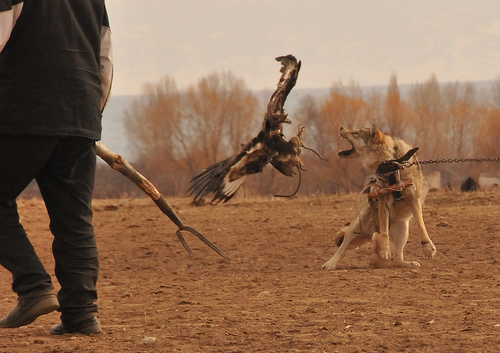
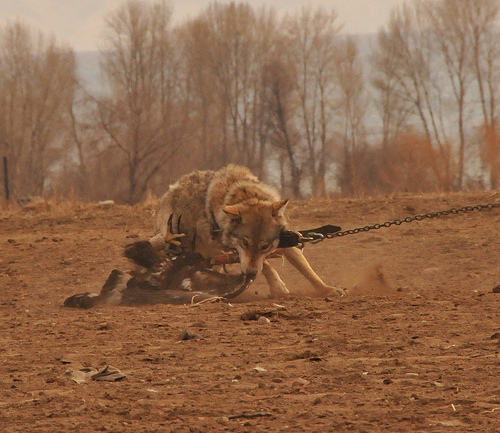
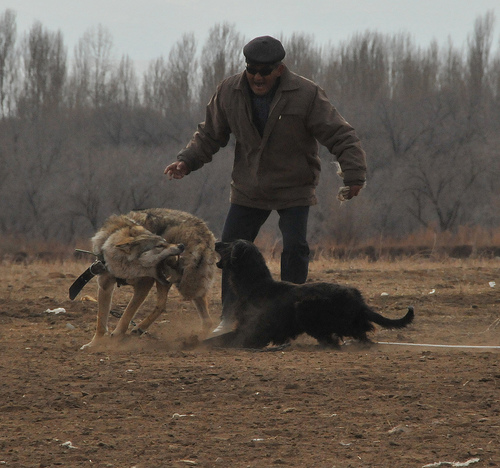
Kyrgyzstan: “Festivities range from eagle hunting of pheasants; Taigen also known as Kyrgyz hunting dog racing; to wolf baiting” – Petition Link Given Below.


Kyrgyzstan – Wikipedia Linkhttp://en.wikipedia.org/wiki/Kyrgyzstan

Petition Link:   http://www.thepetitionsite.com/petition/558699231

Target:  Embassy of Kyrgyzstan in Brussels, Belgium

Sponsored by:   Friends of Wolves

Lake Issyk Kul and in all Kyrgyzstan

VIDEO LINK AND FOOTAGE – Salborun Taigen and Bird Festival
http://sonsofhedin.org/archives/290/comment-page-1#comment-252

We can not tolerate such barbaric acts.

This return to archaic and cruel tradition is a disgrace for Kyrgyztan.

These noble animals deserve respect and protection of their population!

This 2 day festival on the northern shore of Lake Issyk Kul in the town of Cholpon-Ata draws the regions best hunting dogs, eagle hunters, and falcon handlers in all of Kyrgyzstan.

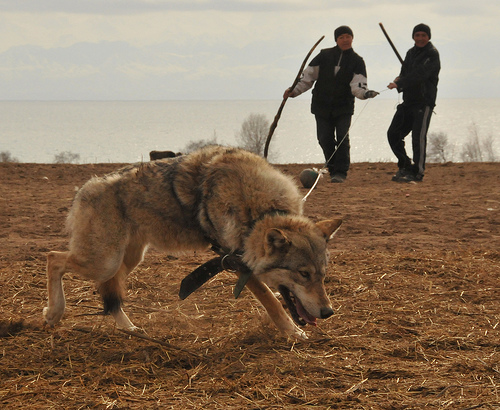
Festivities range from eagle hunting of pheasants;  Taigen also known as Kyrgyz hunting dog racing; to wolf baiting.

These long standing traditions have an important place within Kyrgyz culture and reflect their nomadic past.

Such festivities reflect the Kyrgyz people’s nomadic past.

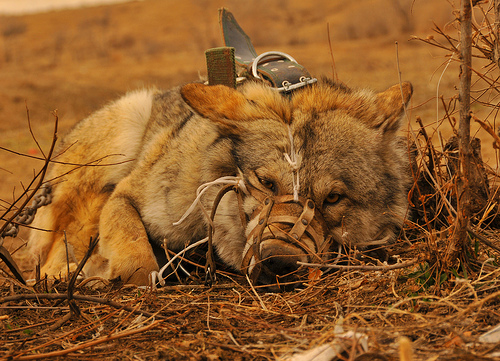
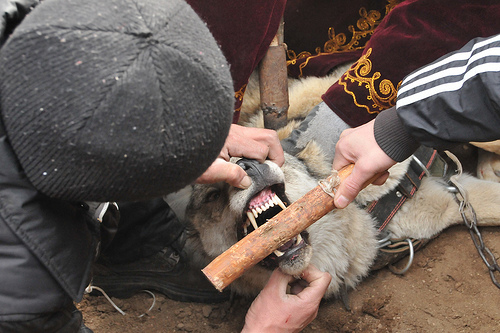
The final event of the festival is only opened to the most respected Berktuchi and Taigen who must hunt a live wolf. This fierce and sometimes gory battle frequently results in mortal wounds. For the sake of sportsmanship, festival officials attempted to place a bit in the wolf’s mouth to no avail, settling for a heavy chain tethering her to a lead weight.

Within rural communities, Kyrgyz have long raised Taigen and trained Eagles to protect both the lives of their livestock and family. This captured wolf was responsible for killing 68 sheep, 20 cows, and 17 horses. Such an unfathomable number of lost cattle and sheep is enough to impoverish any community.

We also encourage regional NGOs, interested students, and international development experts to contact us at :     info@sonsofhedin.org

Lake Issyk Kul and in all Kyrgyzstan

Salborun Taigen and Bird Festival
http://sonsofhedin.org/archives/290/comment-page-1#comment-252

We can not tolerate such barbaric acts.

This return to archaic and cruel tradition is a disgrace for Kyrgyztan.

To whom it must concern.

I’d like to refer you to the article I read about the 2 day festival in February on the northern shore of Lake Issyk Kul in the town of Cholpon-Ata which draws the regions best hunting dogs, eagle hunters, and falcon handlers in all of Kyrgyzstan.  The final event of the festival is only opened to the most respected Berktuchi and Taigen who must hunt a live wolf. This fierce and sometimes gory battle frequently results in mortal wounds.  For the sake of sportsmanship, festival officials attempted to place a bit in the wolfs mouth to no avail, settling for a heavy chain tethering her to a lead weight.

I know that within rural communities, Kyrgyz have long raised Taigen and trained Eagles to protect both the lives of their livestock and family.
I fully agree that their sheep, cows and horses need protection, but there are other ways to do this.  But this killing has nothing to do with protection but has a long standing tradition within the Kyrgyz culture and reflects their nomadic past.
For them the hunting is a sport.

And not only the lives of the wolves are at stake, but also that of the dogs, the hawks and eagles.
These animals are abused to the glory of the Kyrgyz.

Such barbaric traditions can not be tolerated.

Animals are inherently sentient and possess the capacity for thought and emotion, including contentment, loneliness, fear, and agony. All animals, human and non-human,
experience the desire to live free from exploitation and suffering and fear the manifestation of death. Humans have adopted dangerous constructs of speciesism, the prejudicial regard of non-human species, to validate the brutality inflicted upon them. Using this manufactured status of superiority, humans have sanctioned the use of animals as commodities, regarding them only as products to benefit our goals and needs.

We embrace inequity to justify our treatment of animals, yet euphemistic descriptions meant to facilitate morality cannot disguise the fundamentally unethical parameters with which we surround ourselves to distinguish our dominance.  As dangerous as racism and sexism, speciesism further divides the chasm between species, which desensitizes us to cruelty and inevitably leads to human inequality and injustice.

Furthermore, it is also important to recognize the potential environmental ramifications of such a species decline; the ecology is a delicate entity whereby all elements work with and amongst each other in symbiotic manners; any one imbalance will cause negative influence throughout all species, plant and animal. It is therefore ecologically necessary that you acknowledge your contribution to this damage and adopt immediate measures discontinuing such. Although you may not consider the wolves as having essential worth, they value their own lives, and your blatant disregard not only has broad consequences outside your borders, it also has potentially criminal repercussions based on established EU protocols; you should be aware that in surrounding areas wolves are protected species.

The hunting and killing of this vulnerable group of beings is unacceptable, and the celebratory nature with which the slaughtered animals are displayed is indicative of only self-serving indulgence.

This return to archaic and cruel tradition is a disgrace for Russia.
These noble animals deserve respect and protection of their population!
Please act in a compassionate and empathetic manner and ensure that barbarity like this will end

Thank you for your time and attention,

————————— 

All Pictures – Sonsofhedin.


Serbia: After ‘Mima’ in Bulgaria, Now We Have ‘Mila’ – Another Dog Which has Had ALL Its Legs Chopped Off

SAV Comment:

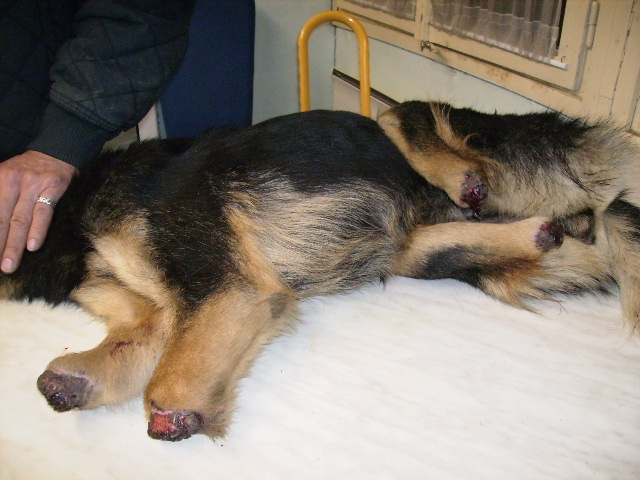
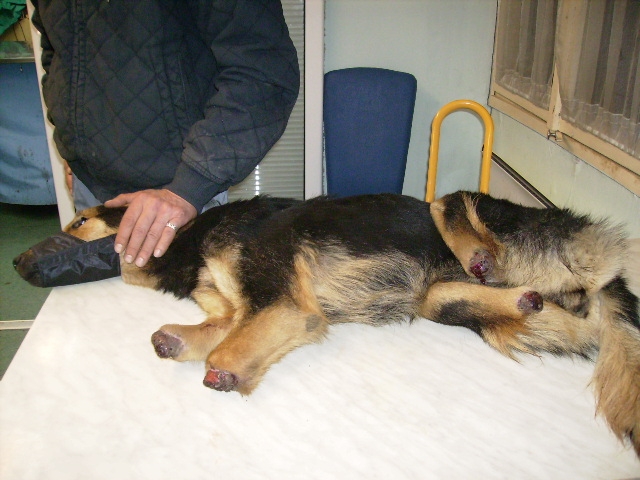
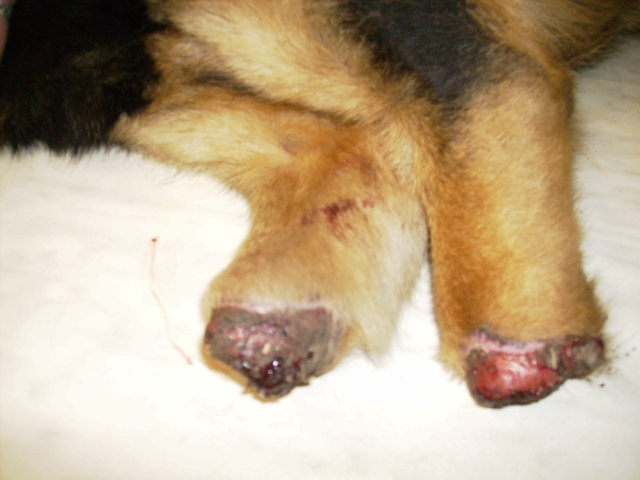
After the recent story of ‘Mima’, the dog in Bulgaria who had all of her legs sliced off by an axe perverted maniac, we now have news of a copy-cat situation in Belgrade, Serbia.

A few of our past ‘Mima’ Links:

https://serbiananimalsvoice.wordpress.com/2010/03/29/bulgaria-dog-has-all-four-legs-cut-off-with-an-axe/

https://serbiananimalsvoice.wordpress.com/2010/04/01/latest-update-on-mima-good-news-see-below-for-video-footage-link/

https://serbiananimalsvoice.wordpress.com/2010/04/05/bulgaria-after-mima-has-legs-cut-off-bulgaria-says-it-will-do-something-we-watch-with-interest/

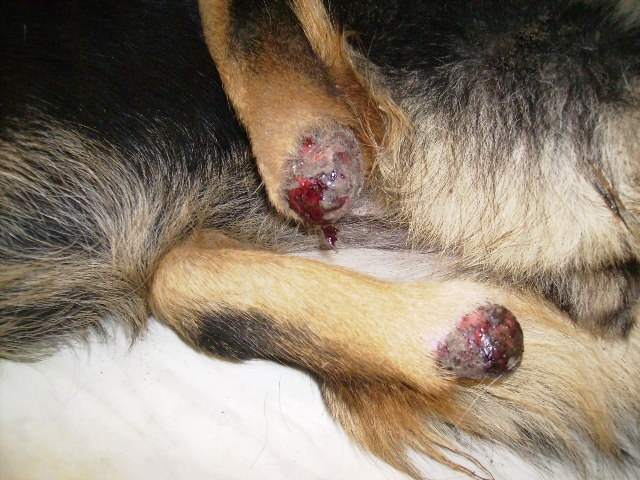
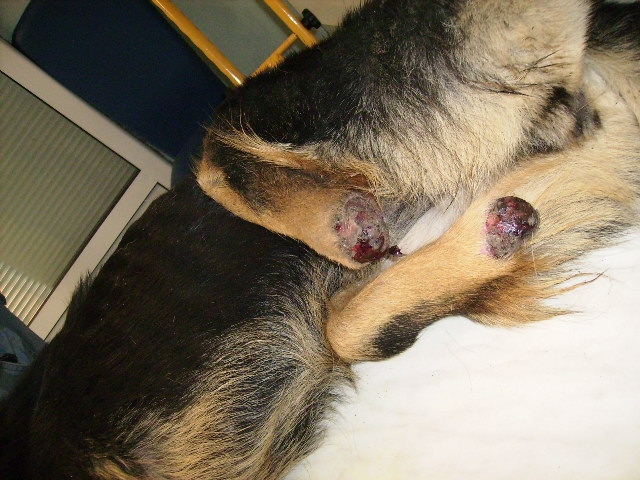
This poor little (Belgrade) dog who survived the ordeal has been called ‘Mila’.  The pictures below will show the severity of her injuries.

We understand that the Mayor of Belgrade has stated that the city is going to cover all the financial costs for Mila’s treatment.  This has not been welcomed by many citizens of Belgrade, who obviously have a real problem about stray animals, but do nothing to attempt to resolve the situation, such as supporting any sterilization, vaccination and identification programmes as continuously proposed by welfare NGOs.

Comments can be sent to the Mayor of Belgrade to support his backing of Mila’s treatment costs.  Positive comments of support can be left at:

http://www.blic.rs/Vesti/Beograd/185221/Djilas-Grad-kupuje-proteze-za-psa/komentari#komentar_1337803

——————————————————————

Information from Slavica in Serbia:

15/04 – This is Mila , she lives in Belgrade. Her sad fate is the face of this city, special because criminals will not be prosecuted. For these primitive homo sapiens she is  “just a dog”-thing . To them, her life is nothing.  She was hungry and dirty, left out on the street after all her legs were cut off. Can it be any worse ?

Thanks

Regards

Slavica

15/04 – Update – Mila is doing better but has infection in her legs.
She is still so young, also a tough fighter and has a strong will to live, so let us hope and keep our fingers crossed until she makes it!

Links:

Serbian newspaper article with photo –

http://www.pressonline.rs/sr/vesti/beograd/story/112126/MONSTRUOZNO!%20Psu%20odse

Care2 article –

http://www.care2.com/news/member/432612950/1461193

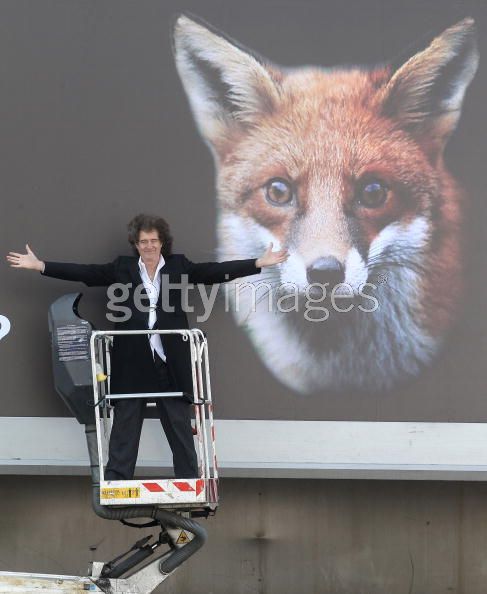
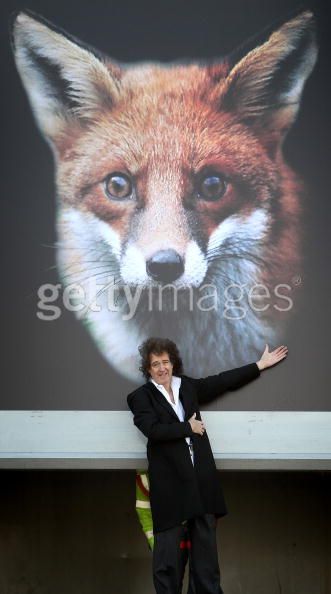
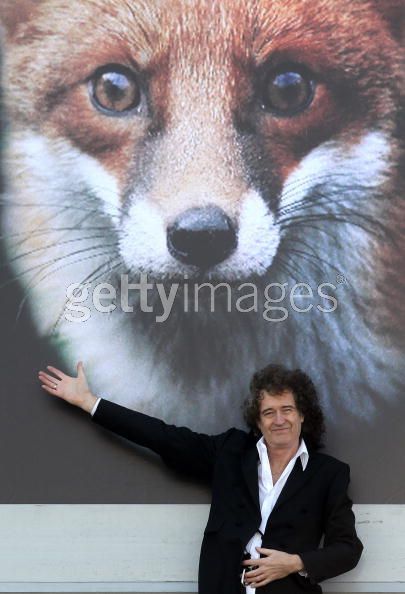
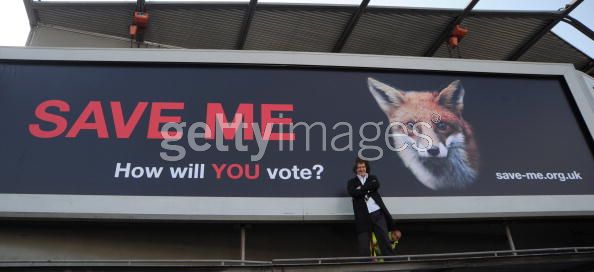
Uk (London): Brian May Launches ‘Save Me’ (Anti Hunting) Campaign

London, England.

April 13th 2010.

Queen guitarist Brian May launches the ‘Save Me’ campaign against the Conservative Party election plans to re-introduce hunting in the Uk if they are elected to government. 

Past Links: 

https://serbiananimalsvoice.wordpress.com/2010/04/08/uk-england-queen-rock-legend-brian-may-fumes-over-queen-song-used-in-pro-hunt-video/

https://serbiananimalsvoice.wordpress.com/2009/08/28/uk-rock-guitar-legend-gives-full-support-to-uk-anti-hunt-campaign/

Uk and Netherlands: Live Animal Transport Investigation Results in Prosecutions by Dutch Authorities.

March 2010 – Dover Sheep Smuggling Update

Uk (England) ‘Kent Against Live Exports’ – KALE, have been working with Netherlands based investigator colleagues at ‘Eyes on Animals’ http://eyesonanimals.com/  for several months to take further action as a result of the attempted sheep smuggling incidents from Dover during September 2009.

Past SAV posts relating to Dover sheep smuggling attempts:

https://serbiananimalsvoice.wordpress.com/2009/11/29/uk-england-live-animals-attempted-to-be-exported-from-the-uk-as-boxed-meat/ 

https://serbiananimalsvoice.wordpress.com/2009/09/17/uk-dutch-haulier-exposed-smuggling-320-live-sheep-out-of-the-uk-declared-as-boxed-meat/ 

Shipments were organised by using (and as a result, misleading) the carrier P&O ferries, but most importantly, by the haulier declaring the ‘cargo’ being carried was ‘boxed meat’ rather than the 320 live sheep which were actually in one consignment.  A deliberate attempt was made by the Dutch haulier involved to undertake deceitful actions to bluff all parties involved in carrying his vehicle to Europe that the cargo being carried was completely different to that actually on board.

‘Eyes on Animals’ and KALE have worked together to provide regular information to the Dutch authorities (Ministry) on this case.

By using further additional information obtained from DEFRA in the Uk, the Dutch Ministry has now been able to hand out both ‘Number 1’ and ‘Number 2’ warnings to this Dutch transport company who are involved.  In the Netherlands, when a company such as this receives a third and final warning, their (operators) licence is then either removed or they have to pay a fine of either 3,ooo Euro per week until solved, 5,000 or 10,000 Euro depending on the severity of the violation.

In the recent past, the Dutch authorities didn’t do anything significant against livestock transporters, simply sending them one letter of warning after another.

From information provided by Netherlands based ‘Eyes on Animals’, since Jan 1st 2009 there is a new Dutch sanctioning system which is tougher and so far appears to be regularly enforced. One company has already had their licence removed, another is about to.

The head of the second company which is in trouble has asked ‘Eyes on Animals’ to train his drivers, training which was undertaken on Saturday 20th March. One component of this training by ‘Eyes on Animals’ concentrates on ethics and animal behaviour, as drivers are supposed to be, and claim to be, well versed on the law regarding animal transport.

Link:  Eyes on Animals gives a workshop on improving animal welfare to livestock drivers from the Dutch/German company Keus en Mollink:

http://eyesonanimals.com/index.php?id=9&tx_ttnews[tt_news]=149&tx_ttnews[backPid]=8&cHash=466d11717f 

‘Eyes on Animals’ training will make the latest EU animal transport legislation responsibilities clear to these drivers and press home the need to 1) respect EU animal transport law, and 2) very much respect the animals they are carrying.

It is hoped that by issuing these warnings and potentially large financial burdens on operators / hauliers, the Dutch authorities are now sending a clear message that causing animal suffering such as this will not be tolerated and that further actions will then be taken as necessary.

In addition to regular correspondence with (NL) ‘Eyes on Animals’, (Uk) KALE have been informing and updating the Uk authorities of these smuggling incidents.  KALE are now awaiting the results of the investigations into these incidents by Uk based authority Kent Trading Standards (KTS) to see if there are going to be any further actions taken on the Uk side of the Channel which parallel those of the Dutch authorities.  KALE are eagerly awaiting the results of the KTS investigation.

Note – Mark Johnson, founder of SAV, has also been very involved in this expose of sheep smuggling from the Uk.  In his additional role as EU Correspondent / investigator for KALE, Mark has found that close, international cooperation between live animal transport investigation groups such as Eyes on Animals and KALE is essential in ensuring that all possible information is transmitted to authorities who can have an effect on results.  The issue of both No.1 and No.2 warnings to the haulier in this case shows what effect good, regular and detailed information transfer can achieve.

KALE and Eyes on Animals are both dedicated to future cooperation to both protect animals in transport across Europe.  They are certain that further investigations and information transfer will continue to lead to future prosecutions where necessary.

Other Links:

Kent Against Live Exports (KALE) – http://www.users.globalnet.co.uk/~kale/news/103.htm

Eyes on Animals (Home) – http://eyesonanimals.com/

Eyes on Animals (Investigations) – http://player.omroep.nl/?aflID=10058689

Note – there may be a 20 second advert prior to the start of this (investigations) programme !


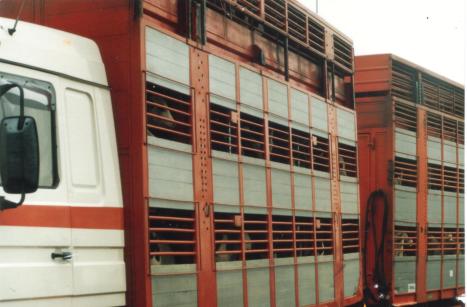
 Past Times: Live Calves being exported from Dover (Uk). Photo – Mark Johnson.

Note – this photo has nothing to do with the investigation / results given above.


Austria: Political Persecution for Defending Animals – The Facts


http://www.shameonaustria.org/en/

Political persecution in Austria

On 21 May 2008, special units of the Austrian police arrested 10 leading campaigners from the country’s successful animal protection movement. The activists, among them a former research assistant at the University of Cambridge, were put on remand. The Ministry of the Interior boasted they had hunted down a criminal gang responsible for numerous cases of arson, gas attacks and bomb threats.

However, the imprisoned people insisted that the prosecution files they were eventually given access to contained absolutely no evidence of any criminal offence but rather a description of their campaigning for changing laws and business policies. One of the prisoners went on hunger strike and stayed without food for 39 days. Fierce criticism came from many well-known personalities and organisations, including Amnesty International and the Green Party.

After more than three months, a senior state prosecutor ordered release of the activists, saying the time spent in custody must be in proportion to the expected sentence. This drove away most of the public attention, but the case wasn’t over. In February 2010, the state prosecution announced that enough evidence had been found to put 13 animal protection activists, including the ten who had spent three months in custody, on trial.

Four of the activists have released their charge sheets on the internet. The worst fears have been fulfilled. There is nothing in the charge sheets that could be seen as evidence of criminal behaviour. Rather, the activists’ supposed membership in a criminal organisation is deduced from an extensive list of expressed opinions and political activities, such as organising demonstrations and public conferences.

The trial is expected to last 6 months. The activists are facing up to 5 years imprisonment and will have to pay over ?35,000 each for defence lawyers, which will not be reimbursed even if the trial results in acquittal.

This cannot be tolerated. Austria must not be allowed to terrorise its citizens with financial ruin and imprisonment because of their political activities.

**Movement**

The Austrian animal protection movement was long considered one of the most successful in the world. Between 1998 and 2008, it managed to significantly reform Austria’s animal welfare legislation, achieving a ban on fur farming, a ban on using wild animals in circuses, a ban on experiments on great apes, a ban on battery farms for hens and rabbits, and an introduction of the institute of animal solicitors. All parliamentary political parties pledged to implement animal protection in the federal constitution. These successes were achieved by smart campaigning, with use of regular demonstrations, media work, lobbying, and acts of civil disobedience.

However, not everyone was happy about the successes of the movement. Laws improving animal welfare, like the ban on battery farming, clashed with business interests of animal industries, which made many politicians reluctant to endorse them. But the campaigners managed to use public support to generate pressure on these politicians, which forced them to accept the laws eventually. Understandably, this led to an ever increasing tension between the animal enterprises and the politicians on one side and the successful campaigners on the other side.

**Investigation**

In 2006 and 2007, the property of a department store Kleider Bauer, in front of which anti-fur demonstrations were held every week, was damaged several times by unknown individuals. After one such attack, the two owners of the company attended a secret meeting with the heads of the police and the interior ministry. As seen from the minutes (disclosed later by the media), the police chief pointed out that no evidence of a connection between these attacks and the demonstrations had been found. But incredibly enough, the chief of the ministry’s public security bureau ordered the police to “exhaust all administrative possibilities to ban the demonstrations in front of the company”.

However, this was just the beginning. The most significant decision of the meeting was the foundation of a special investigation unit SOKO which was to focus on the well-known animal protection activists and organisations. Thirty-three elite police officers were allocated for this task. During the next 12 months, a gigantic spying action was put into operation. All phone calls of the leading campaigners were tapped and their movements were followed by tracking their mobile phones; e-mails were read, including those which were several years old; organisations were infiltrated with spies, and cameras and bugs were installed in cars, offices, and private homes.

The damage caused by unsolved attacks on the property of animal enterprises within the past ten years was claimed to be ?600,000 (although 70% of this sum was dismissed by the insurance company in charge). Nevertheless, the police did not hesitate to pump several million euro into this investigation. In a secret interview with an Austrian daily, “Österreich”, a police officer from the Austrian federal criminal agency said the following: “When we do investigations against drug dealers, child pornography traders, or Russian mafia, exceeding a budget is always a problem. But in this case, money was never an issue.”

**Custody**

On 21 May 2008 at 6am, special units of the Austrian police stormed into 23 private houses and offices. Doors were smashed down, beds were surrounded by masked police men and half-sleeping inhabitants were threatened with firearms pointed at their heads. Ten long-term animal protection activists were sent to prison on remand custody. The Ministry of the Interior boasted they had hunted down a large criminal gang responsible for numerous cases of damage to property, arson, gas attacks and bomb threats.

But the imprisoned activists were not informed about what exactly they were supposed to have done. Access to the prosecution files was simply withheld. As a result, some of the prisoners went on hunger strike, asking to see the evidence or be released immediately. Protests emerged both in Austria and abroad. Fierce criticism came from Amnesty International, the Austrian Green Party and some social democrats; well-known personalities, such as Nobel Prize winner Elfriede Jelinek, wrote protest letters. Demonstrations were held in front of Austrian embassies around the world.

When some parts of the files were finally made available, the activists and their lawyers unanimously insisted that the disclosed papers did not contain any evidence of criminal behaviour but rather a list of completely normal NGO activities, such as organising demonstrations or public conferences. The state prosecution refused to comment on these serious objections, referring to continuing investigation and supposed independence of the court. One of the prisoners, Martin Balluch, a double doctor and former science assistant at Cambridge University, continued on hunger strike and persisted for admirable 39 days.

    “On day 36 I reached a new low point, which gave me near death experiences. I had this strong impression of being suspend above a complete void. I was about to fall into it. I pictured my situation as being up to the neck in a crevice, standing on such thin ice that could not hold my weight much longer. I could not get out anymore by myself.” Martin Balluch in a later letter from prison.

The activists were forced to stay in conditions which didn’t even remotely correspond to the principle of presumption of innocence. They were locked up for 23 hours a day in small cells; they were allowed to exercise for just one hour a day in a concrete courtyard. They could only have a shower or accept visits twice a week and were denied physical contact with their loved ones as they could only speak to them via a glass panel for 30 minutes. No wonder some of the activists were forced to use anti-depressive drugs.

**Release**

On 2 September 2008, a few weeks before an early parliamentary election, a senior state prosecutor suddenly ordered release of the activists. As a result, most of the public and media attention was driven away from the case. But it wasn’t over – on the contrary. The release was only justified by the necessity of “proportional length of detention to the expected sentences” – the accusation and the imprisonment were not questioned. In October 2008, the supreme court delivered a verdict saying that everything had been carried out correctly.

The lives of the activists had been severely impacted. Depression, anxiety, panic attacks and sleeping problems were commonplace. Most had to undergo psychotherapy. The movement was effectively paralysed. Some of the activists completely gave up campaigning, and even those who would continue were unable to work normally as the police refused to return computers, files, photo and video materials, donors’ databases and other essential items which had been confiscated as part of the raids in May 2008. Furthermore, the police continually refused to give the activists full access to the investigation files, creating ongoing uncertainty about what else was still being hidden from them. When the court finally ruled that this is unacceptable, the police simply ignored the verdict.

In February 2010, the state prosecution announced that 13 activists, including the ten who had previously been in custody, would be charged and put on trial because of their alleged membership in a criminal organisation. Four of the charged activists decided to release their charge sheets in full on the internet. This was a breakthrough. Finally, it was possible to evaluate from an objective source whether the extreme measures taken against the activists could have ever been justified.

**Charges**

The four activists who have gone public with their charge sheets (including Martin Balluch and Christian Moser, who were kept for three months in custody) are charged under Section 278a of the Austrian Penal Code. They are said to be members of a criminal organisation which is allegedly responsible for crimes, such as threats or damage to property, that have been committed by unknown individuals against companies or individuals associated with the fur trade, animal experiments, hunting or similar use of animals.

But looking carefully into the charge sheets, the only proven “connections” between the four activists and the criminal offences are as follows

    * although the perpetrators of the criminal offences are unknown, it seems likely that the motivation of their acts was the same as the motivation of the four activists for taking part in legal protests and campaigning – e.g. to encourage a shop to stop selling fur;
    * as a journalist for a radio programme, Martin Balluch has sometimes reported the fact that these offences were committed;
    * the four activists have occasionally expressed opinions, mostly on internet platforms, which the prosecution sees as evidence of them being in favour of these offences.

Based on this “evidence”, the prosecution claims that the four activists’ legal campaigning activities and the unknown people’s criminal offences must be considered to both be part of one campaign run by a criminal organisation, which means that even the legal campaigning is in fact criminal as it supports this alleged criminal organisation.

This is why normal NGO activities, such as filming the conditions on animal farms, organising demonstrations, conferences and workshops, storing leaflets against hunting or discussing campaigning strategies, are all indeed listed in the charge sheets as evidence against the activists, without even attempting to prove that any criminal offence was planned or carried out as part of these activities. This is obviously a complete negation of the rule of law.

The activists are now threatened with up to 5 years imprisonment. With 115 witnesses invited by the prosecution, the trial is expected to last six months. This not only means an extreme disruption of the activists’ personal lives, but also the costs of legal defence amounting to at least ?35,000 per person. The Austrian law gives the activists no right to be reimbursed for these legal costs even if they were eventually found not guilty.

**Conclusion**

The release of the charge sheets by the four activists has confirmed the worst fears. Through massive surveillance, the Austrian police were clearly unable to find anything other than a few expressions of opinions, showing that the activists probably have some sympathies for destroying property of enterprises which they consider unethical. Despite this, the long-term police observations were unable to prove that they had committed any such offence.

But the Austrian state has no scruples. To overcome the complete lack of evidence, the prosecution has exploited the vague formulation of Section 278a and de facto adopted the Orwellian concept of thought-crime. The activists’ “criminal thinking” is used as evidence of their alleged affiliation with a criminal organisation and this alleged affiliation as evidence that their legal animal protection activities are in fact criminal. Mocking Austria’s own constitution, even organising demonstrations is explicitly presented as one of such criminal acts.

With this justification, the activists were one morning woken up by masked police men with firearms pointed at their heads. Martin Balluch and Christian Moser were locked up in cells for three months, one being isolated from his wife and small children, the other spending more than a month on hunger strike. The supreme court later ruled that everything had been carried out correctly. Having already managed to ruin the activists financially and psychologically, the Austrian state now wants to put them back in prison for up to 5 years.

By releasing the charge sheets, the four activists have proven beyond doubt that they are being persecuted for their opinions and political activities. This is in itself a human rights scandal, regardless of whether there is any justification to prosecute the remaining 9 activists. But since these are charged under the same Section 278a, it is to be assumed that the evidence against them is based on similar grounds. When 13 political activists are kept under direct threat of a financial ruin and up to 5 years imprisonment, it is hard not to suspect that this is an attempt to clamp down on the whole social movement, which has simply become too inconvenient.

Please add your voice to the protest against this flagrant violation of human rights in Austria.

REFERENCES

http://www.shameonaustria.org/en/references.php

Additional Links:

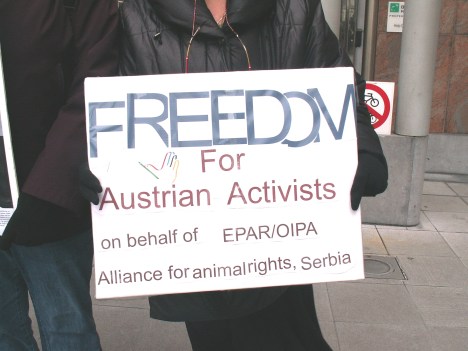
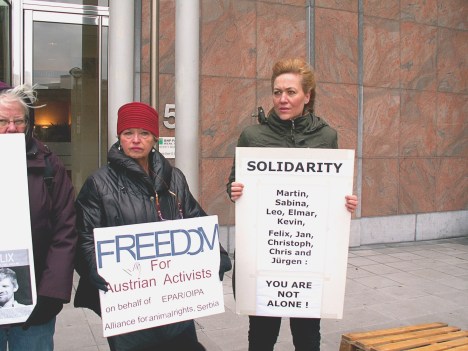
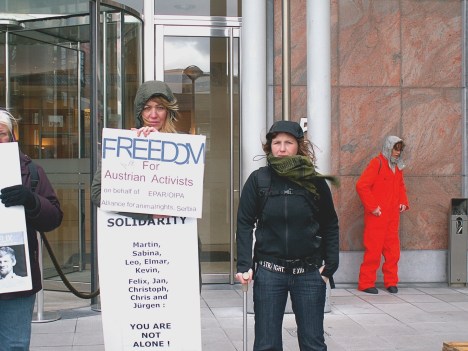
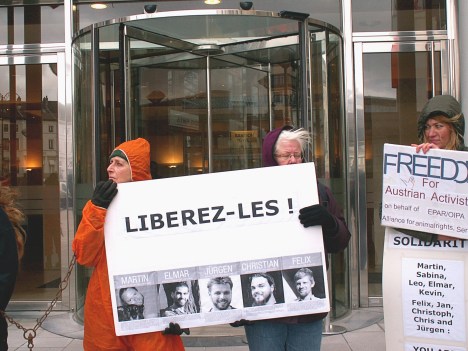
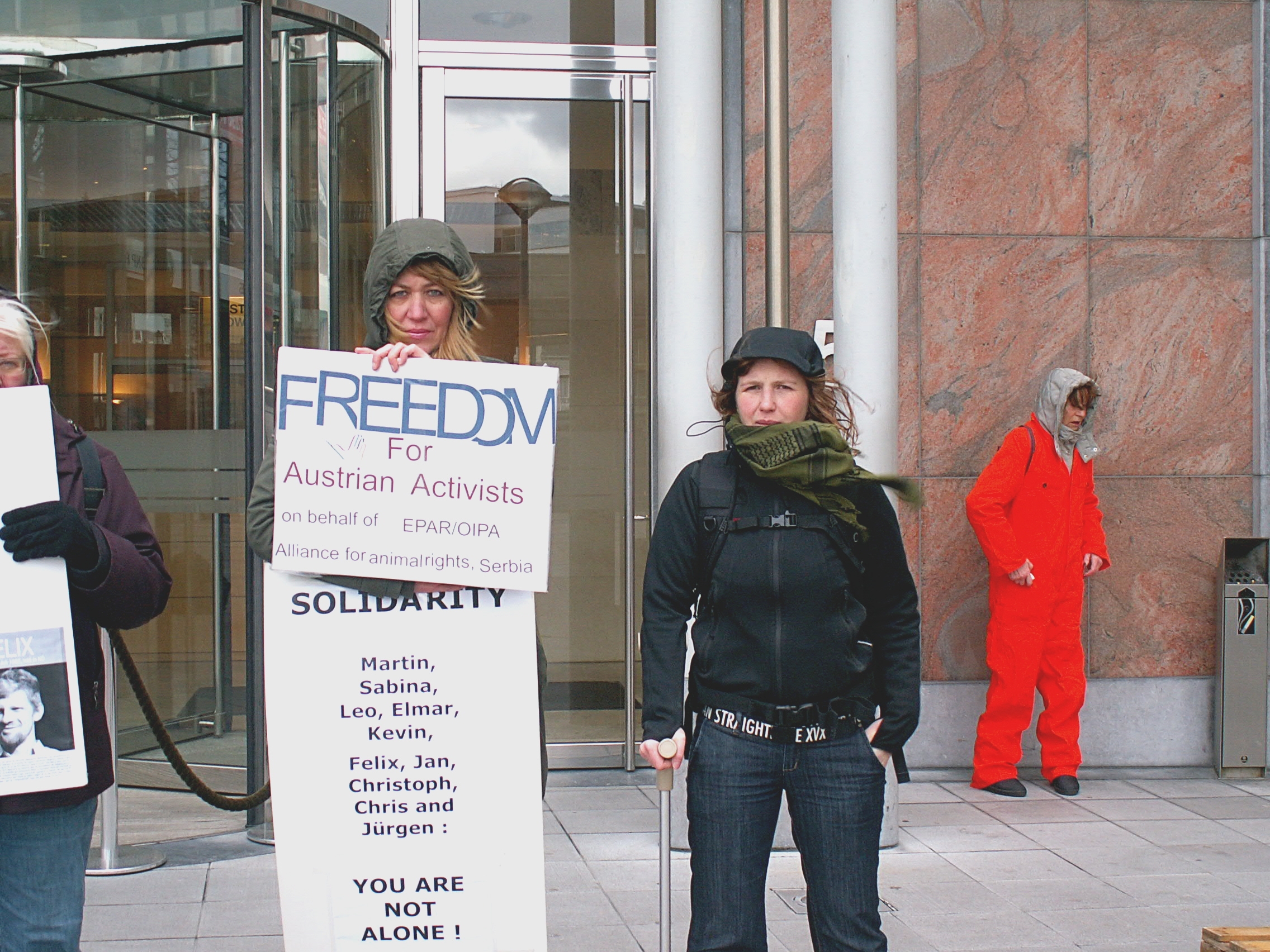
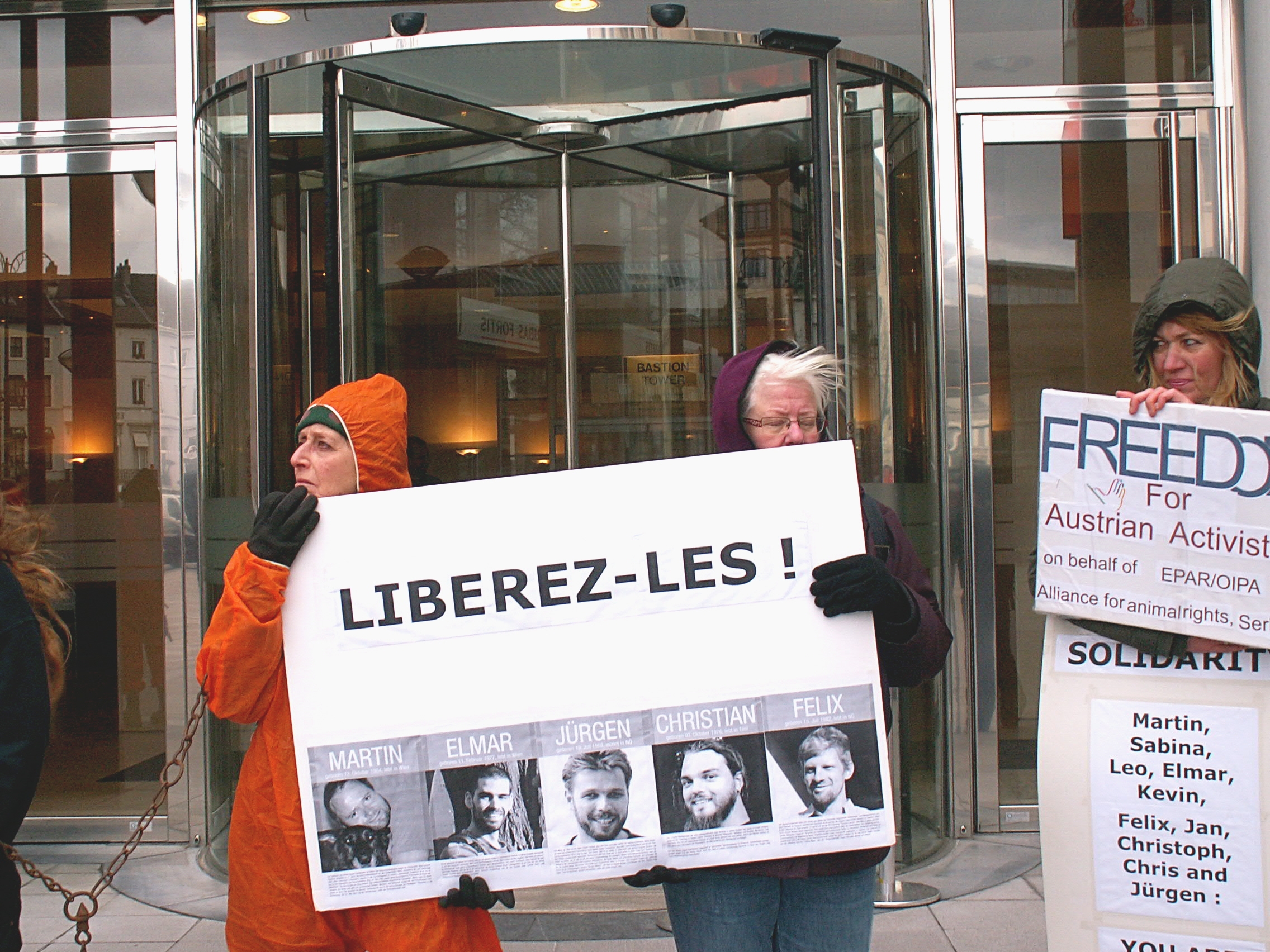
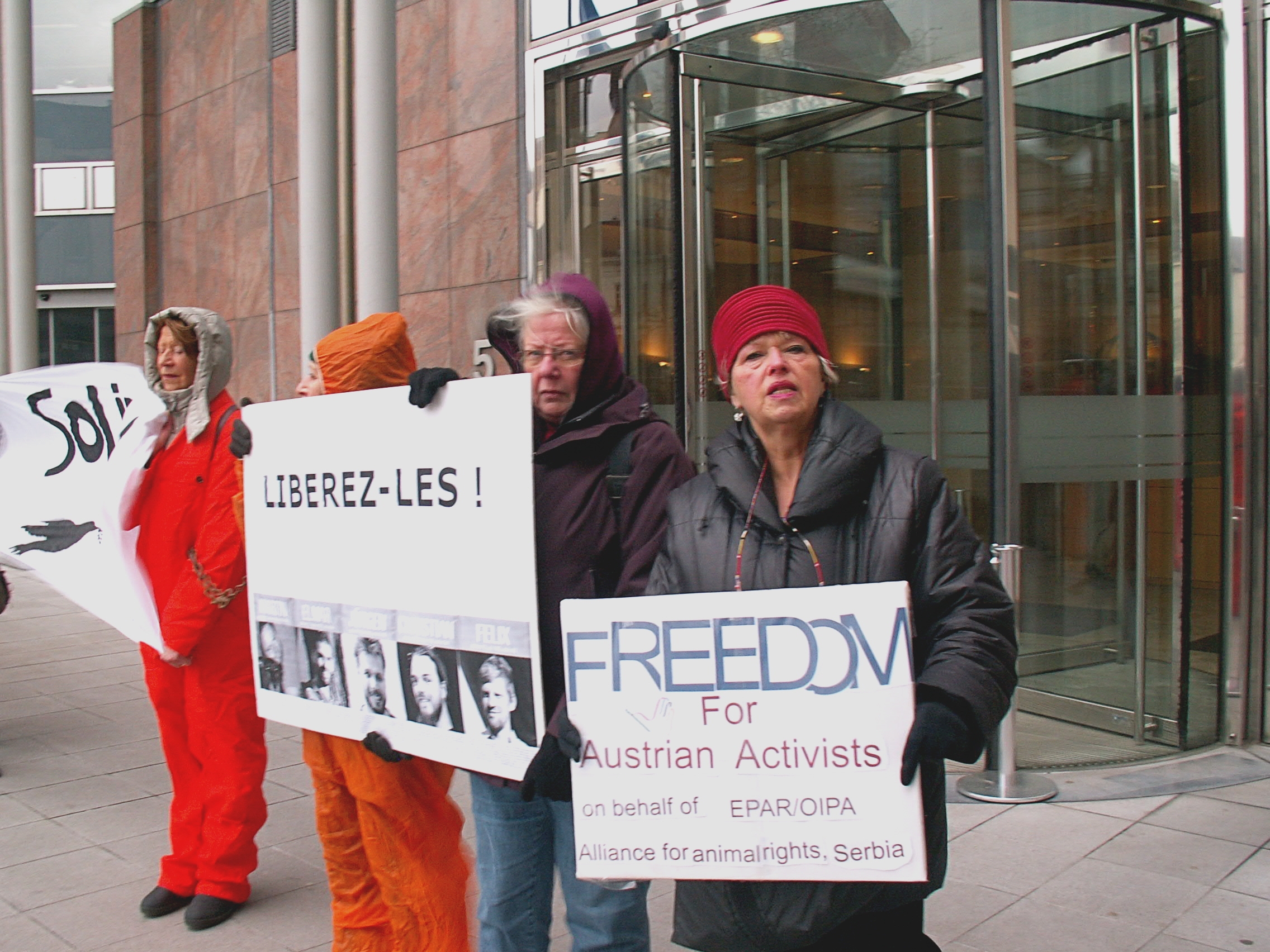
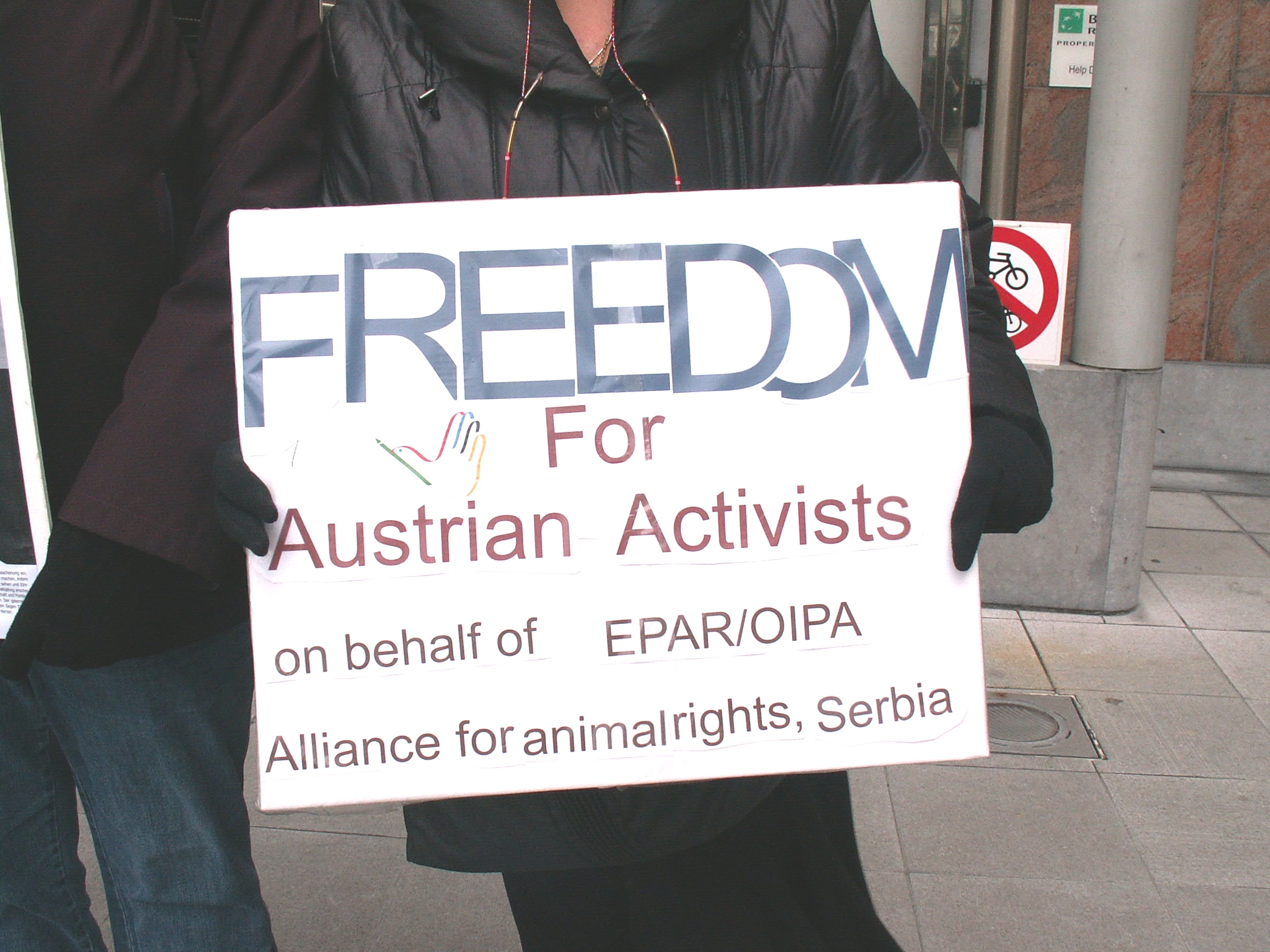
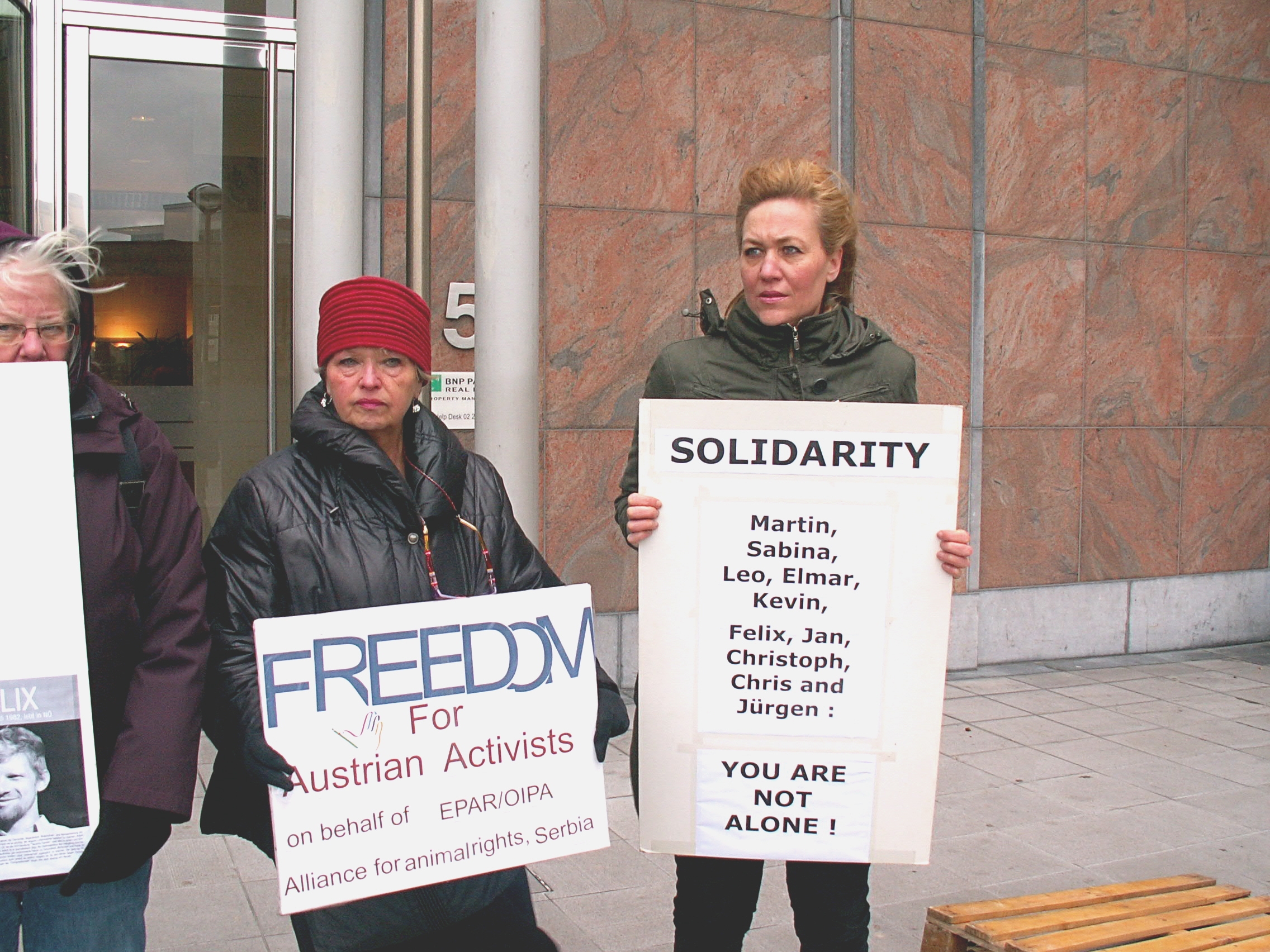
Brussels, 31/03/10 – SOLIDARITY DEMO FOR AUSTRIAN ACTIVISTS

http://www.dailymotion.com/video/xcs6xg_solidarite-pour-les-activistes-autr_animals

Demonstration in front of the Austrian Embassy.