



08/29/2012
Merkel in China Berlin’s Cozy New Relationship with Beijing
By Markus Deggerich, Ralf Neukirch and Wieland Wagner
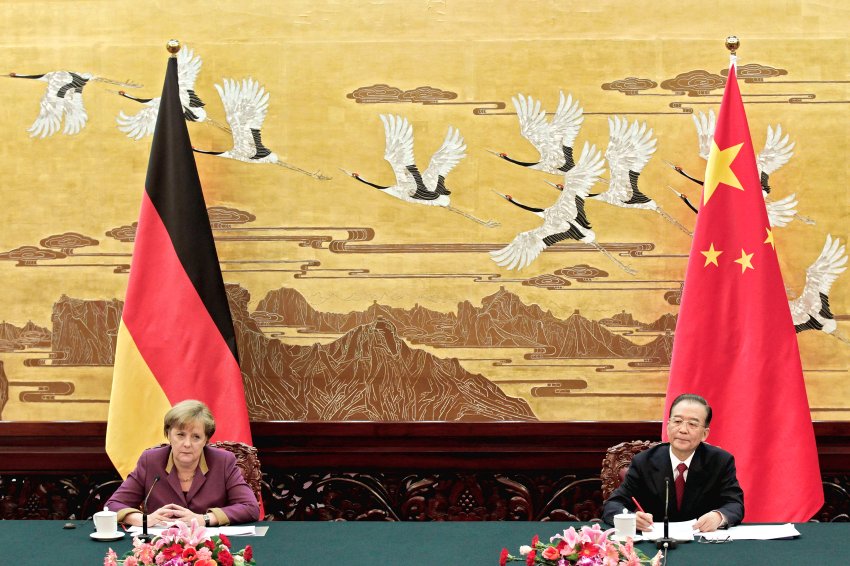
German Chancellor Angela Merkel and much of her cabinet are headed to Beijing on Thursday for a two-day diplomatic offensive. China has quickly become one of Germany’s key partners, but several heated disagreements remained to be solved.
The quality of the relationship between two world leaders isn’t revealed in official appearances, military parades and festive dinners that have been planned down the very last detail. Instead, it is reflected in the small gestures and conversations that take place on the sidelines of the main events, especially when unexpected problems arise.
That was the case in February, when German Chancellor Angela Merkel was last in China. The Chinese authorities had prevented human rights attorney Mo Shaoping from attending Merkel’s reception at the German Embassy in Beijing. Merkel could have scored points with voters back home by issuing in sharp protest. But it would have also complicated her foreign-policy mission.
Instead, the chancellor took Chinese Prime Minister Wen Jiabao aside during the dinner and suggested that he consider how much damage China was doing — especially to its reputation — by barring Mo from the event. In fact, she said, the incident was already dominating coverage of her trip in the German press.
Wen could have bridled at Merkel’s attempt to intervene in China’s internal affairs, as Chinese politicians tend to do in response to reproaches from the West. Instead, he listened quietly to what Merkel had to say, and she got the impression that he at least understood her argument.
Such quiet crisis diplomacy shows how far the German-Chinese relationship has come in recent years. Almost unnoticed by the general public, German foreign policy has undergone a remarkable transformation. China is no longer seen as merely a market for German goods and supplier of cheap products. For the German government, Beijing is now one of its most important political partners outside the Western alliance. Conversely, the Chinese leadership sees Merkel as its central point of contact in Europe.
Pivoting from Moscow to Beijing
Just how close the relationship between the two countries has become will be evident this Thursday, when Merkel travels to Beijing for two days of intergovernmental consultations accompanied by nine cabinet ministers and two parliamentary state secretaries. It’s an important political gesture seeing that the German cabinet only meets regularly with select partners. China does not have a similar arrangement with any other country.
Merkel’s shift toward China isn’t just a result of close economic integration between two of the world’s largest exporting nations. Germany does not buy more goods from any country. Germany ships 6 percent of its exports to China, or almost twice as much as it did only three years ago. China is one of the most important markets for machine-builders and automakers. The Chinese, for their part, need German know-how to continue modernizing their country.
China also has an interest in the survival of the euro. In the long term, Beijing wants to establish its own currency, the renminbi, as the global reserve currency, next to the US dollar. It needs the euro to break the dominant position of the American currency in the long run. Thus, for as long as the Germans support the euro, the Chinese will also do so. They recently promised, without further ado, to contribute an additional $40 billion (€32 billion) to the coffers of the International Monetary Fund (IMF).
In fact, Merkel reportedly plans to directly ask China for aid in combating the ongoing euro debt crisis in Europe. Senior government officials say she will bring up the issue of whether the Chinese would like to directly purchase sovereign bonds of Spain and Italy, the two major ailing euro-zone countries, arguing that their high yields makes them an attractive investment.
Berlin’s interest in China, however, goes well beyond economic relations. Since China is one of the five veto powers on the United Nations Security Council, Beijing plays a decisive role in the central issues that, besides the euro crisis, are currently important for German foreign policy.
The Chinese are as important a factor in the negotiations over the Iranian nuclear program as in the discussions over Syria’s future. Only a few years ago, when voting in the Security Council, China took its cue from Russia on matters that did not directly affect its own interests. When the West wanted to assert important positions, it had to appeal to Moscow and not Beijing.
But now foreign policy experts in Berlin assess the situation differently. On the Syria question, for example, it appears that China is more open to taking a constructive approach. As a result, the discussion over how the world community should deal with the regime of Syrian President Bashar Assad will play a central role during Merkel’s talks in Beijing.
Until now, the Chinese have blocked all attempts by the West to adopt a Security Council resolution against Assad. But the Germans now hope that Beijing’s position could change. It is encouraging that China has announced plans to provide aid for Syrian refugees, says a senior government official in Berlin.
The Chancellor’s newly strengthened emphasis on China also has to do with changes in Russia. The Russian approach to the West has become more rigid since Vladimir Putin returned to the Kremlin as president in May. Merkel has given up hope of being able to convince Putin to agree to compromises on important issues, such as the Syrian conflict. Officials in Berlin also fear that Moscow could veer away from the collective position in the Iran negotiations. Under these conditions, Germany’s pivot toward Beijing is also a turning away from Moscow.
Merkel’s Changed Stance on China
A few years ago, this sort of policy would have been inconceivable. At the beginning of her chancellorship, Merkel still used the German-Chinese relationship to bolster her own domestic profile. At the time, she sought to portray herself as a staunch advocate of human rights, much to the chagrin of then-Foreign Minister Frank-Walter Steinmeier, a member of the center-left Social Democratic Party (SPD), Merkel’s coalition partner at the time.
But the strategy was popular with the general public. She met with the Dalai Lama, the spiritual leader of the Tibetans, at the Chancellery in September 2007. Opinion polls showed that it was a very popular decision. Beijing, however, perceived the chancellor’s behavior as a provocation, especially as Merkel had met with the Chinese prime minister a short time earlier, without telling him about her plans. The mood did not improve when she declined to attend the Beijing Olympics in 2008.
But that was yesterday. These days, Merkel addresses human rights issues much more quietly. Last spring, the Chancellery denied reports that Merkel had urged the Chinese leadership to release jailed artist Ai Wei Wei — even though the reports were true.
“Merkel is far more reserved on human rights issues than she used to be,” says Eberhard Sandschneider, director of the German Council on Foreign Relations. “She has a new, more pragmatic approach to Beijing. Now she is more likely to be motivated by classic power politics. The days of reprimands are over.”
Merkel’s view of China has also changed. She is fascinated by the Chinese leadership’s attempt to economically transform their enormous country while avoiding social unrest. Despite all criticism of political conditions, she is impressed by how quickly the Chinese have catapulted their country to global preeminence, both economically and politically.
The international political situation has also changed in a fundamental way. When Barack Obama was elected US president, it initially seemed like Chinese-American relations were on the mend. But that is no longer the case. The US’s traditional allies in the Pacific, most notably Japan, view China’s growing power with concern. The Americans now leave no doubt that they want to curb China’s regional ambitions.
Part 2: A Strengthening Partnership
Germany could end up running away with the bone as the third dog in this conflict. During her conversations with Chinese leaders, Merkel has often been told that they don’t want a bipolar world dominated by China and the United States. But the Chinese government does have an interest in seeing Europe retain its strength as an important international political player.
In this context, the Chinese see Merkel as their most important European partner. Beijing considers her to be a politician who keeps her promises, unlike former French President Nicolas Sarkozy, for example. As he did during her last visit, Chinese Prime Minister Wen Jiabao will also accompany Merkel when she visits a second Chinese city. After Beijing, she will travel to the nearby city of Tianjin, Wen’s hometown. It is a rare diplomatic honor.
It was also Wen who pushed to have the intergovernmental consultations take place before the change in leadership this fall. He apparently wanted to ensure that the talks become established before Beijing’s new leaders assume office.
Many Chinese look to Germany as a role model for internal reforms. Despite the euro crisis, the country boasts historical record values in all key economic indicators, concludes the first “Germany Development Report” completed at Tongji University in Shanghai. The study, the results of which were reported throughout the country by the party newspaper People’s Daily, will reanalyze the situation in Germany every year from now on.
Remaining Problems
As good as relations between Berlin and Beijing may have become, the remaining problems are also considerable. In addition to the critical human rights situation, the biggest strain on the partnership is Chinese attempts to hijack German know-how.
During Merkel’s last visit to China, German business owners complained to her about the Chinese authorities’ notorious “certification process” for German goods and plants. They described it as an especially perfidious form of institutionalized industrial espionage.
German investors in China constantly complain about how brazenly their local partners siphon off Western knowledge. For instance, Volkswagen recently learned that the state-owned auto giant FAW, VW’s joint venture partner in China, is apparently copying transmissions and engines for its own models. But rather than jeopardize its position in China, its most important overseas market, the German automaker has declined to level public accusations against the Chinese.
Classic espionage also continues to be a strain on relations. Berlin is irritated by the audacity with which China spies on both German companies and the government.
Indeed, although Germany and China are economically dependent on each other, they remain bitter competitors. And as members of the German parliament, the Bundestag, experienced last week, they are also two partners with completely different systems. The German-Chinese Parliamentary Friendship Group had planned to fly to China two Saturdays ago for meetings with Chinese politicians, trade-union officials and business representatives.
On August 14, four days before the group’s scheduled departure, SPD parliamentarian Johannes Pflug sent an urgent email to his fellow Bundestag members. The Chinese parliament, the National People’s Congress, had informed him that it was “not in a position” to issue the invitation to the group of German lawmakers.
The Chinese offered no explanation, but the Germans believe they know why they were disinvited. The Chinese were apparently offended that Bundestag President Norbert Lammert had not met “officially” with the chairman of the National People’s Congress in Berlin but, rather, had merely invited him to an official dinner.
In addition, the Chinese authorities apparently wanted to prevent the German lawmakers from meeting with representatives of the Uyghur ethnic minority. The Germans now expect the government to address the issue in Beijing this week.
It isn’t the only problem Merkel is expected to solve. A group of some 30 China correspondents with German media organizations, including SPIEGEL, wrote a letter to Merkel asking her to address deteriorating working conditions for foreign journalists during her visit “at the highest level” and to request that China offer them the same working conditions to them that Chinese journalists enjoy in Germany.
“The police and state security officials continue to interfere with our work,” the letter reads. According to the journalists, the authorities openly threaten to refuse to extend visas when journalists report on “sensitive” issues and either prevent or strongly discourage sources from speaking with them.
Uncertain Futures
These problems suggest that it is still unclear whether Merkel’s China diplomatic offensive will be a success. No one can predict how reform-oriented the future Chinese government will be. The gap between rich and poor is widening, and the economy is no longer growing as strongly as it was a few years ago. In fact, it is quiet possible that a worsening economic situation will lead to more repressive domestic policies.
This would also affect foreign policy. At the moment, the Germans are betting that Beijing will become more open to Western arguments in the UN Security Council. But this is still little more than a hope, given that the Chinese leadership has not shown any evidence of a new posture.
“We talk about partners,” says one German official, “but exactly when the Chinese will become true partners is in the stars.”
Translated from the German by Christopher Sultan
SAV Comment:
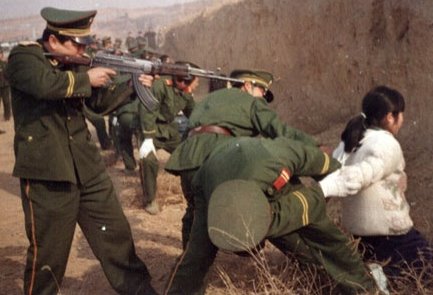
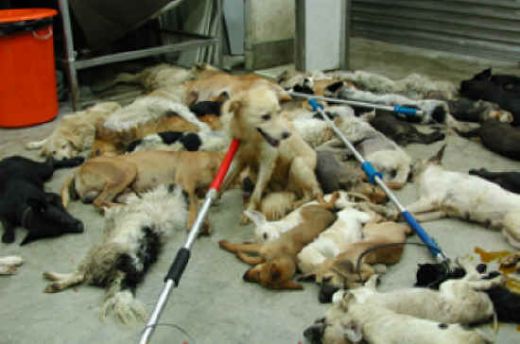
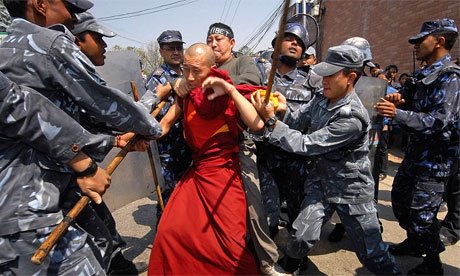
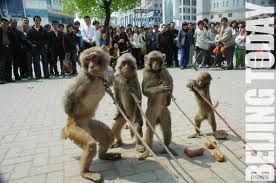
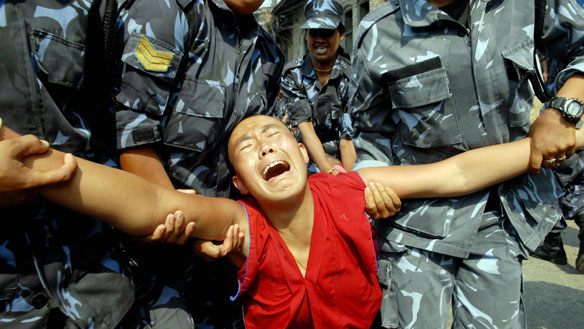
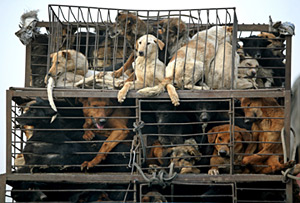
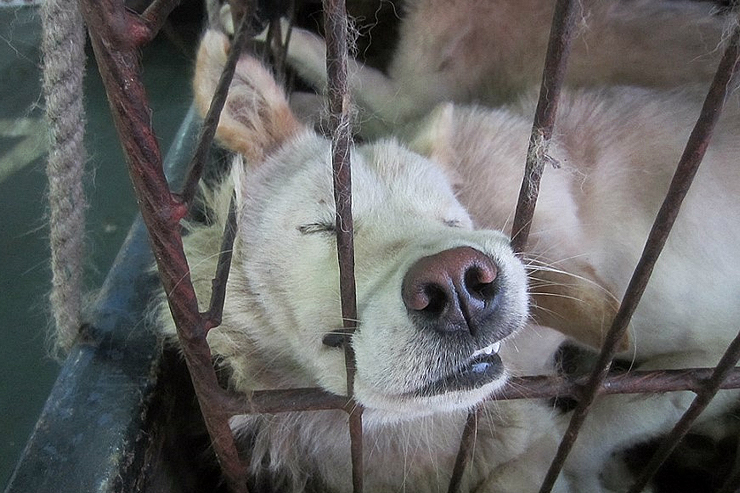
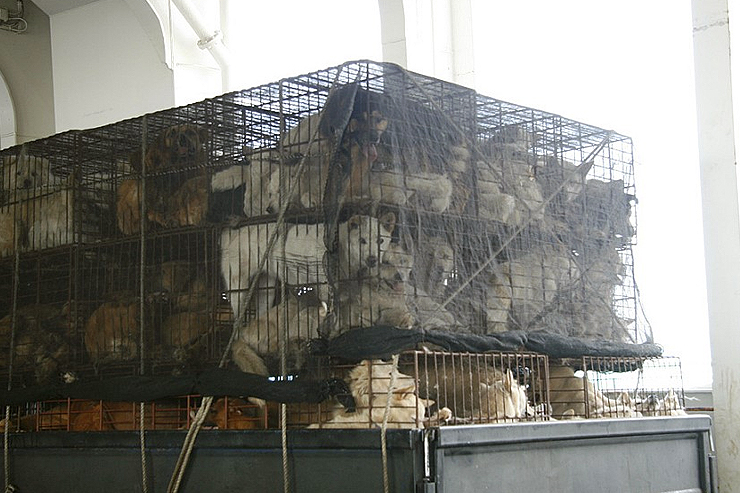
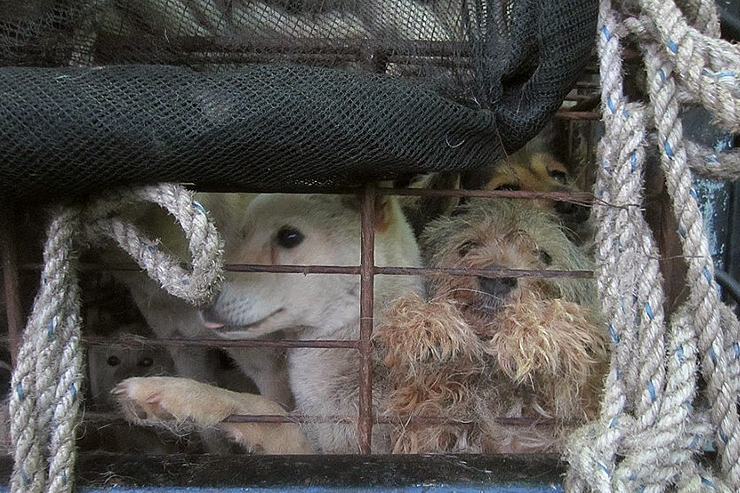
And now, as for animal and human suffering in China; just like human rights issues; Merkel turns in the other direction.




Filed under: CAMPAIGNS - Global Animal Welfare Issues, GENERAL NEWS - International / National / Regional, PHOTOGRAPHS - **WARNING** (Animal Suffering) | Leave a comment »
























































 Serbian Animals Voice (SAV)