Posted on July 3, 2015 by Serbian Animals Voice (SAV)


Donation site link (SAFE Site):
We entered the new month having a debt from June.
At the vet we have new dogs who will be neutered as soon as possible.
Their lives were in danger because of their agressiveness. Bony, abandon Breton, is at the vet, in therapy, and she needs to recover and get stronger before she gets neutered. Besides, at the house we are taking care of six puppies found in garbage container, theu have been fed by hand… These days it’s time for their first vaccine. Street dogs and food for them we can’t even count anymore… We are dealing with it in different ways, getting in debt, borrowing…
Please help us with paying for at least two emergency sterilizations and six vaccines for puppies. This totals at around 110 euros. Two sterilizations are about 70 euros, and 6 vaccines are about 40. Because of out old debt, the vet has stopped everything else, and we are helpless about that.
Please give anything you can via the safe site on this link, thank you.
Donation site link (SAFE Site):

Filed under: Animals Requiring Adoption or Homes - Worldwide, CAMPAIGNS - Global Animal Welfare Issues, GENERAL NEWS - International / National / Regional, SERBIA (Central Serbia: Capital - Belgrade) and (Serbia, SUPPORTERS, The "Serbian Animals Voice (SAV) ALLIANCE | Leave a comment »
Posted on July 1, 2015 by Serbian Animals Voice (SAV)

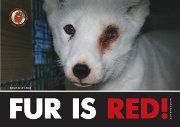
We have been involved with Slavica in Serbia regarding the future production of fur and fur farming in Serbia. We have concerns about fur farming as Serbia is currently seeking EU membership (accession) and effectively it could pick up the trade which is greatly reducing in other parts of the EU. There is NO EU wide restrictions on fur bearing animals in the EU; it is left to individual member states to act as they see appropriate. For example, here n the UK; and EU member state, we have banned fur farming. Some other EU nations also have, along with others that have not. The issue of seal skins into the EU is another issue; and the EU has legislation regarding seal skin import bans.
Our good colleagues at ‘Animal Friends Croatia’, in Zagreb, Croatia, (already an EU member nation) have been very active in supplying us with the situation within Croatia. We (at SAV) have learnt a great deal from the research undertaken with their help and the information kindly provided by others.
Here in the main section below are a few important points which need to be considered very carefully in relation to the fur farming industry – much of which the fur producers wish to keep very quiet about; but us being us, we are gonna shout about it !. We have given references as necessary to support our evidence.
We have had some great input from our friends in Croatia. We understood that Croatia was currently going through a phase out of fur production there; commencing in 2007 with a 10 year phase out period; eventually leading to a ban which would be in line with some other EU nations (such as us here in UK). But things appear to be less simple than just a straight move towards a ban in Croatia; is this not always the case ?.
It would appear that both the fur industry and politicians are trying to impose changes which would have a major influence on Croatian fur farming; and which would be very much in opposition to the Croatian public who very much support a ban on fur and fur farming. You can read more from ‘Animal Friends Croatia’ at the end of this post; but the information they are currently providing to us is as follows:
Hi all,
unfortunately, due to fur lobbying of fur farmers both fur farming in Croatia and Serbia are in great danger (perhaps Bosnia as well, we’re awaiting info).
In Croatia we managed to get the fur farming ban in 2007 with phasing out period until 2017. However, our Minister of Agriculture plans to make an exception for chinchillas who are, paradoxically, only animals kept for fur in Croatia.
We are lobbying towards politicians to get support and keep the ban as it is. It’s a rather complex situation, but in short: we’ve gone public last week (now a few weeks ago – SAV) with info on real possibility that our fur farming ban gets dropped.
We at SAV would suggest that this is read as it is very informative –
We have written argumentation against fur farming which is now online: http://www.prijatelji-zivotinja.hr/index.en.php?id=1765
At this point, we don’t have our press release translated to English, only the argumentation, but we have it in Croatian -: http://www.prijatelji-zivotinja.hr/index.hr.php?id=2732
We are in contact with some Serbian organisations who informed us on the situation there and will continue correspondence. The situation is very similar. Although we (Croatia) are part of EU, since the EU itself didn’t issue the ban of fur farming, our Ministry of Agriculture is using that as an excuse.
We’re struggling with time and money but doing all we can to keep the ban. To make things worse, our Ministry of Agriculture is trying to legalize hunting with bows an arrows (which is currently not permitted) so we have been working so far on that issue as well: http://www.prijatelji-zivotinja.hr/index.en.php?id=1755
We wanted to give you all info on situation on Croatia.
Best regards,
AFC.
————————–
Some general information relating to fur production that we at SAV have found whilst doing our research:
Environmentally harmful products including chromium and formaldehyde are used in the processing of real fur garments to keep them from rotting. Many fur farmers and processors have been fined for releasing toxic waste into the environment. Far from being “natural, renewal resources,” real fur products consume more of our precious and irreplaceable energy resources than do those made from synthetic materials.
TOXIC FUR: The Impacts of Fur Production on the Environment and the Risks to Human Health
A 2009 study by the Humane Society of the United States addresses the fur industry’s claims that fur is green and demonstrates how the use of animal fur by the fashion industry is far from environmentally friendly. Rather, the production of fur for fashion imposes significant adverse impacts on both the environment and human health.
How serious is the pollution generated by the fur industry?
The 2003 European Commission Integrated Pollution Prevention and Control Bureau “Reference Document on Best Available Techniques for the Tanning of Hides and Skins ”recognizes the tanning industry as “a potentially pollution-intensive industry.”
The Industrial Pollution Projection System rates the fur dressing and dyeing industry one of the five worst industries for toxic metal pollution to the land.
And in 1991, the U.S. Environmental Protection Agency (EPA) fined six fur processing plants $2.2 million for the pollution they caused, citing them for hazardous waste violations and stating that “the solvents used in these operations may cause respiratory problems, and are listed as possible carcinogens.”
The Chinese government is also notably concerned about the pollution caused by fur dyeing factories. In December 2007, a fur trade publication, The Trapper & Predator Caller, reported that China was considering imposing a punitive tax on the fur dressing and tanning industries as part of an attempt to penalize “industries causing excessive pollution.”
Energy consumption.
Energy is consumed at every stage of fur production. This is in addition to the energy costs of transporting the animal pelts and finished fur garments around the globe, throughout all the stages of fur production—beginning with transporting feed to fur farms or trappers setting and checking their trap lines, then shipping the animal pelts to international auctions and on to dressers, dyers, manufacturers, wholesalers, retailers and finally to the consumer.
In describing the energy input required to run intensive animal farming operations, The Pew Charitable Trusts and Johns Hopkins Bloomberg School of Public Health note in a2008 report that such systems are “almost entirely dependent on fossil fuels.”
A tremendous amount of gasoline is used by trappers to check their miles of trap lines on a regular basis, to remove dead and dying animals, and to reset the traps. In many of the highest-volume trapping states such as Michigan,
Ohio and Wisconsin, trappers are required to check their traps every day for the three to four month duration of the trapping season. This is done with gasoline-burning vehicles including trucks, snowmobiles, four-wheelers and even airplanes.
And when trapping in inaccessible areas of Alaska, “many gallons of expensive gasoline must be freighted in” simply to operate snowmobiles.
Because they use so much gasoline, a steep rise in price per gallon may lead many trappers to reduce or eliminate how many traps they set.
To account for the amount of energy required to operate tanneries, the European Commission maintains “it is necessary to record the energy consumption for electricity, heat (steam and heating) and compressed air, particularly for the units with highest consumption, such as waste water treatment and drying procedures.”
In Mink Production
A “manual for fur breeders,” the Danish Fur Breeders Association fur discuss the energy consumed during the pelting and drying process: “A pelting plant is not complete without a storeroom in which the temperature can be kept between 10 and 12oC…and the humidity at about 70-80%.” The suggested drying room similarly requires a constant temperature and an energy-powered system for discharging a controlled amount of water.
Chemical processing of fur
As soon as the pelt is removed from the animal it begins to decay. Chemicals such as formaldehyde are needed to prevent the animal skins from rotting. One of the first signs is hair loss as individual hairs begin to fall off the skin.
It’s pretty obvious really, since fur is part of a dead animal it needs protection from attack by natural decay agents including insects, bacteria and fungus.
In fact, a cocktail of harmful and toxic substances are used to process and protect raw fur skins. These include surfactants and fats, solvents, acids, tannins, biocides, fungicides, dyes and bleaches.
Workers in the industry are at risk from acute and chronic effects ranging from skin complaints and eye irritation to cancer and even death. Risks to the environment include toxicity to aquatic organisms, as well as air pollution.
Much of the fur processing industry has moved to developing countries such as China due to their lower environmental standards and cheap labour. However it still takes place in a number of European countries including Italy, Greece, Germany.
A 2003 European Commission Integrated Pollution Prevention and Control study on Best Available Techniques for the Tanning of Hides and Skins recognizes the tanning industry as “a potentially pollution-intensive industry.” The Industrial Pollution Projection System rates the fur dressing & dyeing industry one of the five worst industries for toxic metal pollution to the land.
In 1991, the U.S. Environmental Protection Agency (EPA) fined six fur processing plants $2.2 million for the pollution they caused, citing them for hazardous waste violations and stating that “the solvents used in these operations may cause respiratory problems, and are listed as possible carcinogens.”
But now, even the Chinese government is becoming concerned about the pollution caused by fur dyeing factories. In December 2007, one of the fur trade’s publications, The Trapper & Predator Caller, reported that China was considering imposing a punitive tax on the fur dressing and tanning industries as part of an attempt to penalize “industries causing excessive pollution.”
After animals have been killed on fur factory farms or on trap lines, their skins are pulled off the animals’ bodies. Now referred to as a “pelt,” the animal’s skin with the hair still attached is sent to be tanned (or “dressed”) and perhaps dyed, bleached, or otherwise treated.
Two of the main methods for dressing fur skins involve chemicals that are listed as carcinogens and are toxic to humans.
Formaldehyde is used during dressing and dyeing, as already mentioned, to protect fur follicles. Formaldehyde is on every major list of toxic substances, including the EPA (US Environmental Protection Agency) Toxics Reporting Industry (TRI) list of reportable toxic chemicals, the American Apparel and Footwear Association Restricted Substances List (AAFA-RSL) and the California Proposition 65 Super List of chemicals known to cause cancer. According to the International Agency for Research on Cancer (IARC), “this chemical is carcinogenic.” This expert working group of 26 scientists from 10 countries determined in 2004 that “there is now sufficient evidence that formaldehyde causes nasopharyngeal cancer in humans” and strong evidence that formaldehyde causes leukemia.
Chromium is used in the “chrome tanning” process – a common method for dressing fur skins. It is widely considered to be toxic, and even carcinogenic in some forms. In 2003, children’s toys and other retail items made with dog and cat fur and sold in Australia and Europe were found to contain toxic levels of chromium. Chromium is on the EPA TRI List of reportable toxic chemicals and the California Proposition 65 list of chemicals known to cause cancer or reproductive effects.
Other chemicals that may be used or emitted in the fur dressing and dyeing processes and that appear on one or more US government lists of toxic chemicals include aluminium, ammonia, chlorine, chlorobenzene, copper, ethylene glycol, lead, methanol, naphthalene, sulfuric acid, toluene and zinc.
Of these typical tannery pollutants, the National Toxicology Program (NTP) recognizes toluene and lead as chemicals that are “reasonably anticipated to be a human carcinogen.” This is echoed by the IARC which classifies lead as “probably carcinogenic to humans” and toluene as “possibly carcinogenic to humans.”
Naphthalene-which may be used during the dyeing and finishing stages, as a component of the oxidation dyes- is also listed as an OSHA carcinogen.
Ethylene glycol, lead, toluene and zinc are among the chemicals used known to be developmentally and reproductively toxic to men and women. The Encyclopaedia of Occupational Health and Safety (4th ed.) states that “various chemicals used in the fur industry are potential skin irritants.” Furthermore, a 1998 study of workers in the American Journal of Industrial Medicine found that women employed as leather and fur processors may be associated with an increased risk of breast cancer.
Furthermore, the European Commission considers air pollution to be one of the chief environmental concerns of the tanning process, whereby toxic and odorous substances are typically emitted during normal tannery operations.
The chemicals listed in the section above are just a sample of all those used in fur dressing and dyeing, and all furs are dressed in order to be used for fashion. Dressing is important as it prevents fur from biodegrading. In the pre-dressing preservation process, “common salt is used to remove moisture from the skin, inhibiting putrefaction.” This is the explicit purpose of subjecting fur garments to a dressing process before they can be sold-to stop the natural process of biodegrading.
Filed under: CAMPAIGNS - Global Animal Welfare Issues, CROATIA (Capital - Zagreb), GENERAL NEWS - International / National / Regional, SERBIA (Central Serbia: Capital - Belgrade) and (Serbia, The "Serbian Animals Voice (SAV) ALLIANCE | Leave a comment »
Posted on July 1, 2015 by Serbian Animals Voice (SAV)
Further Important Update 2/7. Good News Possibly ?
We have been following up today (2/7) on the issue of migratory birds being killed in Serbia; and we can confirm that Serbia IS on the route for migratory birds heading from Africa into Europe.
Serbia wishes to join the EU as soon as it can. The EU has a Directive (the EU Birds Directive) which does not allow the Spring Hunting of birds. Only Malta does not enforce this in the EU.
Directive 2009/147/EC of the European Parliament and of the Council of 30 November 2009 on the conservation of wild birds (this is the codified version of Directive 79/409/EEC as amended) is the EU’s oldest piece of nature legislation and one of the most important, creating a comprehensive scheme of protection for all wild bird species naturally occurring in the Union.
The directive recognises that habitat loss and degradation are the most serious threats to the conservation of wild birds. It therefore places great emphasis on the protection of habitats for endangered as well as migratory species (listed in Annex I), especially through the establishment of a coherent network of Special Protection Areas (SPAs) comprising all the most suitable territories for these species. Since 1994 all SPAs form an integral part of the NATURA 2000 ecological network.
The Birds Directive bans activities that directly threaten birds, such as the deliberate killing or capture of birds, the destruction of their nests and taking of their eggs, and associated activities such as trading in live or dead birds,
As Serbia wishes to join EU, we at SAV think that Serbian campaigners thus have a very good case for migratory birds in Serbia being protected by EU Directive 2009/147/EC of the European Parliament. We think this really should form the main area for anything that they approach the Serbian government with regarding changes to the animal welfare laws which the government are currently attempting to do.
We consider that birds should get protection in Serbia with EU Directive !!
———————————————————
Update 1/7 –
very informative articles –
All across south-east Europe but particularly in Romania, Serbia, Albania and Bulgaria, Italian hunters have become public enemy number one for bird lovers and conservationists.
—————————
We (in UK) are trying to help Serbian campaigners regarding the proposed new Serbian animal welfare legislation; which currently seems to be all over the place – we are attempting to get accurate information but it is difficult at present.
One of the main questions that is currently being thrown in our direction it is regarding Albania – and we’re asked “if Albania has banned hunting, then can it not be achieved in Serbia ?”
Well our response is initially that there are several very important issues which have to be considered as part of any response to what appears to be a simple question.
Issues include:
-
Albania has introduced a two-year ban on hunting; not currently a permanent ban. Regardless of this, as animal welfare people, we very much welcome the decision.
-
Albania is a Balkans country (like Serbia); which lies along a major migratory flyways, and which encompasses wetlands and other habitats that provide crucial refuelling stops for millions of migrating birds.
-
While many Albanians, including a substantial number of hunters, realized that the situation had to change, the (old) government showed no interest in strengthening conservation laws, or even in enforcing the regulations that were in place. But elections last June brought a new party to power, with government ministers more sympathetic to conservation.
-
Albania’s move combined with a more pro-environment government clearly highlighted the clear connection between overhunting and species loss, which so many other countries (including Serbia) have yet to address, perhaps afraid of upsetting hunting lobbies or hunting “tradition”.
Today, 1/7, we have attempted to contact the UK RSPB (Royal Society for the Protection of Birds) to ask them for more information on major migratory routes from Africa to Europe; because if Serbia IS one of these prime routes then we can work with Serbian campaigners to press the Serbian government to introduce the same type of anti hunt legislation as now introduced in Albania.
Clever eh ? – especially as Serbia is seeking EU membership and wants drastically to be viewed as being very ‘pro EU’. We say simply, and we know, that the EU does not like the killing by hunters of migratory birds, and so it is solely down to the Serbian government to review the current situation and take decisive action. But we also have to ask will they put corruption aside and protect migratory birds and other protected animal species killed by hunters ?; or will they just continue down ‘corruption road’ as they have done; making no changes to the real benefit of any living thing apart from themselves ?
For your information, here below are a few links to the current (no) hunting situation in Albania, which we very much welcome. We will be back at the UK RSPB tomorrow to get more info on the Africa – Europe migratory routes for birds; especially asking the question if Serbia is included as a major transit route for birds flying into Europe from Africa.
SAV.
————————–
Vast numbers of European birds and other wildlife will be spared from illegal slaughter, thanks to a two-year moratorium on all hunting enacted by the government of Albania.
The Balkan country, which lies along a major migratory flyway, encompasses wetlands and other habitats that provide crucial refueling stops for millions of migrating birds. But poor law enforcement, a surge in gun ownership, and an influx of foreign hunters had made Albania essentially a year-round shooting range. Targets were not just game species but also eagles, cranes, shorebirds, and even small songbirds.
While many Albanians, including a substantial number of hunters, realized that the situation had to change, the government showed no interest in strengthening conservation laws, or even in enforcing the regulations that were in place. But elections last June brought a new party to power, with government ministers more sympathetic to conservation.
Albania’s coast is part of what’s called the Adriatic Flyway zone – an important resting spot for birds migrating between Europe and Africa. According to figures from EuroNatur, an NGO that runs conservation programmes in the region, an estimated two million birds were being hunted along the Adriatic coast before the moratorium came into effect.
The ban will be introduced in February. The new law suspends all hunting licenses and use of hunting areas. The government will use this hiatus to study ways to reform conservation regulations and bring control to what had become almost complete lawlessness.
The story “Last song for migrating birds” impressively shows how bird hunting in the Eastern Adriatic is persistently ruining extensive conservation programmes in the birds’ breeding areas. “The article was circulated within the relevant ministries and was very well received”, Spase Shumka, president of Albanian EuroNatur partner PPNEA, said to National Geographic. “The article strongly influenced the debate on hunting in Albania.”
Read the interview with Jonathan Franzen and an article on Albania’s hunting ban on the website of National Geographic:
Interview with Jonathan Franzen
Article “Albania’s Hunting Ban: Birds and Mammals Get a Two-Year Break”
Interview with Jonathan Franzen about his experiences at the “Adriatic crime scene” (2013)
Albania’s environment ministry spoke with AFP, and reported that the country’s brown bears and eagles have become “seriously endangered” and that “the number of pheasant and wild quail have also fallen dramatically.”
“We have been forced to adopt strict measures to protect endangered species from illegal hunting,” Environment Minister Lefter Koka told AFP.
The ban is set for introduction later this month, and while it will only remain in place for two years (unless revised later on), Albania’s move highlights the clear connection between overhunting and species loss, which so many other countries have yet to address, perhaps afraid of upsetting hunting lobbies or “tradition”.
Filed under: CAMPAIGNS - Global Animal Welfare Issues, DOCUMENTS, GENERAL NEWS - International / National / Regional, HUNTING - Primarily UK and Germany, SERBIA (Central Serbia: Capital - Belgrade) and (Serbia | Leave a comment »
Posted on June 20, 2015 by Serbian Animals Voice (SAV)


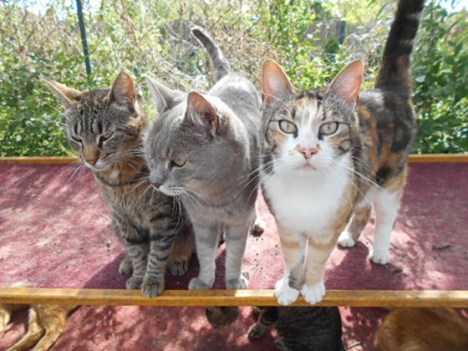
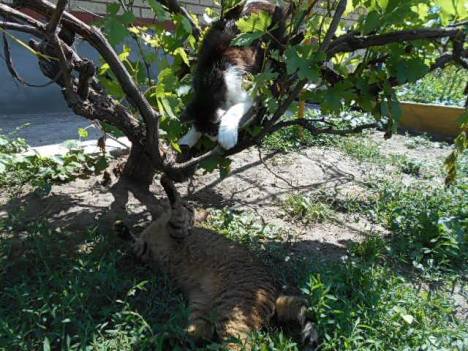
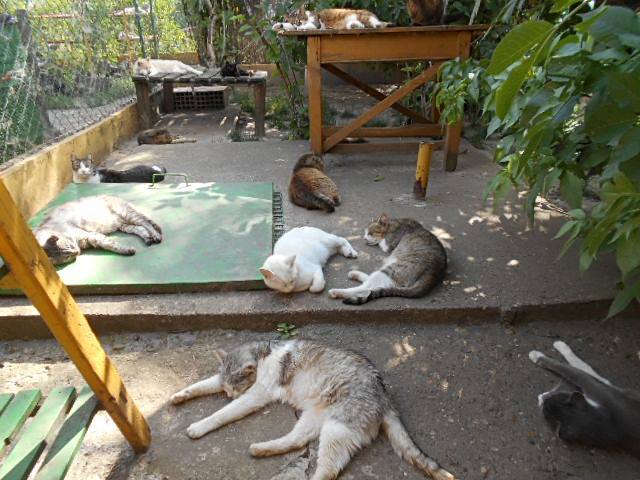
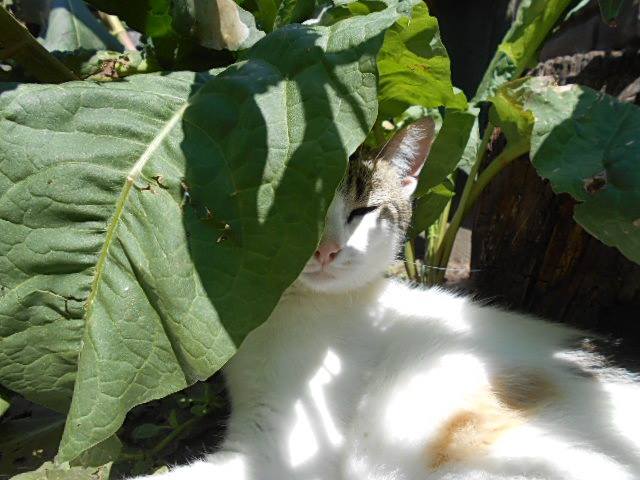
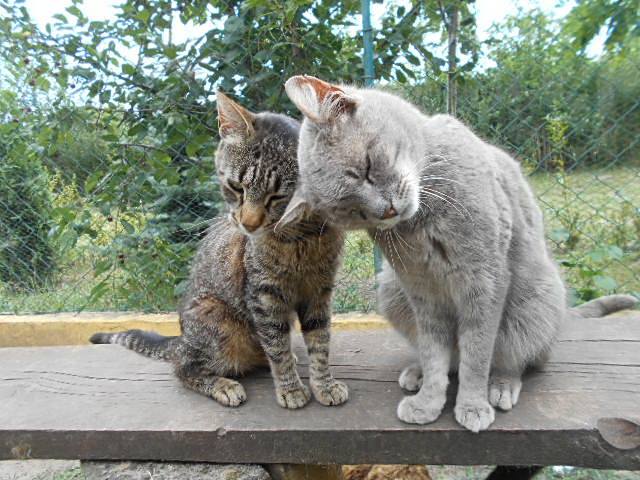
With the summer heat in full swing, life at the shelter seems quite uneventful as most of the kitties are spending their days passed out all over the place, rightfully feeling it’s too hot to even move around. However, it’s not only that their needs remain the same, but now is also the time to start and finish all of the minor repairs at the shelter.
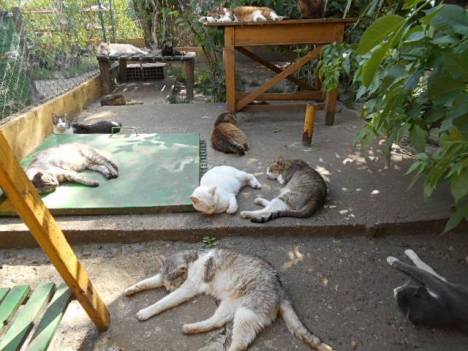
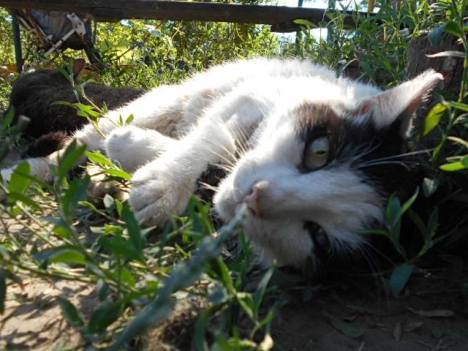
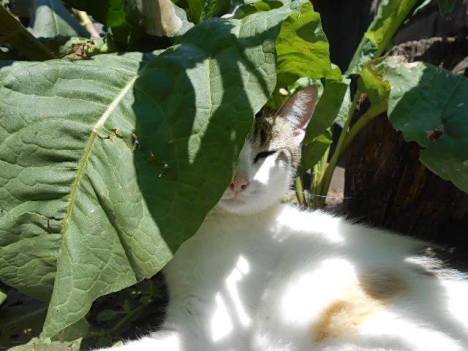
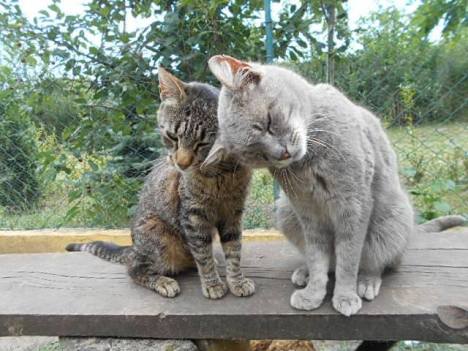
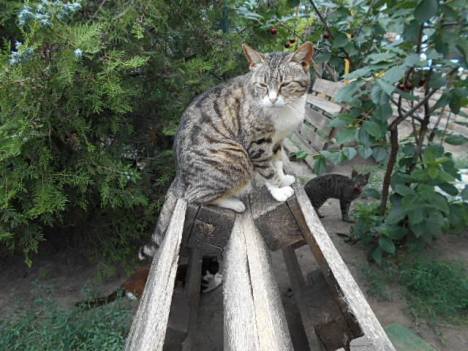
Almost all of the platforms, ladders and wooden wire spools the cats are having so much fun with while playing in the yard need to be replaced now, after being exposed to all kinds of weather over the last few years.
Autumn rains and the winter cold have taken their toll and no matter how well these wooden items were protected by paint or stain, they can’t last forever. And our kitties just love them all big time!

The old outdoor fence which became wobbly three years ago is miraculously still holding up, but the posts keep crumbling and deteriorating with every passing day and it’s been ages since we could close the gates properly. It would be fabulous if this summer we could manage to raise the funds to rebuild the brick-made pillars and the small wall between them, clean and polish the old iron fence above and replace the sheet metal part of the gates. It’s got to be done this summer before the rotten posts completely fall apart and the whole fence goes down, that is…
And last but not the least, not by a long shot – the kitties must eat every day and now the time is rapidly coming for the mandatory yearly vaccinations against rabies.
The problem is that donations regularly slow down as summer approaches and while we totally understand everyone’s busy planning their vacations, our situation is always unenviable at this time of year. The same thing has been happening forever; when the weather is nice, we’re barely keeping afloat, and when we have enough funds to do something, it’s impossible to work outside due to the weather conditions.
We should’ve gotten used to it by now, I guess…
Anyways, if you have a little extra you could spare to help us out please do so!
Even the smallest donation means a lot, as they all add up and get us closer to our goal. A three-digit number of lazy, relaxed kitties and a couple of their tired humans will be immeasurably grateful for your vital help!
Filed under: Animals Requiring Adoption or Homes - Worldwide, CAMPAIGNS - Global Animal Welfare Issues, GENERAL NEWS - International / National / Regional, SERBIA (Central Serbia: Capital - Belgrade) and (Serbia, SHELTER - Information, The "Serbian Animals Voice (SAV) ALLIANCE | Leave a comment »
Posted on June 17, 2015 by Serbian Animals Voice (SAV)

SAV Comment
We are giving donations to a lot of appeals all the time from our own pockets – we ask for no money on this site; instead that people donate directly to the groups and by pass ourselves. Sadly many people do not bother to give anything, although a lot of very small donations add up to a large amount that often meets the appeals need.
We are a volunteer run organisation – self funding even for this sites upkeep; we do not have loads of cash stored away to help every appeal that goes out.
Sadly, when the required funds are not met; the worst happens. The message in red below is from Lina in her own words. This is the sad reality of some animal ‘welfare’. We try to put appeals out well in advance, as this appeal was no exception. There was very little in the way of support or donations, so now the dogs will be turned back onto the streets probably to be rounded up by the Shinters.
For them there is no hope after all… They are forgotten, rejected … Nobody want to adopt them , nobody want to help them to stay on safe .. After all , they will go to street , right to death…
To donate –
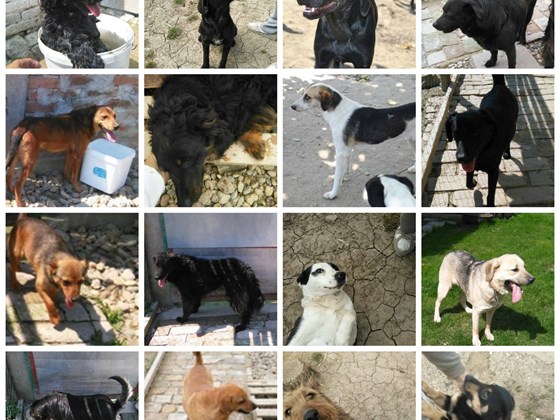
Lina’s Animal Rescue is organisation for animal welfare from Serbia . . We have 23 dogs in small private unfinished shelter, 20 dogs in 2 boarding kennels and 20 kitties in one rescuers home. Funds are desperately needed to pay the boarding kennel fees. We have debt for April 510€ and for May 960€ . We are desperate , those dogs can not go again on the street. The life of street dogs everywhere is difficult, but here in Serbia the dog catchers kill them rather than rescue them.Those dogs urgent need help . Each dog’s boarding fees are 60€ per month ( 40 boarding kennel + 20 food ) .With 20 dogs currently in boarding facilities, the debt is too great to even think about renovating our shelter. They depend only on help from good people. Please share our story and donate , this is URGENT APEL ! Thank you !
Filed under: Animals Requiring Adoption or Homes - Worldwide, GENERAL NEWS - International / National / Regional, SERBIA (Central Serbia: Capital - Belgrade) and (Serbia, SHELTER - Information, The "Serbian Animals Voice (SAV) ALLIANCE | Leave a comment »
Posted on June 12, 2015 by Serbian Animals Voice (SAV)
Posted on June 7, 2015 by Serbian Animals Voice (SAV)

Come on folks, please donate anything you can – even 1 Euro; it makes a huge difference. This facility is too good to close down, as it has over 500 dogs in its care. It needs funds – we have got the ball rolling today – please give anything using the secure site – first link below – Thank You.

To donate and see lots more, please click on the following:
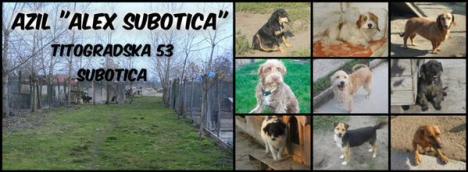
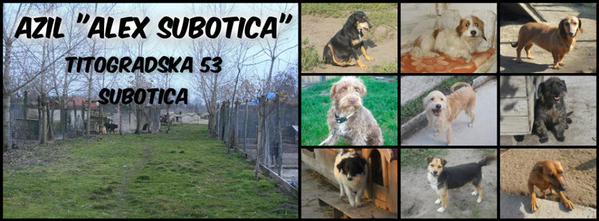
June 2015 – Things have reached a very critical situation at shelter ‘Alex’.
If you can help this dog shelter which has been running for years to help animals around the Subotica region, then please do so. It does not matter the size of your donation – anything at all will help with the dailt costs.
Andrea, who is a volunteer at the shelter, sends the following plea for help:
Today, things have escalated in shelter “Alex” to the point where the only person who runs the shelter has no strength to run it anymore and is willing to surrender it to other people. The pressure comes from another which is getting lots of support.
The shelter is full. No matter how hard we try to advertise the shelter, to share our dogs, to introduce other people with the work of the shelter, and publish each donation we receive to be as transparent as possible, simply it doesn’t go. There is no money.
Alex, with kind heart helps the dog, but in vain. Nobody else steps in with a minimum donation or a can of food, or to provide a ride to the vet or provide a temporary home for a dog. Nobody helps. Adrijana and Dragan kill themselves from all the work they do during winter and summer, hot and cold temperatures, rain and sun, while I only maintain the fb page of the shelter.
There are 500 dogs at the shelter.
In shelter “Alex” there are dogs who have been saved going back to 2003 and they are still alive. Everybody is welcomed in the shelter “Alex”. People can come and see the dogs, pet them, take them for a walk.
At this present time things are extremely difficult. Adrijana has helped at the shelter for many years but she is now finding it almost impossible to continue as financial donations are few and far between; yet the animals need to be cared for – veterinary costs, food costs, shelter maintenance costs, etc, etc.
Without Adrijana or more help with donations, the fate of all the animals at the shelter is uncertain. Please somebody help!! – give anything that you can to help, please; we do not know what more we can do than to simply ask people if they can help the shelter with a donation of any size – THANK YOU.
Andrea Sreiber
Volunteer at shelter “Alex”
About the shelter:
It is currently run by a lady named Adriana Nadj; this has been the case since 2010. She acts alone with big help by her boyfriend – that is great, but very difficult.
It was the first ‘no kill’ dog shelter in Serbia, founded in 2003. So this shelter has a long history and was involved with the original formation of SAV in England. As you can see from the following links, the shelter and SAV go back many years. In the earler days the shelter was run by Slavica, who is part of team SAV. When it was operated by Slavica, the shelter was known as ‘EPAR’. Here you can see some early SAV post links to the shelter when it was EPAR:
Things have not been easy for the shelter; in 2010 city officials attempted to gain access to the shelter in order to take the dogs so that they could all be killed.
Links –
The shelter has a historically important meaning for Serbia. There have been up to 1000 stray dogs living there in the past; some of which were re-homed and some which died at the shelter by natural death.
There are currently around 500 dogs at the shelter.
The shelter was opened on 18.01.2003.
At the time, Subotica legally permitted euthanasia of dogs and on Fridays, people could bring their dogs to be euthanized for free. The shelter couldn’t allow this, so people from the shelter took those dogs and carried them to the shelter instead. This was the first no-kill shelter in Serbia. Its goal is protection of animals and the environment.
The shelter covers the area of 12000m2 + an additional land of app. 3600m2 next to the shelter which Adrijana received as a gift to expend the shelter.
As both SAV and Serbian campaigners have always spoken out iat length about sterilisation of animals (strays and owned animals); ALL the animals under the care of the shelter have been spayed and neutered.
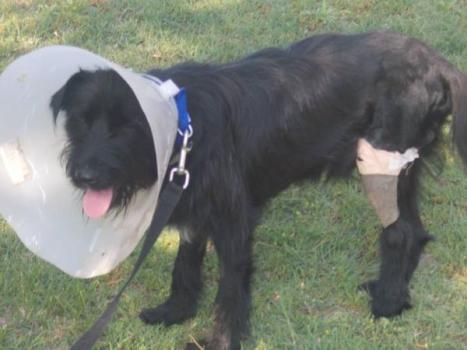
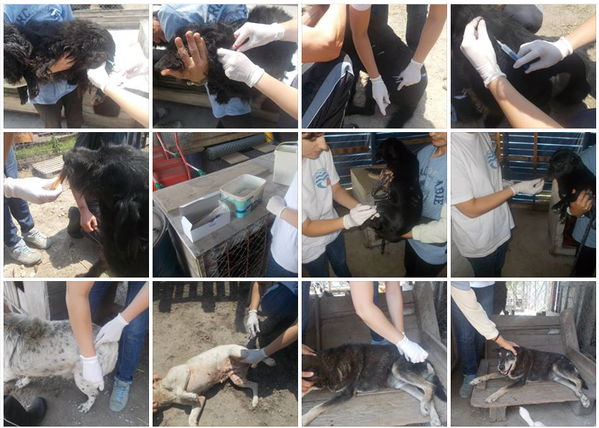
A large number; approximately 70% of the dogs, are old (some having been under the care of the shelter since 2003/2004). Old dogs often lose control of their legs or suffer from an illness of some internal organ; and so the vets are regularly called on to help – and this costs money all the time.
The shelter does not have sponsors to cover medical costs. It is now looking for donations and / or sponsors to help with daily operating costs.
Small boxes at the shelter contain up to six dogs grouped by personality, to prevent fights. Dogs are also spread across six fields, also grouped by personality, around 10-20 dogs are on the fields. Each field also has a small pond. There are covered boxes, which contain dogs known for attempting to jump over the box walls. The small boxes and the fields require repair of old covers and installation of new covers, to provide shade.
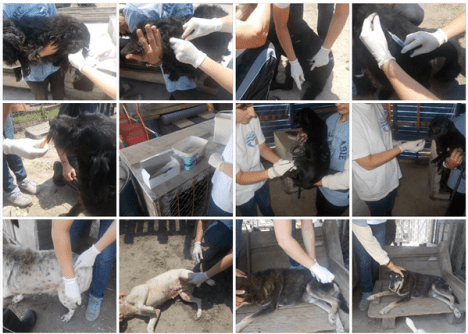
Since it was originally founded, the shelter has helped thousands of dogs, having rescued, adopted and treated them. Dogs will only be adopted out after a mandatory inspection of its potential new home. Adoption is not possible if the owner intends to keep the dog on a chain. Adoption also comes with a mandatory contract. In the case of any dog being found to be in inadequate conditions, the dog is taken back into the shelter. The owner is also permitted to return the dog to the shelter at any time if there are reasons that they cannot continue to have the animal.
The shelter is funded exclusively by donations, which are neither regular or reliable. The City of Subotica currently only provides a free garbage dumpster and provides nothing in the way of financial help, even though the shelter is doing the city a big help by taking dogs from the streets.
The shelter also purchased a van to carry food three times a week from a nearby factory, and the fuel costs vary between 8000 and 10000 RSD. Electricity costs are around 15000 RSD per month. The shelter requires building materials, cleaning supplies, food (granules and canned food, salami, bread, etc), blankets, fleas/ticks
products and money to cover the vet costs, bills, etc.
Here are a few recent links so that you can see the work that is being done to help animals:
So, after having hopefully given you an insight into the opertions of te shelter, all we kindly ask is if you would consider giving a donation; no matter how small, to help with the operating costs of the shelter.
Here at SAV, we do not like to keep asking supporters for financial help; but the situation (as you can see) of trying to help around 500 dogs is a very costly one.
Please give anything that you can;
Thank you very much. SAV
Filed under: Animals Requiring Adoption or Homes - Worldwide, CAMPAIGNS - Global Animal Welfare Issues, GENERAL NEWS - International / National / Regional, SERBIA (Central Serbia: Capital - Belgrade) and (Serbia, SHELTER - Information, The "Serbian Animals Voice (SAV) ALLIANCE | Leave a comment »

















 Serbian Animals Voice (SAV)