Posted on April 24, 2017 by Serbian Animals Voice (SAV)
Jill Robinson: to the Moon and Back DVD
Availability: In stock
Only 300 left
£9.99
Quick Overview
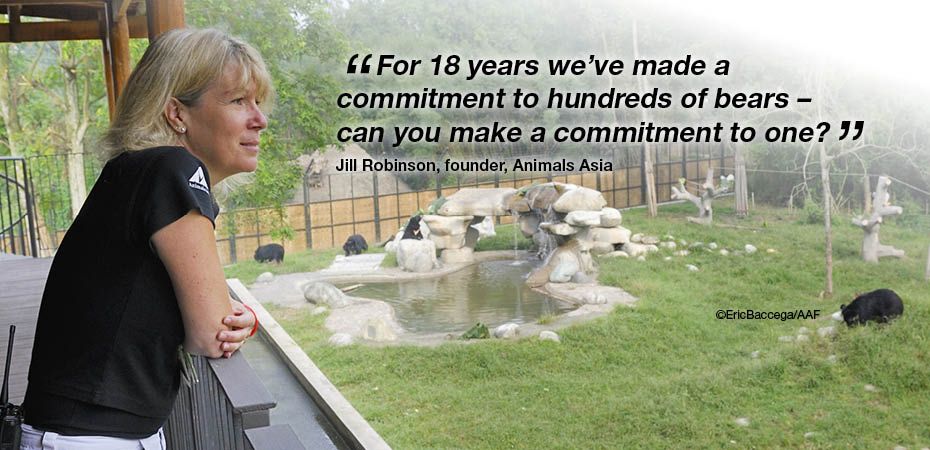
Now you can watch the extraordinary story of our founder Jill Robinson who took on the bear bile industry and created massive social and political change in China and Vietnam. ‘Jill Robinson: to the Moon and Back’ is proof that one person can change the world.
Narrated by actor Peter Egan, this is Jill’s journey told from her own perspective. Our thanks to filmmaker Andrew Telling and Orange Planet Pictures for this deeply moving film. 30% of sales go to Animals Asia. Available in English only. Running time: 53 minutes.
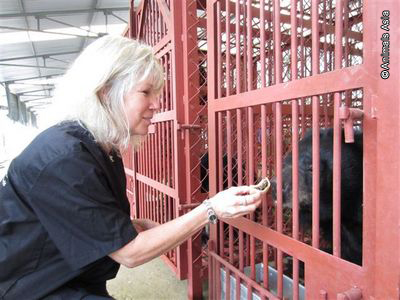
A little more about Jill – the girl from England who visited a bile farm; saw the suffering bears, and decided to start doing something about their suffering. Founding Animals Asia – they have now rescued hundreds of animals and are gradually closing the bile farms down.
I had the great pleasure of corresponding with Jill just about a year ago when I asked her if it would be possible to establish an AA facility in Serbia relating to stray dog education and also a direct link with the EU Enlargement Commission. AA also does work in relation to stray dogs as well as bile bears. We threw some ideas around, but unfortunately decided against it, mainly because a lot of the (AA) funding is desperately needed primarily for campaigns in the far East such as stray animal management, running ex bile bear shelters and doing rescue missions. The other overriding fact was that despite our and many other groups attempts over many years, the brain dead Serbian government cannot get a grip on the fact that a national sterilisation programme of strays works for the very good over a period of time; gradually reducing stray animal numbers.
They cannot (or most probably do not want to) grasp this approach; thinking instead that continual round up and continual killing of strays is the only answer to what they call ‘a problem’. We call it ‘corruption’ as it is a continual way of making money from the government (aka the EU) by continually allowing in sterilised strays to breed; then rounding them up as problem strays and finally killing them, whilst at the same time declaring to the public that they are providing a ‘service’ to them by keeping down stray numbers. Sterilisation is the only real way to reduce numbers !
If the money (in some cases 500 Euros per dog caught and killed – when the average monthly wage for a person is 300 Euros) was put into a national stray sterilisation plan; then stray numbers would automatically decrease over time, thus eliminating the need for shinters and money being paid out for each round up and killing. But to some in certain areas of Serbian government and regional authority, the current process is a continual way of making a fast buck (as we give figure for above) and possibly pocketing some of the big money paid out for every stray dog caught and killed. A Non sterilisation attitude such as theirs is a guaranteed way of ensuring that you always have a supply of dogs to capture and kill – and getting money from organisations such as the EU for doing it. We have given our information so many times to the EU Enlargement Commission over the years; but they are not really interested in the evidence, just the same as they are not interested in real evidence for real abuses in the live animal transport scheme for example.
So we don’t win, the animals certainly don’t win, but the authorities and people in government, sure they win with the ‘official payments made for stray animal control’.
If they read this and say we are overstepping the plate, then let them come forward and threaten to take us to court if they think we are telling untruths. We have THE EVIDENCE; know the shelter formats (ask those campaigning for the Pozega dogs) AND HAVE THE SPECIALISTS WHO WILL TESTIFY THAT THE STERILISATION OF STRAYS IS THE ONLY WAY TO REDUCE NUMBERS OVER A GIVEN TIME PERIOD. At the same time we can also inform that we and others have been ignored by the EU when it comes to a strategy for stray animal management.
We have said a lot about this and gained a lot of evidence over the last 11+ years. Never have we so far even been threatened with court action – we wonder why ? – could it be that we are correct and the government attitude to long term stray management and associated finances is wrong ?
So the situation is that Serbia does not sterilise stray animals as it prefers a money making ‘kill’ policy. Sterilisation would reduce stray numbers = less animals to catch and kill = less money into pockets for some. But also a win – win situation for stray number reduction.
Like live export evidence presented to them, the EU does not really care; it just chugs on at a pathetic rate ignoring any non compliance evidences with its own-created Regulations such as 1/2005; whist at the same time preaching to all other member states that the UK was so wrong to vote to leave the EU. I am a ‘European’ from the UK; and thus would accept to be IN the EU, but only if the EU actually enforces its own rules, which it does not. The UK will not put up with the EU shambles; so we voted to get out. Does the Le Pen situation in France on 23/4 not tell them (EU) that most people in Europe; the normal citizens; are fed up with deaf ear ‘EU jobsworths’ who really do nothing but type out Europa websites and non-enforceable EU regulations each and every day ?
We shall see, and we carry on regardless;
Regardless, I have massive respect and love for Jill Robinson and the work she has undertaken at Animals Asia – it is now a world wide organisation which is slowly but surely killing off the bear bile trade and opening the cage doors to a life of freedom and love and care for all the bears they rescue. Soon there will be no more bile farms – Jill will have succeeded in bringing her dream into the real world; and for that she deserves all of our respect and admiration. She is one very special lady.
It is because of such very special people like her, that SAV will always promote and support the work of this excellent organisation – Animals Asia and their founder, Jill.
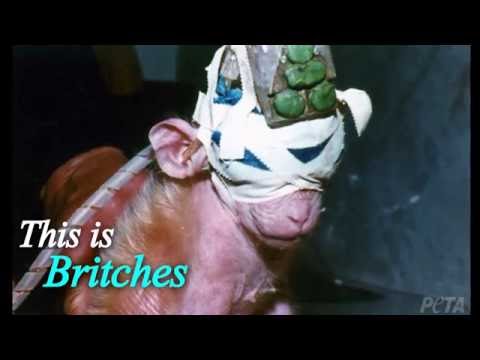
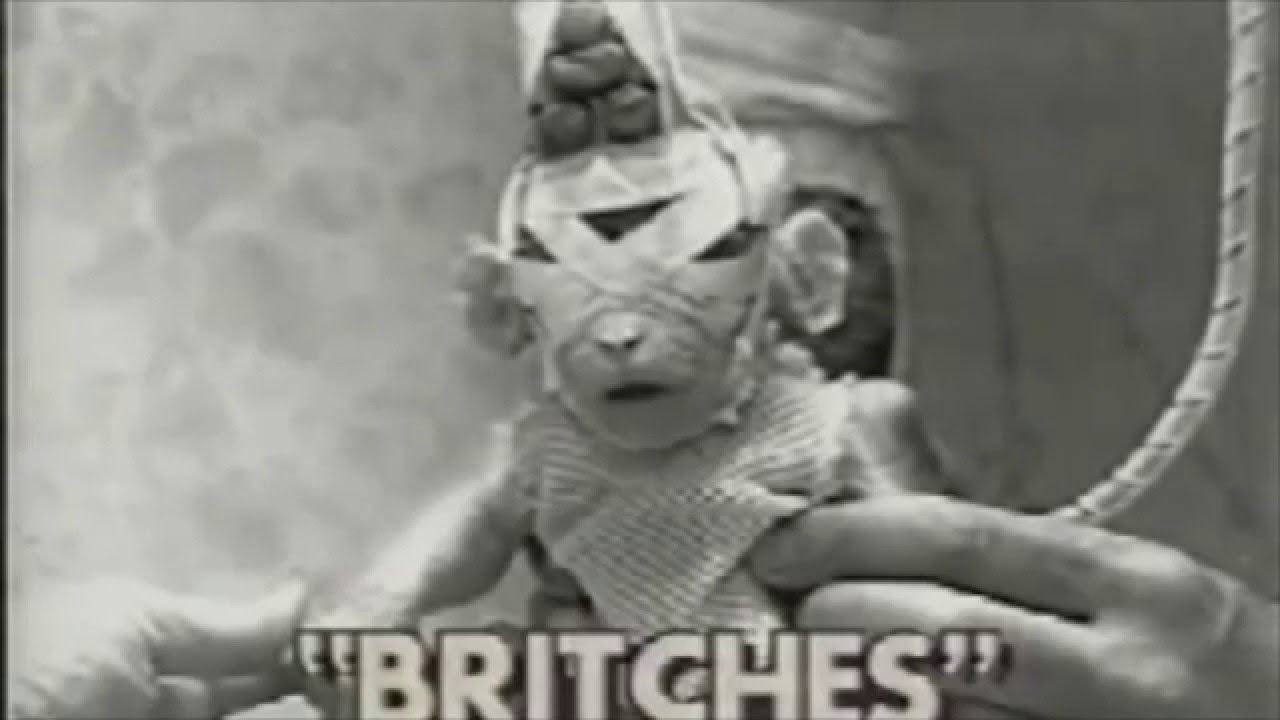
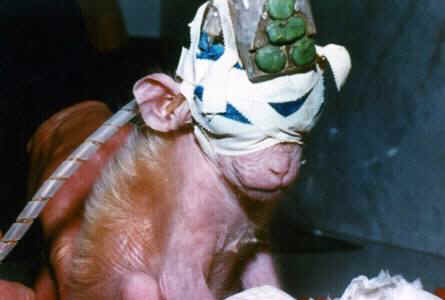
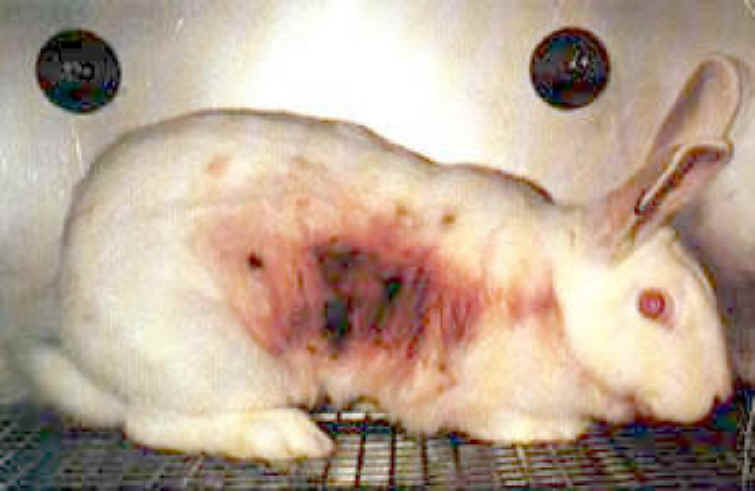
Every year on this day I remember the liberation of the macaque baby “Britches” from the University Laboratory of California (ULC). The ALF has made this exemption. Britches, a five-week-old monkey baby, was separated from his mother shortly after his birth. The aim of the experiment was to test the effect of a device on the blind so that blind people are guided by warning signals. For this reason the eyelids of Britches had been sewn and a sonar device attached to him.
On April 20, 1985, some courageous ALF activists deactivated the alarm system of ULC, entered the lab, and freed Britches, along with other 460 laboratory animals.
The story of “Britches” is perhaps known, but less well-known is that due to this action, these cruel trials in UCR were no longer pursued. The eyes of the monkeys were also no more sewn. And ALF has written with this liberation a history in the fight against animal experiments.
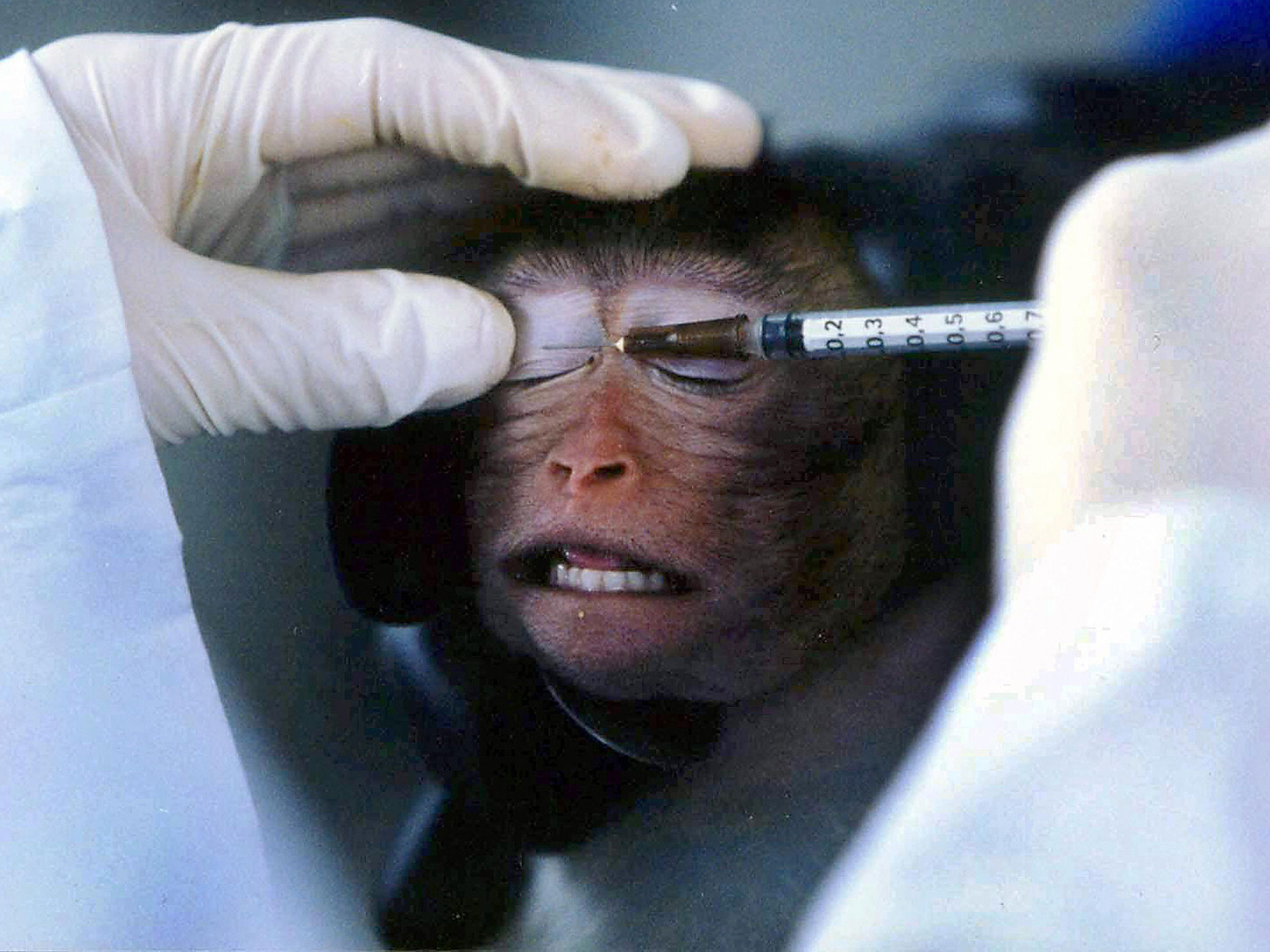
After a lot of actions, demos, signatures we have made against animal experiments, I ask myself today what we have achieved against this criminal idiocy (animal experiments). Unfortunately not much.
After 40 years of fighting animal experiments, the EU has forbidden animal experiments on cosmetics by law on 11 March 2013. This was really a great success! But this is obligatory only for the EU. In China, for example, animal testing for cosmetics is mandatory. The requirements in China mean that companies who want to sell their products there, must have them tested on animals. This means that if a cosmetic company from Germany wants to have new customers in China, it has to participate the animal experiments. Although this company is animal-free in Germany.
Nevertheless, a boycott of animal experiments is possible only in the cosmetics sector.
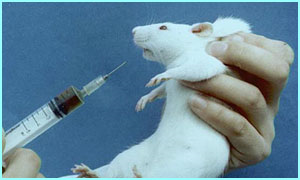
In the drug area, on the other hand, a boycott is almost impossible. All medications, treatment methods, surgical techniques … etc. have been tested in animal experiments, and are still being tested. In most cases with no clinical benefit. Because what works with the animal, does not necessarily work for human beings. The reason is that the animal experimentation system, as known, is based on an incorrect methodological approach, that is: the diseases of humans are reduced to symptoms in experimental animals. The so-called “animal models” are produced in Labor animals. Cancer is produced in mice by injection of cancer cells or gene manipulation. These “animal models”, however, have nothing in common with human disease, and are therefore not suitable for curing human beings.
Cancer is a typical example of the chronic unsuccessfulness of animal experimentation medicine. I quote the opinion of researcher Dr. Richard Klausner, director of the American National Cancer Institute, 1998 “The history of cancer research is the history of how to cure cancer in mice. For decades, we have been curing cancer in mice, but in humans it just does not work “.
I still want to end my contribution to the day of the experimental animals with a positive message, which has sent me a friend recently.
“Maybe we need to stop thinking of animals as these little furry test tubes that can be or even should be controlled,” Joseph Garner, a behavioral scientist at the Stanford University Medical Center, and lead author of the study, told NPR.
“And maybe instead we should think of them as patients.”
Mice not ‘furry little people’: Researchers rethink animal testing as human trials fail
Mark (SAV Founder), has suffered from Multiple Sclerosis (MS) for over 17 years now. Animals do NOT suffer from MS; only humans. So, I ask, why then are we doing animal testing to find a cure for MS ? – Is this not like putting a car tyre onto a Boeing 747 and finding out if it can stand so many landings ? – it makes no sense; you test aircraft tyres on aircraft, so why try and find results for human illness by testing on animals ?
An animal trapped for fur will often chew its own leg off to escape the trap and death. Would a human chew off his own leg and survive ?
A woman who has a hysterectomy is advised not to raise her arms above her head for several weeks. When my dog was sterilised, we were out in the park playing ball within 2 days !
Animals and humans are not the same – they are very different; their body types are specific to their species. You cannot find cures to human illness by testing it (or falsely creating it as with MS) on an animal – they react differently and are certainly not duplicate models for the human species. Anyone who thinks they are is living in the past.
And yes, animals are still being used to find a cure for MS. Why does someone not investigate why the human species gets MS and animals don’t. Is it genetic ? – are there other reasons ? – that would be useful research instead of artificially creating something in an animal that the animal species does not even naturally suffer from in order to find cures for a human only disease.
And yes you have guessed it; we still MS test for MS using animals; and still we have no cure for MS in humans. I would say that all the time we test on animals we will never find a cure. Lets go outside the envelope and undertake some proper research which does not involve animal testing but which will be beneficial to human diseases.
I have an illness and want a cure – but the cure does not exist in animals which do not suffer from it in the first place !
As an MS sufferer and someone who wants a cure, I will always speak out AGAINST animal testing for human diseases. It makes no sense.
Monday 24th April is the World Day For Laboratory Animals.
Check out a lot more on this and other lab animal campaigns at London based ‘Cruelty Free International’ (CFI) – formally known as the British Union for the Abolition of Vivisection (BUAV) which was founded as long ago as 1898.
Read more about the fantastic work of, and many campaigns from the BUAV and its change recently to CFI at the following –
Posted on April 21, 2017 by Serbian Animals Voice (SAV)
United Nations Food and Agriculture Organization (UNFAO): The dog meat trade in Asia is an unregulated industry imposing dangerous health risks.
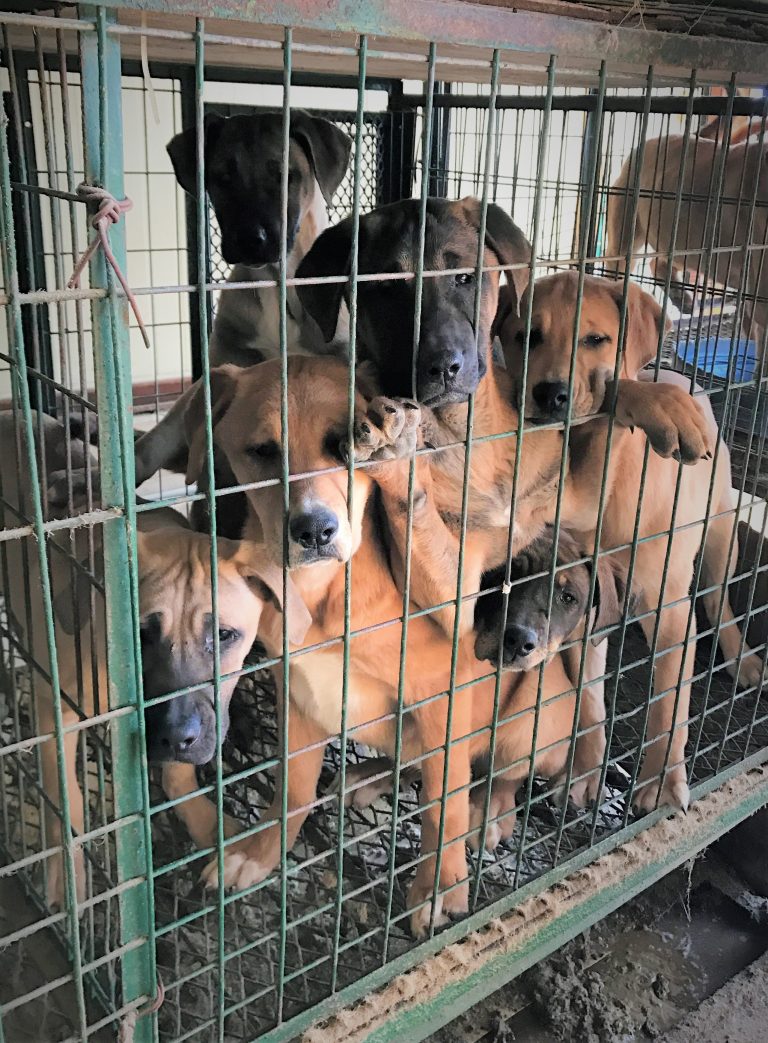
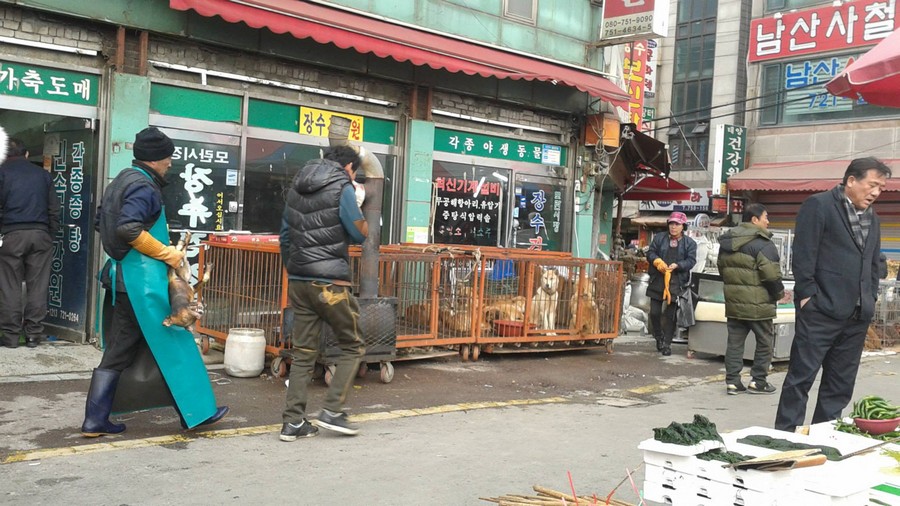
We are urging the United Nations Food and Agriculture Organization(UNFAO) to join us in the fight to end the dog meat trade in Asia. The ugly truth is that dog tonics and soup are harvested and created in an unregulated industry in the most disgusting and unsanitary conditions. From start to finish the treatment of the dogs is incredibly cruel and inhumane.
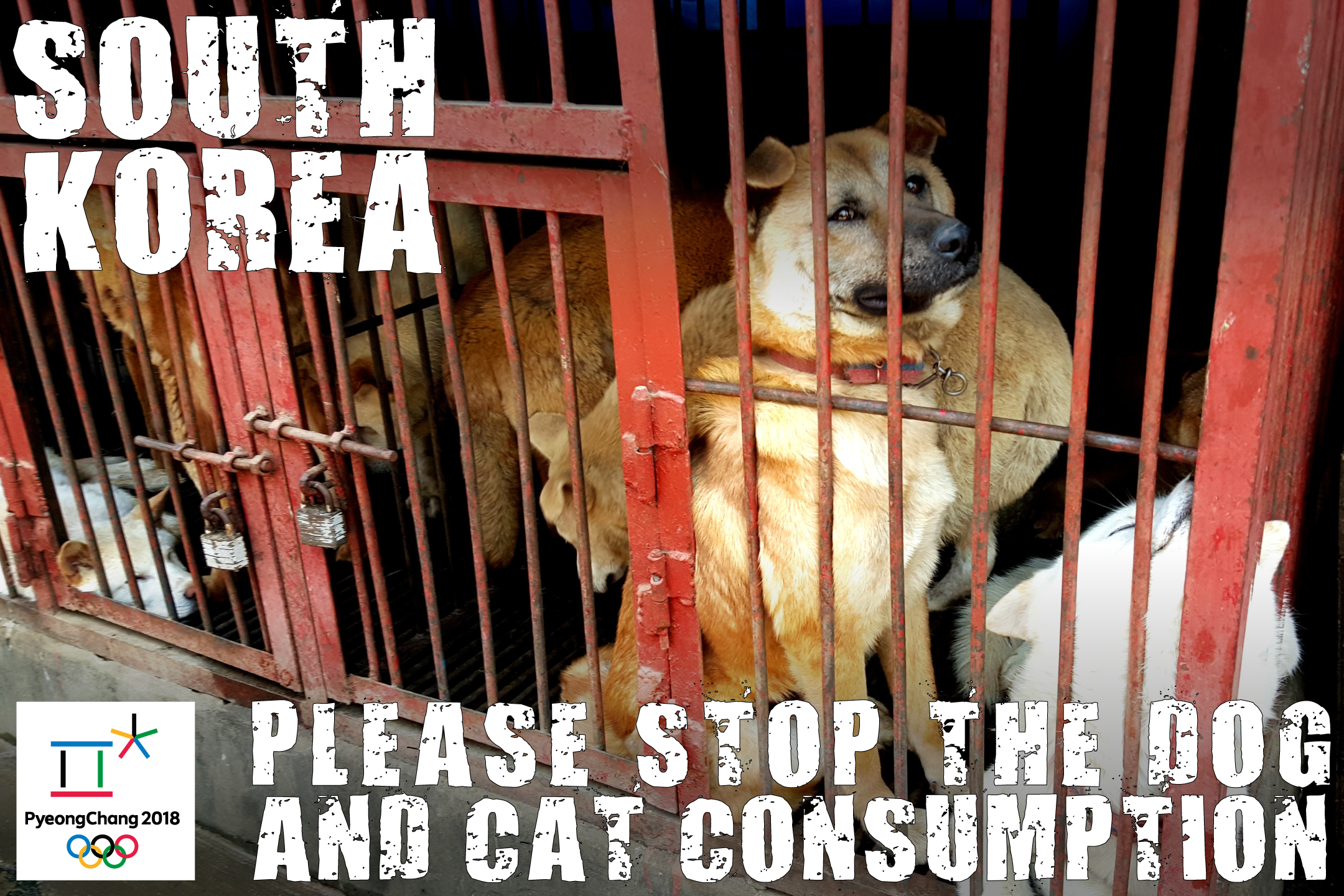
We are reaching out to the UNFAO to help us bring an end to the dog meat trade in South Korea.
How does Dog Meat Cruelty fit into “Eco-Paradise”?
Hwacheon County in Gangwon Province seeks to achieve the status of “Eco-Paradise”, the reason why they pursued Sister City agreements with two American Indian Nation tribes in 2005. They sought to learn from them, how to live in harmony with the natural environment. But where does dog meat farming fit into “Eco-Paradise”?
Let’s tell the Korean cities that they can no longer hide their shameful practices. It’s time to wake up and join the modern world.
Take action today to urge Hwacheon’s Sister Cities to help in the fight to end the cruelty toward our best friends.
CARE is building a safe ‘Healing Shelter’ for over 300 dogs in their Organization.
Sharing for CARE:
Coexistence of Animal Rights on Earth (CARE), is currently protecting over 300 dogs at their no-kill shelters. Yet, the shelters are built in a temporary residence and the time that they need to move out has come. They need their land to permanently stay and to safely protect their rescued dogs from the harsh environment. Their ‘Healing Shelter Program’ is looking forward to solving this problem.
Clock is Ticking! This may be the once in a lifetime opportunity for the Korean dogs.
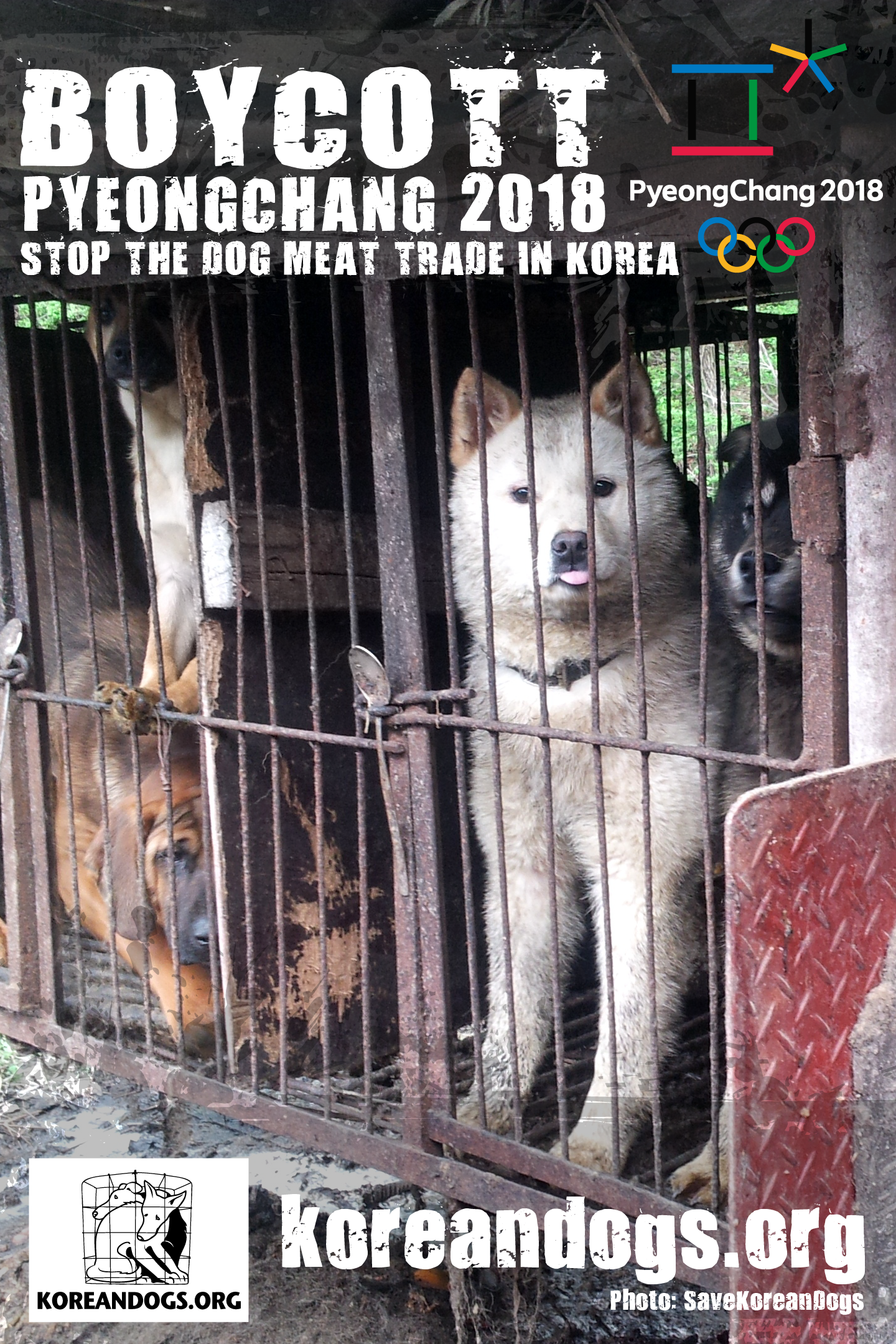
Some opportunities only comes once in a life time. PyeongChang 2018 Winter Olympic in South Korea might be one of those opportunities. What would you do to save your best friends from horrific cruelty and unimaginable suffering? Probably a lot. But we only ask a few minutes of your time (more if you can) to help speak out for these animals who have no voice. Feeling sorry for them would not change anything. Only action can. Thank you for caring!!
Posted on April 20, 2017 by Serbian Animals Voice (SAV)
China’s biggest airline bans shark fin cargo
China Southern Airlines says it is taking a stand for animal conservation
PUBLISHED : Thursday, 20 April, 2017, 5:13pm
UPDATED : Thursday, 20 April, 2017, 11:07pm
The ban on shark fin shipments by China Southern Airlines will narrow the options for traders of the delicacy.
China Southern Airlines, the mainland’s biggest carrier, has banned shark fin shipments and promised to “actively participate” in animal conservation.
The decision is significant as the company is based in Guangzhou, the world’s largest trading hub for the delicacy, and it narrows the options for Chinese importers.
It means that 51 per cent of international airlines, based on seat capacity, have now banned the cargo. Flag carrier Air China had already banned shark fin, leaving just China Eastern among the big three state-owned airlines yet to declare a position.
Robust campaigning by wildlife activists over the years has also led the nation’s largest shipper and logistics firm, China COSCO Shipping, to come onside.
In a letter to WildAid Hong Kong, seen by the Post and confirmed by the airline, China Southern’s vice-president Han Wensheng said the company “attached great importance to the issue” and had “taken immediate action”.
The nation’s largest airline by revenue and eighth biggest globally said it had banned shark fin on passenger and cargo flights as of March 1, but the letter was its first public announcement of the policy change.
“I would like to take this opportunity to extend our appreciation to the global coalition of shark and marine conservation groups for your constant attention and support to China Southern’s air transport business,” Han said.
The airline said it would “shoulder its social responsibility” and pledged to “actively participate in the cause of wild animal and plants conservation … to jointly promote conservation culture and the sustainable development of [the] human community with the general public.”
Environmentalists have long campaigned against the trade in fins – a staple at weddings and banquets – saying the harvesting methods are cruel and that shark populations have declined dramatically.
Other carriers making the same commitment include Hong Kong-based Cathay Pacific Airways, British Airways, American Airlines, Emirates and Singapore Airlines.
Worldwide, 17 of the 19 biggest shipping lines measured by container capacity have banned shark fin, impacting 71 per cent of the global market.
Notable signatories include Maersk, the world’s biggest, and former Hong Kong chief executive Tung Chee-hwa’s family company Orient Overseas Container Line, better known as OOCL.
Alex Hofford, wildlife campaigner at WildAid Hong Kong, applauded the move.
“This particular shark fin airline ban will be hugely impactful for the simple fact that Guangzhou is the world’s largest shark fin trading hub, even eclipsing Hong Kong,” he said.
“China Southern’s ban will no doubt send a strong message to the many Guangzhou shark fin traders that their business activities are often illegal, but always unethical, immoral, cruel and unsustainable.”
Attention will now turn to the United States with the likes of FedEx and United Airlines – whose recent mistreatment of an Asian-American passenger thrust it into the spotlight – likely to face growing pressure to change their ways.
More than a dozen protesters descended on a press conference held by FedEx on Thursday to protest about shark fins as the company launched an online service in Hong Kong to tap into the burgeoning e-commerce and online shopping market.
“Questions remain on why United States air carriers FedEx and United Airlines still continue to ship shark fin, often illegally,” Hofford said.
Posted on April 19, 2017 by Serbian Animals Voice (SAV)
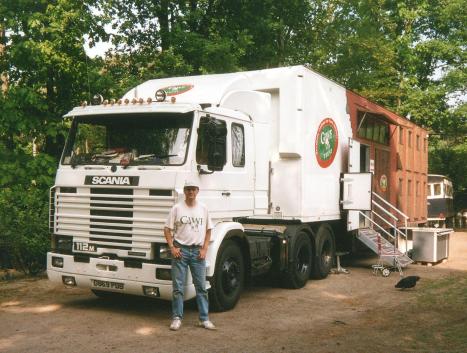
Mark (SAV) and Philip (CEO CIWF) have campaigned together for around 25+ years on a variety of farm animal welfare issues; especially live transport and intensive farming. Mark keeps Phil informed of farm animal welfare issues in Serbia; especially as Serbia is now an EU Candidate Country.
CIWF have been working a lot to improve the welfare of animals in China; especially Pigs as over half the worlds population live there in some of the most basic and terrible conditions. Below are a few points relating to CIWF’s work in China, and at the very end we have provided a link where you can read on and select many more CIWF posts on the issue of Chinese animal welfare work.
Now we have our global map up and running again we can see where all our visitors are located. It is great to see that we now have some visits from people located in China – something we have not had before. Hence the reason for this post – we hope that now our Chinese friends will view what we are providing and will get further information and links about people and organisations working in their country to improve the welfare of farm animals – SAV.
Above – Mark (SAV) with the CIWF tour truck that campaigned for better farm animal welfare all over the EU.
Pictured in the Netherlands at a Goat Farm.
“Hugely damaging to the environment; it’s affecting people’s lives every day.”
China: The most populous country on the planet; home to half the world’s pigs; and the epicentre of an unprecedented surge in mega-farms.
I took on the role of investigative journalist to find out what’s really going on. It was a journey that brought me face to face with the jaw of the Asian tiger; a mighty powerhouse already exerting big influence on the shape of farming tomorrow.
Join me (Phil) over the next couple of weeks as I uncover the stark reality in China, for animals, people and the countryside.
Half the world’s pigs are farmed in China – the vast majority in appalling conditions. This massive industry is not only responsible for untold cruelty but is polluting waterways and forcing people from their land.
Our distinguished guests were led by Ms Xi Chunling, founder and executive president of the China government-backed International Cooperation Committee on Animal Welfare (ICCAW). Ms Xi was accompanied by deputy director, Mr Wan. It was also a great privilege to welcome Mr Zhou, the vice president of the China Association for the Promotion of International Agricultural Cooperation (CAPIAC), an influential body who support the joint ICCAW/Compassion project.
So what is it we’re trying to do? Well, put simply, we are working with the authorities in Beijing to encourage the adoption of higher welfare practices for pig farming. What a proud moment then to recognise the first group of pioneering farmers there with our prestigious Good Pig Production Award! All the recipients have pledged to make a real difference to the welfare of their pigs by using higher welfare alternatives to confinement systems like sow stalls and farrowing crates where the pigs can’t turn around.
Having just attended our Good Farm Animal Welfare Awards in Paris, I’m even more excited about the potential opportunities for improving the lives of farm animals in China through work with food companies.
As I wrote before, we launched our Good Pig Award programme in Beijing last week at the ‘2013 Animal Welfare and Animal Products Quality Safety Forum’, which we co-hosted with the International Cooperation Committee on Animal Welfare (ICCAW).
I’m looking forward to building on this further to bring the benefits of better animal welfare standards to China and to working in partnership with ICCAW to help companies and producers to play their part in benefitting the lives of farm animals and improving food quality.
I have some hugely exciting news – we have just launched our Good Pig Award programme in China! In the country that is home to half the world’s pigs, our work to persuade food companies to step up their animal welfare standards couldn’t be better placed.
The unveiling of the Good Pig Awards for China took place at a well attended conference in Beijing, organised by the International Cooperation Committee of Animal Welfare (ICCAW), newly inaugurated with the backing of China’s Ministry of Agriculture.
As Compassion in World Farming (Compassion) was proud co-host with ICCAW, I had the great honour of giving an opening address. My colleague, Phil Brooke, also gave an excellent presentation on what we mean by animal welfare and the kind of improvements that companies must demand if they are to win one of our internationally recognised awards.
Compassion in World Farming’s ground-breaking work with major food companies on raising animal welfare standards has taken a new leap with the launch of its ‘Good Pig‘ Award programme in China.
As the country that is home to half the world’s pigs, Compassion’s latest initiative couldn’t be better placed.
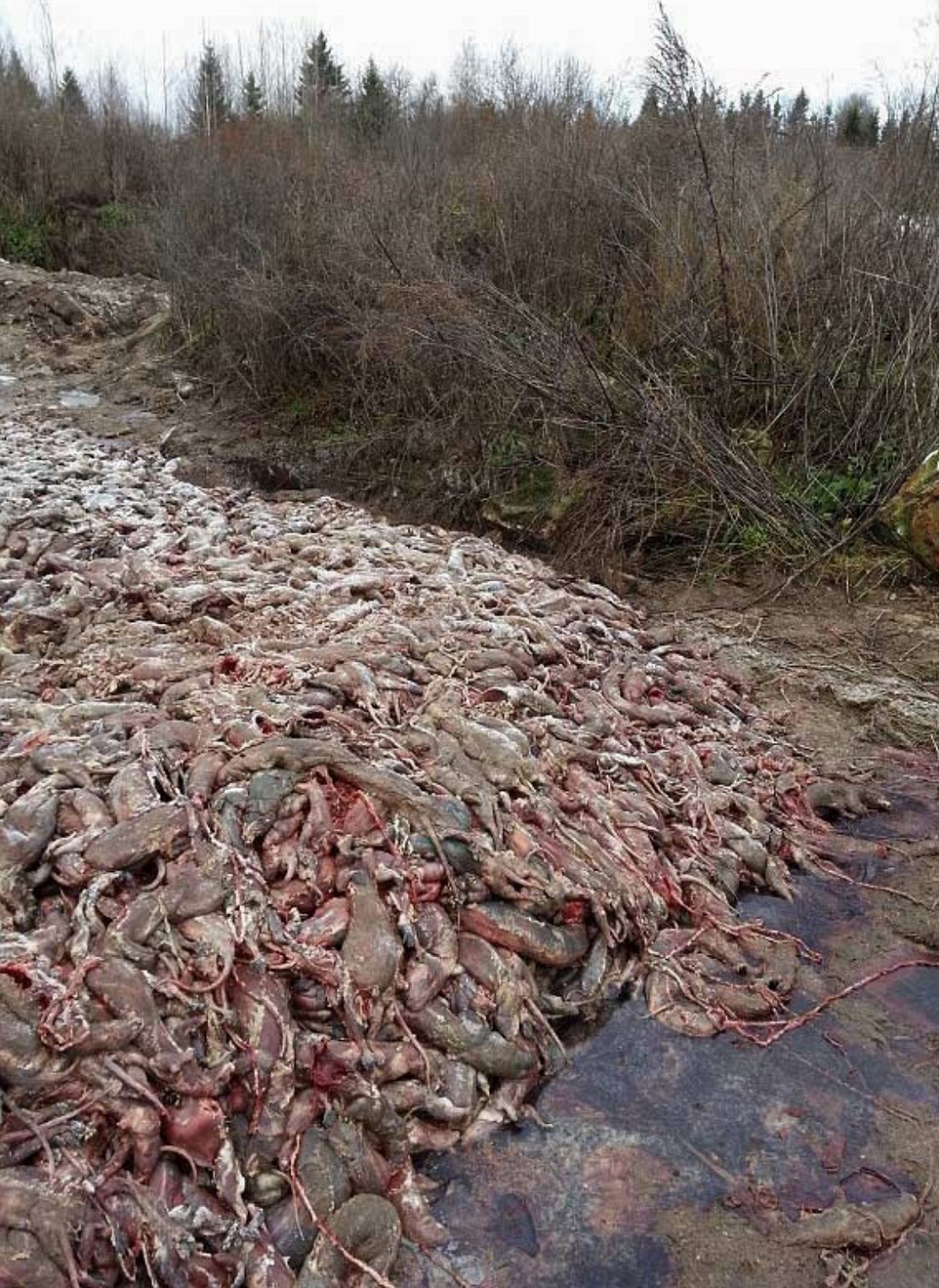
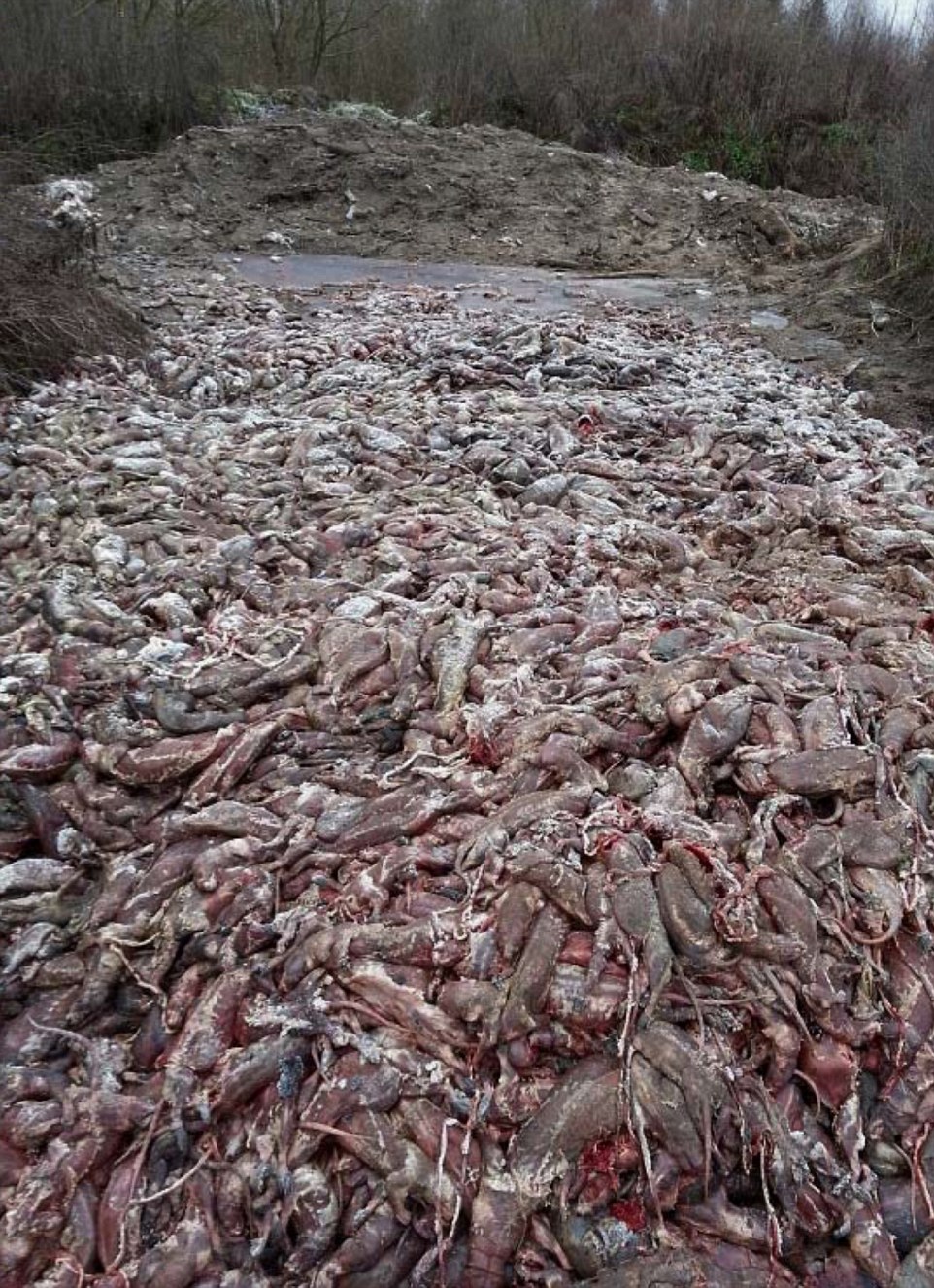
Pig carcasses are supposed to be disposed of by burying. However, land is limited. It’s not unusual for farmers to dump unwanted dead animals into rivers. One Chinese news source states the “dumping of dead pigs in rivers is common among Jiaxing villagers due to over expansion of the hog industry and a lack of burial sites”.
According to local officials, “the reason for the pigs’ death is the cold weather but many don’t believe this”, Jeff told me. “If the pigs can still be sold to market, it doesn’t make sense for farmers to dump them into the river for nothing”.













 Serbian Animals Voice (SAV)