Jason Gillespie, who was just signed by Kent’s coaching team after overseeing Yorkshire’s back-to-back titles in 2014 and 2015, is now also coaching fans on the benefits of plant-based eating.
In a new video for PETA, the cricketer reveals the documentary that made him go vegan – Earthlings – and shares his thoughts on the rise of the “meat-free athlete”:
Athletes are increasingly coming to the correct conclusion that you can get all the nutrients you need from a whole-food plant-based diet, and they’re recovering better, they’re feeling good, they’re feeling fit and strong.
There’s nothing macho about treating animals terribly, and there’s nothing macho about putting your health at risk. There’s nothing macho about polluting the Earth. We’re all here on this one marble, and we just got to work together.
In 2015, veterinarians and a scientist from PETA India, as well as other experts, inspected ten facilities that produce antitoxins and antivenins.
With the exception of one that outsources its work, all the facilities extract large volumes of blood from horses, donkeys, or mules. The inspectors documented many distressing problems, including the following:
·Animals were suffering from anaemia, bleeding and infected wounds, and other serious health problems.
·Other common physical problems included diseased hooves, malnourishment, infections, parasites, swollen limbs, abnormal gaits, and eye conditions, such as blindness.
·The facilities often used painfully large needles in order to collect blood more quickly.
·Many horses were fearful and anxious and struggled to get away when approached by humans.
·Animals were typically kept in crowded, barren paddocks and often tied with ropes that severely limited their movement.
·Many were forced to stand and lie in their own urine and faeces, and some suffered from “capped elbow”, a painful inflammation and swelling of the joint caused by lying on hard floors.
·Basic husbandry procedures such as dental care and hoof trimming appeared to be ignored, and improper tools were used for grooming.
·There were numerous apparent violations of laws and guidelines, such as the failure of facilities to be registered to conduct these procedures on animals.
Indian law requires people who are responsible for animals to take all reasonable measures to ensure their well-being and to prevent unnecessary pain or suffering – in stark contrast to the abuse and neglect documented at these facilities.
Please speak out for these animals! Ask Indian authorities to close these cruel facilities
Exposed: Young Ostriches Butchered for ‘Luxury’ Bags
Never-before-seen footage shows how birds are shoved into boxes and have their throats slit at slaughterhouses that supply Hermès, Prada and other “luxury” fashion houses.
In September 2015, PETA US investigators travelled to South Africa to document what happens inside the largest ostrich slaughter companies in the world, including the exclusive supplier of ostrich skins for Hermès Birkin bags. Investigators saw workers force terrified ostriches into stun boxes – causing many to slip and fall – and then slit their throats. The ostriches next in line watched helplessly as their flockmates were killed right in front of them.
Workers were caught on camera striking ostriches in the face during transport, and when ostriches stumbled over a collapsed flockmate outside a slaughterhouse, a plant director joked, “I’ll call the animal welfare officer just now”.
These slaughterhouses supply ostrich skins to Hermès, Prada, Louis Vuitton and other top European fashion houses. Feathers, some of which are ripped out of the ostriches’ skin while they are fully conscious, are used in costumes for the Moulin Rouge and festivals like Brazil’s Rio Carnival as well as in feather dusters, boas and accessories. Ostrich meat is also sold throughout South Africa and exported primarily to Europe.
South Africa: The Ostrich Killing Capital of the World
The Western Cape of South Africa is home to the largest ostrich slaughter companies in the world, which supply “luxury” ostrich skins to Hermès and other major fashion houses.
PETA US investigators saw the juvenile birds tightly packed into open-topped vehicles for the terrifying journey to slaughter. Once they reach the slaughterhouse, workers forcibly restrain each bird, electrically stun them and then cut their throats. Moments later, the feathers are torn off the birds’ still-warm bodies, they are skinned and dismembered.
The Intelligent Ostrich
While ostriches can live for more than 40 years, farmed ostriches are slaughtered when they are just 1 year old. And while young ostriches typically stay with their parents for up to three years, ostriches raised on factory farms will never even get to meet their parents.
In the wild, these intelligent birds share parental duties, with the camouflaged mother taking care of the eggs during the daytime and the father, who has black feathers, taking night-time duty. One farm manager told our investigators that he has seen ostriches take turns fanning each other on hot days, remarking, “I have a lot of respect for ostrich”.
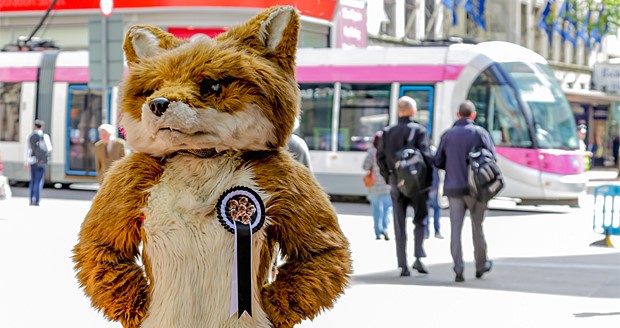
Some peoples told me that there’s a chance that it might become legal to hunt me again? (And not just me – all my fox, deer and hare chums are in danger too)
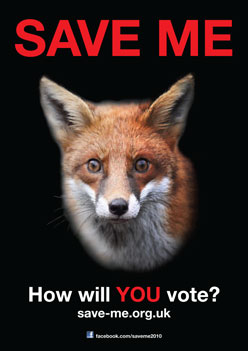
A free vote on repealing the Hunting Act is in the manifesto of the Conservative Party. But why, when so many people are against it?
I don’t understand politics!
This clever moving picture thing tells everyone exactly how many peoples are against hunting. Please, please watch it and send this to everyone you know – including your political candidates. They need to know how unpopular doing this would be (and not just with me!)
Please do it now if you can – it only takes a fox’s heartbeat and it’ll tell all your candidate peoples what you think about hunting and increasing sentences for bad animal cruelty peoples. And please tell your friends you’ve done it!
Help me Crowdfund!
Please pledge towards our urgent crowdfunder appeal. With your support, we will highlight the threat to animals in this election, so that all electoral candidates can take notice of our calls to protect and strengthen animal welfare. Please pledge your support today!
Help me!!
Even if you can’t come and see me, there will be lots of chances for you good peoples to help my campaign! Could you hand out leaflets or talk to peoples? Put up posters? If you can do anything please email campaigns@league.org.uk and my friends will be in touch!
Share and share alike
I’ve been super busy this week and there’s loads of new blogs and photos on my VotesforVinny website. Please share them – go on, I’m really cute! And don’t forget to find me on Tweeter and Foxbook!
I’m going now.
Thank you wonderful person for helping me – it’s made me very happy!
Posted on May 17, 2017 by Serbian Animals Voice (SAV)
You did it. Your voice has been heard!
TK Maxx has responded. They have accepted the Blood Feather award and turned it into something positive:
They have agreed to stand up for the geese and ducks in their supply chain.
As you may remember, we believed that TK Maxx was not doing enough to prevent cruelty from entering their bedding supply chain. They were ignoring our 40Lives campaign and our efforts to get in touch.
Luckily, over 13,000 FOUR PAWS supporterscontacted TK Maxx directly, asking them to budge. And it worked! We finally heard from TK Maxx the night before our planned Blood Feather Award ceremony.
Regardless, we went ahead and delivered the award at their headquarters. It was THE red carpet event of the year.
– committing to credibly excluding force feeding and live plucking from its down products. Thanks to your incredible support, real change has been achieved!
Kindest regards,
Cordelia Britton
Head of Programmes
FOUR PAWS UK
P.S. Your support has encouraged Argos, the White Company, Selfridges, Debenhams and TK Maxx to commit to credibly excluding cruel practices such as live plucking and force feeding from the production of down used in bedding products. THANK YOU for making this campaign a success.
Posted on May 15, 2017 by Serbian Animals Voice (SAV)
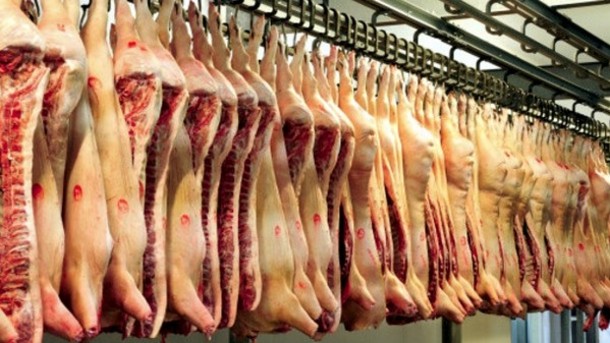
China now eats twice as much meat as the United States, which is far too much on both counts !
“It is not possible to feed everyone so much meat,” said Wen Tiejun, the dean of Renmin university’s Agriculture school a leading advocate of rural reform. “People must simply eat less (meat)”.
Over the last 30 years, the Chinese demand for meat has quadrupled, according to figures from the USDA. China alone now eats a quarter of the world supply, approximately 71 million tons a year.
With lots more money in their pockets, the majority of Chinese citizens have turned away from their traditional diet of rice and vegetables, flavored with only a small quantity of meat. They now embrace Western diets and have become fast food junkies. But Chinese farmers are unable to keep pace with the demand, and imports of meat, breeding stock and animal feed have risen dramatically.
The average Chinese still only eats half the meat that his American counterpart does. But American and European meat consumption has now started to fall, while it is still rising strongly in the developing world, of which China is considered one. Leading water scientists have also issued warnings that the world may have to switch almost completely to a vegetarian diet over the next 40 years to avoid catastrophic shortages.
So what is China doing about it ? – New dietary guidelines could reduce greenhouse gas emissions by 1 BILLION tonnes by 2030, and could lessen country’s problems with obesity and diabetes.
The Chinese government has outlined a plan to reduce its citizens’ meat consumption by 50%, in a move that climate campaigners hope will provide major change in the effort to avoid runaway global warming of the planet.
New dietary guidelines for citizens drawn up by China’s health ministry and only released once every 10 years recommend that the nation’s 1.3 billion population should consume between 40g to 75g of meat per person each day. The measures are designed to improve public health but could also provide a significant reduction to global greenhouse gas emissions.
The Chinese Communist party has released a series of new public information adverts encouraging Chinese citizens to consume less animal flesh each day to help the environment. If the new guidelines be followed, carbon dioxide equivalent emissions from China’s livestock industry would be reduced by 1 billion tonnes by 2030, from a projected 1.8 billion tonnes in that year.
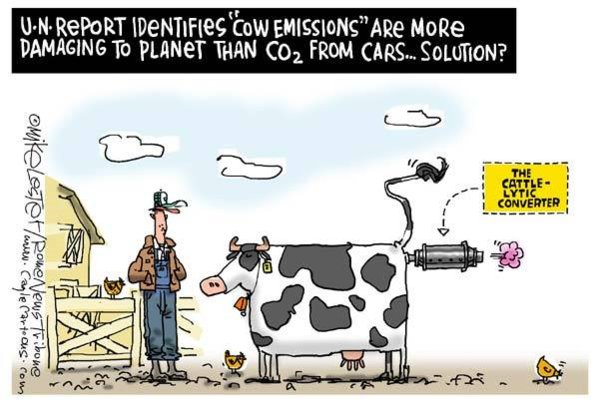
14.5% of planet-warming emissions emanate globally from the keeping and eating of cows, chickens, pigs and other meat animals – this is more than the entire global emissions from the transport sector. Livestock produce and release methane, a highly potent greenhouse gas. Land clearing and the use of fertilizers also release large quantities of carbon into the atmosphere.
Tackling climate change involves many routes – scientific judgement, political decisions, entrepreneurial support, but in the main, it still very much relies on involvement of the general public to change their meat consuming behaviour. Every single meat eating person around the globe has to believe in the low-carbon concept and slowly adapt to it by making changes to their diet and cutting down on, or preferably eradicating, meat consumption.
Meat has gone from a rare treat to a regular staple part of daily diet for many Chinese people. In 1982, the average Chinese person each year ate just 13kg of meat, nicknamed “millionaire’s meat” due to its scarcity. Beef consumption was almost non existent.
But the emergence of China as a world economic power has radically altered the diets of a newly wealthy population. The average Chinese citizen now eats 63kg of meat a year, with a further 30kg of meat per person expected to be added by 2030 if nothing is done to stop or amend the trend. The new guidelines set out in government guidelines would reduce this to between 14kg and 27kg a year – a reduction of more than 50%.
But, China still lags behind more than 12 other nations in ‘per capita’ meat consumption, with the average American or Australian consuming twice as much meat per person compared to China.
According to a new report by Wildaid – http://wildaid.org/ – the predicted increase in China’s meat consumption would add an extra 233m tonnes of greenhouse gases to the atmosphere each and every year, as well as put an increased strain on the country’s water supply, which is already blighted by polluted and denuded rivers and groundwater.
The report also warns that unchecked Chinese meat consumption will degrade its arable land and much worsen the country’s problems and costs relating to obesity and diabetes. Already (2017) an estimated 100 million Chinese people have diabetes, more than any other country.
Research released by the think tank Chatham House in 2014 predicted that China alone is expected to eat 20 million tonnes more of meat and dairy a year by 2020 and warned that “dietary change is essential” if global warming is to not exceed the 2C limit eventually imposed at the Paris climate accord recently.
China’s potential move to cut meat consumption in half would not only have a huge positive impact on its public health, it would also be a massive step towards drastically reducing carbon emissions and reaching the global goals set out in the Paris agreement. Animal agriculture emits more than all transportation combined. Reducing demand for animal-based foods is essential if we are to limit global warming to 2C as agreed at COP21.
Despite the Chinese government’s commitment to reducing meat consumption by 50% or more, it may be very difficult to convince the country’s big spending, rising middle classes to cut down on their meat intake. There are strong cultural traditions attached to the eating of many animals, especially pigs, which will be difficult to change.
Recently, Chinese companies have been buying farms in the United States and Australia to provide feed for their country’s dairy and beef industries. In late 2013 a Chinese company, (Shenghui), purchased the largest US pork producer, named ‘Smithfield Foods’, to help keep up with demand.
China’s demand for meat could potentially continue to grow and support hundreds of thousands of jobs in the US meat industry. Sounds good for the USA; but also think; from a climate perspective, the methane produced by the animals will still continue to be created, but it will be shifted to the United States rather than remain in China. We wonder what President Trump would have to say about this if he cared – but then does he not think climate change is a non-reality invented by the Chinese ?
























 Serbian Animals Voice (SAV)