New Film Details Animals’ Harrowing Journey to Slaughter.

New Film Details Animals’ Harrowing Journey to Slaughter

  • Hannah Bugga
  • February 12, 2021

The new short film Moving Animals documents the excruciating journey animals face in their transport from factory farms to slaughterhouses.

Produced by We Animals Media, the film follows the work of award-winning photojournalist and author Jo-Anne McArthur. McArthur has spent over a decade documenting the horrors animals endure around the globe. She welcomes viewers into her world:

Join me as I climb transport trucks, and stay quietly and diligently with animals as they go to slaughter. Join me in the dusty roads and at my little hotel room editing desk, as Miguel and I discuss animals, animal photojournalism, and ultimately, kindness.

Animals suffer long, grueling journeys to slaughter, up to 28 hours in the United States, with no food or water. And transport trucks are not built to protect animals from harsh weather. During summer, temperatures in the trucks rise to well over 100°F. Many animals suffer heat stress, asphyxiation, and heart attacks.

In winter, farmed animals endure below-freezing conditions and are exposed to snow, rain, and frigid winds. Some die from hypothermia, and others even freeze to the floors or sides of truck beds. McArthur stated:

We have enough photos in the world of beautiful wildlife. We get it. It’s time to show the harsh reality of how the rest are living.

Shot and produced by filmmaker Miguel Endara, Moving Animals focuses on the plight of cows. The film documents cows so weak from long journeys that they can’t even lift their heads. McArthur captures heartbreaking images of desperate cows sticking their tongues through the bars of a truck in an attempt to eat the leaves off a nearby tree.

According to McArthur, when she started documenting farmed animals 10 to 15 years ago, no one was interested in her stories. Now, she is seeing concern for animals making its way into mainstream newspapers around the world.

We can all help spread awareness of animal suffering. Share this powerful film with your friends and family, and follow We Animals on TwitterInstagram, and Facebook. Of course, the best thing we can do for animals is choose plant-based food. Download our free Vegetarian Starter Guide to learn how.

New Film Details Animals’ Harrowing Journey to Slaughter (chooseveg.com)


EU: elp the elephants! Public consultation on new EU measures to ban trade in ivory – Be Quick – Closes 25/2.

Help the elephants! Public consultation on new EU measures to ban trade in ivory

16 February 2021

On January 28th the European Commission published draft measures aimed to effectively ban EU trade in ivory.

The draft Commission regulation and guidance are now open for final public feedback before being adopted by the Commission. The period of public feedback will last until 25 February 2021.  

Across Europe, ivory continues to be traded online, in auction houses and markets. The EU and Japan are among the last countries with large, legal domestic ivory markets, while other major markets in the USA, China and the UK are now closed or in the process of closing. 

Luckily, there is wide support in the EU for the closure of domestic elephant ivory markets, from the EU Council to the European Parliament, and among EU citizens and civil society. 

Help the elephants and take part in the EC public consultation

You have time until February 25th

The European Commission has the mandate to introduce comprehensive measures aimed at closing the EU domestic ivory market, thereby showing global leadership. Only by so doing, the EU will remove any financial value from ivory, reduce the opportunity for new ivory to be laundered through legal markets, and send a clear message to the rest of the world that the EU no longer considers ivory a commodity.

We therefore welcome the European Commission’s draft measures to ban the ivory trade in the European Union (EU) and urge the EU and its Member States to support and implement them without further delays.

We would nevertheless like to highlight the following recommendations for the European Commission’s public consultation:

  • We strongly recommend that the EC assess within the next few years the real effectiveness of both the implementing Regulation and the Guidance.
  •  We ask that the changes made to the guidance document on the EU regime governing trade in ivory is integrated into the EU Commission Regulation, in order to ensure that the guidance becomes legally binding and a consistent language in both the Guidance and the proposed Regulation is used.
  • We fully support the proposed measures which provide that antique worked ivory may only be traded within the EU with a certificate. However, only independent approved/recognised experts should be authorised to assess whether an item has been legally acquired or not in order to avoid conflict of interests.

Read more about Wildlife trade and trafficking.


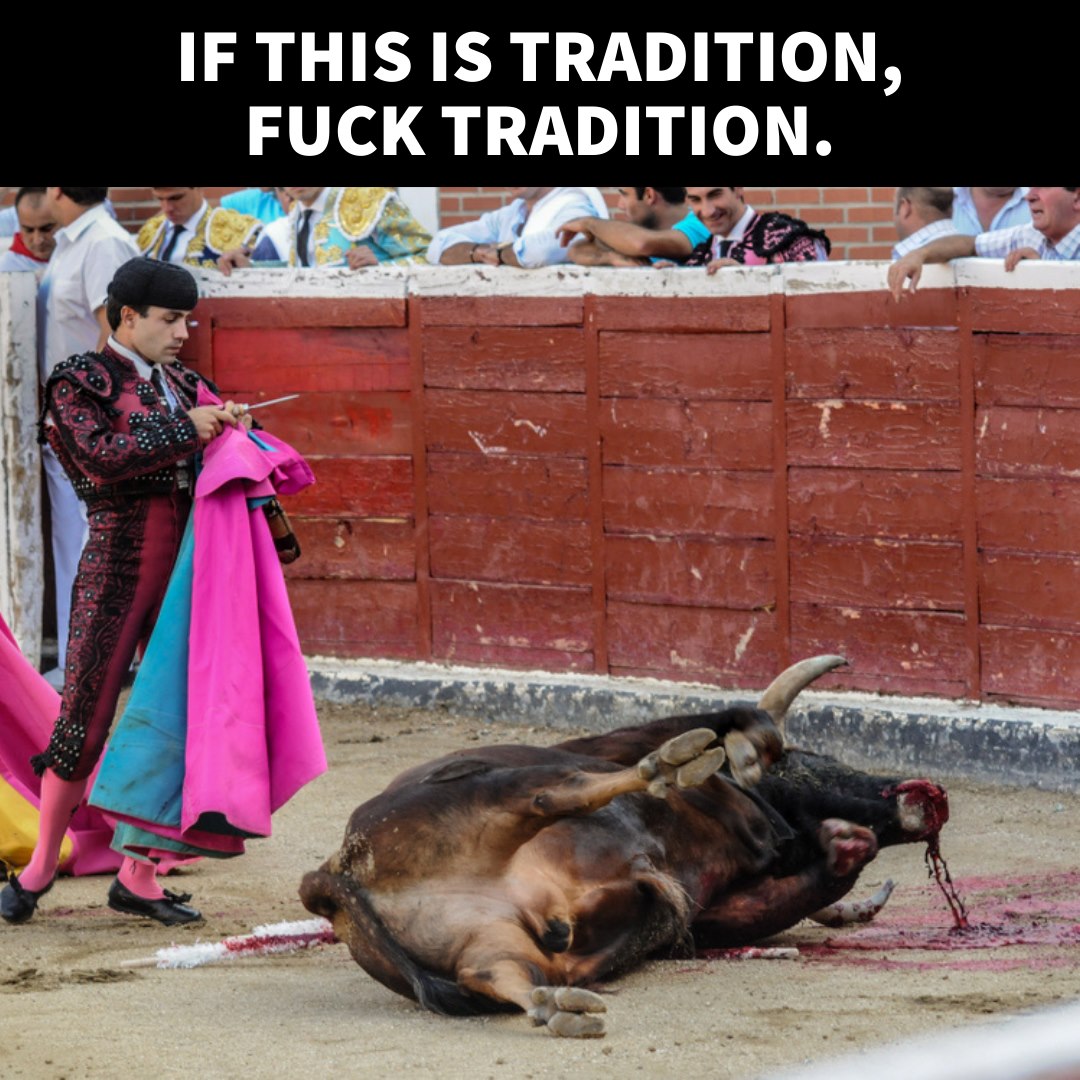
Time to evolve

don’t follow everything blindly
just because tradition dictates it for generations…
some traditions have expired
and above all those that involve violence and human supremacy

regards and good night, Venus

Animal suffering “Made in Italy”

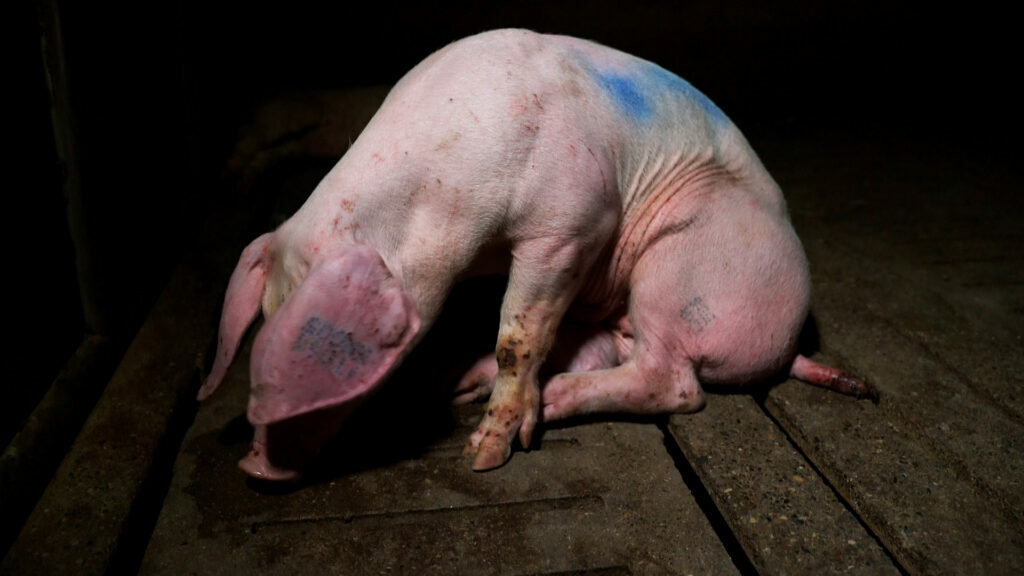
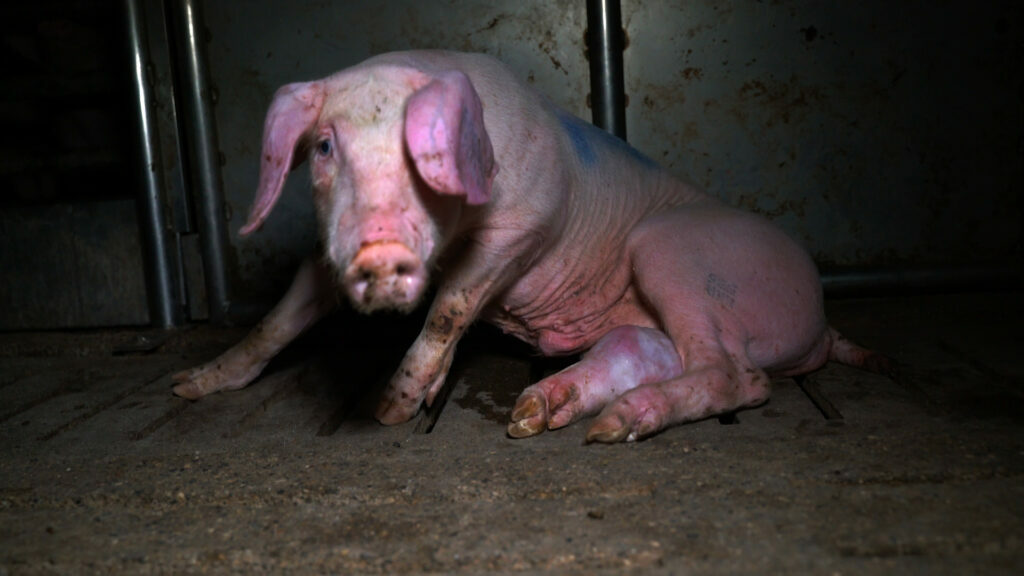
In collaboration with Italian television, Animal Equality has released a new investigation that reveals the cruel reality for pigs bred for meat in Northern Italy—a region that markets its products with the stamp of the “excellence of Made in Italy.”

THE DETAILS: In September 2020, Animal Equality and Italian journalist Roberta Spinelli visited a pig farm in Brescia, Italy, and documented terrible abuse and suffering—images in stark contrast from the idyllic picture of contented animals on green pastures often painted by the region’s producers.

The investigative team found:

-Pigs abandoned and left to die in corridors
-Bodies of dead pigs amongst the living
-Workers dragging pigs by their legs with ropes
-Animals with cysts and sores, unable to walk because of their open wounds
-Animals crammed together and forced to live in overcrowded, unsanitary conditions
-Pigs covered with feces and urine
-Cockroach, rat, and worm infestations
-Sewage not properly disposed of in a ditch adjacent to the farm and fields

WHAT WE’RE SAYING: “Thanks to this investigation, the horrors of Bascia’s pig farms are clearly revealed.

We can no longer turn our heads from the suffering to which these sentient beings are forced to endure—mistreatment that happens behind the closed doors of these polluting farms which are often beneficiaries of public funds.

We need more checks and balances for these places, and we need them now,” says Alice Trombetta, Executive Director of Animal Equality Italy.


For more…at https://worldanimalsvoice.com/2021/02/17/animal-suffering-made-in-italy/


And I mean…The horror situation in the farms is not new – from our experience, we can say that the situation has been this way for over 20 years – maybe it has gotten even worse.
Incidentally, and of course, all of this applies not only to pigs but also to cattle, etc., and an even greater “mess” can be observed with poultry.

In addition,  the (dismantling) personnel in a slaughterhouse, called dismantling columns (!), mostly from third countries, are usually housed in a way that could well be described as ‘barracked’!
What is shameful about this is that ‘politicians’ are surprised today and pretend that none of this was known!

Meat producers are simply criminals, nothing more and nothing less.
Are the beneficiaries of a corrupt system.

But the good fact is: each of us has a conscience, a large brain, empathy, and the ability to make decisions

If we use these wonderful properties, we can decide against animal exploitation, animal cruelty, and animal mass extermination.
Mentally, morally, socially healthy people with decency do not need such disgusting, fascist system structures.

My best regards to all, Venus

Las Palmas: cruelty to animals always stinks

Las Palmas: On Monday morning, residents of the island’s capital, Gran Canaria, noticed an unusual, strong smell of stables in the streets.
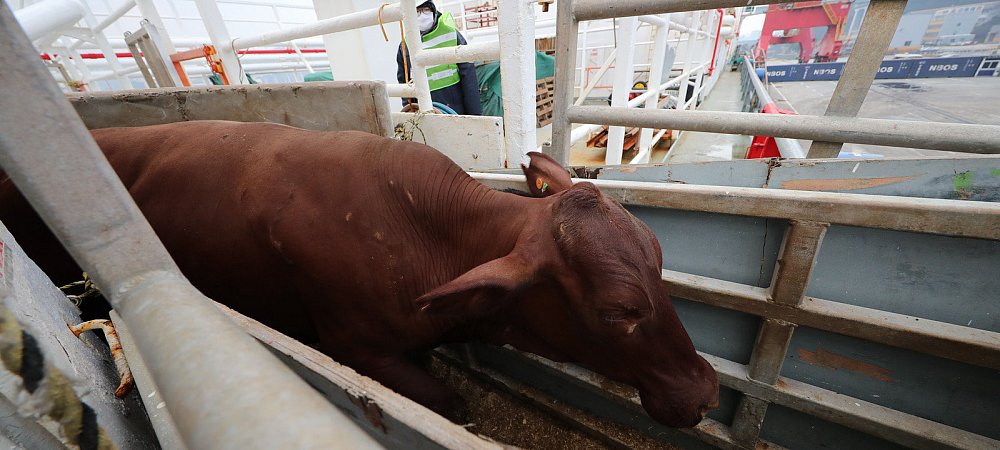
The cause: a freighter that is supposed to transport more than 16,000 cattle to Turkey.

As reported by the broadcaster Canarias7, among others, the freighter Bader III, which is supposed to bring the cattle from Uruguay to Turkey (!!!) made a planned stopover in the port of Las Palmas.

The ship, which sails under the flag of the Bahamas, has been sailing for several days.
The animals had to be supplied with feed and freshwater, and fuel had to be refueled. The wind from the south-east ensured that the smell of the stable spread through the city.
In the afternoon, Bader III, a ship around 200 meters long and 27 meters wide continued its voyage towards Iskenderun.

And I mean…The capital residents probably didn’t like the stench, but this stench will come more and more often, so those who can not stand this stench should stop eating animals.

Animal cruelty stinks too, but only for those who also keep their eyes open.

As soon as the 200-meter mobile coffin makes its way to Turkey with the 16,000 moribunds, every carnivore from Las Palmas can breathe a sigh of relief again, problem deleted.

The motto is also common nowadays: close your eyes, it will all pass

My best regards to all, Venus


UK: Over A Third Of Brits Now Avoid Animal Products After Watching David Attenborough’s Latest Film & Other Eco Docs.

Over A Third Of Brits Now Avoid Animal Products After Watching David Attenborough’s Latest Film & Other Eco Docs

App development and digital product company, 3 SIDED CUBE recently conducted a survey with over 2,000 people to provide insights into the public’s opinions and motivations with respect to sustainability and the data found that six in 10 Brits are thinking of switching to sustainability due to David Attenborough and over a third of Brits are avoiding animal products due to his recent film ‘A Life On Our Planet‘ as well as other documentaries like James The Game Changers, famously backed by James Cameron and Arnold Schwarzenegger.

Premiering on Netflix late last year, the WWF and Silverback Films co-produced documentary presents an important message from nonagenarian broadcaster and natural historian Attenborough that humans must make drastic changes to their diets in order to save the planet

In the trailer for ‘A Life On Our Planet’, Attenborough explains that the films aims to raise awareness among people about the rate at which global warming is happening and press upon the message that the time to act is now. “I had the most extraordinary life. It’s only now I appreciate how extraordinary. The living world is a unique and spectacular marvel. Yet, the way we humans live on earth is sending it into a decline. Human needs have overrun the world.”

Findings from the survey show that Attenborough is right at the top (59%) when it comes to encouraging consumers to be sustainable and shift to a plant-based diet. Over half of British consumers (51%) also feel pressure from wider society and four in 10 (40%) give young Swedish environmental activist Greta Thunberg credit for helping them switch to sustainable choices in their personal life.

Apart from Attenborough’s A Life On Our Planet documentary, data found that the 2018 documentary film about the benefits of plant-based eating for athletes, The Game Changersbacked by James Cameron and Arnold Schwarzenegger was also responsible for people in the U.K. to avoid animal products.

According to a report by the WWF, stopping animal meat consumption by 50% would not only reduce carbon emissions but also save 12,000 species per year as well as 1.72 million square miles of land. 

A majority of Brits (77%) understand the importance of changing their lifestyle to become greener with 73% of consumers agreeing that businesses too have a responsibility to minimize their environmental impact and 64% urging the government to frame a new legislation that will ensure that businesses give details about their environmental footprint on the products they’re offering.

In an interview with Plant Based News, 3 SIDED CUBE managing director Richard Strachan mentioned that with influential figures coming ahead to talk about sustainability, the general public is motivated to follow in their footsteps. “Thanks to influential public figures such as David Attenborough and Greta Thunberg, Brits are taking the climate crisis much more seriously now. Now is the time to come together and tackle the crisis wholeheartedly. It is not just up to governments; it is up to businesses and consumers as well.”

Data from the poll further found that 61% would like an app to help them make more sustainable buying decisions and 50% call for an app to calculate and understand their personal carbon footprint with more than half of respondents agreeing that technology can be vital for living a sustainable life.

Discussing how this new data will help them in the Ignite program, Strachan added: “These findings show a clear case for the use of technology, specifically apps, to boost sustainable behaviour change and environmental protection initiatives. The technological tools to help consumers be greener are available to us, we just need to start developing and using them as soon as possible. This is why we have launched Ignite. Through this technology, we can empower consumers, businesses and NGOs to help protect ecosystems, be smarter with energy usage, and reduce our carbon footprints. The Ignite program is wholly dedicated to bringing organisations together on these issues and making these apps a reality.”

Attenborough also released another documentaryExtinction: The Factsthat talks about mass biodiversity loss and the consequences that the world will face as a result. Over the course of the one-hour program, Attenborough takes viewers on a journey through scenes of destruction due to activities conducted by humans on Earth.

Another noteworthy mention in a list of sustainable films to watch is Craig Leeson’s documentary A Plastic Ocean and his upcoming The Last Glaciers, and you can check out his interview here where he shares his journey from writing to filmmaking as well as throwing light on the world’s most pressing issues and what can be done to protect the planet, and ultimately, save humankind. 

If you’re looking for an app to track your personal carbon footprint, you can check out Singapore-based startup Capture that has created an app that helps users keep track of their climate footprint from their everyday transportation choices, and offsetting their impact through forestry planting projects across the globe. 

And if you need an easier way to buy plant-based alternative products, check out this new mobile app FoodForage, which is developed to help vegans and individuals looking to buy plant-based alternative products and offers a feature where you can share your findings with the community.

Over A Third Of Brits Now Avoid Animal Products After Watching David Attenborough’s Latest Film & Other Eco Docs (greenqueen.com.hk)

USA: Beef Is ‘Killing The Planet’, Reads Major News Outlet.

Beef Is ‘Killing The Planet’, Reads Major News Outlet

‘If you want to make a simple change to your diet to protect the environment, there’s nothing you can do that comes anywhere close to forgoing beef’

Beef production in the US is harmful to the environment. And, it should be replaced more often with plant-based alternatives, an opinion piece in the Los Angeles Times read.

The journalist informed the news outlet’s readership of 1.3 million that switching to a more plant-based diet would make a ‘meaningful contribution’ to climate change.

Plant-based popularity

The article quoted research professor Gidon Eshel, who claimed more consumers are accepting plant-based alternatives.

This is in line with growing concerns for the environment, he said.

Eshel added: “If you want to make a simple change to your diet to protect the environment, there’s nothing you can do that comes anywhere close to forgoing beef.”

Americans are big beef consumers and that’s ‘not going to change any time soon’, the article continued. But, now that consumers bear witness to the climate crisis there is a ‘new urgency’ across the country.

Animal agriculture

The animal agriculture industry ‘appears to be trying to obfuscate’ the environmental impact of beef production, the article added.

A study backed by the US animal agriculture industry claimed otherwise. In it, consumers preferred animal produce over plant-based in economic terms.

The industry was ‘giving consumers permission to avoid dietary changes’. They do this by perceiving eating meat as not as serious as ‘pesky tree huggers might be saying’, the article claimed.

However, the article also included quotes from another researcher who claimed animal agriculture is not ‘the climate villain’ that most people think.

Other studies prove overwhelming evidence that animal agriculture is one of the leading producers of annual greenhouse gas emissions.

Climate change

“I won’t be a card-carrying vegan anytime soon.

“But, if replacing one burger a month with a plant-based alternative is all it takes to make a meaningful contribution to fighting climate change, yeah, I can do that.

“Besides, the way plant-based meat products have been steadily improving, it probably won’t be long before we can’t tell the difference anyhow”, the article concluded.

Beef Is ‘Killing The Planet’, Reads Major News Outlet | Plant Based News