Over the last few days (early February) we have collaborated with our good friends at Compassion In World Farming (UK) – https://www.ciwf.org.uk/ and also established very promising links with contacts at CIWF Italia (Italy) – https://www.ciwf.it/ to further actions on this issue. CIWF UK are currently running the campaign to End the Cage Age right across Europe. Please read more and see video footage at – https://www.ciwf.org.uk/our-campaigns/end-the-cage-age/
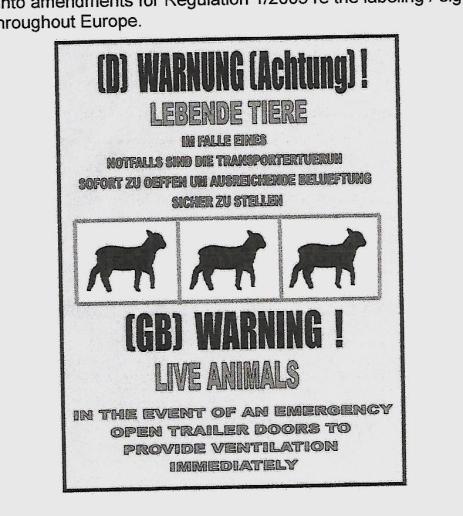
And so on the (German) subject of extending the pig boxes for 17 years:
As Venus has rightly written in communications today:
It is a first-class crime that these metal prisons are still allowed in a country like Germany, which – at least in theory – has anchored ‘animal welfare’ as a state goal in the Basic Law.
In the previous version of the Animal Welfare / Animal Husbandry Ordinance (1), Section 5 determines Section 24 (4)…is clear:
(Pig) Box stands must be designed so that:
– the pigs cannot injure themselves and
– Each pig can stand free, lie down and stretch its head and side members.
A total of three courts have already ruled that the sows must lie down in the crate and that the limbs must be able to stretch out on their side. Anytime and unhindered.
The legal regulation was so clear that the Magdeburg Administrative Court, the Higher Administrative Court of the State of Saxony-Anhalt and the Federal Administrative Court expressly approved this in the years 2014 to 2016.
Now the Federal Government, together with Agriculture Minister Julia Klöckner (CDU), wants to delete this part of the regulation, which provides that the sows in the crates may at least stretch their limbs and their heads in a lying position. Only in this way (by deletion) she can legalize her decision to keep these cages for another 15/17 years.
The German Minister’s proposal is really dangerous for different reasons:
– It would legalise the suffering of millions of German sows in narrow stalls for the next 15-17 years and to do that it would set a precedent, i.e. worsen existing legislation by deleting the national legislation paragraph saying that sows should stretch their legs. A very dangerous precedent, which could then be repeated on other issues.
– It could undermine ECI asks as Germany will soon hold the presidency of the EU.
As an EU ‘civilised’ nation; should Germany be attempting at all costs to improve its animal welfare, rather than taking steps back; as this proposal would ? – How are nations in the Far East expected to improve their welfare when Germany adopts this kind of negative stance ?
That’s what it’s about here.
The Federal Council should have voted on this (practically unlawful) extension on December 2, 2019 (i.e. approval would allow the crates for another 17 years).
The decision was postponed to February 14 2020, because we (in the animal welfare movement) protested and blessed Klöckner with petitions and demos and war over the Internet.
The decision of February 14th will be binding. How sad that this is the same date (14/2) when you should show love and respect – Valentines Day.
Many groups and citizens from all over the EU, and also other nations, are trying to make their voices heard about this very important issue before, and on 14th February.
In view of the 27th of January 2020, (a session of the German Agri Committee) the 27th was a ‘non-public one’ and little has been revealed after it.
What we know so far:
The Agri Committee seems to have made many amendments to the draft sow bill but has still approved it (it could have rejected it)
IMPORTANT Positive – But it also seems that the Land Sachsen Anhalt managed to have an ‘amendment’ approved which basically says that sows should be able to stretch their legs during the phase-out period!
Phase out period for sow stalls should have been shortened from 17 to 10 years- for farrowing crates no change.
So, point 2. Above (the Amendment) could potentially mean the end of the Minister’s proposal. Since the whole construction of her new regulation was based on making current sow stalls legal. And this can be done only by deleting the paragraph mentioning leg-stretching. The submitted Proposal changes this and says that sows should be able to stretch their legs during the phase-out period
It is getting legal and becoming a strong fight by both pro animal welfare advocates; and also the government who wish change. With the Point 2 issue above we (in the welfare movement) are hopeful of a positive end result; but actions will continue to the end. For the pigs, regardless of the result; their confinement will not end. – the ‘Eternal Treblinka’ policy.
CIWF and its partners from the ECI and Eurogroup coalitions will participate in a protest on the 14th in front of the Bundesrat, an action being coordinated by friends at Four Paws – https://www.four-paws.org/campaigns-topics/topics/farm-animals . They are also exploring additional actions.
So; whoever you are and wherever you are, if you want to help get part justice for the caged pigs then search the web and try to take part in written or physical protests. There is one final chance on 14/2 and it needs to be in the favour of the pigs that are suffering enough now as it is, let alone with this changed legislation.
Please keep up the fight and be a voice until then at least – there is very little time left.
Regards Mark, Venus (WAV) – Annamaria, Philip and all the crew at CIWF (UK and Italy).
Posted on February 3, 2020 by Serbian Animals Voice (SAV)
According to the UN, around 15,000 children under the age of five die every day.
According to a report by Unicef, the World Health Organization(WHO) and the World Bank, 5.6 million children died last year.
These children who die of hunger are practically murdered.
From whom?
From those who finance the dirty business of factory farming, from the Carnivores.
Because the countries of Third World sell their grain harves (500,000 tons per year) to the West, they feed the cattle of the Rich World, while their own children die of hunger in their parents’ arms.
15,000 children die every day. It’s about daily mass murder.
But nobody cares. All follow the media propaganda of the coronavirus!
The WHO is now calling for an international emergency because of 364 people who died of coronavirusin China!!!
The humanity is infested with the conscience – virus, but we have not yet found a remedy.
Please note the use of euphemistic terms and phrases such as “early disposal”, ie., killing infants; “it”, ie, a male, him. Please also note a serious lack of ethics or consideration for sentient beings and the “victimized” farmer who is unable to kill the calves herself but has no issue with hiring others to do so.
Please never forget that caring does not equal killing, if farmers cared for the animals, they would not exploit or kill them; there is no legitimate way to consider the well-being of an animal if you exploit and kill him/her. Terms such as “red tractor”, “high welfare”, “cage-free”, etc., are phrases meant to console human conscience, while animals are still exploited: subjected to confinement; inflicted with mutilations; separation of mother and child, causing extreme distress and psychological trauma; stealing of milk for other species; and abbreviated lives ended in violent death.
Dairy farms need female cows to produce milk but with little demand for male calves many farmers can’t afford to keep them beyond birth
The number of male calves being killed straight after birth is on the rise again, despite efforts by the dairy industry to end the practice known as ‘the dirty secret’.
A Guardian analysis shows that it can cost a farmer up to £30 per calf to sell it on for beef or veal, while early disposal costs just £9. A growing number of farmers feel compelled to take the latter option, with 95,000 killed on-farm in the most recent set of figures.
Dairy farms depend on female cows to produce milk, so when male calves are born, they are surplus to requirements and farmers are currently faced with few options.
They can immediately dispose of the calf, either by shooting it themselves or contracting a knackerman to do it [licensed slaughter business that will kill or collect dead farm animals]. They can sell the calf to be raised for veal or beef. Or they can sell the calf for live export. A few farms are experimenting with keeping the calves with the mothers for longer, but this is an expensive and rarely chosen option.
Early disposal is known as the ‘dirty secret’ by farmers, and none relish it. But keeping the calf to sell on to be raised for beef or veal means the farmer will have to rear them for two to four weeks to a good enough weight to interest buyers, at a typical cost of around £2 a day, with selling prices at market as low as £25-40. This doesn’t include extra costs such as getting the calf to market, registering its birth or veterinary bills.
In contrast, shooting the calf costs as little as £9, including the cost of the knackerman who will incinerate the body, or in some cases send them to kennels to be turned into dog food. Calves shot on farm cannot enter the human food chain and farmers can only dispose of calves themselves if they have a licensed incinerator.
Dairy farmers in the UK have been under extreme pressure to cut costs for the last two decades, with milk long used as a loss leader by supermarkets to draw shoppers into their stores. “Some farmers might do the maths and figure out after rearing, transport and time away from the farm it might not add up,” says Chris Dodds, from the Livestock Auctioneers’ Association (LAA).
The estimated 95,000 calves disposed on-farm represents 19% of the male dairy calves born, according to the most recent figures from the dairy industry body AHDB. In 2013 the number had fallen to 13% of male dairy calves born from a previous 21%. The exact numbers shot on farm is difficult to collate as farmers destroying calves within a few days of birth on farm do not need to register the birth – and neither does the company collecting and disposing of the animal.
One dairy farmer, who asked to remain anonymous, explained to the Guardian that she could not find a market for her male calves. “This year we’re shooting the Jersey crosses, because we’ve not got the space or money to keep them. It doesn’t make me feel good.
“We get the knackerman out to do it. I could never do it. I can’t even feed them if I know they are going to be dead in a few days.” She said the issue was still “kept under the carpet” by the wider food and farming industry and that consumer markets needed to be developed and farmers financially supported to rear the calves.
Another farmer told the Guardian: “I shoot black and white bull calves [the Holstein Friesian breed that predominates the dairy sector in the UK], but am still not hardened to like doing it. We have too many calves here. The space available on the farm [an 800-cow dairy herd] is only suitable for a maximum of 80. The less calves I have the better for the overall farm. This is a business and it has to be financially viable to make it worthwhile.”
A joint NGO, retailer, farming and government initiative to promote markets for bull calves, that closed in 2013, estimated more than £100m was being lost from calves killed before realising their economic worth.
The alternatives to early disposal are not simple. Half a million calves used to be exported from dairy farms via ferries to the continent, which has a larger market for veal. But public protests and industry pressure against animals being sent on long journeys in lorries and lower animal welfare standards in other countries has seen that outlet largely disappear. No calves were exported from England last year, although an estimated 5,000 calves did leave from Scotland and a further 20,000 from Northern Ireland.
Attempts to promote a market for high welfare British rosé veal, championed by the likes of Jamie Oliver and Jimmy Doherty, have met with mixed success with margins for farmers tight and consumer interest low. The RSPCA is calling for the food industry to be allowed to rename veal as rosé beef to end consumer misconception of it as a white meat produced from calves kept in crates and fed milk – a system that was banned in the UK in the early 1990s.
Another alternative is to rear the calves for longer and sell them as beef. One of the companies doing that is Buitelaar, set up in 2006 and which collected more than 35,000 calves from dairy farms across the UK last year. It arranges for them to be reared indoors on a mixed diet and then sold after 12-14 months through UK supermarkets, restaurants and fast food chains. But some breeds such as Jersey cows are not seen as suitable for this option.
There has been a steady growth in the use and effectiveness of sexed semen since the early 1990s, accounting for 18% of total semen sales in 2017. It increases costs for farmers but can reduce the proportion of male calves being born to less than 10%.
Supermarkets could play an important role in reforming the situation and providing a market for meat from bull calves. Tesco, Aldi, Iceland, Lidl, the Co-op and Asda do not ban their milk suppliers from shooting bull calves and it is not outlawed under organic standards. But some of the large chains – the Co-op, Morrisons, Sainsburys and Waitrose – have launched schemes, in conjunction with beef companies such as ABP, Buitelaar and Dunbia, to collect calves and ensure they are reared rather than destroyed.
The National Farmers’ Union (NFU) warns that post-Brexit trade deals could make it harder for farmers to find a market for male calves. “A trade deal that allows cheap beef from countries with lower standards of production will most definitely damage many of the positive initiatives that have been developed over recent years to utilise dairy bull calf beef and veal within the UK market,” said NFU dairy advisor Siân Davies.
A small number of dairy farmers are experimenting with trying to make more use of the bull calves. David Finlay, who runs Cream O’Galloway, one of the UK’s largest “ethical” dairy farms in southwest Scotland, keeps his male and female calves with their mothers for the first five months. The male calves are then reared separately before being sold to a veal producer at eight months.
He loses a large proportion of the milk produced by the female cows, but says his use of a dual purpose breeds of cows (good for milk and meat) means he gains a better market price for the animals. “The message coming to farmers from their peers and the industry is still to chase litres at all costs. But if you are chasing milk there will be a cost in terms of bull calves.”
Take PETA’s Cruelty-Free Shopping Guide along with you next time you head to the store! The handy guide will help you find humane products at a glance. Order a FREE copyHERE
Searching for Cruelty-Free Cosmetics, Personal-Care Products, Vegan Products, or more? Click HERE to search.
Want to do more than go vegan? Help others to do so! Click below for nominal, or no, fees to vegan literature that you can use to convince others that veganism is the only compassionate route to being an animal friend:
Posted on February 2, 2020 by Serbian Animals Voice (SAV)
Canada faces the largest tar sand mine ever. For them, 292 km² of forest and wetlands would be cleared or polluted. The extraction of oil would destroy the habitat of caribou and bears, and the Wood Buffalo National Park is in danger. Prime Minister Trudeau makes decisions at all times – he must stop the catastrophe now!
In parts of Alberta it already looks like Mordor. Open-cast mines are excavated in open-cast mines; previously forest and nature were destroyed. In artificial lakes there is water contaminated with heavy metals. Reservoirs and refineries emit toxic fumes.
The new project called Frontier Tar Sand Mineis an ecological monster, bigger than all previous ones. It hardly spares an environmental mess. Teck Resources plans to invest 13 billion euros. From 2026, 260,000 barrels of oil are to be extracted every day – for 40 years!!
The oil from tar sand is the most climate-damaging in the world. It is not normal crude oil, but tarsand, also known as oil sand, a mixture of sand, water and heavy crude oil.
Far larger amounts of energy are needed for extraction and processing than for conventional petroleum. To protect the climate, the oil must remain in the ground – the billion-dollar project would make the phasing out of fossil fuels an illusion.
Pipelines are under construction to export the viscous oil – they contain ecological explosives. The Trans Mountain Pipelineleads over the Rocky Mountains on British Columbia’s Pacific coast.Leaks are likely, if an oil tanker breaks down, threatens to contaminate the coast and the habitat of rare orcas.
The mine project also alerts Unesco. The guardians of the World Heritage Sites see Wood Buffalo National Park at the mouth of the Athabasca River in danger. The river is already polluted; now his condition could get worse.
After a public hearing, an expert report warned of the environmental consequences. 3,000 hectares of old, original forests and 14,000 hectares of wetlands would be completely destroyed.
The population also suffers from environmental degradation. But the rights of the indigenous people are violated.
Canada is planning several large pipelines for the transportation of the crude oil.
The Trans Mountain Expansion Project has already been approved and is supported by Prime Minister Justin Trudeau. He even bought the pipeline connecting Alberta’s oil fields to the Pacific coast to drive expansion.
However, the provincial government of British Columbia is trying to prevent the construction from being imposed by environmental regulations.
The Enbridge Line 3 pipeline has also already been approved. It leads south to the United States. The KeystoneXL pipeline, which also connects Canada’s tar sand fields to the United States, is intended to pump oil to refineries in Texas over a distance of 2,700 kilometers.
The petroleum economy also requires a pipeline to the east – for the export of tar sand oil to Europe. However, the TransCanada group buried its Energy East project on the Atlantic coast at the end of 2017.
The company has thus bowed to public pressure.
Aerial view of Suncor Millennium tar sands mining operations north of Fort McMurray.
Tar sand must stay in the ground! Please sign and share the Petition:
My comment: The Canadian province of Alberta is de facto an oil state: After Saudi Arabia and Venezuela, the world’s third largest crude oil reserves are stored here.
Canada already produces today as much oil as Kuwait. Soon it will be twice as much. And Canada is already the largest crude oil supplier in the USA.
The oil companies get everything they want from politics. The free market and oil income outweigh all other factors.
The oil has to be extracted from the tar sands in an energy-intensive manner and with great interventions in nature. This makes extraction complicated and expensive.
But Canada still thinks the effort is worth it: It is estimated that the government and the provinces will generate revenues of just under $ 80 billion between 2012 and 2035.
What does that have to do with Germany and the EU?
A lot of!
In January 2017, the European Union voted for the trade agreement with Canada and allowed more Canadian oil (tar sands, oil sands) to be imported from Canada.
CETA: Dirty oil has been given a clean label.
Since December 2014, the energy source, which comes mainly from Alberta in Canada, has no longer been classified as environmentally harmful by the European Union.
‘”Why don’t everyone protest today? The potential health effects of ecoterrorism for profit and money are enormous and threaten all of us – from water and soil poisoning to the effects of a warming global climate on public health -The effects will soon be devastating. “
That was what an older protester told me at a demo against Glyphosate years ago.
And he was right.
Posted on February 2, 2020 by Serbian Animals Voice (SAV)
Summary: We request from Prime Minister Ramush Haradinaj, AUVK, and Kosovo Police to stop this cruel act once and for ever and to instruct all police forces to take action against the offenders and the abuse of dogs for fights.
Personal story: I am starting this petition to stop the sick blood sport of dog fighting in Kosovo and to close all the dog breeding kennels where dogs are bred especially for dog fights.
Dogfights are taking place every day in Kosovo.
11. Mai 2019 — This is done by teenagers!
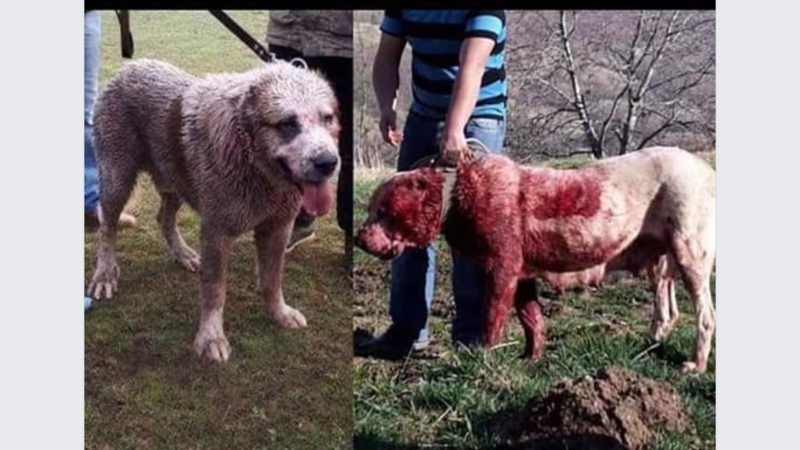
In Rahovec Kosovo just recently in January 2019 two dogs were forced to fight each other until one of the dogs died from bleeding injuries. I have also come across people who have made dog fighting an online business.
They breed dogs especially for dogfighting and they advertise them and sell them via Facebook.
The biggest one is in Prizren KosovoFighting dogs are kept isolated from other dogs and most people, so they spend most of their lives on short, heavy chains.
The conditioning of fighting dogs may make use of a variety of legal and illegal drugs, including anabolic steroids to enhance muscle mass and encourage aggressiveness. Narcotic drugs may also be used to increase the dogs’ aggression, increase reactivity and mask pain or fear during a fight. Sparring comes into play:
Sparring consists of using a dog as practice for a fighter dog.
Many of the dogs used in sparring are stolen from dog kennels and shelters or even from the same street.
Fighting dogs may have their ears cropped and tails docked close to their bodies. Fighters usually perform this cropping/docking themselves using crude and inhumane techniques.
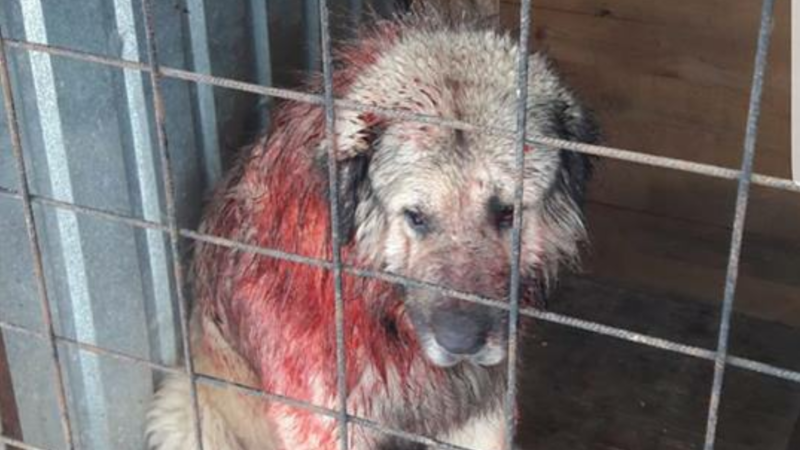
Dogs forced into fighting suffer terrible injuries, both from the fights and at the hands of their vicious ‘owners’. Most will ultimately be killed in the ring or die soon after from their injuries.
Those who can no longer fight are often brutally dispatched.
This barbaric practice must be stopped.Those that take place in dog fighting are generally involved in other illegal behaviors.
Dog fighting is barbaric and cannot be allowed to be part of a modern society. Instead of tolerating such cruel acts which have impacts on human minds and their willingness to accept killings of living existences, we demand the Prime Minister to adapt a law for animal protection, putting every cruelty against animals and every offence under severe punishment.
Will you join me today by signin this petition to help bring dog fighters to justice?
The issue: Dog fighting is barbaric and we cannot allow it to be part of modern society.
Take action! Dogfighting is the worst thing to happen to dogs. It’s brutal. The people who do this are disgusting and should be ashamed of what they’re doing. Dogs are supposed to be loved not killed. I care about all dogs and they deserve to be treated with love and respect.
Please join me by signing my petition so that all dogs in Kosova are treated with love and respect they deserve.
My comment:Kosovo is a republic in south-eastern Europe on the western part of the Balkan Peninsula.It was formerly part of the Socialist Federal Republic of Yugoslavia and has been a part of the Republic of Serbia since 2003.
The Republic of Kosovo is considered a stabilized de facto – regime.
On February 17, 2008, the Parliament proclaimed the independence of the territory. The country’s status under international law is controversial,114 of the 193 member states of the United Nations recognize the Republic of Kosovo as independent.
And now I want to further explain the sentence of the article… “Those that take place in dog fighting are generally involved in other illegal behaviors”:
– According to the corruption index, Kosovo is at the top with Cambodia and Cameroon, and the mafia washes its dirty money there – all under the eyes of the UN, which wanted to build the mini-state according to its ideas.
– According to the U.S. Department of State, Kosovo and its neighboring regions are one of the most important European drug transit routes for heroin from Afghanistan to Western Europe. In the meantime, up to 80 percent of the heroin smuggled into Western Europe comes from Kosovo.
– In particular, the country’s prime minister, Ramush Haradinaj, has been accused of being linked to the drug trade. Because the governing members of the government generally maintain a closeness to organized crime, mafia-like structures form the basis of the leadership areas in the political landscape.
A high-ranking BND employee spoke of Kosovo as a country in which “organized crime is the form of government”(BND = Bundesnachrichtendienst, one of the three German intelligence agencies).
– Terrible crimes against the civilian population of Kosovo remain unsolved years later. Kidnappings, murders and barbaric removal of organs in the late 1990s and early 2000s to an extent unprecedented for Europe were practically everyday.
– Freedom of the press has even deteriorated in recent years, according to the International Research & Exchanges Board (IREX). This puts Kosovo behind all of its neighboring countries except Albania.
Of course there are dog fights all over the world; in Germany they are forbidden but they still take place illegally here.
I have described the political situation in Kosovo in order to emphasize the courage and strength of animal rights activists if they still want to fight against this mafia under such prevailing conditions.
We will help them and sign the petition, which now has almost 200,000 signatures.
In addition to political measures as well as petitions, demos … the commitment of everyone is important:
keep an eye out, it could be a dogfighting cartel in an inner-city warehouse next to your office or on a rural farm in your quiet village.
Show civil courage, keep your eyes and ears open and inform the police or the veterinary office, even if something seems suspicious to you.
The criminals act because the inactive enable them.