EU: COVID-19 first detected in European mink farms a year ago – NGOs and the public urge the EU to act.

COVID-19 first detected in European mink farms a year ago – NGOs and the public urge the EU to act

13 April 2021

Press Release

12 months after the SARS-CoV-2 virus was first detected in animals in a mink farm in the Netherlands, the EU has failed to take decisive action to shut down these coronavirus reservoirs despite huge public support for a ban on fur farming.

In recent months, almost 500.000 people have signed a petition calling for an end to the cruel and deadly fur trade. A new survey also shows strong support for emergency EU action to put an end to fur farming and breeding, to protect the health of EU citizens and animals.

Throughout the past year, there have been outbreaks of SARS-CoV-2 (the virus that causes COVID-19 to humans) on more than 400 mink farms in ten EU Member States, with millions of animals affected. Given the living conditions on fur farms, once a single animal has been infected, the virus spreads quickly. It soon became evident that the SARS-CoV-2 virus could not only spread between farmed mink and mutate, but can also be transmitted back to humans and wildlife

Fur farms pose a threat to public health and have the potential to become reservoirs for the coronavirus. A joint assessment from the World Health Organization (WHO ), the World Organisation for Animal Health (OIE) and the Food and Agriculture Organization (FAO) warned that there is a significant risk of COVID-19 being transmitted from mink to humans. Yet, despite this, the European Commission has remained mostly inactive. 

“To date, the European Commission has only required the monitoring and reporting of COVID-19 cases on fur farms. It recommends the implementation of stricter biosecurity measures, including regular COVID-19 testing for fur farm employees and random sample testing of mink, as well as the testing of dead animals”, says Dr Joanna Swabe from Humane Society International/Europe, “These measures are, however, insufficient to protect public health. The only way to prevent the coronavirus spreading from mink to humans is to end mink farming in the Member States where this cruel practice is still legal”.

Not only can COVID-19 be spread from mink to humans, but Joh Vinding from the Fur Free Alliance explains that “With animals being kept in such close confinement under inherently poor welfare conditions, fur farms are the perfect breeding grounds for infectious disease. Viruses can also mutate. Indeed, mutations of the SARS-CoV-2 that occurred in mink on Danish mink farms were already transmitted to humans. Researchers feared that such mutations could reduce the efficacy of vaccines and significantly delay success in our battle against COVID-19”.

A recent opinion poll, commissioned by Four Paws and Eurogroup for Animals to YouGov, conducted in France, Italy, Bulgaria, Hungary, Estonia and Slovakia (1), has shown that EU citizens are in favour of emergency EU action to end fur farming and breeding, to protect their health.

The survey results show that the majority support our calls for urgent action. With such strong public support and the health risks associated with allowing fur farming to continue unabated, the European Commission must act immediately and urge Member States to halt fur production.

Reineke Hameleers, CEO, Eurogroup for Animals. 

In Italy, a country which, while having suspended mink fur farming for 2021, still has operational farms, 77% of the adult population are in favour of the adoption of emergency measures to end fur farming and breeding. This illustrates that by allowing fur production to continue, the European Commission is more concerned with protecting the economic interests of a small group of stakeholders at the expense of the health of all European citizens. 

“With the entry into force of the Animal Health Law on 21st April, the European Commission has a prime opportunity to take action against fur farming and eliminate this threat to human health once and for all”, says Pierre Sultana from FOUR PAWS Europe.

To draw attention to the issue, inform the public and reach out to policymakers, the Fur Free Alliance, Eurogroup for Animals and their members, together with FOUR PAWS and Humane Society International are holding a joint day of online action on 14th April.

ENDS

Notes


1. All figures, unless otherwise stated, are from YouGov Plc. This global study was conducted online between 25th March – 1st April 2021 in 6 markets. The sample in this market report comprised a nationally representative sample of 5,098 adults aged 18 years and older in the following countries: France (n=1,047), Italy (n=1,048), Slovakia (n=501), Hungary (n=1,001), Bulgaria (n=1,000) and Estonia (n=501).
 

Opinion poll full results
The Stop Deadly Fur petition 
Scientific statement on public health risks from SARS-CoV-2 and the intensive rearing of mink
Eliminating a potential reservoir of SARS-CoV-2 virus on EU fur farms
 

Eurogroup for Animals represents 70 animal advocacy organisations in 26 EU Member States, Switzerland, Serbia, Norway, Australia and the USA. Since its inception in 1980, the organisation has succeeded in encouraging the EU to adopt higher legal standards for animal protection. Eurogroup for Animals reflects public opinion through its membership organisations’ affiliations across the Union, and has both the scientific and technical expertise to provide authoritative advice on issues relating to animal welfare. 

The Fur Free Alliance exists to end the exploitation and killing of animals for fur. The Alliance is an international coalition that consists of more than 50 animal protection organisations, based in more than 35 countries around the world, working collaboratively to bring about the end of fur farming and fur trapping, using wholly peaceful means.

FOUR PAWS is the global animal welfare organisation for animals under direct human influence, which reveals suffering, rescues animals in need and protects them. Founded in 1988 in Vienna by Heli Dungler, the organisation advocates for a world where humans treat animals with respect, empathy and understanding. FOUR PAWS’ sustainable campaigns and projects focus on companion animals including stray dogs and cats, farm animals and wild animals – such as bears, big cats, orangutans and elephants – kept in inappropriate conditions as well as in disaster and conflict zones. With offices in Australia, Austria, Belgium, Bulgaria, Germany, Kosovo, the Netherlands, Switzerland, South Africa, Thailand, Ukraine, Hungary, the UK, the USA and Vietnam as well as sanctuaries for rescued animals in twelve countries, FOUR PAWS provides rapid help and long-term solutions.

With a presence in more than 50 countries, Humane Society International works around the globe to promote the human-animal bond, rescue and protect dogs and cats, improve farm animal welfare, protect wildlife, promote animal-free testing and research, respond to natural disasters and confront cruelty to animals in all of its forms.

https://www.eurogroupforanimals.org/news/covid-19-first-detected-european-mink-farms-year-ago-ngos-and-public-urge-eu-act

“Compassion is the basis of all morals” (A. Schopenhauer)

Speciesism demands a strict separation between humans and animals. He demands special solidarity with all members of our species.

He assumes that all people have the same value (egalitarianism).

In our society, this is even called a humanistic attitude.
The result is the categorical devaluation of all non-human living beings.

This violent ideology is arbitrary and unfounded like the attitude of a despot who believes that his special power over other living beings also gives him special rights.

All species must have the right to life, freedom, integrity, and protection. Only then is it a right and not a privilege of the ruler.

Fight for basic rights for all feeling, thinking individuals.

regards and good night, Venus


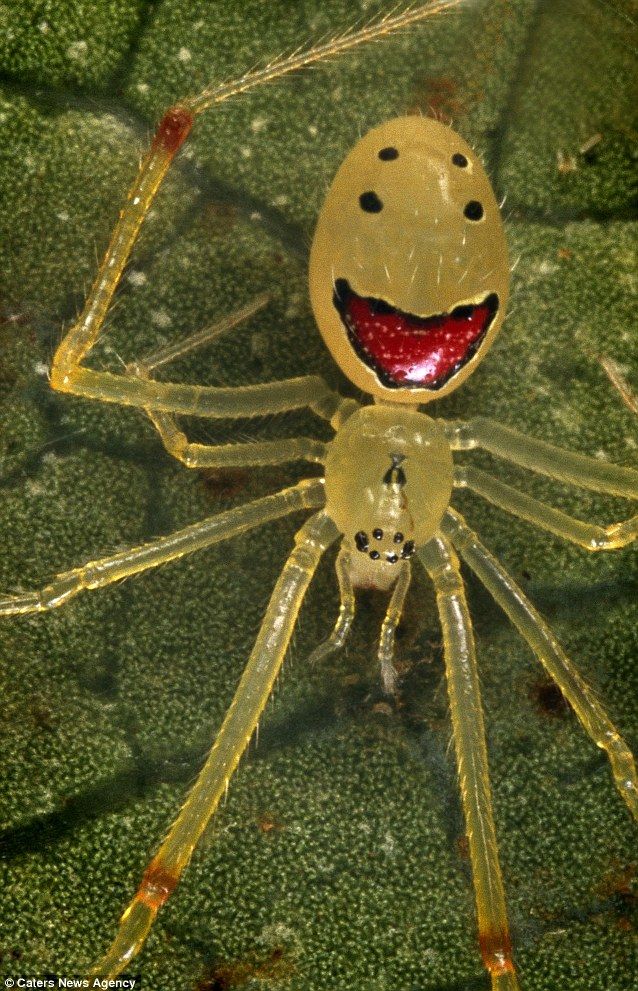
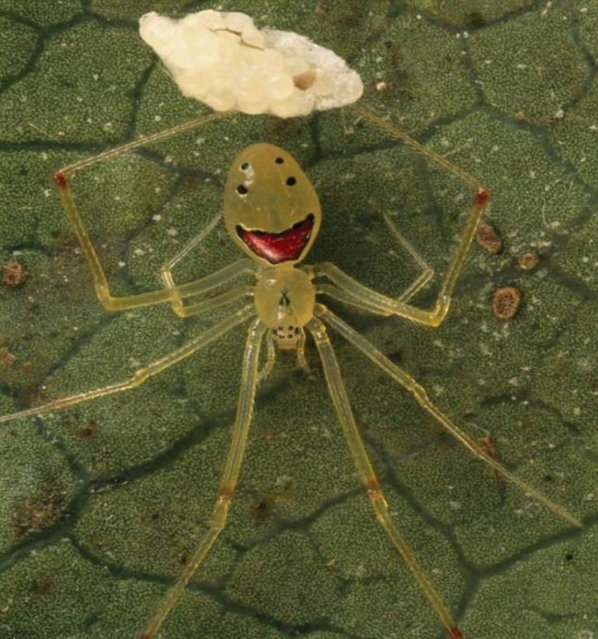
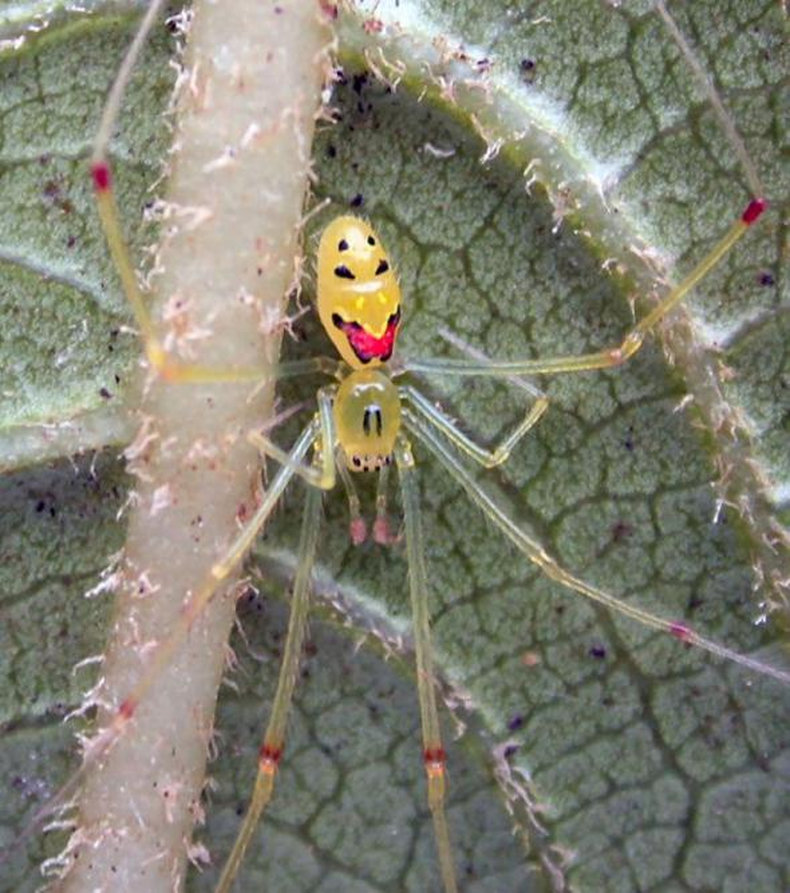
the happy face spider from Hawaii

Theridion grallator is a species of spider in the genus Theridion that is found exclusively in Hawaii.
The underside is light yellow and somewhat transparent.

Depending on the food consumed, it can be red, black, and white in color.
T. grallator gets its name from its long, spindly legs (grallator meaning “stilt-walker” in Latin).

It gets the nickname happy-face spider because of the yellow color on most of the body and the patterns on the abdomen.
The pattern is similar to a smiling face.
Therefore the common English name is also “happy face spider”.

This polymorphism could counteract the applicability of their hunters’ prey schemes.
The females live as solitary animals under leaves in forests.

They defend their egg balls aggressively and look after the brood for a while after they hatch.

It can happen that some young animals of the brood are taken in by foster mothers.

They mostly live predatorily and feed mainly on captured arthropods, especially insects that they suck out.
For this purpose, the prey animals are first dissolved with an enzyme-containing digestive juice, which the spider brings into its victim, which has been killed with its jaw claws.

It is absolutely harmless to humans.
Despite its restricted habitat, the Theridion Grallator is not considered endangered according to the IUCN

Text: Together for the animals

Not all happy-face spiders have such striking markings, and some are nearly all orange or all blue.
The Hawaiian name is nananana makakiʻi (face-patterned spider).

In addition to the variety of color polymorphisms present in T. grallator, this spider also demonstrates the interesting quality of diet-induced color change, in which its appearance temporarily changes as it metabolizes various food items.

T. grallator spiders do not utilize webs to capture prey, so they do not follow the sit-and-wait method of web-building spiders. Instead, they will forage freely, often traveling to nearby leaves to capture insects.

During prey capture, T. grallator spiders use their silk.
Common prey include Dolichopodidae and Drosophilidae.

A very likable animal and a splendid specimen of the genus!

My best regards to all, Venus


French hunter schizophrenia

⚠ HARD IMAGES posted on Instagram by a young hunter (since deleted).

https://fb.watch/4SYd73yQAa/

Instead of killing the boar, the hunter lets the dogs come to massacre him alive
We call this sadistic cruelty and is an indication of who has what intellectual level within the hunters…

According to this young man, who presents himself as a high school student in Gironde, “the boar is dead but is still moving because of the nerves”.

Lie or complete ignorance?
We’d say both because hunters aren’t just professional killers; they are professional liars too.

Be that as it may, the hunting lobby is sticking to the trivialization of cruelty among young people:

The minimum age for obtaining a hunting license in France is 16 years (15 years for the accompanying person with a license).

Hunting is a popular sport in France: 1.3 million hunters enjoy great freedom here. They can hunt almost anywhere and during the hunting season on all days of the week.

Hunting accidents, including fatal ones, are one of them.

Thierry Coste | Bild: BR

Thierry Coste is arguably the most influential French hunter. He is a political spokesman for the French Hunters Association.

Coste is in regular contact with President Macron because for politicians Coste is a powerful man who knows how the French think in the country.
The hunt is a national good for them.

His political conviction is: “In the past, hunting was a privilege of the nobles, but the French fought for the right to hunt during the revolution.
Everyone has been allowed to hunt since the French Revolution. With us, hunting is not a sport for the rich. It’s democratic. Hunting is a thing of the people. “

And we say: Hunting is and remains murder!

Anyone who operates the murder of a defenseless animal as “sport”, “hobby”, “nature conservation”, “species protection”, “epidemic protection” or “tradition” does not deserve to have their own rights.

My best regards to all, Venus


Elon Musk and the brave new dictatorship of Neuralink

Animal Trials, Exploitation, and Planted microchips

Elon Musk, the large entrepreneur, visionary, billionaire, and man with 3 citizenships originally from South Africa is known as the co-founder of Pay Pal, Space X, and Tesla.

He dreams of manned Mars flights and of sending people around the world through suction tunnels at lightning speed.

His achievements caused a sensation, but as always, not all that glitters is gold: behind the scenes of his work, animals are tortured and exploited in the name of an unholy science.

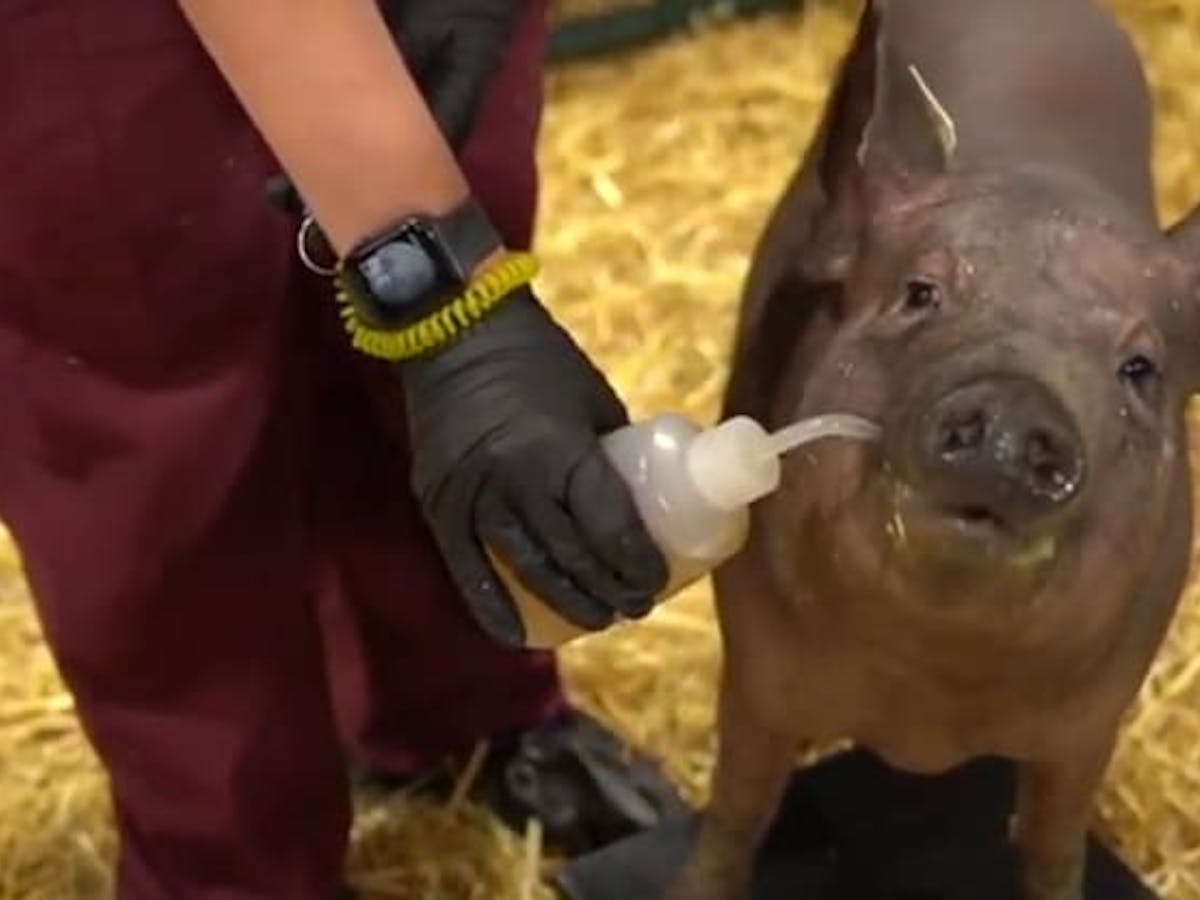
In 2020, the multi-billionaire introduced Gertrude to the world on August 28th: ​​one of many pigs who were exploited, coerced, and tortured for his megalomaniac ideas.

Gertrude was the result of his project for the Neuralink company, which is also owned by the cold-hearted Croesus.

Neuralink put a chip in Gertrude the pig's brain. It might be useful one day

After a few attempts, coin-sized computer chips were implanted in her brain and her pitiable, bristly fellow sufferers.
These were supposed to track the animals’ brain waves.

Realizing that this cruelty to animals will bring animal rights activists worldwide to the barricades, Musk wanted to cover up his crimes with a hypocritical “animal welfare coat”, but the shot backfired – an Elon Musk can do with all of us empathic animal rights activists do not deceive his wealth.

What he does in the name of science is flawless cruelty to animals.
His animal experiments only demonstrate his arrogance and the lack of respect for fellow creatures.

Continue reading

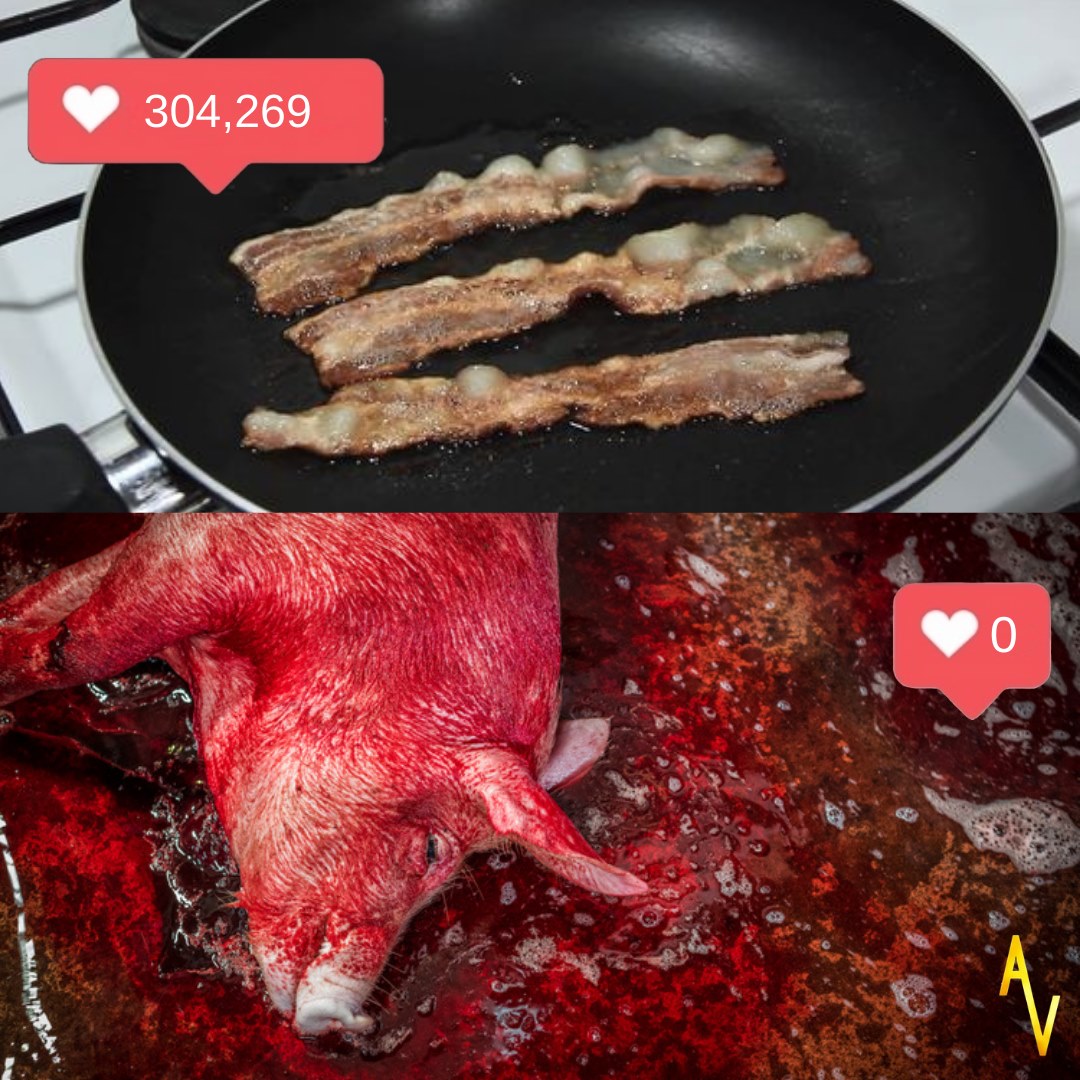
Likes and Truth


Non-vegans love the finished products comprised of another being’s flesh, but are reluctant to see just how that flesh came to be on their plates.⁠

Personal pleasure seems to override people’s morals, and those of us who are vegan know this all too well.⁠

⁠There’s a reason why seeing an innocent being hung up, bleeding from their neck makes you uncomfortable, and that’s because, deep down, you know it’s not OK.⁠

The majority of us were not born vegan – we made that choice because we connected the dots that are deliberately hidden with the insanely powerful meat, dairy, and egg propaganda, engineered by an industry that has successfully duped the public for centuries.

Anonymous for the Voiceless

Regards and good night, Venus


Animal shelter ALBA- Berlin/ Bosnia=a crime syndicat

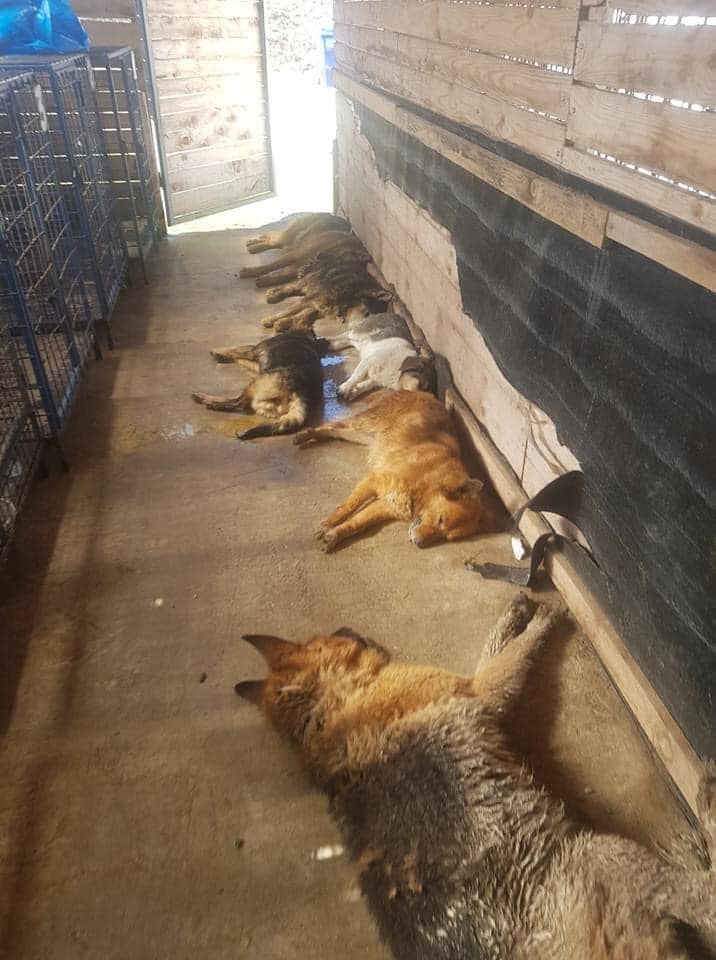
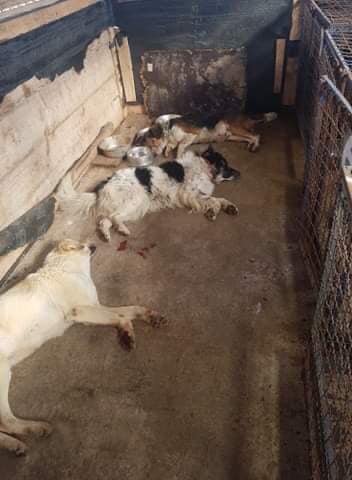
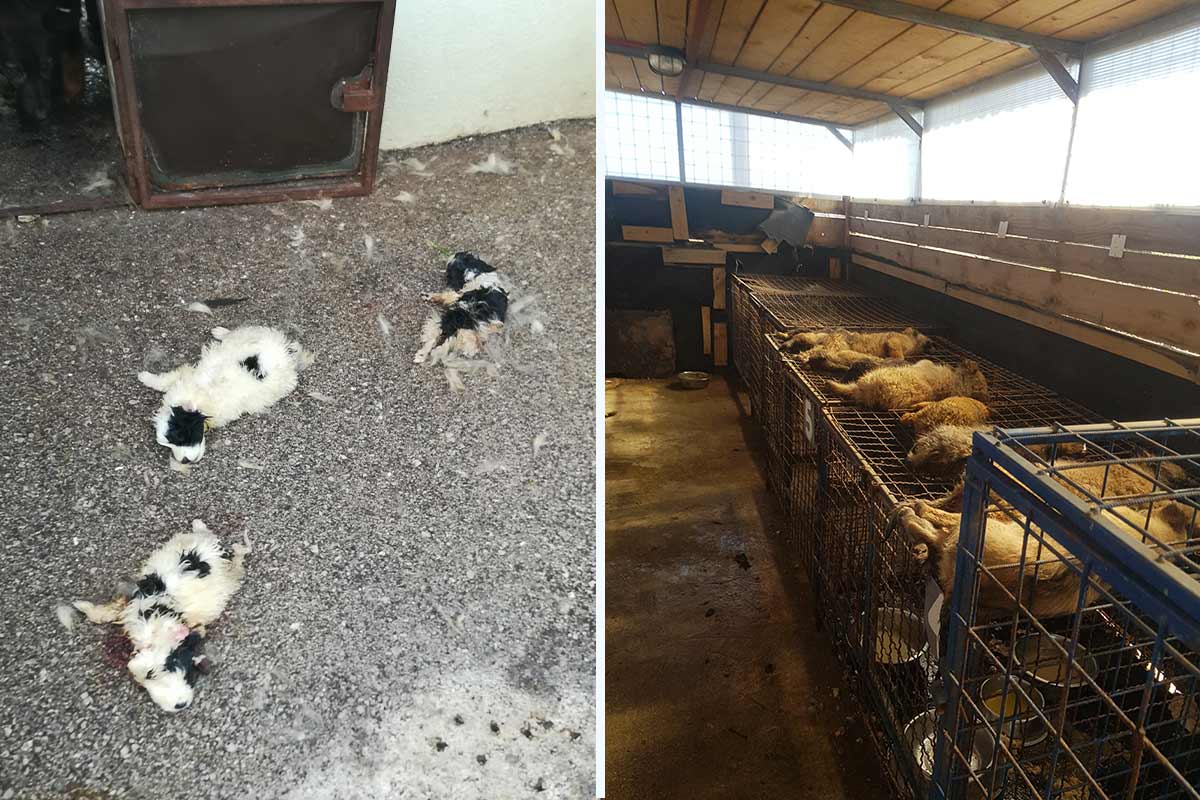
For a few days, gruesome pictures of dead dogs have been circulating on social media in the so-called quarantine station of the shelter for abandoned animals in Stranjanin, which is managed by 𝗝𝗞𝗣 𝗔𝗟𝗕𝗔 𝗭𝗲𝗻𝗶𝗰𝗮 (Bosnia and Herzegovina).

ALBA Zenica is a location of ALBA Berlin GmbH.

In autumn last year, employees at the ALBA Zenica animal shelter in Bosnia and Herzegovina published shocking photos and videos.
The disturbing recordings document the daily suffering of the animals in narrow, dirty cages and the barbaric, massive killing of dogs in the animal shelter.

In recent months, PETA Germany has been in close contact with the informants and Bosnian-Herzegovinian animal rights activists who brought these atrocities to the public.

According to information available to PETA, the ALBA Group Berlin has been financing an animal shelter of the subsidiary Alba D.O.O. since January 2017. (Alba Ltd.) in Zenica, Bosnia, and Herzegovina.

The shelter is owned by the city of Zenica.

As the leaked photo and video material show, the dogs in this facility are neglected and tortured, which is a clear violation of the regulation on the operation of animal shelters.

The images show the rotting bodies of deceased puppies, dogs with sad eyes that are vegetating in their own feces and urine, dirty, empty bowls.

One-shot shows a mother dog with her babies: the dogs are locked in a tiny cage, stacked on top of each other so that they cannot move or stretch out.

The material also shows photos of emaciated and already deceased dogs that are scattered in the rain-soaked area.

The more wind is made about it, the more the pressure on ALBA Zenica and the city administration Zenica is increased so that this comes to an end.

For more…at https://worldanimalsvoice.com/2021/04/13/animal-shelter-alba-berlin-bosniaa-crime-syndicat/


And I mean…We remember the animal catcher business in Romania.
As long as there are subsidies from the EU for these cruel shelters, the crimes will not stop either.

I translated the text of a third petition, which I thought was great and I agree with it.

“It has to stop! Hell for dogs! Zenica- Bosnia, and Herzegovina! EU!

No money! My tax money is not there to kill! They cheat. Sterilization / castration. No! Kill! For the dog catcher, there is 50 € per animal!

The photos above show the illegal mass killing of dogs and PUPPIES in an animal shelter run by ALBA Zenica, which is carried out regularly. Zenica uses the method of regular killing to make room for new dogs. New dogs, give money from the EU.

The authenticity of the photos was confirmed by the veterinary inspection of Zenica-Doboj Canton.

It’s not just in Zenica. Many animal shelters take the money for themselves. And let the dogs starve to death miserably. The syringe is also too expensive. Or they are brutally beaten to death.

The Third Petition: https://www.change.org/p/alba-berlin-gmbh-illegale-t%C3%B6tung-streuner-alba-zenica

My best regards to all, Venus