Ecuador Sets Major Rainforest and Climate Protection Precedent


EI PRESS/SOCIAL MEDIA RELEASE
VICTORY: Ecuador Sets Major Rainforest and Climate Protection Precedent

– It is reported Ecuador will be compensated for leaving oil reserves in Yasuni National Park untouched. This is a major victory for Ecuador, the rainforest movement, and Ecological Internet – who was the first to campaign internationally on the issue.

July 31, 2010
From Earth’s Newsdesk and the Rainforest Portal, projects of Ecological Internet (EI)
http://www.ecoearth.info/newsdesk/ | http://www.rainforestportal.org/
 
Ecuador’s government announced today it has reached a deal with the United Nations Development Program under which donor countries will compensate Quito for leaving oil reserves untouched in a large primary rainforest filled national park. Yasuni National Park – covering some 9,820 km2, or about the size of Massachusetts –  is thought to be one of Earth’s most biodiversity rich sites and is also home to several nomadic Indian tribes. Yasuni’s preservation (total protection, not “sustainable management” or “conservation”) would spare Earth some 410 million metric tons of carbon dioxide (CO2) emissions that contribute to global warming; while keeping biodiversity, ecosystems and cultures fully intact. The official signing is reported to be held on Tuesday.

Ecological Internet’s Earth Action Network [1] was the first to campaign internationally on threats to Yasuni from oil exploration, successfully internationalizing the issue. “This marvelous rainforest and climate victory is very gratifying and exciting,” states Dr. Glen Barry, Ecological Internet President. “Ecological Internet began to campaign in the early 2000s to protect Yasuni National Park from oil development, and continuously since. Like so many of our campaigns, it has just taken off. Our efforts were picked up by ‘The Ecologist’ Magazine, and since then a large local and global movement has been built – including the Yasuni-ITT Initiative, Scientists Concerned for Yasuni, Save America’s Forest and many other participants – who share in this victory.”

In 2007, Ecuador’s then President Rafael Correa launched the Yasuni-ITT Initiative, which sought compensation for agreeing to forgo exploiting the estimated 846 million barrels of crude in the Yasuni National Park. Negotiations had centered on the amount of compensation Ecuador would receive, with Correa insisting his nation get at least 3.5 billion dollars over ten years — about half the value of the estimated reserves in the protected area. When international donors were slow to respond, Ecological Internet launched another campaign which successfully “nudged” donor nations to fund this Yasuni-ITT proposal[2]. As of early this year, about half had been pledged, with Germany (910 million) and Spain (241.8 million) leading the group of donors that included France, Sweden and Switzerland.

### MORE ###

Much of the remainder of the Western Amazon — home to some of the most biodiverse and intact primary rainforest ecosystems left on Earth, which are critical for driving regional and global ecosystems and climatic patterns necessary for life – are threatened with decimation by oil rigs and pipelines. Over 180 oil and gas “blocks” – covering some 688,000 km2 (170 million acres) of Bolivia, Colombia, Ecuador, Peru, and western Brazil (nearly the size of Texas) – areas zoned for exploration and development. This energy production is concentrated in the Amazon’s largest remaining un-fragmented primary rainforest wildernesses, containing the most species of birds, mammals, and amphibians.

 “Destruction of primary rainforests for oil production and other industrial developments is a global ecological emergency. Regional governments, international donors and global citizens must decide whether every last bit of the Earth’s old forest wildernesses; and intact, large ecosystems which make Earth habitable, will be sacrificed to delay having to transition now to renewable energy sources. In the process, abrupt run-away climate change, mass extinction and social disintegration will be ensured. This deal, if indeed signed as reported on Tuesday, represents a major new model for achieving global ecological sustainability, which must be replicated wherever primary rainforests shroud oil reserves. Further, it sets the precedent that to truly be protected, primary rainforests must be fully preserved in an intact condition, and not ‘sustainably managed’, which is a myth,” explains Dr. Barry.

### ENDS ###

[1] Earth Action Network’s current alerts are found at http://www.ecoearth.info/shared/alerts and you can subscribe to new alert notifications at: http://www.ecoearth.info/shared/subscribe/ and on facebook at http://www.facebook.com/ecointernet

[2] http://forests.org/shared/alerts/send.aspx?id=ecuador_oil_underground

DISCUSS RELEASE:
http://www.rainforestportal.org/issues/
http://www.facebook.com/ecointernet
http://www.twitter.com/ecointernet

—
Please support Ecological Internet’s campaigns to protect and restore old forests at http://www.rainforestportal.org/shared/donate/ . Our mid-year fund-raiser was very successful, yet we are a couple thousand dollars short of meeting our expenses to the end of the year.

To subscribe visit:
http://www.ecoearth.info/shared/subscribe/

Romania: Man is Seen Attacking a Dog; Another Man Steps in to Defend Dog and is Stabbed to Death as a Result – The Romanian Authorities Are NOT Acting to Help Animals, But Help Criminals !

Today’s news: In Brasov, a man saw an aggressor beating a street dog, and tried to save the dog.   The aggressor vented his rage upon him, the dog lover was attacked, beaten, stabbed to death with a glass piece in his chest.

This is the result of the tensions that have built – up in the Romanian society over the last years, of the policy of violence against the street animals promoted and encouraged by Romanian authorities.

There is nowhere you can report the acts of cruelty against animals, with the hope and expectation that the law will be enforced.

If media and people make pressure on cases that get to public knowledge, the authorities will open the regular penal investigations, which in the best case will end 1 year later with the aggressors facing no penal convictions.

If you report cruelty cases to police, the investigations will be very slow, rather reluctant and often the witnesses and the plaintiff are treated with a sort of mockery. 

Witnesses report sometimes they were influenced by police representatives, during interviews. In other cases the investigations consist in exchange of letters with perpetrators. The evidences submitted are ignored, omitted. The investigations are conducted in such a manner to end up with no criminal charges. We can provide evidence of such cases.

The investigations are carried out simply because these public employees fear reports or complaints to higher levels, not because the law and society reprove the animal cruelty, and the perpetrators should pay for their acts.

According to our knowledge, since 2008, all penal investigations on animal cruelty ended with very few insignificant administrative fines: less than 125 euro for a horse stabbed to death by the employees of a zoo, less than 50 euro for poisoning dogs with insecticide.   That is, insignificant administrative fines for felony cases.

Many other dossiers regarding animal maltreatment and mass killing of dogs while the law forbids it, with hard evidences, are blocked at Braila, Tulcea, Onesti etc. The system is very ‘efficient’ to cover the facts and perpetrators.

Other penal complaints on animal cruelty were lost in the bureaucratic system of police and prosecutors.

If you are an individual, a citizen who knows your Romanian law punishes the animal cruelty, and you take stand and report a cruelty act to authorities, you have no chance to see the perpetrator punished as provided by law.

Last week our organization brought a case on the table of the Romanian College of Veterinarians, were interviewed, and they defended their colleague who killed and maltreated thousands of dogs in Braila, and still does it, saying that we have no right of complaint, since we were not the owners of dogs, that the veterinarians are not in charge of animal welfare, and how can we prove the 2000 dogs killed as incurables were not incurable but healthy dogs?

Could a veterinarian with 40% dog mortality rate in his shelter, he being also owner of this dog killing ‘business’, could he be called ‘veterinarian’?

This position was expressed within the highest Romanian institution monitoring the veterinarians deontology.

So that, what position to expect from the other institutions?

http://stirileprotv.ro/stiri/eveniment/un-barbat-din-brasov-a-murit-incercand-sa-salveze-un-catel-comunitar.html

Daniela Dragomir

FRPCA

International: Animal Petitions Site – Please Visit and Sign for a Massive Amount of Animal Issues

Animal Petitions.

Please visit this site to see a host of animal petitions which you can electronically ‘sign’ via your computer.

http://animals.change.org/petitions

Just a very small sample of some petitions are:

http://animals.change.org/petitions/view/prevent_the_killing_of_strays_in_neuqun

http://animals.change.org/petitions/view/stamp_out_the_canadian_foie_gras_industry–the_dirty_little_secret

http://animals.change.org/petitions/view/tell_the_sc_legislature_to_end_fox_penning

http://animals.change.org/petitions/view/stray_dog_abused_at_kepong_ktm_station

And if you have a cause which is not getting attention, then why not create a petition of your own ? – this site allows you to do this.

Please check out the great site and start signing.

SAV.

China: Giant Panda Accidently Gassed To Death


Giant Panda Accidently Gassed To Death 

Quan Quan, a 21-year-old giant panda that was on loan to the Jinan Zoo in China was moved last week to an indoor enclosure to protect her from the summer heat, but a few hours later she was found dead.  The panda was accidently exposed to deadly gasses that leaked into her habitat through a ventilation system with a design flaw.

Quan Quan, who was about 70 in panda years, was considered a national treasure in China because she gave birth to seven cubs during her lifetime.  Her death has drawn criticism from international animal advocacy groups who are calling for Chinese officials to strengthen the laws in the country that protect animals in captivity.

The autopsy showed the giant panda died from inhaling a mixture of chlorine, chlorine hydride and carbon monoxide.   The fumes made her lungs collapse. 

Reports from The Telegraph and the L.A. Times say that workers had been disinfecting an air raid shelter inside the zoo when the gasses leaked through the ventilation system and into the panda house. 

“The ventilation system was built in 1995,” a spokesman said to The Telegraph.  “It was used to keep the panda house cool, but it fed large amounts of smoke into the panda enclosure.”

Quan Quan was not the first panda to die at the Jinan Zoo.   In 2008 a panda named Tao Tao died of brain complications at the age of 36. 

China has about 250 pandas in captivity that belong to several different breeding facilities.  About half stay at a breeding center, while the other half are loaned to various zoos in the country and worldwide or given as gifts.  Quan Quan came from the Wolong Panda Breeding Center in Sichuan, which is home to 150 pandas.  Pandas are an endangered species with only 1,000 living in the wild.

Quan Quan’s death is causing animal groups and individuals to question the reasoning for having the breeding centers.

Kati Loeffler, veterinary advisor for the International Fund for Animal Welfare told the L.A. Times, “These pandas are being bred for a life in captivity.  Why are they being bred?  Just so they can circulate through zoos and live next to old air raid shelters?”

Loeffler pointed out that pandas have died in Chinese zoos and the breeding facilities because of malnutrition, stress, inappropriate breeding and poor veterinary care.

Chinese citizens have also called for change in how the pandas are treated.   They want an explanation how this type of accident could occur.  Giant pandas are treated as celebrities in the country and Quan Quan was beloved by many people.

A group of mourners that included adults, parents and their children held a funeral service for Quan Quan at the Jinan Zoo to pay tribute to her life.

USA: Pregnant Cow Shooting At State Fair Raises Animal Welfare Questions

http://www.ktvu.com/news/24432505/detail.html

Pregnant Cow Shooting At State Fair Raises Animal Welfare Questions

Posted: 10:59 pm PDT July 28, 2010Updated: 12:21 am PDT July 29, 2010

SACRAMENTO, Calif. — Protesters gathered Wednesday at the California State Fair in Sacramento, rallying against the shooting death of an escaped cow a day earlier. Police shot the pregnant dairy cow Tuesday after the animal got loose and panicked.

The cow and her full-term fetus died.

Fair officials said the stressed cow bolted while being transferred to a birthing area. They also said attempts to tranquilized the cow didn’t work and officials feared people could me hurt.

“We stayed with it for about an hour, along with the veterinarians from UC Davis,” State Fair Manager Brian May said. “It was very agitated.”

Protesters said the cow was rightfully agitated since veterinarians brought the cow to the fair to give birth in front of fair-goers.

“You know the mayhem of the midway and a deep-fried churro walking by one of those creatures. How are you suppose to gain a real since of this animal’s sentience and consciousness?” said Humane Society’s Jennifer Fearing.

UC Davis officials said Wednesday it wouldn’t rethink performing live births, but would review their procedures on dealing with stressed animals.

Oakland has reviewed its procedures after a wild deer was pursued into a backyard and fatally shot by housing authority officers.

As a result, Oakland Animal Control now carry tranquilizer syringe poles for sick or hurt animals.

“If they’re up and moving and not laying down or unable to walk, we want to just leave those animals alone,” said Megan Webb, who works Oakland Animal Services.

Uk: World’s Oldest Living Species Found in Scotland


World’s Oldest Living Species Found in Scotland

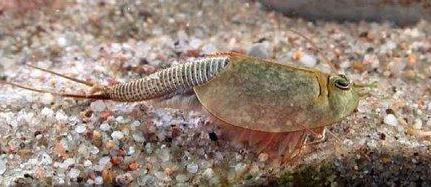
The tadpole shrimp Triops cancriformis has been found in the Caerlaverock nature reserve in Dumfriesshire, Scotland. It is considered to be possibly the oldest living species in the world, because it has remained nearly unchanged for an estimated 220 million years. (Another reference states tadpole shrimp may have been living for 300 million years.)

Scientist Larry Griffin who has studied the rare shrimp, said, “Triops matures rapidly and produces hundreds of eggs in just a couple of weeks. The pond they live in may dry out, but the eggs can survive in the mud for many years.”

Not only are the shrimp unique for having survived several major extinctions, they also can  have both male and female reproductive parts so just one can generate a new colony. Tadpole shrimp live in seasonal, freshwater ponds. Their eggs are very tough. They can resist high temperatures (almost boiling), dryness and even consumption by birds. It is thought they also can remain in a dormant state for years, or even centuries until favorable conditions occur, and then they hatch. Tadpole shrimp have outlived dinosaurs, trilobites and mammoths. They are endangered and protected by law in Scotland.

http://www.care2.com/greenliving/worlds-oldest-living-species-found-in-scotland.html

Uk: Could Guards Wear Stella McCartney Synthetic Bearskin ?

http://www.telegraph.co.uk/news/7903157/Could-Guards-wear-Stella-McCartney-synthetic-bearskin.html?ea.url.id=35603&ea.campaigner.email=EZHmm%2FpN2AOWon0byxX%2Ff2JQPMb61MHn%2FU1dYLj9Pwra3xEzZ4tJzA==&ea_broadcast_target_id=0

Could Guards wear Stella McCartney synthetic bearskin?

For almost two centuries the Army’s Guards regiments have been decked out on ceremonial occasions in real bearskin hats.

 By Sean O’Hare and Stephen Adams
Published: 9:00PM BST 21 Jul 2010

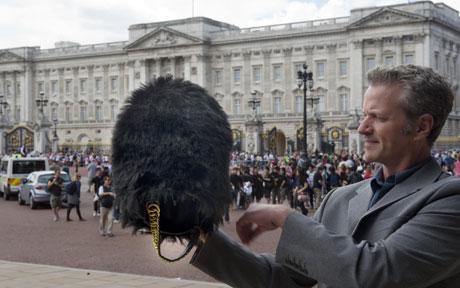
PETA’s faux-fur version of the bearskin. Photo: Paul Grover

Tourists come to marvel at them at Buckingham Palace.

But the Guards could soon be wearing a faux-fur version, designed by the vegetarian Stella McCartney.

On Thursday a delegation from People for the Ethical Treatment of Animals (Peta) is meeting Peter Luff, minister for defence equipment, support and technology, to propose their animal-friendly alternative.

Peta claims the plastic-fibre hat now meets rigorous Ministry of Defence water repellency tests, after years working on a technology called Bear28.

The hats are also fitted with air vents to keep wearers cool on parade.

McCartney said: “Historically, England has a very high regard for animals, so it makes perfect sense that the MoD should continue shedding ceremonial furs from uniforms.

“Initially the big bear fur hats were intended to make soldiers look taller as they marched over hills in battle, but they haven’t been worn in action for over a hundred years.

“I’ve been working on this with Peta for a few years now and am really happy with the final product, as I hope the MoD will be when they see it.”

Dan Matthews, senior vice-president at the animal rights group, added: “In 2005 the MoD carried out specific weather tests on their own prototype which failed on water absorption levels.

“After four years working on this hat, we carried out the same tests at the same test centre and it passed.”

He claimed it was a “win-win situation” as the synthetic hats were cheaper than real bearskins, 230 grams lighter “and the bears will certainly be happier”.

However, while the MoD said it “remains open” to new ideas, a spokesman stressed it would not be chucking out the original bearskins anytime soon.

They are worn infrequently, need little maintenance and last many years, she explained.

She said: “The MoD remains open to testing material that industry might offer us to asses whether a faux fur meets the requirements for a replacement bearskin hat material. So far industry has not been able to produce a suitable material to meet the Guards’ requirements.”

She also stressed: “All bearskins used in the UK are sourced from Canada where bears are culled under the direction of the Canadian government to keep the bear population under control.”

Bearskin hats have been worn since the Battle of Waterloo in 1815 where they were taken as a badge of honour by the Grenadier Guards when they defeated Napoleon’s bearskin-wearing Imperial Guard.

——————————

SAV Comment

As an Englishman, the attitude and negativity of the MoD for many years just because of what they attribute to ‘historic importance’ disgusts me. 

We are in the 21st Century and if the MoD is still not capable of using fake fur for soldiers to wear on the hats every now and again then the MoD is still living in the past.  Their attitude for many years to this has been disgusting and not what the vast majority of British people want – they want fake fur on hats !

The talk by the MoD of ‘bears being culled under direction’ is complete and utter rubbish.  You do not have to kill bears and their cubs so that every now and again, a soldier can walk around thinking he looks impressive.

Get real MoD, get modern, and get fake fur !