Australia: Gutless PM Tony Abbott Fails To Act In The Defence Of Australian Animals. Just Like Gillard Before Him.

australia


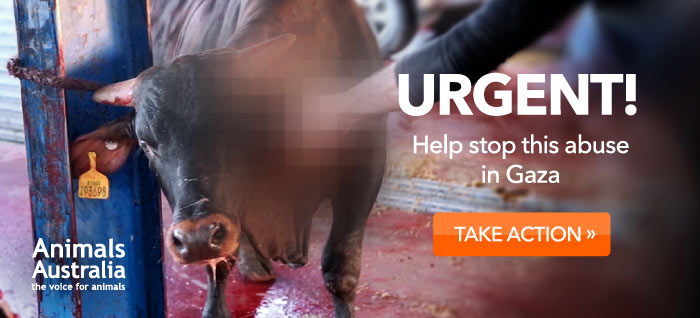
gaza2


SAV Comment:

What we in the UK (and the rest of the civilized world) have known for a very long time:

Tony Abbott and Julia Gillard – Two Animal Abusing Australian Prime Ministers.

Neither who have had the guts to do anything about such a disgusting business of live animal exports.  Gutless fools who just let animals suffer for their own political satisfaction.

Oh how we feel for the poor citizens of Australia – to have an animal abuser like Abbott at the helm now.


———————————————————————————————————–

From Animals Australia

http://www.banliveexport.com/gaza 

As the sun goes down in the Gaza Strip tonight, Australian animals stand waiting… and we do not know their fate. But based on evidence from our recent investigations, I fear the worst.

What you do in the next 3 minutes will help us send the strongest possible message that Australians will not tolerate this industry any longer… and on behalf of the thousands of animals abandoned to live export cruelty yet again — I am pleading with you to be their voice today.

ABC’s 7.30 program last night aired a damning exposé revealing an even darker side of this industry: allegations of corruption and criminal activity have now emerged.

But what our latest investigation has uncovered will shock you even more.

Actually, ‘latest’ sounds like it was one investigation. In reality, on almost a weekly basis over past months we have lodged 6 additional complaints with the Department of Agriculture showing that the nightly abuse of Australian cattle in Gaza… continues.

With the help of our brave young local investigator in Gaza, we have presented case after case, evidence upon evidence, to the government pleading for urgent action. Yet night after night, workers terrified of ‘wild’ Australian cattle have been resorting to violence within the abattoirs of Gaza. We’ve seen animals with leg tendons slashed, being stabbed in their eye, and being abused in ways which are too traumatic to describe.

I don’t tell you this to shock you, Maria. In fact, I strongly urge you not to watch footage from our investigation because it is simply too distressing. But I’m telling you this because relying on the regulatory process to end the cruelty has failed.

That brings us to you, and why you’re reading this:
THIS NEEDS TO BE MADE PUBLIC.

Will you spare 3 minutes today to help achieve justice for animals?

Knowing how confronting the evidence is, we have gone to extra lengths to ensure that you can take action on our website today without needing to see any graphic images if you choose not to.

To the live export industry, these animals are considered ‘products’. To us, they are ‘living beings’ deserving of compassion and respect. I know that when Australians discover what animals have been suffering in Gaza there will be a groundswell of compassion and action on their behalf — one that our government cannot ignore.

After taking action please share this urgent alert with your friends, family — anyone who like us wants a kinder, more compassionate world where cruelty is not excused as the cost of doing business.

For the animals, thank you,

Lyn White
Campaign Director

http://www.banliveexport.com/features/largest-live-exporter-questionable-track-record.php


P.S. With the live export ‘assurance’ system failing to protect animals from the worst abuses, your help is needed to stop this from continuing and achieve justice for animals. It only takes 3 minutes to make a difference. Please click here to take urgent action today.

The track record of the world’s largest live exporter, Livestock Shipping Services, raises big questions about why they’ve been allowed to keep their export licence.

It’s Friday, 4th April 2014. The ship called Bader III sets out from Fremantle Port on the long sea voyage to Jordan and Israel. On board are 10,000 cattle and thousands of sheep. The exporter is Livestock Shipping Services (LSS).

A day earlier, LSS General Manager, Garry Robinson, complained to the media about this ship being delayed as a result of ‘handful of animals’ in Gaza. Robinson did not express concern that this ‘handful’ of cattle, who had been exported by LSS and ‘leaked’ from their supply chain, were once again suffering terrifying and prolonged deaths both in LSS’s ‘approved’ and in non-approved abattoirs in Gaza.

No accountability was expressed about the fact that this situation was LSS’s legal responsibility or that it was both predictable and preventable. After all, the company was aware that Australian cattle in Gaza had been subjected to sickening abuse last October — including at their approved abattoir, which had months earlier passed an LSS-funded audit despite not meeting required standards.

As a result, rather than a ‘handful’ of animals, every one of the 4,631 Australian bulls sent into Gaza since November would be brutally slaughtered.

With a dire situation for cattle in Gaza ongoing, and under investigation for five serious breaches of regulations, it seemed inconceivable that LSS would be granted a further export permit.

But five weeks after the Department of Agriculture was first provided with evidence that the horrific slaughter of Australian bulls in Gaza had continued unabated they granted the company implicated a further export permit.

Only a couple of days after the Bader III sailed for Israel, in a filthy slaughterhouse in Gaza, another Australian bull was brutally slaughtered in breach of Australian regulations, including having his eye stabbed to blind him. Around him lay the bodies of other Australian bulls who would have suffered similarly shocking deaths.

The dreadful suffering of these animals was predictable and preventable. The Exporter Supply Chain Assurance System (ESCAS) was put in place to prevent the worst abuses to exported animals. But with no Australian government oversight in importing countries, its ability to do so rests with exporters facing consequences for breaches, including suspension or loss of export licence.

Tonight, once again, Australian bulls will be brutally slaughtered in Gaza. Tonight the export company implicated in these breaches of regulations continues to be allowed to export, and has tens of thousands of animals aboard the Bader III once again, entrusted to its ‘care’.


http://banliveexport.com/gaza#takeactionplace  

TAKE ACTION NOW

That shocking abuse of Australian cattle continues in Gaza five months after first being reported, is damning.

The good news, is that after receiving evidence from Animals Australia in November, the Australian Government ceased granting export permits to Gaza.The bad news, is that this was no help to the thousands of cattle who were en-route at the time. Since then, at least 4,631 exported cattle have been sent to the slaughterhouses of Gaza.

This ongoing cruelty could have been avoided had exporters been complying with regulations. Tragically, the Australian Government’s live export ‘assurance’ system is providing anything but ‘assurance’. The truth is that nobody — not live exporters, nor the Australian government — can guarantee that animals in the live export trade won’t be brutally killed.

It doesn’t have to be this way. Live export is valued at only 0.3 percent of national exports. And most sheep and cattle farmers aren’t involved with the industry. Not only that — a phase out of this cruel trade will create more jobs for Australians and benefit the economy.

Take action today, and help spare an animal from suffering this brutal fate. Ask your MP to support a phase out of live exports — for jobs, for the economy, and most importantly, for the animals.


China: Fantastic Breaking News 15/4/14 – Animals Asia Take Over Bear Farm to Make Bear Sanctuary and Education Centre – And Rescue 130 Bears and Their Unborn Cubs In The Process – Major Result – Donations Required To Help This Groundbreaking Project.

china


peace by piece AA


Free the Bears !!

Peace by Piece – from farm to freedom !

Watch the AA video by clicking on the following link:

https://www.youtube.com/watch?v=OPI4P3xMNYg 


Animals Asia start work to turn a bear farm in China into a bear sanctuary – freeing 130 caged bears in the process !!!

Support and donations are required to help support this fabulous transformation.

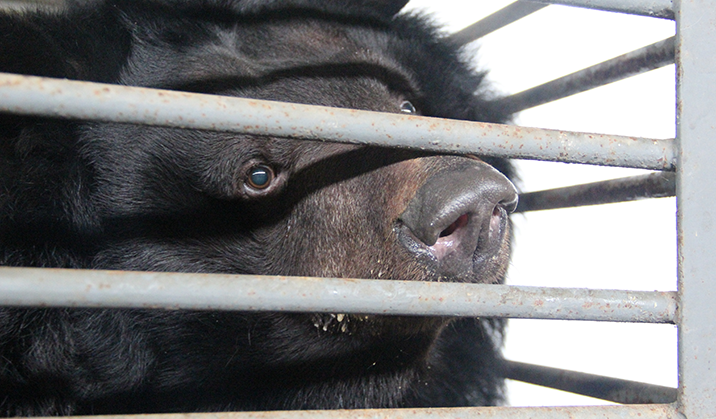
Peace by Piece is Animals Asia’s new landmark campaign to help rescue and rehabilitate over 130 moon bears in Nanning, China. These bears have been kept in horrendous conditions – many trapped in tiny cages from birth – and farmed for their bile.
Some of the 41 female bears could be pregnant with up to four cubs.

The farmer had bred the bears and extracted their bile for years, but had a change of heart when his daughter convinced him of the horrible cruelty of the trade. Animals Asia is taking over custody and care of the bears, leasing the land and facilities.

This will be the largest rescue of its kind in the world.

We now need your help to turn this farm into a home – peace by piece!

Not only will we turn this bile farm into a comfortable home for the bears, we will create a sanctuary AND education centre. By uniquely working with the Chinese Government, we will also ensure that this new sanctuary will provide meaningful jobs to the nine existing farm workers.

We will retrain them to become skilled bear carers, at this new groundbreaking sanctuary. So, this isn’t just a bear rescue, it’s a landmark initiative to help change the hearts and minds of other farmers in the region.

Because of the size and scale of this rescue, we need your support more than ever before. Your donation will help fund the renovation of the farm as well as the veterinary care these bears urgently need and the equipment and structures needed for their rehabilitation. The map above outlines these plans, piece by piece, showing why we urgently need your donation now.

Please help us provide the peace these bears deserve – and claim your piece of history in the making.


Dear Mark,

Animals Asia has just signed an agreement to undertake the world’s biggest bear rescue. Please watch our short clip below to see how we are transforming a bear farm in Nanning, China into a sanctuary for the 130 bears and their unborn cubs.

To do this, we need your support more than ever.

To donate please visit   http://peacebypiece.animalsasia.org/home?locale=en&currency=gbp   


Watch the AA video by clicking on the following link:

https://www.youtube.com/watch?v=OPI4P3xMNYg 

For updates on the rescue, please follow us on Facebook and Twitter. To find out more and to support the rescue, please click here.

More coming soon – I hope you’ll join us on this incredible journey as it unfolds.

Sincerely,
Jill Robinson MBE, Dr med vet hc
Founder and CEO  


Animals Asia Website – https://www.animalsasia.org/uk/ 


———————————————

Some of our past post links to bear farming:


https://serbiananimalsvoice.com/2011/08/11/china-mother-bear-abused-by-chinese-government-inaction-on-bear-bile-farm-kills-cub-and-then-itself-boycott-chinese-products-until-animal-welfare-legislation-is-introduced-and-bear-bile-farms-ar/  


https://serbiananimalsvoice.com/2014/02/01/china-petition-stop-the-barbaric-medical-torture-of-harvesting-bear-bile-please-sign-now/  


https://serbiananimalsvoice.com/2013/01/17/vietnam-you-did-it-the-vietnam-bears-can-stay-at-animals-asias-sanctuary/  


https://serbiananimalsvoice.com/2011/12/24/241211-a-festive-smile-for-you-from-bearland-animalsasia-insight-and-links/   


https://serbiananimalsvoice.com/2010/01/20/vietnam-from-cargo-containers-to-freedom-for-19-bears/    


https://serbiananimalsvoice.com/2009/09/12/viet-nam-global-action-needed-to-free-80-endangered-moon-bears-being-held-illegally/    


England: Time Out – Floyd.

England


First track – Pink Floyd: ‘Echoes’ Live at Pompeii is a 1972 concert film featuring the English progressive rock group Pink Floyd

Echoes – https://www.youtube.com/watch?v=VeHUFSJ9rr8

Hey You – https://www.youtube.com/watch?v=bLhH4tmR_GA

Probably one of the most haunting (and very best) starts to any music track:  Shine on you crazy diamond – https://www.youtube.com/watch?v=klKCeFDnDiI


sheep123

Sheep – https://www.youtube.com/watch?v=tcRYdVlGXNQ

Us and them – https://www.youtube.com/watch?v=nDbeqj-1XOo


Global News Shorts.

china


China Southern Airlines Stops Shipments of Primates for Vivisection

China Southern airlines has announced that it has stopped shipments of primates to laboratories worldwide in response to vigorous campaigning by animal rights organisations around the globe.   Prior to this announcement, China Southern was the only airline in China – and the only major carrier in the world other than Air France – still shipping primates to laboratories.  Air France is now the only major airline left that is willing to ship monkeys, so it will be extremely difficult and expensive for experimenters to get their hands on monkeys. This means that more primates will remain in the wild with their families instead of being trapped and imprisoned at decrepit breeding farms and terrifying laboratories. Please build on this momentum by urging Air France to join every single other major airline in the world by refusing to ship primates to certain suffering and death in laboratories.


USA1

HRT and horses urine

New England Anti-Vivisection Society recently supported the rescue of 3 remarkable horses from a pregnant mare urine (PMU) farm. After facing the horrific fate of a lifetime of confinement or slaughter, the trio is now safe in sanctuary.  The oestrogen-rich urine of pregnant mares is a key ingredient in many hormone replacement therapy (HRT) drugs. Tara would have been repeatedly impregnated her entire life. She would have lived in a narrow stall with limited access to water and chafing-causing urine collection bags attached to her body. She would have watched her male foals be taken from her and sent to slaughter. Her female foals would either share that fate, or be spared only to replace “spent” mothers once they were no longer of use to the industry.  The entire PMU pharmaceutical industry is unnecessary because plant-based and synthetic HRTs with comparable benefits and risks are readily available.  NEAVS is working to end the use of horses in HRTs.  If you take HRT check that it isn’t using PMU.  There are better alternatives.


End to US cosmetic tests

A groundbreaking new bill could bring about an end to tests on animals for cosmetics products in the US.  Congressman Jim Moran of Virginia has introduced the Humane Cosmetics Act, which, if passed, would make it illegal to conduct tests on animals for cosmetics in the US and to sell cosmetic products that have been tested on animals. This would be huge. The US market is enormous and influential, so banning these cruel and archaic tests would save countless animals from having chemicals rubbed on their skin, dripped into their eyes or forced down their throats in painful and deadly experiments. The ban could also have a wider impact, sending a clear message to international companies that they need to throw their weight behind the use of humane, non-animal testing methods. Since March 2013, selling cosmetics products containing ingredients that have been tested on animals has been banned in the European Union, making it clear that these horrific experiments are on their way out.

Australia will recommence exporting sheep and cattle to Egypt after the government struck a deal with Egyptian importers on animal welfare standards. It’s been two years since cattle was last exported to Egypt after shocking footage of cruelty at two Egyptian abattoirs. It led to an industry-wide live trade suspension.


England

England (UK):  Roll out dropped

Plans to roll out the controversial badger cull pilots nationwide across England have been dropped by Owen Paterson after a damning independent report found the shoots were not effective or humane. The 2 pilot culls, in Gloucestershire and Somerset, will continue with improvements recommended by the independent expert panel (IEP), including more and better-trained marksmen. But plans to start badger culls in 10 other areas have been abandoned, the environment secretary announced, telling MPs he was taking the responsible approach.  The shadow environment secretary, Maria Eagle, said the abandoned roll-out was a humiliating climbdown for Paterson. “Consistent with his inept handling of this shambles he has put prejudice before science, secrecy before transparency, conflict before consensus and posturing before good policy,” she said.  Prof Rosie Woodroffe, a leading badger expert who conducted a landmark decade-long trial of badger culling, said even the 2 pilot culls should be halted. ” The culls were dismissed by senior scientists as “mindless” before they started and have provoked huge public opposition since, and led to ministers losing a vote in the House of Commons. Paterson said he accepted the IEP recommendations to “improve the accuracy and field-craft” of shooters. He added that if the free-shooting of badgers could be “perfected”, he still wanted to see the culls rolled out in the future. Paterson previously said he wanted 40 culls across the nation.  Opponents of the cull have argued that vaccination of badgers and cattle is a better strategy and Paterson said: “I am proposing a scheme for [badger] vaccination projects around the edge of the most badly affected parts of the country, in an attempt to create a buffer zone of TB immunity to stop the disease spreading further.” He also said large-scale field trials of cattle vaccines were being designed, but said a usable vaccine was many years away.  Opponents have also argued that stricter testing and controls on cattle movements are the key to cutting TB. In Wales, where a planned badger cull was abandoned, the number of cattle slaughtered has fallen from 11,671 in 2009 to 6,102 in 2013, a 48% drop, following more stringent testing. The number of cattle slaughtered in Great Britain fell by 15% in 2013 following some new controls being introduced in England.  The campaigner and Queen guitarist Brian May said: “I am disgusted that David Cameron and Paterson insult us all by continuing this spectacular failure.”


bTB cattle sold on (UK)

A major veterinary investigation is underway after a number of herds across Britain tested positive for bovine TB following a dispersal sale from a Cumbrian dairy herd.   More than 100 animals were sold at the end of February at a market in Cheshire to buyers from across England, Wales and Scotland.  After some of the cattle sold were found to have tested positive for bTB, AHVLA launched a nationwide operation to trace, isolate and test all animals from the sale, alongside increased surveillance in surrounding herds.  The incident has generated significant concern among Government vets and the farming industry and raised fresh questions about the effectiveness of TB surveillance in England’s 4-year testing areas, where pre-movement testing is not compulsory.  The disease has been confirmed at the Cumbrian farm which sold the cattle and it has been placed under movement restrictions. TB testing of neighbouring holdings within a 3km radius is underway.   An AHVLA spokesman said: “AHVLA has taken robust and rapid action to identify all animals originating from this herd so they can be isolated and tested for TB.”  He said it was too early to comment on the likely number of herds involved, or how this could have happened with a herd originating in the relatively clean 4-year area.  “This incident highlights how serious a problem TB is for all cattle farmers, regardless of where they farm,” he said.  The incident will prompt further debate about cattle TB controls as Defra publishes its long-term TB eradication strategy for England, which covers TB testing and movement controls and includes a proposal for compulsory post-movement testing in the TB Low Risk Area.


sweden

1 in 10 people in Sweden is a vegetarian or vegan,

a survey has found. There has been a 4% increase in the number of Swedes adopting a meat-free lifestyle over the past 5 years, according the study commissioned by Animal Rights Sweden (Djurens Rätt).


USA1


oregon calf crates


Above – USA:  This is in Oregon, and each crate has a calf in it, taken from their mourning mother, 1 hour after they were born. Their mother had enough time to clean up the birth, lick and initially bond with them, before they were taken away to live in these boxes, destined to die in about 6 weeks, barely able to move to make their “meat” tender until they become veal steaks. Meat eaters…are you proud?  Rense.com


Ag-gag – A diverse coalition of civil rights, animal protection, labour, and environmental groups, and a journalist have filed a lawsuit to strike down Idaho’s new “ag-gag” law as unconstitutional.  Idaho’s governor “Butch” Otter (the same man orchestrating the annihilation of wolves in Idaho) just signed “ag-gag” into law in Feb. But the coalition is moving quickly to overturn this dangerous bill because it’s a direct attack on whistleblowers, investigators, and journalists. Most importantly, laws like this are an attempt to keep everyone from knowing what really takes place behind closed doors on factory farms and slaughterhouses.


Canada

 Chicken suffering

One of Canada’s biggest chicken producers will have to spend at least $1m over 3 years to ensure compliance with federal rules after an Ontario judge convicted it of causing undue suffering to the birds.  In a case closely watched by animal-rights groups, Ontario Superior Court Justice Nancy Kastner also fined Maple Lodge Farms $80,000 on 2 of 20 counts of failing to transport chickens humanely. Kastner placed the company based in Brampton, Ont., on 3 years probation, suspending the other 18 counts for the duration. Among conditions of probation, the company will have to make public the convictions, sentence and measures it is taking to avoid further offences by “prominent” website posting. The Canadian Food Inspection Agency charged Maple Lodge Farms under the Health of Animals Act with cruelty to chickens after 2,000 of the birds died on 2 trips to slaughter in the winter of 2008-2009. In her decision, Kastner said “lack of adequate training, personnel, or equipment” contributed to the high mortality rate of the transported birds.


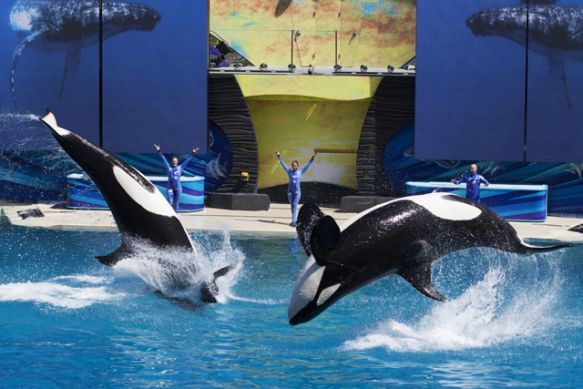
Global: Nations That Have Banned Orca and Dolphin Captivity As ‘Entertainment’ For Paying Customers.

orca perform reuters

Photo: Reuters.

http://www.takepart.com/article/2014/04/10/all-states-countries-and-cities-ban-orcas-captivity?cmpid=tpanimals-eml-2014-04-12-orcas


April 10, 2014 By David Kirby

David Kirby has been a professional journalist for 25 years. His third book, ‘Death at Seaworld,’ was published in 2012.

More than 2,100 dolphins and whales are being held in captivity at 343 facilities in 63 countries around the world, with the highest numbers of dolphinariums located in Japan (57), China (44), the United States (34), Russia (24), and Mexico (24), according to the Born Free Foundation.

This week, a vote on a California bill that would ban orca captivity was delayed by 18 months, pending an interim study. But, if it passes, California will join a growing list of U.S. states and localities and at least 14 countries that have outlawed the captive display of orcas, dolphins, and in some cases, all wild animals.

Herewith, all the locales around the world that forbid the keeping of orcas in tanks for the amusement of paying customers.

United States

California

On Feb. 24, 2014, a proclamation declaring that all dolphins should have the right to freedom was passed by the Malibu City Council and subsequently signed by Mayor Joan House. “Whales and dolphins are known to be highly intelligent and emotional creatures,” it declared, “and therefore deserve the right to their own freedom and lives.”

On March 6, California state Assemblymember Richard Bloom made international headlines by introducing the Orca Welfare and Safety Act, which would make it illegal to “hold in captivity, or use, a wild-caught or captive-bred orca for performance or entertainment purposes.” The bill would also ban captive breeding and artificial insemination of captive killer whales in California.

New York

State Sen. Greg Ball surprised anti-captivity activists by introducing a bill in February to ban “the possession and harboring of killer whales in aquariums and sea parks” in the state. On March 25, the Senate Standing Committee on Environmental Conservation voted in favor of the bill. New York has no captive orcas, but the symbolic measure is nonetheless being closely watched by animal welfare activists.

South Carolina

In 1982, activist Mark Berman, now at the Earth Island Institute, home to Ric O’Barry’s Dolphin Project, helped pass the first and only U.S. state law to ban marine mammals in captivity. In 2001, state officials amended the law, limiting protections to just cetaceans after Riverbanks Zoo in Columbia announced plans for a sea lion exhibit. “We will work very hard to defend the law if there’s any attempt to change it further,” Berman said in November 2013.

Hawaii

When a developer proposed in 2002 to construct a dolphinarium at a Maui shopping center, the Pacific Whale Foundation and other groups successfully lobbied the Maui County Council to ban the display of any captive whale or dolphins.


Other Countries

Bolivia

The Bolivian government made history in July 2009 by enacting the world’s first ban on all animals in circuses and other public performance venues. The law was passed following an investigation by the U.K.’s Animal Defenders International, which found widespread abuse in Bolivian circuses, according to The Guardian.

Chile

Chilean law was amended in January 2005 to prohibit the capture or import of any cetacean species, “for public exhibition or any other objective associated to its utilization by man.”

Costa Rica

The government of Costa Rica decreed new cetacean regulations in July 2005 making it  “strictly forbidden” to catch and kill marine mammals, keep cetaceans and other marine mammals captive, or touch, feed, or trap any marine mammal.

Croatia

In July 2009, Croatia’s State Institute for Nature Protection enacted a regulation banning the keeping of cetaceans in captivity for commercial purposes. The only exemption would be for the rehabilitation and return of sick or injured animals to their natural environment.

Cyprus

The nonprofit group Animal Responsibility Cyprus won a campaign to ban the importation of cetaceans in June 2011. The group says it was also successful in shutting down the Ayia Napa dolphinarium, the only one in the island nation, in 1999. “Subsequent applications to open captive dolphin shows were refused by the authorities,” according to the ARC website. “In spite of Cyprus being a popular holiday spot, you will not see any so-called dolphinariums here.”

Greece

A campaign by Animal Defenders International and the Greek Animal Welfare Fund prompted the Greek government to enact a ban in February 2012 on not only dolphin captivity but the use of all animals in circuses. Greek law now forbids using animals in “recreational games, car racing platforms, musical concerts, exhibitions, fairs or other artistic or entertaining festivities.” In January 2014, the law was overwhelmingly upheld by Parliament following a challenge by the Attica Zoological Park in Sparta.

Hungary

This country’s last dolphinarium was closed down and a ban on dolphin imports was imposed in 1992 after “one of the five illegally-imported dolphins from Ukraine died during the transfer, and another within a week of its arrival,” according to the Armenian Weekly.

India

On May 20, 2013, India’s Ministry of Environment and Forests banned the keeping of captive dolphins for public entertainment. A statement from B.S. Bonal of the Central Zoo Authoritydeclared that cetaceans do not in general survive well in captivity. “Confinement in captivity can seriously compromise the welfare and survival of all types of cetaceans by altering their behavior and causing extreme distress,” he said. The ministry even declared that dolphins “should be seen as ‘non-human persons’ and as such should have their own specific rights.”

Nicaragua

On Feb. 2, 2003, Jorge Salazar Cardenal, then Nicaragua’s minister of the environment, confirmed in a letter to the World Society for the Protection of Animals that his country had “banned the use and exploitation of bottlenose dolphins indefinitely.” Salazar added that the law “guarantees that in Nicaragua, these animals will be fully protected.”

Slovenia

According to WDC, Slovenian law “explicitly prohibits” the display of captive dolphins.

Switzerland

The country’s House of Representatives handed a major victory to captivity opponents when it outlawed the “keeping of dolphins in aquariums or for entertainment purposes” in March 2012. The Swiss Senate also banned the importation of dolphins. Meanwhile, the last two dolphins remaining in the country were sold to a facility in Jamaica in December 2013.


Others

A few countries have standards so strict that it is nearly impossible to keep cetaceans in captivity, including Brazil, Luxembourg, Nicaragua, Norway, and the United Kingdom, where the last dolphinarium was closed in 1993.

No company has been able to open in the U.K. since then, “because imposed standards exceed the viability of establishing a dolphinarium in the country,” according to the Born Free Foundation.


Vivisection Quicks.

University of Florida horror story

On Jan 10, 2002, capuchin monkey 120V (along with his 4 brothers) was sold into slavery at the University of Florida from the now-defunct Primate Products Inc. in Miami. Documents indicate that UF determined that all but one of these individuals arrived inside their labs already compromised and infected with rubella (German measles). Monkeys living in the wild do not contract measles. This infection is exclusive to nonhuman primates forced to live in captivity and is sometimes fatal. However, left wholly untreated inside UF, little 120V and his 3 brothers are regularly documented as still living with this infection over a decade later. Sometime after his enslavement, sick little 120V was light-heartedly baptized “BOOGER” by vivisector Raymond Joseph Bergeron who continues to get rich from his victims’ misery and blood.  For 21 years, Bergeron has been conducting iron chelation “studies” (i.e., he poisons monkeys with heavy metals and then force feeds them chemicals to try to resolve the condition he created). One of UF’s largest benefactors is said to have succumbed to haemochromatosis, an iron-overloading disease and so this “research” is clearly politically- and economically-motivated. Yet Bergeron received close to $700,000 from the NIH (that means from taxpayers) in 2013 alone.  And it is interesting to note the words of one of his anonymous colleagues:  …he’s a bastard. Bergeron himself barely ever even looks at the poor creatures, much less ever touches them. He keeps his distance at all times. He hates the animal facilities.”  Immediately upon finding himself inside UF’s dungeons, Booger began a gruelling routine of being knocked down, dragged from his cell, restrained, prodded, poked, drugged, poisoned, anaesthetized, undergoing gratuitous operations, and being thrown back in his cell. Perhaps the best part of his life is when he peers out of his cage, momentarily unmolested, to await the next indignities to be visited upon his deteriorated little body. We know that by 2004, little Booger was already a drug addict due to the relentless administration of increasingly-larger doses of ketamine and other tranquilizing agents. While there are no lab charts, daily logs, or veterinary records for a 9-month period between 2004 and 2005, Booger’s documentation indicates that he had developed alopecia by March of 2005. This is a common condition in lab monkeys that is caused by stress and self-mutilation, indicative of the individual’s deteriorating mental health as they are driven insane from their confinement. Now a formal federal complaint has been filed with the USDA for a number of unconscionable and lengthy gaps in which veterinary care appears to have been withheld. The missing records could simply be yet another symptom of the culture of corruption running rampant inside UF to hide the atrocities committed in their labs. Not wanting anymore images of their victims to reach the public, UF has steadfastly maintained that “no images exist” since 2011. We are working diligently to disprove that statement and, thus, prove what we believe is yet another wilful exercise to actively defy and remain in non-compliance with Florida state disclosure laws.  Beginning in 2005 and continuing through 2013, he is repeatedly found with vomit in his cell, his body obviously attempting to reject the poisons that he is relentlessly being force fed. Over years, he is repeatedly reported for having a swollen tongue, hands, and feet and is noted to be salivating excessively. Eventually, by 2010, he has lost control of his lower lip conjuring images of a stroke victim, unable to control their muscles that simply sits and drools. There is no escape for little Booger. He is found with significant amounts of blood in his cage from the increasingly-worse self-inflicted injuries. By 2011, he begins throwing his faeces at his tormentors. He cannot escape his torment. Perhaps he is escaping into inevitable madness.  Despite the fact that Bergeron has discovered absolutely nothing of relevance in over 2 decades, Booger, who has already withstood over a decade of terror at his direction, was just re-approved and re-funded in January for another 3years in hell. At the end of this study, he may be sold or be allowed to be adopted by Jungle Friends, a nonhuman primate sanctuary in Gainesville. We will do everything in our power to see that “Booger” and his fellow prisoners are released.  But it is of the utmost importance that we stop this concentration camp and never again allow them to replace any monkey with new and terrified victims.


New methods without animals

As some countries and companies roll out new rules to limit animal testing in pharmaceutical products designed for people, scientists are stepping in with a new way to test therapeutic drug candidates and determine drug safety and drug interactions – without using animals.The development of “chemosynthetic livers,” which could dramatically alter how drugs are made, was presented at the 247th National Meeting & Exposition of the American Chemical Society (ACS), the world’s largest scientific society. Mukund Chorghade, Ph.D., noted that the EU enacted new regulations in 2010, known as REACH, that aim to dramatically reduce the use of animals in testing. But the development of new pharmaceuticals still depends heavily on the time-consuming and expensive process of animal testing. “Researchers in drug discovery make small quantities of new potential drug compounds and then test them in animals,” said Chorghade, who is chief scientific officer of Empiriko Corporation and president of THINQ Pharma. “It is a very painstaking, laborious and costly process. Frequently, scientists have to sacrifice many animals, and even after all that, the results are not optimal.” Typically, when researchers are onto a new compound ….they test it on animals to see if it’s toxic before taking it into clinical trials with human subjects. They figure this out by metabolic profiling. That is, after giving an animal a test drug, the experimental compound does its designated job in the body until the liver breaks it down. Then researchers try to detect the resulting, minute amounts of molecular by-products, or metabolites. It’s these that are often responsible for causing nasty side effects that can derail an otherwise promising therapeutic candidate. This is where Empiriko’s patented chemosynthetic liver technology (Biomimiks™) comes in. Chorghade has developed these stand-ins, which are catalysts that act similarly to a group of enzymes known as cytochrome P450. Catalysts are substances that speed up processes that otherwise wouldn’t happen or would occur slowly. Many of these cytochrome P450 enzymes break down drugs in the liver. So rather than using lab animals, researchers could figure out metabolic profiles of drugs by mixing them in test tubes with chemosynthetic livers. Chorghade’s team at Empiriko has already demonstrated how Biomimiks™ works with several pharmaceutical compounds. “These chemosynthetic livers not only produce the same metabolites as live animals in a fraction of the time,” Chorghade said, “but they also provide a more comprehensive metabolic profile, in far larger quantities for further testing and analysis.” Other possible applications are cropping up for these chemosynthetic livers. One of Empiriko’s scientific advisors suggested the use of Biomimiks™ to detoxify blood for liver transplant patients. Biomimiks™ could also be used in the near future to predict side effects when multiple drugs are taken together. In a case study, Chorghade and collaborators looked at two drugs commonly taken together, one for high cholesterol and the other for type 2 diabetes. They found that the cholesterol drug sped up the breakdown of the other one, which could potentially lower its effectiveness.  The chemosynthetic livers aren’t yet approved to take the place of animal tests. But Chorghade is optimistic. His group has tested more than 50 drugs so far to show that the catalysts accurately mimic how the human body processes them. He said that they’re working to get that number up to 100, which is what the U.S. FDA requires for regulatory approval.


Animal testing ‘fundamentally flawed’

The flagship journal, Nature, has called on the research community to tighten animal research planning and analysis. It is, for instance, common for results of tests in one animal species not to predict the same result in another. Yet animal models are still expected to accurately predict reactions in human beings.  Sadly, the 11.5m animals used in EU laboratories in 2011 are testament to the fact that tradition and faith in what was described as the ‘high-fidelity fallacy’ in 1959, namely that results in one mammal will predict what happens in humans, persists.  Change is needed. Part of the solution lies in decisions taken by research funders, whether these are public, at EU or national level, private charitable organisations or companies.  Several flagship research projects have already switched to new technologies that rely on the use of human cells, organs and systems integrated with advanced computational techniques to initiate a new ‘systems toxicology’.  Several animal models of disease are now receiving the same kind of critical evaluation. Animal models of stroke and asthma, diseases that afflict millions of people worldwide, have consistently failed to deliver new therapies and the need for new approaches is increasingly being recognised.  New funding opportunities are becoming available. Commercial companies specialising in providing in vitro analytical techniques are thriving. Public funding can also be channelled through regional development budgets, as we see in the UK’s centre for alternative testing and in-vitro monitoring (CATIM) project, which provides lab space and resources for small companies through the University of the West of England.  AXLR8, the EU coordinated research programme to accelerate the transition towards more predictive, non-animal approaches in toxicology, is just one example of how the EU can lead the world in research excellence when it is guided by good science rather than an unthinking reliance on traditional approaches.  In toxicology, we now realise that the animal tests first developed in the 1920s are not fit for purpose. The human cell tests, high-throughput robot systems and powerful new computer programmes replacing animal test approaches mark a bold new era in safety testing based on human biology-based approaches capable of elucidating chemical reactions at the cellular level, rather than broad and misleading extrapolations from mice to men.  As new generations of scientists emerge, and new technologies are developed that exceed our wildest expectations of what’s possible, more and more we will see science challenging its traditions, replacing animals and in so doing, improving the quality of our biological understanding and prediction of safety of chemicals and the effectiveness of new medicines. Full article: www.theparliament.com/latest-news/article/newsarticle/animal-testing-is-outdated-and-fundamentally-flawed/#.UwhyzM40_D4


Serbia: We Need Masses More Signatures – Please Sign and Crosspost – Thank You.

Serbian  Flag

petition pic


shepherd


URGENT – we need lots more signatures – please ensure you sign and then crosspost to all your contacts – thanks SAV.


View the petition

Thank you very much to each and every one of you for signing this petition.

We are still far away from making an impact as we need a lot more signatures to be heard!

Don’t forget… each time you sign a petition, the listed targets receive an email.

So far, none of them has responded, so I don’t think we are loud enough.

Could you please ask at least one of your friends or family members to sign this petition? Or share it via social networks? It would mean a lot!

Please do so.

Thank you for what you have done so far!

Andrea

View the petition

Unsubscribe from updates about this petition