Posted on February 16, 2020 by Serbian Animals Voice (SAV)
EU mafia: How crime bosses have abused the Brussels project to make billions!
THE European Union has allowed Mafia crime families to flourish by taking advantage of the bloc’s single market and lavish cash subsidies, an Italian MEP has claimed.
Sabrina Pignedoli,of the Five Star Movement, said crime bosses had capitalised on the EU’s expansion to Eastern Europe where they have invested vast sums of illicit cash in legitimate businesses.
Sabrina Pignedoli
During periods of economic crisis, Italian mafia-style groups – the Cosa Nostra, Camorra and Ndrangheta – have maintained a low profile in their home country while investing billions of euros into struggling firms across the Continent.
They use the legitimate business to launder cash from their large-scale drug trafficking, counterfeiting and toxic waste management enterprises.
Italian MEP Sabrina Pignedoli has called for a EU-wide approach to fighting Mafia activities (Image: GETTY)
Ms Pignedoli is calling for Brussels to adopt a bloc-wide approach to tackling the Mafia’s presence in Europe.
In Italy, specific laws have been introduced to tackle mobsters’ illicit and often violent activities after decades of crime syndicates profiting from lax rules.
The legislation clearly defines the activities of crime families – illegal or legal – and allows for their assets to be seized and confiscated.
It has allowed Italian authorities to target associates of organised crime gangs even if they have not broken the law themselves.
“This crackdown has led to the Mafia searching out new businesses opportunities elsewhere in Europe”, Ms Pignedoli said.
She added: “The fact that there are no barriers in Europe it makes it easier for the Mafia circulate goods and money.”
“The real problem is when they are money laundering they use banks, they use the legal economy, they buy restaurants and shopping malls – so they are invisible.
“They’re giving money to the economy and helping the economy but this money is being laundered from the profits of drug trafficking.”
Ms Pignedoli said the Mafia’s presence is often undetected, or even a blind eye turned to it, because of the growth in the struggling economies that are targeted by crime bosses.
The Ndrangheta, an Italian crime family from Calabria, was named in the investigation into the murder of Slovakian journalist Jan Kuciak in 2018.
He and his fiancee Martina Kusnirova, both 27, were found shot dead at close range at their home in the village of Vel’ka Macs outside the capital, Bratislava.
His story unearthed a series of Italian businesses, with ties to the Ndrangheta, that had obtained access to hefty EU subsidies from the bloc’s Common Agricultural Policy, amounting to around £58 million over a 14-year stretch between 2004 and 2018 !!!.
The Ndrangheta crime gang also has ties to the UK, with corrupt allies in the City of London helping them to launder their cash, accounting for a surge in growth in the illicit industry that the National Crime Agency, in 2017, said was worth “hundreds of billions” of pounds a year.
And with the EU’s proposed enlargement into North Macedonia and Albania, Ms Pignedoli believes now is the time for Brussels to find a “one definition for the Mafia and organised crime”.
She said: “Now is the right time to reinforce anti-Mafia legislation in Europe. We must have the law to fight the mafia and then we can open up towards other member states without problems”.
Express.co.uk has contacted the European Commission for comment.
My comment: As if we didn’t know! There’s no accounting for the money. Nobody knows what happens to it once we’ve paid it. It goes “into the system” and much of it vanishes without a trace via schemes and back handers and grants and loans etc. all lost in an accounting tangle that works like a bottomless pit, a scandal that has been going on for years.
Looks like the EU have become a Mafia as well, it’s become a partnership… ‘The Ndrangheta crime family was siphoning off billions in EU agricultural subsidies’!!
How could that happen without the EU knowing about it?
Or is that also part of the “family”?
The same old story – the EU chiefs have no interest in stopping this illegal activity because they are all on the payroll. Secondly, they are responsible for running the greatest protection racket that world has ever seen, all done in plain sight.
Posted on February 16, 2020 by Serbian Animals Voice (SAV)
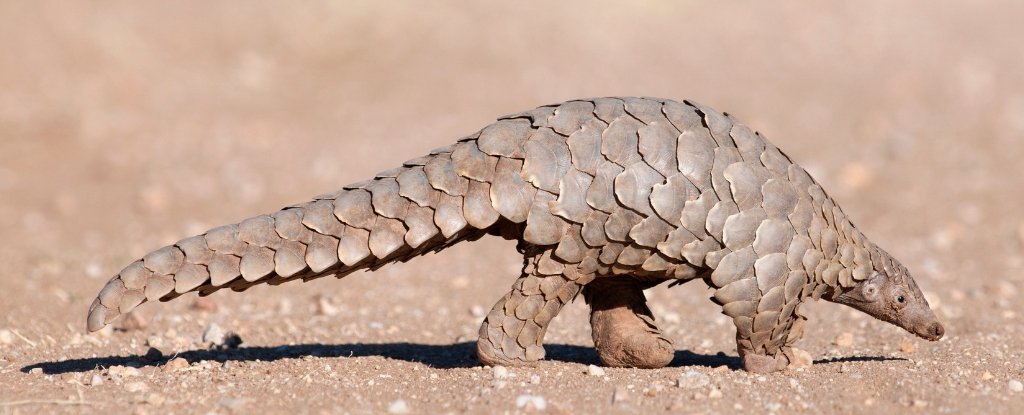
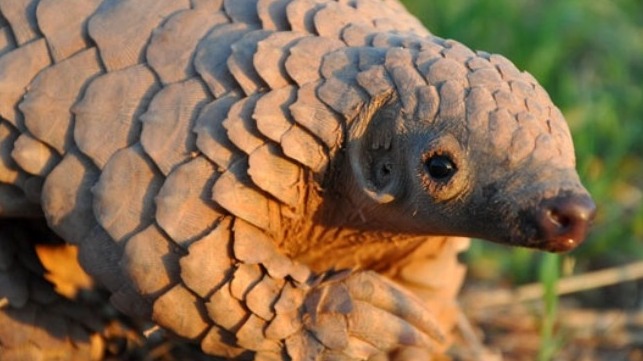
Yesterday, 15/2 was World Pangolin Day.
Here we want to share a little more about these wonderful animals who, thanks to man; are either listed as vulnerable, endangered or critically endangered.
World Pangolin Day is an opportunity for pangolin enthusiasts to join together in raising awareness about these unique mammals — and their plight. Pangolin numbers are rapidly declining in Asia and Africa.
The demand for pangolins comes mostly from China, where pangolin scales are unfortunately believed to be a cure-all of sorts and pangolin flesh is considered a delicacy. In Vietnam, pangolins are frequently offered at restaurants catering to wealthy patrons who want to eat rare and endangered wildlife. There is no evidence to support claims regarding medicinal properties of pangolin scales or any other part of the pangolin.
Pangolins or scaly anteaters[2] are mammals of the order Pholidota (from the Greek word φολῐ́ς, “horny scale”). The one extant family, Manidae, has three genera: Manis, which comprises four species living in Asia; Phataginus, which comprises two species living in Africa; and Smutsia, which comprises two species also living in Africa.[3] These species range in size from 30 to 100 cm (12 to 39 in). A number of extinct pangolin species are also known.
Pangolins have large, protective keratin scales covering their skin; they are the only known mammals with this feature. They live in hollow trees or burrows, depending on the species. Pangolins are nocturnal, and their diet consists of mainly ants and termites, which they capture using their long tongues. They tend to be solitary animals, meeting only to mate and produce a litter of one to three offspring, which are raised for about two years.
The physical appearance of a pangolin is marked by large hardened overlapping plate-like scales, which are soft on newborn pangolins, but harden as the animal matures. They are made of keratin, the same material from which human fingernails and tetrapodclaws are made, and are structurally and compositionally very different from the scales of reptiles. The pangolin’s scaled body is comparable in appearance to a pine cone. It can curl up into a ball when threatened, with its overlapping scales acting as armor, while it protects its face by tucking it under its tail. The scales are sharp, providing extra defense from predators.[17]
Pangolins can emit a noxious-smelling chemical from glands near the anus, similar to the spray of a skunk. They have short legs, with sharp claws which they use for burrowing into ant and termite mounds and for climbing.
The tongues of pangolins are extremely long and – like those of the giant anteater and the tube-lipped nectar bat – the root of the tongue is not attached to the hyoid bone, but is in the thorax between the sternum and the trachea. Large pangolins can extend their tongues as much as 40 cm (16 in), with a diameter of only 0.5 cm (0.20 inches.
Most pangolins are nocturnal animals which use their well-developed sense of smell to find insects. The long-tailed pangolin is also active by day, while other species of pangolins spend most of the daytime sleeping, curled up into a ball.
Arboreal pangolins live in hollow trees, whereas the ground-dwelling species dig tunnels to a depth of 3.5 m (11 ft).
Some pangolins walk with their front claws bent under the foot pad, although they use the entire foot pad on their rear limbs. Furthermore, some exhibit a bipedal stance for some behaviour and may walk a few steps bipedally. Pangolins are also good swimmers.
Pangolins are insectivorous. Most of their diet consists of various species of ants and termites and may be supplemented by other insects, especially larvae. They are somewhat particular and tend to consume only one or two species of insects, even when many species are available to them. A pangolin can consume 140 to 200 g (4.9 to 7.1 oz) of insects per day. Pangolins are an important regulator of termite populations in their natural habitats.
Pangolins have very poor vision, so they rely heavily on smell and hearing. Pangolins also lack teeth; therefore they have evolved other physical characteristics to help them eat ants and termites. Their skeletal structure is sturdy and they have strong front legs that are useful for tearing into termite mounds. They use their powerful front claws to dig into trees, ground, and vegetation to find prey, then proceed to use their long tongues to probe inside the insect tunnels and to retrieve their prey.
The structure of their tongue and stomach is key to aiding pangolins in obtaining and digesting insects. Their saliva is sticky, causing ants and termites to stick to their long tongues when they are hunting through insect tunnels. Without teeth, pangolins also lack the ability to chew; however, while foraging, they ingest small stones (gastroliths) which accumulate in their stomachs to help to grind up ants. This part of their stomach is called the gizzard, and it is also covered in keratinous spines. These spines further aid in the grinding up and digestion of the pangolin’s prey.
Some species, such as the tree pangolin, use their strong, prehensile tails to hang from tree branches and strip away bark from the trunk, exposing insect nests inside.
Threats to this wonderful little animal
Pangolins are in high demand for Chinese traditional medicine in southern China and Vietnam because their scales are Pangolins are in high demand for Chinese traditional medicine in southern China and Vietnam because their scales are believed to have medicinal properties. Their meat is also considered a delicacy. 100,000 are estimated to be trafficked a year to China and Vietnam, amounting to over one million over the past decade. This makes it the most trafficked animal in the world.[41][43] This, coupled with deforestation, has led to a large decrease in the numbers of pangolins. Some species, such as Manis pentadactyla have become commercially extinct in certain ranges as a result of overhunting In November 2010, pangolins were added to the Zoological Society of London‘s list of evolutionarily distinct and endangered mammals.[45] All eight species of pangolin are assessed as threatened by the IUCN, while three are classified as critically endangered.[5] All pangolin species are currently listed under Appendix I of CITES which prohibits international trade, except when the product is intended for non-commercial purposes and a permit has been granted.[1]
Pangolins are also hunted and eaten in many parts of Africa and are one of the more popular types of bush meat, while local healers use the pangolin as a source of traditional medicine.[46]
Though pangolins are protected by an international ban on their trade, populations have suffered from illegal trafficking due to beliefs in East Asia that their ground-up scales can stimulate lactation or cure cancer or asthma.[48] In the past decade, numerous seizures of illegally trafficked pangolin and pangolin meat have taken place in Asia.[49][50][51][52] In one such incident in April 2013, 10,000 kg (11 short tons) of pangolin meat were seized from a Chinese vessel that ran aground in the Philippines.[53][54] In another case in August 2016, an Indonesian man was arrested after police raided his home and found over 650 pangolins in freezers on his property.[55] The same threat is reported in many countries in Africa, especially Nigeria, where the animal is on the verge of extinction due to overexploitation.[56] The overexploitation comes from hunting pangolins for game meat and the reduction of their forest habitats due to deforestation caused by timber harvesting.[57] The pangolin are hunted as game meat for both medicinal purposes and food consumption.[57]
Man, as with everything; the ‘intelligent’ destroyer of everything that lives in this world !
As public opinion continues to shift, increasing numbers of people are falling out of love with dairy products.
Recent years have seen a significant shift in consumer attitude towards dairy, as more people understand the environmental, health and animal welfare issues associated with the industry. The UK is now drinking 50 per cent less milk than they were in 1974, according to a report by Agriculture and Horticulture Development Board (AHDB) released on Tuesday 6 February.
Viva! have investigated countless British dairy farms and exposed the brutal reality of the industry – helping many people make the switch to dairy-free.
An increasing number of dairy-alternatives are widely available including cheeses, yoghurts, milks and chocolates. Supermarket giants ASDA, Aldi, Tesco and Sainsbury’s now all have their own ranges of vegan food – proving these products are big business. Although the milk market is much bigger, valued at over £3bn, demand for cow’s milk is declining and plant-alternatives sales have surged 10 per cent over the past two years. It’s undeniable, dairy-free sales are booming and show no signs of slowing down. Considering these factors, it comes as no surprise that the dairy industry is desperately trying to claw its way back into public favour.
So what is Februdairy?
Februdairy is a social media campaign created by the dairy industry in a desperate attempt to boost sales and portray dairy in a more favourable light. This is the industry’s third annual campaign and is pitched as a direct response to Veganuary, a campaign which encourages consumers to try vegan for one month. This year Veganuary announced a record number of sign-ups with a whopping 400,000 people going vegan for a month. Milk producers, pro-dairy consumers and industry experts are encouraged to create and share pro-dairy content during the month of February on social media using the hashtag #Februdairy.
When the campaign launched in February 2017, the vegan community commandeered the hashtag to highlight the darker side of the dairy industry, where pain and suffering is an everyday occurrence. Social media has played an instrumental role in the rise of veganism and vegans are well versed in using it as a platform to educate and inform others. Animal rights advocates and groups including Viva!, Animal Equality and Animal Aid use Februdairy as an opportunity to expose the cold-hard facts surrounding dairy production – which doesn’t go down well with the dairy industry.
A surprising number of people are still unaware that cows must be made pregnant to produce milk. To do this they are artificially inseminated and give birth to a calf, which is taken away shortly after. – There is no time for maternal bonding when profits are priority. If the calf is female she will face the same fate as her mother, if he is male he will be raised for veal or more likely be shot shortly after birth as an unwanted by-product of the dairy industry. These are all facts that the dairy industry chooses not to shout about – not surprising is it?
In addition to these abhorrent practices, the livestock industry is having a detrimental effect on our planet and many people are choosing to go vegan as a result. Dairy is the second biggest greenhouse gas emitter in the food production industry due to the huge amounts of soya needed to feed dairy cows and the methane they release. According to a recent article in The Guardian, all plant-based milks are better for the environment (3), with oat and hemp milks having the smallest environmental impact.
A recent Farmer’s Weekly article interviews a dairy farmer and marketing consultant, Andy Venables, who called for an overhaul in the way milk is promoted – describing it as “a complete mess”. The article concludes ”The dairy industry could learn a lot from the vegan movement, which had attracted huge media coverage despite accounting for just 1.16% of the UK population”, said Mr Venables.
Although the industry admits it needs a re-brand, they seem to be in denial about why people are ditching dairy for plant-based alternatives. Until they understand this, it looks like we’ll be seeing a lot more Februdairy-style campaigns from the industry as veganism continues to grow globally.
This Mother’s Day Viva! are organising a national Day of Action to raise awareness about the plight of dairy cows, Britain’s hardest working mothers, and encouraging them to go dairy-free. Visit https://scarydairy.org.uk/campaigns/mothers-day-action for more information.
For more information on the health, environmental, health and animal welfare issues caused by the dairy industry please visit www.scarydairy.org.uk .
Posted on February 15, 2020 by Serbian Animals Voice (SAV)
Many Australians are unaware of the disgraceful way in which wild pigs are being killed throughout New South Wales and Queensland.
Pig dogging is a shamefully cruel and barbaric practice in which dogs are forced to hunt wild pigs.
While hunters boast grotesquely of the adrenaline rush they experience, their treatment of the victims of this “sport” – both pigs and dogs – is deplorable.
The dogs are encouraged to chase and tire out the pigs and then hold them by the ears until a human arrives to kill them. Pigs who are chased, trapped, and killed in this way experience intense fear and distress.
Usually, hunters kill pigs by “sticking” them – stabbing them in the stomach or chest to puncture the heart – before leaving them to bleed out in a prolonged and painful death.
Because these hunts cover large areas and it’s difficult for hunters to maintain contact with their dogs, pigs are often mauled for long periods and even killed before the humans arrive on the scene.
In many cases, hunters actually encourage their dogs to maul the pigs.
The dogs are usually large mixed-breed ones who’ve been “blooded” to make them especially aggressive.
They may be beaten, starved, and psychologically abused in order to “train” them not to retreat from a pig 10 times their size.
After enduring this trauma, they’re then exposed to extreme danger during the hunt. Even though they may be “armoured” – wearing protective throat collars, breastplates, and vests – they’re often injured, mutilated, and killed.
Legislation relating to pig dogging differs from state to state, but it’s virtually impossible to take part in this blood sport without seriously compromising the intentions and regulations of the Prevention of Cruelty to Animals Act 1979 and the Companion Animals Act 1998.
Write to the New South Wales and Queensland state governments and ask that they take action on this important issue.
Everything takes place with the support or tolerance of corrupt politicians.
From psychopaths who sit in important positions and decide about lucrative business with animals.
But it is not an argument not to publish any criminal acts because they happen everywhere.
Wherever they happen, we will publicize them and ask for help.
Because the animals have just us.
That these metal prisons are still allowed at all seems impossible in a country like Germany, which has – at least in theory – anchored animal welfare as a state goal in the Basic Law.
In the previous version of the Animal Welfare Livestock Ordinance (1), Section 5 states §24 (4) “Box stands must be designed in such a way that…
1) the pigs cannot injure themselves and
2) each pig can stand up freely, lie down and stretch its head and side limbs”
But now the Federal Government, together with Agriculture Minister Julia Klöckner (CDU), wants to simply delete the part of the regulation that stipulates that the sows in the crates should at least be able to stretch their limbs and head in the lying position.
Instead of ensuring that at least existing laws and corresponding legal judgments are complied with, the economic interest of farmers is increased and animal cruelty is legalized once again. Julia Klöcknerwants to extend the illegal boxes for another 17 years!!!
The issue was originally supposed to be decided on Friday (February 14th, 20)by the Federal Council – but was removed from the agenda at short notice. The ordinance said the topic could be discussed at a next meeting at the request of a state or the federal government.
Peta’s information is a bit different: Update February 2020
On February 14, 2020, the Federal Council actually wanted to vote on the draft ordinance from the Federal Minister of Agriculture,Julia Klöckner, to amend the animal welfare livestock ordinance and thus to subsequently legalize the cruel crates for animals!!!


 Sabrina Pignedoli
 Italian MEP Sabrina Pignedoli has called for a EU-wide approach to fighting Mafia activities (Image: GETTY)





 Serbian Animals Voice (SAV)