Posted on May 8, 2020 by Serbian Animals Voice (SAV)
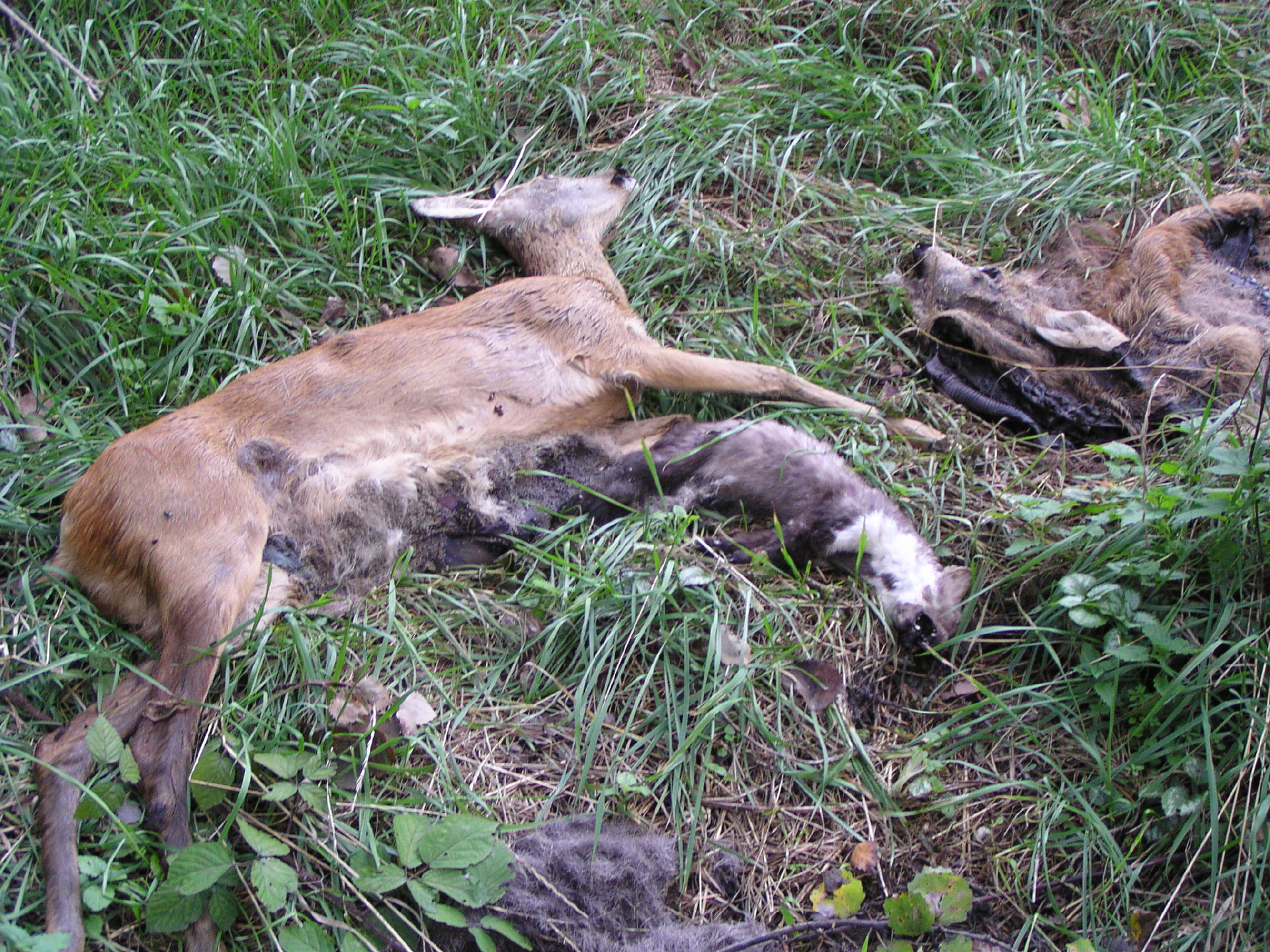
Wild deer in the Hörnli cemetery in Basel cause ever greater costs. Individuals are now to be shot, as the city garden center explains to “Schweiz aktuell”.
The Basel Hörnli cemetery is the largest in Switzerland with 54 hectares. It lies on the outskirts of the city and borders on the forest.
That is why deer live there.
For them, the cemetery is a land of milk and honey: practically every day graves have fresh flowers to eat, and there are no enemies – neither dogs, cars nor disturbing bikers.
“Deer breed terrific”
Even the visitors do not scare the animals away, but behave extremely calmly. “The deer are multiplying terrific,” says Emanuel Trueb, head of the Basel city garden center.
In recent years, the population has increased from around 15 to around 25 animals (!!!).
They live in the cemetery, many were also born there.
As cute as the deer look: they cause great damage. On the one hand, the graves would have to be repaired, on the other hand, one tries to keep the deer away, for example with butyric acid, says Emanuel Trueb. The costs for all countermeasures and maintenance measures would now amount to CHF 100,000 per year.
Deer cannot be driven away
That is why the city must take action now, Trueb told “Schweiz aktuell”, and targeting individual roebucks.
Because the previous measures would have brought little or nothing. “We also tried repeatedly to drive the animals out of the area, but they were back the next day.”
Because the cemetery is in the area of Riehen, it is responsible for a kill. The town council of Riehen therefore investigated the matter.
“The focus was not on the damage caused by the deer, but on the welfare of the animals” (!!!), says councilor Christine Kaufmann.
“We found that the number of roe deer in the cemetery is three times larger than in the forest in a corresponding area,” says Kaufmann, who is also a veterinarian (!!!). And that leads to stress in the animals.”
That is why Riehen supports the cemetery’s wish to kill the deer population with kills.
Special approval required
However, since the cemetery is a hunting ban area, where shooting is not permitted, Riehen has submitted a shooting application to the canton. This is now with the Basel Security and Justice Department and should be answered shortly. There is nothing more to be learned.
And I mean…Why can’t the city of Riehen protect the cemetery with a fence?
The Swiss also do it with their motorway, a method which is good for the animals as well as for drivers.
The deer did not come from heaven.
We take away their living space, their houses, their food, hunters kill their children and destroy their families.
The animals try to find peace and security in the cemetery.
“The deer are multiplying terrific,” said the gardener
People too!
“Deer cannot be driven away and cause great damage”
People too!
So… do we want to use the killing method for human pests too?
To regulate the population, as the hunters would say!
Posted on May 8, 2020 by Serbian Animals Voice (SAV)
BY MATT CARTY
Global News- Canada
[Press Office note: No claim for this action has been received by the Press Office as of this posting.]
Wellington County OPP say vandals broke into the University of Guelph’s swine research site in Puslinch, spraying paint onto walls and equipment with animal rights messages.
Officers were called to the facility on Arkell Road on Tuesday morning to find walls and a tractor spray-painted. Red spray paint reading “stop exploiting animals” in capital letters was scrawled on an interior wall.
OPP believe that someone entered the facility between 3 p.m. Monday and 6:30 a.m. Tuesday and wrote messages that “consisted of profanity and slogans in support of animal rights.”
A vehicle captured on surveillance is described as a metallic blue four-door Ford Focus from either 2008 or 2009.
Posted on May 7, 2020 by Serbian Animals Voice (SAV)
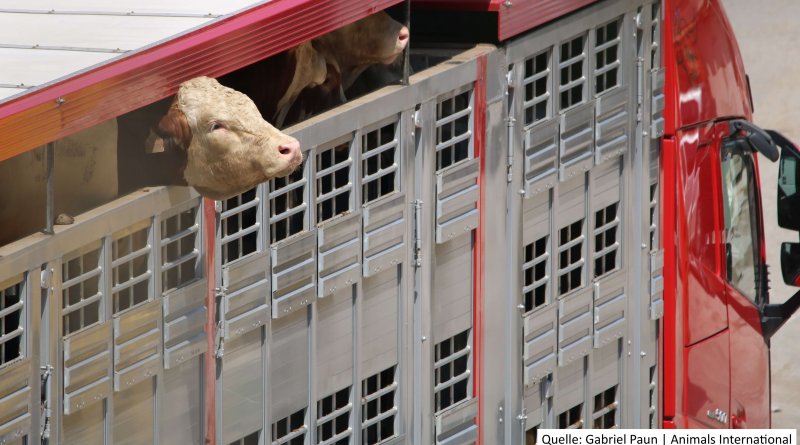
A new investigation from Animal Equality shows the pain and torment of Spanishlambs as they are shipped across long distances, with journeys lasting up to ten days, and slaughtered while fully conscious after arrival.
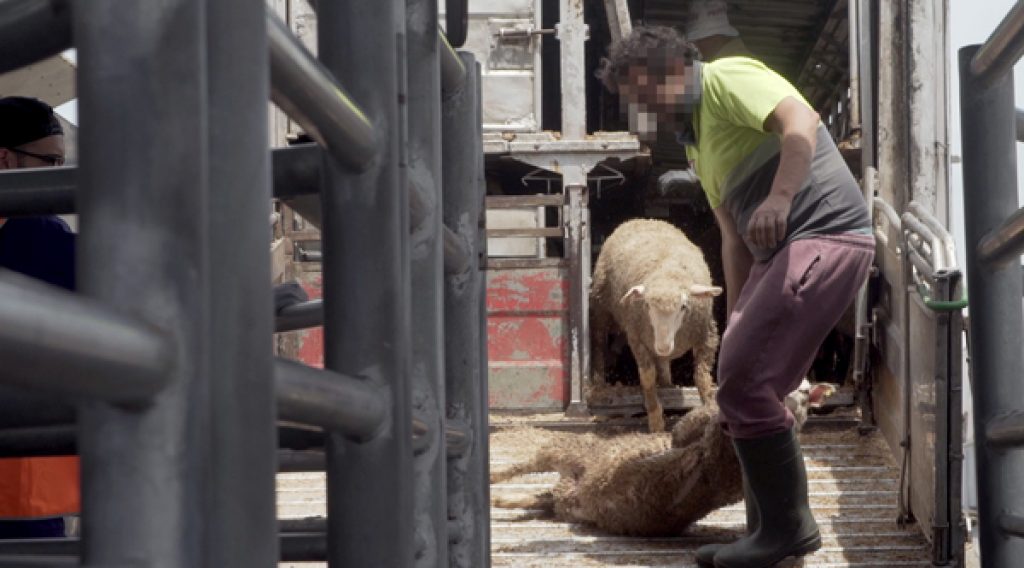
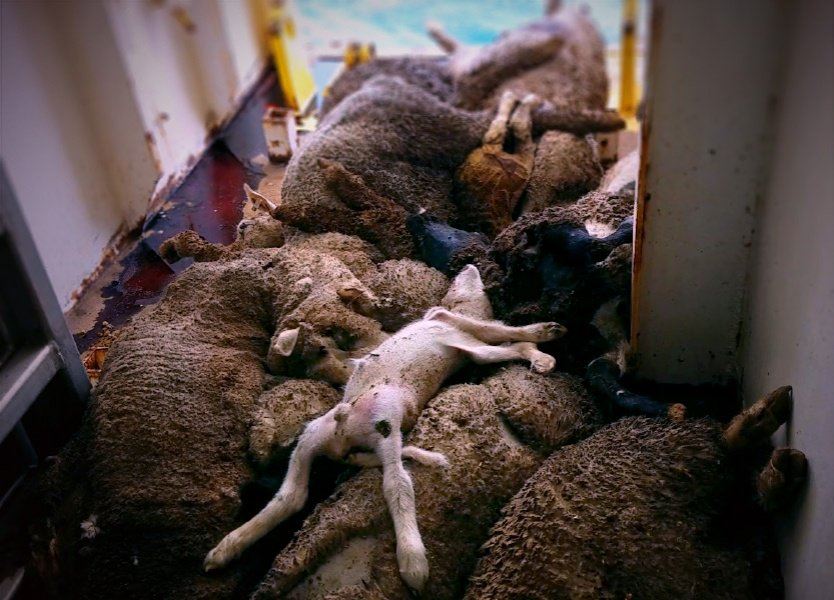
THE DETAILS: In distressing footage shot by our investigators, we documented how lambs, all less than a year old, are treated during their live transport from Spanish farms.
Tens of thousands of lambs are first shipped hundreds of miles by truck to Spanish port cities and then forced to travel by sea to countries in the Middle East to meet the demand for meat coinciding with Ramadanand the feast of the Sacrifice of the Lamb. Lambs are particularly sensitive animals that become paralyzed when they are afraid.
During the journey, workers are shown throwing the animals and grabbing them by their legs to prevent them from retreating.
COVID-19 A FACTOR: The meat industry is utilizing the exports of lambs to Middle East countries as a way of compensating for the lack of domestic demand due to the COVID-19 pandemic, as 90% of these animals are consumed in bars and restaurants. Data indicates that this year alone more than 250,000 lambs will be sent to countries in North Africa and the Middle East for Ramadan celebrations.
BILLIONS OF ANIMALS ENDURE CRUEL LIVE TRANSPORT: Worldwide, more than two billion farm animalsundergo long-distance of travel each year as a means of transporting live meat.
Thousands also die during long sea journeys, with their bodies thrown overboard, appearing on beaches days later.
In a 2019 report following an accident in which 14,000 sheep drowned in the Black Sea while being transported from Romania to Saudi Arabia, the European Commission acknowledged numerous deficiencies in this type of long-distance transport.
The report points out that the welfare of these animals depends largely on the conditions of the ship and because there are no suitable inspections carried are carried out, there are no guarantees that these ships have an adequate drainage or ventilation systems.
In fact, for ships bound for Saudi Arabia, port operators or livestock owners are not even allowed access to the vessels’ interior.
WHAT WE’RE SAYING: “Our investigations have clearly documented the mistreatment of lambs on these trips. It’s time to demand that both the Spanish government and the European Commission ban long-distance travel of live animals,” says Silvia Barquero, Executive of Animal Equality Spain.
WHAT ELSE WE’RE SAYING:“From farms to slaughterhouses, animals exploited for food suffer tremendously. What is often forgotten in this never-ending cycle of violence is the immense cruelty that happens when these animals are transported to be slaughtered. It’s more than time for this cruelty to be stopped and Animal Equality will continue to use its investigations to expose these truths,” says Sharon Núñez, President of Animal Equality.
LIVE TRANSPORT OF ANIMALS OUTSIDE OF THE EU MUST END: In Europe, Animal Equality launched a petition addressed to the European Commission and the Ministry of Agriculture, Food and Fisheries calling for an end to long-distance transport to countries that do not guarantee basic EU animal welfare standards (!!)
We are hopeful that our efforts will lead to much-needed change and will prevent the suffering of hundreds of thousands of animals every year. In the meantime, you can make a difference for animals by sharing out our investigations and ditching animal products.
Saving lives starts with consumer choices, and you can help end suffering by making the switch plant-based.
The animals, the planet, and your health will thank you.
And I mean…Since the judgment of the European Court of Justice in April 2015, the legal situation has been clear: The EU animal welfare transport regulation No. 1/2005 must be observed until the animals’ final destination, even if it is outside the EU.
The longer the transport, the more the animals suffer.
The lower the financial ‘value’ of the animals, the worse the transport conditions – mostly with live exports from the EU.
In order to get rid of the overproduction of animals, the member states of the European Union export over three million animals per year to countries outside the European Union, especially cattle and sheep.
Sooner or later the animals will be slaughtered in the countries mentioned without anesthesia. The methods for fixing animals are inconceivable and far from the EU animal welfare laws for animal transport.
And now the following question arises: Why do we need EU law if it is constantly broken?
Has the EU Commission considered what happens to the ships that want to enter the ports of non-EU countries and are not allowed if the countries close their borders because of Corona?
Who will check whether Regulation 1/2005 is complied with in these countries?
The EU Commission has so far confirmed that they are indifferent to the suffering of animals in transports, farms, laboratories, circuses, aquariums, zoos…
Close the altar that worships power, excess, animal torture and tyranny
Let the bloated bureaucrats find real jobs in the fast food industry.
Turn these palatial EU buildings into nature wildlife parks for zoos animals
A Europe without an EU will be a win for everyone!
Posted on May 6, 2020 by Serbian Animals Voice (SAV)
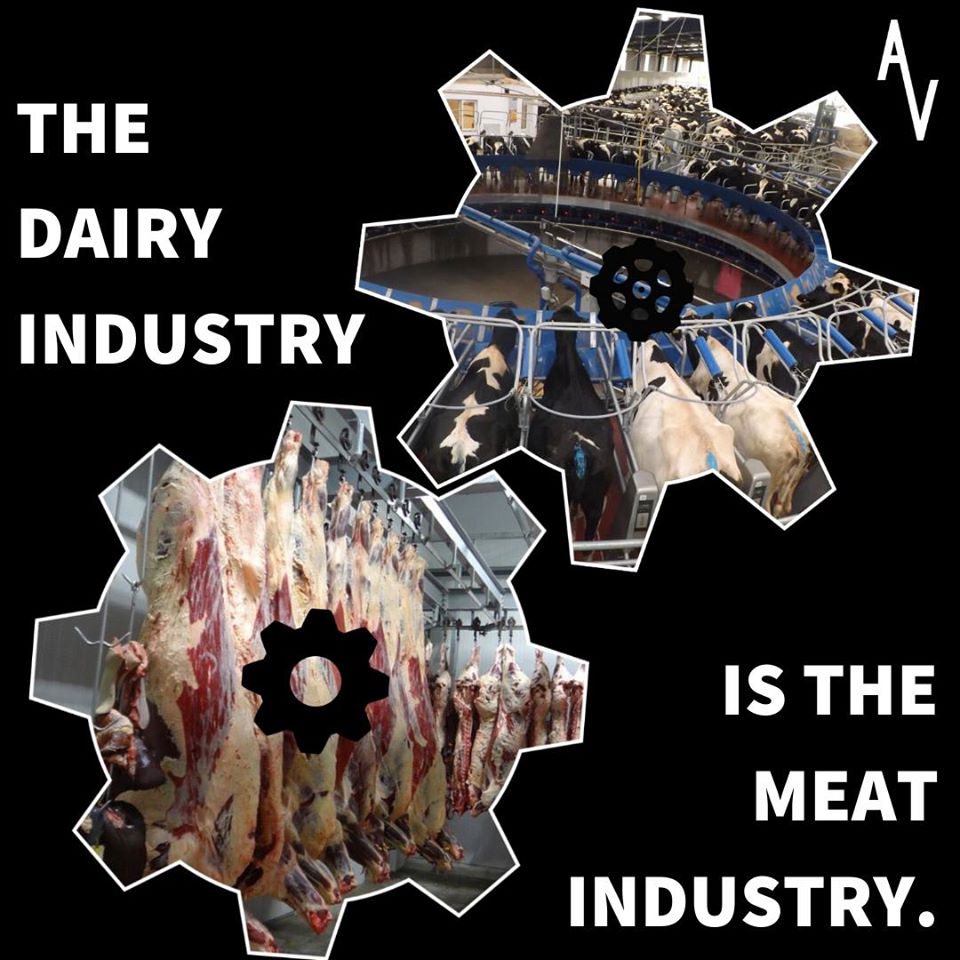
Many people seem to be under the impression that by buying a glass of milk is somehow “different” to buying a steak—not true.
The reality is that dairy is beef and beef is dairy.
You CANNOT fund one without funding the other.
Here’s how: when you buy a dairy product like cheese or milk, you pay for a cow to be fisted in order to impregnate them (so they can lactate) and create someone’s future steak.
Males will be murdered shortly after birth, and females will grow up as sex slaves having that whole process repeated to them until they, too, are sent to the slaughterhouse.
And the same is true of the other products of abuse that people buy.
The egg industry is the chicken industry.
The wool industry is the lamb industry.
To buy eggs or wool is to fund murder and slavery.
Posted on May 6, 2020 by Serbian Animals Voice (SAV)
The blood of this animal is worth almost 15,000 euros per liter.
The pharmaceutical companies owe their bulging accounts to horseshoe crab – a creature that is older than the dinosaurs and that floats in our oceans as a “living fossil”.
For decades, the pharmaceutical industry has been harvesting blood commercially from an animal with the scientific name ‘Limulus Polyphemus’ – the Atlantic horseshoe crab (also called Moluccan cancer or horseshoe cancer), for a very special reason: its “blue gold”, as they call it can bring tens of thousands of dollars per liter, Bloomberg reports.
The blue blood of the crayfish is used to detect germs in vaccines and infusions as well as on medical devices. It contains a protein molecule that works like a primitive immune system: as soon as it comes into contact with disease-causing coli bacteria or Salmonella, it clots like sour milk.
No substance in the world displays bacteria better.
The uniqueness of their blood, which was to revolutionize medicine, was discovered in the 1960s in these crab species, which are 450 million years old.
Unlike vertebrate blood, horseshoe crabs do not use hemoglobin to carry oxygen through their bodies. Instead, the blood ( called is called Limulus Amebocyte Lysate ) contains hemocyanin, a protein that transports oxygen, stains the blood blue, and has specialized immune cells that are extremely valuable.
That is what makes these animals so valuable.
And then there’s the pharmaceutical industry!!
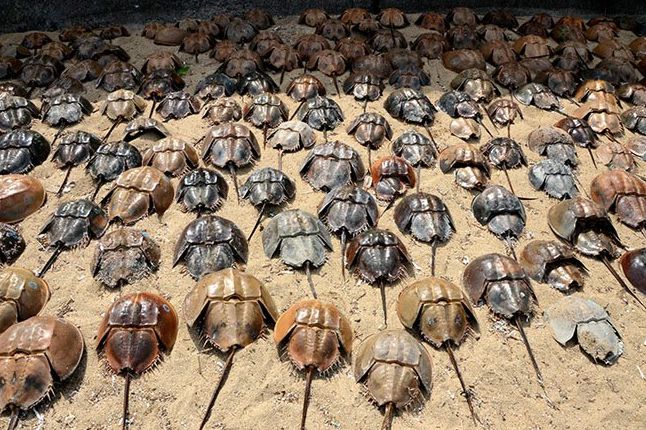
Around 430,000 American horseshoe crab are caught and forced to donate blood on the US coast alone, reports the English Guardian. A lucrative business: The lysate made from blood is one of the most valuable liquids on earth.
A liter costs up to 15,000 euros.
As soon as the blood is drawn, the horseshoe crabs are released back into the ocean. However, it is estimated that 15% to 20% of them die from the consequences of the process.
According to Bloomberg, horseshoe crab stocks have plummeted by 80% in the past four decades.
Up to a fifth of horseshoe crabs did not survive «blood donation».
In the procedure, the shell of the animals is pierced near the heart. The animals must leave 30 percent of their blood in the laboratory before being released again.
A professor at the National University of Singapore developed a synthetic solution two decades ago that would replace the blood of horseshoe crabs.
Apparently, however, the pharmaceutical industry prefers to bleed horseshoe crab until this animal too, at some point, like the dinosaurs, belongs to the animals that have become extinct.
The animals have even survived the dinosaurs but they will not survive the bloodsuckers.
They are in the hands of the pharmaceutical mafia, which draws blood from them in masses.
This is mainly about the ethical problem, above all because of the way in which this procedure be practiced. In Japan, for example, they are squeezed alive in order to obtain the maximum amount of blood.
So another animal with which the pharmaceutical mafia fills their accounts with billions.
The human species is the only species that is mostly responsible for the extinction of another species.











 Serbian Animals Voice (SAV)