Posted on April 16, 2020 by Serbian Animals Voice (SAV)
Coronavirus: live animals are stressed in wet markets, and stressed animals are more likely to carry diseases
When a pathogen challenges a healthy immune system, the body responds with inflammation to fight it. But when an animal is stressed, the hormone cortisol is released.
This causes the normal inflammatory response to change into a more limited activation of white blood cells. And this allows new pathogens to survive and multiply.
In a controversial move, China recently reopened its wet markets, which sell fresh meat, produce and live animals. A wet market in Wuhan may have been the source of the COVID-19 outbreak.
Prime Minister Scott Morrison has condemned the move, and the World Health Organization reportedly stated while wet markets don’t need to close down, they should be prohibited from selling illegal wildlife, such as pangolins and civet cats, for food, and food safety and hygiene regulations should be enforced.
The demand for meat and milk in China is growing rapidly. Nearly 1.5 billion people live in China, and each person eats, on average, about 2.5 times more meat than in the early 1990s.
Poorly treated animals are stressed, and stressed animals are more likely to harbour new diseases because their immune systems are compromised.
This means these wet markets, where there are stressed animals in close contact with humans, are the perfect breeding ground for new diseases.
China urgently needs to restructure its animal industries for global food safety. “Clean” meat” (meat grown from cells in a laboratory) offers hope – but more on that later.
Stressed animals can’t fight diseases well
The consumption of wildlife per se does not increase the risk of disease transmission. Freshly killed deer in the Scottish highlands can provide venison that’s less risky than intensively farmed chickens, which are routinely infected with human pathogens.
When wildlife are stressed, farmed in small cages and kept in close contact with humans during the entire rearing and slaughtering process, including in wet markets, the risk of disease transmission rises.
When a pathogen challenges a healthy immune system, the body responds with inflammation to fight it. But when an animal is stressed, the hormone cortisol is released.
This causes the normal inflammatory response to change into a more limited activation of white blood cells. And this allows new pathogens to survive and multiply.
Wildlife under pressure
As well as importing more meat, the Chinese government has rapidly changed production systems from “peasant-style” agriculture to intensive animal production systems. Recent urban expansion has also put more pressure on agricultural land.
Some weeks ago I visited a new dairy farm in China with more than 30,000 cows. I passed through a destroyed village where small farms kept just a few cows each. Cows in the new megafarms are permanently housed and produce twice as much milk as the cows on small farms, being fed a richer diet.
But they typically last only two or three lactations because of the stress, whereas small farmers’ cows might be kept for a decade.
Similarly, wildlife populations have been put under significant pressure. The human population density in China has grown to four times that of the United States and 50 times that of Australia, all similar-sized countries with significant wilderness areas. Indigenous forest in China has diminished to just 3% of its original area.
Domesticated animals have been bred to tolerate traditional farming systems without getting unduly stressed. Wildlife have not.
The response to wildlife farming
In 2017, the Chinese government issued a law tightening up trade in wildlife, but still allowed wildlife not under state protection and obtained by a person with a hunting license to be sold. Fines for vendors and purchasers were as little as twice the value of the wildlife.
With limited “wild life” available for consumption, entrepreneurial Chinese have turned to farming them in an industry reportedly worth billions and employing 6 million people.
Keeping wildlife in small cages – as is practised on wildlife farms – causes them immense stress, traditionally recognised as “capture myopathy”, which can be so severe that it kills them.
But in February this year the law tightened to include a ban on all consumption of terrestrial wildlife, but only if they lived naturally, rather than on farms.
However, nearly 20,000 of the wildlife farms have reportedly been closed down since the COVID-19 outbreak began.
Signs of change
There are signs of growing awareness in China towards stress in their animals.
My colleagues and I at the University of Queensland recently established a Sino-Australian Animal Welfare Centre, and our latest research has found a growing number of scientists studying animal welfare issues in China.
What’s more, there’s a big opportunity to bring “clean meat” into the Chinese diet. Clean meat is grown synthetically from muscle cells, without the massive land and water resources required of traditional meat production in China, without the emissions of pollutants and, most importantly, without the risk of transmission of novel diseases.
In fact, plant-based meat substitutes are gaining favour in China as more sustainable and healthy products. A 2018 study found Chinese consumers’ intention to eat less meat had a positive emotional response.
Cultural studies suggest that in general, Chinese people have many of the right qualities for widescale adoption. They act in the collective interest, not for themselves, they are adaptable and entrepreneurial, and their society is driven by competition and success in the face of adversity.
Chinese scientists are already working on clean meat. In fact, the first cultured meat there, from pig muscle stem cells, was produced last year by scientists at Nanjing Agricultural University.
Clean meat is expected to comprise 35% of the global meat market in 2040. Perhaps it will be even faster in China to avoid more animal-borne diseases emerging.
Posted on April 15, 2020 by Serbian Animals Voice (SAV)
The zoos and animal gardens in Germany are also suffering from the corona crisis. Due to the lack of income, they are under increasing pressure.
Bankruptcies are imminent – but what will become of the animals?
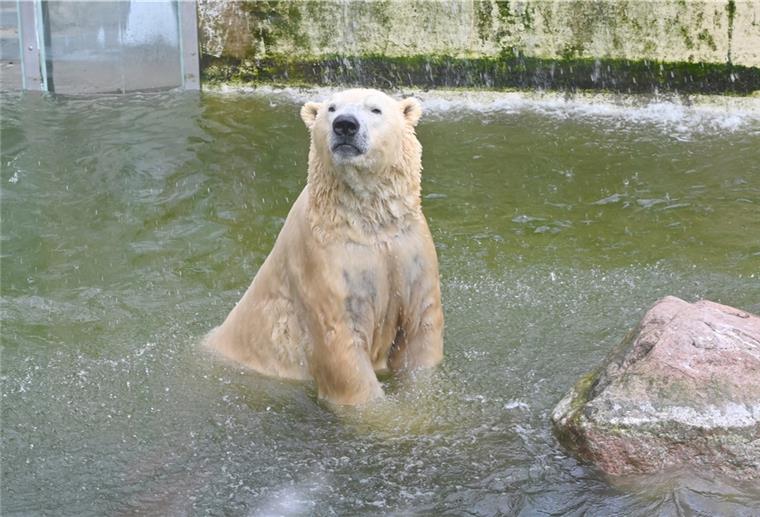
The animal park Neumünster has drawn up emergency plans for the slaughter of its animals because of the existential corona forced closure. It also says who will be the last to go to the slaughterhouse in the event of a fall: the 3.60 meter tall polar bear«Vitus», said Zoo Director Verena Caspari.
Vitus, the polar bear- Neumünster
The background is that the zoo currently has no income from visitors and is only kept alive by donations.
“We are an association,” said Caspari. “We do not receive any urban funds, and everything we have applied for so far has not yet been received by us. We currently only survive with donations.”
That’s enough.
“But if – and that’s really the worst, worst case – if I run out of money to buy feed, or if it should happen that my feed supplier can no longer deliver due to new restrictions, then I would slaughter animals to feed other animals. “
But that would be the very last step.
“It’s not as spectacular as it sounds,” said zoo director Caspari. Because killing an animal in certain cases is even mandatory for animal welfare reasons. “Before that, you could of course also try to sell animals to other companies. But that is not so easy with all animals.”
For example Vitus, the polar bear.
With a weight of around 700 kilograms, it is one of the largest of its kind in Germany. “If things get really tough here and the zoo has to be dissolved, I can’t just put it in a box and transport it elsewhere.”
You can’t even get such a big animal with a colleague. “It is not a pony that you can sometimes put in a donkey stable. It is a large predator for which you need an adequate system.”
But Caspari is confident that it won’t come to that. Other animal parks had promised to send fish and meat to the Neumünster residents “if the worst case would happen,” she said.
The Nuremberg zoo also issued a press release to the public at the end of March: The Association of Zoological Gardens has confirmed that the zoos need an emergency aid program in the amount of 100 million euros.
“Unlike other facilities, we cannot simply shut down our farm – our animals still have to be fed and cared for,” said Jörg Junhold, President of the Association and Zoo Director in Leipzig.
“At the moment, however, we are working with no income and consistently high expenses.”
The seriousness of the situation can be seen from the fact that a single large zoo currently has to cope with a weekly loss of sales of around half a million euros.
The corona crisis also affects the animals – “the monkeys miss the visitors ,” says the Nuremberg Zoo director.
How critical the situation is can be seen in the case of Neumünster Zoo: Zoo director Caspari says: “In the worst case, I will have to euthanize animals before I starve them to death.”
Other animal parks would also deal with this question – even if one does not like to talk about it. To prevent the disaster, the zoo in Neumünster is asking for donations.
My comment: What a disgusting mix of self-pity and manipulation!
EVERYONE who has taken responsibility for so many other beings (or rather, has seized them against their will) must have reserves for at least a few months.
And I want to say: a zoo director can’t let tigers fly in and let elephants cart in from somewhere and then say: Oops, the Easter business failed, let’s put a few penguins to sleep!
This is about sentient and healthy living things and not about things!
As long as they served as crowd pullers and brought money to the till, each zoo director spoke of a “family”.
As soon as the crisis is there, they have to be slaughtered.
Zoos have to be closed forever, now is a good opportunity.
The animals belong in freedom and should be housed in national parks.
Posted on April 15, 2020 by Serbian Animals Voice (SAV)
Coronavirus: WHO urges China to close ‘dangerous’ wet market as stalls in Wuhan begin to reopen
’75 per cent of emerging infections come from the animal kingdom… It’s partly the markets, but it’s also other places where humans and animals are in close contact,’ says Dr David Nabarro
The World Health Organisation is urging countries across the world to close “dangerous” wet markets amid warnings about the risks posed by environments where humans are in close contact with animals.
Wet markets in Wuhan, the city where the coronavirus outbreak first emerged, have begun to reopen following the lifting of lockdown restrictions. This move comes despite the virus being linked to the city’s Huanan Seafood Wholesale Market.
But WHO, as well as other public health organisations and campaigners, have said the markets pose a “real danger” as pathogens can spread easily and quickly from animals to humans.
Dr David Nabarro, a WHO special envoy on Covid-19 and special representative of the United Nations secretary general for food security and nutrition, said the world health body “pleads with governments and just about everybody” to be respectful of how viruses from the animal kingdom are rife.
Speaking on BBC Radio 4’s Today programme, Dr Nabarro said while WHO is not able to tell governments what to do, their advice is to close wet markets.
He replied: “You know how WHO and other parts of the international system work – we don’t have the capacity to police the world. Instead, what we have to do is offer advice and guidance, and there’s very clear advice from the Food and Agriculture Organisation and WHO that said there are real dangers in these kinds of environments.
“75 per cent of emerging infections come from the animal kingdom. It’s partly the markets, but it’s also other places where humans and animals are in close contact. Just make absolutely certain that you’re not creating opportunities for viral spread,” added Dr Nabarro.
Traders sell fresh produce, fruit and vegetables in wet markets alongside wild and domestic animals mainly for consumption in wet markets, which are common in China, South Korea and southeast Asia. Not all wet markets sell exotic meats, but poor legal controls allow for the controversial product to enter the supply chain.
Last week, over 200 conservation groups across the world signed an open letter calling on WHO to force the closure of markets where wild meat is sold for consumption.
The joint letter calls on WHO to recommend to governments that they bring permanent bans to live wildlife markets and to exclude the use of wildlife from the organisation’s definition and endorsement of traditional medicine.
Dr Nabarro added: “We have similar concerns about bushmeat – be very very careful when you’re basically eating wild animal meat or killing wild animals. All these things are higher risk and we have to be on high alert these days for these problems.”
The Independent is calling for global action to impose tighter restrictions surrounding the trade of wild animals, in order to help reduce the risk of diseases like coronavirus from spreading.
There is some indication that Chinese authorities are heeding calls for more restrictions. Last month, Beijing banned the trade and consumption of non-aquatic wild animals, and shut down 20,000 farms raising animals such as peacocks, porcupines and ostriches.
Shenzhen became the first Chinese city to ban the sale and consumption of dog and cat meat, with central authorities declaring that dogs are companions and not for consumption.
Jinfeng Zhou, secretary general of the China Biodiversity Conservation and Green Development Foundation, told The Guardian that a universal closure of wildlife markets was justified.
However, the use of wild animal meat or byproducts are still being approved for use in medication and signs that regional Chinese authorities are not enforcing the recent ban on the sale of wild animals have emerged.
Posted on April 15, 2020 by Serbian Animals Voice (SAV)
Spring hunt in Malta: Despite all protests by the nature conservation associations and from the population and contrary to the requirements of the EU Birds Directive, Malta has approved the spring hunt for quail.
From April 10th to 30th, 6,000 hunters can shoot a total of 5,000 of the endangered migratory birds.
That means the hunters go on the prowl for 20 days in order to allegedly kill less than one bird on average – a hardly credible calculation.
The actual number of birds shot is likely to be much higher. The police controls, which are always too tight, have been further reduced by the corona pandemic.
As a result, the two teams of the Committee against Bird Murder, which are currently in use in Malta, observe numerous violations of hunting and nature conservation law.
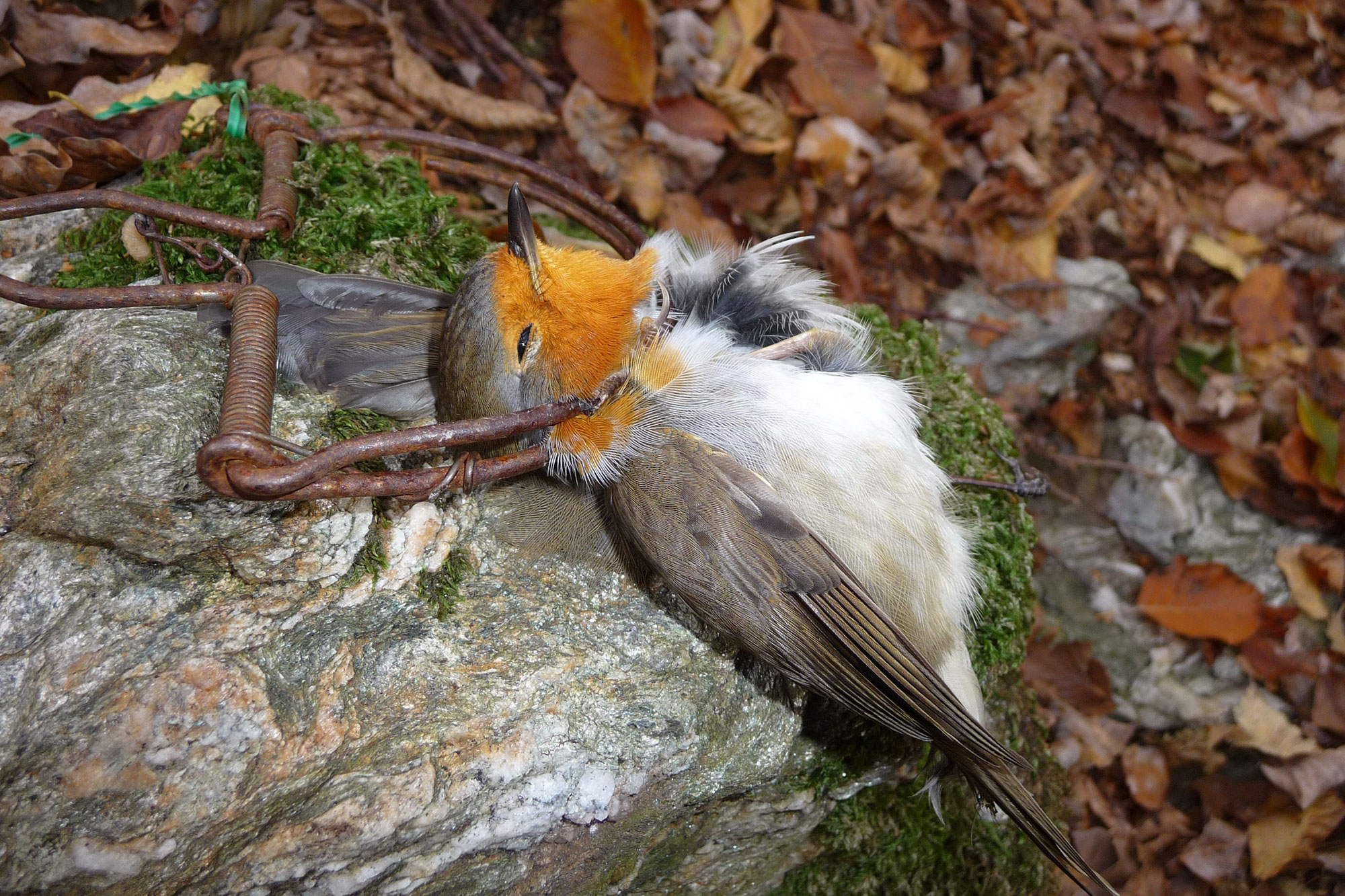
The use of banned electronic lure systems and shots at protected birds of prey, hoopoes and lovebirds are particularly widespread.
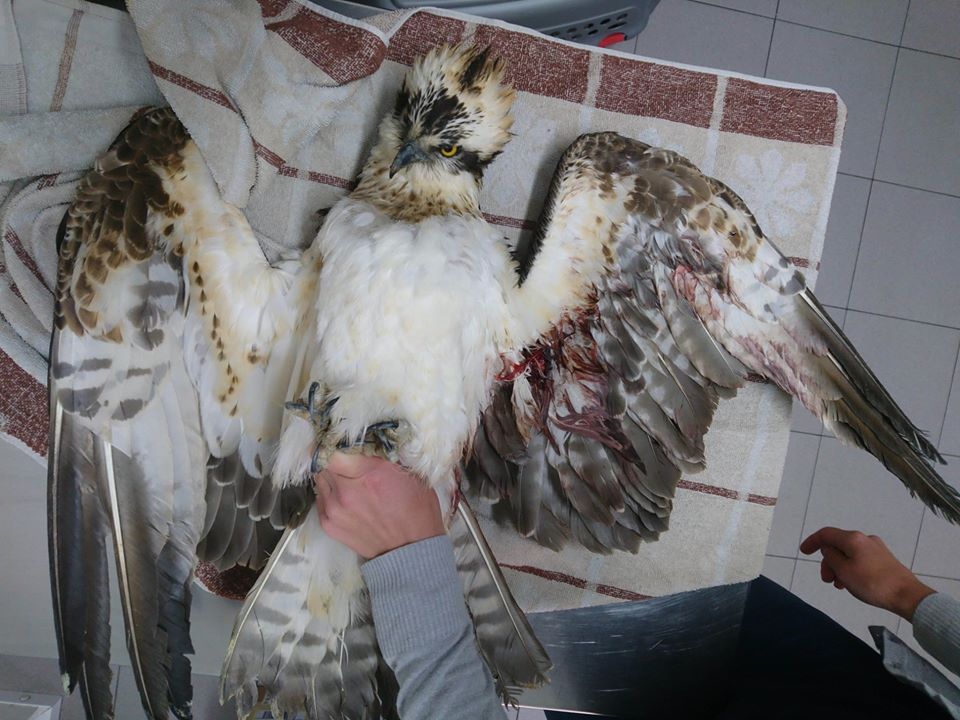
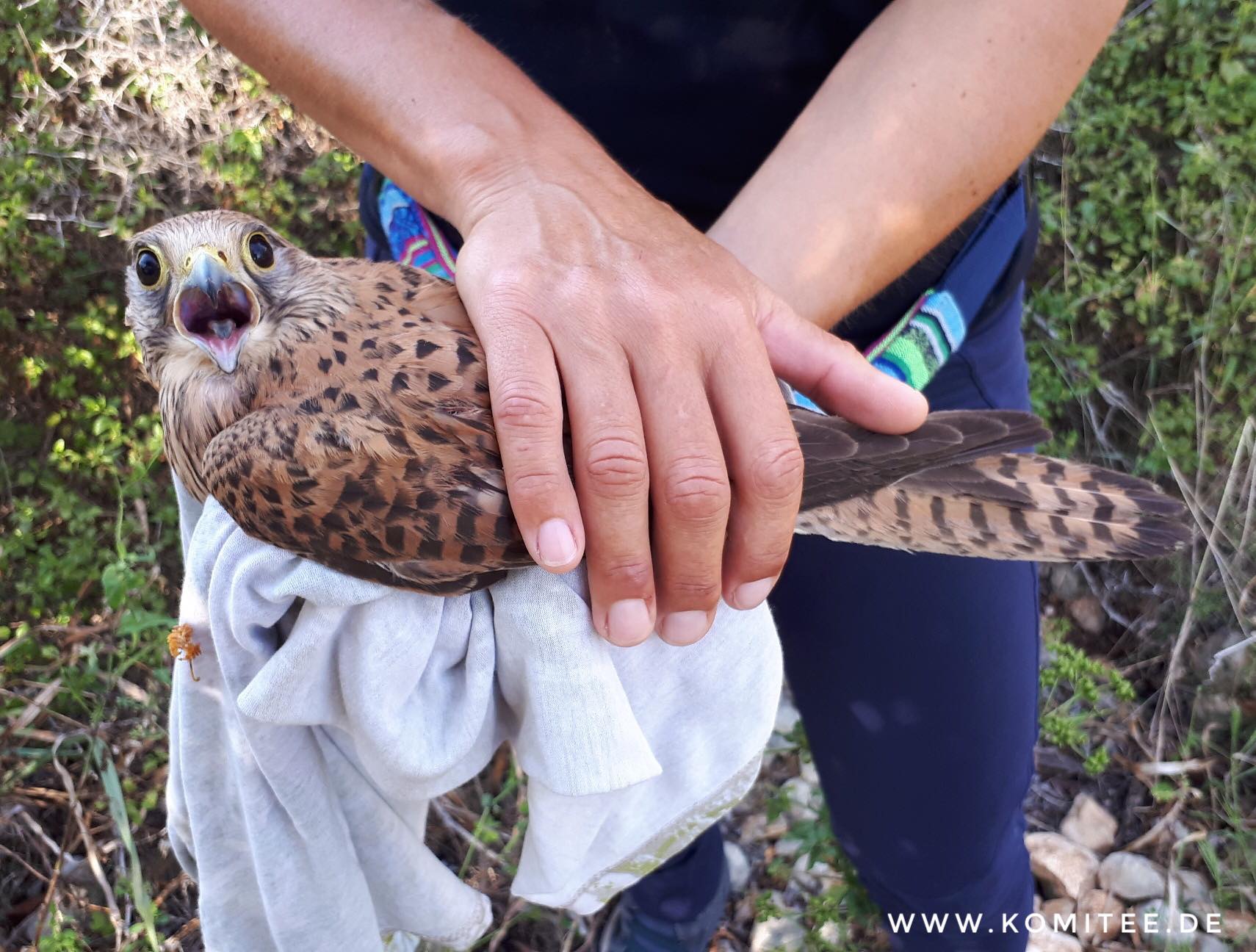
The last victim of the uncontrolled spring hunt is a kestrel, which a committee team found at Birzebuggia on Easter Sunday (photo below).
Unfortunately, the bird had to be put to sleep – its body was full of lead shot.
In our video published today, we show a whole range of violations – from bird trapping with blow nets to hunters who are illegally stalking.
It has received and confirmed information that the man works as a prison guard in Corradino Correctional Facility.
My comment: The hunting season in Malta lasts from September to May. There is hunting almost everywhere, and the illegal poachers don’t give a shit about the police.
Since classic game on the islands has long been eradicated, the murderers’ rage is concentrated on the migratory birds.
The list of birds officially released for hunting and fishing includes, in addition to numerous songbirds, waders and waterbirds, even highly endangered species.
A blatant case of corruption when licenses are issued for endangered species.
Bird catching is a popular sport in Malta. Unlike most other fishing areas in the Mediterranean, the captured songbirds end up as caged birds, locked up in the living room of perverted “bird friends”.
In Malta’s capital Valletta there is even a large bird market every Sunday, which is even mentioned in the travel guides as a sight.
Another big advantage of the Corona is the temporary standstill of tourism in countries that have always lived from tourism. For tourism, a lot of money is usually made with animals.
Speaking to Howard Stern on his SiriusXM radio show, the former Beatle said: “They might as well be letting off atomic bombs because it’s affecting the whole world.”
“Whoever is responsible for this is at war with the world and itself.”
Although no origin for the deadly virus has been officially determined, some have heaped blame for the pandemic on China’s wet markets, which sell freshly slaughtered animals.
Last week, more than 200 conservation groups across the world signed an open letter calling on the World Health Organisation to force the closure of markets where wild meat is sold for consumption.
Stern brought up the topic of the markets to McCartney, who has been a very public vegetarian and animal rights campaigner for decades.
“I really hope that this will mean the Chinese government says, ‘Ok guys, we have really got to get super hygienic around here,’” McCartney said. “Let’s face it, it is a little bit medieval eating bats.”
“They don’t need all the people dying. And what’s it for? All these medieval practices. They just need to clean up their act. This may lead to it. If this doesn’t, I don’t know what will.”
McCartney also praised the community spirit that has emerged during the pandemic, saying: “A lot of people are pulling together and it is a great thing. It is inspiring.”





 Serbian Animals Voice (SAV)