Germany: ‘Fox Week’ 2013 and Hunting News.

GERM0001

fow week 2013 1

fox week 2013 8

OLYMPUS DIGITAL CAMERA

fox week 2013 10

Germany – ‘Fox week’ and hunting news.

Dominik Storr, the lawyer involved with the Strasbourg case, has lodged a complaint with the Wuerzburg public prosecutor’s office.

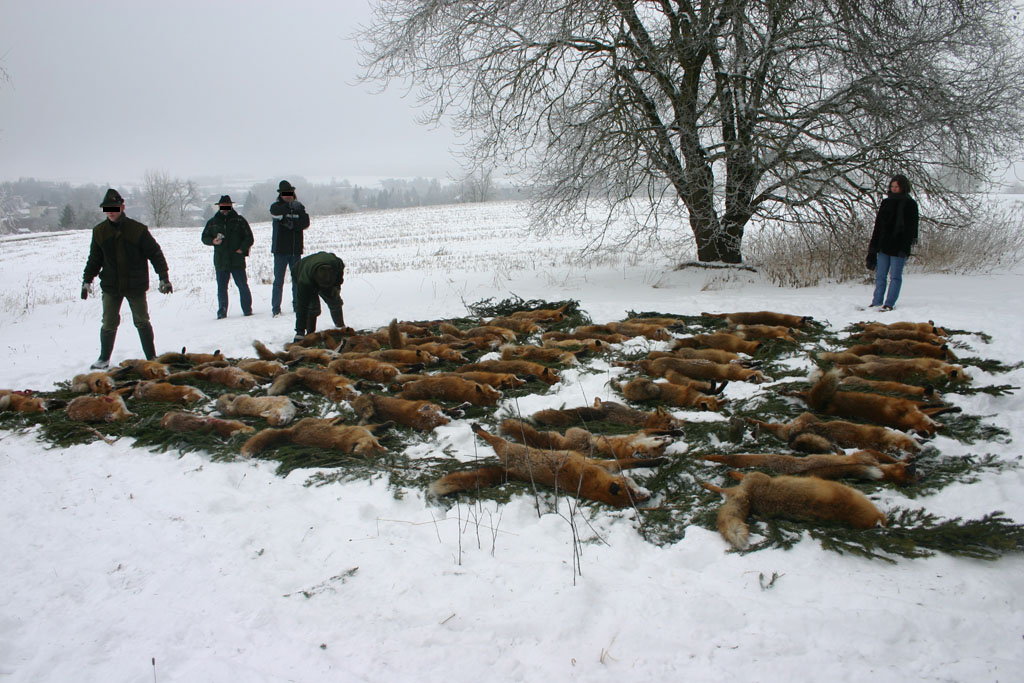
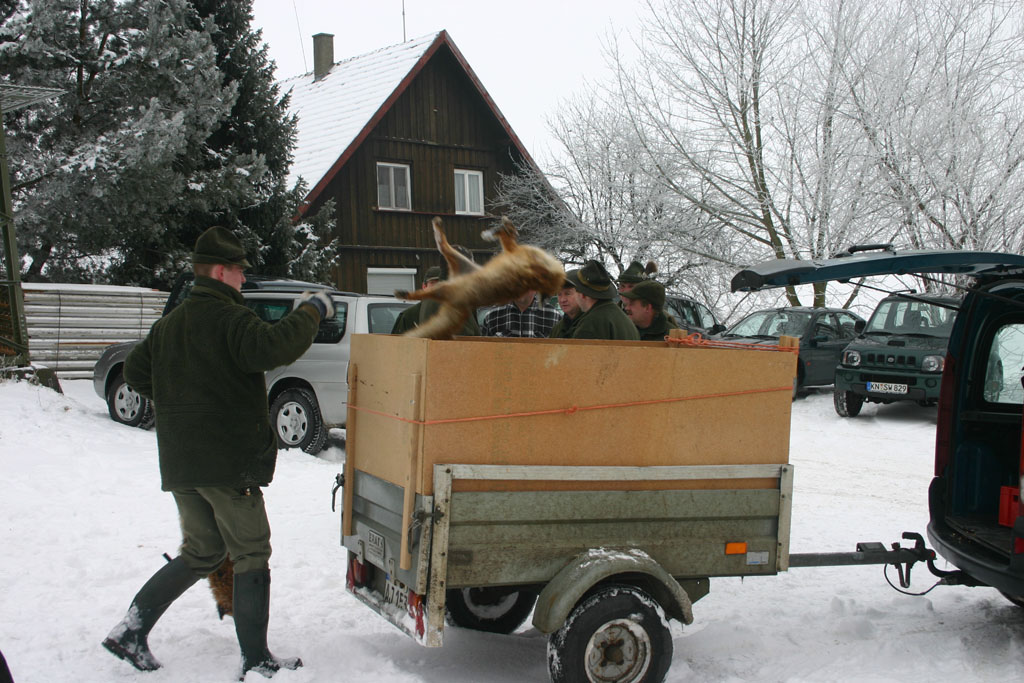
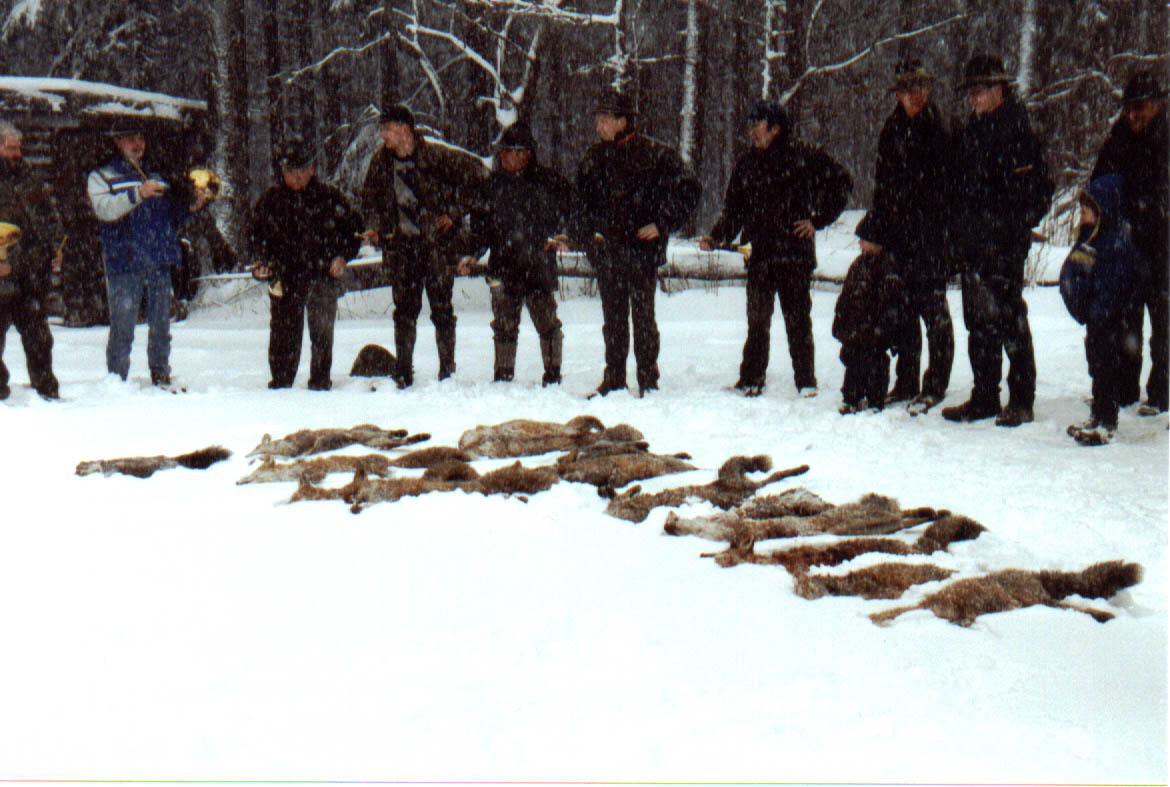
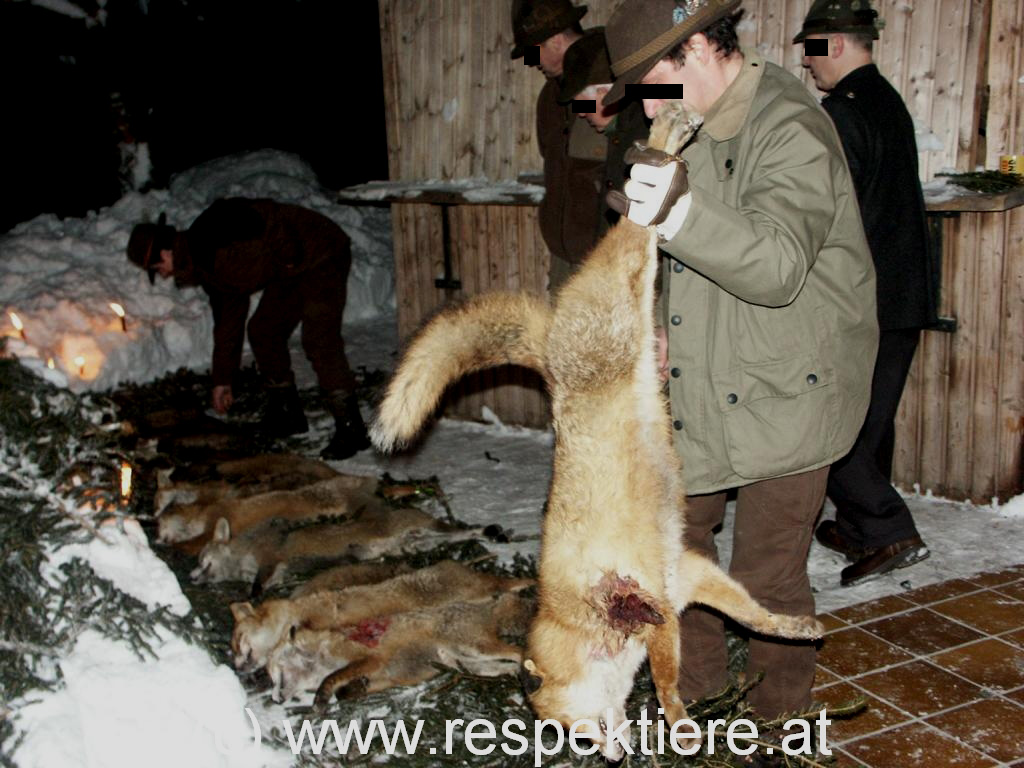
He’s representing a number of ant-hunting initiatives (Lovis’ “  – “closed season for foxes”/ “Wildtierschutz Deutschland” – among them) who want to see some action against the local (Lohr and Marktheidenfeld/Northern Bavaria) hunting societies and the involved hunters who have killed 92 foxes during their annual “fox weeks” from 20.01. – 03.02.2013.

A copy of the Dominik Official document can be viewed here:

http://www.buergeranwalt.com/wp-content/uploads/2013/02/Strafanzeige-15.2.2013.pdf

There’s a video with Dominik here – he’s the blond long-haired chap:

http://www.youtube.com/watch?v=i5W8bjJ2Hgw

The programme/discussion group is about animal welfare issues.  The lady with the short grey hair is also pro-animal rights – she used to be with the local Greens, but is now retired. She is seen a lot now at protests etc;

Info on Lovis’ site, with article links:

92 tote Füchse – Wildtierschutz Deutschland zeigt Jäger an

** 92 dead foxes – “Wildtierschutz Deutschland” reports hunters **

This is Dag’s (Frommhold) site: http://fuechse.info/

(Fox hunts pics: http://fuechse.info/index.php?navTarget=galleryofevil.php)

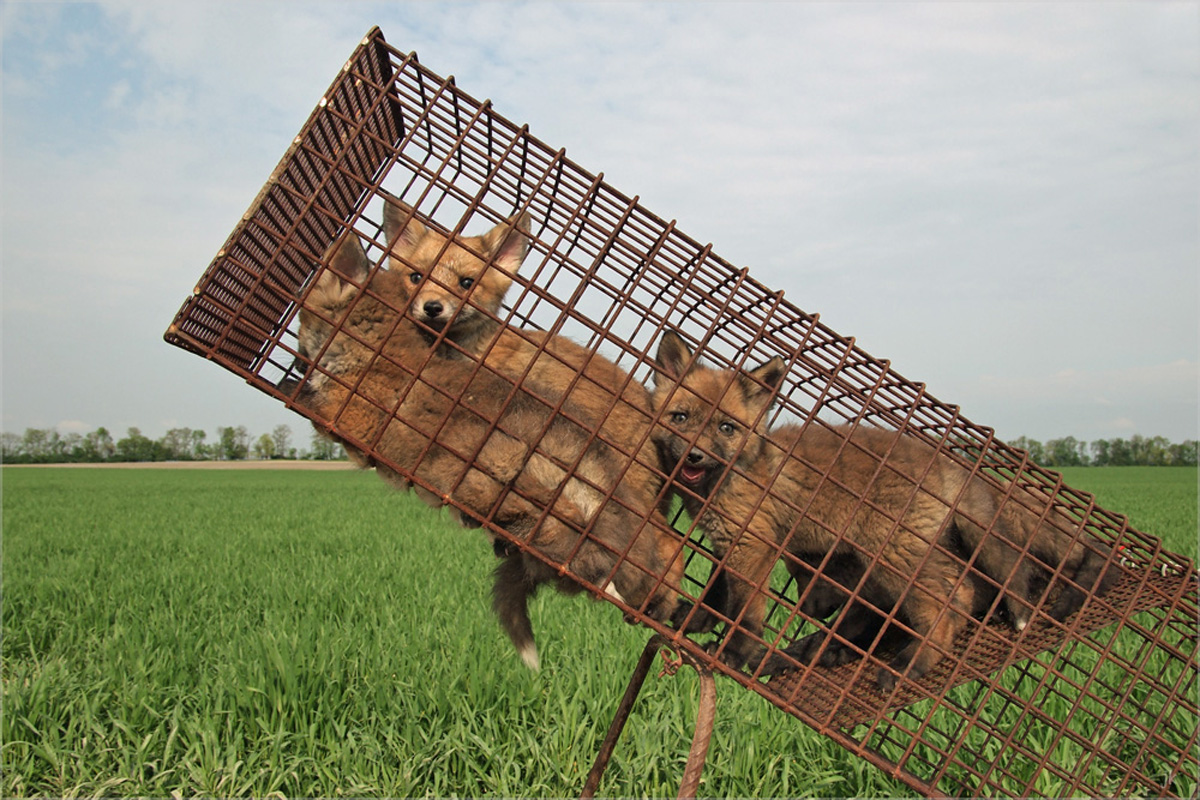
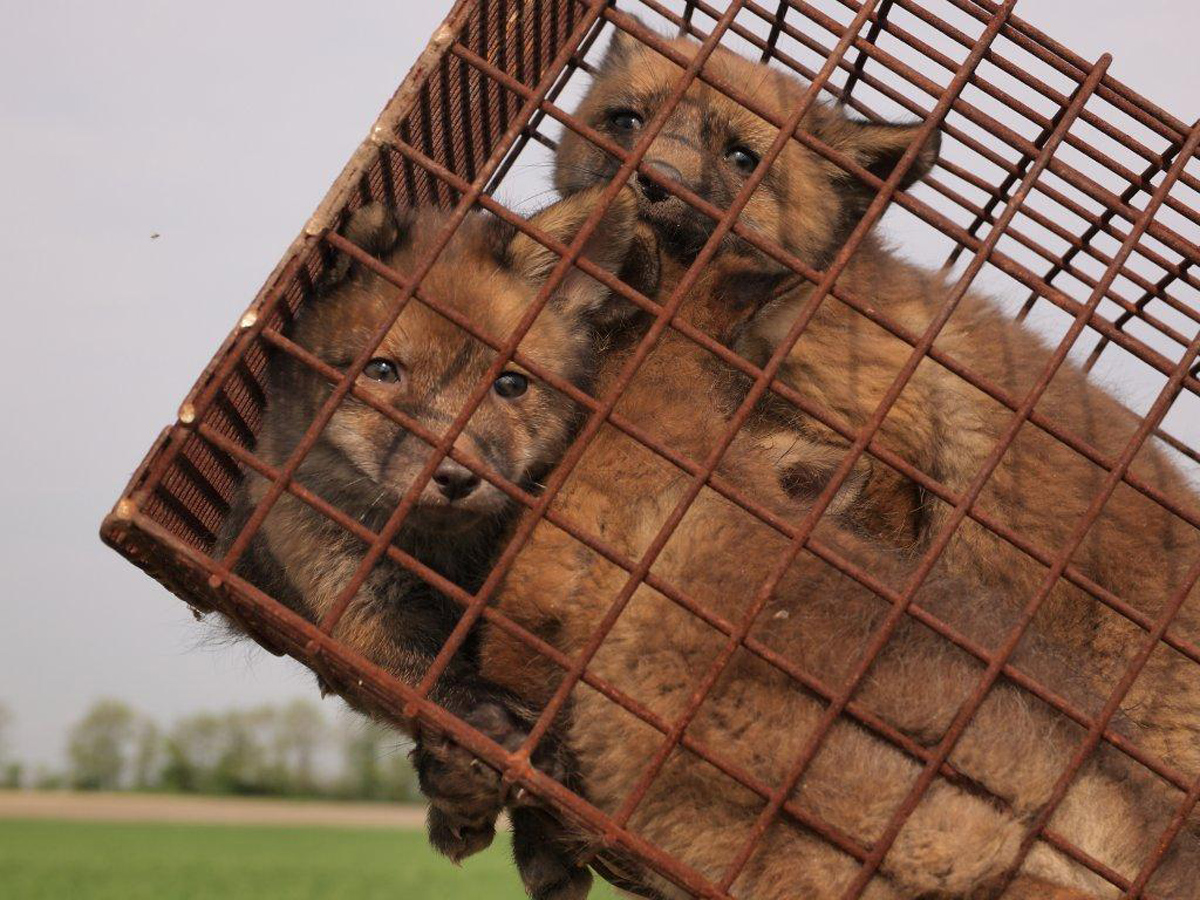
All fox hunt pictures of recent ‘Fox Weeks’ are taken from: http://fuechse.info/index.php?navTarget=galleryofevil.php

fox week 2013 2

fox week 2013 3

fox week 2013 4

fox week 2013 5

fox week 2013 6

fox week 2013 7

OLYMPUS DIGITAL CAMERA

fox week 2013 10

Some previous SAV posts relating to Germany ‘Fox Week’ are given below:

NOTE – (for the full list and to view all the posts individually, go to the ‘Search’ bar at the top right and enter ‘Fox Week’ – this should then give you access to all of our past posts, including (WARNING) many graphic photographs.

https://serbiananimalsvoice.wordpress.com/2011/01/28/germany-280111-german-fox-week-latest-pics-links-and-even-a-message-from-jesus/ 

https://serbiananimalsvoice.wordpress.com/2011/01/25/very-important-please-read-hunting-and-timber-lobbyists-in-germany-may-influence-eu-wide-wildlife-protection-in-the-future-we-must-not-let-this-happen/ 

https://serbiananimalsvoice.wordpress.com/2011/01/23/germany-update-230111-eu-hunting-court-rulings-the-german-fox-week-and-more/ 

https://serbiananimalsvoice.wordpress.com/2011/01/20/germany-mass-slaughter-of-fox-week-to-start-by-february-international-appeal-for-aw-groups-to-join-the-german-protest-and-say-no-details-below/ 

https://serbiananimalsvoice.wordpress.com/2011/01/04/germany-international-animal-welfare-organisations-only-please-support-the-call-for-a-closed-season-on-fox-murder-currently-foxes-can-be-killed-all-year/


Germany: 73 Year Old Driver Causes His Truck Overturn On Motorway A99 – 700 Piglets Slaughtered On Site Despite Many Not Suffering Injury.

GERM0001

German piglets 3

Subject: (DE – Bavaria) Truck overturns on motorway A99700 piglets slaughtered on site

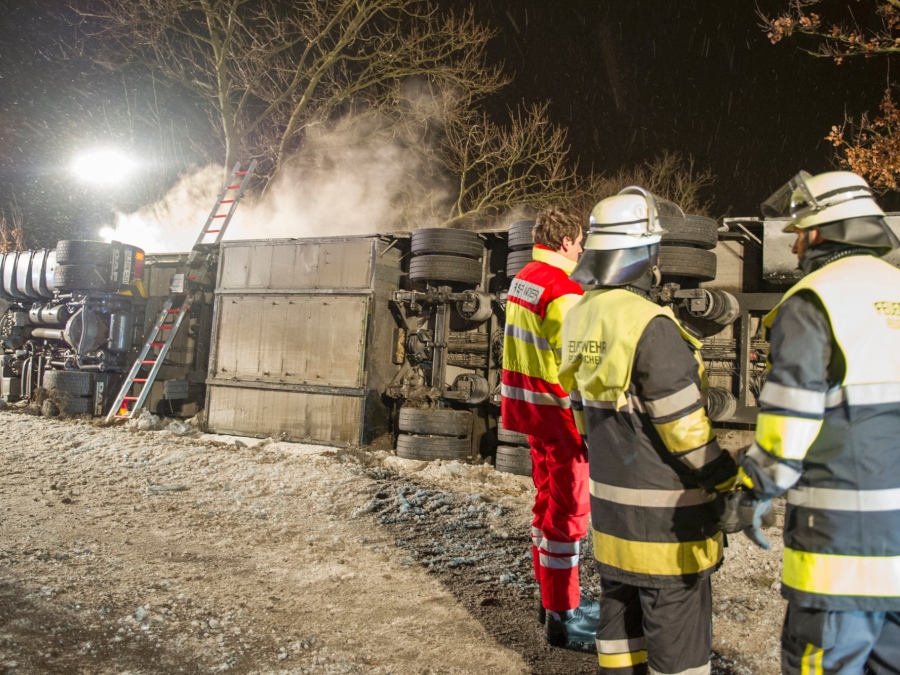
Shortly past midnight on Feb. 22nd a livestock carrying truck overturned on the A99, the Munich bypass motorway. Police put the accident down to a driving mistake by the 73-year old driver, who seems to have tried turning into a motorway service station and lost control.

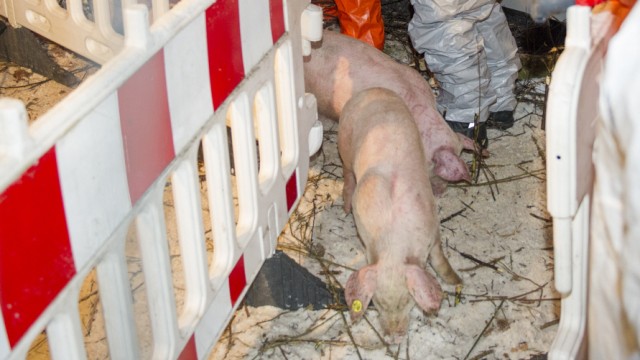
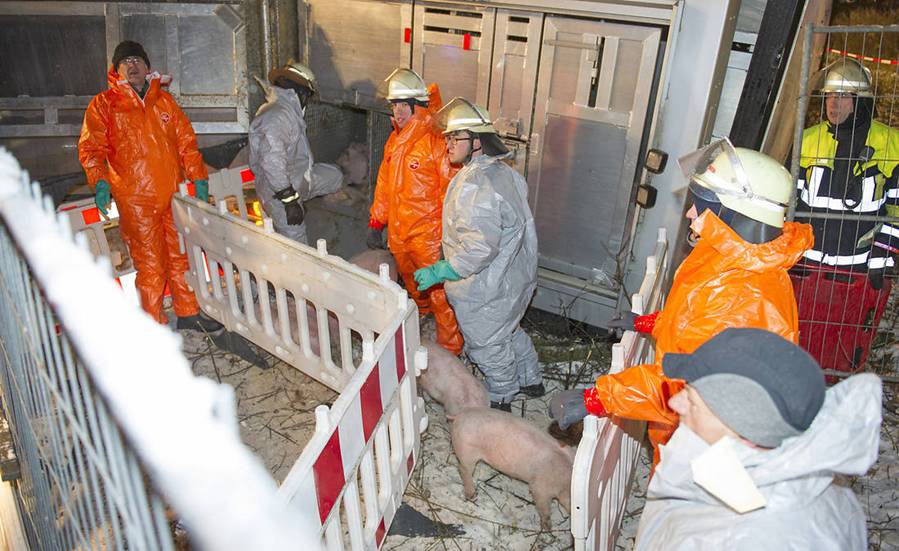
The veterinarian general called to the site ordered the immediate slaughter of all piglets due to the impossibility of unloading them without injury. People passing in their cars heard the high-pitched screams of the piglets as they were first stunned with electric tongs and bled – right there and then, on the motorway.

The meat, it was said, is unfit for consumption due to the high levels of stress hormones, and so the bodies were disposed off.

The animals apparently came from a farm in Schleswig-Flensburg (extreme north of Germany) and were destined for Italy – to be fattened for slaughter.

————————————————

SAV Comment:

a 73 year old driving a truck such as this !! – obviously he should have been retired years ago – but his mistake led to the deaths of 700 pigs and he survived.

The bodies were simply ‘disposed off’.  This wastage of living creatures sums up completely what is wrong with this planet now.  Greed,greed, greed, money, money, money and profit, profit, profit.

We advise the incompetent too old driver to retire before he causes any more suffering to living animals.

German piglets 1

German piglets 2

http://www.sueddeutsche.de/bayern/lastwagen-auf-der-a-umgekippt-notschlachtung-hunderter-ferkel-auf-der-autobahn-1.1606783

22. Februar 2013 12:55

Lastwagen auf der A 99 umgekippt – Notschlachtung Hunderter Ferkel auf der Autobahn

Fast 700 Ferkel werden nach dem Unfall eines Tiertransporters auf der A 99 notgeschlachtet: Die Autobahn ist mehrere Stunden gesperrt.

Fast 700 Ferkel sind nach dem Unfall eines Tiertransporters auf der Autobahnumgehung von München getötet worden. Der Sattelzug war in der Nacht zum Freitag auf der A 99 in Höhe Vaterstetten von der Fahrbahn abgekommen und umgestürzt. Auch die Boxen auf der Ladefläche mit je etwa zehn Ferkeln kippten dadurch um.

Weil die Bergung der Schweine nicht ohne Verletzungen möglich war, ordnete eine Amtstierärztin das Töten noch am Unfallort an. Die Kadaver kamen danach zur Tierkörperbeseitigung. Der Unfall hatte sich um 00:46 Uhr ereignet. Die Polizei geht von einem Fehler des 73 Jahre alten Fahrers etwa 100 Meter vor der Raststätte Vaterstetten aus, die der Mann wahrscheinlich ansteuern wollte. Zugmaschine und Auflieger kippten seitlich um, nachdem der Sattelzug ins Schleudern geraten war.

Das im norddeutschen Kreis Schleswig-Flensburg zugelassene Fahrzeug hatte die Ferkel nach den Angaben des Polizeipräsidiums Oberbayern Nord in Dänemark abgeholt. Die Tiere sollten nach Italien gebracht und dort gemästet werden. Der Fahrer blieb bei dem Unfall unverletzt.

Mitten auf der Autobahn: betäubt und “entblutet”

Die genaue Zahl der auf vier Etagen der Ladefläche verteilten Ferkel stand zunächst nicht fest. Jedoch ging die Polizei aufgrund der Frachtpapiere von knapp 700 Schweinen aus. Die Amtstierärztin beim Landratsamt Ebersberg ordnete jedenfalls das sofortige Töten der Schweine an.

Zur Begründung wurde mitgeteilt, dass die Ferkel durch den Unfall Stresshormone wie etwa Adrenalin ausgeschüttet hätten. Aus lebensmittelrechtlichen Gründen seien die Tiere daher nicht mehr zum Verzehr geeignet. Mehrere Metzger übernahmen an der Autobahn das Töten. Die laut Augenzeugenberichten teils laut quiekenden Ferkel wurden zunächst mit elektrischem Strom betäubt und dann “entblutet”, wie es eine Behördensprecherin nannte. Anschließend kamen die Kadaver in eine Anlage zur Tierkörperbeseitigung. Einige Ferkel waren schon bei dem Unfall verendet.

Der umgekippte Sattelzug sollte noch am Freitag geborgen werden. Dazu musste die Autobahn Richtung Süden zeitweise total gesperrt werden. Möglicherweise ist Öl oder Dieselkraftstoff ausgelaufen. Zur Bergung und dem Töten der Ferkel waren bis zu zwei Fahrspuren gesperrt worden. Es bildete sich ein Stau von etwa vier Kilometern.

http://www.focus.de/panorama/welt/tiertransporter-kippt-auf-a-99-um-700-ferkel-werden-nach-unfall-geschlachtet_aid_924980.html

http://www.nordbayern.de/region/a99-notschlachtung-von-700-ferkeln-1.2710421

Ireland: LIVE EXPORTS VIGIL AT WATERFORD PORT for Cattle To Be Exported Live To Lyba for Ritual Slaughter.

Ireland

***Spare an hour to highlight animals being exported to Libya from Ireland for the meat trade.

PLEASE LET US KNOW IF YOU CAN ATTEND OR IF YOU NEED TRANSPORT.

LIVE EXPORTS VIGIL AT WATERFORD PORT.

Time: 7pm.

Place: Bellvue Port of Waterford

On : Tuesday 19th February 2013.

Exporters have begun assembling 2,900 cattle for the first live export vessel destined for Libya on Wednesday next.

All breeds except Friesians are being sought for Live export to Libya according to David Hunter of Murphy Hunter International Livestock in Cork.

The Vessel arriving from Ceuta, the Al Mahmoud Express will have 2,900 young dairy bulls loaded from Monday at Waterford port to travel to Tripoli, loading alone may take 48 hours. The sea journey will take 10 days.

The boat, which has undergone major refurbishment to meet Irish standards, was inspected by Department of Agriculture officials while it was docked in Istanbul, Turkey, last week.

Minister Coveney has repeatedly stressed the importance of any live-shipping venture adhering to the highest animal welfare standards. “It’s no joke crossing the Bay of Biscay in January and the last thing I want is reports of cattle breaking legs on their journey to wherever,” Mr Coveney said recently.

Treatment of cattle in Muslim Countries.

Cattle that are exported from Ireland to Libya will be subjected to a host of new and frightening environments. Unloading in overseas ports is stressful, with cattle forced to endure many new and/or frightening factors including; extremes of temperature, handling, noises, smells, and painful practices (e.g., tail-twisting, beating). Animals may be separated from their herd and will face these situations alone, often bellowing for their fellow herd members. The slaughter process obviously causes great fear (even terror) and prolonged suffering.

These large animals are not easy to coerce, so slaughterhouse employees use sheer brute force and pain to force the animals to move. These gentle animals have their tendons slashed, their eyes stabbed, and their tails twisted (sometimes broken) before slaughter. These beautiful animals then have their necks bent back and their throats cut whilst fully conscious, and very often take minutes to die.

  • Directions; Take the N25 from Waterford / New Ross Road . Go 5 Klms to Luffany roundabout and turn on to N29 [PORT ROAD]

Enquiries phone 0872651720 or 0879394096

Bernie Wright

Press  officer AFAR.

0872651720

Group Of Muslim Animal Abusers In Sweden Behead Cat and Proudly Display Photos.

cat beheaded

Group Of Muslim Animal Abusers In Sweden Behead Cat, Proudly Display Photos On Facebook

http://midnightwatcher.wordpress.com/2013/02/15/practise-makes-perfect-group-of-muslim-men-in-sweden-behead-cat-display-pho/#

‘According to a 1997 study done by the Massachusetts Society for the Prevention of Cruelty to Animals (SPCA) and Northeastern University, animal abusers are five times more likely to commit violent crimes against people and four times more likely to commit property crimes than are individuals without a history of animal abuse …’

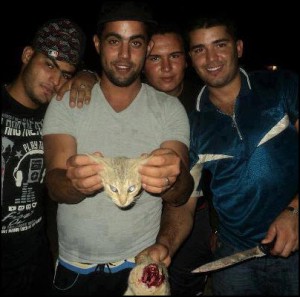
Alerta Digital (Translated) – “Swedish police are investigating a case of animal abuse after a photo published on the net where four men appeared with the severed head of a cat. One held the animal’s head while another was carrying a knife and the cat’s body.

After leaving the photo on the net, new images have been revealed where you can see how the cat is skinned by a man with a large knife and standing proudly with the cat’s head.

Östergötland police were investigating the case, but it finally went to Nykoping. According to a police report, the man with the cat’s head has been identified as a citizen of Vagnhärad, Sweden. The only one identified is the prime suspect of animal cruelty because the picture was published.

Following the identification, the portal has been exposed to reveal the identity of the four men involved through their social profiles on Facebook.

According to the website, who holds the animal’s head by the name of Hamza Tchaki, of Tunisian origin.

At his side, holding the knife appears Youssef Ben Ali, while the left is Kuorbam Uomama with a baseball cap.

Finally, the man who is at the bottom of the photo is Firas Mani.   They are all Tunisian govern.

The tortured cat has become a hot topic on Twitter and Facebook.” Source – Alerta Digital (Spanish).

Cruelty Toward Animals Is A Good Indicator Of Future Cruelty Toward People – “According to a 2001-2004 study by the Chicago Police Department, as reported by The Humane Society, ‘Of those arrested for animal crimes, 65 percent had been arrested for battery against another person.’ 65 percent is an overwhelming majority and, surprisingly or not, this statistic is not one of a kind. The Humane Society lists many more documented and researched cases that share similar figures. For example, ‘of 36 convicted multiple murderers … 46 percent admitted committing acts of animal torture as adolescents’ or ‘of seven school shootings that took place across the country between 1997 and 2001, all involved boys who had previously committed acts of animal cruelty.’

All of these statistics echo a similar morbid message: cruelty toward animals is a good indicator of future cruelty toward people. Read more.

International News Shorts – Vivisection and Hunting.

Vivisection and Hunting News


cameron hunter  david+cameron+mouse

 EU AW LOGO

Cosmetic testing ends in Europe

The ban on the import and sale of animal tested cosmetics and their ingredients will kick in throughout the EU on 11tn March this year.  This ban represents a significant milestone and is the accumulation of over 40 years of campaigning by the BUAV to end cosmetics testing on animals in the UK and EU. You can find out more about the history of the campaign to end cosmetics testing on animals by visiting the website: http://buavnews.org/LN3-19DL9-4H8GG4-I4F3U-1/c.aspx .


Leading research initiative

A world’s first education and research initiative announced on Jan 16th will see the UK spearhead a collaborative global search for more ethical, human-relevant alternatives to animal testing.  The UK’s leading humane medical research charity, the Dr Hadwen Trust (DHT), and Queen Mary, University of London, have joined forces to lead the global development of human-relevant methods and alternatives to animal use in diverse areas of bio-medical research. The Dr Hadwen Trust is to fund the first Professorial Chair in animal replacement science thanks to a £1 million legacy left to the DHT specifically for this purpose by lifelong supporter Alan Stross.


United Airlines refuses research primates

In a stunning blow for the global primate research industry, United Airlines announced that they have implemented a ban on the transportation of primates for the research industry! This decision means that there are now only 4 commercial airlines still willing to transport primates for the research industry. Those airlines are China Eastern Airlines, Vietnam Airlines, Philippine Airlines and Air France-KLM.  To read the full story visit the Gateway to Hell site: www.gatewaytohell.net/united-airlines-ban-research-primates-from-their-flights/


Huntingdon Life Sciences largest ever lender

US Bank National Association, a subsidiary of US Bank Corp. has been uncovered by SHAC as the largest ever lender ($120m) to controversial animal testing laboratory, Huntingdon Life Sciences (HLS). HLS have existed mainly on debt since 1998 and through campaigning lost their market-makers, shareholders, suppliers and customers over the years. Along with declining revenue and loss of orders from important customers as the global pharmaceutical industry make cutbacks, staff redundancies, the future continues to be uncertain for the multiple exposed animal testing laboratory as well as recent UK staff layoffs in 2012. Please help us kick off our campaign against US Bank by sending polite letters informing them of what they are involved with at HLS.  For more information about Huntingdon’s financials and about the US Bank campaign, please visit: www.shac.net/action/US_Bank/index.html   Sample letter: Dear Sir/Madam, I am writing to you because US Bank National Association, a subsidiary of US Bank Corp has loaned Huntingdon Life Sciences (HLS) $120m. Without this loan HLS could not remain open and therefore US Bank are in large part responsible for the continuing cruel and violent actions going on inside HL S.  HLS have a long history of violence; they were most famously exposed in 1997 when channel 4 TV filmed workers punching beagle puppies in the face. In 2005 ex-workers spoke out about cruelty they had witnessed and in 2008 Animal Defenders International went undercover inside H-L-S exposing cruel primate experiments and disgusting conditions. HLS also have a track record of law breaking and manipulation of data. During just one known primate study, HLS broke the law over 500 times; and workers have been caught taking drugs and drinking on site. Video footage, images and testimonials of this cruelty and misconduct can all be seen at the following link: http://www.shac.net/HLS/exposed.html   There are many hundreds of companies including NatWest, Royal Bank of Scotland, HSBC, Citibank, Bank of New York, Merrill Lynch, Charles Schwab, Barclays Plc, Stephens Inc. and Fortress Investment Inc. that have stopped dealing with H-L-S because of our highlighting H-L-S’ track record of cruelty and sloppy work practices, which in the past have also included the falsification of scientific data, leading to protests. (http://www.shac.net/SHAC/victories.html)  I am urging you to explore all get out clauses in this loan and reel it in. I also urge you to raise these issues with everyone you can within the company and do everything in your power to halt your support of Huntingdon Life Sciences cruel practices.  Please raise this issue at any meetings you attend, and let all your colleagues know about HLS.  For further information, please visit: www.shac.net  If you have any questions at all, please don’t hesitate to contact SHAC,  either by letter to SHAC, BM SHAC, London, WC1N 3XX, UK, or via email to: usbankcruelty@shac.net. Thank you for your time.  Yours faithfully.

CONTACTS  Directors – richard.davis@usbank.com, andrew.cecere@usbank.com, jan.estep@usbank.com, richard.hidy@usbank.com, bill.williamson@usbank.com  US Bank Media – thomas.joyce@usbank.com, teri.charest@usbank.com, nicole.sprenger@usbank.com, amy.frantti@usbank.com, tessa.olson@usbank.com, judith.murphy@usbank.com, sean.oconnor@usbank.com, healthcare@usbank.com


Research violations

Animal welfare group Stop Animal Exploitation Now has asked the U.S. Dept of Agriculture to re-examine the 16 animal research violations for which Ohio State was cited last year to ensure corrections took place.   Michael Budkie, the executive director of SAEN, said the group routinely examines reports for laboratories in the U.S. which the USDA makes available online. OSU’s large number of citations immediately stood out to the group as a problem, causing SAEN to file a complaint to the USDA.  “We’re very concerned any time we see that many animal welfare violations because that starts to demonstrate a serious pattern of breaking the law,” Budkie said. “When you see that many violations, you are looking at a laboratory that is not following the regulations, they’re not providing adequately for the animals and they’re not meeting even the minimal standards.”  The 10 violations cited in July, according to the USDA inspection report, included use of expired drugs on canines, inadequate veterinary care resulting in hair loss in half the grass rats, and hamsters being housed at 46.4oF, below the minimum of 60oF.  Other violations in the July inspection involved housing all of the lab’s 12 macaques, a species of monkey, separately when pair or group housing is required for primates that exist in social groups in nature.  6 violations were reported in May, including an issue of unsanitary hamster procedure rooms and various plywood doors between animal stalls being significantly chewed, according to the May inspection report.  Jeff Grabmeier, senior director of Research and Innovation Communications at OSU, said the university constantly ensures that its researchers are using the most humane methods in their work with the 130,000 animals under the university’s care.  “We take seriously our obligation to meet and exceed all federal regulations involving the use of laboratory animals and we remain committed to continually looking for ways to improve the care of the animals housed at the university,” Grabmeier said in statement.  Budkie said the regulations in the Animal Welfare Act that set the standards for the care of research animals were being overlooked. The act was signed into law in 1966 and, according to the USDA website, “is the only federal law in the US that regulates the treatment of animals in research, exhibition, transport and by dealers.”  Budkie said the act was designed to protect animals from basic violations such as those in question.  “If it’s not functioning in that way, then these animals are in significant jeopardy because if they’re getting away with these things that the USDA found, what else is going on that the USDA didn’t happen to uncover?” Budkie said.  Jan Weisenberger, senior associate vice president for research, said in an email to OSU researchers that they inspect all animal research facilities and assured that time is also spent conducting continuous training for them.  “We will continue to work with all of you to achieve this goal. The discoveries that you make every day are helping to conquer disease and promote both human and animal health.”  None of the 16 citations from the USDA were considered to be a direct threat to animal safety or welfare, Grabmeier said.  He also said the violations in the inspection were corrected by their due dates, and the 2 that remained would also be fixed by the dates the USDA requested.  Budkie said that while USDA has not yet begun further investigation, it is required to act on any complaints it receives.  OSU could potentially be fined $10,000 per violation, Budkie said, and SAEN hopes it will be substantial enough to have an impact.  “That kind of a fine is really, in our opinion, necessary to get the attention of a facility like Ohio State because they make so much money,” Budkie said. “I’m sure it can be tens of thousands of dollars in animal experimentation that if the fine is not significant, then they have no reason to be concerned.”  The USDA did not immediately return requests for comment.

EXCELLENT NEWS

The RSPCA has amassed a £160,000 “fighting fund” in just 8 weeks to pay for “major prosecutions” against illegal hunts and other groups. Gavin Grant, the charity’s chief executive, said the cash in the fund had “skyrocketed” in the wake of its successful action against the Heythrop Hunt.

Animal Cruelty Investigation Group

At long last we have created our new even more informative web site. You will find it now at: http://www.acigawis.org.uk/ You will notice that this new site is written more in the third person – which reflects the fact that there is now input from more individuals. We will be uploading more images and video clips in the near future and this web site will replace our Facebook presence as our prime means of campaigning. Our old web site address still works – people going there will merely be directed to our new site.  web site: http://www.acigawis.org.uk/ Mike Huskisson

The “German Red Fox Award” is a prize awarded to members of the German furriers industry for designs using German fox fur.  The competition is part of the Duesseldorf trade fair “Jagd und Hund” (Hunting and Dog) which ended on Feb 3rd.  It is heavily supported and sponsored by the local Hunting Association and the publication mentioned above. They want to push for more German fox fur being worn as fashion and to revitalise a traditional industry – that is also heavily supported by the German ministry for Trade at the Hong Kong Fur Fair (German Pavilion) every year.  Sadly, most article comments reflect a support for this. The lettering of the title is of especial interest as the particular font is not used any more in modern German writing. It was used up to the 1940s – the time of the Nazis. Indeed, the current German hunting legislation was formulated by “Reichsjaegermeister” (Reich’s hunting master) Hermann Goering – a fact that fills many hunters, especially the older generation or those with a right-wing tendency (of which there are many among the hunters), with pride. Also of interest is the magazine online shop, with suitable offers for children such as T-shirts and small rifles

Operation Zero Tolerance

4 Japanese whale-killing, factory ships armed with coast guards and grenade-tipped harpoons are within hours of entering a demilitarized zone and the international Great Southern Ocean Sanctuary. The bloody “War Against Nature” is set to rage.   In a world in which the environment is being marauded, the Sea Shepherd Conservation Society is standing up and upholding the law to protect the great whales in an international sanctuary. Enough blood has been shed; in the 20th century humans slaughtered 1.5m whales. 4 Sea Shepherd boats — Steve Irwin, Bob Barker, Sam Simon and Brigette Bardot — are being led this year by former Australian Greens leader and environmental champion Dr. Bob Brown and former Australian Senator and former Environment Minister Ian Campbell. They have taken over from Sea Shepherd founder Captain Paul Watson who is restricted by a U.S. Court of Appeals preventing him from going within 500 yards of whale-killing ships. The Aussie leaders and 120 crew representing 24 nations (including Japan) are on a bold mission — Operation Zero Tolerance: Zero Cruelty: Zero Kills. It’s the 9th year of the Sea Shepherd campaign to protect the great whales in the Southern Ocean Sanctuary. This year, in addition to a helicopter, 2 long-range aerial drones (donated by Bay Shore Recycling Corp, N.J.) are being used to quickly locate the Japanese fleet as they enter the sanctuary. The quicker the Sea Shepherd find the whalers, the quicker they can get on their tail; the sooner they can prevent any whale slaughtering.  As soon as Sea Shepherd discovers the whalers they closely follow the large fish-factory boats, blocking the stern-slipway. If the Japanese can’t load whales — they can’t kill them. It’s a very effective tactic — in 2012 the Japanese only took 26% of their kill quota and even lower in 2011 at 17%. The fiscal losses of the Institute of Cetacean Research (ICR a Japanese government agency) in 2012 were $20.5m. After a relentless 9-year Sea Shepherd campaign the whalers have lost $100m. Japan’s government-subsidized whaling program is indeed in strife. In 2011, the Japanese whaling industry siphoned $29m from the March 2011 (tsunami) Earthquake Recovery Fund. The Japanese 2013 quota of 935 minke whales, 50 fin whales and 50 humpback whales is set for lethal-scientific research, yet little (if any) peer-reviewed whale research has been released in the past quarter century by ICR. (The Japanese call a harpoon-tipped grenade that misses a whale a sampling error.) Instead the whale meat is sold into the marketplace.  The absurdity here is that Japanese are no longer buying the whale meat. In fact, in 2008 several tons of unsold whale meat was placed in cold storage. Sea Shepherd Posted: 01/21/2013 3:15 pm


Australia tells whalers to leave

Australia has demanded Japan’s whalers leave the southern ocean, after a support vessel for the fleet was found to have entered its waters in pursuit of environmental activists. The Australian environment minister, Tony Burke, told the whalers they were not welcome in the region following confirmation that the Shonan Maru No 2 had entered the country’s exclusive economic zone near Macquarie Island. “Australia has made it clear to Japan on a number of occasions that vessels associated with its whaling programme are not welcome,” Burke said in a statement. “Our embassy in Tokyo has conveyed these sentiments directly to the Japanese government.” The Japanese vessel provides security for the rest of the fleet, which sails to the Southern Ocean every winter to conduct what Tokyo calls scientific research. The Shonan Maru No 2 tailed the Bob Barker, a Sea Shepherd vessel, for 2 days earlier this week, according to the group. It remained inside Australia’s exclusive economic zone, which stretches 200 nautical miles from Macquarie Island. The Japanese ship stopped just short of Australian territorial waters, which extend 12 nautical miles from the island.  “Tokyo has ignored the call from the federal government for this part of the whaling fleet not to enter the zone,” Bob Brown, the former Australian Green party leader, who now leads Sea Shepherd’s anti-whaling campaign, told Australian radio. The body that organises Japan’s “scientific” hunts said the fleet had the legal right to enter the zone, and accused Sea Shepherd of using dangerous tactics to stop the hunt.  “Since Sea Shepherd has been putting Japanese lives and property at risk, it’s been necessary to move as close to Australian territorial waters as possible to keep an eye on them,” Glenn Inwood, a spokesman for the Institute of Cetacean Research, told Associated Press. Australia, the most vocal international opponent of Japan’s whaling programme, has taken its campaign to ban the annual hunts to the international court of justice in The Hague. The International Whaling Commission banned commercial whaling in 1986, but Japan uses a clause in the moratorium to conduct “lethal research”. Meat from the hunts is sold on the open market.

Zambia has banned the hunting of lions and other endangered wild cats such as leopards because it sees more value in game viewing tourism than blood sport, the country’s tourism minister said. Sylvia Masebo told Reuters big cat numbers were also too low to have a sustainable hunting industry. “Tourists come to Zambia to see the lion and if we lose the lion we will be killing our tourism industry,” Masebo said.

The 2 Colorado police officers responsible for the January 1 shooting of the towering bull elk known as ‘Big Boy’ were arrested on Friday morning and are facing possible jail time. Officers Sam Carter and Brent Curnow are facing felony counts of tampering with physical evidence, attempt to influence a public servant and forgery, as well as misdemeanour charges of unlawful taking of a trophy elk.  They have both now resigned but investigations are continuing. The 2 had been on unpaid leave since their arrests on 9 charges, including killing an elk out of season and tampering with evidence.


UK (England): The Live Animal Export Battle Continues.

uk

Vita KAALE Logo 9 9 2011

Kent Action Against Live Exports (KAALE) – http://www.kaale.org.uk

Lesley last 1

Petition Link – Please sign.

http://www.thepetitionsite.com/740/060/667/better-identification-for-box-type-livestock-carrying-vehicles-throughout-the-eu/

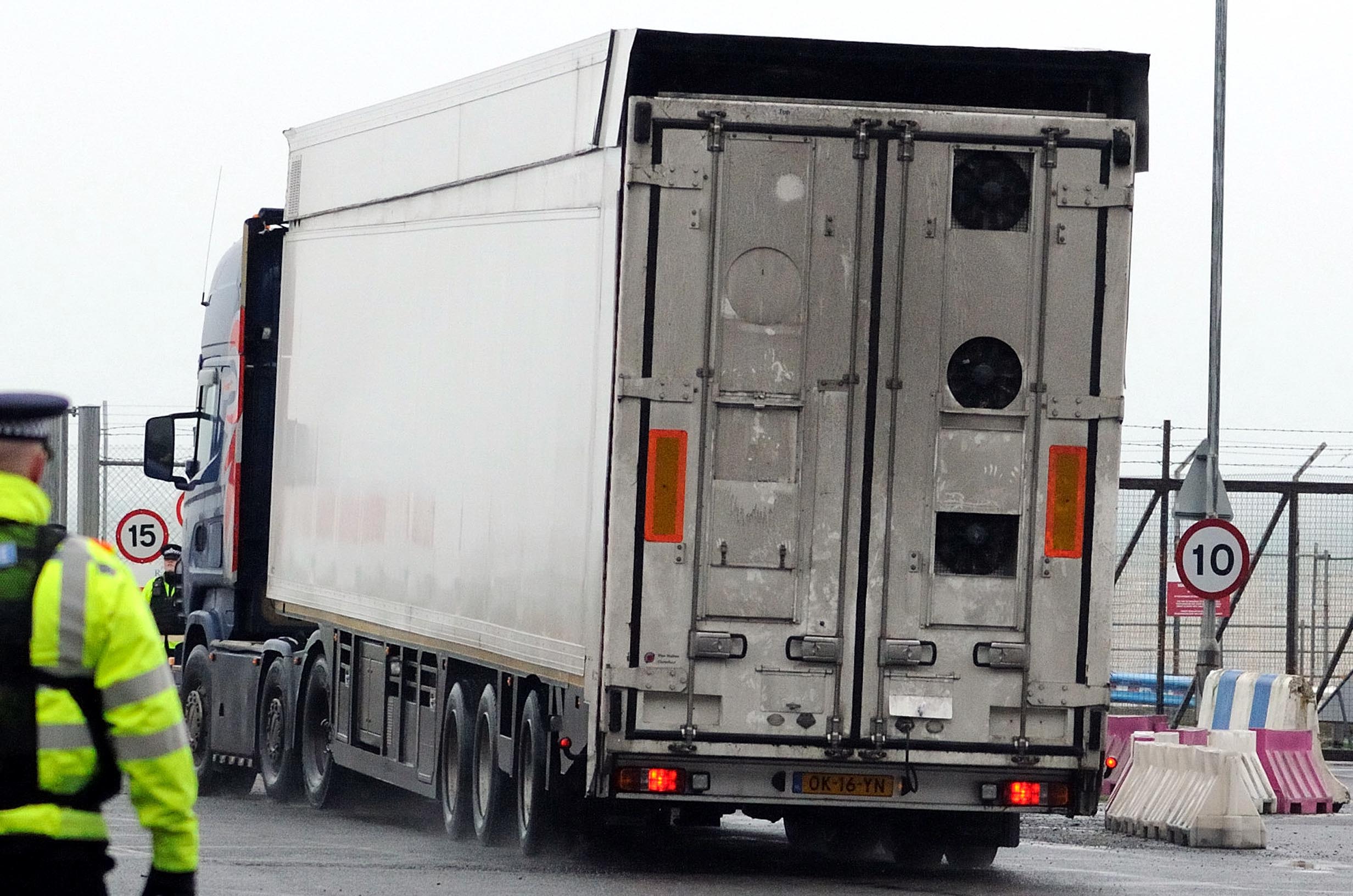
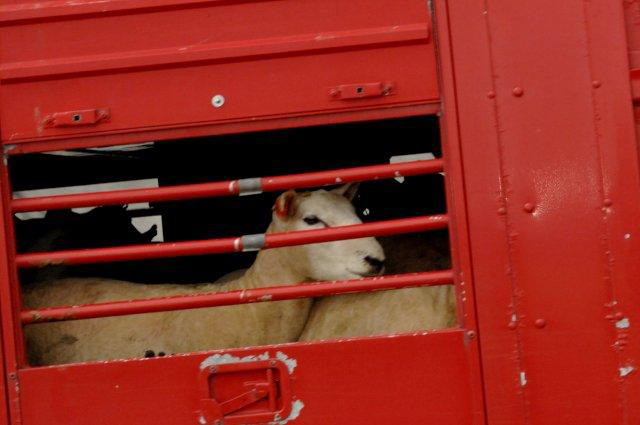
Not all animals being transported by road across the EU go in ‘conventional’ livestock trailers which have exterior air vents fitted to each tier, providing air to the animals. Some trailers are completely sealed as shown in the photograph (this truck has several hundred sheep in its trailer) giving most outside observers the conception that anything other than live animals are being carried within it. We feel that this should be made much more evident to outside observers and especially emergency services should an accident occur.

Lesley last 2

 Lesley last 5

RSPCA seeks hearing over live exports ruling

Wednesday 13 February 2013

The RSPCA is to seek an oral hearing in the High Court to determine whether it can take its live animal exports judicial review application to a full hearing.

The animal welfare charity applied in December to seek a judicial review of the arrangements operated by Animal Health and Veterinary Laboratories Agency (AHVLA) for the approval and supervision of live animal exports through the port of Ramsgate.

But permission to bring the case to a judicial review was refused last week by Mr Justice Males following a consideration of the court papers.

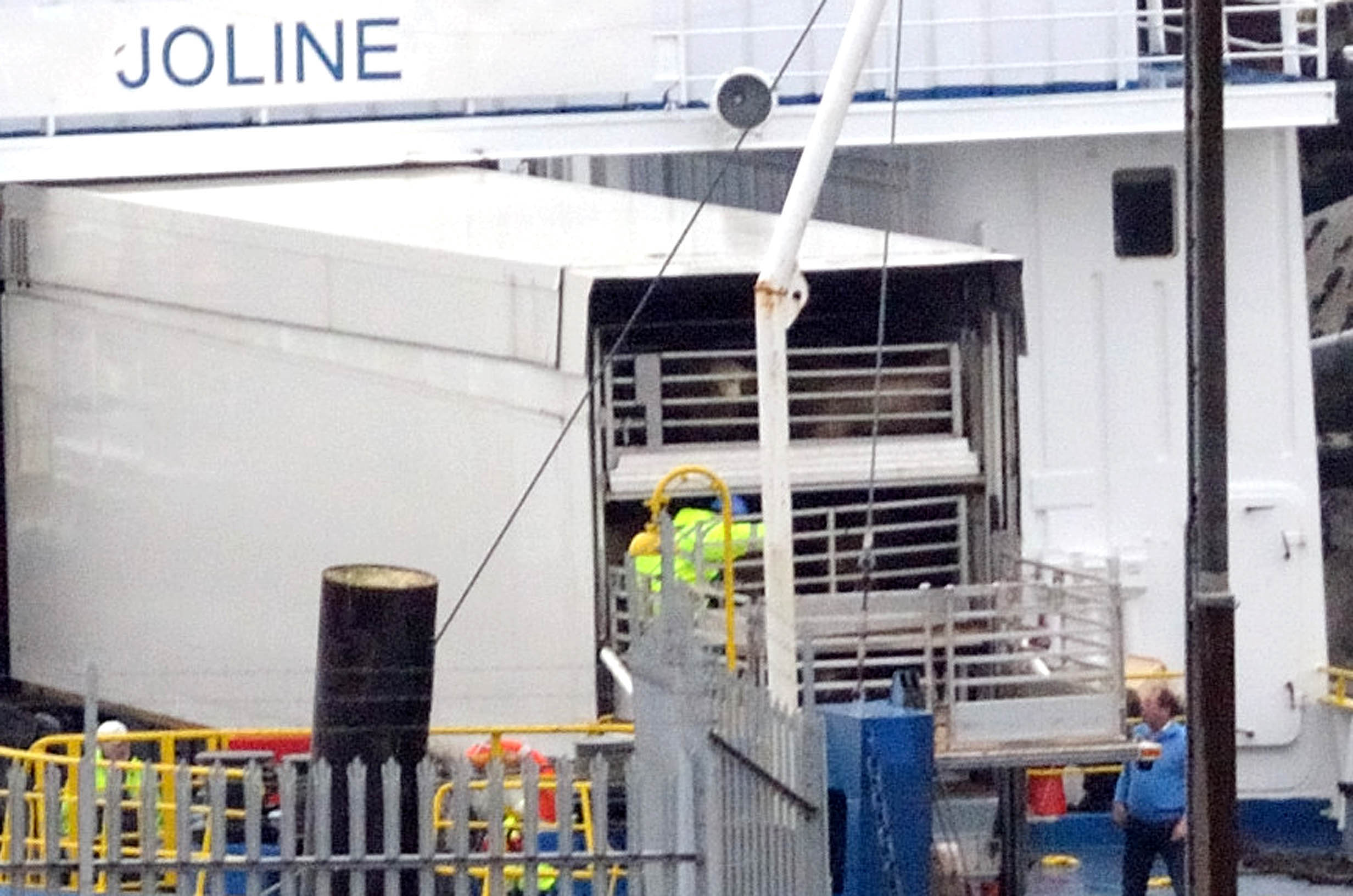
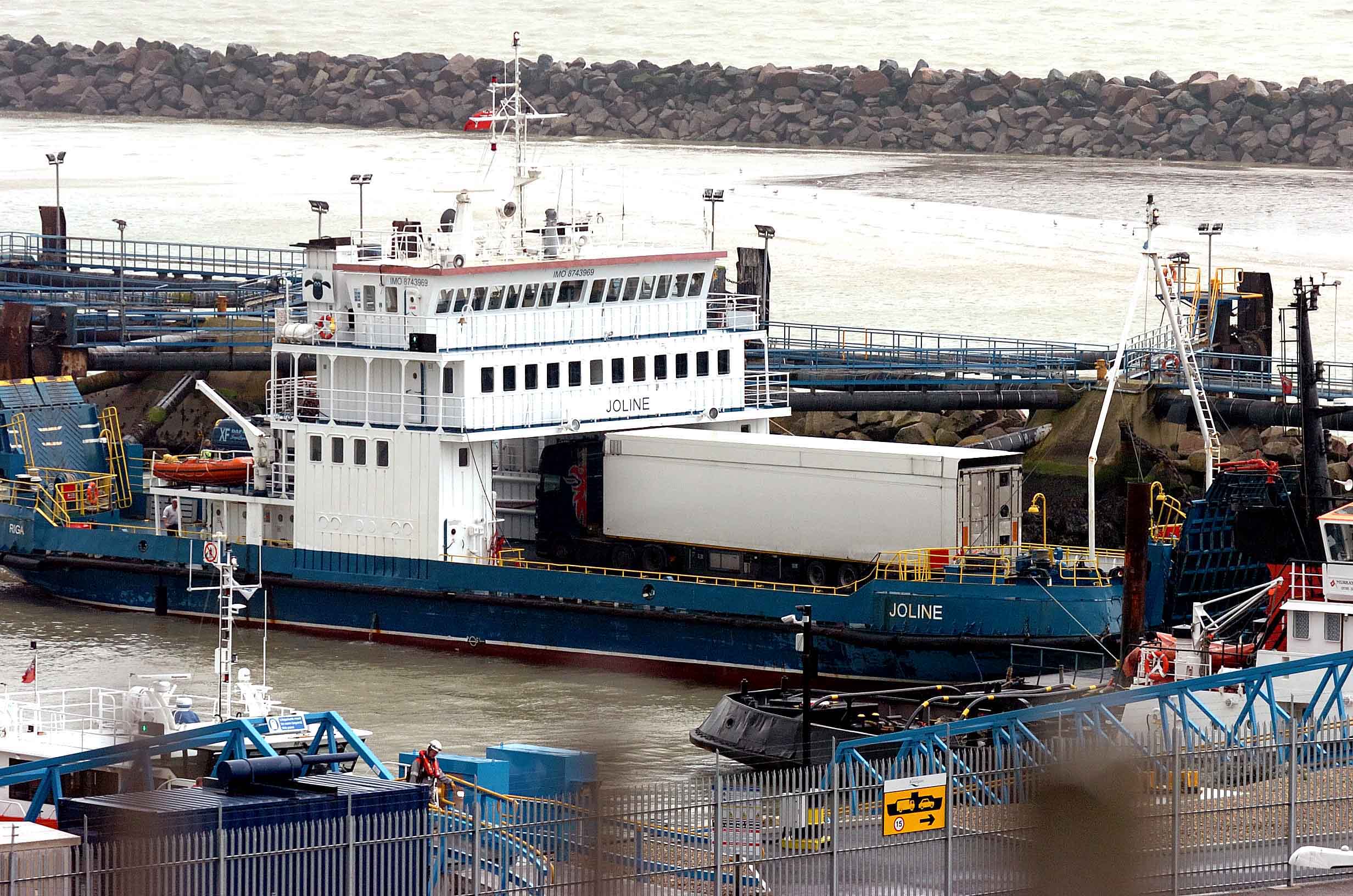
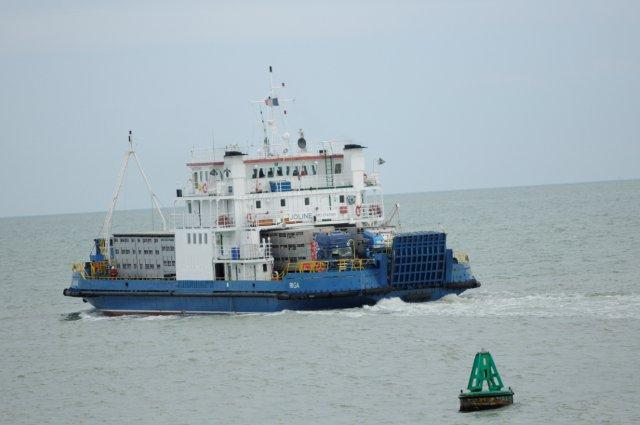
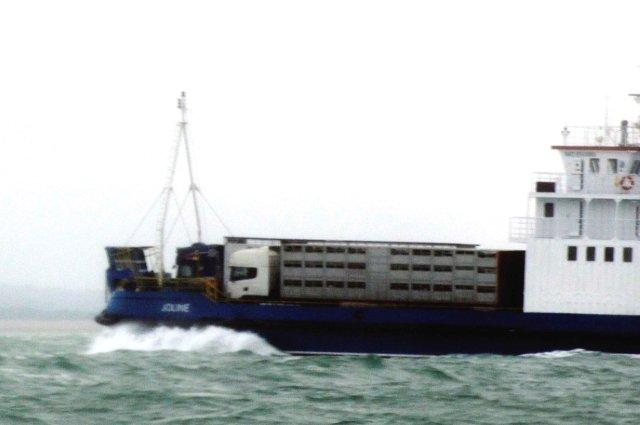
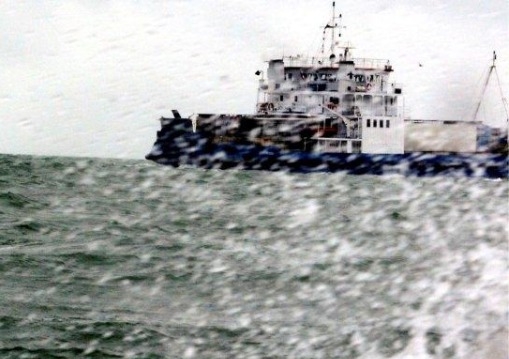
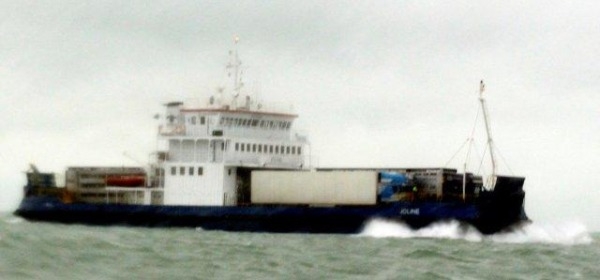
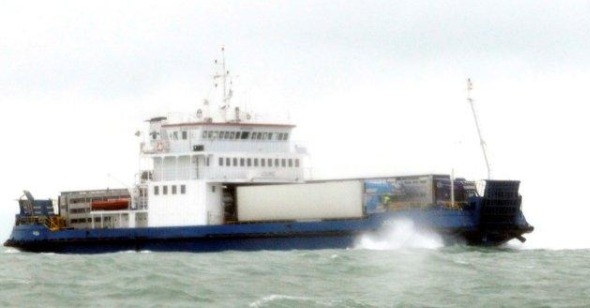
Currently, live animals are transported over to Calais on an open-decked, flat-bottomed converted Russian tank transporter, the MV Joline.

The Joline - photo 2

But the RSPCA claims the AHVLA is acting unlawfully in failing to require the exporters to use ports with appropriate facilities and also in failing to impose sailing restrictions on the MV Joline to ensure that animals are not injured or caused undue harm while being transported by sea.

A lack of facilities at or near the port to deal with emergencies, the use of an old tank transporter to ship animals across the Channel in rough weather and the failure to thoroughly inspect animals at the port are “all unacceptable” and have “serious issues for animal welfare”, it claims.

RSPCA chief legal officer Ray Goodfellow said: “We are taking this stand because we believe AHVLA’s approach is failing to safeguard animal welfare and is in breach of European laws designed to protect animals from injury or undue suffering during transport.

“We believe we have a strong case that deserves to be heard.”

The charity also believes that changes to the inspection regime introduced by the AHVLA following the September incident are also unlawful in failing to provide proper checks at the port to safeguard animal welfare.

The RSPCA has vowed to fight on for the animals after Thanet District Council lifted its temporary ban on live exports at Ramsgate in November.

The local authority had closed Ramsgate port to live exports in September following an incident when more than 40 sheep had to be destroyed. But the port was reopened in October after legal action by Dutch exporters.

The AHVLA said it would not be commenting on the case while there was still an option for the RSPCA to appeal.

VITA Photo

RSPCA legal bid to ban live exports from Ramsgate quashed

Thursday 07 February 2013

The RSPCA has expressed its disappointment after a High Court judge rejected its legal bid to stop the live export of animals from a Kent port.

The animal welfare charity lodged a claim in the High Court to seek a judicial review of the approval and supervision of live animal exports through Ramsgate port.

The RSPCA launched the legal challenge after Thanet District Council lifted its temporary ban on live exports at Ramsgate following an incident on the vessel MV Joline in September in which more than 40 sheep, considered by officials as lame, were put down.

Launching the legal proceedings last month, the RSPCA said it believed the Animal Health and Veterinary Laboratories Agency (AHVLA), which is responsible for checking consignments of live animals through Ramsgate port, was “acting illegally”.

The RSPCA accused the AHVLA of failing to impose sailing restrictions on the MV Joline – which it described as an “open-decked, flat-bottomed converted Russian tank transporter” – to ensure that animals were “not injured or caused undue harm while being transported by sea”.

Joline10

Joline.1 resize

Joline.3 resize

Joline.4 resize

It also accused the AHVLA of failing to require exporters to use ports with appropriate facilities and failing to provide proper checks at the port to safeguard animal welfare.

But in a High Court ruling on Tuesday (5 February), judge Mr Justice Stephen Males dismissed the RSPCA’s case on all three grounds and said it was not even arguable.

Commenting on the ruling, an RSPCA spokesman said: “We are extremely disappointed by the decision. We still have an opportunity to ask for a reconsideration of the decision at an oral hearing.

“We will be considering the options with our legal team and also consulting with our trustees. Our deep concern about the lack of appropriate regulatory safeguards to protect the welfare of animals involved in this trade remains unchanged.”

The AHVLA said it would not be commenting on the case while there was still an option for the RSPCA to appeal.

In December, farm minister David Heath announced new, tougher rules for live animal exports from Ramsgate port. AHVLA inspectors have been told to increase inspections and take a “zero tolerance” approach to any breaches of welfare regulations where unnecessary suffering is caused to animals.

Germany: 20 Million Pigs Live and Die for Nothing Every Year.

GERM0001

(Farmer quote) „It all comes down to how much pork I can produce on 1 sq. meter of stable space”. (a farmer earns between EUR 5-10.- per animal; so is dependent on EU subsidy for survival)

Germany produces a huge surplus – the EU finances this with billions; the German agricultural ministry, upon inquiry, sees no need to change anything about the status quo and existing subsidy system that washes billions into the pockets of the “pork barons”.

A third of meat and meat products being produced in Germany lands on the rubbish

*** – that is, 20 million pigs live and die for nothing every year. ***

http://www.swr.de/report/-/id=233454/nid=233454/did=10492500/ye1smz/index.html

Greenwashing via new (animal welfare) label.

The German “Tierschutzbund” (Germany’s largest Animal welfare organisation) has joined forces with meat producers (here specifically pork) to market meat under a new welfare label of theirs: http://www.tierschutzlabel.info/tierschutzlabel/

Sadly, the reality is no different from conventional. Both VION (the international meat producing corporation) and the Tierschutzbund, when confronted with recent undercover footage from VION’s all-is-well example farm (start of video), went into instant denial. VION even refused to view the footage and declined a request for an interview with the journalists.

http://www.swr.de/report/-/id=233454/nid=233454/did=10784456/v9y85a/index.html

Duck “production” in Germany.

Conditions, despite clear EU regulations demanding more space and access to water, are dismal. Animals often end up on their backs toward the end of their mast period and cannot raise again, causing them to die slowly of dehydration.

One of the two involved companies, “Wichmann”, declined to comment. “Wiesenhof”, Germany poultry giant, declared the farm subjected to an unannounced audit and subsequently closed. “Wiesenhof” has been in the news a lot in the last two years, with numerous counts of massive animal abuse.

The German minister of agriculture, when approached, did not feel any changes to the system were necessary. The state authority of Niedersachsen, where the footage was taken, was not available for an interview.                  

http://www.swr.de/report/-/id=233454/nid=233454/did=9964142/aos9oa/index.html