Posted on March 2, 2017 by Serbian Animals Voice (SAV)
As you can see from our recent post (link below); yet again, a Conservative MP, Mr Christopher Chope, talked out a ban on the use of animals in UK circuses in Parliament last week.
We have now combined with Venus to produce a response; or you could call it ‘an appeal’ ?, to Mr Chope about the situation for all circus animals, wherever in the world they may be suffering.
This issue of UK circus animals is being discussed in UK Parliament again on 24th March. How will Mr Chope act then we have to ask ? – yet again defending animal abuse; or joining the vast majority of UK citizens who have been calling for a ban for well in excess of 11 years; as proven by the MAFF Public Consultation taken but never acted on, more than a decade ago.
We will watch with great interest the events of 24th March and the actions of Mr Chope. Naturally we will provide an update soon after.
In the meantime; here below is our simple letter to Mr Chope.
Will it make him think ? – the 24th of March will tell ! – we wait and see with interest – SAV.
Our letter to Mr. Chope – with hope for circus animals !
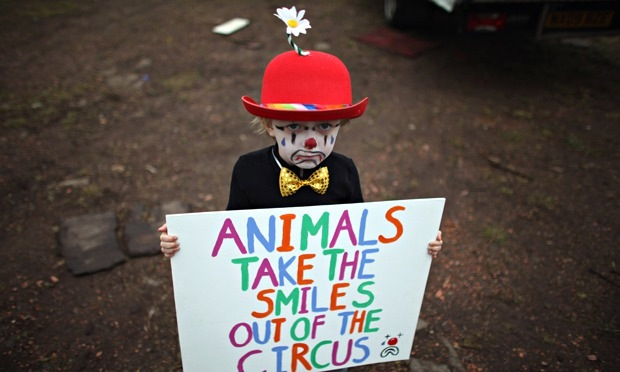
When a tiger and a bear are forced to ride on horseback in a circus show, these are things that only thrill a stupid audience and so-called ‘politician’ types such as Christopher Chope.
But in reality, all this performance really shows is forced animal suffering and torture, which the civilized, understanding people of this world call ‘animal cruelty’.
There are two categories of people who would advocate any circus that uses wild animals: One is the ignorant braindead who pays his entrance fee to watch suffering, the other is the politician, who benefits from it !
The fact that in nature, a tiger never lives together with a lion in the free wilderness should even provoke suspicion by the ignorant, that this abnormal coexistence is only possible under the power and control of the demon circus animal trainer.
The traces of torture on the backs of, or in the eyes of the animals, are proof of what these animals must suffer and endure constantly. Perhaps with the ignorant the suffering is overlooked; but as animal advocates,we see it, because they are visible scars on sentient beings.
These traces of torture on skin and in eyes are the real evidence of the circus life.
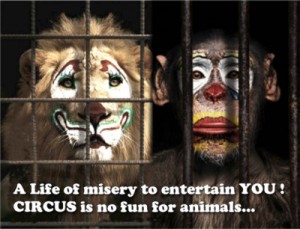
Circus animals are captive wild animals. They live in direct contact with humans. To control these wild animals and to show them as circus attractions, they are not given a life of sweetness and tender care, like most of the attending, hand clapping drag knuckles believe. The ‘control’ happens with abominable cruelty. Regular blows with sharp hooks and current surges make them pliable. These animal cruel rituals take place at night, when the office doctors sleep, or in dark corners of the circus tents, far from the eyes of the paying public.
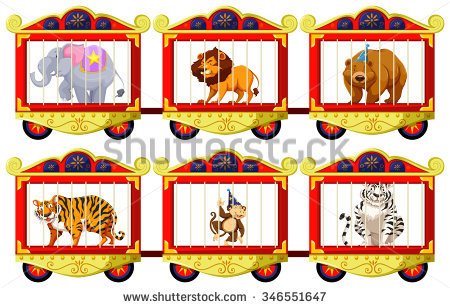
Elephants are chained by the leg in a stable tent all their lives; whenever they are not used as a pathetic visual tool for drag knuckle eyes. Lions and tigers live a life imprisoned in cages surrounded by their own excrement, enduring a pitiful ‘life’ that is nothing but lonely and captive.
Their freedom ? – only when they die and the time comes for them to be released from their eternal torment and suffering; and the captivity of a travelling ‘beast wagon’.
And now once again, the politicians are in play.
Dragging out their speeches to prevent an end to the suffering, transportation and cruelty.
What do you personally get from all this, Mr.Chope?
Sure, morality and ethics are obviously not on your list of cultural achievements, but your personal dulling is not enough, as a reason, to advocate the cruel business of the wild animal circus.
Anyone who has a bit more empathy than you, would suspect, that possibly you have a personal interest in the conservation of this animal-trafficking business. An economic interest, I mean.From your web page, I quote:
“Chris is here to help, regardless of how you vote, so please feel free to get in touch”!
Absolutely ridiculous, Mr. Chope! –
The circus wildlife you have “helped” at the request of the British citizen – where are they now ?
In February 2017 your actions prevented any help for circus animals; and though your actions they continue to live in slavery and torture.
You have personally helped slavery continue to exist in the Circuses of England.
As long as circus animals are kept as slaves, are tortured, are abused with your personal consent, because you consider it ‘right’, no one will ever believe that you want to ‘help’.
And this ignorance of yours thus prevents us from having any further communication with you ‘the helper’, because we are the people with compassion, who don´t support the cruel business of the animal circus.
Prove to us you want to help as you declare, on March 24, 2017, and give your voice against the barbarism inflicted on the circus animal – show us real proof that you really want to help as your site declares.
Revealed: exported EU animals subject to abuse and illegal conditions
Undercover videos show EU cattle and sheep being beaten, given electric shocks, and inhumanely slaughtered at destinations in Turkey and Middle East.
Animals exported live from EU countries are routinely being subjected to abuse, illegal transportation conditions and inhumane slaughter, an investigation has found.
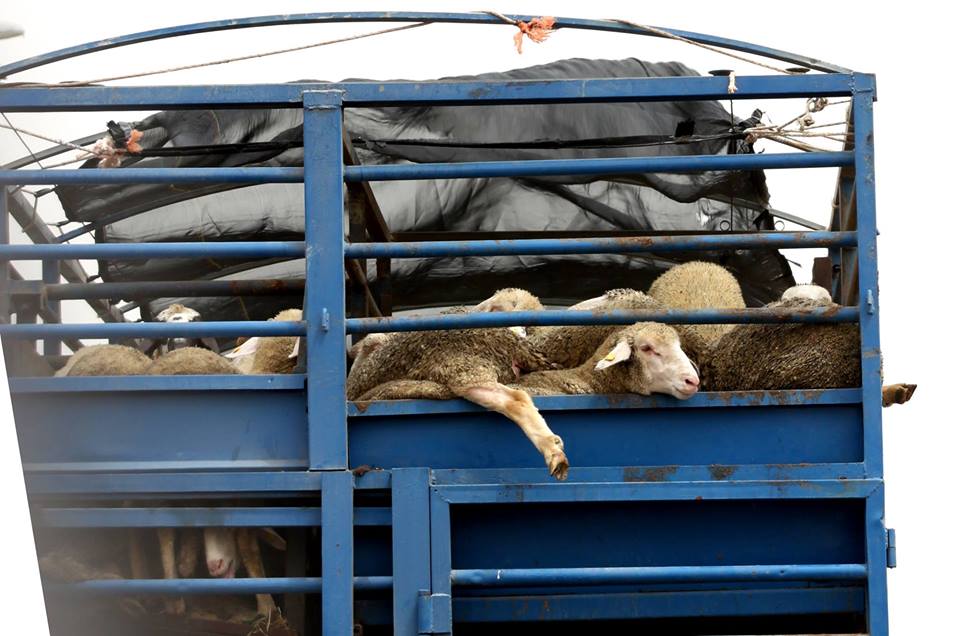
Dozens of undercover videos and photographs obtained by the Guardian show live cattle and sheep from EU countries being beaten, shocked with electric prods, held for days in overcrowded pens and covered head to toe in faeces as they are transported fromEurope to their final destinations in Turkey and the Middle East in conditions that breach European law.
At their destination, at least some of the animals are slaughtered in appalling conditions. The footage shows cattle and sheep from France, Romania and Lithuania kicking and flailing violently as their throats are crudely cut or sawed at repeatedly, often in crowded street markets and run-down abattoirs.
The footage was collected over eight months by campaigners from the Australian animal rights charity Animals International, who worked undercover in Croatia and six Middle Eastern countries to follow animals from their departure at European ports through to destination.
The evidence they collected shows clear breaches of a number of European laws in almost every country the campaigners visited. European legislation maintains that export livestock must receive certain standards of care throughout the entire journey, including any stages that occur entirely in third countries. The standards dictate that animal handlers must carry out their task without violence or any method likely to cause unnecessary fear, injury or suffering; that transport and loading equipment must be designed, maintained and operated so as to avoid injury and suffering, and that transport is carried out without delay and at the minimum possible length.
The Guardian asked Conte & Giacomini, an Italian law firm specialising in animal rights and shipping and transport law, to review the evidence. They responded: “We might deem that the transports shown in the footage are all in breach of the [EU] Regulation EC No 1/2005 [on the protection of animals in transport].
“Moreover, we could also state that, according to the ruling of the European court of justice and to the interpretation of the regulation EC No 1/2005, the competent authorities of the member states of departure shouldn’t even have authorised these transports as they couldn’t ensure that provisions would be met,” they said.
In an EU port in Croatia, the video shows animals from at least five European countries, including Germany, Hungary, Romania, Poland and Slovenia, waiting to be loaded on to a vessel headed to Beirut. Cattle and sheep are seen being kicked, beaten and shocked with electric prods to the anus while being loaded on to the ship. A sheep is shown being picked up by an animal handler and thrown on to the boat; cows slide backwards on to each other while trying to climb steep loading ramps.
At a port in Turkey, footage shows cattle being unloaded from a vessel that has arrived from Ireland after a voyage of almost two weeks. Their hair is thick with faeces from the journey as they are crammed on to a small and open-topped truck to be transported along the next leg of the journey. In Palestine, Romanian cattle travelling unharnessed in the back of an overcrowded truck are shown being thrown violently against the railings, causing clear distress to the animals.
While European legislation covers EU export livestock up until they are unloaded at their final destination, it does not apply to the final stages of the animal’s life. The footage shows repeated instances in multiple countries of animals being brutally slaughtered. In a street market in Jordan, a Romanian sheep spasms violently across the blood-soaked pavement after its throat is cut. In an abattoir in Turkey, French cattle hang by one leg from the ceiling, kicking and twisting violently as their throats are repeatedly cut at.
Exports of livestock from the EU to the Middle East have grown rapidly in the past two years, with exports of cattle doubling since 2014 to 650,000 last year, while sheep exports rose by a quarter to 2.5 million, mostly to Libya, Lebanon and Jordan.
The increase in exports coincided with a landmark legal case at the European court of justice in 2015, in which the judge ruled that any transport provider carrying livestock from the EU to third countries must take steps to prove that they have complied with EU legislation throughout all stages of the journey. Transport providers are required to submit a log detailing their journey to the national authorities in the country of departure. It is these national authorities who are responsible for enforcing European regulations.
However, EU officials, member states and animal rights groups have repeatedly claimed that enforcement is poor across much of the continent. In November 2016, a paper presented by several member states to the European agriculture council called on the European commission to address the problem. It stated: “The continuing shortcomings in enforcement [of animal welfare in export laws] is simply not acceptable. Since the entry in to force of Regulation 1/2005 [on the protection of animals during transport], there have been numerous examples of infringements and lack of enforcement. Both member states and commission have to intensify their efforts to put an end to transports that are in obvious breach of the regulation”.
Animal rights groups including the Animal Welfare Foundation (AWF) and Tierschutzbund Zürich believe that financial motives drive many export and transport enterprises to breach European animal protection regulations, as it reduces costs and administrative charges. As a result, enterprises are encouraged to operate in member states with poorer enforcement of EU law.
This view appears to be supported by the European commission’s own Animal Welfare Strategy 2012-2015, in which the commission notes that “a diverging interpretation of [protection of animals in transport] rules may result in market distortions which, combined with reduced profit margins and different administrative costs, could put a transport business operator in a difficult situation. Furthermore, a lack of vigour in enforcement may put compliant transporters at disadvantage”.
After watching the footage, MEPs from Germany, France, Lithuania and Finland said they are calling on the European commission for stronger enforcement of existing laws and an extension of legislation to cover the slaughter of European-bred animals in third countries.
Sirpa Pietikäinen, a Finnish MEP and president of the European parliament’s Intergroup on the Welfare and Conservation of Animals, said: “These shocking revelations should be the final frontier for the European commission to take this seriously. We need EU strategy on this issue. Better law enforcement, agreement with supervision on slaughtering practices, with the goal of ending the transportation of living animals for slaughter to third countries.”
The MEPs join a growing movement that is calling for reform of Europe’s animal transport regulations. The Eurogroup for Animals, the EU umbrella group for animal advocacy organisations, has collected more than 700,000 signatures urging the EU to put an end to long distance transport of live animals.
“Europe is to all effects exporting massive animal cruelty, which is largely invisible for EU citizens”, says Reineke Hameleers, Eurogroup’s director. “It is crystal clear that the transport regulation is not fit for purpose and that we should move towards a food system where animals are reared and slaughtered as close as possible to the place where they are born. This is not only paramount for animal welfare but also essential for food security, the environment and to protect public health.”
A European commission spokesman told the Guardian “The level of enforcement of existing EU legislation on animal welfare during transport has improved over the last years (SAV Comment – ARSEHOLES!!) and has been considered one of the key priorities of the directorate general for health and food safety. Although the responsibility for the enforcement lies primarily with the member states, the commission has made considerable efforts to improve the enforcement and provides active assistance to member states.”
Talk to Mr ‘I can do nothing’ Van Goethem (pictured above) – so he and the Commission have made considerable efforts ???
The spokesman said: “The EU has limited power to enforce the union legislation on animal transport within the territory of non-EU countries. The commission will continue supporting training activities on animal welfare during transport and at slaughter, including for non-EU countries.”
The European commission has failed to respond to pressure on the protection of animals in transport before.
In early 2016, animal rights groups Tierschutzbund Zürich, the AWF and Eyes on Animals presented the commission with a 1,000 page report detailing hundreds of cases of illegal treatment of animals being transported over land between Europe and Turkey in the hot summer months. The NGOs claim the commission ignored all their requests, including an appeal for transport of live animals to Turkey in the hottest summer months to be halted.
Iris Baumgärtner, project manager at AWF, said: “Despite the fact that the commission and the member states have been well informed since 2010 of the suffering of animals transported to Turkey, the situation remains unchanged and the numbers of animals being exported are increasing. The commission and member states are ignoring the core elements of their own regulations.”
The governments of Ireland, France, Germany, Romania, Hungary, Lithuania and Poland did not respond to requests for comment. The Slovenian agriculture ministry said: “Should the Slovenian competent authority receive any information on any non-compliances in live animal consignments aboard any vessels, we would immediately institute an investigation into the problem and, based on investigation results, we would institute the required and prescribed measures for the prevention of any subsequent non-compliances.”
The Croatian agriculture ministry said they saw no truth in the accusations and that necessary procedures and checks in line with the EU regulation are implemented in order to ensure animal welfare. They said competent veterinary authorities were always present “in order to monitor and undertake necessary corrective measures if irregularities are detected”.
SAV Comment – so all the evidence gathered is wrong ?
Good job we can rely on the EU to ensure there is full protection for
all animals in transport – re Regulation 1/2005 !!
Go to ore ‘Search’ box at the top right and type in ‘Turkey exports’ to
see all of our past involvement with this campaign.
Posted on February 22, 2017 by Serbian Animals Voice (SAV)
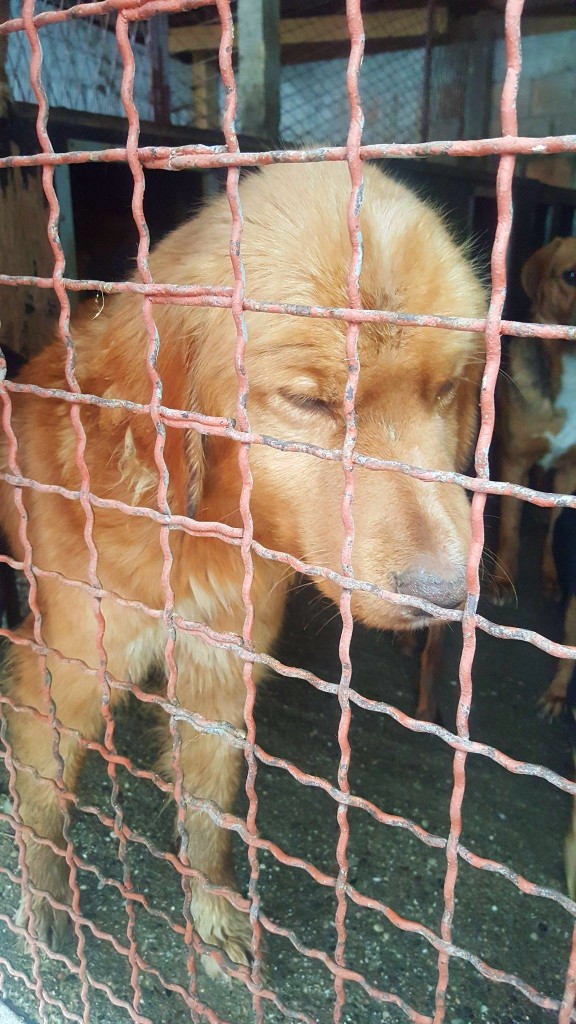
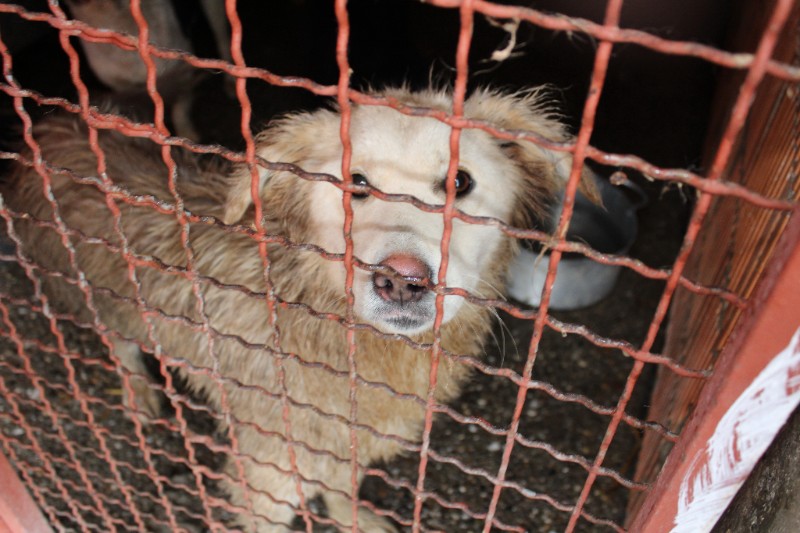
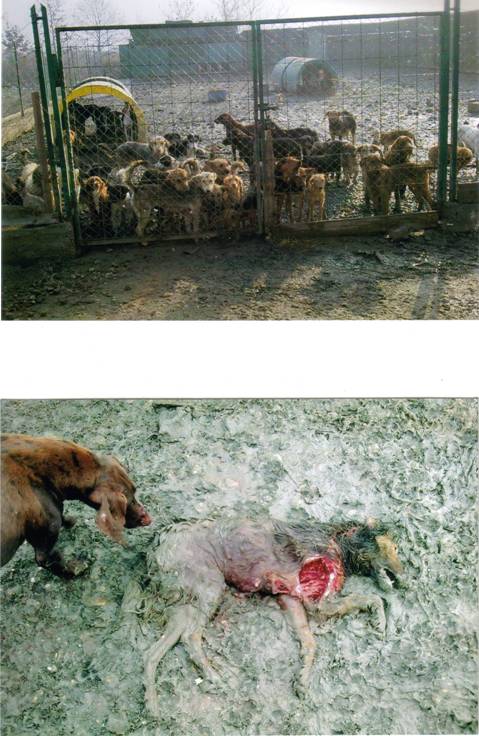
LOZNICA: ENTERING THE DOORS OF HELL AGAIN A DOG… A HEART BEAT AT OUR FEET
The hardest and most painful thing for any rescuer is to leave a dog pound with saved dogs and look into the eyes of the ones who are left behind.
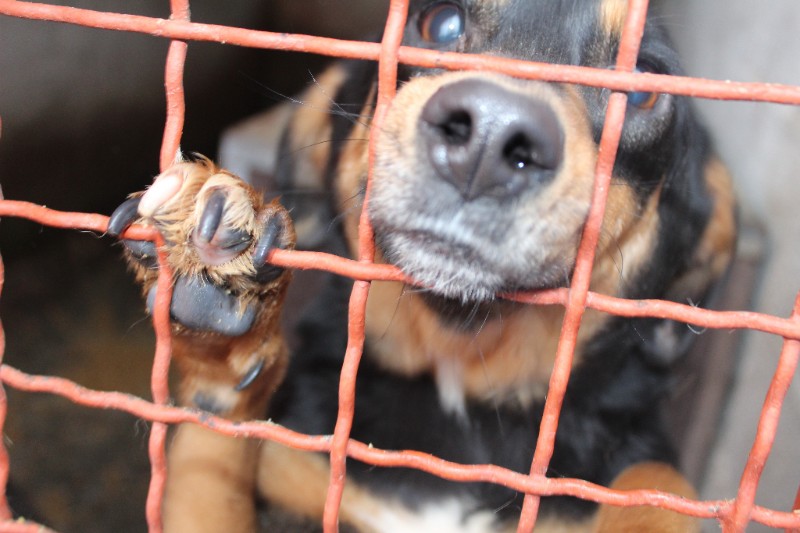
They know. They know their fate. Their end is coming… Your heart aches, you can’t stop dreaming about them during night, you can’t sleep, flashes come into your mind of their imploring eyes, paws on your legs, and then immense sadness when the pound door is closed and you leave….
We can’t forget so many babies and we are begging you for your help again: we want to save more lives. The dog too scared to move for fear of being beaten, the little dog brushing round our ankles just desperately trying to get us to notice her.
So many precious beating hearts begging to be noticed and taken out. Almost as if they’re promising us they will be “such a good dog if we rescue them”. A silent promise.
We really are their last hope on Friday.
We will re-visit this living hell to save more gentle dogs.
THIS REALLY WILL BE OUR LAST RESCUE FOR SOME TIME until we can home some dogs.
Those left unsaved will spend their last moments on earth terrified and often in agonizing pain. Euthanasia if conducted, is not conducted in a civilized way – but by the cheapest means possible which involves immense brutality.
These sweet lives can’t cry for help, but we can. And we have to! Only their eyes tell us their pain and need. Give them this final chance of life! Help us free the prisoners of one of the worst Serbian dog pound we have ever seen. ONLY YOU CAN HELP US TO DO THIS
Posted on February 21, 2017 by Serbian Animals Voice (SAV)
WARNING – EXTREME ANIMAL SUFFERING IN VIDEO.
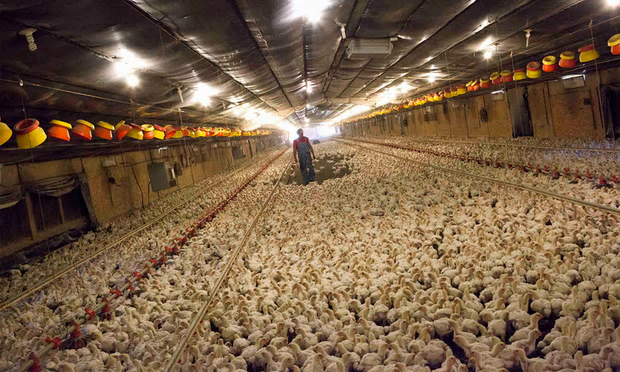
The latest breaking eyewitness investigation, released by PETA India and Anonymous for Animal Rights, of major chicken farms that raise and slaughter chickens for their eggs and meat, found widespread, rampant cruelty to chicks.
As you can see in this shocking video footage, it is clear that the egg and meat industries are focused on maximising profits at the chicks’ expense and that they consider living, feeling, thinking birds to be mere commodities. From problems in incubators that cause organ deformities to invasive methods of sex determination and using burning-hot blades to de beak them, the lives of newly hatched chicks are filled with agony and end in a premature death – suffocated, burned, ground up alive, or drowned. These sensitive baby birds are treated like trash – literally. Some are even tossed, live, into waste bins to die.
Baby chicks need your help.
The best thing that you can do for baby chicks is to refuse to eat eggs and chicken meat. By reducing that demand, we can spare them this horrific suffering.
Posted on February 11, 2017 by Serbian Animals Voice (SAV)
The EU has something like 18 pieces of legislation on farm animals alone.
The US has one piece of legislation at a federal level
Judging by appearances alone, it’s pretty difficult to tell the difference between a cheeseburger from the US and one from the UK. Same beef patty and oozy cheese, similarly obligatory lettuce leaf and bun.
But looks can be deceiving. The way in which that meat, cheese, salad, and bread is manufactured differs hugely between the two countries.
Under current EU law, many American farming practices—including the use of specific antibiotics and growth hormones, certain pesticides, and washing chicken in chlorinated water (yep, it’s a thing in the US)—are banned on health and environmental grounds.
It’s also illegal to import food made via these methods to EU countries. While the US has in the past attempted to lift the ban, Europe has resisted.
But that could all be set to change—at least in Britain. There are worries that the UK Government may be about to open the doorto hormone-pumped beef, pesticide-treated wheat, eggs from poor welfare hens, and swimming pool chicken.
Here’s the lowdown. As Britain prepares to leave the European Union following last June’s referendum result, a trade deal with the US is high on Theresa May’s to-do list, underlined by her meeting with Donald Trump last month. As the PM and President shook (held) hands at The White House, the future of Britain’s food safety standards were called into question.
Speaking on BBC Radio 4’s Today Programme, Bob Young, chief economist at the American Farm Bureau Federation, stated that any free trade deal between the two countries would have to involve the UK lifting its current ban on US food products. While the terms of a transatlantic trade deal are yet to be struck, it seems unlikely that Trump will miss an opportunity to
“put America first”—pesticides, antibiotics, chlorine, and all.
The standard of food safety practices in the US, to which the British public could be exposed should current bans be lifted, has already been heavily criticised. The US Food and Drug Administration (FDA), which regulates the use of food additives, warned last year that dairy cows were too drugged up, while the World Health Organisation stated that the overuse of antibiotics in meat was causing antimicrobial resistance in humans. Pesticides, especially the ones used in GM crops by US seed giant Monsanto, are condemned by agricultural campaign groups for harming the environment and damaging native crop breeds.
And then there are the so-called “ag-gag” lawsin the US that make it near impossible to expose certain animal welfare violations.
Speaking to MUNCHIES, David Bowles, head of campaigns and public affairs at the RSPCA, stressed just how different US food safety laws are compared to the EU. He said: “The EU has something like 18 pieces of legislation on farm animals alone. Whereas the US has one piece of legislation at a federal level and most of the responsibility is left to individual states.”
Things also look set to worsen under Trump’s Presidency.
Last September, MUNCHIES reported on a memo from Trump’s Presidential campaign that appeared to set out plans to dissolve the FDA and remove food hygiene standards for farmers. Should a UK and US trade deal go through, this could have a huge impact on what makes its way to British supermarkets.
May and the Government’s Department for Environment, Food, and Rural Affairs (Defra) have been quick to assure the public that UK food safety won’t slip.
A Government spokesperson told MUNCHIES: “Any new products wishing to enter the UK market must comply with our rigorous legislation and standards—we will not compromise on animal welfare and food safety.”
Addressing MPs on the issue at Prime Minister’s Questions yesterday, May said: “We are committed to maintaining, where possible improving, standards of welfare in the UK, while ensuring of course that our industry is not put at a competitive disadvantage.”
MUNCHIES reached out to the Food Standards Agency for comment, but they were unable to provide us with a response.
Despite May’s reassurances, many are worried that the British Government won’t maintain a strong stance against dodgy American farming methods. This could negatively affect the food British farmers produce.
Speaking to MUNCHIES, Peter Stevenson, the chief policy advisor at welfare charity Compassion in World Farming, said: “Farm animal welfare standards in the US are generally lower than in the UK, so we could find ourselves being compelled under an agreement with the US to let meat and dairy products come in that have been produced to a low welfare standard. Industrially produced livestock has also, in part, fuelled intensive crop production, which depends on the use of pesticides and monocultures.”
He continued: “That makes things very difficult for British farmers. If lower welfare, and cheaper to produce, products come in from the US, that will undermine our farmers.”
Indeed, the National Farmers’ Union (NFU) has already suggested that should a ban on US food imports be lifted, food safety standards would need to change for British farmers too. This would be the only way to ensure an even playing field between producers.
The NFU’s director of policy Andrew Clark told MUNCHIES: “Other countries, like the USA, apply different standards to their farming systems which provide a cost advantage in the market place.”
Clark continued: “Following Brexit, it’s vital that British farmers can increase their efficiency and resilience and compete with farmers from across the world. A regulatory environment that embraces this will reap the rewards of a productive and progressive farming industry.”
A trade deal that allows for the free-flow of food products between the UK and US comes with the risk of British farmers being undercut on price. But Bowles from the RSPCA thinks that this should prompt the US to raise its farming standards, rather than forcing UK farmers to cut corners on welfare to achieve lower costs.
Bowles said: “I agree with the NFU is that there should be a level playing field. Where I disagree with them is that they want to bring our standards down to the US standards. I want to bring the US standards up to the EU standards. There are many ways to ensure that we have a level playing field that do not mean that we lower or reduce our own standards.”
But Stevenson from Compassion in World Farming remains skeptical: “When you have a trade agreement with another country, in theory everything can be discussed and negotiated so the UK could ask for a clause that allows us to decline to import meat, dairy, and eggs that have been produced to lower standards.”
“Whether our Government is going to feel that this is important enough to them is highly questionable. The danger with any trade agreement is that we will accept imports with different standards to our own.”
Here’s hoping British diners aren’t forced to order antibiotic-fuelled, low-welfare fried chicken with a side of pesticide fries anytime soon.
Animal lovers are flooding social media with photos of their pets to express their opposition to the U.S. Department of Agriculture’s decision last week removing animal welfare inspection records from public view on its website.
The now-hidden database ― which includes information about animal welfare violations at zoos, research laboratories and commercial breeders ― was a valuable resource for journalists and animal advocacy groups. The USDA cited concerns about privacy as the reason for its decision, and some people have speculated that the department felt pressured by ongoing litigation with those who raise show horses.
After days of public outcry, USDA spokeswoman Tanya Espinosa said Wednesday that the decision is “not final,” noting that “adjustments may be made regarding information appropriate for releasing and posting.”
In the meantime, the Twitter account AltUSDA — which describes itself as “resisting the censorship of facts and science” — is encouraging its followers to post pet photos to protest the decision. It suggested the hashtag #NoUSDAblackout, among others.
The huge response has featured all sorts of animals from all kinds of backgrounds, including dogs, cats, horses, rabbits and at least one ferret.
Some of the most powerful photos show animals rescued from the very kinds of places that now have their records shielded from public view — research labs and large-scale breeding operations, known as puppy mills, where many animals are kept in terrible conditions.
The photos pile on to the opposition that the USDA has faced since taking its records down. The Humane Society of the United States said Monday that it would take legal action if the records were not reinstated within 30 days, and lawmakers like Sens. Ron Wyden (D-Ore.) and Cory Booker (D-N.J.) have criticized the move.
The USDA website notes that the records are still available via Freedom of Information Act requests, although those can take months or even years to process. Additionally, thousands of older records are still viewable via the Wayback Machine Internet Archive and on the blog The Memory Hole.






















 Serbian Animals Voice (SAV)