Serbia: Now That Stray Animal Control Programmes Go to Public Tender, Authorites Cut Budget By Two Thirds – To Ensure Animal Welfare Proposals Fail ???

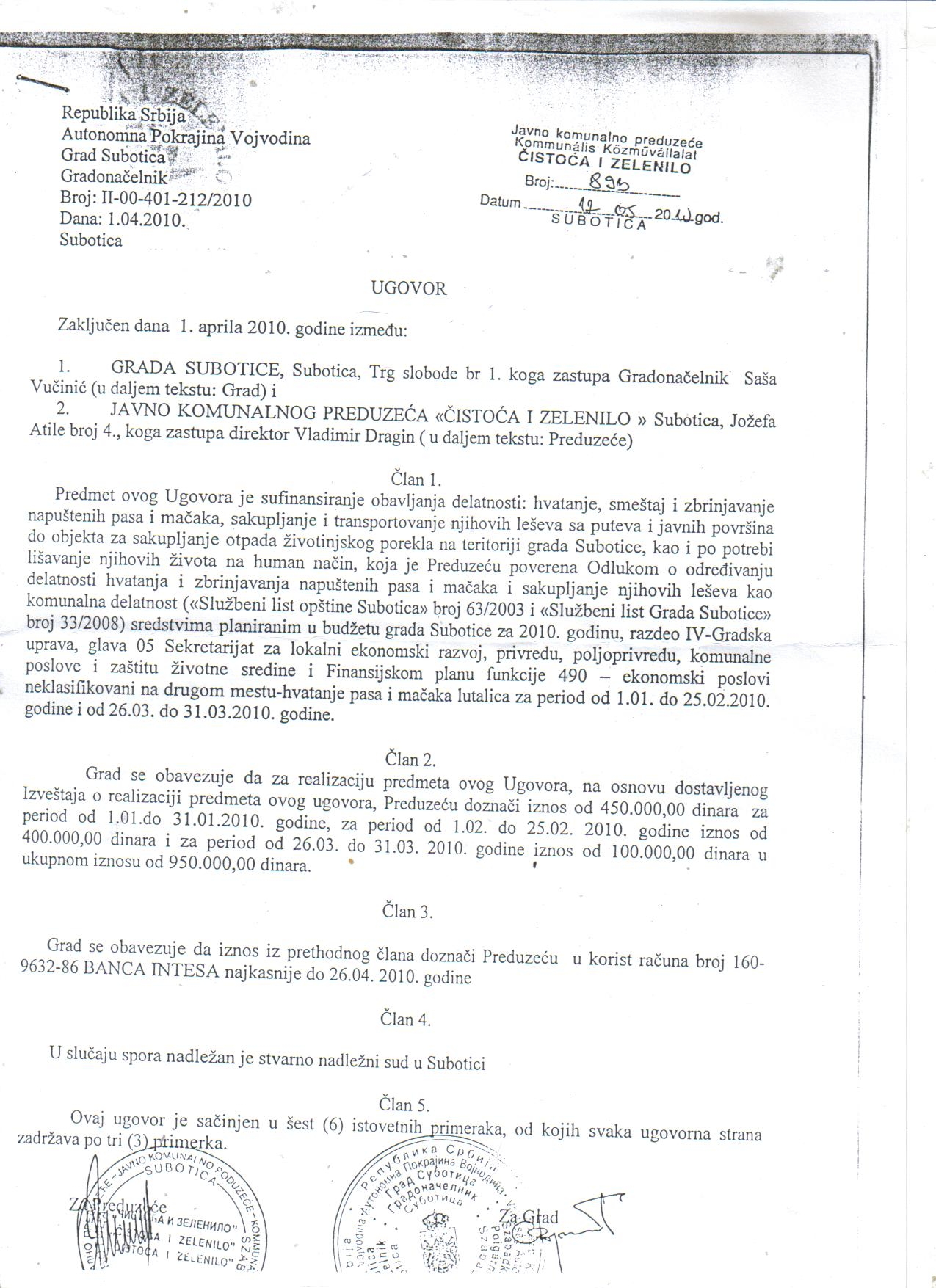
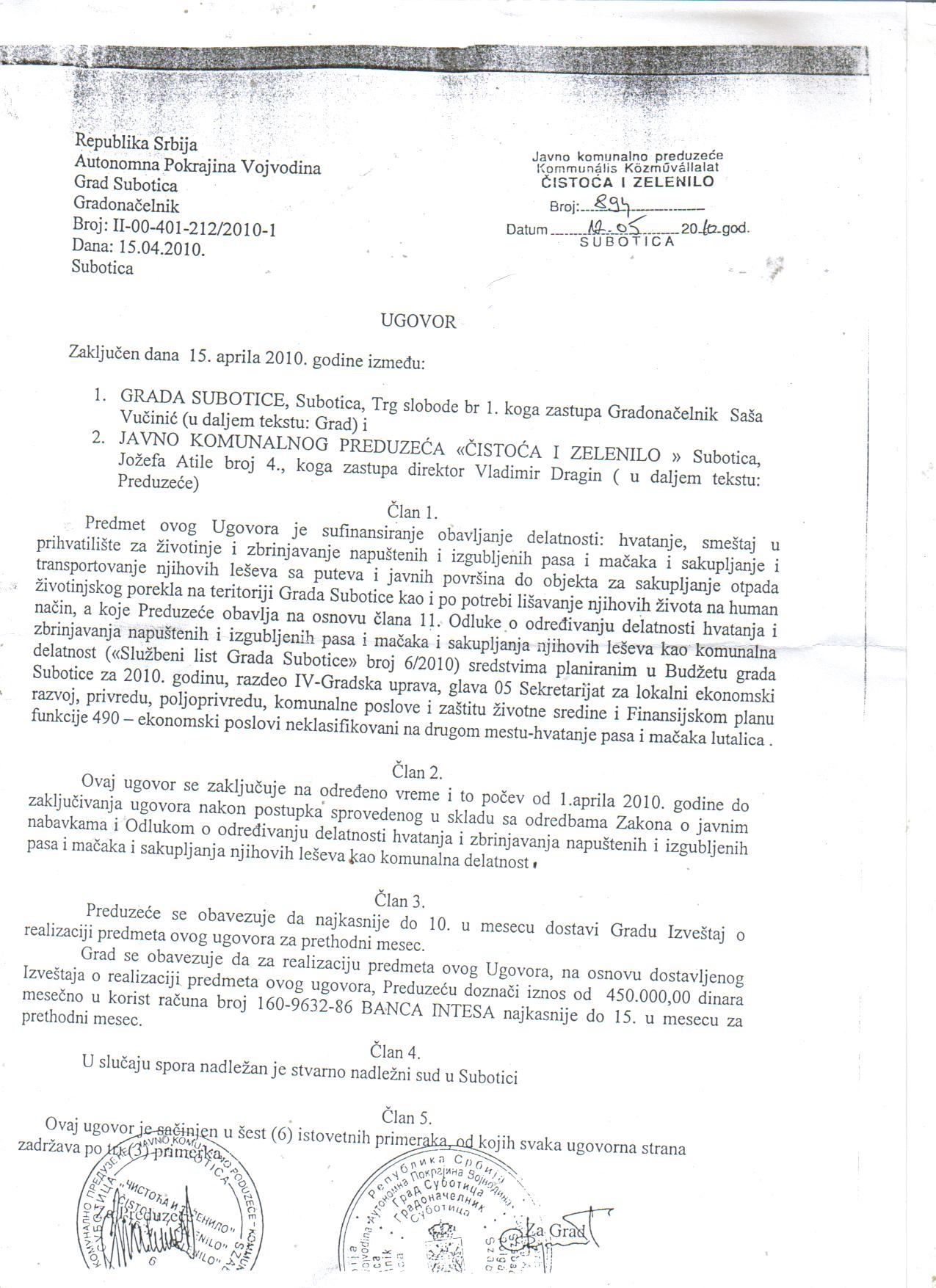
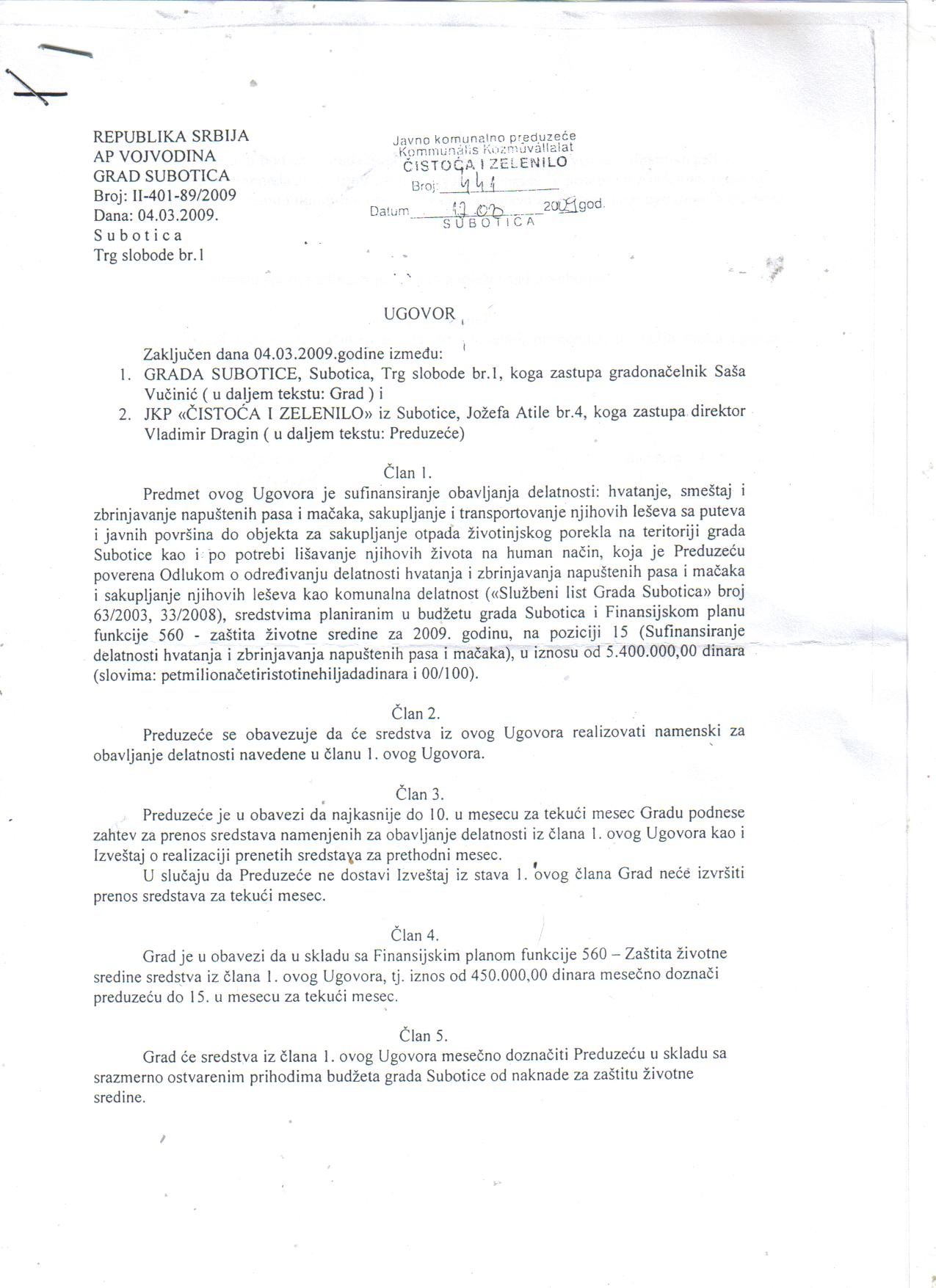
We now have copies of the contracts between the Subotica government / authority and the public garbage firm ‘JKP Cistoca i zelenilo’ who have the contract to capture (and subsequently kill) the strays in the city.

In 2009 the city government awarded 5,400,000 dinars from the municipality budget, whilst an additional 5,800,000 dinars was given from the republic budget.

This closed shop system equals 11,200,000 dinars in just 2009 (12 months) alone to a public firm FOR THE CAPTURE AND KILLING OF STRAY ANIMALS.

Now that the contract for stray animals is open to public tender / competition, including proposals that can be presented by animal welfare organisations with a No kill policy;

the budget has now been reduced to 4,100,000 dinars for the first 12 months of the contract, followed by 6,100,000 over the next 18 month period.

This equals 10,200,000 dinars over a 30 month period (two and a half years) now that the contract has been put out for public competition !

This means that a closed shop city organised budget (NO PUBLIC COMPETITION) of 933,333 dinars each month for 2009

has now (FOR PUBLIC COMPETITION)

been REDUCED to 340,000 dinars per month.

*** We make that a CUT OF APPROXIMATELY TWO THIRDS ***.

As we have stated in our recent post:

https://serbiananimalsvoice.wordpress.com/2010/06/02/serbia-subotica-city-now-stray-animal-control-is-opened-up-to-public-competition-including-welfare-organisations-suddenly-the-budget-for-same-is-drastically-reduced-the-closed-shop-big-money-w/ 

“We consider that this immediately shows a fear factor in the depths of municipal authorities financial controllers – one which immediately shows that now that tendering is open to public competition, the vast fortunes of money which have been provided by authorities in the past, and which have been controlled by elicit groups and organisations within the authority, may now be lost by them when it has to be handed over to another party undertaking the work – such as the animal welfare organisations”.

For example; up to this present time, many contracts for things such as the control of stray animals within cities has had what could only be classified as political support and leanings – namely that the Director of one of the Shinter firms engaged in the capture and killing of stray animals, one Vlada Dragin, also happens (by just pure chance !) to be the brother of the Serbian Minister for Agriculture, one Sasa Dragin. 

Keep contracts within ‘the family’ along with the millions of dinars financially involved each year and you have basically what could be referred to as a bit of a closed shop !

Now ‘outside parties’, including animal welfare organisations, who propose an alternative ‘No Kill’ way of addressing stray animal control, are immediately given advance information that this budget for such tasks will be greatly reduced in the coming years.

A fear factor concern that things in the dynasty type establishment will not be controlled from within the close knit community now that all future contracts for animal control will be going out to public competition, or just the way things are now days ? – lets leave the decision up to you all to see what you think”.

Strange what happens to money when it is no longer under the closed shop control of a few individuals and has to be put out to public tender – the amounts available fall so dramatically !!

It leads one to question if there was any corruption going on in the past ?

Just for the record, here are the official copies of all documents associated with these past and future budgets.

Now why should animal welfare No Kill stray control policies be under threat from the government and city authorities ? – after all, if they win the public competition to control stray animal numbers, animal welfare organisations suddenly (under public competition) now have only have one third of the past money available with which to undertake their programmes !

Strange that, isnt it ? – or is it ?

Serbia: Loznica City – Further ‘Rabies Necessary’ Killings By Hunters and Shinters Acting Under Orders From Government.

*****  UPDATE 03/06/10 –

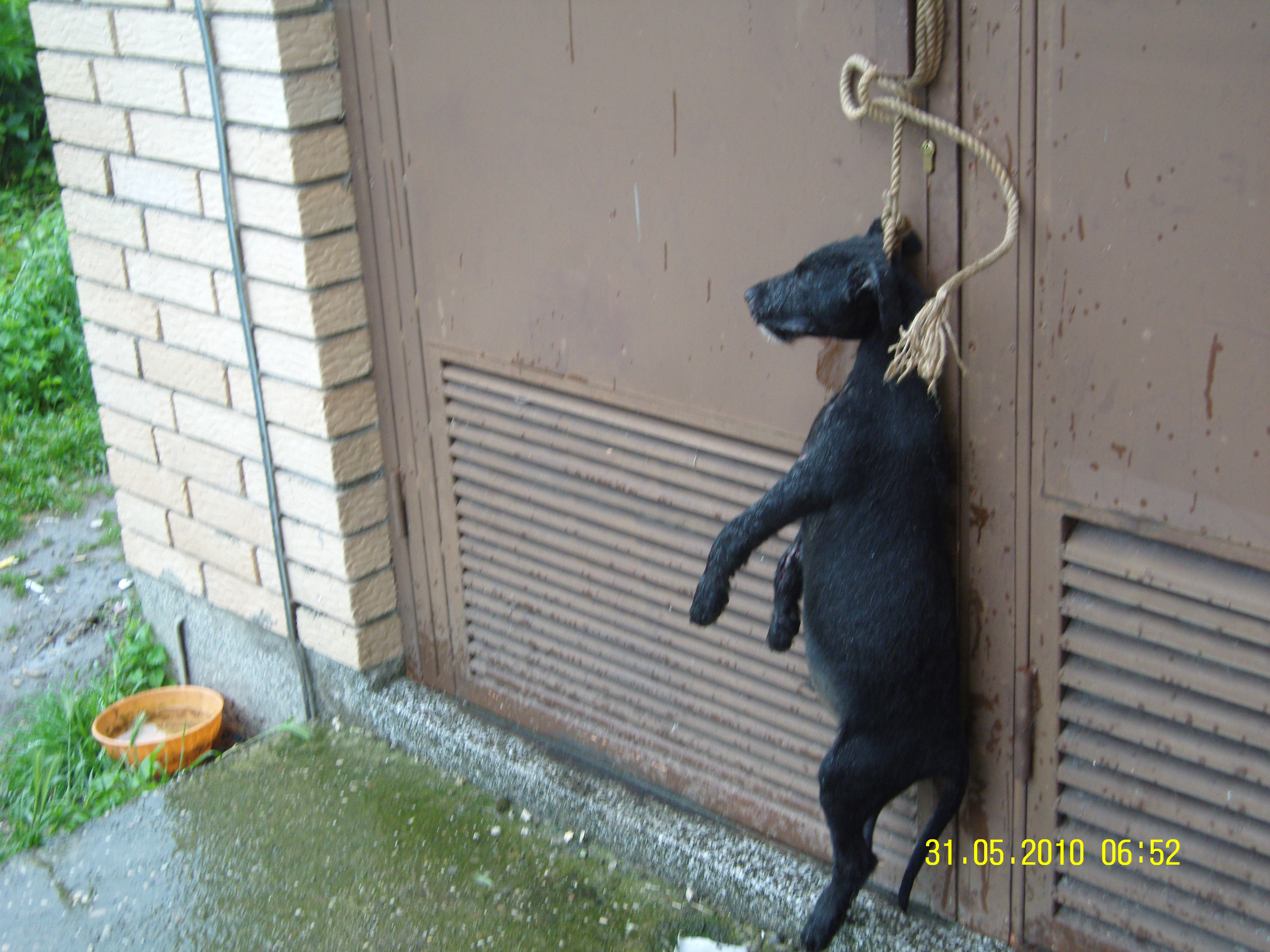
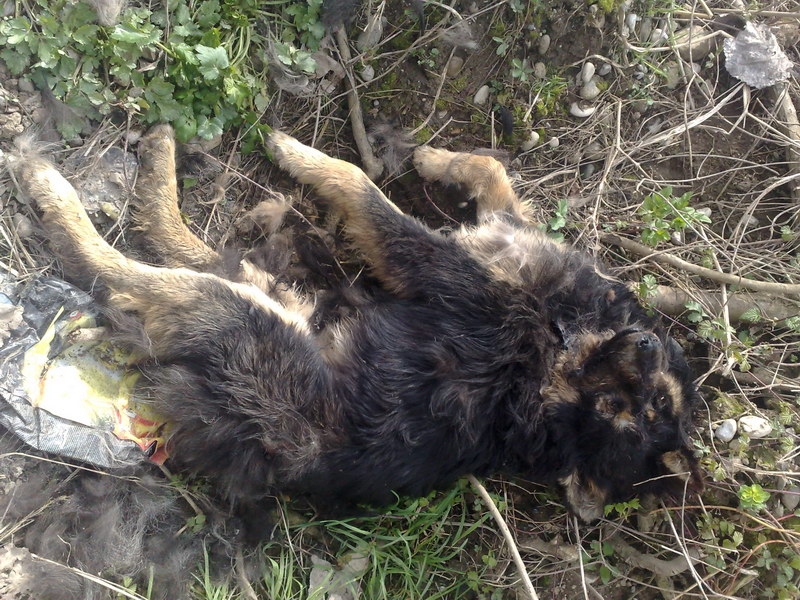
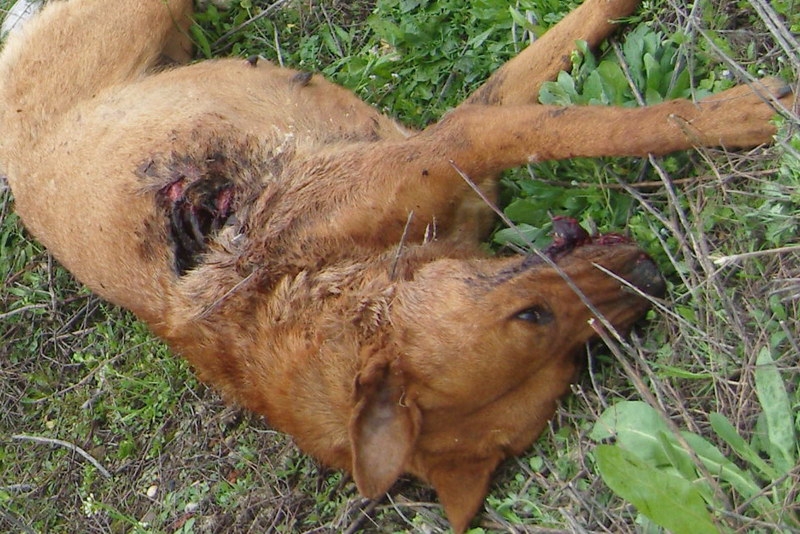
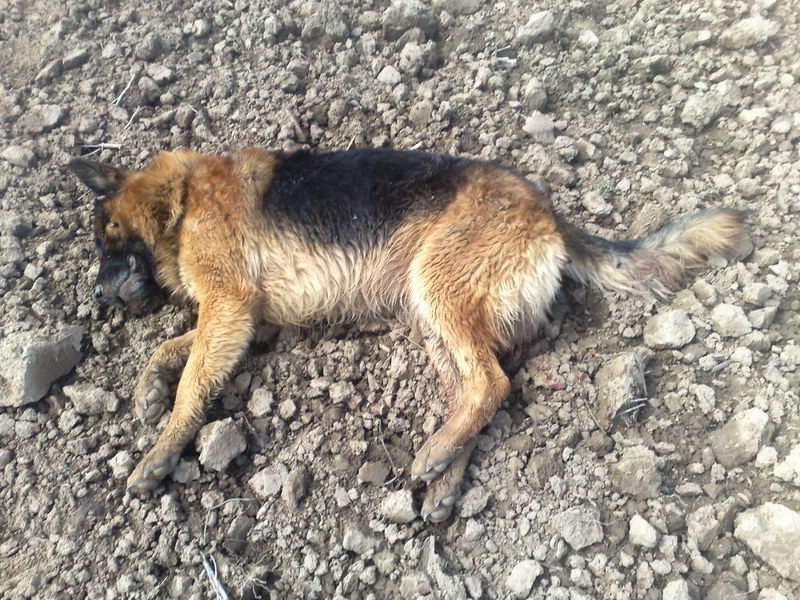
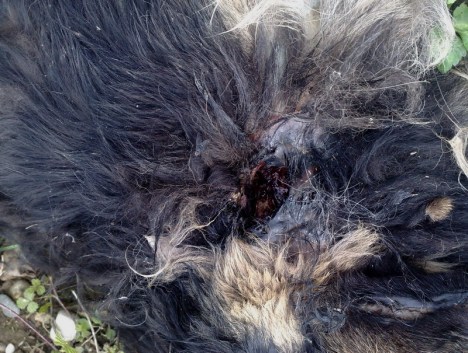
The veterinary investigation shows that the dog in the photographs below was beaten, that both his front legs were violently fractured.
The main cause of his death was suffocation due to being hung as shown, – in public – in the park where he has lived since he was sterilised.

The activist who cared for this dog is in hospital with a heart condition after witnessing this to the animal which he looked after.  And why the killing ? – allegedly because of rabies –  all strays must be killed.

Update ends.

———————————————————————————————-

Original Story:

Pictures have just arrived from Loznica, where a dog belonging to a local animal welfare activist has been killed.  It is suspected that either shinters or hunters did this.


The man who saw this done to his dog has had to be taken to hospital with heart problems.

The ‘official’ answer to this from Zvonimir Rot ,on behalf of Mr. Micovic states that the killing of dogs and cats is necessary as a method of prevention and the dispersion of rabies.  It continues that dogs and cats must be killed immediately on the streets in areas where rabies is present.

E mail contact details are left on the mail below in order that people can send messages to those authorising the killings if they so wish.

————————————————————————————————- 

From: *Zvonimir Rot* <zvonimir.rot@minpolj.gov.rs <mailto:zvonimir.rot@minpolj.gov.rs>>
Date: 2010/6/1
Subject: Odgovor na PITANJE

To: radavolizivotinje@gmail.com <mailto:radavolizivotinje@gmail.com>
Cc: Uprava za veterinu <vetuprava@minpolj.gov.rs <mailto:vetuprava@minpolj.gov.rs>>, Zoran Micovic <zoran.micovic@minpolj.gov.rs <mailto:zoran.micovic@minpolj.gov.rs>>

Поштовани грађани Лознице и Бање Ковиљаче,
 Поводом појаве беснила на Вашој територији и упућеног дописа у име Др Зорана Мићовића желим да вaс обавестим следеће:
 Поштујући Закон о ветеринарству и Правилник о утврђивању мера за рано откривање, дијагностику, спречавање ширења, сузбијања и искорењивања заразне болести беснила и начину њиховог спровођења, када се на основу дијагностичког испитивања потврди присуство болести, Министар пољопривреде, шумарства и водопривреде доноси Решење о проглашењу зараженог и угроженог подручја и налаже мере у истим.
 Као једна од мера налаже се лишавање живота паса и мачака луталица, што је у складу и са Законом о добробити животиња који прописује, да се ради спречавања ширења, сузбијања и искорењивања заразних болести животиње могу лишити живота, чак и на јавним местима.
 Све друге мере се односе на власничке псе и мачке.

На основу члана 6. Закона о ветеринарству власник, односно држаоц животиња је дужан да се стара о здрављу и добробити животиња  и да предузме све мере заштите здравља животиња ради спречавања појаве и ширења заразних болести животиња и зооноза. Беснило је нарочито опасна заразна болест и зооноза. Као мера спречавања ширења ове болести обавезна је вакцинација паса и мачака, старијих од три месеца, и касније ревакцинација на годишњем нивоу. Тако се једино може спречити ланац преношења вируса са дивљих животиња, у овом случају лисица, на псе и мачке, и наравно на људе. Животиње познатих власника, осим што имају познати здравствени статус на беснило, у зараженом и угроженом подручју морају имати и контролисано кретање, тако што се мачке држе у безбедно ограђеном простору, а пси при извођењу у шетњу морају ићи на повоцу и са брњицом.

Пси и мачке луталице, осим што имају непознат здравствени статус, њихово кретање нити је могло нити може бити праћено, те веома лако могу бити преносиоци болести ако дођу у контакт са бесном лисицом, те је стручно и оправдано лишити живота те животиње.

У циљу искорењивања ове болести, и уз помоћ предприступних (ИПА) фондова Европске Уније, почело се са реализацијом  вишегодишњег пројекта оралне вакцинације лисица.

Борба са беснилом је тешка и дуготрајна, али Управа за ветерину спроводи све законске и стручне мере како би била и успешна и са што мање последица по здравље и добробит животиња, а наравно и самих људи у околини.

Срдачан поздрав

Звонимир Рот

Zvonimir Rot
Viši savetnik
Uprava za veterinu
Ministarstvo poljoprivrede,
Šumarstva i vodoprivrede
Omladinskih brigada 1
B e o g r a d

Zvonimir Rot
Special adviser
Vetrinary directorate
Ministry of agriculture,
forestry and water managment
1 Omladinskih brigada
B e l g r a d e

Tel./Fax: +381 11 2602320

www.minpolj.gov.rs <http://www.minpolj.gov.rs/>
zvonimir.rot@minpolj.gov.rs mailto:zvonimir.rot@minpolj.gov.rs

————————————————————————–

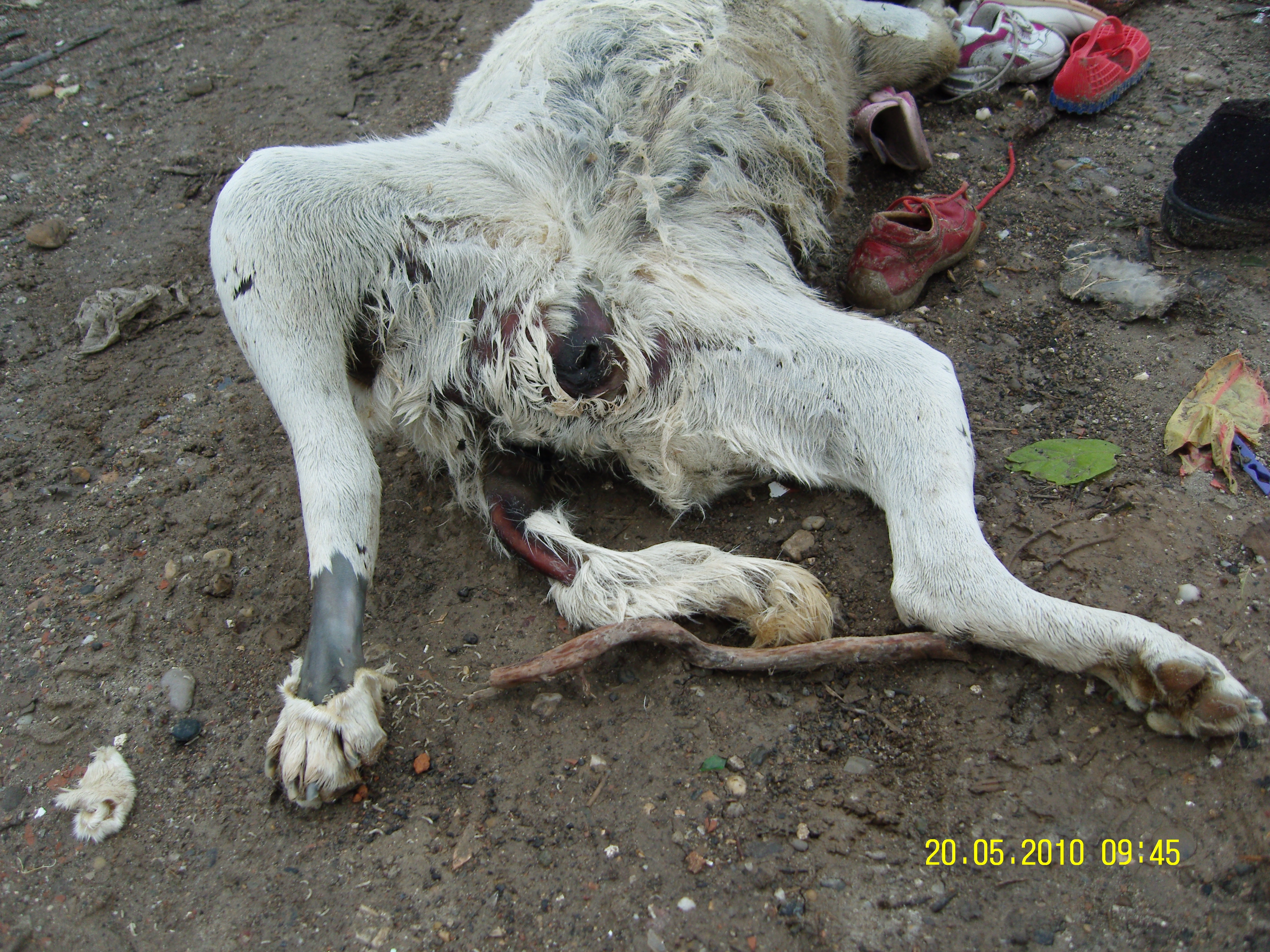
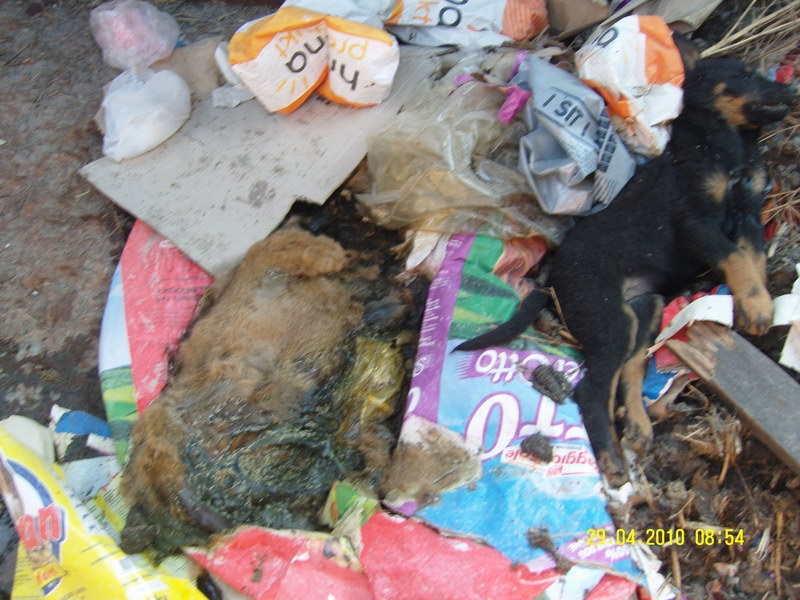
Further to this we have a picture which again has arrived from Loznica.

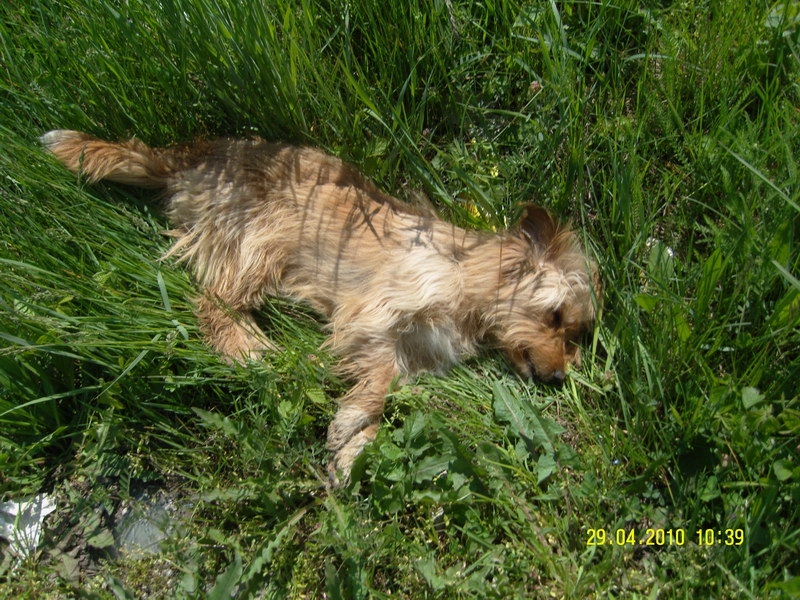
This female dog was killed by having wood inserted into her vagina.

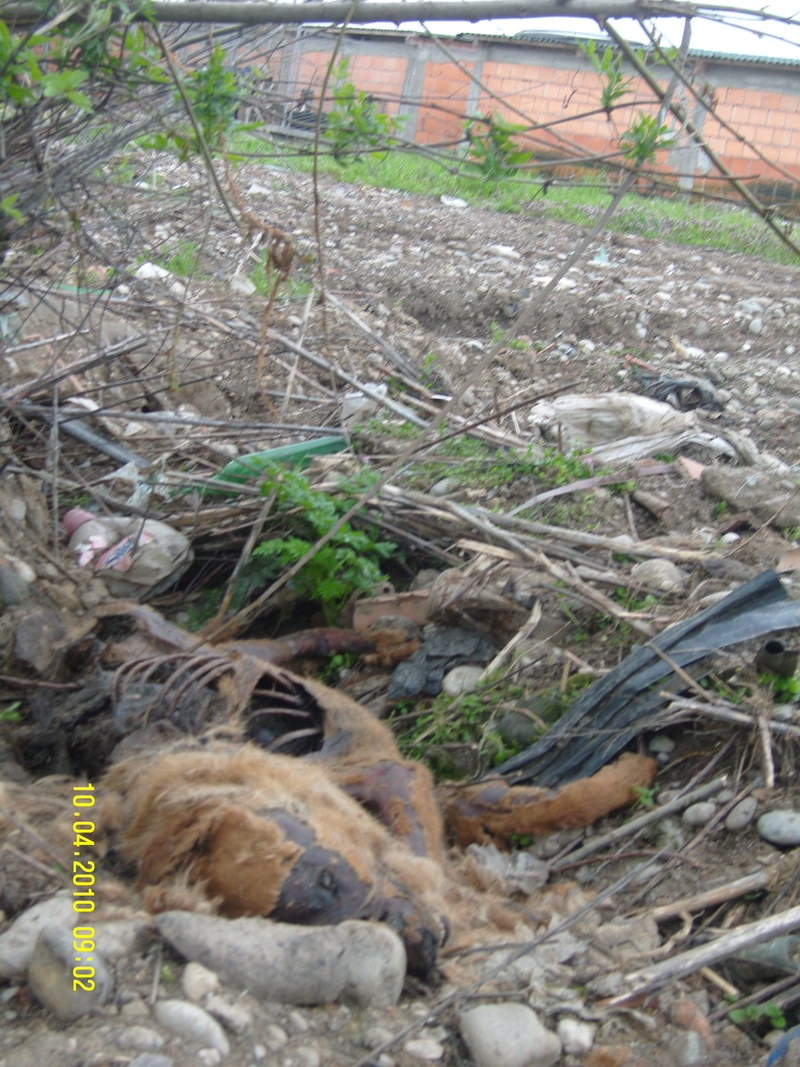
Her body was thrown into the local pound at Loznica city.

It is thought that this act is one of revenge by hunters.

Past links relating to Loznica city animal abuses:

https://serbiananimalsvoice.wordpress.com/2010/05/13/serbia-loznica-city-shelter-captured-stray-dogs-used-for-target-practice-by-local-hunters/

https://serbiananimalsvoice.wordpress.com/2010/05/18/serbia-180510-new-photographs-of-loznica-pound-animal-killings-and-conditions-at-city-dump-no-wonder-stray-animals-are-attracted/

https://serbiananimalsvoice.wordpress.com/2010/05/16/serbia-sample-letter-to-send-to-the-government-the-eu-commission-and-to-the-world-organisation-for-animal-health-the-oie-serbia-must-change-its-attitude-towards-stray-animals-and-willingless-to/

https://serbiananimalsvoice.wordpress.com/2010/05/11/serbia-loznica-city-pound-3-million-dinars-for-what-certainly-not-for-animal-welfare-politicians-maybe/

https://serbiananimalsvoice.wordpress.com/2010/03/09/serbia-many-cases-of-rabies-throughout-the-country-but-is-the-serbian-government-reporting-this-to-the-oie-world-organisation-for-animal-health-as-they-should-maybe-not/

https://serbiananimalsvoice.wordpress.com/2009/10/13/serbia-loznica-city-pound-death-camp-why-does-the-government-not-act-re-leskovac-city-policy-and-why-not-the-european-union-with-a-policy-for-stray-animal-welfare/

Serbia: Subotica City – Now Stray Animal Control is Opened Up to Public Competition, Including Welfare Organisations, Suddenly the Budget for Same is Drastically Reduced. The Closed Shop, Big Money Ways of The Authorities Past Dealings are Now Declined to Welfare Organisations. But We Fight On to Win the Competition.


Regarding our recent post which declares that there must be a Public Competition – Tendering for the catching of stray dogs and cats in Subotica city;

https://serbiananimalsvoice.wordpress.com/2010/05/29/serbia-public-competition-by-law-may-now-enable-animal-welfare-groups-to-present-proposals-to-authorities-for-their-no-kill-stray-animal-numbers-control-programmes/

already there are signs that the city authorities are attempting to cause the animal welfare approach to fail.

The way they will be attempting this is by drastically reducing the budget allocated for stray animal control.

We consider that this immediately shows a fear factor in the depths of municipal authorities financial controllers – one which immediately shows that now that tendering is open to public competition, the vast fortunes of money which have been provided by authorities in the past, and which have been controlled by elicit groups and organisations within the authority, may now be lost by them when it has to be handed over to another party undertaking the work – such as the animal welfare organisations.

For example; up to this present time, many contracts for things such as the control of stray animals within cities has had what could only be classified as political support and leanings – namely that the Director of one of the Shinter firms engaged in the capture and killing of stray animals, one Vlada Dragin, also happens (by just pure chance !) to be the brother of the Serbian Minister for Agriculture, one Sasa Dragin. 

Keep contracts within ‘the family’ along with the millions of dinars financially involved each year and you have basically what could be referred to as a bit of a closed shop !

Now ‘outside parties’, including animal welfare organisations, who propose an alternative ‘No Kill’ way of addressing stray animal control, are immediately given advance information that this budget for such tasks will be greatly reduced in the coming years.

A fear factor concern that things in the dynasty type establishment will not be controlled from within the close knit community now that all future contracts for animal control will be going out to public competition, or just the way things are now days ? – lets leave the decision up to you all to see what you think.

And the numbers ?

From information provided, see documents provided below, it would appear that for the next year, 4.1 million dinars has been allocated for stray animal control.  The two years following, 2011 and 2012, 3.5 million dinars per year is allocated.

This is a little different to how things have always been.  The shinters of JKP Cistoca were always provided with a minimum of 4 to 5 million dinars per year.  In addition there were separate payments made for buildings, for vehicles and for workers salaries.  We understand that in 2009 shinter teams have been provided with 5.8 million dinars from the republic budget, and also provided with 5.2 million dinars from the municipality budget.  That makes 11 million dinars for the year of 2010.

Now it would appear that the tendering for work is being opened up to public competition, which involves proposals being provided by animal welfare organisations, the budget announced on 25/05/2010 has now been slashed to 4.1 million dinars for the period of the first 12 months, and thereafter 3 million dinars per year for the next 2 years.

It could be declared, argued and stated, that by suddenly reducing these budgets immediately by such large amounts, the authorities are already accepting defeat in a system that will no longer allow them to operate a closed shop system, and also that by allocating such small amounts of money when compared to the past, they are also attempting to show that those ‘public competition’ organisations who are tendering to take over management of programmes, such as stray animal control in Subotica city, are just not worthy and completely inadequate for the task !

It could be cynically stated that should any contract be awarded to a public organisation in the near future, things may decline and fail within a few years due to budget restrictions.  Whether this budget allocation would suddenly make a dramatic rise again after this period if contracts were given back to elicit groups and organisations within the authority one can only question – time will no doubt tell.

Again, lets leave the decision up to you all to see what you think.

Finally, Serbian campaigners who will be submitting proposals for the public competition for stray animal control are now going to use the public freedom of information request to obtain data from the city authorities as to why suddenly there is such a drastic reduction in money being provided now that the system has been opened up to public competition.

It will be very interesting to see what reasons are going to be provided by the authorities relating to this, now that the closed shop system has been closed for the future.

Whatever, we will be monitoring events and will hopefully be providing regular updates on a system which has finally been opened up to public control and management.  At what cost we have yet to establish, but there is little doubt that money will be harder to grasp for the ‘public’ organisations undertaking work on behalf of the public, using money provided by the public.

A corrupt closed shop system in the past ? – again, lets leave the decision up to you all to see what you think.

Serbian, Italian and SAV activists are currently cooperating to try and devise a proposal for the strays control of Subotica.  We have been given a limited time for this (around 30 days) and so several avenues to find a way forward are currently being looked at.

Further news in the very near future.


Serbia: ‘Public Competition’ by Law May Now Enable Animal Welfare Groups to Present Proposals to Authorities for Their ‘No Kill’ Stray Animal Numbers Control Programmes.


Today there has been some good news arriving from Serbia.

Campaigners have been waiting since 2002 for a verdict, but now, the Constitutional Court of Serbia has officially demanded that there must be a Public Competition – Tendering for the catching of stray dogs and cats in Subotica city.

Subotica city is finally starting to / having to act in agreement with the court, by allowing public competition for the process of catching strays in the city.  Until now, this process has been very much a closed shop type set up, with shinter (dogcatcher) firms having a stranglehold on the awarding of stray animal contracts.  Every year, shinter firms would effectively be awarded millions of dinars to undertake the rounding up, catching and killing of all stray dogs and cats in the city.  There was never any real plan or progress towards a policy of reducing stray animal numbers through a long term sterilisation programme.  In effect, a sterilisation programme to reduce stray animal numbers over a period of time was not to the benefit of these organisations.  Their approach to the stray numbers was one of kill, kill, kill.

Effectively the shinter management policy was one of – strays could continue to reproduce on the streets; shinter teams could be paid annually from the public purse to continually round them up and kill all the animals, and as a result the authorities could continue to inform a largely uneducated public (on this issue) that they are doing everything in their power to try and control stray animal populations.  It all looked good for those involved and was financially very beneficial.  Almost a never ending way of being financially supported to solve an issue, but an issue which never diminishes no matter how much money is thrown at it.

But as we, the animal welfare lobby have always argued, stray animal numbers can never be reduced unless a long term sterilisation programme is introduced somewhere into a system which aims to eventually eliminate or at least very drastically reduce stray animals from the streets.  With a sterilisation programme, stray numbers will gradually reduce over a period of time – ie. a sterilised (stray) animal cannot reproduce and thus continue to constantly add further to the large numbers of strays in cities.

As a result of this new public competition / tendering scheme, it is hoped that the current large costs involved in stray animal ‘control’, which could be argued does not really work in controlling numbers and always results in large numbers of animal deaths, can now be diverted into a sterilisation programme aimed at long term animal numbers reduction – a positive programme for the future and one which will especially be of benefit to the animals; as the programme will definitely be a ‘no kill’ strategy.

And so now, animal welfare campaigners in Subotica city can commence work to produce a proposal programme of stray animal control for the city using ‘no kill’; a programme which will be much more financially beneficial to the authorities and tax paying public of the city.  Whilst not wanting to provide detail of their proposal, as this site is frequently visited by governments and authorities who may learn from the proposals when compiling their own bid, animal welfare campaigners will at last be given the opportunity to present a programme / plan for stray animal control which will include:

  • Sterilisation of animals taken in from the streets to ensure that these animals cannot contribute further offspring to the numbers which exist at present
  • Vaccination of same animals to ensure both animal and public safety from infectious disease
  • Microchipping of each animal; including owned (but roaming) pet animals, to compile a database to allow identification of animal owner should it be collected from the street 
  • If animals are ever returned to the streets, then identification tags (such as a small high visibility ear tag) to be fitted to every animal that has been sterilised.  This to provide immediate identification to catchers that the animal in question has previously been caught, sterilised, vaccinated and microchipped and that it is NOT necessary to capture this animal again
  • Public education schemes to inform of the benefits of long term sterilisation programmes, especially where expenditure from the public purse is involved
  • Production of very strong and durable shelters for (captured street) animals who once sterilised will be kept in facilities such as the ‘Delta’ shelters used in Brcko district, Bosnia and Herzegovina.  Delta shelters are made of straw bales, cement and wood, which although cheap to produce, especially using schemes involving authority prisoners for manpower / labour, can provide strong, warm and weather protective shelters for the animals that reside within them.


Photos –  Low Cost but Very Effective  – ‘Delta’ shelters as used in Bosnia and Herzegovina.

Pictures with thanks to ‘ARKA’ animal welfare.

It is envisaged and hoped that the proposal presented by animal welfare campaigners in Subotica city will provide a long term solution and a very forward looking scheme which will over time, ensure that the numbers of stray animals in the city are reduced.

As we have always stated, the continual killing of stray animals does nothing to reduce stray animal numbers.  Killing strays in any location in any part of the country simply creates a void in that specific region which within a matter of days or a few weeks maximum, then allows stray animals from other outlying areas to venture into the location, which always amplifies the risk of diseases being spread and always guarantees that within a short time, the region in question gets provided with a new, fresh crop of fertile, unsterilised animals arriving, to search for possibly more food which they always seek, to continue to procreate and as a result further contribute to the never diminishing pyramid of stray animals in that particular area / region.


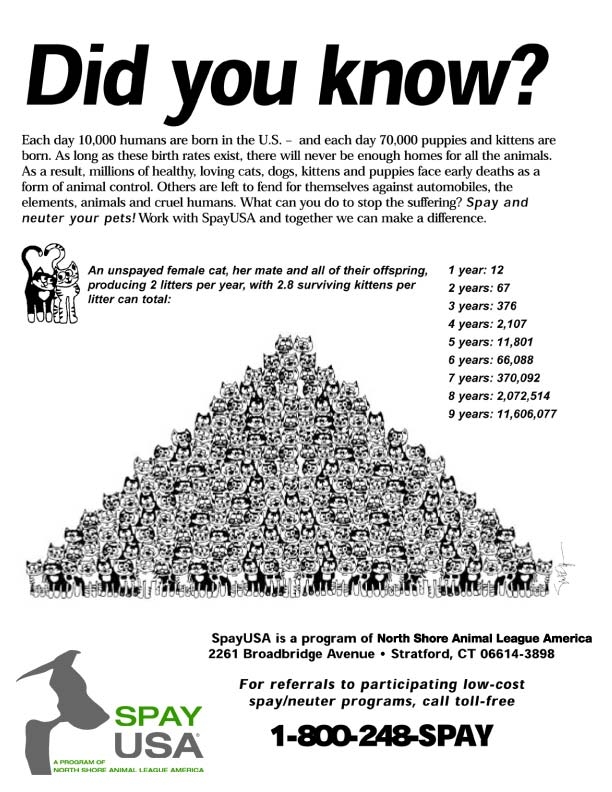
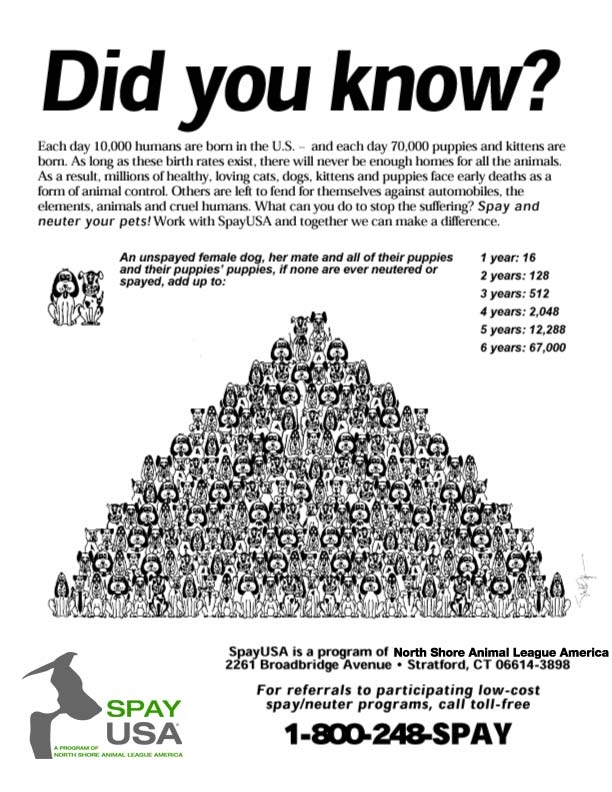
The Results of NOT Sterilising Stray and Pet (Owned) Animals – there IS NO RESULT, only a constant supply of animals to fill any void left by those which have been killed by authorities.

Killing strays does not reduce stray animal numbers; a programme of sterilisation and vaccination ensures that animal numbers reduce over time and disease risk is minimised.

Subotica campaigners who produce this proposal for an effective, no kill stray animal numbers reduction programme, are then in a position to be able to share their data with other campaigners throughout the nation; making every one of the 170 communities be able to present a no kill sterilisation programme to their local authority through the public competition process.

The public education programme must be geared to the education of all citizens about the positive aspects of animal sterilisation, including their own pets, the necessity for responsible pet ownership, and using the microchip database which is proposed (and undertaken during sterilisation), a scheme which could allow for fining irresponsible owners who let their animals wander the streets.  Small fines by this system could be fed back into further funding of schemes and databases used for such purposes.

Currently, campaigners are initially looking at Subotica as the first of (hopefully) many cities throughout Serbia in which they can now propose stray animal control programmes to regional authorities.  It does not matter which city is first, it is only important to address the management of stray animal numbers using a scheme which will be financially beneficial in the long term, whilst also of benefit to citizens throughout the country.

The government and authorities to date have not grasped effective management and control of stray animal numbers throughout Serbia.  It is now hoped that through the public competition process the animal welfare movement can show the government a scheme which they, the government, should have accepted and instigated many, many years ago.

That is a NO KILL programme of sterilisation, vaccination, microchipping and identification for the stray animals of Serbia.

Maybe now a change on the horizon …

for the benefit of all stray animals in Serbia.


Serbia: Rabies Across the Nation ‘Legally’ Allows Animals to be Killed. But Has the OIE Been Informed by the Serbian Ministry of These Alleged Nationwide Outbreaks ? – Or Just a ‘Creational Excuse’ to Continue With Mass Animal Killings As Always ?


Serbia – the Rabies issue goes on and on.

Prelim:  27/05/120.

Today, SAV have been in contact by telephone with the OIE; the ‘World Organisation for Animal Health’, http://www.oie.int/eng/en_index.htm  starting in Brussels and then moving through to Paris, the headquarters of the OIE.  We need to ascertain exactly the situation regarding Rabies in Serbia; including;


  • How large are the alleged outbreaks ?
  • What animal species are involved ?
  • Are / have the OIE been informed and kept up to date of these alleged rabies outbreaks in Serbia by the OIE ‘official delegate’ in Serbia – Dr Zoran Micovic, Chief veterinary Officer, Ministry of Agriculture and Water Management ?
  • If they have not been informed by Dr Micovic, then why not ? – he is the official delegate for the OIE in Serbia 
  • Are the OIE monitoring the situation in Serbia with regard the alleged infected regions ? 
  • Are the OIE encouraging the use of Serbian authorities to undertake a national oral vaccination programme of all animals which could be affected ? 
  • If not, why not ? 
  • Is the OIE aware that Serbian hunters could be out killing many wildlife animals which are NOT affected by rabies, and that this may be supported and even encouraged by the Serbian government and authorities ? 
  • What is the official reporting procedure / structure that the Serbian OIE ‘official delegate’ in Serbia – Dr Zoran Micovic should be undertaking to keep the OIE informed of what is happening ? 
  • Where is this documentation being held ? 
  • Is the information available to animal welfare NGO’s such as SAV ? 

SAV aim to be in discussion with the OIE Sub-Regional Representative in Brussels during next week (31/05-04/06) in order to further investigate and ask / discuss the alleged Serbian rabies outbreaks.

It is understood that 170 million Euros were given to Serbia by the EU during the financial period 2009/10, and that some of this money was provided for the vaccination of animals against rabies within Serbia.

So, what is the situation now ? – we hope to obtain more answers during the coming week(s) when we hope to be in discussion with the OIE.

Ends.

—————————————————————————————– 

According to information supplied from our contacts within Serbia, we are told that Rabies is ‘everywhere’ in Serbia.

Whilst it is not doubted that there are some cases of rabies within the country, it has to be questioned what are the real reasons for all these alleged ‘everywhere’ outbreaks.  More importantly, it has to be asked why, when provided with such huge amounts of financial support from the EU, and with such a wide range of (animal) oral vaccines for rabies available now, the Serbian government has allegedly still not shown any intention on embarking on a nationwide programme of oral rabies vaccination for all stray animals (ie. Dogs and cats) and wildlife such as foxes ?

We ask, would this (oral vaccine) thus prevent hunters and the government from using rabies as the reason to undertake their mass enjoyment of the mass killing of animals in Serbia ? – a way and excuse to allow for large number killings of stray animals. 

Very Important Point:

It should be remembered that the original (old) legislation to allow stray killing – named Pravilnik 29/94, was overwritten by Article 168 of 2005, the result being that all killing of animals was forbidden apart only from cases for Rabies infected areas, which were covered by application of Articles 64 and 65 of the Veterinary Law.

This is the important point, that animal killing is illegal apart only from cases for Rabies infected areas, which were covered by application of Articles 64 and 65 of the Veterinary Law.

It would seem strange that there are alleged mass outbreaks of rabies across Serbia now.

In effect, Article 168 of 2005 which does not allow animal killing is replaced by legislation that DOES ALLOW animal killing, simply because there is allegedly rabies in areas.  The word ‘rabies’ being the one which specifically gives right to animal slaughter rather than animal protection.

Even more strange that rabies is supposedly breaking out right across Serbia; which therefore allows all strays and wildlife to continue to be killed by ‘by-passing’ legislation of Article 168 of 2005 – the no kill animal legislation. 

No rabies in area = legislation Article 168 = NO animal killing, only animal care.

Rabies in area = Articles 64 and 65 of the Veterinary Law = Mass animal killing.

So, we suggest that a national rabies outbreak has suddenly arrived en masse, been invented, devised etc in order that the continued mass slaughter of all animals can continue, when in fact, Article 168 which should allow for the care of animals, is very conveniently being by-passed.

Reference – https://serbiananimalsvoice.wordpress.com/2010/05/04/serbia-temerin-city-their-animal-shelter-death-after-3-days-and-a-national-public-attorney-who-says-all-is-ok/

——————————————

Is rabies the new alibi which is being ‘created’ by Serbian authorities in order that they can undertake mass killings of both strays and wildlife animals such as foxes ?

In the financial period 2009 / 10, the EU allegedly donated 170 million Euros to Serbia for vaccination of animals against rabies and swine flu.  So what has happened to the money ?

Serbia is a relatively small country in terms of landmass and we envisage that a rabies oral vaccination programme could be undertaken nationwide within a 1 month period.

Immunity of animals against rabies would start approximately 2 weeks later and animals would have an immunity against rabies for a period of 3 years.

http://www.rabies-vaccination.com/control-rabies.asp

http://www.rabies-vaccination.com/oral-vaccination.asp

“Dog rabies control programs by parenteral vaccination in developing countries often fail because an insufficient number of dogs can be vaccinated. Oral vaccines allow for easy mass vaccination and is proposed for the vaccination of large ownerless dog populations. Intervet/Schering Plough Animal Health is in the process of developing an oral rabies vaccine.

Previous rabies control programmes using baits containing other oral rabies vaccines to vaccinate foxes in some European countries and wildlife in certain US states, have been successful”.

http://www.rabies-vaccination.com/intervet-oral-rabies-vaccine.aspOral vaccine strain – SAD – B19

“The vaccine virus SAD B19 is the most widely used oral vaccine virus to immunize wild life in Europe. The distribution of more than 100 million vaccine baits in 13 countries has resulted in a significant decrease in the rabies incidence or complete eradication of terrestrial rabies in baited areas.

Vaccine induced rabies has not been reported from any country where this vaccine virus has been used. However, this vaccine has some residual pathogenicity for certain rodent species after intracerebral inoculation”.

“In developed countries the risk to humans has been minimized mainly due to mandatory rabies vaccinations of dogs and other pets. Progress in the control and elimination of wildlife rabies has been made through successful oral vaccination programs”.


Publication links

http://www.rabies-vaccination.com/publications-rabies-vaccination.asp 

 Other information sources and links:

http://www.aphis.usda.gov/ws/rabies/vaccine_faq.html

http://www.aphis.usda.gov/ws/rabies/vaccine.html 

“There is an immune response to the rabies antigen which creates antibodies to fight off the disease.  After two to three weeks the “blueprint” to create rabies antibodies exists in the animal’s immune system which can easily be created should the animal be exposed to a rabid animal”.

http://en.wikipedia.org/wiki/Rabies_vaccine 

Recombinant rabies vaccine (V-RG)

Aerially distributed wildlife rabies vaccine in a bait from Estonia.

In 1984 researchers at the Wistar Institute developed a recombinant vaccine called V-RG by inserting the glycoprotein gene from rabies into a vaccinia virus.[5] The V-RG vaccine has since been commercialised by Merial under the trademark Raboral. It is harmless to humans and has been shown to be safe for various species of animals that might accidentally encounter it in the wild, including birds (gulls, hawks, and owls).[6]

V-RG has been successfully used in the field in Belgium, France, Germany and the United States to prevent outbreaks of rabies in wildlife. The vaccine is stable under relatively high temperatures and can be delivered orally, making mass vaccination of wildlife possible by putting it in baits. The plan for immunization of normal populations involves dropping bait containing food wrapped around a small dose of the live virus. The bait would be dropped by helicopter concentrating on areas that have not been infected yet. Just such a strategy of oral immunization of foxes in Europe has already achieved substantial reductions in the incidence of human rabies. In November 2008, Germany had been free of new cases for two years and is therefore currently believed as being rabies-free, together with few other countries (see below). A strategy of vaccinating “neighborhood dogs” in Jaipur, India, (combined with a sterilization program) has also resulted in a large reduction in the number of human cases.[7]

Modern vaccines

The human diploid cell rabies vaccine (H.D.C.V.) was started in 1967. Human diploid cell rabies vaccines are made using the attenuated Pitman-Moore L503 strain of the virus. Human diploid cell rabies vaccines have been given to more than 1.5 million humans as of 2006.

Aside from vaccinating humans, another approach was also developed by vaccinating dogs to prevent the spread of the virus. In 1979 the Van Houweling Research Laboratory of the Silliman University Medical Center in the Philippines, then headed by Dr. George Beran,[3] developed and produced a dog vaccine that gave a three-year immunity from rabies. The development of the vaccine resulted in the elimination of rabies in many parts of the Visayas and Mindanao Islands. The successful program in the Philippines was later on used as a model by other countries, such as Ecuador and the Yucatan State of Mexico, in their fight against rabies conducted in collaboration with the World Health Organization.[4]

In addition to these developments, newer and less expensive purified chicken embryo cell vaccine, and purified Vero cell rabies vaccine are now available. The purified Vero cell rabies vaccine uses the attenuated Wistar strain of the rabies virus, and uses the Vero cell line as its host.

————————————-

We hope that discussions with the OIE next week will provide more of an insight into the rabies situation in Serbia.  After all, the OIE should be informed of all rabies outbreaks in order that they can keep their world disease outbreak database updated.

And as we have shown, the OIE allegedly does have a Serbian ‘official delegate’ in the form of Dr Zoran Micovic, Chief Veterinary Officer, Ministry of Agriculture and Water Management.

We trust that Dr Micovic would be informing the OIE of all the Serbian rabies outbreaks; but we also appear to be witnessing on the OIE web site that there is in fact nothing which appears to substantiate this !

Strange !

Maybe next week will clarify the situation or shine a light on a bit more of what is happening.

SAV.

Serbia: 18/05/10 – New Photographs of Loznica Pound Animal Killings and Conditions at City Dump. No Wonder Stray Animals Are Attracted !!


Some of our recent post relating to Loznica city pound:

https://serbiananimalsvoice.wordpress.com/2010/05/11/serbia-loznica-city-pound-3-million-dinars-for-what-certainly-not-for-animal-welfare-politicians-maybe/

https://serbiananimalsvoice.wordpress.com/2010/05/13/serbia-loznica-city-shelter-captured-stray-dogs-used-for-target-practice-by-local-hunters/

https://serbiananimalsvoice.wordpress.com/2009/10/13/serbia-loznica-city-pound-death-camp-why-does-the-government-not-act-re-leskovac-city-policy-and-why-not-the-european-union-with-a-policy-for-stray-animal-welfare/

https://serbiananimalsvoice.wordpress.com/2010/05/16/serbia-sample-letter-to-send-to-the-government-the-eu-commission-and-to-the-world-organisation-for-animal-health-the-oie-serbia-must-change-its-attitude-towards-stray-animals-and-willingless-to/

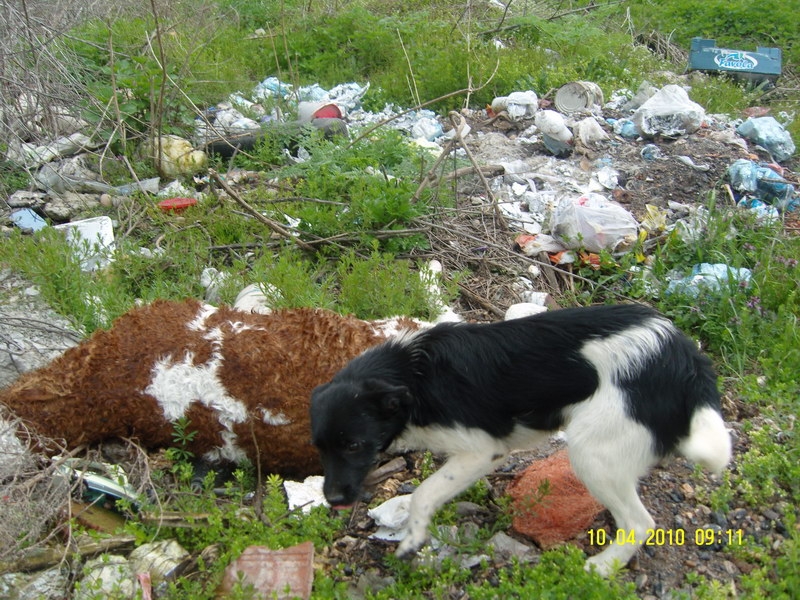
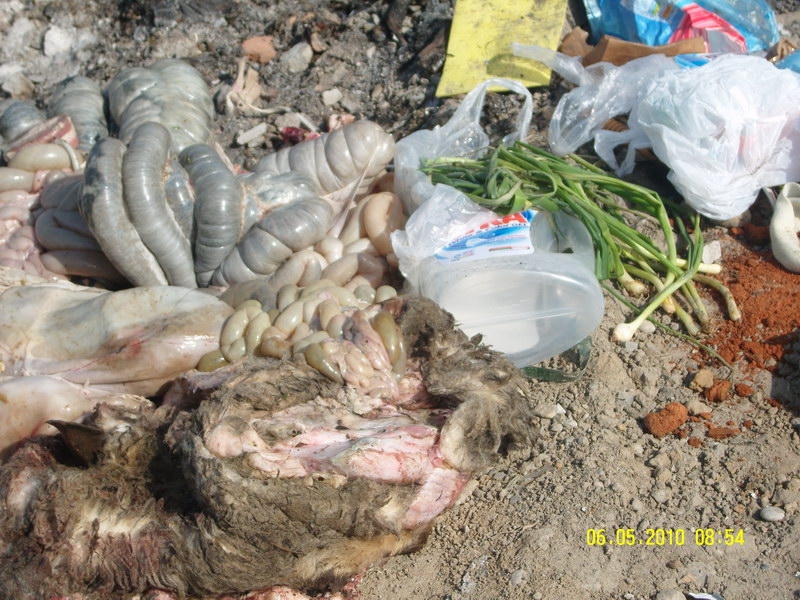
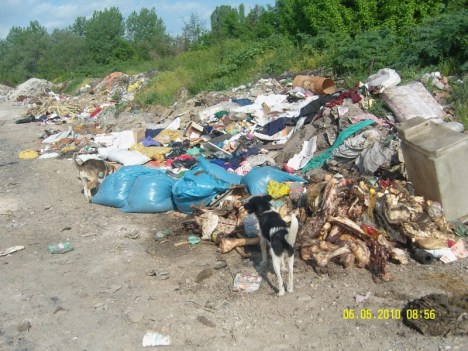
In the following photographs you can see the location of the city pound / shelter for stray animals.  Convenient, as it is adjacent to the city dump, the place where a lot of the dead strays seem to end up.

Note – many of the following photographs show different parts of the Loznica shelter; and the dead animals killed by hunters which surround it.

The proximity of the shelter to the dump (facility behind cars).

Dead animal bodies everywhere !

The Animal Protection Society from Loznica city has obtained information that the building which is shown in the photographs, the ‘shelter’ for homeless animals, – 

https://serbiananimalsvoice.wordpress.com/2010/05/11/serbia-loznica-city-pound-3-million-dinars-for-what-certainly-not-for-animal-welfare-politicians-maybe/

has been provided with 14 million dinars + for animal welfare.

Below are 5 of our archive pictures of the situation at Loznica ‘shelter’ – note the red brickwork in other photographs:

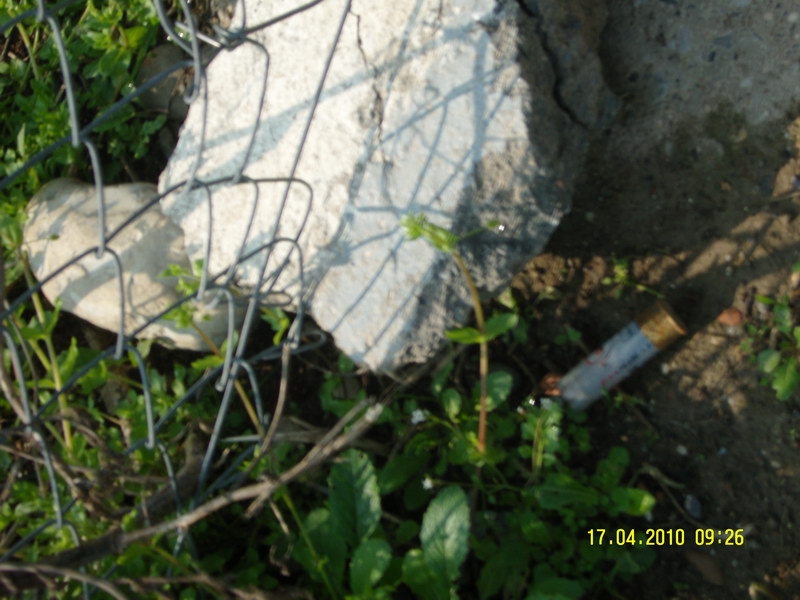
The photographs have been supplied by the people of Loznica city.  It is alleged that the fencing around the shelter has been partly destroyed in order that some of the animals  held at the shelter can escape; only to then be killed by hunters from the area.  One of the photographs shows used gun cartridges as used by the hunters. 

A used hunters cartridge lies in the waste.


A hunters ‘target’ which survived the ordeal – but since killed ???

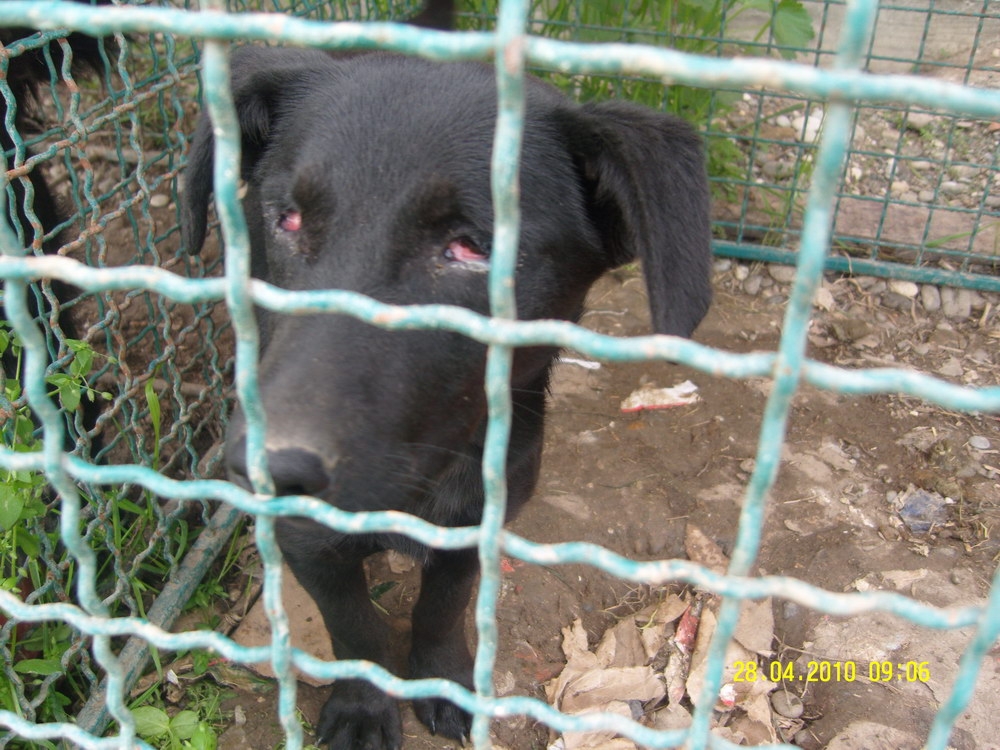
We are including also many pictures of dogs (ex strays which have been captured and sent to the shelter, only then to escape via the destroyed fencing and become a hunters target). 

The President of the local hunters society, which we are informed is called ‘Gucevo’, has said that the pound / shelter is ‘located in the hunters area, and so the hunters have the right to kill the animals’ !!

Less fortunate hunters ‘targets’ shown below:


Red brickwork above – see previous photographs.

Again Note the Red brickwork – dead animals very close to the ‘shelter’.

The Shelter in the Background.

Any wonder that other stray animals are attracted ?

When things such as this are lying around the city dump !!

– a haven for rats also, as well as stary dogs and cats, one would guess.

Dead Animals Strewn Amongst the Garbage.

TAKE ACTION    TAKE ACTION    TAKE ACTION 

Please take action as outlined in our previous posts.

A sample letter, complete with e mail addresses is provided.

Link:

https://serbiananimalsvoice.wordpress.com/2010/05/16/serbia-sample-letter-to-send-to-the-government-the-eu-commission-and-to-the-world-organisation-for-animal-health-the-oie-serbia-must-change-its-attitude-towards-stray-animals-and-willingless-to/

Serbia: Animal Campaigners Letter to the Serbian Government – Please DO NOT COPY and Send On Anywhere.


There are many Serbian visitors to this site.  This letter by a Serbian animal campaigner is reproduced simply to inform Serbian visitors of the situation in their country; a situation they may not be fully aware of, including the fact that their taxes are supporting mass animal killing by authorities when these same taxes should be supporting animal care at shelters.

THIS LETTER IS FOR INFORMATION TO SERBIAN SUPPORTERS ONLY – PLEASE DO NOT COPY AND SEND IT ANYWHERE !

Thanks – SAV.

————————————————————————————————-

Vladi Republike Srbije  – na srpskom , sluzbenom jeziku Republike Srbije

Commissioner Oli Rehn – in  english, official language  of   EU

OIE ,Paris –  in english, official language  of   EU

16.5.2010.

Postovani   g.Predsednice Vlade  i  postovani  svi clanovi Vlade Republike Srbije

Ponovo vam se obracamo ,mada smo to ucinili vec  bezbroj puta ,godinama ,  u svim  postojecim oblicima  komunikacije  gradjana  i nevladinih organizacija sa svojom Vladom : postom, e-mailovima, telefonom , otvorenim pismoma , dostavljanjem peticije sa 32000 potpisa  direktno u pisarnicu Vlade RS , gde smo trazili, ali nismo dobili prijem nasih predstavnika , gde smo dobili mali papiric-potvrdu s pecatom  Vlade kojim potvrdjuju da smo predali peticiju s 32000 potpisa  kojom zahtevamo  implementaciju svih vazecih zakona , i to je sve . Nema  implementacije zakona, i dalje  je nacin upravljanja u oblasti koja se tice zivotinja :  primenjivanjem nezakonitih  opstih i pojedinacnih PODZAKONSKIH akata nesaglasnih vazecim  zakonima , sto je protivustavno.

Ponovo vas molimo da postujuci Ustav, postupite po clanu 192. Ustava  i  clana 6. i clana  8.  Zakona o Vladi , i da  nalozite  obustavljanje primenjivanja opstinskih odluka kojima ,uz krsenje Zakona o javnim nabavkama  i Zakona o  komunalnim delatnostima kao i Zakona o drzavnoj upravi i lokalnoj samoupravi,  opstinske vlasti  bukvalno poklanjaju milione dinara iz opstinskih budzeta, pa cak i Ministarstvo  zivotne sredine i prostornog planiranja to cini  poklanjajuci milione dinara iz republickog budzeta  , javnim komunalnim preduzecima koja su  ilegalno dobila javna ovlascenja i koja ilegalno obavljaju  poslove  hvatanja i  unistavanja/zbrinjavanja pasa i macaka lutalica , BEZ javnog tendera , i kojima zapravo nije stalo da  psi i macke lutalice  nestanu sa ulica  u Srbiji, jer bi time izgubili  pouzdanu  , ilegalnu tezgu .

Zakonima  koji su na snazi u Republici Srbiji , a ciju implementaciju nalaze Ustav ,jasno je definisan dozvoljeni odnos prema  ovoj kategoriji zivotinja , kao i prema  ogromnim sumama javnog novca namenjenog   zakonitoj realizaciji  tog dozvoljenog odnosa, kao i  nacin davanja javnih ovlascenja i kontrole  obavljanja istih ,  medjutim vlast u Srbiji , od vrha do dna piramide vlasti , donosi i koristi nezakonite podzakonske akte – sto je protivno Ustavu  Republike Srbije , bila ona ili ne clan Evropske Unije.Na ovaj nacin  ta vlast krsi ustavna prava  svih gradjana Srbije , kako onih koji  bezuslovno postuju zivotinje- postujuci sopstveni Ustav, zakone, Univerzalnu Deklaraciju o dobrobiti zivotinja, Bernsku , Ramsarsku , Bonsku  i druge konvencije ciji je Srbija potpisnik ,tako i onih koji  zele  da njihov javni novac  bude namenski potrosen , da oni i njihova deca  i starci ne strepe od ujeda  gladnih pasa na javnim povrsinama u Srbiji , koji zele  da naoruzana udruzenja gradjana: ne istrebljuju zivotinje , da ne povecavaju potrebu za koriscenjem pesticida narusavajuci prirodni lanac ishrane  , da ne onemogucuju vizitorski turizam i odlazak u prirodu  jer pucaju vatrenim  i drugim oruzjem  po prirodi i postavljaju  opasne zamke, da  ne organizuju borbe zivotinja s trgovinom i kladjenima sto omogucuje  naziv tih borbi podzakonskim aktima : utakmice, treninzi ili neustavnim cl.23. Zakona o divljaci i lovstvu : – ` ispitivanje urodjenih osobina pasa` , dok su to u stvarnosti najkrvolocnije  borbe na zivot i smrt u jamama i gaterima –  a  koji je  u suprotnosti  s cl. 138.Zakona o veterinarstvu i clanom 7.Zakona o dobrobiti zivotinja  koji su bili na snazi u  vreme usvajanja clana 23 ,koji se  usled toga nije smeo ni pojaviti .

Zamrznite nezakonite podzakonske akte  drzavnih organa i jedinica lokalne samouprave i nezakonit cla 23. Zakona o divljaci i lovstvu ,nezakonit Pravilnik o zasticenim i strogo zasticenim vrstama zivotinja kojeg su napravili lovci i vlast , bez Crvene liste i bez monitoringa zivotinja , – ucinite  ovo postupajuci po cl 192.Ustava Republike Srbije , pa ako ih njihovi autori ne poniste u roku od 5 dana , trazite  od Ustavnog suda -ocenu zakonitosti  tih podzakonskih akata , ali trazite i zakonske  sankcije za one  koji ih nisu ponistili u zakonskom roku, kao i za one koji su  ozakonili  najkrvlocnije borbe zivotinja clanom 23. Zakona o divljaci i lovstvu , sto je  protivno Ustavu Republike Srbije, jer su borbe zivotinja zabranjene s dva  validna zakona Republike Srbije , koji su  bili validni u vreme  usvajanja clana 23. Zakona o divljaci i lovstvu.

Hvala.