February 1: Dia de Galgos – Day of Shame for Spain

The hunting season in Spain is officially over on February 1st.
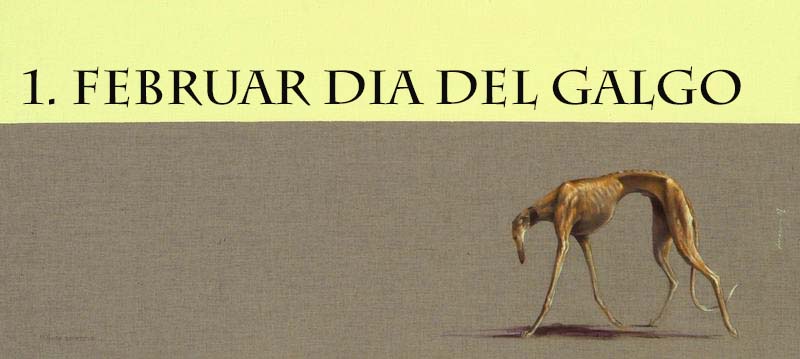
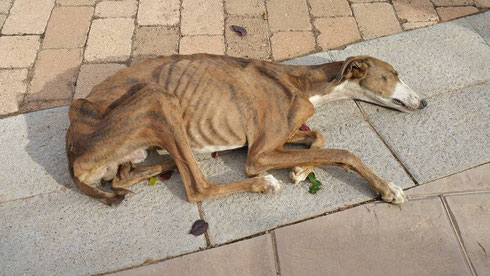
At the end of the season, thousands of hunting dogs lose their use and thus their raison d’etre every year.

Galgos, Podencos, Bretons, and other dogs.

Bred to be acquired by hobby hunters for precisely this purpose – and to be used for mostly one hunting season.

Then it will be disposed of again, as cheaply as possible.
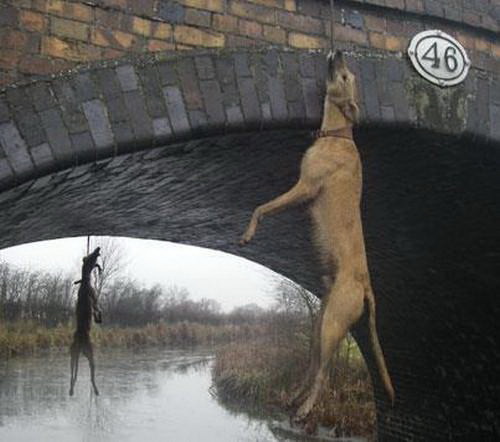
From this, a terrible custom has developed, they are hung up, mostly in trees.

The “best” dog hangs highest, the others below.

Dogs that have proven to be less successful hunters are often made to “dance” out of mockery.

So panicked, the animals dance for hours (up to 2 days) from one rear paw to the other until they run out of strength in their legs and their air is choked off.
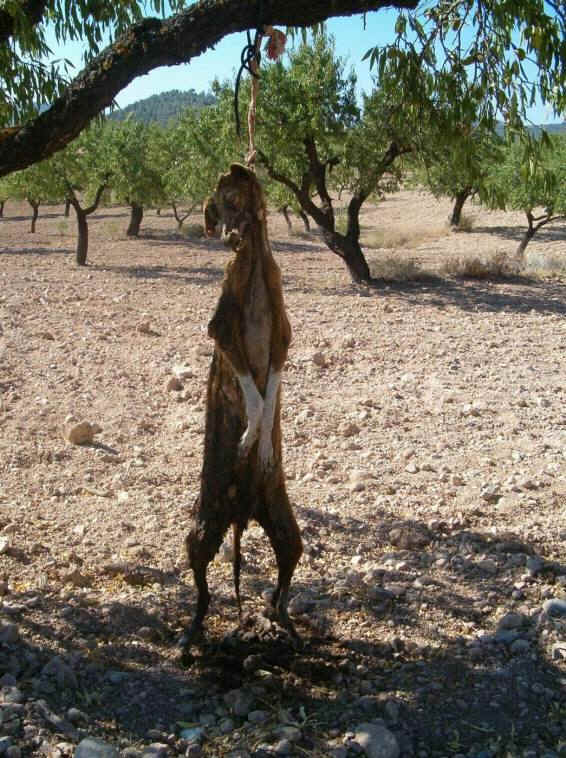
A cruel and long agony, full of fear and pain.

This procedure is called “playing the piano” by the hunters and these loyal and intelligent animals are humiliated to the point of death.

So the brutal, painful massacre is repeated. Every year.

The hunters use the most barbaric methods to “get rid of” the innocent dogs they no longer need.

The 190,000 Spanish hunters who practice this cruelty each year consider dogs to be disposable items.

From this point of view, they breed the dogs excessively and uncontrollably. This negligence is followed by the massive killing and abandonment of the galgos.
For more…at https://worldanimalsvoice.com/2021/01/31/february-1-dia-de-galgos-day-of-shame-for-spain/

And I mean…Spain is not just about sun, sand and sea, sangria and flamenco.

Spain is hell on earth for those who have no voice, whose agony is mocked in the ole screams of the arenas, whose cadavers rot in the stinking perreras that are hung on the cork oaks.

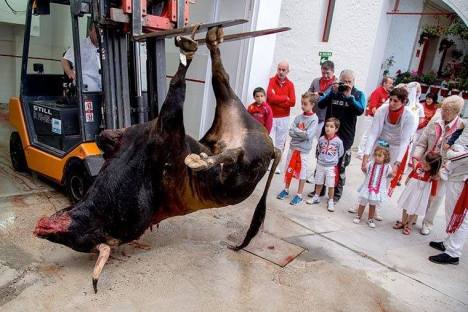
Abuse of animals is the order of the day in Spain, there are no limits to the perversity, but what can we expect from a country that regards bullfighting and bull spectacle as a culture, legalizing the abuse of bulls, where the Sunday excursion of the arch-Catholic Spaniards to a bullring after going to church is a matter of course.
Even from small children, they learn that torturing animals is a sensible, legitimate pastime.

Education in cruelty from childhood.
Corruption and nepotism rule, there are hardly any controls, the judiciary works slowly, and unsustainable conditions are repeatedly discovered in animal reception centers (Perreras).
The situation of the hunting dogs is particularly dramatic, they suffer like no other animal in Spain.

Spain is now the only country in the European Union where hunting with Galgos is still allowed.

Galgos are drowned in wells, thrown into rivers, burned alive, or doused with acid. Some have their legs broken and then abandoned in the forest so that they cannot walk home.

Many of the dogs are not chipped. And even if they do, the Galgueros cut out the microchips before they “dispose of” their dogs. Many rescuers often fail to report such incidents because they fear retribution.

Hunting is a popular sport and acquiring a license to kill is easy. Everything that moves is blasted, trapping is also popular, a “real” Spanish man spends his free time in this way.

Centuries ago the galgos were a symbol of wealth and prosperity.

Nowadays they are a symbol of abuse and for many Spaniards, it is a shame that something like this still happens and is tolerated in their country.

Perhaps one day our children can experience a world free from this sadistic bond, from this wretched, cowardly, and murderous hunter rabble, that has no place in a civilized society.

My best regards to all, Venus


Bed stories

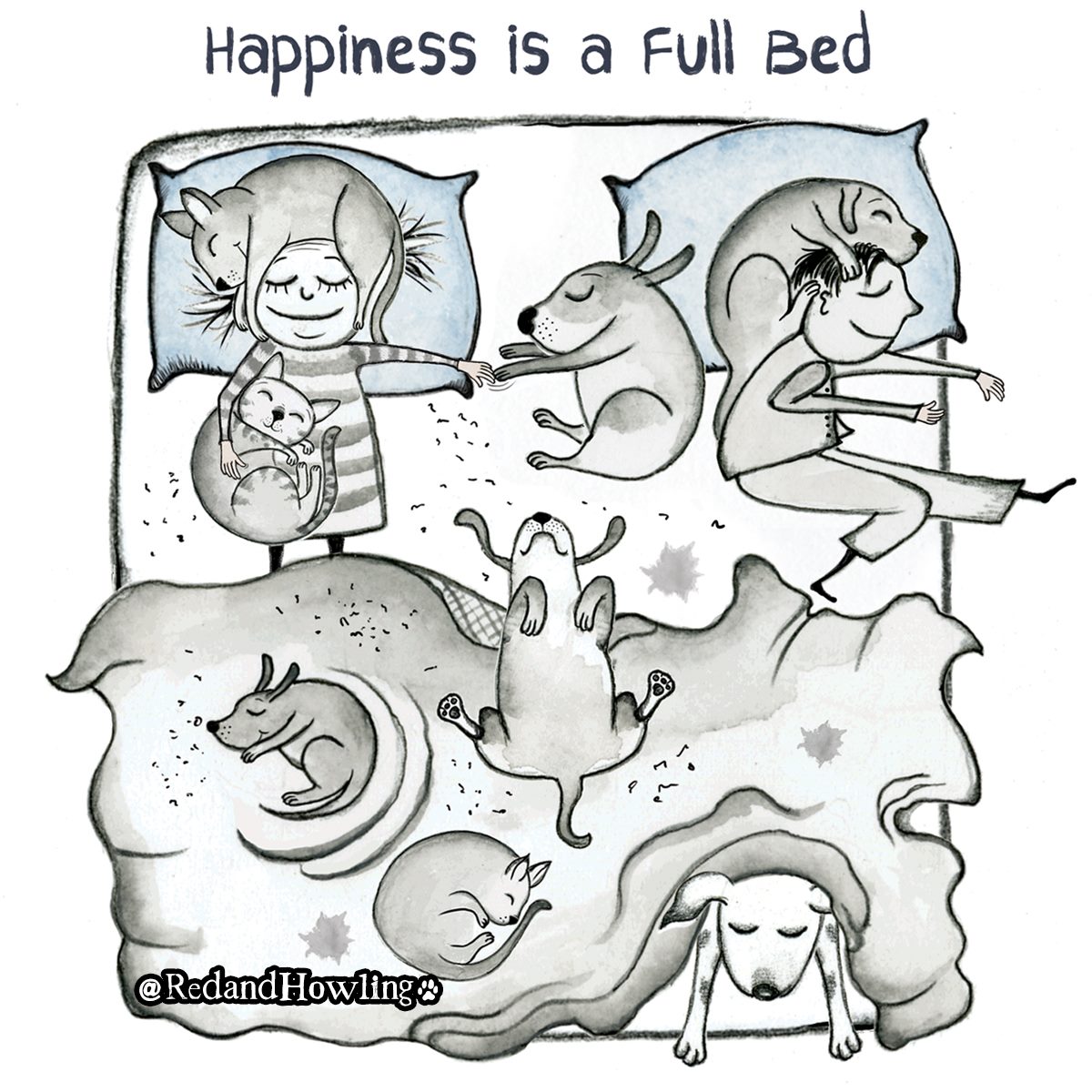
To get a good place in a full bed, you have to take care of it early on.

regards and good night, Venus

It is not the vegan that is perverse, but the system in which we live.


The answer to this question is simple:
We just remained criminals, animal abusers, animal eaters, animal exploiters…

… 150 billion animals are slaughtered worldwide every year, that’s 4756 per second …

It is so easy to speak of the right of “personal choice” because none of the meat-eaters is threatened with the fate that awaits the caged animals at the slaughterhouse.

Go in, meat-eater! in the slaughterhouses and stay with the animals until chopped up.
Stay there and feel their fear of death, see how they deflate their bladders in fear, see how they try to escape, how they are beaten up when they disobey, how people laugh.

Hear their screams for help, the screams in the gas chamber, the screams in the scalding bath, the fidgeting with the throat cut open and listen to their last breath and watch them being dismembered and how almost finished babies are cut from their bodies!

And then tell us again about your personal choice!

Meat production is one of the greatest crimes in human history

My best regards to all, Venus


Sundance Film festival must end the collaboration with Canada Goose

A business built on cruelty has no business being tied to show business!

Canada Goose is using the Sundance Film Festival to make its coats seem trendy, but no amount of movie magic can hide the violence behind its feather-stuffed parkas.

For years, PETA has informed Sundance leadership about the cruelty inherent in Canada Goose jackets.
The company hasn’t been able to sell or give away its fur-trimmed coats during the festival since Sundance Institute barred it from doing so a few years ago.

But times have changed, and companies are reflecting more on how their businesses affect the world, including all the ways in which animals are violated.

So Sundance must stop accepting sponsorship money from (and thereby promoting) a company that sells fur and down at all.
High-quality, down-free jackets like those made by Save the Duck, NOIZE, and Wuxly Movement keep people warm, look stylish, and aren’t a product of violently slaughtering animals.

Misleading marketing is Canada Goose’s MO.

Instead of simply going fur-free as other companies have, it trumpeted its transition to using “reclaimed” fur starting in 2022.

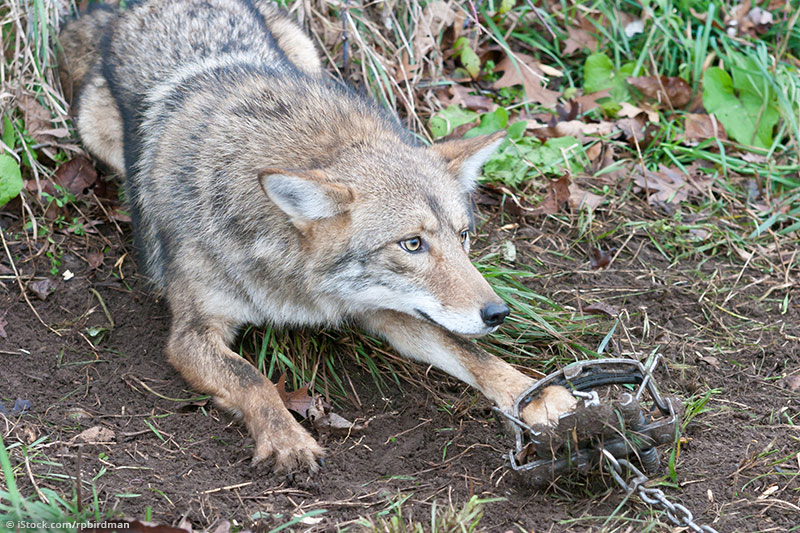
But no matter when or where it was stripped, coyote fur is often taken by catching the animal in steel traps, where they’re left to languish in agony—possibly suffering from shock, frostbite, and dehydration—until the trapper returns to bludgeon them to death, shoot them, or kill them in some other violent way.

And despite the company’s tired claims of using “responsible” down, there’s simply no such thing.
The Responsible Down Standard (RDS) itself is really just a marketing tool.

Even if the suppliers followed the standards, they’d still be allowed to let injured birds languish in agony for days before they’re required to put them out of their misery.

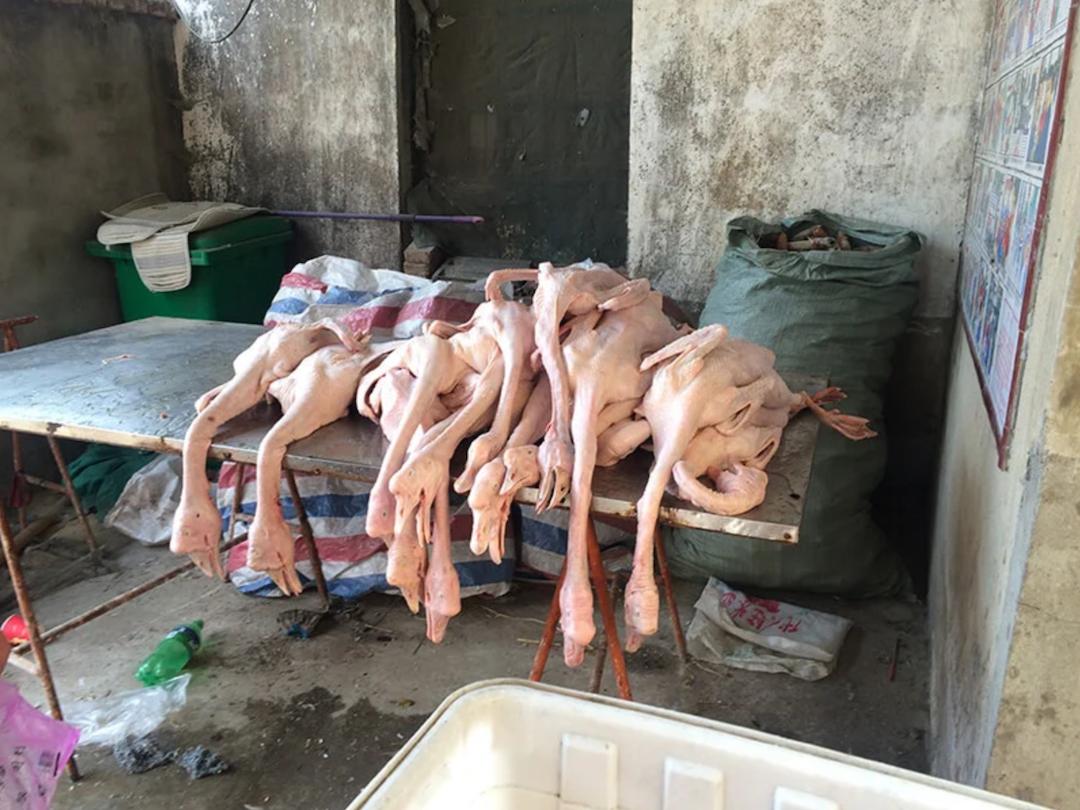
Like all birds used by the down industry, the farmed geese whose feathers are stuffed inside Canada Goose jackets wind up at the slaughterhouse, where it’s standard practice to hang them upside down by the legs, stun them, and slit their throats—all this instead of simply using warm, high-quality, down-free material.

Please sign: Petition: https://support.peta.org/page/26193/action/1

For more…at https://worldanimalsvoice.com/2021/01/29/sundance-film-festival-must-end-the-collaboration-with-canada-goose/#more-37630


And I mean…Canada Goose has coyotes hunted and killed in North America so that their fur can be sewn onto hoods.
Snap traps are used for this purpose. If a coyote steps into the trap, it digs deep into its flesh and leaves bloody wounds and painful mutilations.

It can take hours or several days before the hunter returns – a long time in which the coyotes are defenseless against all weather conditions, predators, and gangrene.
The animals are then shot, strangled, or kicked to death.

So much suffering for a little bit of fur and a lot of vanity.

Not only coyotes suffer for Canada Goose.
Many of the brand’s jackets are filled with the feathers of ducks and geese.

These come either from killed or alive plucked animals that spend a miserable life locked up on the breeding farms with thousands of conspecifics.

On its website, Canada Goose tries to put customers’ consciences at ease.

The company claims that all down and fur are “ethically sourced” and from animals “that are not subjected to unfair practices, willful abuse or unnecessary suffering “.

Down and fur come from dead animals and are therefore always associated with suffering and abuse.

Be attentive to the tricks of the down industry.
Check very carefully what you buy
And never dress in feathers or fur carcasses.

My best regards to all, Venus


we say “Thank you”!

Hello friends

Today Mark drew my attention to the fact that we had reached the number of 200,000 visitors to our blog.
This is very nice news that we want to share with you.

We both feel happy, and your loyalty rewards our work.
We associate every visit with love for the animals
with a personal interest in news and developments in the fight for animal rights
with respect and appreciation for our work, which we try to do conscientiously, seriously, and politically correct.

We hope that we will continue to work as missionaries for animal rights for a long time and we firmly believe that this mission can best be accomplished when we work together and consistently.

We thank you

Mark and Venus

UK: Plant-Based Diet Slashes Risk Of Heart Disease, Stroke And Diabetes, Study Finds.

Plant-Based Diet Slashes Risk Of Heart Disease, Stroke And Diabetes, Study Finds

Plant-Based Diet Slashes Risk Of Heart Disease, Stroke And Diabetes (plantbasednews.org)

‘The evidence that switching to plant-based foods can manage or reverse this condition is hugely valuable, particularly as we navigate the peak of this pandemic’

Plant-based diets can slash the risk of heart disease, stroke, and type 2 diabetes, according to a huge UK study. 

Health check service Medichecks surveyed 10,000 Brits to explore the effects of a plant-based diet versus eating meat.

The study’s findings

It found that vegan had a lower blood sugar (HbA1c) count, meaning a lower risk of type 2 diabetes. Vegans also showed reduced non-HDL (unhealthy) cholesterol and lower overall cholesterol than meat-eaters – meaning a decreased risk of heart disease and stroke.

Moreover, the study showed vegans had around a 30 percent higher blood level of folate compared to those following a non-vegan diet. Folate is one of the B-vitamins needed to make red and white blood cells and it converts carbohydrates into energy.

The marker for liver health (GGT) was 25-30 percent lower for vegans compared to omnivores.

Plant-based diet

Dr. Natasha Fernando is a GP and Head of Clinical Excellence at Medichecks. In a statement sent to PBN, she said: “An important finding from this 2020 study is the effect of a plant-based diet in supporting the body’s ability to control blood glucose levels, because this is a determinant for type 2 diabetes. 

“As published recently in The Lancet, diabetics are 40 percent more likely to have fatal or critical-care COVID. The evidence that switching to plant-based foods can manage or reverse this condition is hugely valuable, particularly as we navigate the peak of this pandemic.”

‘Balanced and nutritious’

Dr. Fernando added: “At this stage in our fight against COVID, everyone can continue to do their bit not just by following the government guidance, but also by taking personal responsibility to safeguard their health. 

“That means making a healthy, balanced and nutritious diet a priority – that goes both for vegans and meat-eaters. Almost all of the underlying conditions that increase risk factors for coronavirus are preventable and, in many cases, reversible.”

You can view the full study here

UK – This weekend is the annual RSPB Garden Birdwatch – UK Residents Only to Participate.

UK – This weekend is the annual RSPB Garden Birdwatch – unfortunately only open to UK residents.

This post has been done in order to support the work of the RSPB – the Royal Society for the Protection of Birds.

Our Mission: Big Plans for Nature – The RSPB

The brilliant thing about the Birdwatch is that you never know what you might see. Head here for everything you need to enjoy your Birdwatch.

Devote just 1 hour of your weekend time to record all the birds that visit your garden.

Log them all down and at the end, do a final count up of numbers and types.

Then submit your information to the RSPB in order that they can add your data to obtain a nationwide review of how bird species are increasing or declining; and where in the UK this is happening.

Taking Part in Big Garden Birdwatch – RSPB

How does Big Garden Birdwatch help?


Thanks to people like you taking part in the Big Garden Birdwatch, we now have over 40 years of data and this has helped increase our understanding of the challenges faced by wildlife.

It was one of the first surveys to identify the decline of song thrushes in gardens. This species was a firm fixture in the top 10 in 1979. But by 2019, those numbers had declined by 76% – coming in at number 20. And did you know that house sparrow sightings have dropped by 53% since the first Birdwatch in 1979? However, in the past 10 years their numbers have grown by 10% showing that we are beginning to see some signs of recovery.

Results like these help us spot problems. But, more importantly, they are the first step towards putting things right.

Taking Part in Big Garden Birdwatch – RSPB

How to take part:

  1. Pick a time
    You can choose any hour between 29 and 31 January. So whether you’re an early bird or a night owl, you can still take part.


  2. Tell us what you see 
    Count the birds you see in your garden or from your balcony*. Ignore any birds that are still in flight. To avoid double-counting, just record the highest number of each bird species you see at any one time – not a running total.

    *This year our advice is to take part in the safety of your own home. This could include a birdwatch from your window if you overlook a green space or courtyard.
  3. Submit your results
    Online: You can submit your results online at rspb.org.uk/birdwatch from 29 January until 19 February.
    By post: If you’d rather send your results by post, you can download a submission form below. Please post your results to us before 15 February.

Every count is important so, if you don’t see anything, please still submit your result. Finding out which birds don’t visit your area is as important as understanding those which do!

See our resources below for printable bird ID sheets to help you, or posters you can display to show you’re taking part.

Tell us what you saw

By counting the birds in your patch, you’re helping to take a snapshot of how they are doing. And the more people that submit their results, the better picture we will have of how garden birds are faring across the UK.

You’re vital in helping us understand the challenges faced by wildlife. Whatever you saw – even if it was nothing – it still count

Identify a bird:

Bird Identifier | British Garden Birds and Many More – The RSPB

WAV Comment – make sure you take part; it is fun and great education on birds for the youngsters.   Plus, you are giving a little bit of time but helping to contribute towards a massive annual survey of all the birds in the UK.  Good luck !