England: RSPCA calls for cut in meat and dairy as activists launch legal fight to end factory farming.

WAV Comment – This is fantastic news.  And take it from me (Mark – Englishman); to have Mike Mansfield involved could not be better.  He has been a plant based foodie for a very long time; and is one of, if not the, most respected legal people in the country.  He has always been dedicated to animal welfare, which is probably why he has decided to become involved with this case; especially if it against the government for the better of animals.  I would guess that now, government legal people must be quaking in their boots a bit; regardless of the outcome; which we all wish will be positive; Mike will endure the issue gets maximum publicity.

Regards Mark


RSPCA calls for cut in meat and dairy as activists launch legal fight to end factory farming

Exclusive: Case believed to be the first of its kind worldwide will challenge ministers over intensive animal agriculture 

RSPCA calls for cut in meat and dairy as activists launch legal fight to end factory farming | The Independent

Animal-welfare activists are planning a legal challenge to the government to force ministers to end factory farming in the UK to halt damage to the environment and human health.

And RSPCA members have also called for a major cut in meat and dairy consumption in what has been hailed a landmark decision after years of debate over how much the charity should speak out on climate issues.

In the legal case, believed to be the first of its kind in the world, members of a group called Humane Being are crowdfunding with the aim of raising £60,000 to force ministers to curb intensive animal agriculture.

They say it is a major cause of greenhouse gas emissions and risks starting new pandemics by spreading viruses, as well as causing deforestation, animal cruelty and antibiotic resistance.

Phasing out intensive animal farming would end the harm and help create systems of producing food that are more sustainable to feed the world’s population in the long term, they say.

The legal team includes Michael Mansfield, the human-rights lawyer who has acted in cases from the Stephen Lawrence murder to Hillsborough and the Grenfell disaster.

The group has already written to  George Eustice, the environment secretary, asking whether the issues have been considered and whether there are any plans to ban industrial farming or remove subsidies.

Earlier this month, RSPCA members voted at their AGM by 88 per cent to call for an end to intensive animal agriculture in the UK and for a significant cut in meat and dairy consumption to achieve the country’s climate targets.

Jane Tredgett, a former board member of the charity and the founder of Humane Being, said: “It is great to see the RSPCA getting on board with this messaging.  

“I spent 10 years urging the RSPCA to be more progressive. Under the new chief executive, Chris Sherwood, the society is now moving forward (and closer to the vision of the original bold founders) and this vote symbolises that.”

Peta Smith, another campaigner, said: “We hope this proves to be a landmark decision for the RSPCA. Slavery abolitionist William Wilberforce co-founded the society in 1824.

“We are trashing our planet for a dangerous and short-term fix of cheap meat and dairy.”

The RSPCA resolution acknowledged “the serious immediate and long-term issues linked to factory/ intensive farming of animals” and calls for an end to UK-based intensive animal agriculture.  

It cited climate crisis targets, environmental pollution, pandemic risks, antibiotic resistance, global food security and farming systems that “deny sentient, intelligent animals any sense a normal life, whilst subjecting them to painful mutilations with no anaesthetic or pain relief”.

The vote is not binding but Ms Tredgett said they were looking to the board to take concrete steps to promote a ban on factory farming.

The World Health Organisation and other UN experts have pinpointed animals or food of animal origin as a starting point for emerging diseases, such as Covid-19, and some of the world’s leading scientists have warned future pandemics are likely to be more frequent, spread more rapidly and kill more people if humanity continues to exploit animals. 

Livestock account for 14.5 per cent of global greenhouse gas emissions, according to the United Nations’ Food and Agriculture Organisation.

report last month warned a new bird flu virus with “high transmissibility” would make Covid-19 appear mild, with factory-farmed chickens exposed to a “cocktail” of infections, creating a “near-perfect breeding ground” for a disease outbreak of pandemic potential.

David Finney, of Humane Being’s Scrap Factory Farming campaign, said: “We are sitting on a pandemics timebomb. Factory farming – with huge numbers of animals in cramped and unhygienic conditions – is the perfect breeding ground for these diseases.  

“We may eventually get control of Covid-19 but we are doing nothing about the conditions that created it in the first place.”

Asked by The Independent whether realistically the government would shake up an entire industry, Mr Finney said: “While of course there is a possibility they may not, the risk of deadly zoonotic diseases hitting factory farms makes the challenge more serious; if they don’t seek to bring about the end of factory farming, the government is not adequately protecting its citizens; 14 outbreaks of avian flu hit British farms just before Christmas.”

He said he was confident the £60,000 needed for the full legal challenge would be raised. So far, nearly £5,000 has been raised.

“The scale of factory farming is also incredibly cruel,” he added. “Pregnant pigs are confined in metal crates before giving birth; they have no room to turn around for up to 12 weeks a year. Calves are removed from their mothers within days or even hours of birth.”  

Lorna Hackett, of the legal team, said: “Dietary over-reliance on animal products produced by intensive means has created an environmental and human health imperative. 

“This case, which we believe to be a global first, starts with a key mitigator – the banning of cruel factory farming. That is breeding and risking incidences of disease that pose a health risk that the authorities cannot continue to ignore.”

Mr Sherwood said the RSPCA had a goal of seeing at least half of all farm animals in the UK reared to RSPCA welfare standards, and encouraging the public to reduce the amount of meat they eat, choosing higher welfare options and laboratory-grown meat when it is commercially available.    

A spokesperson for the Department for Environment, Food and Rural Affairs said: “We’re proud to have some of the highest animal welfare standards in the world, and we are fully committed to strengthening them further to ensure all animals avoid any unnecessary pain, distress or suffering.

“That is why we will be bringing in new laws on animal sentience and are currently reviewing slaughter welfare regulations.”

TryVeg.com – A Guide to Vegan Eating.

TryVeg.com – A Guide to Vegan Eating. – World Animals Voice

The administrators of the animal population

An Elyria man unintentionally shot and killed his 28-year-old son while deer hunting in Delaware County last week.

Bradley Smith, 63, apparently mistook his son, Andrew Smith of Columbus, for a deer while hunting at dusk, said Tracy Whited, spokeswoman for the Delaware County Sheriff’s Office.

The Smiths were hunting with a group of friends in a heavily wooded area in the 2000 block of Pollock Road, just outside the city of Delaware. The group, who were experienced hunters, had met there for more than 20 years to hunt white-tailed deer during the state’s annual deer gun-hunting week, which ended Sunday.

Whited said Andrew Smith was not wearing any orange hunting clothing when the shooting occurred at about 5:45 p.m. on Dec. 2.

He was pronounced dead at the scene.

The elder Smith is not facing any charges (!!!), she said.

In Ohio, hunters are legally required to wear orange during the deer-gun season while hunting from 30 minutes before sunrise to 30 minutes after sunset, according to the Ohio Department of Natural Resources Division of Wildlife’s hunting and trapping regulations guide. This requirement applies statewide on both public and private land.
That day, the sunset just after 5 p.m.

“It’s just the worst kind of tragedy,” Whited said. “He thought he was shooting at a deer. It was his son.”

The Delaware County Sheriff’s office, ODNR’s Division of Wildlife, Delaware police, and city fire medics responded to the scene.
A spokeswoman for ODNR’s Division of Wildlife declined to comment, referring The Dispatch to the sheriff’s office…

An estimated 310,000 hunters in Ohio participated in the gun-hunting week from Nov. 30-Dec. 6, according to a news release from the division.

In total, they harvested 71,650 white-tailed deer.

Man fatally shoots son while deer hunting in Delaware County

More: Hunters preparing for deer gun season in Ohio

And I say…Hunters have always claimed they care for the natural population.
Now they have convinced us of it.

The ratio of 1 dead human animal to 71,000 murdered deers is unsatisfactory, of course.

But they are always working to improve the relationship.

As soon as they have reached the mark 1 to 1, the hunting license is worth it

My best regards to all, Venus

Who is a hunter?

This is a hunter.


https://www.facebook.com/watch/?v=728882541353613

That’s a killer

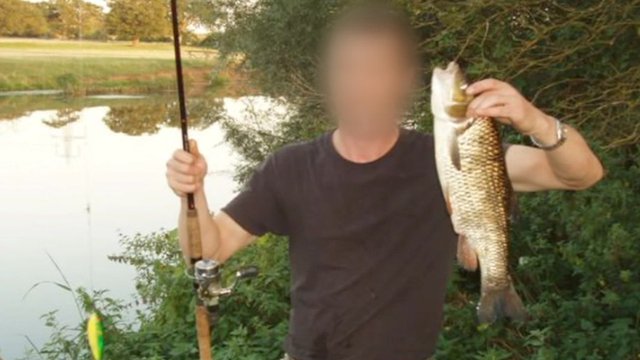
The first one hunts to survive
The second for perverse fun

My best regards to all, Venus


Picture of the year 2020

This is the most beautiful picture from the Ocean Photography Awards 2020

With this picture, the photographer Tobias Baumgartner won the Community Choice Award at the Ocean Photography Awards 2020. 📸

The story behind it is touching: The two penguins have both lost their partner. Since then they have mourned together.

Tobias Baumgartner found out about this from a volunteer who looks after the penguin colony on the beach at St. Kilda in Australia. ❤️

Baumgartner waited three days and three nights before he could take this picture.
“They looked at the skyline for hours,” said the photographer. 🐧

We congratulate the winner!
Really a beautiful picture.

Regards and good night, Venus

New inmates from Brazil landed in the Nuremberg zoo

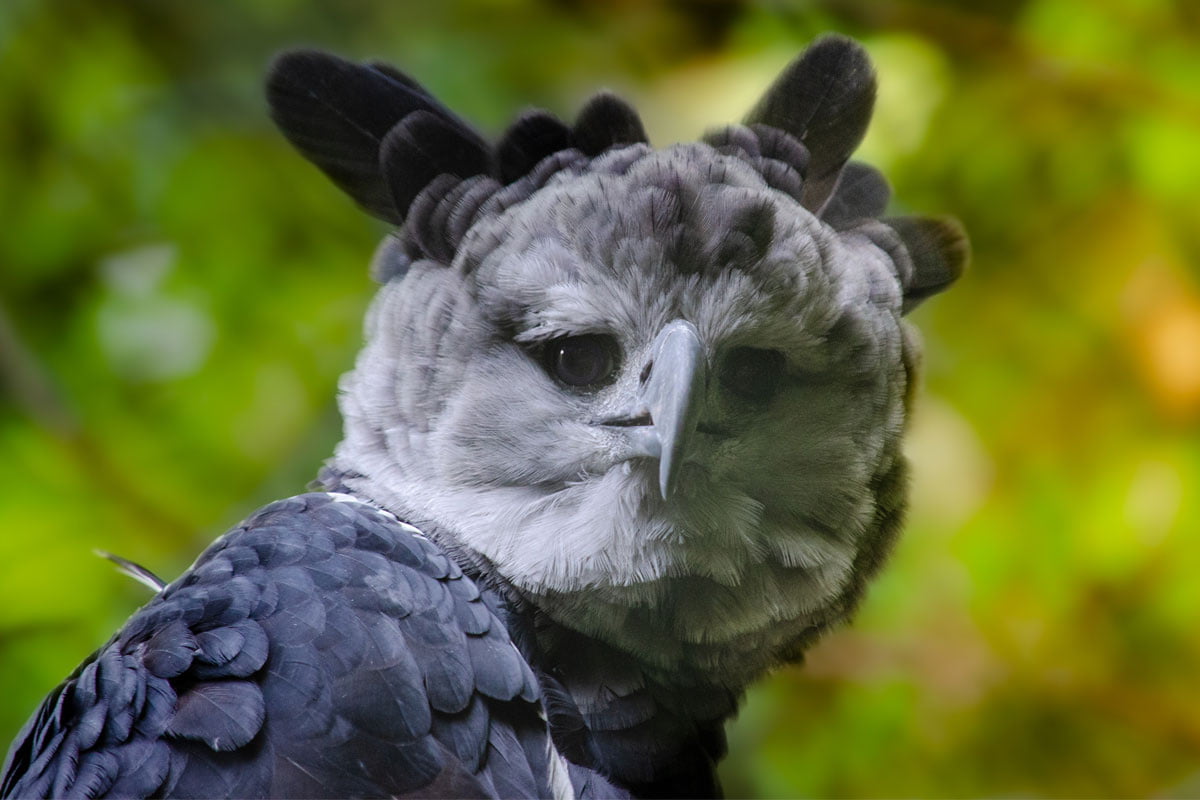
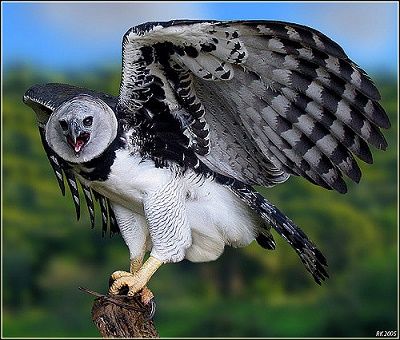
The Nuremberg Zoo has taken in a pair of harpies from Brazil. The zoo visitors do not get to see them, however. The birds of prey are housed as a breeding pair on the Zoo‘s own Mittelbüg estate.

Both animals, a male, and a female come from the Roberto Ribas Lange Zoopark in Itaipu Binacional in Brazil. They hatched there in early 2018.

Before the two birds could travel to Germany, they had to go through a two-year international approval process.

The Nuremberg Zoo is important for breeding harpies worldwide (!!!).

Successful breeding with the harpy pair Esmeralda and Enrico began in the early 1980s.
The couple raised eleven chicks, four female and seven male; four more chicks died.

The offspring of this breeding pair from Nuremberg live today at Schmausenbuck. These are Evita, Jorge and Domingo.

Further offspring can be found in zoos like Berlin, but especially in Ecuador, Peru and Brazil. Most recently, the zoo transferred the male harpy Vito to Parque Condor in Ecuador on August 11, 2020.

The animals are potentially threatened with extinction. Due to the increasing deforestation of the rainforest in South America, their population is decreasing rapidly.

The mighty birds of prey with a weight of four to nine kilograms and a wingspan of up to two meters depend on the tropical rainforest.

Harpies live on the tall jungle trees on which they build their nests to raise their young.

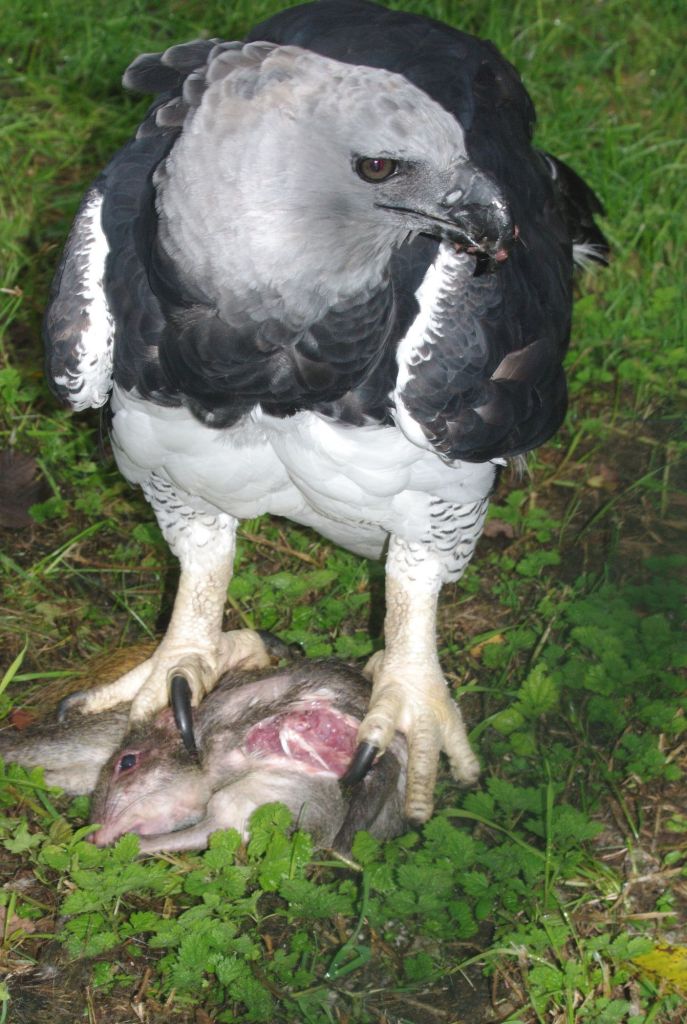
They also find their large prey such as monkeys and sloths there. Birds of prey experts from Nuremberg report that the birds often stay in their tree for days and only soar in the air when they are looking for food.

Research projects on behavior and reproduction

The Nuremberg Zoo staff also carry out various research projects with harpies. It is about behavioral experiments, studies on animal preferences, and reproduction.

The specialist knowledge on birds of prey is not only used at the Schmausenbuck: conservation projects in the natural habitat of animals in Brazil also benefit, reports the zoo

.

https://www.nordbayern.de/region/nuernberg/harpyien-aus-brasilien-im-nurnberger-tiergarten-gelandet-1.10653945

And I mean…On the website of the Nuremberg zoos we read: “the greatest threat to their continued existence is the destruction of their habitat by slash and burn and the deforestation of tropical rainforests”.
That’s true.

But so far, other than enslaving animals and raising them for money, the zoo director has done nothing against Bolsonaro’s environmental crime.

The indigenous peoples of the Amazon are also on the list for threatened peoples in the early warning level due to the paramilitary forces of Brazil.
Should we, therefore, tear them out of their homes, bring them here to zoos, and let them breed?

By the way! There were human zoos too, until 1958!
With the same excuse “we want to” save “these cultures”, the whites have depicted and degraded the (black) people in zoos.

The Germans have a perverse understanding of species protection: removing people and other animals from their natural environment and bringing them to Germany to show them to the onlookers for money.

The Hagenbeck zoo (near Hamburg), from which the photo originates, still advertises with its role model function “as a pioneer of nature, environmental and species protection”.

Girls and women from Ethiopia in Hagenbeck’s zoo, Germany. The concept of the Hamburg “People’s show” was to show the people with their dwellings and equipment – an idea that was also much praised by scientists at the time.


Were the “exhibits” shown also threatened with extinction and did they have to be preserved “for the next generations”?

My best regards to all, Venus


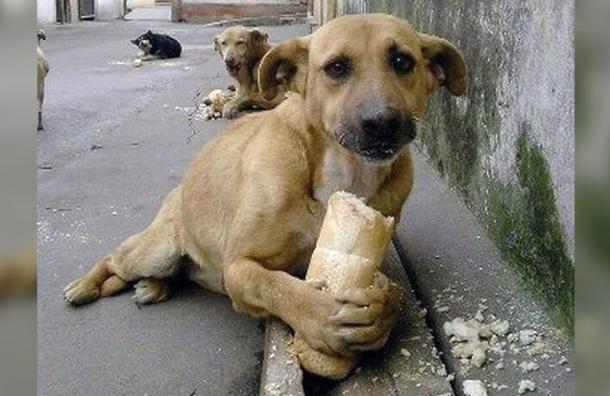
You should love the strays from the street!

You should love the strays from the street! … because at some point in your life you too felt like a lonely stray!
Alone on a bench, in a schoolyard, at a party when someone you loved rejected you.

When a friend just forgot about your existence, with someone who didn’t like you, in a society that didn’t notice your needs, as if you were invisible.

You should love and take care of the street strays! Maybe because you’ve literally been stranded on the street yourself, or maybe because there wasn’t a home that you would call “home”.

You should feed the strays from the street! Perhaps because you’ve been hungry yourself because your food was burnt, the supermarket was closed, or because it was hunger in your heart that was gnawing and no one was feeding.

You should look at the strays in the eyes from the street and listen carefully to what they are telling you.

They all have a hidden story to tell, just like you have a secret story that you would like to tell someone else.

You should apologize to the strays from the street for us humans because we are the reason for their desperate situation and for their terrible condition.

Maybe you’ve stood with your back to the wall before, waiting for an apology that never came!

You should love the strays off the street for who they really are, not just for your ego and need to be loved back.

They will always love you one way or another, just for who you are … so don’t worry

Somehow we’ve all felt like strays off the street at one point in our lives … full of fear, pain, and sometimes without hope!

You should love the strays from the street because the love you give them heals the stray in you!

We all want someone who loves us for who we are, who gives without demanding, and who never lets us down.

Be this SOMEONE … for you and for others!

(c) Martha Politis Athanassiou / Bettina Marie Schneider

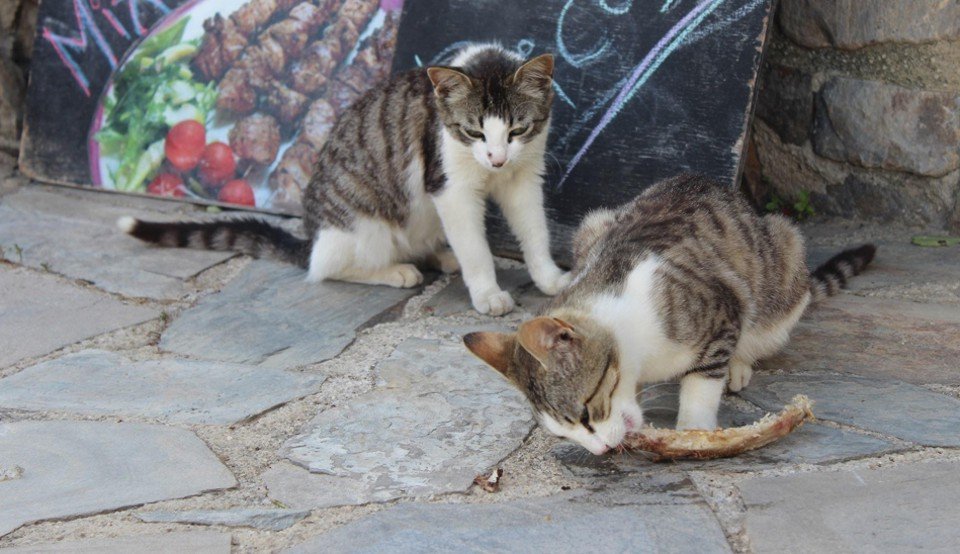
From me to this beautiful article… They are known us by the southerners.
It is all these animals that sit very discreetly next to your table and watch you eat.
With hope, they’ll get a piece of your food.

For those who do not close their hearts and eyes, for compassionate people, this look is a knife stab.

If these systems have all means at their disposal to exploit the weak parts of this planet, be it, Africa or children in the Third world countries, then no one is surprised when animals experience the most brutal exploitation of this system.

The weaker the victim, the worse the exploitation.

On the other hand, all the revolutions and movements in human history have proven that no ruling class has given up its privileges on its own.
The abolition of slavery and the exploitation of people socially and economically was the result of years of struggle.

The liberation of the animals as slaves is the continuation of this struggle.

We need education, whoever fights for animal rights has to try to change this society, which has got used to violence and brutality in a certain way and takes both for granted, especially when it comes to animals.

It cannot be taken for granted that there are strays today.
It is not a given that there are animal barracks.
It is not a given that we cull millions of fur animals for a disaster of human origin.
It is not a given that millions of laboratory animals die for Hocus-pocus science

That’s why we will keep fighting.
Against the rationalization of a fascist ideology that wants to take the exploitation of animals for granted

My best regards to all, Venus