Posted on October 2, 2020 by Serbian Animals Voice (SAV)
For six months, PETA USA covertly investigated at the Wisconsin National Primate Research Center (WNPRC).
It is one of the most famous primate laboratories in the United States, which keeps nearly 2,000 monkeys in barren steel cages and bleak, windowless rooms.
The investigation shows: The highly intelligent animals were grossly neglected, driven insane by the extreme conditions of their captivity, and attacked by traumatized conspecifics.
Monkeys at WNPRC spend every day and every night locked inside barren metal cages. They never feel the warmth of the sun on their backs or the earth beneath their feet. Stripped of their autonomy, they’re unable to make decisions regarding the most basic aspects of their lives.
Baby monkey Cocoa was attacked by a stressed adult monkey who made deep, painful cuts on his face
Constant, unremitting captivity causes these smart, sensitive animals extreme psychological distress, leading some to injure each other and themselves.
Incompatible animals were forced to live together in just a few square feet of space, and a monkey named Ellie lost part of her ear in a fight with a cage mate.
A baby monkey named Cocoa by PETA’s investigators was attacked by a stressed adult macaque. Little Cocoa had deep cuts on her face that had not healed properly even months later.
The fingers, toes, or tails of many monkeys were so badly injured that some of them had to be amputated. One employee said some of the animals were kept solitary “because they are assholes who do not contract with the others”!!
Macaques roam wide grasslands and lush forests in their natural habitat. In the test laboratory of the WNPRC, however, they ran back and forth or in circles, screaming loudly.
The macaque lady Princess was apparently so desperate that she pulled her hair out. However, it continued to be used as a birthing machine.
One frustrated monkey, known only as r12050,mutilated his own leg down to the muscle. With nothing to occupy his mind, picked and scratched compulsively at the open wound.
And I mean… the main problem is that this shit is financed with our money. Anyone who says animals don’t suffer in experiments is uninformed or an absolute fool. Animals are used for experiments because they cannot defend themselves and therefore they are at the mercy of psychopaths.
That is the ethical basis for all animal testing.
The mere fact that humans are still allowed to experiment on animals and torture them as they please only shows what criminal system we are dealing with.
Anyone who knows and has studied the history of the “Third Reich” knows what animal experimenters feel.
The way they act is 100% identical to the mass murderers of that time. Down to the last detail. Even Zyklon B is still used to kill laboratory animals.
It is not possible to keep insane people out of this area, they work with the full support of an equally sick system.
Environment Secretary George Eustice said the government was “firmly committed” to tackling environmental “devastation” caused by single-use plastics.
Campaigners welcomed the move but said the items formed only a “fraction” of the plastic waste littering the environment.
Sion Elis Williams, of Friends of the Earth, said ministers “must also do more to challenge our throwaway culture by forcing a shift away from all single-use materials in favour of reusable alternatives”.
Tatiana Lujan, of environmental law charity ClientEarth said straws, cotton buds and stirrers were “some of the most pointless plastics out there” and the ban on them was “a no-brainer”.
But they remained “a tiny fraction” of single-use plastics, she said, adding that countries such as Ireland and France had “shown far more ambition” with targets on reusable packaging and deposit return schemes.
Mr Eustice said the government was “building plans” for a deposit return scheme to encourage recycling of single-use drinks containers.
The summit is supposed to have taken place on 30/9/20. We will produce more on this as post meeting facts are known.
The year 2020 was meant to be a super year for nature and biodiversity, according to the UN. But with swathes of the planet in lockdown, Covid-19 has highlighted the risk of humanity’s unstable relationship with nature, with repeated warnings linking the pandemic with the destruction of ecosystems and species.
On Wednesday, the world will gather to discuss the biodiversity crisis at a virtual summit in New York. The UN secretary general, António Guterres, Prince Charles and the Chinese president, Xi Jinping, will open proceedings. Here is what to look out for.
Will China step up?
Next year China will for the first time host major international talks on the environment – postponed from this year – at Cop15 in Kunming, where the international community will agree a Paris-style agreement for nature. The stakes are high: governments failed to meet any of the UN targets to slow biodiversity loss for the previous decade and the drum beat of warnings about the state of the planet’s health is growing louder. Now the world’s biggest greenhose gas emitter is tasked with using its growing might to corral 196 countries into agreeing a plan worthy of the crisis.
Q&A
What is biodiversity and why does it matter?
Show
Biodiversity is the variety of life on Earth, in all its forms and all its interactions. “Without biodiversity, there is no future for humanity,” says Prof David Macdonald, at Oxford University. It is comprised of several levels, starting with genes, then individual species, then communities of creatures and finally entire ecosystems, such as forests or coral reefs, where life interplays with the physical environment.
Without plants there would be no oxygen and without bees to pollinate there would be no fruit or nuts. The services provided by ecosystems are estimated to be worth trillions of dollars – double the world’s GDP. Biodiversity loss in Europe alone is estimated to cost the continent about 3% of its GDP, or €450m (£400m) a year.
Changes to the climate are reversible, even if that takes centuries or millennia, and conservation efforts can work. But once species become extinct, there is no going back.
China’s modern record on the environment is poor. Rapid economic development and huge infrastructure projects such as the Belt and Road Initiative have come at a huge cost to nature, destroying precarious ecosystems and leaving many cities with severe air pollution. But Beijing is uniquely placed to influence countries eager to follow its development model but distrustful of the conservation-focus approach of some European nations whose wild areas largely disappeared with industrialisation.
“I think China is absolutely critical to the issue of both climate change and biodiversity and land degradation. We are not going to solve these problems without leadership from China,” says Sir Robert Watson, former chair of the Intergovernmental Science-Policy Platform on Biodiversity and Ecosystem Services (IPBES), which informs the UN biodiversity negotiations with the latest science.
Some privately suspect that President Xi will surprise world leaders with another major environmental commitment during his speech at the summit’s opening, just days after he ramped up China’s carbon commitments by pledging to achieve carbon neutrality by 2060.
“They’ve had some really bad examples of land degradation when they deforested the Yangtze basin. Now, as I understand it, they’ve done a fairly significant replanting of trees in the Yangtze basin because it was leading to extreme floods and dust bowls. They also, of course, have terrible air pollution in their cities. I’m somewhat optimistic that China wants to show it is an economic power and play a leadership role in the world,” Watson says.
“I would argue that governments around the world need to work closely with China and see if, collectively, we can move in the right direction.”
The absentees and the reluctant
Summit organisers have been overwhelmed with requests from world leaders to speak on Wednesday. The Indian prime minister, Narendra Modi, Turkish leader Recep Tayyip Erdoğan, South African prime minister Cyril Ramaphosa and Britain’s prime minister, Boris Johnson, are among dozens of leaders jostling to make statements at the oversubscribed event. But the talks will be marked by those who are not scheduled to speak.
The US president, Donald Trump, will not appear and nobody from his administration is scheduled to address the event. Brazilian foreign minister Ernesto Araújo – who has previously dismissed the climate crisis as a Marxist plot – had been listed to represent his country in the place of president Jair Bolsonaro but the South American leader will now speak. Russian president Vladimir Putin will not appear, sending the head of the ministry of natural resources, Dmitry Kobylkin, in his place. All three men oversee vital life-sustaining ecosystems with global significance and Brazil has traditionally been a major player in UN environmental circles through its impressive diplomatic machine.
But under Bolsonaro, the Amazon rainforest continues to burn and many fear Brazil’s leader is steering his country towards environmental ruin. Last week the president hit back at the UN general assembly for a second year in a row about how the Amazon has been treated under his leadership, claiming Brazil was the target of a “brutal disinformation campaign”. While the US is not a party to the UN convention on biodiversity, Bolsonaro’s stance on the environment could have a major sway over the final Kunming agreement. Governments will listen to what Bolsonaro has to say with great interest.
One to watch
In between the world leaders, heads of state and royalty, indigenous youth activist Archana Soreng will also speak at the summit’s opening. The member of the Khadia tribe in India is part of the UN secretary general’s youth advisory group on climate change and will be a powerful voice for her generation.
Ambition to protect the planet
Before the coronavirus pandemic disrupted talks, Wednesday’s summit was meant to be the moment international leaders gave their input before negotiators headed to Kunming to thrash out a final agreement. While there is a danger that governments might ignore the environmental targets while grappling to rescue economies and save lives, there is cautious optimism that the opposite has happened.
“Look at the number of governments and states which have registered to make statements. That clearly by itself says something,” the UN’s biodiversity head, Elizabeth Maruma Mrema, told the Guardian. “Noticeable trends have emerged in this period of pandemic and in lockdowns. It has really brought up the voices of many actors we probably would not have seen or noticed.”
Despite the optimism, the ambition of the “Paris agreement for nature” will be reflected in the detail of measurable, targeted actions. As things stand, the draft Kunming agreement has headline targets of protecting 30% of the world’s land and sea by 2030, introducing controls on invasive species and reducing pollution from plastic waste and excess nutrients. Ahead of Wednesday’s summit, 64 leaders and the EU published an ambitious 10-point pledge that many privately hope will bounce other countries into being more ambitious. Watch out for how that translates into statements by countries such as Australia, China and India that did not sign the pledge.
Giving nature a financial value
Expressing nature’s value in financial terms has become a big focus of conservation efforts. With the cost of deforestation, pollution and species extinction absent from most economic models, calculating the economic contribution of ecosystem services that healthy forests, rivers and oceans provide to humanity has helped reframe the conservation debate.
Ahead of the talks, the insurance company Swiss Re calculated that more than half (55%) of global GDP, equal to $41.7tn, is dependent on high-functioning biodiversity and ecosystem services. But the research also found that major economies in south-east Asia, Europe and the US are exposed to ecosystem decline. The EU, Germany, Norway, Costa Rica and the UK are leading efforts to increase funding for nature. But to take meaningful action on the environment, many developing nations with high biodiversity – including Brazil and a number of African countries – want the creation of a global financial system that recognises their ecosystem services.
The UN’s co-chair on the Kunming process, Basile van Havre, who is tasked with combining all of the negotiating positions into a final agreement, said he understood their position.
“I think they’re putting on the table some concerns that need to be heard. There are commodities leaving Brazil and going to other places in the world, and they’re feeding economies in the other places. So, if I buy food items in the supermarket, how do we flow the money back to Brazil to support conservation? I totally understand the need of those local communities.”
While these issues will be sorted in the midnight negotiating hours in Kunming next year, watch for world leaders laying out their countries’ positions on ecosystem services on Wednesday.
The private sector and vested interests
Alongside governments, banks and private companies have announced commitments to protect nature ahead of Wednesday’s summit. HSBC, Allianz and Axa are among 26 financial institutions – representing more than €3tn in assets – calling on world leaders to reach an agreement to protect ecosystem function. Larry Fink, CEO of BlackRock, the world’s largest investor, will also take part in the leaders’ dialogue on harnessing science, technology and innovation for biodiversity.
But like the fossil fuel industry with climate talks, there could be significant pushback from major chemical and agricultural companies that might lose out through restrictions on fertiliser, farming practices and pollution through any agreement. Half a billion dollars of environmentally harmful government subsidies was highlighted as a key failure in the UN report on biodiversity targets.
“The landscape in the private sector is a bit different on nature and that’s one advantage we have,” Van Havre notes. “All that system of agri-food is very active and very worried because their bottom line depends on effective natural systems. They’re very engaged. They’ve learned from their climate change experience. So we’re not dragging them, they’re dragging us.
“It’s a very different world from the energy sector. We’re going to need to feed more people. So if anything, they have a bigger place in the world, it’s just a very different place.”
The summit as a focal point for campaigners
Ahead of the meeting, conservation groups and organisations have fired off a slew of press releases about biodiversity and their campaigning goals. Business leaders and philanthropists have announced increased funding for the preservation of nature alongside foreign ministers.
The Wildlife Trusts has launched a £30m fundraising appeal alongside the UK’s new commitment to protect 30% of land and sea by 2030. Most events have been based around the four-day Nature for Life events, with discussions on the sustainable development goals, business and nature, global ambition and local action.
• This article was amended on 30 September 2020 to reflect an update to the list of leaders expected to address the summit. A caption was also expanded, for avoidance of doubt, to make clear that the sheep photographed were sculptures.
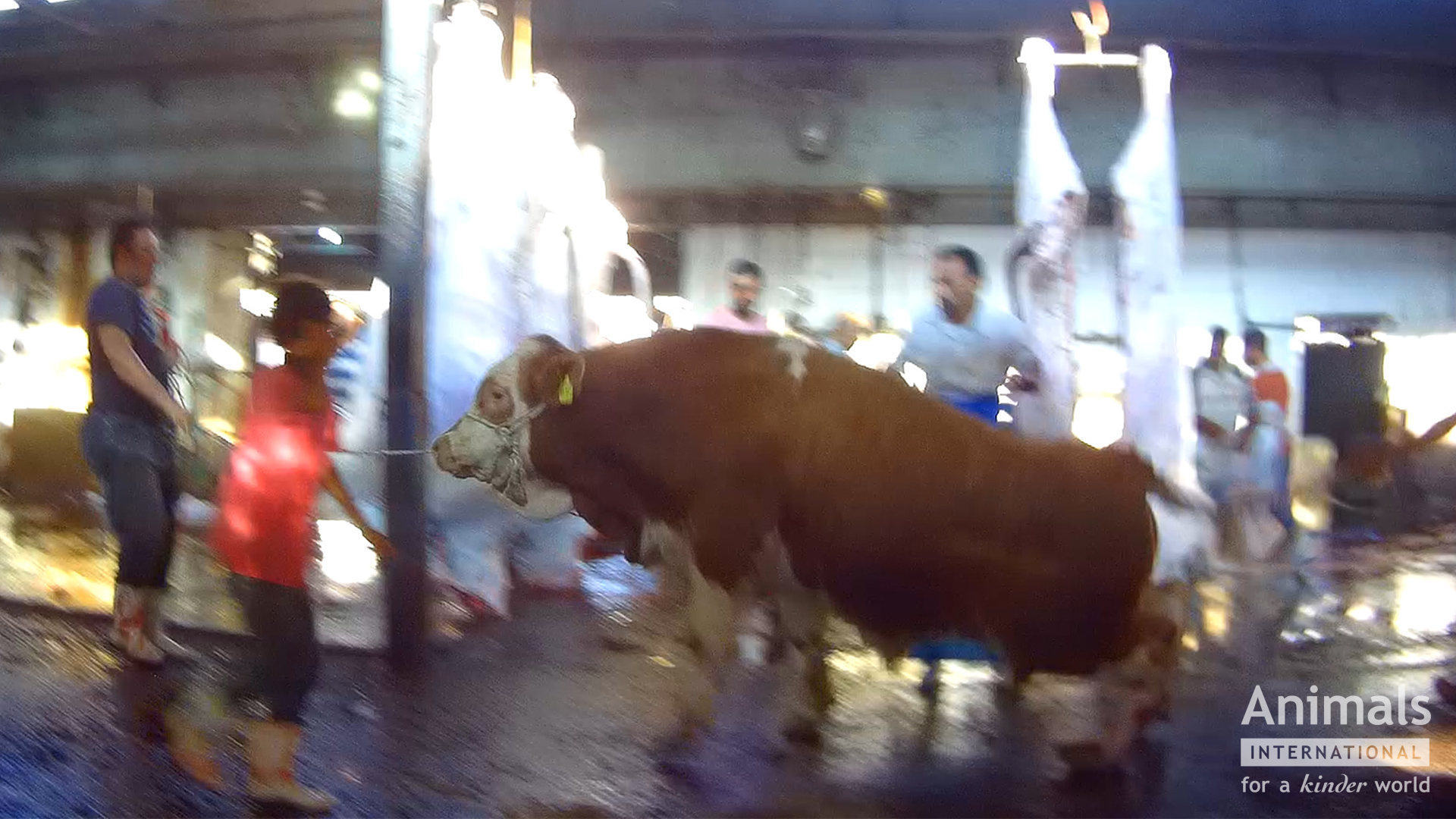
1.4 billion animals are transported in the EU every year, as far as North Africa and the Middle East. For years, the main customers for German and EU cattle have been third countries such as Lebanon,Libya, and Egypt, but also Turkey.
As if animal transports within the European Union weren’t bad enough: If animals are transported to countries outside the EU, they are often exposed to extreme heat or cold.
Not only long travel times but also long waiting times at the borders do their part.
It’s criminal, it’s a political shame to let them cart to countries where there is no animal protection law.
As soon as animals leave the EU on trucks or ships, animal welfare is usually over.
Immediately after the journeys to hell, their tendons are cut or their eyes gouged out to make them defenseless – many of them fight for their lives for minutes in the slaughterhouse because of imprecise cuts in their necks.
Although the European Court of Justiceruled in 2015: “Animal welfare does not end at the border of the European Union. The welfare of the animals must be ensured until the final destination – whether stables or slaughterhouses”.
But at the destinations of animal transports, for example in Lebanon or Egypt, nobody is interested in the regulations of Europeans.
Controls are missing.
The following applies: where there is no plaintiff – there is no judge.
In 1990 the filmmaker Manfred Karremann made his first film about animal transports: his pictures of tortured farm animals from Germany and Europe resulted in millions of protests.


 Baby monkey Cocoa was attacked by a stressed adult monkey who made deep, painful cuts on his face
 The macaque lady Princess was apparently so desperate that she pulled her hair out. However, it continued to be used as a birthing machine.