Posted on May 22, 2018 by Serbian Animals Voice (SAV)
You only have to read this, our recent post; to see the reality of animal ‘welfare’ in the EU – EU politicians who care nothing; and simply carry on as usual, despite the evidence:
The recent uproar over the ability of animals to feel pain has created a grossly inaccurate discussion. Beneath all the bluster and posturing from those claiming to be concerned by animal welfare was an underlying implication: without the EU, British animals would suffer horrific cruelty at the hands of a pig-hating, cattle-loathing domestic government.
Of course such a belief borders on hysterical paranoia. Britons are a nation of animal lovers. We have a proud history of global leadership in the field of animal welfare. Removing ourselves from the inept EU presents us with an exciting opportunity to once again become a pioneer in improving animal welfare standards internationally. This can be done through trade deals and by discussions in international arenas. Despite the idyllic face given to this by many, the EU is guilty of holding back British ambitions for improved standards. In some cases the EU actively prevents us from taking action to improve animal conditions which could stop the unnecessary pain and suffering endured by animals.
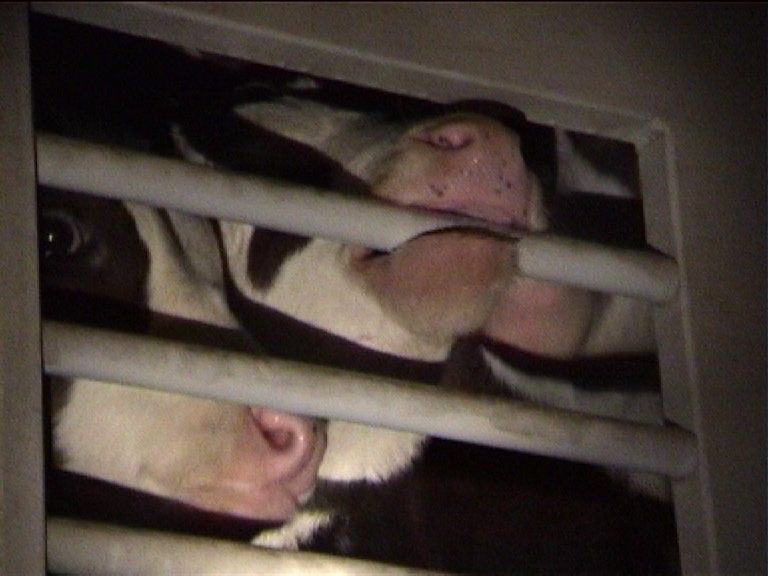
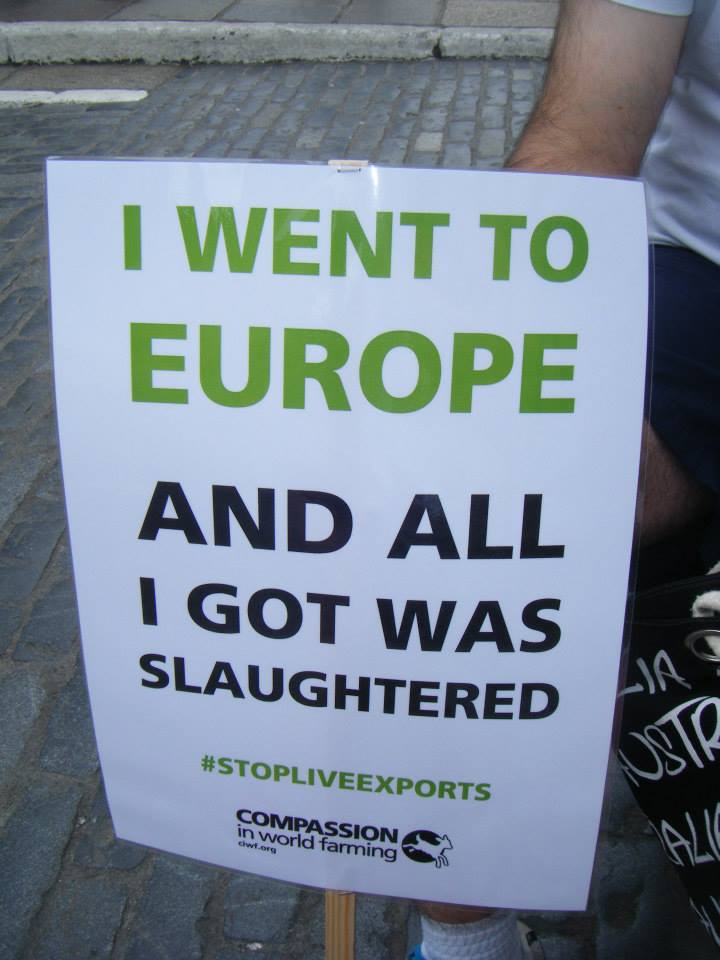
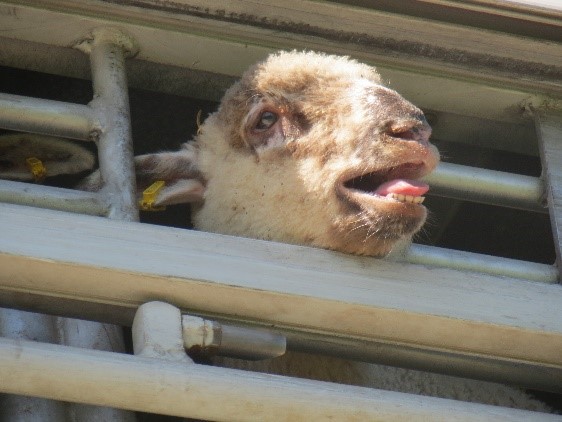
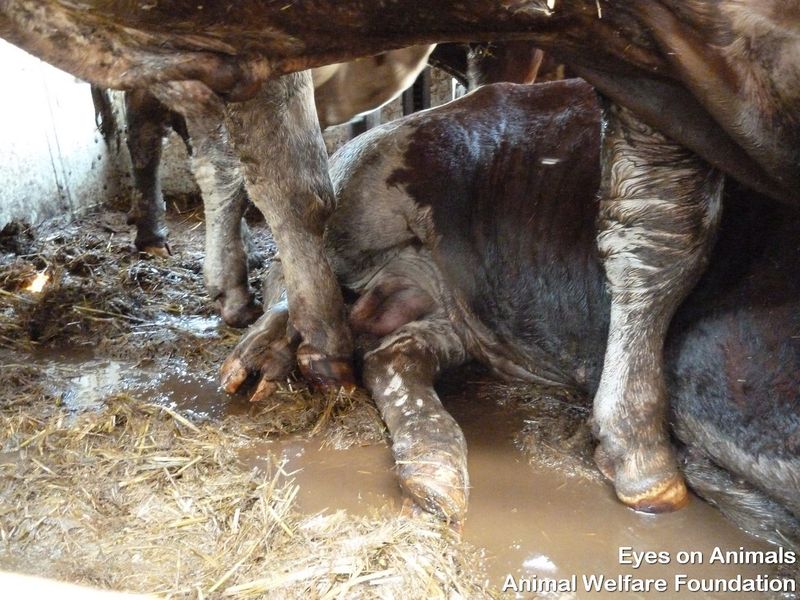
Take, for instance, the matter of transporting livestock for slaughter across long distances. The images of cattle, sheep and pigs horrifically crammed into the back of lorries, suffering from severe health conditions, exhaustion and dehydration, rightly provokes outcry from the Great British Public. Parliament, when discussing the matter, finds itself in almost complete cross-party unanimity. There is a strong consensus for banning the barbaric export of live animals.
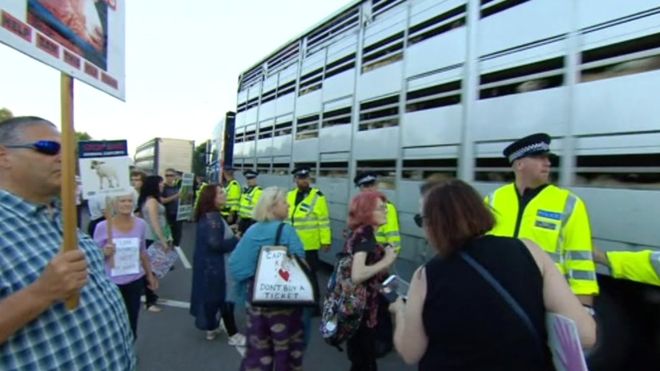
Above – England – Live Animal Export Demonstrations
However, this robust current of objection – displaying our credentials as an animal loving nation – is in vain. Our membership of the EU and the principle of free movement reduces our concerns to irrelevance. The Treaties are clear. The free movement of goods – clearly also including animals which even the EU admits can feel pain – must not be impeded in any way.
Once we are outside the EU, any Bill advocating the end of this torture will be passed in a blink of an eye, but until then, nothing can be done!
The disconnect between intentions and ability is mind-numbingly infuriating, especially as there is such a simple solution. However, this lays bare just one way in which the EU impedes Britain’s desire to reduce the suffering of animals.
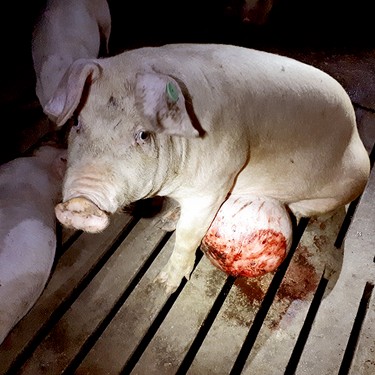
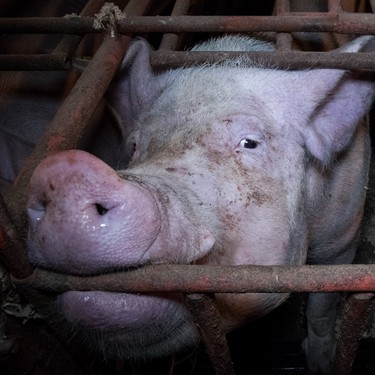
Even where European legislation exists to prevent suffering, the protectionist fervour with which the agricultural sector is shielded means most breaches of welfare practice are overlooked. The EU Commission fails to enforce the rules in order to maintain and satisfy European farmers’ market advantage and competitiveness. The Commission also actively discourages the use of CCTV in abattoirs and opts to ignore laws maintaining the dignity of pregnant pigs. This allows those that fail to uphold even basic animal rights to continue, massively reducing their expenditure in the process in order to maximise profits.
The fact that British farmers consistently maintain high standards despite the rules not being enforced is therefore testament to their own credential as guarantors of animal well-being rather than the result of EU influence.
Law-abiding British farmers who take every effort and cost to minimise suffering for livestock are at a systemic disadvantage. They face competition with an influx of cheaply produced meat (mainly from eastern EU countries) – reared and slaughtered on a policy of minimum expenditure – with little thought for animal suffering. Once we are outside the EU, British farmers will not have to choose between maintaining high standards or market competitiveness, but they will be able to meet both requirements satisfactorily.
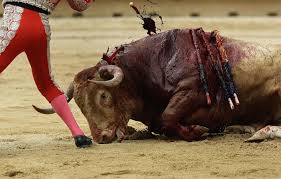
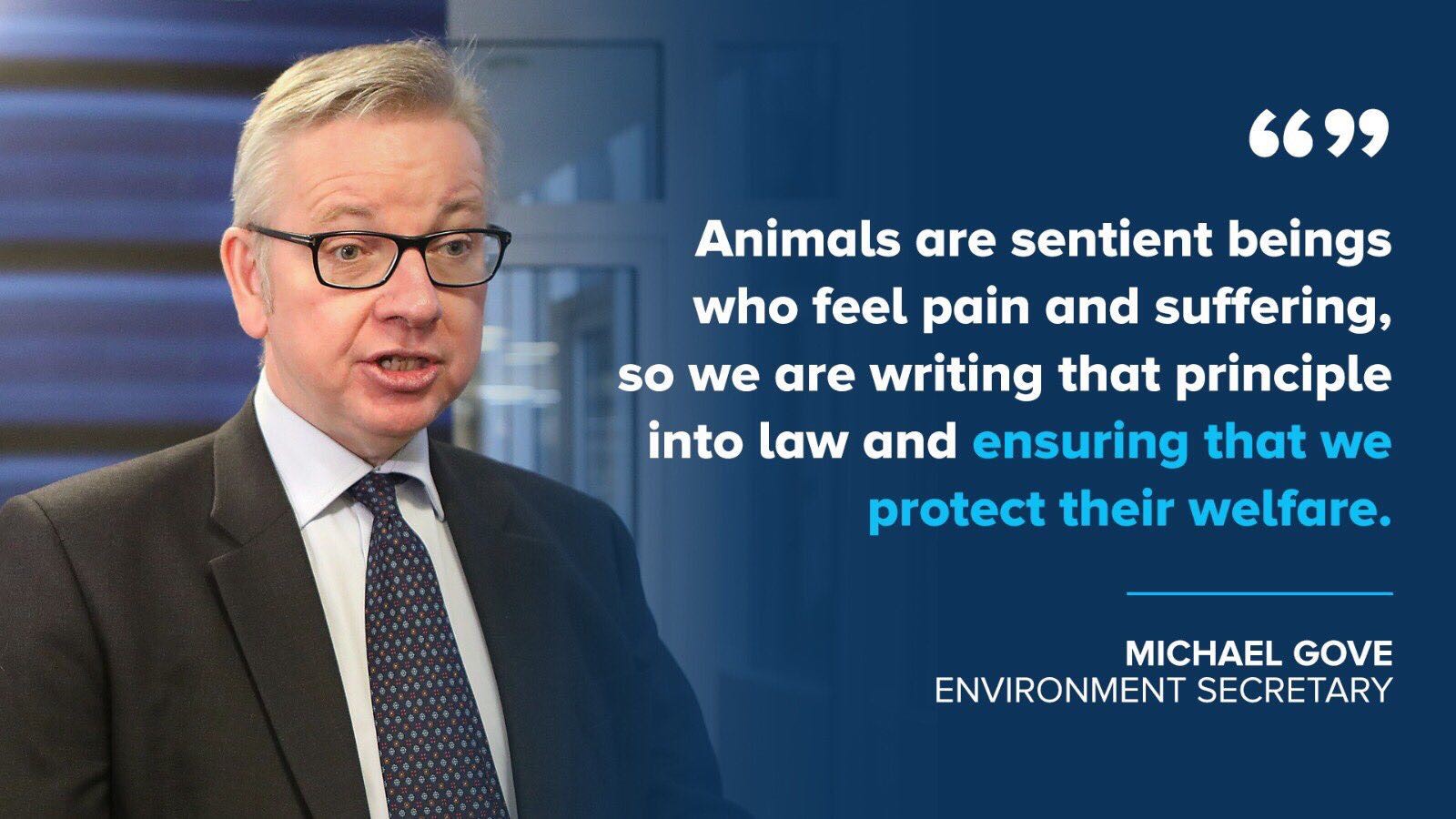
As we can see from Michael Gove’s (photo above) enthusiastic tenure as Environment Secretary, British welfare standards are already on the rise. The draft Animal Welfare (Sentencing and Recognition of Sentience) Bill goes further than its EU equivalent, banning medieval practices (such as bullfighting in Spain and other EU countries), which are permitted by Article 13 of the Lisbon Treaty on account of them being so-called ‘cultural traditions’.
This, in addition to a toughening of prison sentences for the most serious offences, and moves to improve surveillance in slaughterhouses, shows a strong intent by Britain to make improvements where needed.
In the pet industry, moves are being made to clamp down on puppy smuggling and the illegal transportation of other domestic animals, which is facilitated by the EU’s ‘pet passport’ scheme: a problem which has, until now, remained out of Parliament’s jurisdiction. These proposals provide a small taste of post-EU Britain’s desire to go beyond European mediocrity.
Excitingly, once we are outside the Customs Union, the free-trading role Britain will craft for itself, once free of the EU’s stranglehold, will create a multitude of opportunities to engage with other countries. This will allow us to spread the values of animal welfare which are so important to us as a nation.
By taking part in bilateral trade deals, British negotiators will be able to install minimum standards which must be met before produce can enter the United Kingdom. Not only will this ensure British consumers are protected from unethically reared meat, but will force nations seeking access to the UK market to meet our set standards of welfare.
Once we Get Britain Out of the EU, we (UK) will be in full control to pursue the highest possible standards of animal welfare. Free trade agreements will provide the perfect platform of interaction from which we can spread these values for animal welfare to other countries.
Posted on May 22, 2018 by Serbian Animals Voice (SAV)
EU Commission assesses the “El Pozo scandal” as an isolated case and does not initiate punitive measures!
(Well-com again to the “Do Nothing” Factory from EU!!)
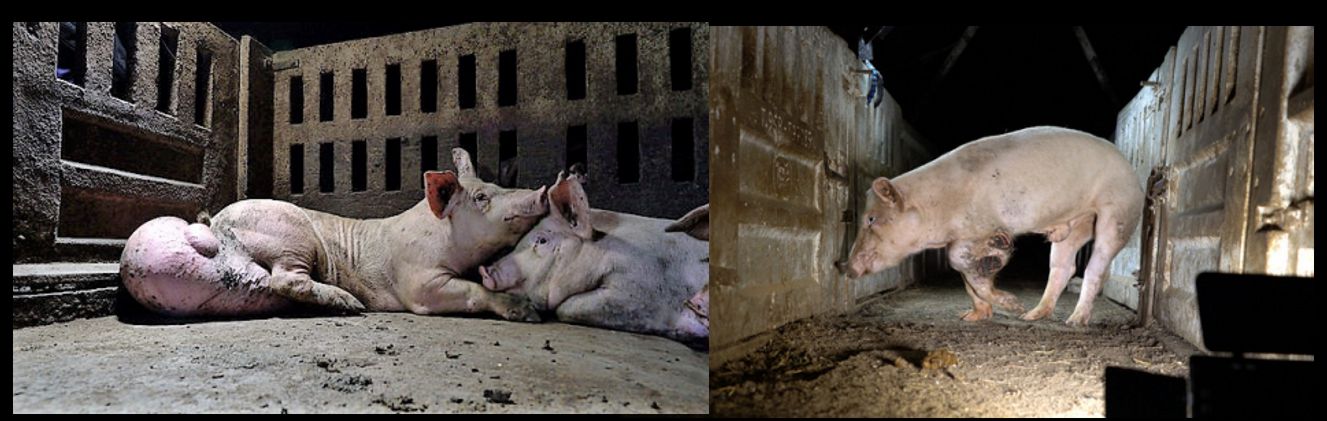
At the end of February, MEP Stefan Bernhard Eck put a written question to the Commission to draw attention to the horrific events revealed by the Animal Equality animal welfare organization in a pig farm in Spain that owns the meat group EL Pozo supplies. He asked whether the Commission would sanction non-compliance with EU regulations, or at least request clarification from the Spanish authorities.
On 15.05.2018, almost three months later, Eck’s office finally received the Commission’s response: they had learned from the media about the case of El Pozo and had turned to the competent authorities. These would have to “promise to remedy the situation”. However, the Commission considered that it was a “case-by-case”, so that sanctions under the Regulation on official controls, in which Stefan Eck had worked as shadow rapporteur, were not considered, and only systematic failure to comply with the relevant EU rules would justify such measures.
Conclusion: Once again, an animal welfare and food scandal is not sufficiently addressed and taken as an isolated case, although the Commission is aware, that violations of EU animal welfare regulations in all Member States are the rule!
For those who do not know, what the “El Pozo scandal” is!
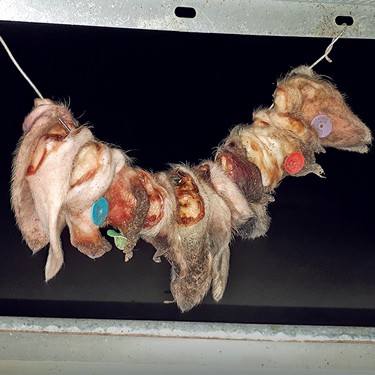
Animal Equality published shocking footage from a pig farm in Alhama de Murcia, Spain in early February 2018. The company is part of a company that supplies the meat producer El Pozo. The sausages from El Pozo are also sold in German supermarkets such as Edeka and Rewe as well as in the online marketplace of Amazon.de.
The research was done in collaboration with the prestigious Spanish TV program Salvados, presented by the well-known presenter Jordi Évole. On Sunday, February 4, the research was first broadcast on Spanish television and nationwide followed by a huge number of viewers. The cruel conditions in the factory have shocked even the experienced investigators of Animal Equality. The pictures show, among others:
-sick pigs with huge pus-bumps and severe cases of intestinal breakages, which do not receive any veterinary care,
-dying and dead animals in some advanced state of asphyxiation lying between the surviving ones,
-Animals that can barely move due to their weaknesses and are injured by conspecifics after days without food or even eaten alive,
-sick and injured pork babies suffering torment without veterinary care,
-Pigs that have to live in catastrophic hygienic conditions in their own excrements,
– Containers overflowing with dead animals and fly maggots.
Experts are horrified
Animal Equality presented the recordings to Ignacio Arija, director of the Institute of Animal Husbandry at the Complutense University of Madrid. The livestock expert was appalled: “If you had told me that these scenes came from a country without any animal welfare legislation, I would have believed it, but not in the European Union, there should not be anything like that here, just like us there is something like that. […] Something like that has to be reported. “
Veterinarian Ignacio Mercadal, who has analyzed the video material and authored a veterinary report, concludes: “The magnitude and severity of the injuries suggest that the pigs have not been treated by veterinarians for an extended period of time.”
Posted on May 21, 2018 by Serbian Animals Voice (SAV)
And the name is: Piñatex!
Fashion label Hugo Boss is about to launch its first line of vegan footwear — a collection of sneakers for men crafted from pineapple leaf fiber.
The new product line was created in response to the rapidly growing consumer demand for more sustainable and cruelty-free fashion.
Piñatex is an innovative, sustainable and 100% cruelty-free material that makes a splendid substitute for leather. The leaves used to manufacture it are by-products from harvested pineapples, and therefore don’t need any extra resources to grow. Sourced from the Philippines, this progressive material is creating extra income for local farmers.
Designed by Dr. Carmen Hijosa over the course of seven years, Piñatex is an ideal material for footwear, accessories, clothing, indoor furniture or even automobile upholstery.
Hugo Boss describe the pineapple-leather shoes as “bold steps forward for responsible design,” with every pair of shoes featuring soles crafted from recycled TPU (thermoplastic polyurethane), a 50/50 cotton and linen lining, and organic cotton shoelaces. Even the four different colored dyes are plant-based.
Not only is pineapple leather much easier on the environment and kinder to animals, it is also cheaper than animal leather, selling at between $5 to $15 per square meter.
This forward-thinking fashion label continues to advance towards a more peaceful, cruelty-free future, having already discontinued the use of fur in 2016.
With over one billion animals killed for the leather industry each year, it is promising to see these environmentally friendly, cruelty-free products finding their way onto the retail market.
My Comment:
Bravo, Hugo Boss!
In contrast to an incompetent parliamentary coalition in Germany, which is currently trying by all means to criminalize and destroy the animal aktivism, you, a German, are taking a big step forward to abolish the suffering and pain of millions of animals.
In the name of the animals we say “thank you”!
Posted on May 20, 2018 by Serbian Animals Voice (SAV)
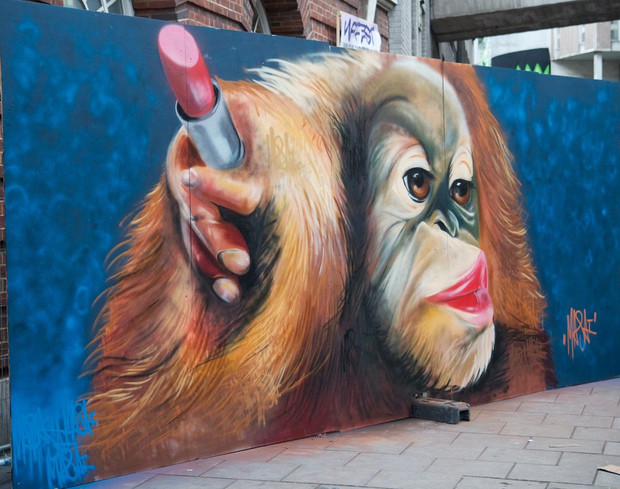
From 1973 to 2005, the orangutans lost almost half of their living space, according to WWF. This is due to forest changes and fires. Today they are threatened with extinction. Only 50,000 specimens should still live in the wild.
The idea of a monkey brothel is just absurd, but cruel reality Photo: flickr.com
Many orangutan females have to live in Indonesian brothels – and have sex with humans there. The word “animal cruelty” would have to be reinvented for these institutions.
When orangutan females have been recruited and found by the “pimps,” they are threatened with immediate death because brothel operators are interested in the newborn females.
They are sold into sex slavery. Here is the motto: the younger, the better. Young monkeys are easy to educate and get used to humans.
Young orangutans who fall into the hands of this prostitution ring experience hell on earth. They are distributed among villages and trained as domestic servants.
In a zoo in Bangkok monkeys are dressed as Gogo- girls or trained as kickboxer and abused.
When they land in the brothel, there are agonizing years before them. The females are shaved and made up. Dozens of men pass each other every day for sexual satisfaction in a dark room, where the animals are tied to a bed. The strong animals do not fight because they are used to humans.
Monkey brothles work because they are cheap. The customers do not have much money.
In the wild, the animals are up to 50 years old. In the brothels seldom older 20 years. The animals suffer depression and memory loss. Some monkeys try to end their lives.
Therefore, the brothels cannot be prohibited:
Indonesia is dominated by corruption and poverty. Attempts by animal welfare groups to liberate the monkey sex slaves can only be undertaken with heavy police intervention. The villagers perform armed resistance. Animal trade is a billion-dollar business, that competes in Asia with drug and arms trade.
Comment:This article is one year old. But I announce it now, because so far it has received very little attention.
And as far as I know, nothing has changed.
Posted on May 19, 2018 by Serbian Animals Voice (SAV)
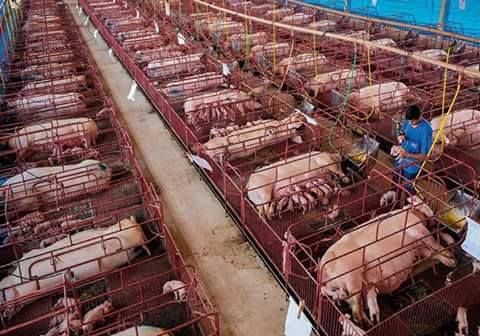
In seven floors skyscraper 30,000 pigs-slaves are fattened.
Pigs that use elevators are not uncommon in China. In multi-floors pig farms, the animals are driven from floor to floor, depending on their stage of development.
A private Chinese agricultural company already operates two seven-stores pig farms in the country, with four more to follow. The pig high-rise buildings would have many advantages, says Jiang Wei, who is responsible for the breeding of pigs here:
“The environment and the temperature control system are very good here and that will certainly reduce the deaths among the piglets. There will be a higher survival rate and the mother pigs will produce more piglets. In this case, we have to invest less and have higher productivity. “!!!
The high-rise pig house, where Jiang Wei works, is home to about 30,000 animals. A special ventilation system and other devices should ensure that each floor can be operated independently of the other floors. Even viruses could not jump from floor to floor, the operators say.
But even in China, there are doubts about the alleged safety of these factory farms on several floors. Scientists say the risk of disease and epidemic disease with the number of kept animals.
Regardless, the high-rises for pigs in China are currently in vogue. Pig farms are to be built here soon, which even have 13 floors.
A private Chinese agricultural company already operates two seven-floors pig farms in China, with four more to follow. The pig high-rise buildings would have many advantages, says the operator.
But even in China there are doubts about the alleged safety of these mass animal husbandry on several floors.
Comment: In Maas Dorf near Halle (Germany) is a pig high-rise too. On six floors, approximately 500 sows are kept, which every year thousands of piglets in the world have to bring.
The animals are transported to the individual floors with elevators, there is no outlet.
Already in 2015 and 2016, the organization “German Animal Protection Office” revealed massive violations of the law and filed criminal complaints.
Now there are again shocking images from the pig high-rise, which again clearly show offenses and animal cruelty. The animals are kicked, abused and killed.
On 13.03.2018, the organization has now reimbursed the third complaint against the operator of the pig tower.
There has also been a huge demonstration with 650 people in front of the high slaughterhouse.
Television stations, radio stations or newspaper offices; whether regional or national – many media reported and thus brought a wide range for the fight of the “German Animal Welfare Office” but also for the common fight against animal cruelty and the exploitation of animals.
The activists of the “German Animal Protection Office” are sticking to their goal: they want to get the pig high-rise closed. And the same must be done by the animal rights activists in China!
Posted on May 18, 2018 by Serbian Animals Voice (SAV)
Positive News.
There can be no ‘good news’ when it involves facilities that kill animals; but after many years of campaigning, UK residents are now going to see CCTV installed in all UK slaughterhouses as a requirement of law.
The legislation came into force on 4/5/18, and premises that do not already have CCTV now installed will have until November to comply. We at SAV are sure that this new legislation will prevent currently unseen abuses of animals during their final minutes of life at the slaughterhouse.
We also welcome the fact that if veterinarians using the CCTV footage find welfare breaches, a slaughterhouse can be given a welfare enforcement notice, have its staff’s licences suspended or revoked, or be referred for a criminal investigation.
——————————————————————————————
Legislation requiring mandatory CCTV in all slaughterhouses in England comes into force today (4/5/18). Premises will have until 5 November to fully comply.
We hope the presence of CCTV will help stop the horrendous and illegal additional abuses revealed time and again by our extensive investigations. It is terrible enough that animals should be at the slaughterhouse at all, without being subjected to being kicked, punched, beaten and burnt with cigarettes to name but a few awful issues we uncovered. Further information is availableon the government website.
We welcome this positive news on a long-fought campaign. But we will continue to encourage people to go vegan, since this is the best way to protect farmed animals. If you aren’t already vegan please sign up to ourSummer Vegan Pledge today!
Legislation to make CCTV cameras mandatory in slaughterhouses in England to safeguard animal welfare has been laid in Parliament by Environment Secretary Michael Gove.
The legislation will come into effect from May 2018, once it passes through Parliament, at which point businesses will have six months to comply.
Access
Under the proposals, Official Veterinarians [OVs] from the Food Standards Agency [FSA] will be given unfettered access to the last 90 days of footage.
It is believed this will help them to ‘monitor and enforce animal welfare standards’.
If OVs find welfare breaches, a slaughterhouse can be given a welfare enforcement notice, have its staff’s licences suspended or revoked, or be referred for a criminal investigation.
The government has said it plans to increase standards for farm animals and domestic pets in England by updating these statutory animal welfare codes.
Breaches would result in a welfare enforcement notice, the suspending or revoking of staff licences or referral for a criminal investigation.
Unrestricted footage
FSA chairwoman Heather Hancock said the watchdog supported compulsory CCTV in abattoirs, since voluntary adoption by slaughterhouses had reached a “plateau”.
She said: “We look forward to the introduction of a comprehensive requirement for using, accessing and retaining footage from CCTV in abattoirs.
“We see CCTV as an invaluable management tool for business owners to help with compliance with official controls and to improve animal welfare standards across the industry.”
British Veterinary Association (BVA) president Gudrun Ravetz said the mandatory CCTV in all areas of slaughterhouses was “essential” to safeguarding animal welfare.
“We are particularly pleased to see a commitment to official veterinarians having unrestricted access to footage, which the BVA has been calling for,” he said.
“Vets’ independence and unique qualifications help ensure that the UK will continue to have the highest standards of animal health, welfare and food safety.”