Posted on April 15, 2020 by Serbian Animals Voice (SAV)
Coronavirus: WHO urges China to close ‘dangerous’ wet market as stalls in Wuhan begin to reopen
’75 per cent of emerging infections come from the animal kingdom… It’s partly the markets, but it’s also other places where humans and animals are in close contact,’ says Dr David Nabarro
The World Health Organisation is urging countries across the world to close “dangerous” wet markets amid warnings about the risks posed by environments where humans are in close contact with animals.
Wet markets in Wuhan, the city where the coronavirus outbreak first emerged, have begun to reopen following the lifting of lockdown restrictions. This move comes despite the virus being linked to the city’s Huanan Seafood Wholesale Market.
But WHO, as well as other public health organisations and campaigners, have said the markets pose a “real danger” as pathogens can spread easily and quickly from animals to humans.
Dr David Nabarro, a WHO special envoy on Covid-19 and special representative of the United Nations secretary general for food security and nutrition, said the world health body “pleads with governments and just about everybody” to be respectful of how viruses from the animal kingdom are rife.
Speaking on BBC Radio 4’s Today programme, Dr Nabarro said while WHO is not able to tell governments what to do, their advice is to close wet markets.
He replied: “You know how WHO and other parts of the international system work – we don’t have the capacity to police the world. Instead, what we have to do is offer advice and guidance, and there’s very clear advice from the Food and Agriculture Organisation and WHO that said there are real dangers in these kinds of environments.
“75 per cent of emerging infections come from the animal kingdom. It’s partly the markets, but it’s also other places where humans and animals are in close contact. Just make absolutely certain that you’re not creating opportunities for viral spread,” added Dr Nabarro.
Traders sell fresh produce, fruit and vegetables in wet markets alongside wild and domestic animals mainly for consumption in wet markets, which are common in China, South Korea and southeast Asia. Not all wet markets sell exotic meats, but poor legal controls allow for the controversial product to enter the supply chain.
Last week, over 200 conservation groups across the world signed an open letter calling on WHO to force the closure of markets where wild meat is sold for consumption.
The joint letter calls on WHO to recommend to governments that they bring permanent bans to live wildlife markets and to exclude the use of wildlife from the organisation’s definition and endorsement of traditional medicine.
Dr Nabarro added: “We have similar concerns about bushmeat – be very very careful when you’re basically eating wild animal meat or killing wild animals. All these things are higher risk and we have to be on high alert these days for these problems.”
The Independent is calling for global action to impose tighter restrictions surrounding the trade of wild animals, in order to help reduce the risk of diseases like coronavirus from spreading.
There is some indication that Chinese authorities are heeding calls for more restrictions. Last month, Beijing banned the trade and consumption of non-aquatic wild animals, and shut down 20,000 farms raising animals such as peacocks, porcupines and ostriches.
Shenzhen became the first Chinese city to ban the sale and consumption of dog and cat meat, with central authorities declaring that dogs are companions and not for consumption.
Jinfeng Zhou, secretary general of the China Biodiversity Conservation and Green Development Foundation, told The Guardian that a universal closure of wildlife markets was justified.
However, the use of wild animal meat or byproducts are still being approved for use in medication and signs that regional Chinese authorities are not enforcing the recent ban on the sale of wild animals have emerged.
Posted on April 15, 2020 by Serbian Animals Voice (SAV)
Spring hunt in Malta: Despite all protests by the nature conservation associations and from the population and contrary to the requirements of the EU Birds Directive, Malta has approved the spring hunt for quail.
From April 10th to 30th, 6,000 hunters can shoot a total of 5,000 of the endangered migratory birds.
That means the hunters go on the prowl for 20 days in order to allegedly kill less than one bird on average – a hardly credible calculation.
The actual number of birds shot is likely to be much higher. The police controls, which are always too tight, have been further reduced by the corona pandemic.
As a result, the two teams of the Committee against Bird Murder, which are currently in use in Malta, observe numerous violations of hunting and nature conservation law.
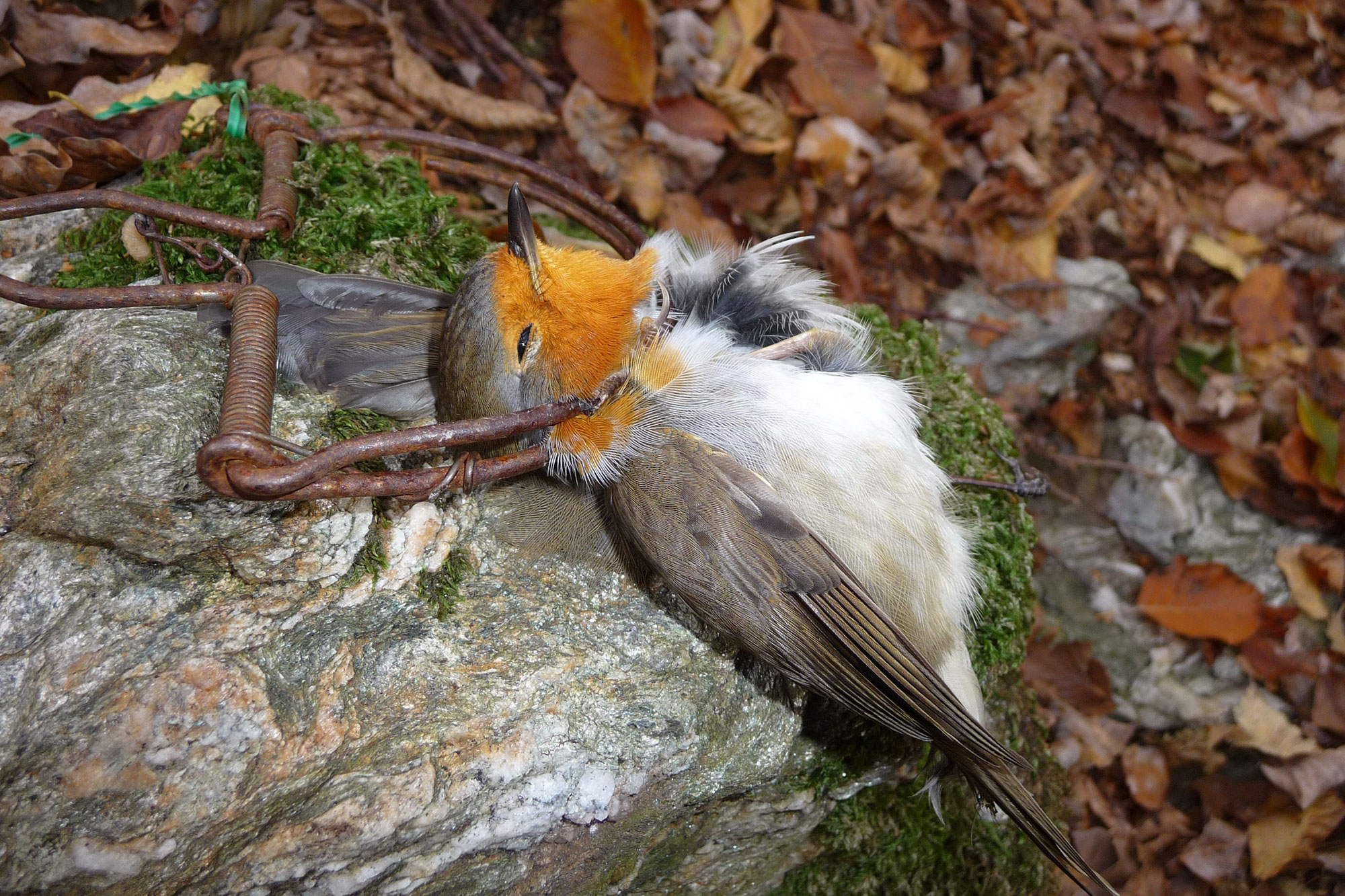
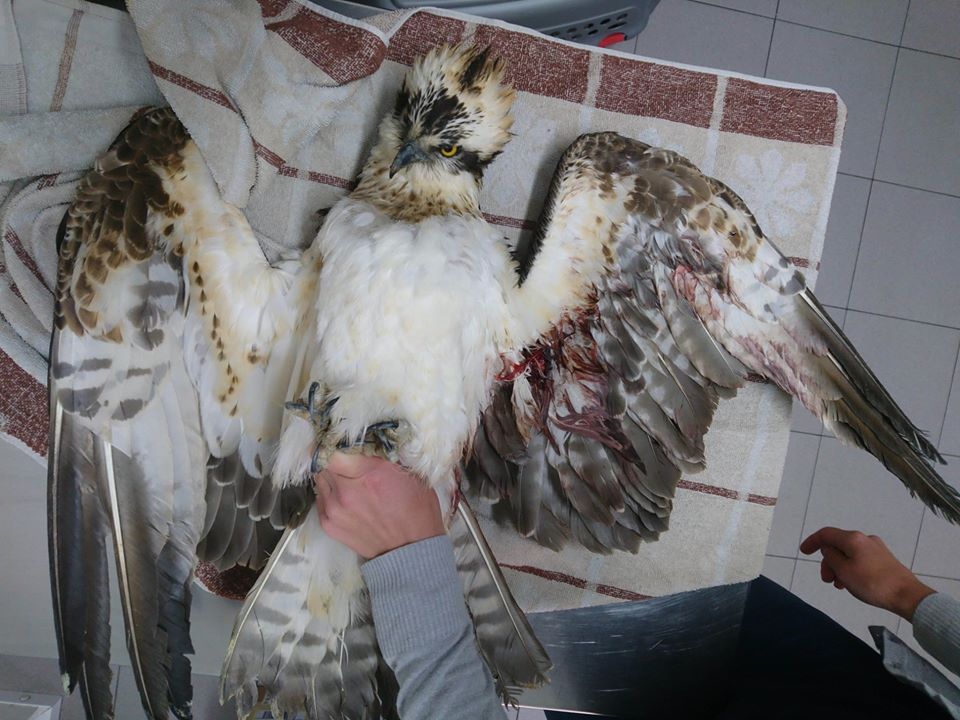
The use of banned electronic lure systems and shots at protected birds of prey, hoopoes and lovebirds are particularly widespread.
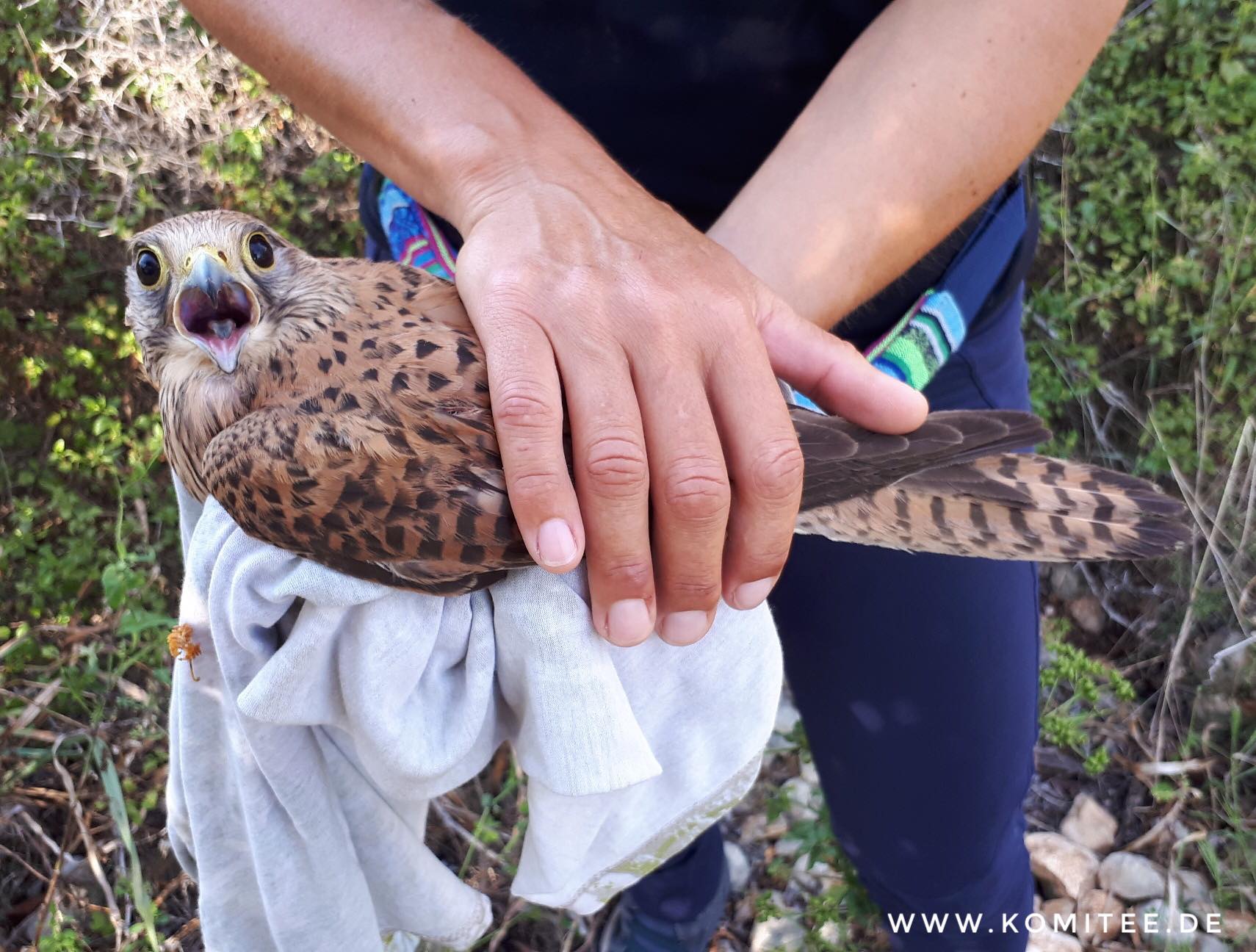
The last victim of the uncontrolled spring hunt is a kestrel, which a committee team found at Birzebuggia on Easter Sunday (photo below).
Unfortunately, the bird had to be put to sleep – its body was full of lead shot.
In our video published today, we show a whole range of violations – from bird trapping with blow nets to hunters who are illegally stalking.
It has received and confirmed information that the man works as a prison guard in Corradino Correctional Facility.
My comment: The hunting season in Malta lasts from September to May. There is hunting almost everywhere, and the illegal poachers don’t give a shit about the police.
Since classic game on the islands has long been eradicated, the murderers’ rage is concentrated on the migratory birds.
The list of birds officially released for hunting and fishing includes, in addition to numerous songbirds, waders and waterbirds, even highly endangered species.
A blatant case of corruption when licenses are issued for endangered species.
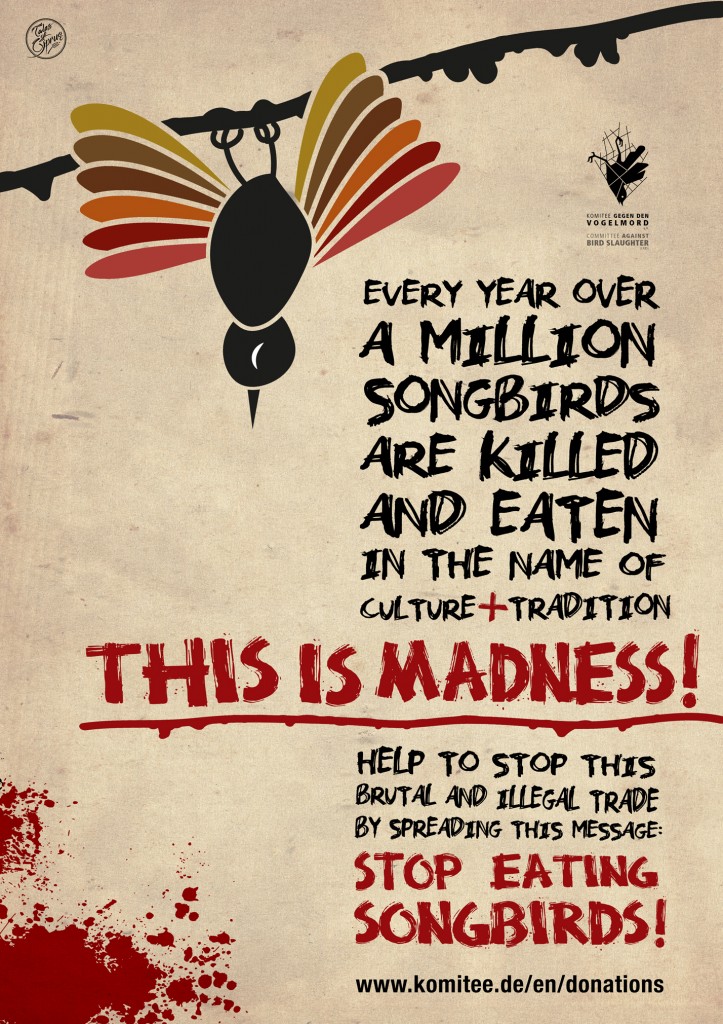
Bird catching is a popular sport in Malta. Unlike most other fishing areas in the Mediterranean, the captured songbirds end up as caged birds, locked up in the living room of perverted “bird friends”.
In Malta’s capital Valletta there is even a large bird market every Sunday, which is even mentioned in the travel guides as a sight.
Another big advantage of the Corona is the temporary standstill of tourism in countries that have always lived from tourism. For tourism, a lot of money is usually made with animals.
Speaking to Howard Stern on his SiriusXM radio show, the former Beatle said: “They might as well be letting off atomic bombs because it’s affecting the whole world.”
“Whoever is responsible for this is at war with the world and itself.”
Although no origin for the deadly virus has been officially determined, some have heaped blame for the pandemic on China’s wet markets, which sell freshly slaughtered animals.
Last week, more than 200 conservation groups across the world signed an open letter calling on the World Health Organisation to force the closure of markets where wild meat is sold for consumption.
Stern brought up the topic of the markets to McCartney, who has been a very public vegetarian and animal rights campaigner for decades.
“I really hope that this will mean the Chinese government says, ‘Ok guys, we have really got to get super hygienic around here,’” McCartney said. “Let’s face it, it is a little bit medieval eating bats.”
“They don’t need all the people dying. And what’s it for? All these medieval practices. They just need to clean up their act. This may lead to it. If this doesn’t, I don’t know what will.”
McCartney also praised the community spirit that has emerged during the pandemic, saying: “A lot of people are pulling together and it is a great thing. It is inspiring.”
In an unconscionable move, Anna Seidman — a former lawyer for the trophy hunting group Safari Club International (SCI) — has been appointed assistant director of the U.S. Fish and Wildlife Service’s (FWS) International Affairs program.
Seidman has sued the FWS a number of times during her 20-year tenure as litigator for SCI, an organization which successfully lobbied to revoke the ban on importing elephant body parts as hunting “trophies” from Africa.
In her new role, Seidman, who replaced Eric Alvarez, will head a team focused on protecting endangered wildlife and enforcing conservation pacts worldwide. This is in sharp contrast to her lengthy employment at SCI, where, as Director of Legal Advocacy and International Affairs, Seidman fought against legislation aimed at protecting wildlife, including a 2015 regulation that banned aggressive methods of predator control in national preserves and refuges — specifically in Alaska.
A spokesperson from the FWS confirmed the engagement to HuffPost, citing Seidman as “an effective, innovative leader with 20 years of legal and policy experience, including expertise in international environment and natural resource management.”
This appointment could potentially have far-reaching negative implications for the protection of wildlife.
To voice your concern, contact Chief Officer of Public Affairs for the U.S. Fish and Wildlife Service Gavin Shire at Gavin_Shire@fws.gov.
Posted on April 14, 2020 by Serbian Animals Voice (SAV)
Coronavirus closes meat plants in Canada and the United States as world’s largest pork producer warns of shortages.
CHICAGO — Major meat companies in the United States and Canada have closed plants temporarily due to cases of the new coronavirus and concerns about its spread.
Here are some facilities that have shut or reduced production:
• An Olymel pork plant in Yamachiche, Quebec, shut on March 29 for two weeks, after nine workers tested positive for the coronavirus.
• Maple Leaf Foods suspended operationson April 8 at its Brampton, Ontario poultry plant, following three COVID cases among workers at that facility.
• Harmony Beef in Alberta, Canada, shut its cattle slaughter operations on March 27 for two days, after a worker tested positive for the new coronavirus, prompting some federal inspectors to stay away from the site.
• Smithfield Foods, the world’s biggest pork processor, on Sunday said it is shutting a pork plant indefinitely and warned that plant shutdowns are pushing the United States “perilously close to the edge” in meat supplies for grocers.
• JBS USA shut a beef plant in Souderton, Pennsylvania, until April 16, after previously cutting production.
• JBS reduced production a beef plant in Greeley, Colorado, due to high absences among workers, according to the local United Food and Commercial Workers union.
The company said high absenteeism led slaughter rates to outpace the process of cutting carcasses into pieces.
• National Beef Packing Co suspended cattle slaughtering at a beef plant in Tama, Iowa, for a cleaning and planned to resume on April 13.
• Aurora Packing Company closed a beef plant in Aurora, Illinois, said Brad Lyle, chief financial officer for U.S. commodity firm Kerns and Associates. A security officer at the plant said it was closed due to the pandemic. The company did not respond to requests for comment.
• Cargill Inc closed a plant in Hazleton, Pennsylvania, that produces meat for U.S. grocery stores.
• Tyson Foods Inc shut a hog slaughterhouse in Columbus Junction, Iowa, the week of April 6 after more than 24 cases of COVID-19 involving employees at the facility.
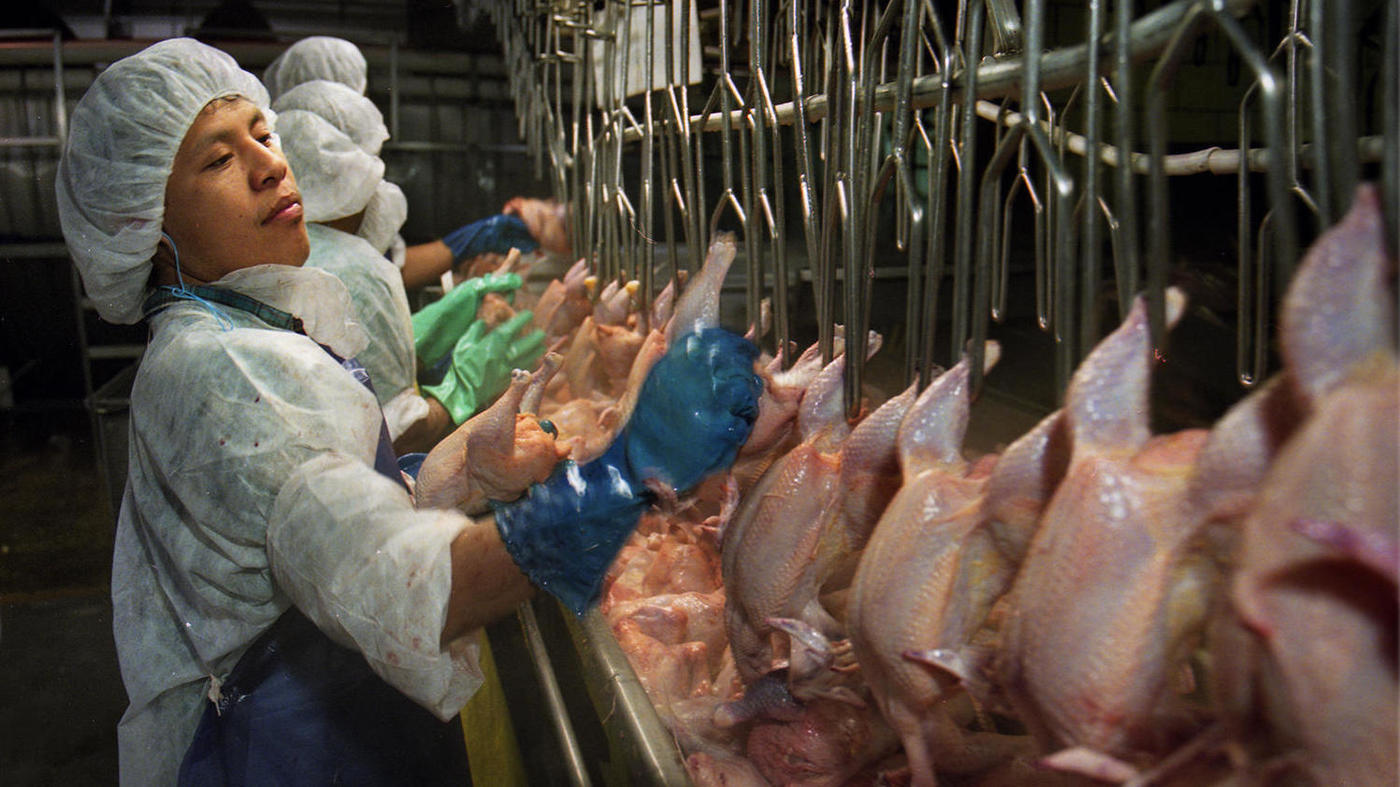
• Sanderson Farms Inc reduced chicken production to 1 million birds a week from 1.3 million at a plant in Moultrie, Georgia.
My comment: The USA is the second largest pig producer in the world after China.
Germany comes third.
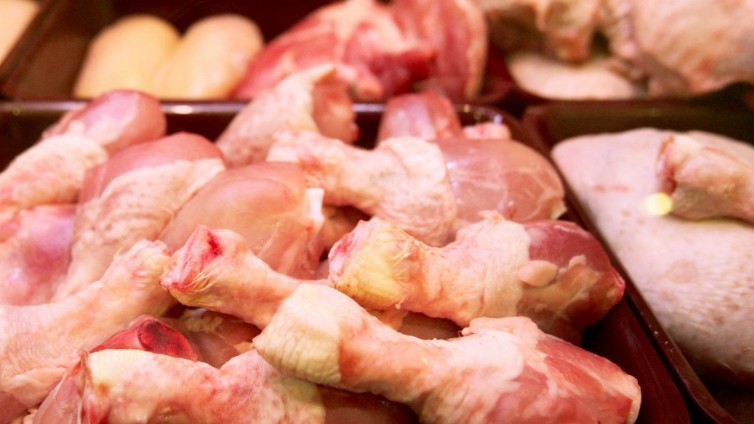
35 million chickens, 424,000 pigs, 130,000 cattle. So many animals are slaughtered, cut into pieces, packed in Tyson Foods companies every week (!!!) – and then offered for consumption in supermarkets such as Walmart or fast food outlets like McDonalds in over 100 countries.
Every second person in the world eats meat from Tyson Foods, a meat producer who is considered to be the world’s largest polluter.
We are particularly pleased with the consequences of coronavirus on Tyson’s businesses.
And we wish Tyson and the rest of the meat mafia around the world the biggest losses the economy has ever seen.
Posted on April 14, 2020 by Serbian Animals Voice (SAV)
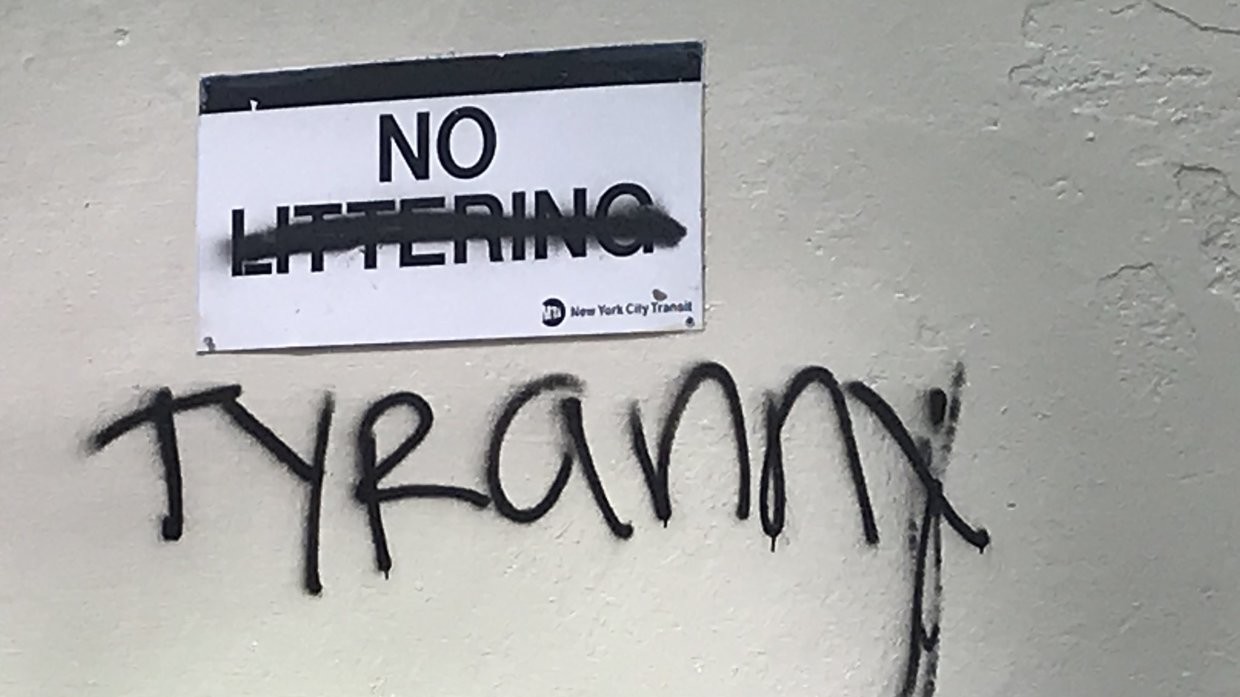
Famous whistleblower Edward Snowden has a dire warning for everyone grappling with the coronavirus pandemic: don’t let authoritarians exploit the crisis to claim more power.
Snowden told Vice that he sees the rise of emergency laws, increased surveillance, and other ways that governments have suspended civil rights to combat the pandemic as a disturbing power grab.
And, he added, he doesn’t expect the leaders behind it to relinquish the newfound power when the coronavirus outbreak finally recedes.
Snowden argued that a global pandemic was readily predictable, and that scientists and intelligence agencies had long been sounding alarm bells. Imposing new emergency surveillance, he argues, is a particularly disturbing play.
“As authoritarianism spreads, as emergency laws proliferate, as we sacrifice our rights, we also sacrifice our capability to arrest the slide into a less liberal and less free world,” Snowden told Vice.
Ultimately, Snowden fears that the world leaders claiming new emergency authority will hold onto them well after the pandemic ends.
“Do you truly believe that when the first wave, this second wave, the 16th wave of the coronavirus is a long-forgotten memory, that these capabilities will not be kept?” Snowden said.
“That these datasets will not be kept? No matter how it is being used, what is being built is the architecture of oppression.”
And I mean … All governments, at least in Europe, continue to be tough on the Corona virus, and that’s right.
However, no one is willing to ban meat consumption – at least during the blackout period.
And no one talks about the main cause of virus formation.
Even the conservative media warn of viruses and bacteria in factory farming and point this out every day.
Nevertheless: The animal transports go beyond the borders with even looser regulations than before, hunting in Germany is allowed without restrictions, feeding pigeons remains forbidden, with a fine of 1000 euros for non-obedient citizens
The stupid government in Germany wants to introduce the app warning system in mobile phones that send a signal as soon as a registered corona infected person appears.
That’s not all.
The German government expects 40 to 50 million volunteers of the app system !!!
In the first place it is voluntary, then it is mandatory.
The majority of the population does not understand what is really happening. And it doesn’t even understand that it doesn’t understand.
This makes the surveillance system easier than ever.
Animal rights activists will not be spared the future harmful consequences of the current corona measures.
Animal transport, undercover investigations in slaughterhouses, demonstrations against animal exploitation … It seems that more and more means are right to end the fight for the animals.
Our struggle has long become a political issue. We have to stay on the side of animals and fight against systems and governments that want to prevent our fight.
Posted on April 13, 2020 by Serbian Animals Voice (SAV)
Jane Goodall calls for global ban on wildlife trade and end to ‘destructive and greedy period of human history’
Stop the Wildlife Trade: The renowned conservationist says we are putting economic growth ahead of environmental protections and destroying our children’s future
Read the entire article from the ‘Independent’ (London) by clicking on the following link:










 Serbian Animals Voice (SAV)