Posted on April 19, 2021 by Serbian Animals Voice (SAV)
Despite the ban on the ivory trade, tens of thousands of elephants are killed for their tusks every year.
In a South African national park, a poacher has now paid for the hunt with his life.
April 18, 2021, 3:42 p.m.
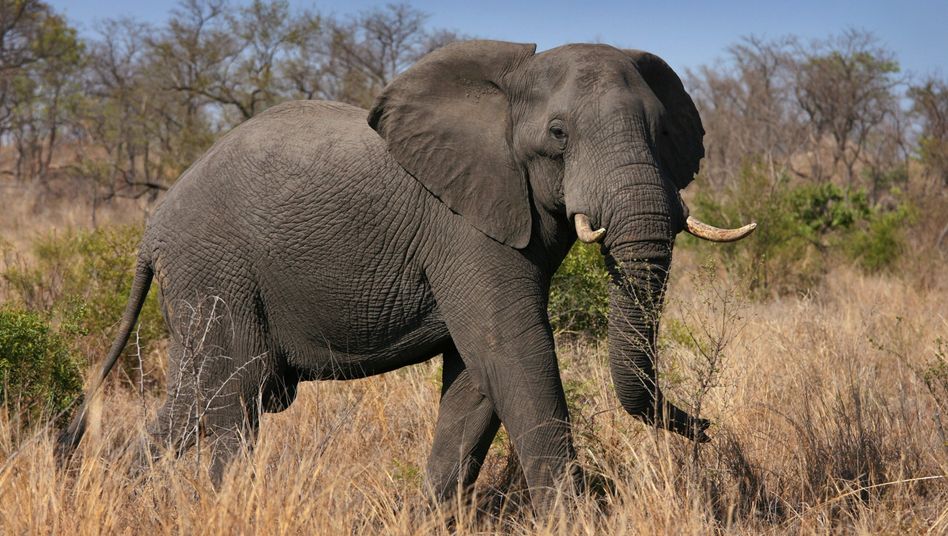
A suspected poacher has been killed by elephants in South Africa’s famous Kruger National Park.
The man and two accomplices fled from park rangers and came across a herd of elephants with cubs, said the Sanparks National Park Authority on Sunday.
The elephants would have trampled the man to death.
Foto: Jon Hrusa – dpa
One of the accomplices was arrested while the third man escaped, it said. The rangers were also able to retrieve a rifle, an ax, and a bag with supplies. The search for the third suspect continued on Sunday afternoon.
Despite an international trade ban on ivory, tens of thousands of African elephants are killed for their tusks every year. According to the IUCN animal welfare organization, there are still an estimated 415,000 elephants on the continent.
The Kruger Park is one of the main tourist attractions in South Africa and is one of the largest national parks in Africa.
It is about the size of the state of Hesse and is known for a large number of wild animals such as elephants, lions, rhinos, leopards, and buffalo.
The last time there was a similar incident occurred in 2019 in which a poacher was trampled by elephants and eaten by lions.
And I mean...Wonderful, we like to hear such news!
Finally, someone is doing something against poachers. We humans don’t manage to fight them effectively!
If people had such social behavior as the elephants, we would all have no more problems.
Unfortunately, it hits the weakest link in the chain, and not those who are enthroned as heroes above the dead elephant and even publicize the murder on photos.
A son of Donald Trump is also a big game hunter …Just an idea …
And now we keep our fingers crossed for the Spanish bulls.
Posted on April 19, 2021 by Serbian Animals Voice (SAV)
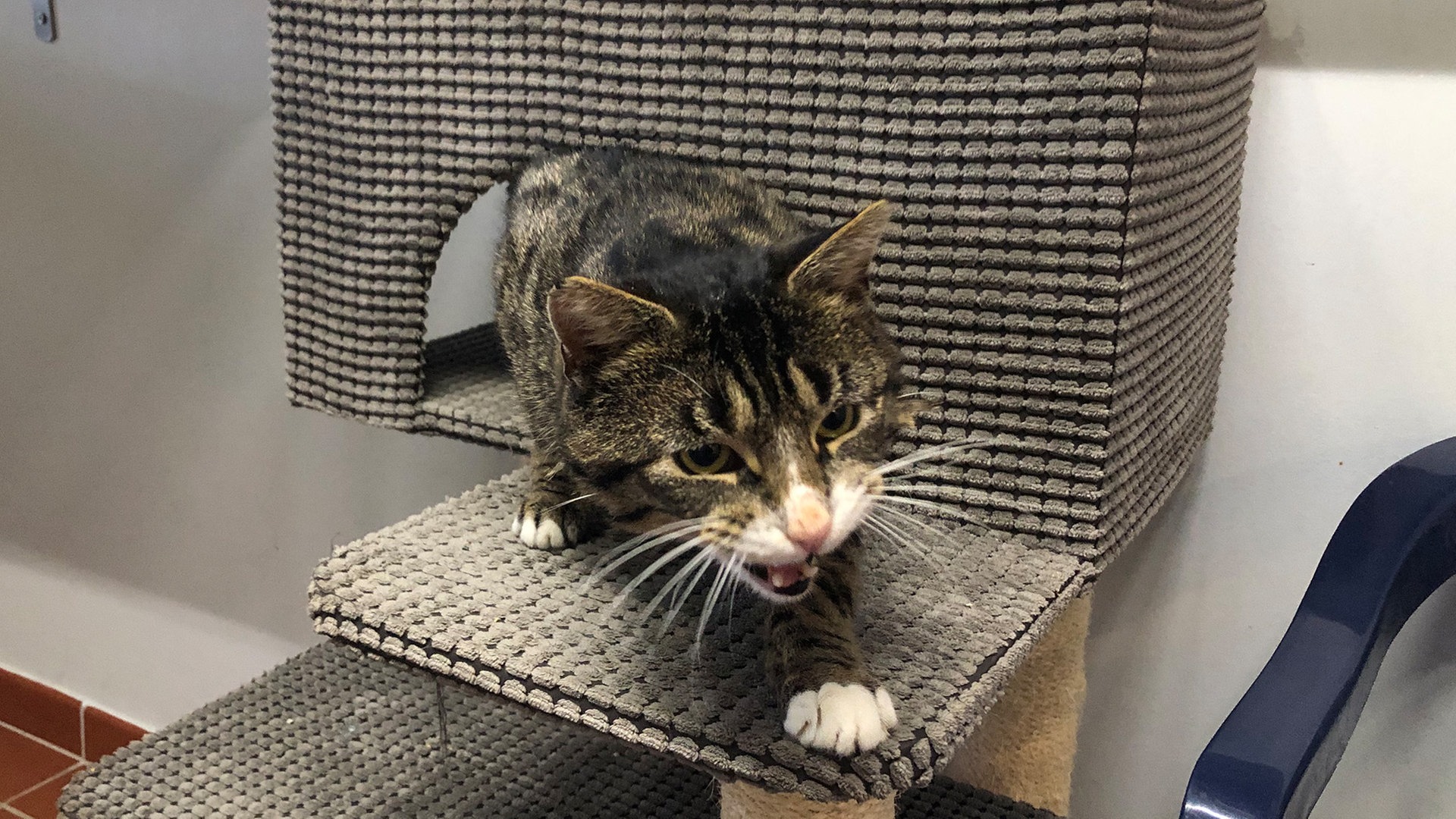
The Swedish breeding program for farm cats has been withdrawn
15 April 2021
Svenska Djurskyddsföreningen
News
At the end of 2020, the Swedish Board of Agriculture approved a breeding program for farm cats, which has been criticized in a letter from Svenska Djurskyddsföreningen.
The Swedish Board of Agriculture has come under fire after approving a farm cat breeding program in December, primarily because the program recommends that cats that are allowed to roam freely outside to be fertile, which would increase reproduction and result in an increase in unwanted, abandoned, and feral cats.
On March 23, Svenska Djurskyddsföreningen wrote to the Swedish Board of Agriculture, asking them to reconsider the approval, in part because it violates animal welfare rules that require cats that go outside to be neutered or prevented from reproducing uncontrollably.
Following the outpouring of criticism, the authority decided to re-examine the case and announced that they are withdrawing the approval.
“We understand the criticism and regret that the case has not been sufficiently examined from an animal welfare point of view. We share the view that the breeding program does not live up to the animal welfare rules in all respects and therefore withdraw our approval”, said the Swedish Board of Agriculture’s head of animal welfare, Helena Elofsson.
Posted on April 18, 2021 by Serbian Animals Voice (SAV)
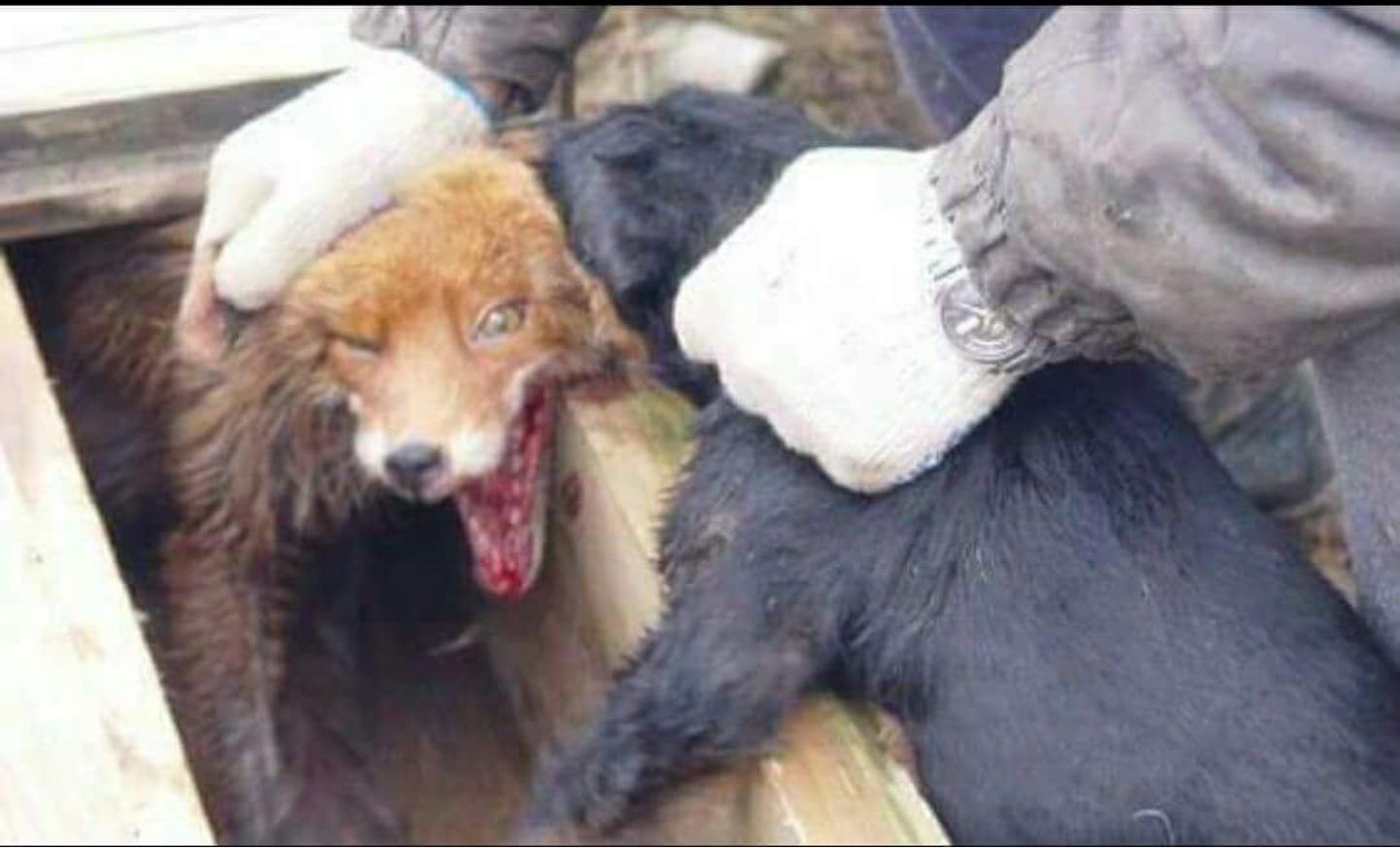
As a leisure activity, hunters across Germany kill up tohalf a million foxes in the cruelest way every year – many of the animals are “only” shot or downright crushed and mutilated in traps.
Foxes are a living target for hunters; there is no reason for the massive hunting of predators, neither from a wildlife biological nor from a health point of view.
Politics must finally act and put an end to the senseless killing of useful animals.
Petition for a nationwide ban on fox hunting – sign it now!
(Text of online petition): Finally, recognize wildlife studies: forbid fox hunting
Dear ministers,
I was dismayed to learn that up to half a million foxes are killed nationwide every year, even though there is no understandable reason for the massive, widespread hunting of predators from a wildlife-biological point of view.
On the contrary, the facts speak for a ban on fox hunting.
I note with concern that hunters deliberately attach a bad image to foxes in order to be able to pursue their bloody hobby. Foxes, however, are an important link in the cycle of nature. They also ensure the survival of their prey species by preying on weak and sick animals and thus immediately eliminating foci of disease.
Nevertheless, foxes are tracked nationwide and nationwide. Up to 500,000 of these animals are killed by hunters every year. Many of them are only shot at or downright crushed and mutilated in traps.
The reason for the hunt is usually given by hunting associations as the alleged endangerment of the populations of ground-breeding species such as partridge, lapwing, and skylark as well as young hares and common hamsters.
However, experts agree that the drastic decline in the population of affected species such as partridges or brown hares in recent decades can be attributed to industrialized agriculture and the associated loss of habitat.
In addition, hunters in Germany themselves kill more than 180,000 brown hares every year. Foxes feed primarily on mice; per fox, there should be 3,000 to 5,000 mice per year.
In agriculture as well as in cities, mice and rats are fought with large amounts of poisonous substances that can pose a significant risk to all wild animals, but also to dogs and cats. This is also catastrophic from an ecological point of view.
The fact that the hunt for foxes is unnecessary and rather counterproductive has long been shown in extensive scientific literature. English scientists come to the conclusion that hunting foxes have no noticeable effect; rather, fox populations regulate themselves based on food availability and social structure.
According to Section 17 of the Animal Welfare Act, it is forbidden to kill or harm an animal without good cause. But this is exactly what happens when hunting foxes.
Against the background that animal protection has been anchored in the German Basic Law as a state protection goal since 2002 and is, therefore, to be regarded as a binding asset with constitutional status, I would like to ask you to ban fox hunting.
Foxes have not been killed in the Bavarian Forest National Park for many years. Fox hunting has also been banned in Luxembourg since 2015. The bottom line: no problems.
Please remove foxes from the list of huntable species or at least establish a year-round closed season.
And I mean…First of all, the German Hunting Act is an enabling act in the sense of 1933.
It empowers hunters to attack someone else’s property.
Reich’s hunter Göring founded an institute for hunting studies “in order to follow the instinctual inclinations of the unbreakable German man.” (Original quote from the founding decree of 1936)
In most driven hunts, everything that comes before the rifle is already shot today.
The amendment to the Hunting Act now even enables hunting during the night, using night targeting technology and headlights.
According to the Veterinary Association for Animal Welfare, up to 70 percent of wild animals do not die immediately, especially during driven hunts, but suffer excruciating jaw, stomach, and barrel shots.
In nature, it is intended that every living being becomes food so that every species can survive. Those who have a lot of “predators” produce a lot of offspring in order to preserve their own species.
That is normal.
If this were not the case, an imbalance would arise. However, this balance is severely disturbed by hunting.
This means: the more foxes die as a result of hunting or accidents, the more their birth rate rises.
Conversely, falling mortality through social regulation mechanisms within fox populations leads to fewer offspring.
Via the training plants– torture chambers for foxes: offered legally and in excess on the Internet, including instructions for use.
The so-called burrow dogs are made sharp on the living foxes, whose task it will be to drive the foxes out of the burrow.
For the fox, after excruciating stress, fear of death, and serious injuries, the end result is always fatal.
Once earlier, once later.
The German animal protection law states:
§3. Section 7: It is forbidden to train or test an animal on another living animal.
Paragraph 8: It is forbidden to set an animal on another animal unless this is required by the principles of grazing-friendly hunting.
Usually, however, it is claimed by hunters that it is not practiced, after all, it is forbidden.
In Germany, murder, rape, speeding, and tax evasion are also prohibited.
But that doesn’t seem to be a reason that it doesn’t happen.
In order to understand that we are dealing with animal cruelty inherent in the system and that the NOT documented suffering during hunting is much, much worse, one really only has to add one and one.
The hunt is and remains murder.
Hunting does not belong to a civilized society and must be abolished.
We keep fighting
Posted on April 18, 2021 by Serbian Animals Voice (SAV)
‘We love foie gras’: French outrage at UK plan to ban imports of ‘cruel’ delicacy
UK officials are exploring restrictions on product after minister described it as ‘unbearably barbaric’
The head of France’s foie gras producers’ association has said she is “shocked and outraged” that the British government is considering banning imports of the product.
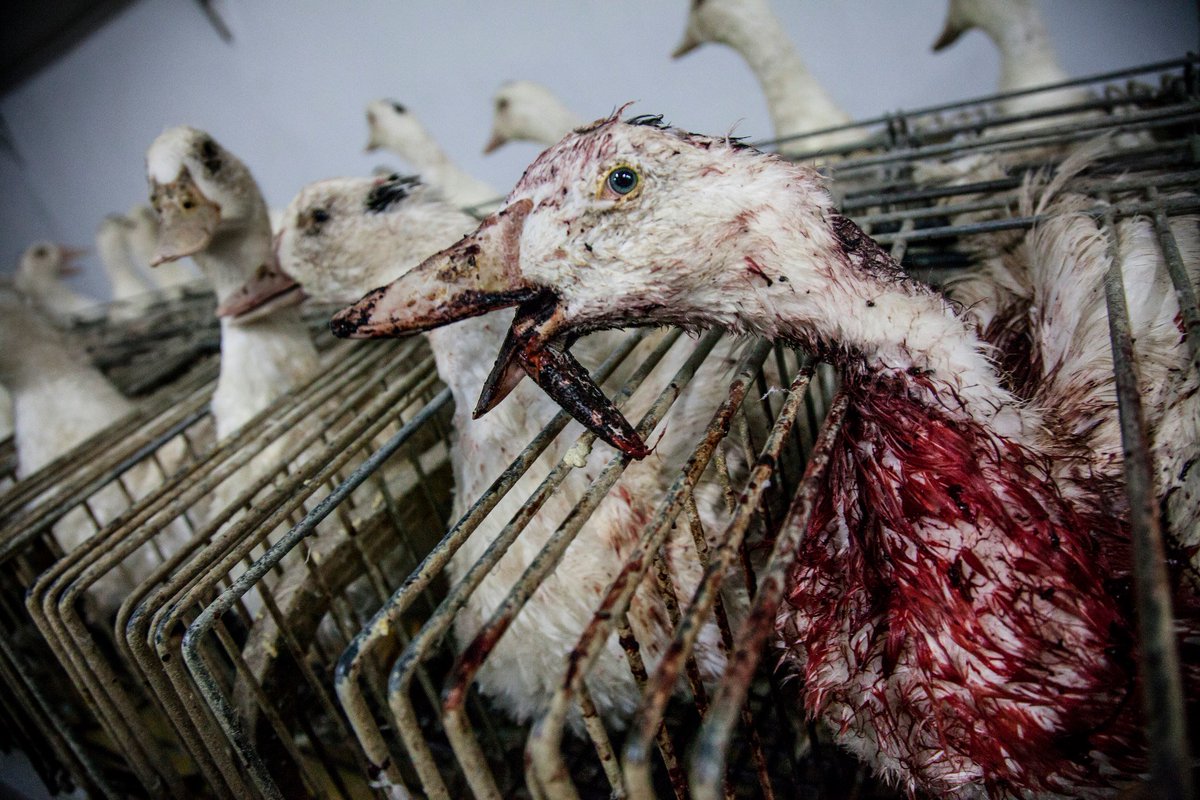
And she has invited MPs to visit French farms producing foie gras to see the force feeding of ducks and geese and judge for themselves whether it is “cruel and torturous”, as animal rights campaigners claim.
Marie-Pierre Pé, director of the Comité Interprofessionnel des Palmipèdes à Foie Gras (CIFOG), which represents about 3,500 foie gras producers, said: “I am shocked and I deplore the fact that the freedom to sell a perfectly healthy product defined under international conventions is threatened.
“For a country that promotes freedom of trade, it is not only paradoxical but shows a lack of understanding of our production as well as the problem of judgments based on anthropomorphic perceptions that the animal used in the production is suffering.
“Clearly, they don’t know how we do our job. Before taking this decision I invite them to visit a foie gras producer so they can make a rational decision. We have nothing to hide and we operate with complete transparency.”
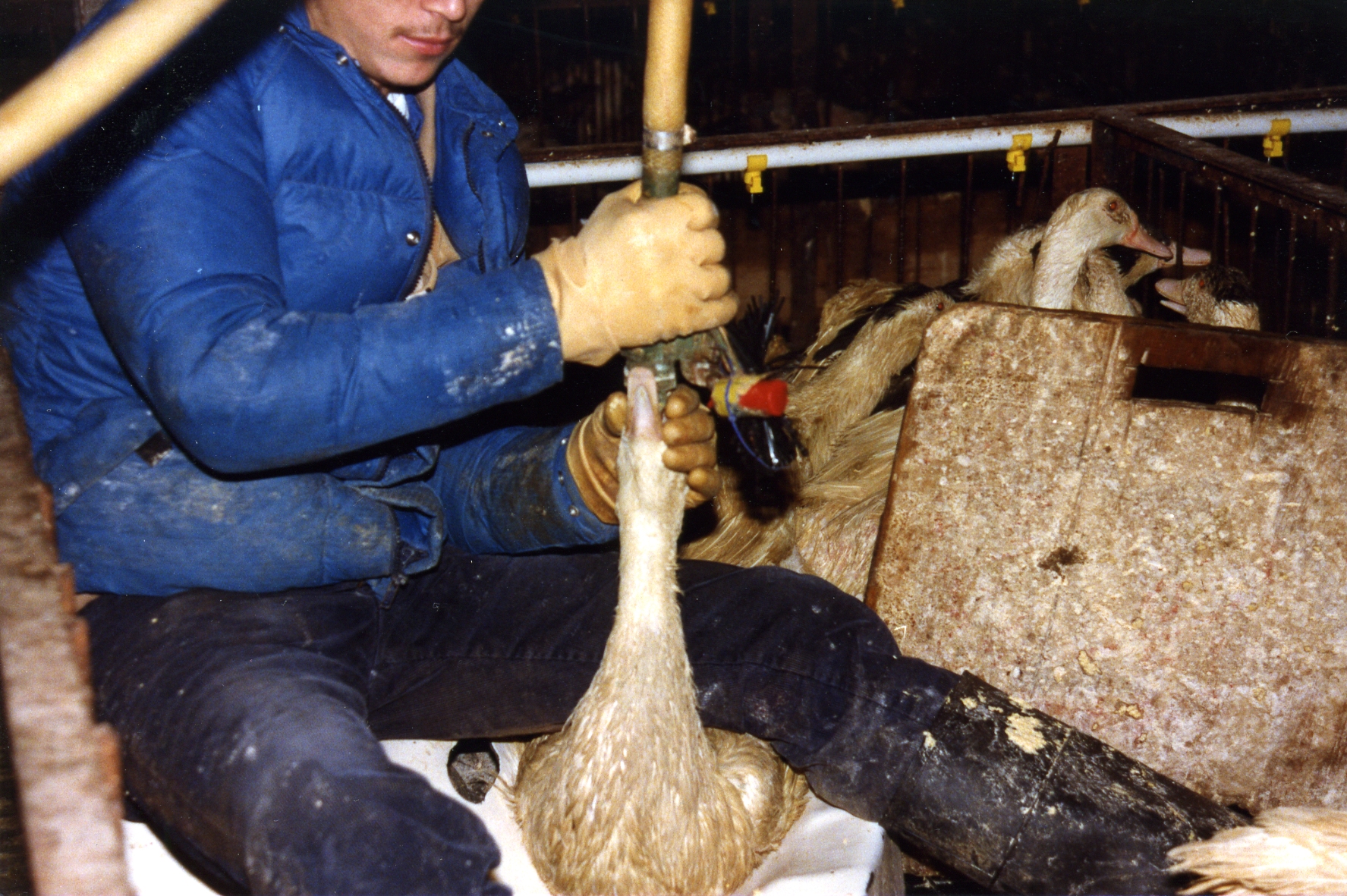
Asked about the gavage, the most controversial aspect of foie gras production, where long tubes are pushed down the birds throat to pump food into the digestive system, causing the liver to swell to several times its natural size, Pé said campaigners were anthropomorphising – attributing human characteristics to animals – by claiming this harmed or hurt the ducks and geese.
“People have to stop imaging a tube being inserted in their own throat, because a duck and goose’s throat is nothing like yours. For a start, the duck’s throat is elastic and at the base there is a pocket that allows them to stock food – called gésiers, which is like our stomach,” she said.
“It does no harm to them. Of course, you have to know how to insert the tube, but if done properly the animal does not suffer and scientific studies have been made into the possible effects of the gavage, so we know.”
“The gavage is done twice a day respecting the digestive rhythm of the animal. We cannot force the digestive cycle because if we did it would then get blocked and you wouldn’t get the foie gras.
“We cannot say there are no accidents from time to time, but it is exceptional. A farmer has no interest in harming his own animals because that would kill them – and his production.”
A cross-party group of British MPs has written to ministers urging them to ban sales of foie gras in the UK. The letter to the environment secretary, George Eustice, and the animal welfare minister, Lord Goldsmith, was coordinated by the campaign group Animal Equality.
“Over the coming months, thousands more ducks and geese will endure torturous treatment for this cruel product,” the letter states.
The (UK) Department for the Environment, Food and Rural Affairs said it was “exploring further restrictions” to the delicacy following reports that Goldsmith was determined to ban sales in the UK, having described it earlier this year as “unbearably barbaric”.
Abigail Penny, executive director of Animal Equality UK, said: “Foie gras is the definition of animal cruelty and people are clearly united in their hatred for this wicked product. We simply cannot tolerate this any longer. A ban can’t come soon enough.”
However, opponents of a ban disagree. Richard Corrigan, who runs several Mayfair restaurants, has said that a ban would take the UK into “nanny-state territory”, while George Pell, the co-owner of L’Escargot, said there was a “paradox between people happily eating industrially farmed food products and advocating the ban”.
Pé said the legality of foie gras production had been examined “several times” and had been found to conform with European food regulations.
“Yes, there have been videos with shocking images from farms but they are exceptions and those farms do not reflect our sector and our profession,” she said. “Our farms are controlled by the authorities and the producers pledge to guarantee the welfare of the animal.”
She added: “I can understand if people don’t like foie gras, or they don’t want to eat animals or animal products, but there is respect for the animals in our production. I have no problem stating this because I know it is true.
“I am outraged and sad,” Pé said. “Surely the British government will not pass a law based on one-sided arguments. I personally invite them to come and see for themselves.”
Pé said foie gras had been singled out for a ban, “because foie gras is a gastronomic symbol of France. I think we are an easy target.
“It’s a recurrent theme and strategy by the animal rights groups. They produce sensational images to influence economics. We should ask ourselves, ‘are we being manipulated?’”
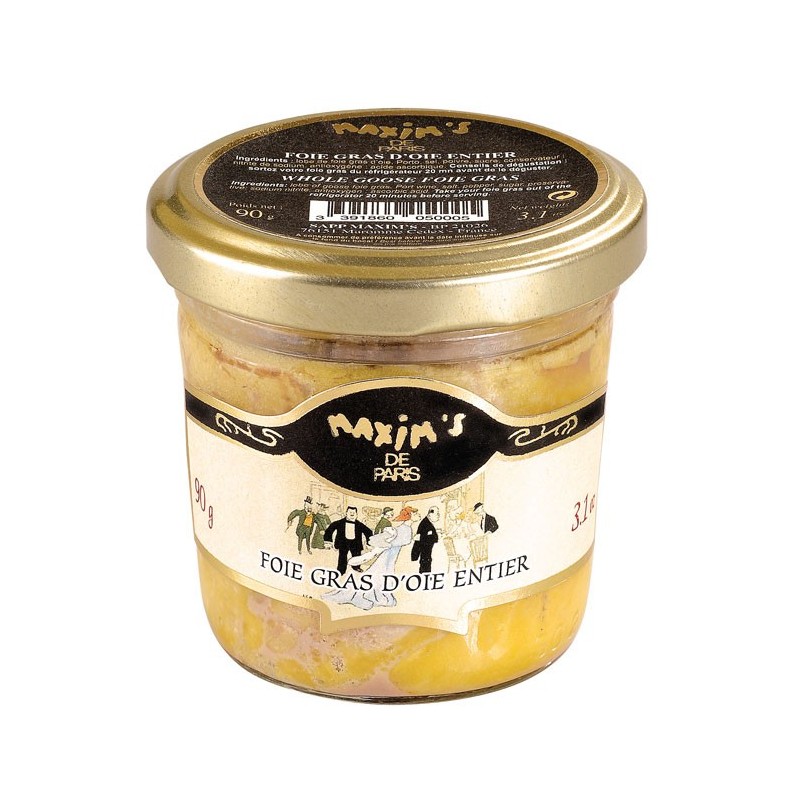
France is the world’s largest producer, consumer and exporter of foie gras. CIFOG says French farmers produced 15,000 tonnes of foie gras last year – down on the 18,800 tonnes produced in 2019 – mostly in and around the Périgord region, in south-west France. Up to 5,000 tonnes are exported annually, with up to 200 tonnes a year coming to Britain.
Pé said that despite Covid restrictions that shut winter markets and hit sales before the Christmas holidays – a period when foie gras is traditionally eaten – producers reported 1.2 million new French buyers in 2020. The sector has since been hit by outbreaks of avian flu.
“There is no problem in terms of support for our products in France,” she said. “The French love foie gras, there is extraordinary support for it,” she added.
Posted on April 18, 2021 by Serbian Animals Voice (SAV)
Corona loneliness, boredom, or just time to finally fulfill the long-cherished wish of having a pet? The Henstedt-Ulzburganimal shelter (in the state of Schleswig-Holstein-Germany) has never had so many inquiries as it does now.
When she opens the door to the cat station in the morning, the animal shelter carer Philine Bestehorn is greeted by a meow – but by a much quieter one than she is used to.
Because normally around 40 cats are waiting for a new home at the Henstedt-Ulzburg animal shelter.
At the moment the cat Rufus lives here all by himself. And there are already interested parties for him too.
The cat “Rufus” – he will also be picked up in a few days.
We really never had that here before, normally all rooms are always occupied,” explains Philine Bestehornthe,the animal carer. Hardly anyone is currently giving up their animal.
And the demand has never been as great as in Corona times.
Endless animal inquiries
“The phone doesn’t stand still all day,” said Philine Bestehorn, commenting on the ringing while she was cleaning Rufus’ litter box.
Then the dogs get their food.
The animal caretaker strokes the little mongrel male Kayro. “He’ll be picked up today,” she says.
And there are already applicants for almost all of the other seven dogs here.
The animal shelter employees are critical of the great interest in animals:
“We are a little bit scared of the big wave of sales after the lockdown,” says animal shelter managerKatja Vogel.
Because when it’s over, people suddenly don’t have that much time. And the animals may not know how to be alone. Then it can be that dogs start barking or whining or cats pee in the apartment in protest. And the animals end up with us again, “she fears.
Posted on April 17, 2021 by Serbian Animals Voice (SAV)
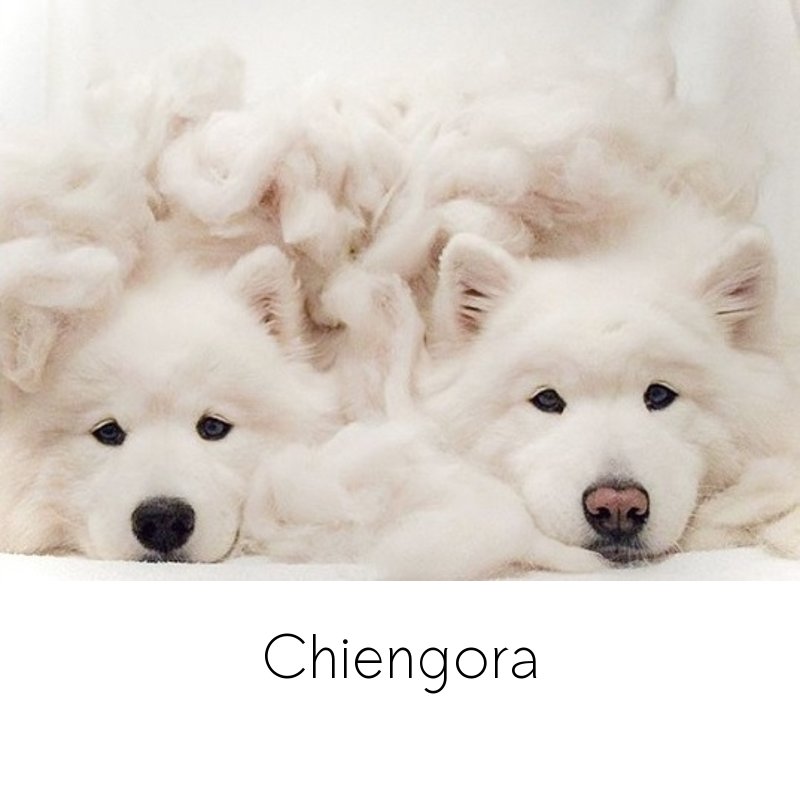
More and more often you come across clothes, accessories, and blankets made of dog wool, also known as chiengora, on the Internet.
The yarn from the combed-out undercoat of dogs should be sustainable and, above all, be produced without animal suffering.
Where does dog wool come from?
Manufacturers of products from Chiengora state that they receive combed dog wool from private individuals, breeders,animal shelters, and dog barbers for a fee. This is to ensure that the wool only comes from dogs raised in a species-appropriate manner.
However, the keeping of the animals is not controlled.
Many animals are also badly treated in private households and by breeders.
In addition, the fibers for products from Chiengora are currently mixed with the fur of agriculturally exploited merino sheep and alpacas in order to improve the quality.
With dog wool, as with any other product of animal origin, the following applies: sooner or later animal suffering is almost inevitable.
Danger: Animal suffering through mass breeding and production?
When clothing from Chiengora becomes a trend, many more people will want to get into the business model and breed dogs for wool production. As in many areas of the fashion industry, animals will then suffer for profit.
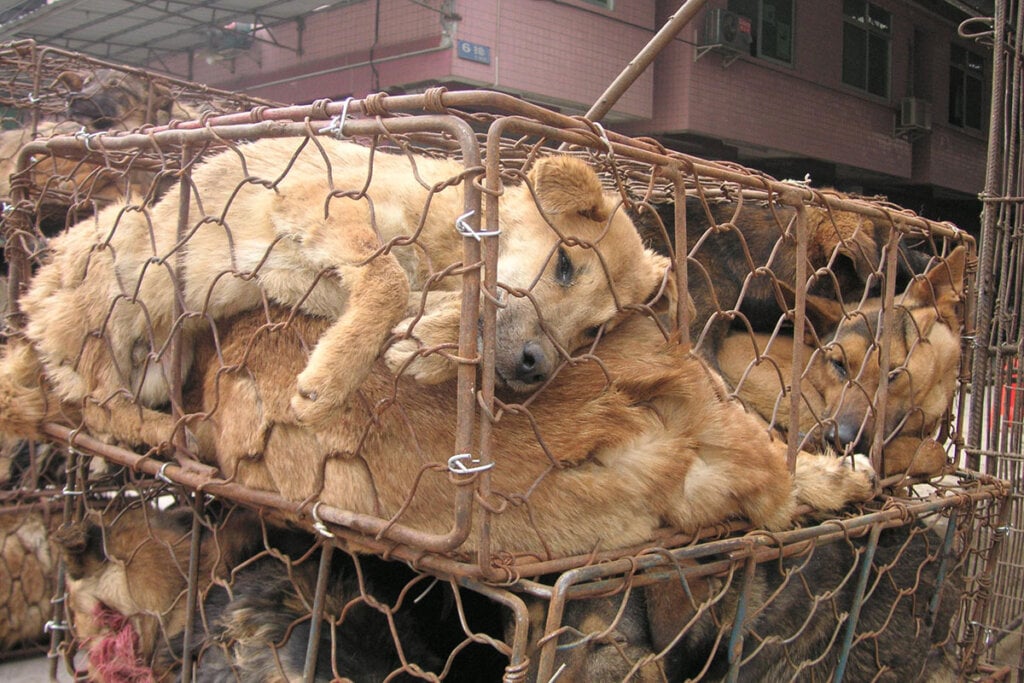
In Asian countries, millions of dogs are already tortured and killed for leather and fur production.
Trading in dog wool could make the situation even worse.
The excruciating abuse to which animals are exposed in the wool industry around the world clearly shows that as soon as one can make money with animals, they will suffer.
Animals are not resources and are not there to be attracted by us.
Posted on April 17, 2021 by Serbian Animals Voice (SAV)
Update: April 15, 2021
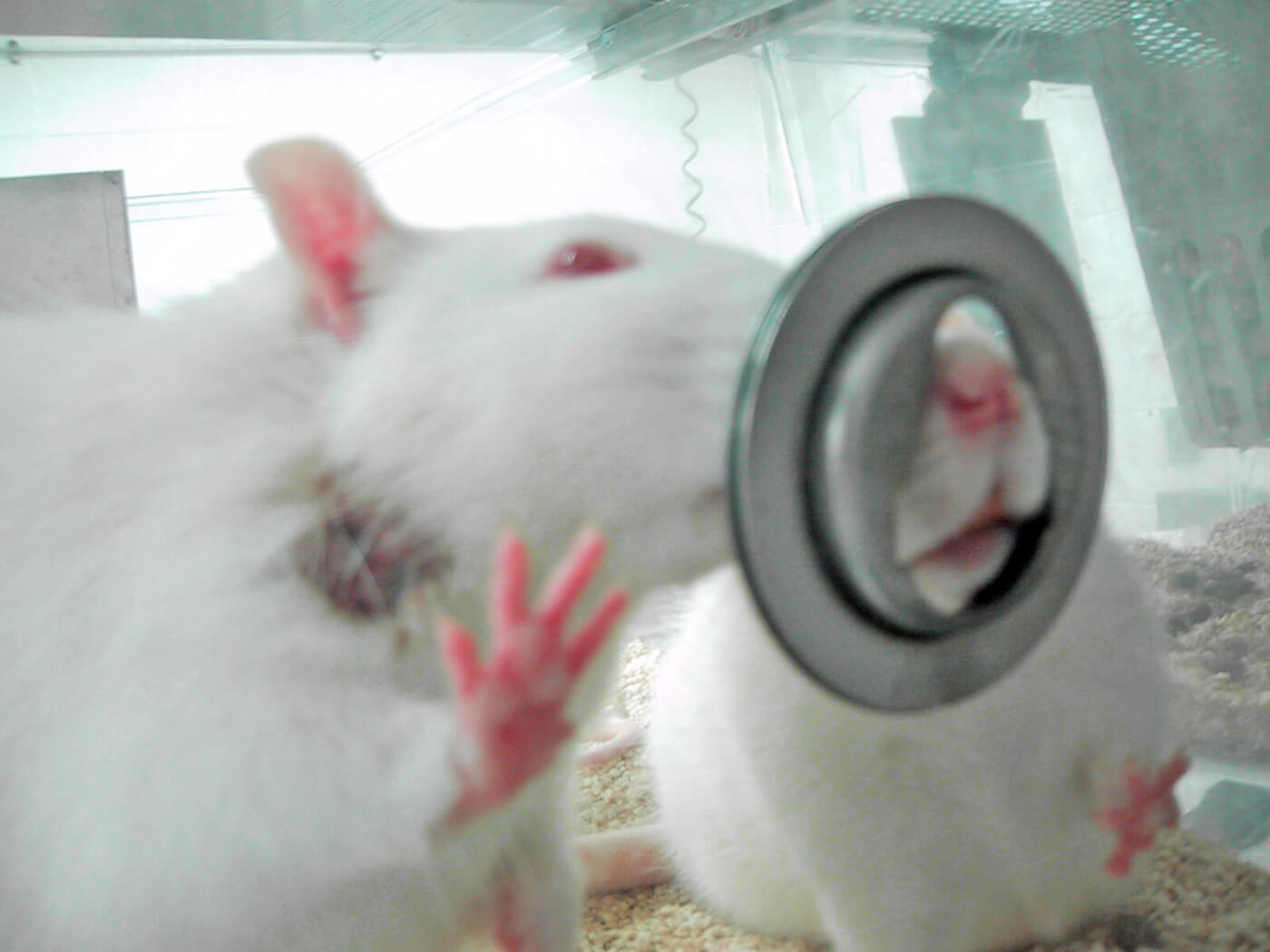
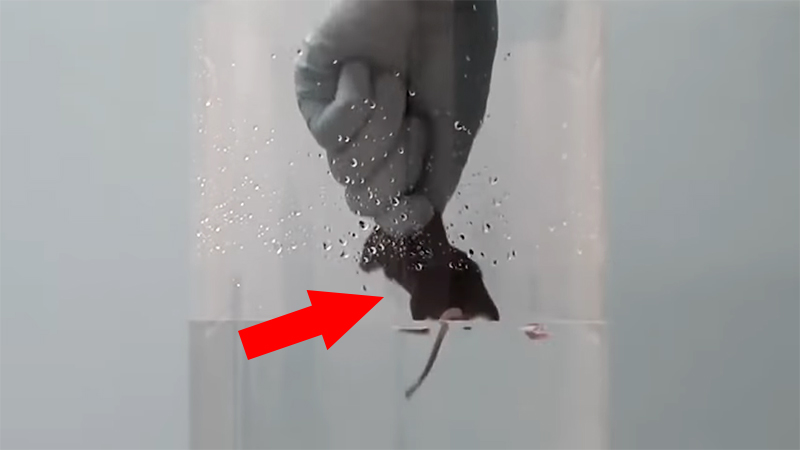
Following years of pressure from PETA, the Taiwan Food and Drug Administration(TFDA) has announced a groundbreaking decision to delete all animal tests—including drowning mice and rats and making them run to exhaustion on an electrified treadmill—from its draft regulation for marketing foods and beverages using dubious anti-fatigue health claims.
After receiving PETA’s detailed scientific critique and more than 73,000 e-mails from PETA supporters during a public comment period for the agency’s draft anti-fatigue health claim regulation, the Taiwan Food and Drug Administration (TFDA) has finalized the regulation and removed animal testing as an option for companies to pursue.
Now, only safe and effective human tests are required and allowed.
We need your help now to push for an end to animal testing for a different TFDA draft regulation—this one concerning joint-protection health claims for marketing foods and beverages to consumers.
The agency has proposed allowing gruesome, misleading experiments that would chemically or surgically induce painful arthritis in sensitive rats before they’re killed and dissected.
Pain relief would be intentionally withheld so as not to interfere with the results.
Prior to the FDA’s announcement of its decision to remove the animal tests from its draft regulation, the agency had endorsed these horrific experiments, which are irrelevant to human health, and PETA sent the TFDA a detailed scientific critique of these tests at the agency’s request.
If the final draft regulation is approved as is, only safe and effective human tests would be required and allowed for companies that want to make anti-fatigue health claims for marketing food and beverage products.








 Serbian Animals Voice (SAV)