Posted on May 22, 2020 by Serbian Animals Voice (SAV)
A Beagle was found tragically drowned in a pond, beaten and with his snout zip-tied shut, allegedly at the hands of his owner. Demand justice for this poor animal.
Target: Scarlett A. Wilson, Berkeley County Solicitor, Berkeley County, S.C.
Goal: Punish man who allegedly abused and drowned his pet Beagle.
A Beagle was found drowned in a pond, his muzzle zip-tied and his body battered. Sign the petition to demand that the man allegedly responsible for this horrific crime face the severest penalty the law allows.
Jeremy Bush is facing a felony charge of mistreatment of animals after his pet Beagle was found drowned in a pond. Authorities allege that Bush murdered the dog on purpose, beating the animal and then zip-tying his muzzle before disposing of the body. This reported attack was caught on video.
No animal should ever have to endure such cruelty and mistreatment. Sign the petition to demand that Bush be prosecuted to the fullest extent of the law.
PETITION LETTER:
Dear Solicitor Wilson,
An innocent Beagle was found drowned in a pond, allegedly beaten and disposed of by Jeremy Bush. The poor animal was reported to have been battered for 15 minutes before his muzzle was zip-tied and his body was thrown into a nearby pond.
Bush is facing felony charges for these alleged crimes. I demand that you prosecute him to the fullest extent the law allows. Do not let this cruelty go unpunished.
We are presently inundating you with information because COVID-19 has coincided with the new Agriculture Bill and we need you to call the alarm. To take a quote from our interviewee, Michael Greger; “In this new age of emerging diseases we now have billions of feathered and curly tail test tubes, for viruses to incubate and mutate within. Billion more spins at pandemic roulette. Maybe COVID-19 is the dry run we needed, the fire drill, to wake us up out of our complacency to reform the food system before it’s too late.”
We have interviewed several people from the scientific community who have spoken out about factory farming and the stress they inflict on animals and risk this poses to public health.
Author of Bird Flu: A Virus of Our Own Hatching and leading nutritionist, Dr Michael Greger accounts past pandemics and their roots in the industrialisation of livestock production. He advises “along with human culpability comes hope and, if changes in human behaviour can cause new plagues, maybe changes in human behaviour may prevent them in the future.”
Dr Lizzie Rowe, senior researcher at the Sustainable Food Trust, and a research associate at the University of Bristol tells us how poor welfare and squalid conditions in factory farms causes stress & disease in animals that have the potential to unleash viruses to human populations. She strongly believes that high welfare farming should not be a luxury, it should be an imperative.
News of 3 coronavirus deaths linked to a meat packing plant in West Yorkshire is the first report of this catastrophe on English soil. It reminds us that giant meat plants are intrinsically volatile due to insufficient care of the largely immigrant workers, crammed together with inadequate PPE and poor assurance of pay if they want to stay home to self-isolate from the risk of COVID-19. In the US, due to the closure or slow down at giant meat plants, up to 10 million market hogs will be inhumanly euthanised between the weeks ending on 25 April and 19 September 2020, despite unprecedented demand at food banks. We should question the import of pork from this system, and the increasing industrialisation of our food system at home, in terms of both production, processing and retailing. A network of small scale farms, abattoirs,processing plants and markets is the most resilient way to feed the nation.
Therefore, we are bitterly disappointed with the news last week (13th May) that a majority of MP’s rejected amendments to the Agriculture Bill that would have enforced into law the protection of UK farmers from low welfare imports. To compete, UK farmers will have to join the downward spiral of ever lower animal welfare and worker health standards. The fascinating House of Commons debate shows the polarisation in both parties with short speeches from those MP’s that want to protect our farmers from cheap imports and those that chase damaging trade deals. Our hope lies in a majority in the House of Lords voting for the amendments. Look out for news next week of how to engage in this important bill as it moves through the House of Lords and then back for the 3rd reading in the House of Commons… In the meantime we can inform ourselves on the issue; let’s not drop the ball on this one, it could shape British farming for years to come.
Millions of US farm animals to be culled by suffocation, drowning and shooting
Closure of meat plants due to coronavirus means ‘depopulation’ of hens and pigs with methods experts say are inhumane, despite unprecedented demand at food banks
More than 10 million hens are estimated to have been culled due to Covid-19 related slaughterhouse shutdowns. The majority will have been smothered by a water-based foam, similar to fire-fighting foam, a method that animal welfare groups are calling “inhumane”.
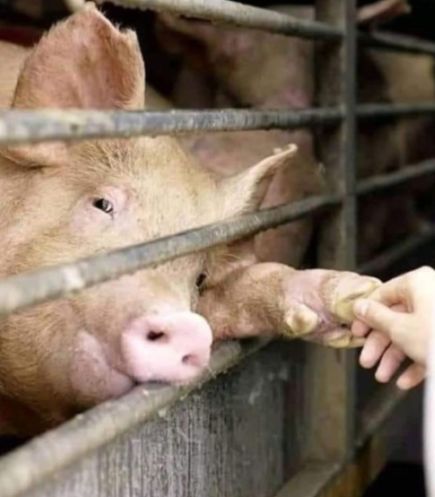
The pork industry has warned that more than 10 million pigs could be culled by September for the same reason. The techniques used to cull pigs include gassing, shooting, anaesthetic overdose, or “blunt force trauma”.
In “constrained circumstances”, according to the American Veterinary Medical Association (AVMA), techniques [pdf] might also include a combination of shutting down pig barn ventilator systems with the addition of CO2 so the animals suffocate.
The ‘depopulation’ comes despite food banks across the US reporting unprecedented demand and widespread hunger during the pandemic, with six-mile-long queues for aid forming at some newly set up distribution centres.
The American meat supply chain has been hit hard by the closure of slaughterhouses, due to Covid-19 infection rates among workers. 30 to 40 plants have closed, which means that in the highly consolidated US system beef and pork slaughtering capacity has been cut by 25% and 40% respectively, according to the United Food and Commercial Workers (UFCW).
The closures have meant that animals cannot be killed for food and many must instead be culled, or “depopulated” at home.
More pigs to be ‘depopulated’
As it is comparatively easier to keep cattle on farms, cow culls do not appear to be an issue as yet, and the chicken cull may have peaked, said Adam Speck, an agribusiness analyst with IHS Markit.
“[Cattle] could stay on ranches another six months if necessary. The peak of the chicken cull has passed for now. North of about 10 million chickens were depopulated, either at the chick or egg stage,” Speck said.
At the hen stage, Leah Garcés, president of US welfare organisation Mercy for Animals, said it is hard to be sure of the numbers. But, “what we know with certainty is that 2 million meat chickens [and] 61,000 laying hens”, have been killed on farms.
Compared with poultry, said Garcés, stopping or slowing the production cycle of pigs is harder, mainly because pig growing periods are about six months compared to six weeks for hens. “Pregnancies had already been set in motion when the slaughterhouse closures occurred,” she said, and pigs were already in the system.
The National Pork Producers Council (NPPC) has estimated that: “up to 10,069,000 market hogs will need to be euthanised between the weeks ending on 25 April and 19 September 2020, resulting in a severe emotional and financial toll on hog farmers”.
For pig culls, AVMA “preferred methods” include injectable anaesthetic overdose, gassing, shooting with guns or bolts, electrocution and manual blunt force trauma. AVMA methods “permitted in constrained circumstances” include ventilator shutdown (VSD), potentially combined with carbon dioxide gassing, and sodium nitrite which would be ingested by pigs.
Speaking more graphically, Garcés said manual blunt force trauma can mean slamming piglets against the ground while VSD would “essentially cook the pigs alive”.
Asked to estimate numbers of pigs that have already been culled, Speck said producers are very reluctant to depopulate. “About two million might have been culled so far due to the Covid-19 pandemic, over the last six or so weeks.”
Speck added that with slaughterhouses likely to return to 85% capacity by the end of May, the NPPC’s depopulation estimate of 10 million pigs could be significantly reduced.
Speck said breeders are thinning herds and slowing growth to reduce pig supply. “They are sending breeding sows to slaughter, aborting pregnant sows on a small scale and [keeping market-bound pigs] on maintenance style rations with less protein. Coming into the summer months the pigs will also gain weight more slowly as the weather heats up.”
Methods are ‘inhumane’
Asked about growth slowdown, Garcés said it posed other welfare risks. “One method to slow down growth is to turn the heat up inside of the warehouses beyond the pigs ‘comfort zone’ because pigs eat less when they are too hot,” she said.
The combination of feed restrictions and higher barn temperatures, she said, mean pigs are “hungry and hot, increasing their overall discomfort, which is already high in a factory farm setting”.
In what appears to be an attempt by the industry to reduce any negative depopulation impact, a blog managed by the National Pork Board called Real Pig Farming offers social media sharing tips for farmers. The blog suggests farmers: “Think twice before engaging with posts that show what may be happening on farms right now.”
It said: “Most people do not understand the complexity of raising pigs and getting pork from the farm to their table. That means, “[a] good rule of thumb is to speak to a level a third grader [eight to 10 years old] would understand to ensure that things are not taken out of context.”
NPPC spokesperson Jim Monroe said that as of the week ending on 15 May, less than 25% of overall slaughter capacity was idled and the situation was improving. Monroe, added that the “tragic need to euthanise animals is to prevent animal suffering.”
For poultry, culling options are no easier. Filling sheds with carbon dioxide gas is one method, said Kim Sturla, director of welfare organisation Animal Place. Another cull method, she said, is to smother hens with water-based foam, similar to firefighting foam. Water-based foaming is categorised as the “preferred” method by the AVMA.
Previously asked about water-based foaming and other cull methods such VSD, an AVMA spokesperson said depopulation decisions were difficult and “and contingent upon several factors, such as the species and number of animals involved, available means of animal restraint, safety of personnel, and other considerations such as availability of equipment, agents and personnel”.
European campaigners said firefighting foam causes prolonged suffering. Although risks of similar livestock culls appear low in Europe so far, welfare group, Compassion in World Farming advised using foam that contains nitrogen gas because death is faster.
A 2019 European Food Safety Authority journal report said it did not find water-based or firefighting foam acceptable because “death due to drowning in fluids or suffocation by occlusion of the airways” is not seen as “a humane method for killing animals, including poultry”.
Posted on May 22, 2020 by Serbian Animals Voice (SAV)
In a few weeks, Little Grey and Little White; 2 ex performing Beluga whales; will be released into their new forever sanctuary home in Icelandic waters. At last, free from performing stupid tricks for stupid humans.
Posted on May 21, 2020 by Serbian Animals Voice (SAV)
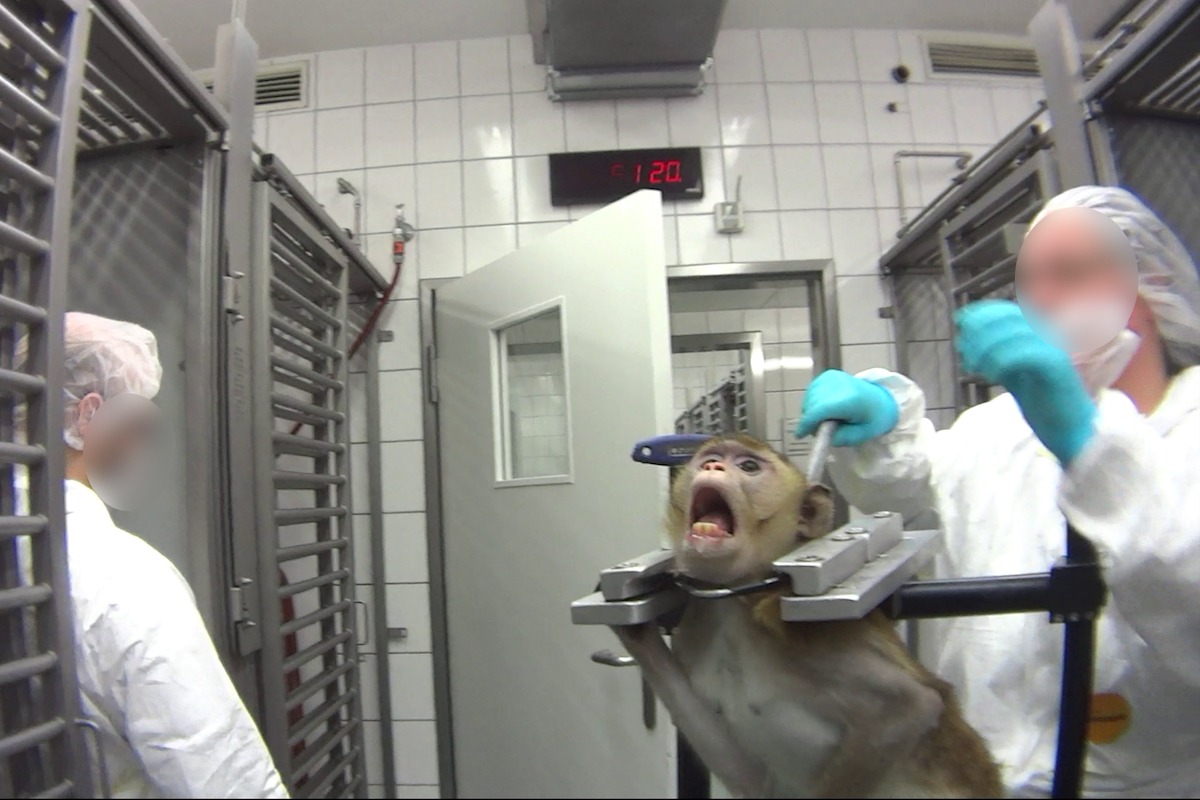
Four months of undercover research by the SOKO association and a short, powerful campaign, supported by the power of the images, brought a historical change.
The laboratory is now history, the authorities have withdrawn their operating license, and most of the animals were saved.
Almost 50 years of fighting were going on against LPT, it seemed hopeless to close it, and furthermore the laboratory was expanded, e.g. in primate husbandry.
Former LPT employees accuse the Hamburg-based company of falsifying studies and torturing animals.
Thanks to the “SOKO animal protection” as well as a large demonstration and increasing pressure, the laboratory is now closed!
Perhaps we should erect a memorial in front of the Hamburg laboratory in the name of the victims, like this one in Munich in Dachau, to remind us where millions of beings have lost their lives under fascism.
A very nice contribution by the Austrian philosopher and animal ethicist, Helmut. F. Kaplanon the subject:
“Animal testing is wrong regardless of whether it is useful for humans. The legitimate question is not: “What is the maximum amount of health we can produce?” But: “How much health can we generate in an ethically acceptable way?”
The – real or perceived – usefulness of animal testing is not an ethical argument at all: there are many things that would be useful but are still immoral and prohibited, for example human testing.
The only reason why animal experiments have not been frowned upon and banned for a long time is simply because animals cannot defend themselves. They are helpless delivered to us.
But of course this is not a moral justification, just a cynical exercise of power.
Animal experiments are and remain crimes against defenseless beings” (Helmut Kaplan, Animal ethicist)







 Serbian Animals Voice (SAV)