Recently, a PETA Asia eyewitness visited 10 different circus and animal-training facilities in China and documented heartbreaking conditions for animals kept as slaves in the entertainment industry. These are their faces:
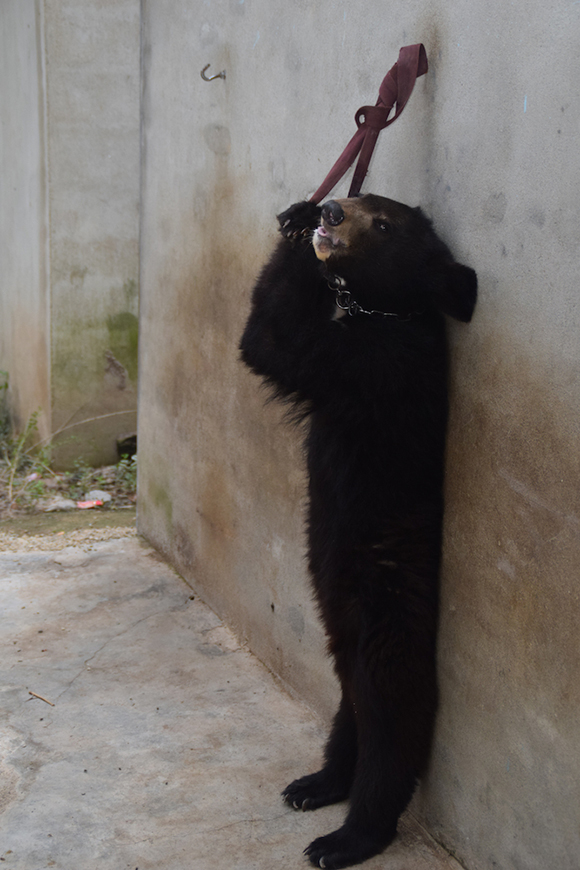
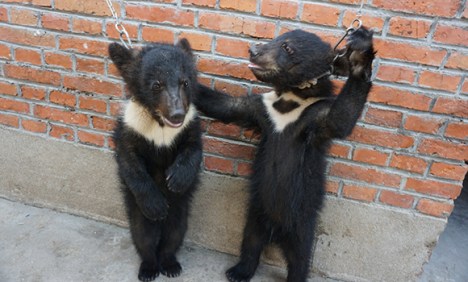
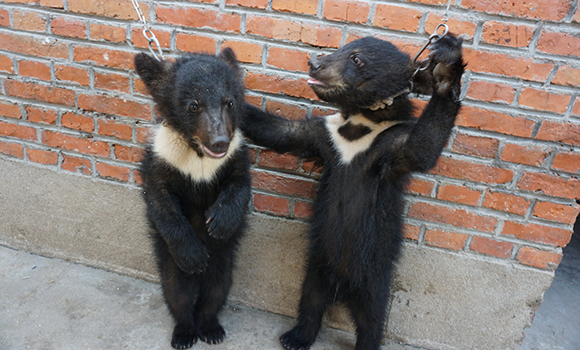
Bear cubs were also tied to a hook in the ground by a short rope, making it impossible to move more than a few inches in any direction.
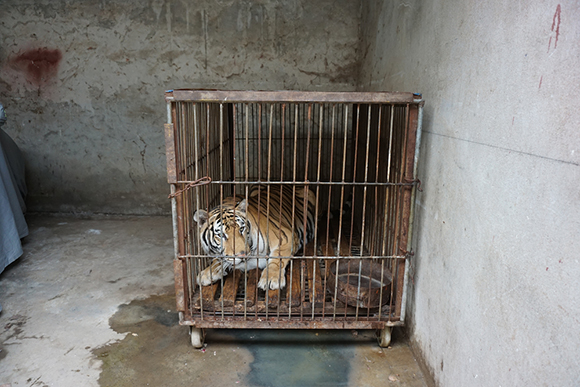
When not being forced to perform, big cats were confined to small cages with little space to move around in. Many were forced to wear chains around their necks.
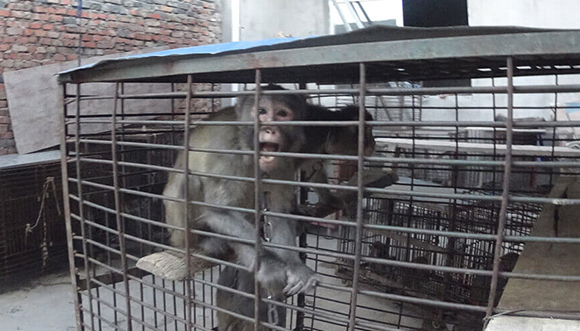
Monkeys were kept in and chained to small, barren cages, in which they thrashed around and paced back and forth, showing signs of intense distress. They had no choice but to eat, drink, sleep, defecate, and urinate all in one small area.
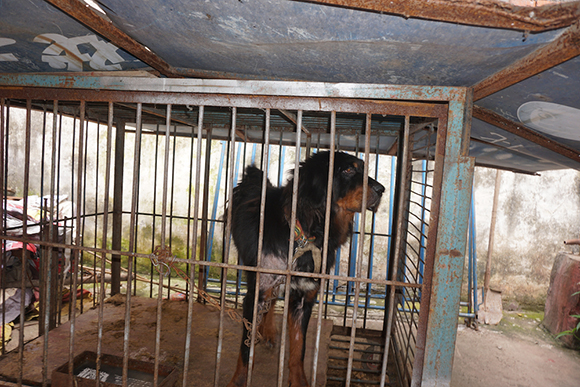
This senior dog, named Laifu by the eyewitness and too old to perform, was forced to live in this cage 24 hours a day and never let out.
You’ve heard their stories. Now what will you do to stop this?
Throughout China, circuses, traveling shows, and roadside zoos force animals—including bears, monkeys, tigers, lions, dogs, and others—to perform for the public.
A PETA Asia investigator visited 10 different circuses and animal training facilities in the city of Suzhou, which alone encompasses more than 300 circuses, and documented animal abuse and suffering on a massive scale. PETA Asia’s investigator documented that bear cubs are chained or tethered to a wall and forced to stand on their hind legs, sometimes for hours. If they can’t hold themselves up, they risk choking and hanging themselves.
.
Bear cubs were chained to a brick wall and forced
to stand upright, putting them at risk of choking or hanging.
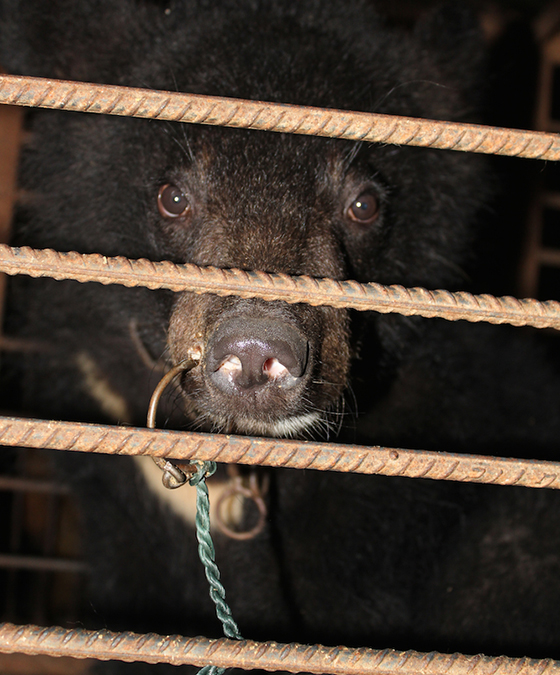
This bear’s snout was pierced with a metal ring, which was used to lead her around.
This caged bear’s snout was pierced by a metal ring, which was used to lead her around. This procedure is frequently performed without pain medication.
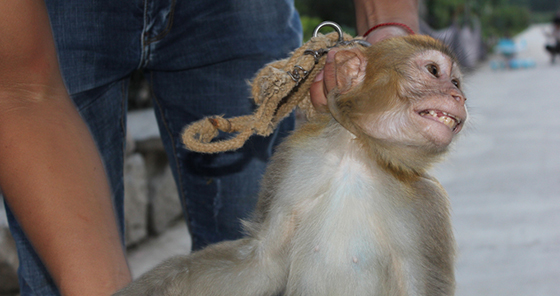
One monkey, named Xiaohau by the investigator, was dragged around by a rope around her neck, causing her to struggle frantically and try to escape.
Xiaohua struggled against her trainer as he tossed her around and pulled on the rope around her neck.
Any circus that uses animals inevitably subjects them to terrifying and cruel training methods as well as barren, cramped living conditions. U.S.-based circuses like Ringling Bros. and Barnum & Bailey Circus, UniverSoul Circus, Jordan World Circus, and others continue to exploit animals. Training sessions take place behind closed doors and are not regulated by a protective entity. Jordan World Circus—one of the largest producers of Shrine Circuses in the country—even uses bears, just like the Chinese circuses that PETA Asia investigated.
Please click here to learn more about the investigation and pledge never to buy a ticket to any circus that uses animals.
Dear EU and MS authorities, official highway inspectors and police, transporters and NGO colleagues,
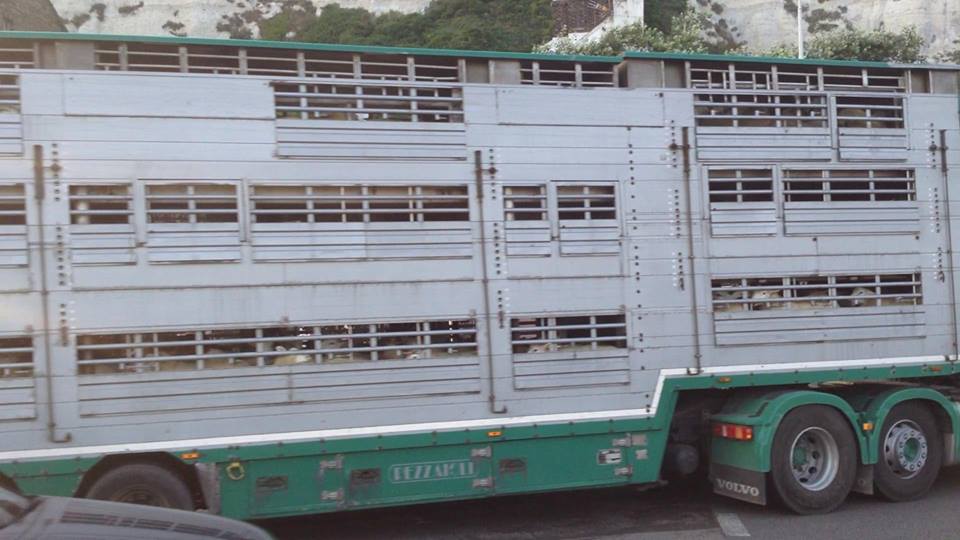
During one of our practical training courses for road inspectors in Poland, a livestock truck was stopped. There were several violations to the EC 1/2005. It concerned a poultry truck from the Polish company Lech Drob (they own trucks and a slaughterhouse in northern Poland). The birds on board had been loaded on a farm in the Netherlands. Many of the birds that we could see in the outer rows were dead. The birds were seriously overcrowded (17 per crate instead of the 14 max) and the so-called ” water-system” was leaking.
The Polish authorities that participated in this training are inquiring further and applying sanctions where necessary to the Polish transporter and we have asked the Dutch authorities to look into the Dutch keeper of the birds (farmer) and catching crew in the Netherlands responsible for the horrible overcrowding.
We do not expect you to do anything, it is just for your information.
With best wishes, on behalf of Eyes on Animals and TSB|AWF
Posted on July 14, 2016 by Serbian Animals Voice (SAV)
As many of you will be aware, live animal transport is still probably our greatest campaign – you can read a bit more about our history in this field at ‘About Us’ – https://serbiananimalsvoice.com/about-us/ and which shows that live animal transport investigations were being undertaken at least 15 years before SAV was even founded !
The EU has a lot of legislation supposedly to protect the welfare of animals in transport. The main regulation is 1/2005 – which SHOULD be enforced by all member states of the EU.
Here is a link to the regulation (1/2005) to show just how detailed things should be; and which we have to know fully when undertaking animal transport investigation work.
We have recently shown that the EU fails miserably to enforce regulations which should protect animals in transport. Here are links to just a few of our recent posts which show where the EU is failing the animals:
Our good friend Lesley at ‘Eyes on Animals’ in the Netherlands has produced an excellent and very detailed presentation video relating to Regulation 1/2005 and how the EU is failing animals by not enforcing the legislation.
Here below you can read Lesley’s into to the video, and then have a look for yourself.
As we have said, the Regulation is very detailed and this is borne out by the length of this video. Over the years we have made contact with the EU very many times relating to live animal transport. The importance of access to livestock being carried is one of the most important factors when carrying live animals.
Dear EU and Member State authorities, highway police, livestock-transport companies and livestock-truck manufacturers and fellow colleagues of animal-welfare NGOs,
During our inspections of livestock-trucks we are often confronted with vehicles that have received a Certificate of Approval of Means of Transport by Road of Live Animals but that in reality are not appropriate. Sometimes the water system on board is not the correct design for the specie and age of the animals on board and yet this limitation is not indicated on the Certificate. For example, we continue to see adult cattle transport in livestock trucks with only metal nipples. Cattle needs large and deep troughs in the corners. This may seem like a small mistake, but as the Certificate is valid for 5 years, it results in many cattle suffering from thirst during transport and some even dying.
We also continue to see partitions that are poorly designed and cause animal injuries, such as when they are not solid to the ground. In the gap we find sheep, calves, adult cattle trapped underneath and as a consequence many become trampled to death. It is a horrible sight to see.
The good news is that these problems can easily be solved if the livestock trucks are correctly checked before handing out the certificate of approval. Design adjustments can be made on time, or limitations can be indicated in the Certificate of Approval, before live animals are loaded!
For this reason Eyes on Animals was invited by the Dutch authorities at the NVWA to give a presentation on this topic a few months ago. We gave this “course” together with our colleagues from TSB|AWF and it was a successful and also positive day.
I am writing to you now because Dr. Tea Dronjic and I have now made a video of this educational course so that everyone can watch it via youtube.
Please take a look and feel free to pass it on to any colleagues that could also benefit from watching it:
Should you have any questions, or should you wish to have us come in person to also give a live presentation to you and colleagues, do not hesitate to contact us.
Posted on July 13, 2016 by Serbian Animals Voice (SAV)
Cruelty Conviction
A Foster Farms slaughterhouse employee caught torturing chickens has been convicted of criminal animal cruelty. The conviction stems from a recent Mercy For Animals hidden-camera investigation.
by Lina Cohen – July 6, 2016
Yesterday, Gabriel Cevallos, a Foster Farms employee, was convicted for criminal animal abuse after being caught on hidden camera ripping out fistfuls of feathers from live birds, repeatedly hitting a bird with a severed chicken leg, and tossing live birds around like basketballs. Cevallos pled no contest to one count of criminal animal cruelty. His conviction stems from a 2015 Mercy For Animals undercover investigation at a Foster Farms chicken slaughterhouse in Fresno, California, which revealed birds scalded alive and several Foster Farms employees punching, throwing, and slamming birds.
Cevallos was sentenced by the Fresno County Superior Court to three years of probation and a fine of $600, and is required to attend 12 sessions of mental health counseling.
Although animal abuse is pervasive in Foster Farms’ poultry supply chain, American Humane Association has certified Foster Farms—one of the largest poultry producers in the country—as “humane.” AHA’s standards, which cover more than 1 billion animals, are far less stringent than those of virtually every other humane certification program. In fact, AHA standards barely exceed the minimal standards set by the factory farming industry itself. In other words, these standards are essentially meaningless.
MFA is calling on Foster Farms and AHA to stop misleading the public and implement meaningful animal welfare requirements, including replacing live-shackle slaughter methods with less cruel systems that eliminate the appalling suffering caused by dumping, shackling, shocking, and slitting the throats of conscious animals. Additionally, birds should be provided with more space, clean litter, access to adequate light, and environmental enrichments. Video monitoring systems that live stream to the internet should also be installed to deter future violence against animals.
Last week, Perdue Foods, one of the nation’s largest poultry producers, announced a precedent-setting animal welfare policy. MFA is calling on AHA and Foster Farms to stop paying lip service to animal welfare and do the same.
Convictions send an important message that animal cruelty will not be tolerated. The best way to protect animals, however, is not to eat them. Visit ChooseVeg.com to get started with some tips and recipes.
————————————————-
Washington Post – Meat Is Horrible
by Joe Loria – July 5, 2016
“Meat is horrible,” a new article in The Washington Post, highlights the negative impacts of a Western diet.
Author Rachel Premack discusses the environmental, ecological, and health reasons Americans must give up or cut back on meat. Featuring multiple graphs, her compelling argument destroys common myths and seems to support a meat tax.
Premack writes:
By 2050, scientists forecast that emissions from agriculture alone will account for how much carbon dioxide the world can use to avoid catastrophic global warming. It already accounts for one-third of emissions today — and half of that comes from livestock.
She also notes that it takes “48 times as many liters of water to produce the same amount of beef as veggies” and we could save “a collective $730 billion in health care by reducing meat consumption.”
The debate over climate change and animal agriculture’s role in it is over. We know how raising animals for food damages our planet, and it’s time world leaders took action.
In the meantime, you can help protect the planet, your health, and animals by switching to a plant-based diet.
Click here to order your FREE Vegetarian Starter Guide
Posted on July 12, 2016 by Serbian Animals Voice (SAV)
It’s common for elephants used in the tourism industry to be separated from their mothers as babies, tied down with ropes, beaten mercilessly, and gouged with sharp weapons.
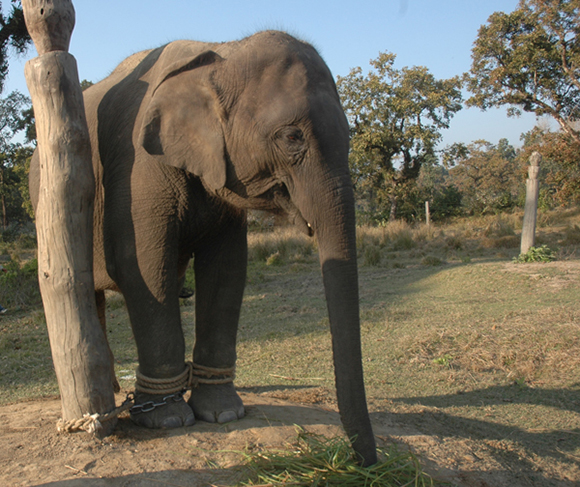
These intelligent, complex, sensitive animals are forced to spend their entire lives shackled in chains and give rides to people, even in extreme heat.
Travel companies Classic Journeys, Goway Travel, and SITA World Tours know this, but they still offer elephant rides as part of some of their tours.
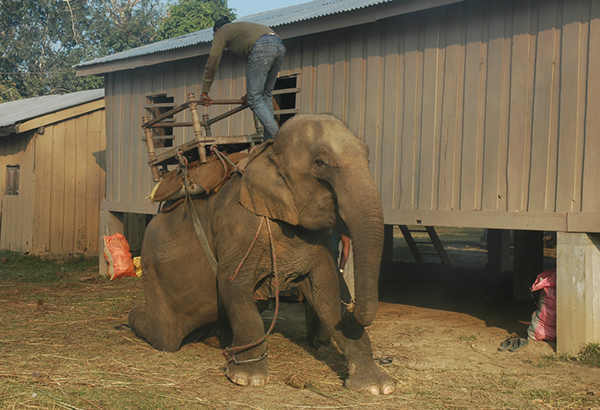
When people go to Thailand and ride on an elephant, most of them have no idea that elephants are often separated from their mothers when they’re babies, tied down with ropes, beaten mercilessly, and gouged with sharp weapons. If they knew, they probably wouldn’t do it.
But travel companies Classic Journeys, Goway Travel, and SITA World Tours can’t say that they didn’t know, because PETA told them about the industry-standard abuse, but they still offer elephant rides as part of their tours.
Life for these elephants is hell: Trainers at some camps wave flaming sticks in baby elephants’ faces, just to terrify them. The animals are often deprived of food and water during training, which can last for days and leave them injured and traumatized. Some don’t even survive.
The survivors will spend the rest of their lives like slaves, chained up and forced to carry tourists on their backs through sweltering heat and exhaustion, all while being jabbed and pulled with weapons such as bullhooks or other sharp objects.
If this makes you mad, think about how the elephants feel—then you might be able to understand why they sometimes lash out. Earlier this year, a man vacationing in Thailand was gored to death in front of his daughter. In March, captive elephants killed at least four trainers in Thailand alone. Plus, elephants throughout Asia are known to carry tuberculosis, a deadly disease that can be spread between elephants and humans.
Riding elephants hurts animals and humans, and there’s no reason for it. Animals are not ours to capture, beat, enslave, and ride.
ACTION
Tell Classic Journeys, Goway Travel, and SITA World Tours to stop supporting the abuse of intelligent, sensitive elephants.




















 Serbian Animals Voice (SAV)