Posted on May 11, 2020 by Serbian Animals Voice (SAV)
Coronavirus: Industrial animal farming has caused most new infectious diseases and risks more pandemics, experts warn
Exclusive: ‘Zoonoses often take that route… and the more you have of a thing, the more that thing is going to be the likely conveyor,’ says UN environment chief
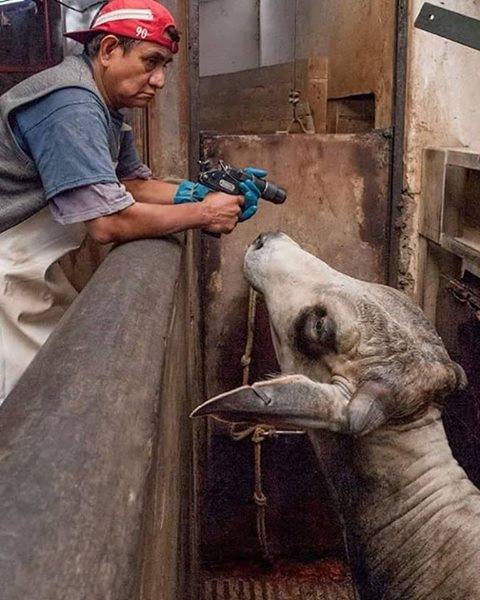
Industrial animal farming has caused most new infectious diseases in humans in the past decade – and risks starting new pandemics as animal markets have done, experts are warning.
Experts from both the UN and the European Food Safety Authority (EFSA) have pinpointed animals or food of animal origin as a starting point for emerging diseases, such as Covid-19, which has killed more than 270,000 people worldwide.
And a separate report has cautioned that replacing Asia’s open-air slaughter markets with factory farming for meat would create similarly dangerous conditions for highly virulent flu strains to breed.
Valentina Rizzi, an expert in disease at the EFSA, said: “The diseases transmitted directly or indirectly from animals – including livestock – to humans are called zoonoses. A big proportion of all infectious diseases in humans are originating from animals, and more specifically the majority of emerging new infection in humans in the last 10 years really come from animals or food of animal origin.”
Inger Andersen, executive director of the United Nations Environment Programme (UNEP) told One Earth: “The virus usually originates in the wild, is transmitted often by wild birds, bats etc into livestock – domesticated animals.
“We see it more frequently in pigs than poultry but you do see it elsewhere, too, in other animals. Of course we can’t deny that these zoonoses often take that route – this we know from science.
“And the probability is the more you have of a thing, the more that thing is going to be the likely conveyor.”
The UNEP warned in 2016 of new diseases from animals, amplified by the world’s rising population of livestock for meat and dairy.
Ms Andersen said the more we as consumers demand protein from livestock and meat, the more the market would respond.
The experts spoke out as governments worldwide are facing a clamour of calls to ban live animal slaughter markets, such as that in Wuhan, linked to the emergence of the coronavirus. The World Health Organization has been pressured to intervene.
The Independent‘s campaign Stop the Wildlife Trade is calling for the trade to be strictly controlled and regulated.
Viruses such as Covid-19 have been linked to street stalls in southeast Asia and India, where animals are susceptible to disease because the stress caused by such close confinement and the sight of others being slaughtered is believed to weaken their immune systems.
A new report, called Is the next Pandemic on our Plate?, says the similarly crowded conditions of industrial agriculture play a key role in the emergence of pathogens.
Peter Stevenson, chief policy adviser at Compassion in World Farming and author of the document, said policymakers “must resist arguments that wet markets should be replaced by factory farming, or that industrial farming is needed to provide cheap food to feed the growing world population”.
The paper sets out ways to switch to keeping animals in “health-oriented” systems in which the wellbeing of the animal is prioritised so stress and disease vulnerability are reduced.
Such systems would also mean less soil degradation, water pollution, biodiversity loss and deforestation, Mr Stevenson argues.
Food should be regarded as a public good, not as a tradeable commodity, according to the report, which suggests economic policies that would allow for sustainable agriculture and a “nutritious, equitable” food system.
“Maintaining a flawed global food system can and will lead to further pandemics,” he said.
Earlier this week researchers led by the University of Sheffield and Bath warned that intensive farming, involving overuse of antibiotics, high numbers of animals, and low genetic diversity are hotbeds for pathogens to spread.
Posted on May 10, 2020 by Serbian Animals Voice (SAV)
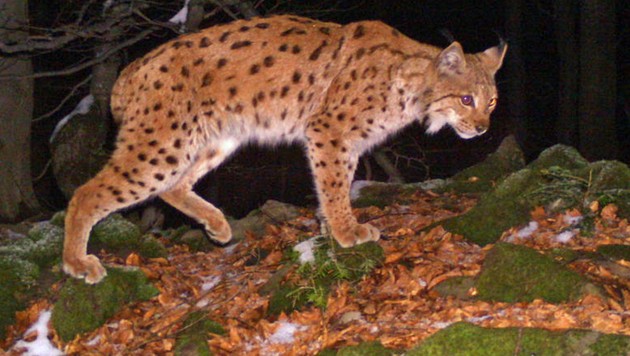
The death of a strictly protected lynx is currently causing outrage in the Czech Republic. The wounded animal caught the eye of a former forest ranger and could still be caught, but despite veterinary care, the wildcat died a little later, as was known on Friday.
“The animal was stressed and emaciated, it must have suffered from pain and hunger, “ said Frantisek Jaskula, head of the Beskydy landscape protection area in the east of the country (see map in the link).
It has been the fourth lynx in the region to fall victim to poachers since 2000.
Olda- (Image: selmy.cz)
Animal rights activists had been watching the lynx for years and baptizing Olda. Since his birth in 2011, he has appeared around 800 times in camera trap images in the region. In the Czech part of the Beskids, a mountain range of the Western Carpathians, there are barely a dozen lynxes left.
Popular fur: Lynx almost eradicated centuries ago
The Eurasian lynx is the largest cat species in Europe and can be recognized by its long brush ears.
In earlier centuries, the lynx was hunted for its fur and almost wiped out.
And I mean … No! They weren’t poachers, they were hunters.
There is no difference either; no matter by whom, it was a crime.
This could have been commissioned by a wealthy collector so that Olda would decorate a psychopath’s living room as a carpet.
This gang of murderers is supported by important politicians.
Most hunters come from the wealthy social classes.
They are doctors, lawyers, judges, industrialists, politicians, the military … psychopaths who pay a lot of money for their sick, bloody pleasure.
Lynxes and many other wild animals are threatened with extinction.
Nevertheless, they are killed out of sheer lust for murder. Mostly as trophies.
For this, these “people” are willing to pay a lot of money.
The more endangered an animal is, the more expensive it is to shoot.
The hunting lobby also seems to have enormous power in the EU, for example, trophy hunting is even supported by the EU.
For your information: Safari Club Internationalis also available in Germany!
This is where the hunting enthusiasts meet regularly for a “round table” in Munich.
By now at the latest everyone should know why the EU does not want to ban the trade in trophies.
Certainly very few people know that despite protests from their own ranks, the EU Parliament has spoken out in favor of a legal and sustainable trophy hunt.
Damned Oldas killer!
And hopefully his life will soon end in unbearable pain-
to put it in the language of the murderers!
Posted on May 9, 2020 by Serbian Animals Voice (SAV)
Online on May 8th, 2020 11:50 pm
The German meat industry appears to be exceptionally badly affected by the coronavirus pandemic. In a number of slaughterhouses, a striking number of workers were infected.
They were closed. The entire workforce should now be tested.
In Coesfeld in North Rhine-Westphalia, the critical value of 50 new infections per 100,000 inhabitants per week was exceeded. There the number reached 52.7. The virus had recently spread mainly in a slaughterhouse.
129 infected people were recorded there. All 1,200 employees are now to be tested.
The Health Minister of North Rhine-Westphalia, Karl-Josef Laumann, took action and had the business closed for the time being.
In a sister company of the Coesfeld plant in Oer-Erkenschwick in Recklinghausen, 33 out of 1,250 employees are said to have contracted the virus.
All employees are tested
in Bad Bramstedt in Segeberg. There were 109 employees tested positive for the corona virus by Thursday, as the authorities said. All employees of the company were quarantined, regardless of the test result.
Most of the workers from abroad are accommodated in shared accommodation on the site of a barracks in Steinburg. Steinburg was above the limit with 87 confirmed current cases. The Ministry of Health of Schleswig-Holstein also announced on Friday that the workforce of all slaughterhouses in the state would be tested for the corona virus.
Unsustainable conditions in infection protection
According to a media report, German labor minister Hubertus Heil asked his country colleagues to strictly control occupational safety for seasonal workers in agriculture and the meat industry because of several CoV outbreaks.
“Particular care should be taken with the situation in collective accommodation and when transporting people,” according to the North German Broadcasting(NDR) and West German Broadcasting (WDR).
Media reports on “unsustainable conditions in company infection control” were the reason for the letter.
In his letter to his ministerial colleagues in the federal states, Heil points out that several diplomatic representations of workers’ countries of origin have already complained to the German government.
Focus on harvest workers
Migrant workers and seasonal workers in the meat industry and also in agriculture are often defenseless against the corona virus. Because people mostly live in narrow collective accommodation, which significantly increases the risk of infection.
In North Rhine-Westphalia alone there are 35 large slaughterhouses with up to 20,000 employees.
Like North Rhine-Westphalia, Saxony-Anhalt also wants to test all employees of slaughterhouses in the state for the corona virus. The Minister of Health of Saxony-Anhalt, Petra Grimm-Benne, announced that all harvest helpers would also be tested.
Hygiene and safety rules are not observed in many companies.
Hundreds of positive tests
According to a “Spiegel” report, more than 600 employees in slaughterhouses across Germany have so far been tested positive for the corona virus. According to the authorities, the magazine reported that mostly Romanian contract workers who had been living in shared accommodation were infected.
Around 300 infected people have also been registered with a Baden-Württemberg producer in the past few weeks. “Work can continue in the factories because the authorities assume that they have the situation under control with the quarantine measures in place,” (!!!) the “Spiegel” report continued.
A kind of “emergency brake”
In Germany, all federal states had agreed on Wednesday that numerous restrictions on public life imposed by the coronavirus crisis would be relaxed on Monday.
If the limit of new infections from 50 to 100,000 inhabitants is exceeded within seven days, a restriction concept should immediately come into force – a kind of “emergency brake”.
If the infection is local and clearly delimitable, for example in a facility, restrictions can only be imposed for this facility.
Posted on May 9, 2020 by Serbian Animals Voice (SAV)
Moo Free May:
This MooFree May we’re taking our actions online – sharing information about animal welfare, human health and the environment, while encouraging the British public to ditch dairy once and for all.
This year our MooFree May campaign enters its third year! Launched in 2018 the initiative has been a huge success and we hope to reach even more people this year. Obviously, the circumstances are very different from those previous but we hope you’ll still join us digitally.
Last year our online campaign was supported by lots of Street Action events, when we visited cities all across the country to promote veganism. Together with our volunteers we reached thousands of people. With COVID-19 threatening people’s lives, we won’t be able to take MooFree May out on the street with us. However, this year it’s more important than ever to raise awareness about the impact of animal agriculture with three quarters of the world’s new or emerging infectious diseases coming from animals, mainly through trade in wildlife and factory farming.
While this pandemic is turning our world upside down and claiming lives around the globe, we can’t forget that the animals including cows in the dairy industry are still going through horrendous suffering every single day. With fewer staff being allowed to work on farms and financial pressure due to this crisis, welfare standards are likely to be even worse than under normal circumstances.
Scary Dairy
We’re brought up believing in an idyllic image of dairy cows grazing fields, eating grass and magically producing milk. Yet in reality, dairy cows are subjected to a perpetual cycle of artificial insemination, calving and milking year after year in order to keep their milk production up.
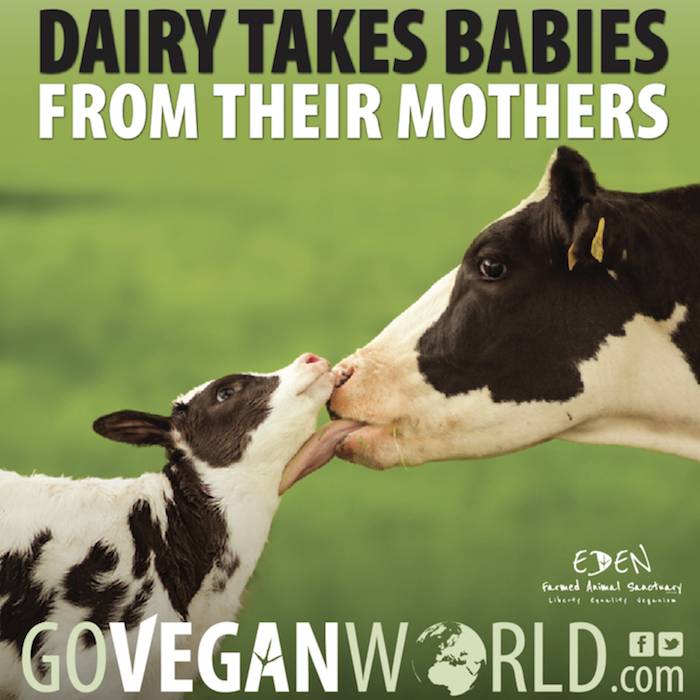
After a nine-month pregnancy, all dairy cows are separated from their young between 24-48 hours after birth. This happens across the board, whatever the system – organic, ‘free-range’ or zero-grazing. If born a boy he’ll likely be shot in the head as a useless by-product and if born a girl she’ll be reared as a milk machine to eventually replace her mother in the milking herd.
This continuous exploitation of a dairy cow’s reproduction system causes unnecessary suffering on an industrial scale but with so many amazing plant-based alternatives now available to us, it’s never been easier to go dairy-free.https://youtu.be/oOJ_8IWMpOA
Do you need help going dairy-free?
Viva! has a vast amount of resources to help you go dairy-free. You can order our Everyone’s Going Dairy Free guide or have a look at our online section. If you’ve got a friend who’s been wanting to go dairy-free but hasn’t quite managed yet to give up cheese, why not get them one of our brilliant guides to help them with their journey?!
CHINESE scientists have been accused of being real-life Dr Frankensteins who play God by cloning apes and editing the genes of babies.
Some of their work has been dubbed “monstrous” while other cutting edge research could lead to cures for Parkinson’s and Alzheimer’s.
It’s important to note that the US and the UK are not immune from conducting tests on animals and in fact carry out THOUSANDS of experiments on primates every year.
However, China has become the capital of research on apes and monkeys believing that our closest relatives hold the key to understanding brain disorders that destroy lives.
Incredibly, the Institute of Neuroscience (ION) in Shanghai, cloned five infant monkeys last year from an adult macaque who had been genetically-edited.
PUSHING ETHICAL BOUNDARIES
The result was baby primates intentionally born with a mutation that disrupts their wake-sleep cycle.
By giving the monkeys new drugs to treat their pre-existing brain disorders, the scientists hope to develop treatments for illnesses such as Alzheimer’s disease.
It’s no wonder the ION has been dubbed the “Cern of primate neurobiology”.
The Institute successfully cloned two macaque monkeys in 2018 – a world first – giving the experts confidence to push ahead with further experiments.
Heaping praise on the research, the Chinese Academy of Sciences said: “The achievement heralds a new era in which China can produce batches of standardised monkey clones, which will serve as animal models in the research of the brain’s cognitive functions, early diagnoses and interventions of diseases, as well as research and development of drugs.”
While China allows genetic manipulation on animals it has banned the use of gene-editing on humans – but that hasn’t stopped some of its scientists “playing God” with unborn children.
Scientist He Jiankui, 35, rocked the scientific world when he revealed he had altered the embryos of twin girls in 2018.
In December last year, it was revealed that a third child born to a different mum had also been gene-edited.
Heaping praise on the research, the Chinese Academy of Sciences said: “The achievement heralds a new era in which China can produce batches of standardised monkey clones, which will serve as animal models in the research of the brain’s cognitive functions, early diagnoses and interventions of diseases, as well as research and development of drugs.”
While China allows genetic manipulation on animals it has banned the use of gene-editing on humans – but that hasn’t stopped some of its scientists “playing God” with unborn children.
Scientist He Jiankui, 35, rocked the scientific world when he revealed he had altered the embryos of twin girls in 2018.
In December last year, it was revealed that a third child born to a different mum had also been gene-edited.
GENE-EDITING BABIES
The rogue expert said he used a tool called Crispr to disable a gene that allows the AIDS virus to enter cells in a bid to make the children immune from the disease.
But why have such experiments been dubbed “monstrous” by others within the scientific community?
Experts claim gene-editing in people could “divide humans into subspecies” and can cause mutations, genetic problems and even cancer.
Dr Kiran Musunuru, an expert in this area from the University of Pennsylvania, called the experiment “unconscionable … an experiment on human beings that is not morally or ethically defensible.”
Professor Julian Savulescu, of the University of Oxford, said: “If true, this experiment is monstrous.
“The embryos were healthy. No known diseases. Gene editing itself is experimental and is still associated with off-target mutations, capable of causing genetic problems early and later in life, including the development of cancer.
“There are many effective ways to prevent HIV in healthy individuals: for example, protected sex.”
Last December, Mr Jiankui was jailed for three years after news of the third child’s birth was revealed.
He was convicted of practising medicine without a licence and fined £330,000 by a court in Shenzhen, the Xinhua news agency reported.
One of the most controversial experiments to date was the creation of embryos that were part human and part primate.
MONKEYS WITH HUMAN ORGANS
Last year, Spaniard Juan Carlos Izpisúa Belmonte led a team of Chinese researchers with the end goal of creating monkeys which have entirely human organs such as kidneys or livers.
The organs will then be used for human transplants.
Based in China, the team made the chimeras – a single organism with cells from more than one genotype – by injecting human stem cells into a fresh monkey embryo.
Biologist Belmonte previously tried adding human cells to embryos of pigs but the disturbing experiment was not successful.
However, because primates are genetically related to humans, the chances of the new research being successful is much greater.
The scientists also use gene-editing technology to disable certain cell formations in the animals to give the human cells a better chance of thriving.
In the US and other western democracies, such research is banned – however in China, experts are allowed to push the boundaries of scientific ethics.
Importantly, no Frankenstein monster has been born as a result of this research… not yet anyway.
Instead, the hybrid embryos are allowed to develop for around two weeks so their progress can be studied.
Mr Belmonte defended his work with the Chinese, saying: “History shows us time and time again that, over time, our ethical and moral standards change and mutate, like our DNA, and what yesterday was ethically unacceptable, if this really represents an advance for the progress of humanity, today it is already an essential part of our lives.”
Archive 2019:
World’s first human-monkey hybrid created in China, scientists reveal
Researchers pledge to continue using primates in search for transplant organs
The team revealed that they had injected human stem cells capable of creating any type of tissue into a monkey embryo.
The experiment was stopped before the embryo was old enough to be born.
But the scientists – who were Spanish but held the trial in China to get round a ban on such procedures at home – said a human-monkey hybrid could have potentially been born.
The embryo had first been genetically modified to deactivate genes that control organ growth.
Ethical concerns were raised over the trial, partly over fears that human stem cells could migrate to the brain.
Angel Raya, of the Barcelona Regenerative Medicine Centre, said experiments on organisms with cells from two species faced “ethical barriers”.
He told El Pais: “What happens if the stem cells escape and form human neurons in the brain of the animal? Would it have consciousness? And what happens if these stem cells turn into sperm cells?”
But Estrella Nunez, of Murcia Catholic University (UCAM) and the project collaborator, said mechanisms were put in place so that if human cells did migrate to the brain, they would self-destruct.
“The results are very promising,” Ms Nunez said.
The research, which was financed largely by the university, was costly. “If we combine the human/pig, human/rat and human/monkey research, it is many hundreds of thousands of euros,” she said.
Dr Raya said scientists have traditionally set a “red line” at 14 days’ gestation, which is not long enough for the embryo to develop a human central nervous system. All chimera embryos are destroyed before that time.
Juan Carlos Izpisua, who created the world’s first human-pig hybrid in 2017 and led the latest experiment, said: “We are now trying not only to move forward and continue experimenting with human cells and rodent and pig cells, but also with non-human primates. Our country is a pioneer and a world leader in these investigations.”
First Human–Monkey Chimeras Developed in China
The researchers aim to grow transplantable human organs from primate embryos.
An international team of researchers has created embryos containing both human and monkey cells, the Spanish newspaperEl País reported July 31. The controversial project was conducted in China, rather than in the US where the project leader is based, “to avoid legal issues,” according to the newspaper, and ultimately aims to grow viable organs for transplantation into humans.
Juan Carlos Izpisúa Belmonte of the Salk Institute in San Diego is spearheading the project with scientists from his own lab and those from the Murcia Catholic University in Murcia, Spain. The team wants to develop chimeras—organisms composed of cells from two or more species—capable of growing human organs.
Similar experiments using pig or sheep embryos have faced technical challenges, likely because the animals are genetically distant from humans. Primates, being more closely related to people, may offer more promise. “The human cells did not take hold. We saw that they contributed very little [to the development of the embryo]: one human cell for every 100,000 pig cells,” Pablo Ross, a veterinary researcher at the University of California, Davis, who previously researched pig-human chimeras at Salk, tells El País.
Ross adds that he doesn’t see the utility of growing human organs in monkeys. “I always made the case that it doesn’t make sense to use a primate for that. Typically they are very small, and they take too long to develop,” he says in an interview with MIT Technology Review.
The National Institutes of Health forbids the use of federal funds to create human-monkey embryos. China, where Izpisúa Belmonte’s experiments are taking place, has no such restriction. The crux of the controversy, according to The Guardian, is that it is difficult to restrict human cell growth to just one organ of interest. Should a human-animal hybrid develop a human-like nervous system capable of consciousness, or be brought to term and display human-like behaviors, the ethical consequences could be extreme.
So far, the human-primate embryos have only been allowed to develop for a few weeks at a time, before organs have formed, according to Estrella Núñez, a biologist and administrator at the Catholic University of Murcia whose institution partially funds the research. “In no case is the gestation brought to full term,” she says in an interview with El País.
“I don’t think it is particularly concerning in terms of the ethics, because you are not taking them far enough to have a nervous system or develop in any way—it’s just really a ball of cells,” says Robin Lovell-Badge, a developmental biologist from the Francis Crick Institute in London, in an interview with The Guardian. “[But] if you allow these animals to go all the way through and be born, if you have a big contribution to the central nervous system from the human cells, then that obviously becomes a concern.”
In July, Japanese researchers—including Hiromitsu Nakauchi of the University of Tokyo and Stanford University—first received permission from the government to create human-animal embryos to be transplanted into surrogates. Japan had previously banned animal embryos containing human cells from developing beyond 14 days, let alone implanting them in a surrogate uterus. Although legal now, it remains unlikely that any of these animals will soon be brought to term as the proportion of monkey-to-human cells in the chimeras still has to be perfected, according to The Guardian.
It doesn’t make sense to bring human–animal hybrid embryos to term using evolutionarily distant species such as pigs and sheep because the human cells will be eliminated from host embryos early on, says Jun Wu, who researches human–animal chimaeras at the University of Texas Southwestern Medical Center in Dallas, in an interview with Naturelast week.
“The evolutionary distance between humans and monkeys spans 30 to 40 million years, so it is unclear if this is even possible,” says Alejandro De Los Angeles of the Yale University School of Medicine, in an interview with The Guardian.
Beyond organ production, the research could address questions of evolutionary distance between species and investigate basic mechanisms in molecular biology, Ross tells MIT Technology Review. The results could also be used to develop better animal models of human disease, says Los Angeles to The Guardian.
“The ultimate goal would be to create a human organ that could be transplanted but the path is almost more interesting for today’s scientists,” says Núñez in an interview with Vice. “What we want is to make progress for the sake of people who have a disease.”