Posted on March 14, 2020 by Serbian Animals Voice (SAV)
Posted on March 14, 2020 by Serbian Animals Voice (SAV)

State Department spokesman Lijian Zhao has asked the US authorities to disclose information about the origin of the corona virus.
Beijing even hinted that the U.S. military might have brought COVID-19 to China.
Zhao pointed to a video on Tuesday in which the director of the U.S. Centers for Disease Control, Robert Redfield, apparently reveals that several corona deaths have been reported in the United States that were wrongly classified as flu.
Redfield admitted that the doctors did not have a precise test for the new condition at the time. He did not go into detail about when these misdiagnosed cases first appeared. He only said that “some cases were diagnosed this way”.
 Source: Reuters ©/ Stringer; Reuters / China Daily
The Chinese Department of State spokesman called on the U.S. agency to clarify information about these cases. In addition, he pointed to a military delegation from the United States who traveled to Wuhan for the Military World Games in October 2019.
A little later, the city confirmed the outbreak of the Corona epidemic.
The delegation was part of a group of American athletes.
According to the World Health Organization (WHO), the COVID-19 epidemic was first reported in the Chinese city of Wuhan on December 31, 2019.
The origin of the disease has not yet been established.
And I mean…Yes, it can be the military games.
If that’s true, it’s biological warfare.
Consciously and deliberately in order to damage China economically, that has always been “Nero”- Trump’s dream and now the polluter has it himself.
I myself exclude China, it just doesn’t make any sense.
My best regards to all, Venus
Filed under: GENERAL NEWS - International / National / Regional | Leave a comment »
Posted on March 14, 2020 by Serbian Animals Voice (SAV)
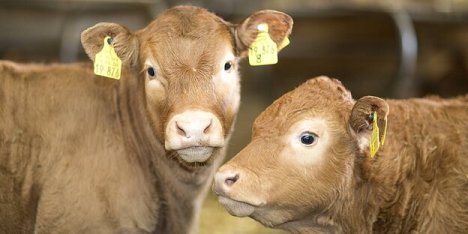
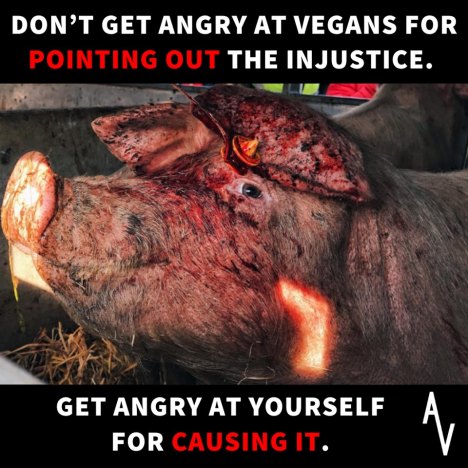
Many meat eaters react irritably to a vegan lifestyle. There is a psychological reason for this: the meat paradox!
This text comes from the “taz.magazin on the weekend”.
To my great joy, the topic of veganism is more topical than ever! More and more people are open to a switch to plant-based nutrition; in Germany alone, almost half a million registered for the veganuary campaign in January, of which one or the other has certainly stayed on. Excellent!
With the popularity, however, the vegan rage of many meat eaters increases, which I also experience in the online comments on this column every now and then.
The most hated are vegans who, for ethical reasons, do without animal products – which is strange considering that a large part of our society would like to see less cruelty in the world. Or?
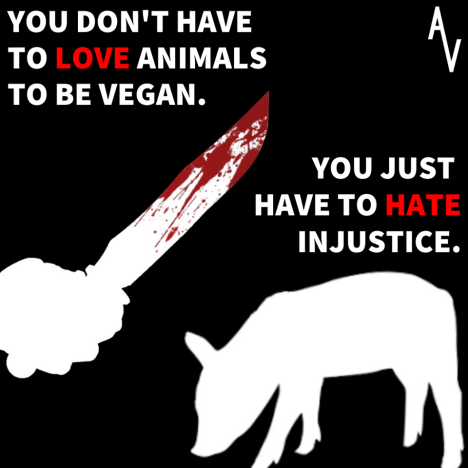
Not at all, says the American psychology professor Hank Rothgerber. Because the reason for this veganophobia is the so-called “meat paradox”.
The cognitive dissonance that meat eaters experience when they have to reconcile their diet and their love of animals. Because when we have two incompatible views in our heads and live one of them, it causes stress.
Now our brain knows a few tricks to protect us from this stress. I experienced that myself.
Previously, the first trick, I was a master at completely ignoring the reality of meat and milk production.
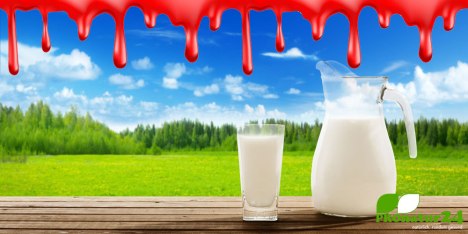
Finally, there were pictures of grinning pigs on my sausage packaging and happy cows wandered over green mountain pastures on my milk cartons.
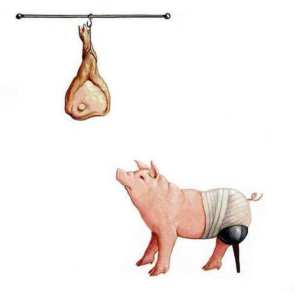
And, second trick: Sooo much meat, I said to myself, I don’t eat at all. A liver sausage bread for breakfast, spaghetti Bolognese for lunch and the salad with a little steak in the evening – almost half vegetarian.
Stupidly, this mental trickery no longer works if you are directly confronted with a vegan lifestyle. Then the “meat paradox” hits your head again.
You feel condemned, that stresses and makes you angry.
And who is to blame for the anger?
These stupid, better eaters, on which you dump your bad feelings.
This is how you resolve the dilemma in your head instead of changing your behavior and reducing meat consumption. I felt the same way.
Today I know that when in doubt it is better to be for something rather than against it.
For the animals.
For the environment.
For social justice.
For delicious vegetable food. Then the spark jumps faster and enables a conversation with each other.
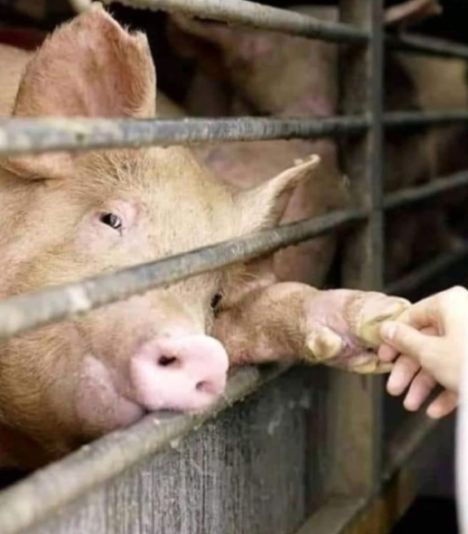
And who knows… maybe there will be a million in Germany in 2021 who will try vegan in January.
And I mean…The favorite excuse of all meat eaters: vitamin b12.
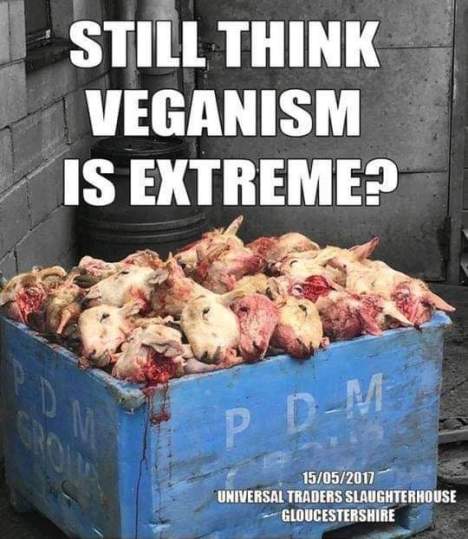
My first thought at the sight of twitching, bleeding pigs with electric tongs or “CO2 anesthetic”, scalding bath, cutting throats etc., is not the lack of vitamin B12 or 6 or 100, but the lack of responsibility and compassion of a society that already knows all of this but a shit cares.
We have ethics and morality. This is the basis of our basic law, from which unfortunately only human animals benefit.
But the nonspeciesist morality command us to avoid suffering, torture and murder of non-human animals, that means the morality command us to stop eating animals.
This morality is the future of a civilized society.
My best regards to all, Venus
Filed under: GENERAL NEWS - International / National / Regional | 1 Comment »
Posted on March 13, 2020 by Serbian Animals Voice (SAV)
Posted on March 13, 2020 by Serbian Animals Voice (SAV)
The rat poison was neatly packaged in ham slices, and with a thick thread she additionally reinforced the package with a lethal dose. On Tuesday, Helga S. * leaves her insidious trail in the middle of Dielsdorf, Switzerland. Their goal: to torture dogs and cats in the community.

Attentive neighbors are watching their plans and alert the police. Shortly afterwards, the woman puts it in the act and discovers further prepared bait during the subsequent house search.
But who is the woman who lays her poison right next to a school and a sports field, where small children also play?
 This is one of the poison baits that Helga S. is said to have laid out.
Candidate for the Zurich Cantonal Council!!
The 58-year-old is a lawyer and was a lecturer at a Swiss university for a long time.
She was also active in a school supervisory board. In 2003 Helga S. ran as SVP politician for the Zurich Cantonal Council. At the time, she campaigned for her education advertisement and demanded that the young people receive the “best opportunities”.
In Dielsdorf the woman had been considered strange for some time. Neighbor Antonella B. says to 20 minutes magazin: «She has withdrawn very much. Was never there and was not part of our quarters. »
Helga S. triggers great anger with her alleged act.
Neighbor Mari S. says: “I wish her the same suffering that she wanted to do to poor animals with the poison baits.”
Helga S. is currently said to be in psychiatric care.
It is then sent to the investigative authorities.
The arrested Swiss woman is accused of violating the Animal Welfare Act.
In the meantime, the Zurich cantonal police are warning animal owners in Dielsdorf that other baits may be lying around in the community. It calls for special attention from the population.
And I mean … as soon as Helga S experiences the same suffering that she has inflicted on the innocent animals, she will quickly recognize that cruelty to animals is a murderous act combined with agonizing death and will never try it again.
Psychiatric treatments for animal tormentors produce only costly and very dubious results.
My best regards to all, Venus
Filed under: GENERAL NEWS - International / National / Regional | 1 Comment »
Posted on March 13, 2020 by venus2407
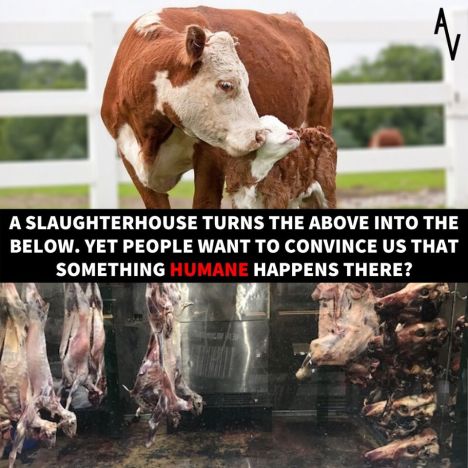
What exactly is “humane” about what we do to innocent sentient beings like cows, pigs, chickens, turkeys, goats, sheep, and fish?
Here is the definition of humane, for anyone interested:
Definition of humane
1 : marked by compassion, sympathy, or consideration for humans or animals.
Can one “compassionately” slaughter another sentient being who wants to live?
Does this line of logic propagating “humane slaughter” apply elsewhere to be consistent both morally and logically?
Can there be such thing as humane rape? How about humane child molestation? Humane dog fighting?
Or is this word when used in conjunction with an injustice like violating another’s bodily autonomy against their will the very definition of an oxymoron and the epitome of contradiction?
Anonymous for the Voiceless
My best regards to all, Venus
Filed under: GENERAL NEWS - International / National / Regional | 1 Comment »
Posted on March 13, 2020 by Serbian Animals Voice (SAV)
United States Trails Behind Mexico and India When It Comes to Animal Protection Laws, Report Finds
The United States is trailing behind other countries—including Mexico and India—when it comes to animal protection laws for farmed and wild animals, a report published by non-profit World Animal Protection (WAP) has revealed.

In its latest Animal Protection Index (API)—a global ranking of animal welfare policies in 50 countries—the organization has awarded the United States a “D” grade, while the two aforementioned countries received “Cs.” The U.S.’s ranking has not improved since the first edition of the API, which was published in 2014.
According to the API, animal protection laws at the state level in the country—where most originate—are inadequate, inconsistent, and sometimes contradictory. At the federal level—where only a few key laws exist—WAP found that there was a lack of accountability.
Below are the four main reasons outlined in the report which contributed to the award of the “D” grade:
-
“The federal government’s key legislations limit which animal species and groups are covered.
-
Most animal protection legislation is are created at the state, not federal, level, giving rise to inconsistencies in enforcement.
-
The number of exemptions or exceptions allowed in both federal and state legislation means that most animals and welfare-impacting practices are not covered.
-
Lack of transparency regarding animal welfare enforcement reports and audits mean there is little accountability for authorities.”
WAP experts say that a failure to improve standards will lead to the continued suffering of millions of animals, while also raising the risk of disease outbreaks.
“The longer poor animal welfare practices continue, the greater the risk of zoonotic disease outbreaks becoming more frequent, including but not limited to salmonella, avian influenza and most recently, the COVID-19 pandemic currently happening worldwide,” Alesia Soltanpanah, Executive Director World Animal Protection, U.S., said in a statement provided to Newsweek.
“Improving conditions for farmed animals and ending the commercial trade in wild animals, will not only guarantee the welfare of billions of animals but could also help prevent the next big human health hazard.
“There is no federal legislation protecting farm animals during the rearing phase. Intensive, close confinement production systems are common, causing great suffering, causing animals to be stressed and immunosuppressed while also destroying the local environment and endangering the health of people and wildlife in the area,” Soltanpanah told Newsweek.
“The U.S. also allows the continued practice of fur farming and allows animals to be used for various entertainment purposes causing great suffering.”
In 2014—when the first API was published—the United States only had a few key animal laws at the state level, according to WAP. These included the Horse Protection Act of 1970, the Humane Methods of Slaughter Act of 1958, and the Animal Welfare Act (AWA)—which set general standards for certain animals bred for commercial sale, used in public exhibitions or biomedical research, or transported commercially.
Since then, several pieces of legislation have been introduced at the state and federal level, which have helped to improve animal standards, according to the report. For example:
-
In 2018, California passed Proposition 12, which effectively banned the most restrictive forms of confinement on farms.
-
In October 2019, California also banned the sale of fur from 2023—the first state to do so. Earlier that year, it also outlawed the use of wild animals in circuses.
-
And at the federal level, the Preventing Animal Cruelty and Torture Act (PACT) became law in November 2019, making animal cruelty a felony.
However, gains such as these were not enough the improve the U.S.’ grade, given that the Trump administration has weakened several protections for animals. According to Soltanpanah these include:
-
“Granting permits to trophy hunters to kill endangered species and bring them back to the United States.
-
Lifting environmental protections on national parks and monuments which provide habitats for wildlife, and allowing mining and drilling in formerly protected lands.
-
Rolling back protections for species categorized as ‘threatened’ and allowing economic factors to influence which species are classified as ‘endangered.’
-
Overturning a ban on the hunting of predators in Alaskan wildlife refuges and proposing to overturn a ban on extreme sport-hunting practices such as baiting grizzly bears.
-
Allowing poultry processing facilities to have faster line speeds, which increases risks to chickens and workers.
-
Rolling back environmental protection laws under the Clean Water Act which reduces environmental oversight of factory farms and threatens wildlife.”
Soltanpanah notes that these efforts to weaken animal protections—in addition to the abundance of “loopholes” and exceptions for many species in U.S welfare laws—has meant that many animals are still suffering, despite several promising pieces of legislation being passed in the past few years.
“This index should be a wake-up call for our political leaders with the message that we are failing to protect the vast majority of animals in this country,” Soltanpanah said in the statement. “We are calling on the Trump administration and local governments to improve animal welfare standards and enshrine animal protection into current and critical debates on food, public health, and sustainable development.”
In the API, World Animal Protection urges state and federal government to increase protections for farmed and wild animals in the United States, making a number of recommendations:
-
Recognizing all vertebrates, cephalopods, and decapod crustaceans as sentient, while expanding the AWA so that it applies to all sentient animals.
-
Removing exemptions in the PACT Act for animals killed for food or used in scientific research.
-
Banning the production and sale of fur products.
-
Outlawing forms of entertainment that cause animal suffering, such as circuses, rodeos, fights, races, rides, and the use of marine mammals in shows.
-
Supporting the reintroduction of the Humane Cosmetics Act to phase out cosmetic animal testing and the sale of cosmetics tested on animals.
No countries were awawarded an “A” ranking in the API, however, Sweden, the United Kingdom and Austria received the highest scores—all “Bs.” On the other end of the scale is Iran with a “G” rating. According to the Index, Iran lacks any policies or legislation recognizing the sentience of animals, while also falling short in other areas, such as government accountability for animal welfare.
The report singled out the United States, China, Vietnam, Egypt, Azerbaijan and Belarus, for concerning animal welfare practices related to intensive farming and/or wildlife markets—which could lead to disease outbreaks.
Newsweek has contacted the White House for comment regarding the findings of the API.
Filed under: GENERAL NEWS - International / National / Regional | Leave a comment »


 Source: Reuters ©/ Stringer; Reuters / China Daily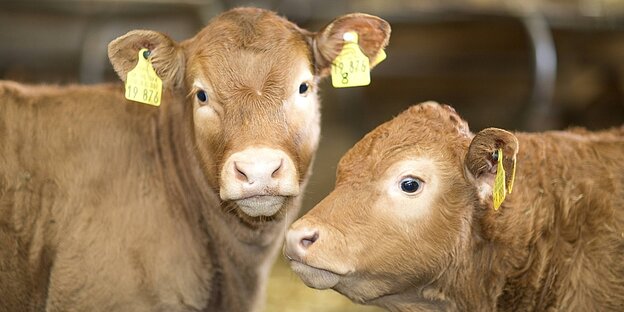




 This is one of the poison baits that Helga S. is said to have laid out.

 Serbian Animals Voice (SAV)
