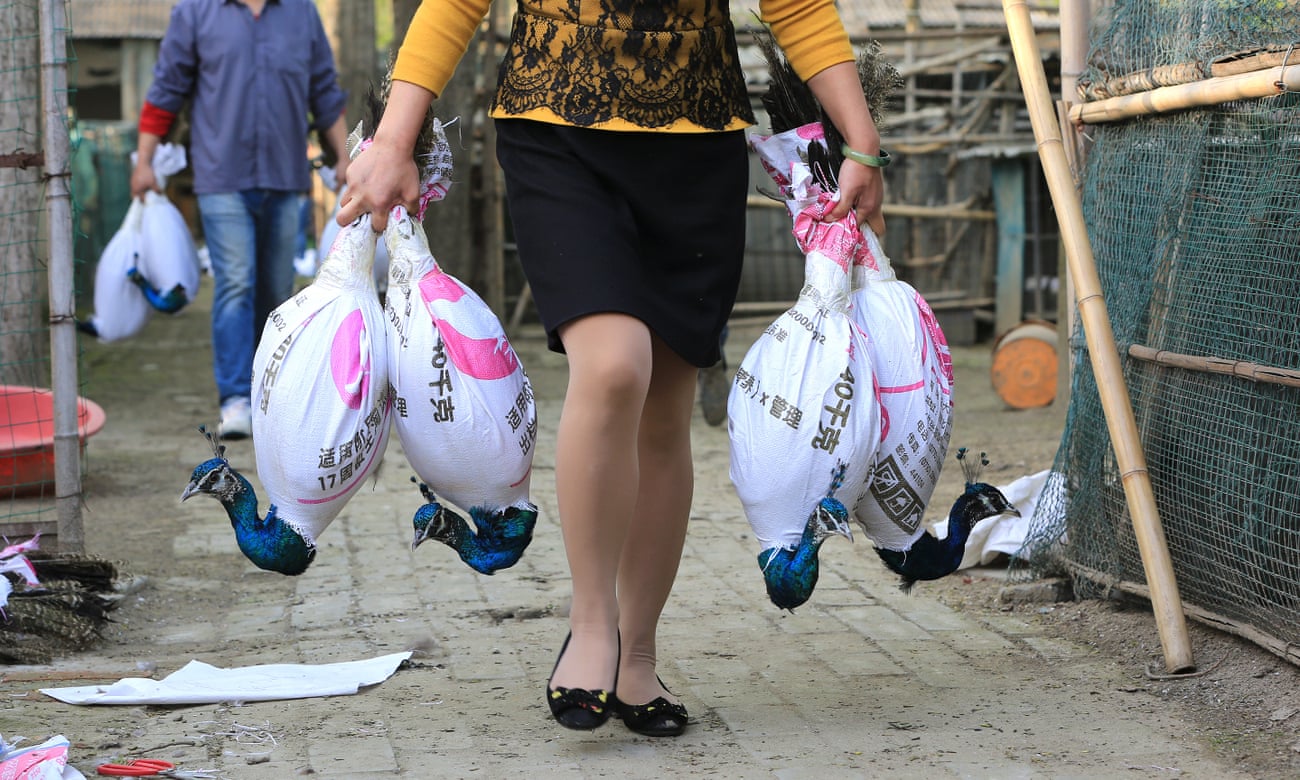
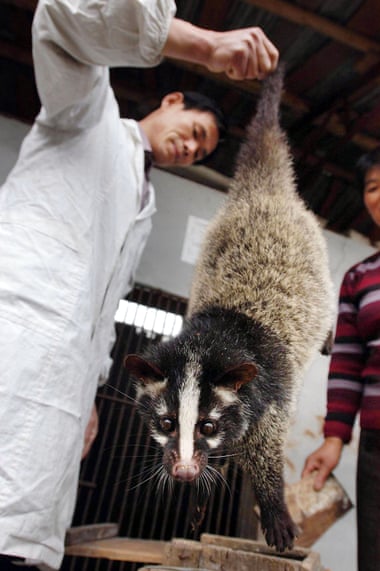
Nearly 20,000 wildlife farms raising species including peacocks, civet cats, porcupines, ostriches, wild geese and boar have been shut down across China in the wake of the coronavirus, in a move that has exposed the hitherto unknown size of the indust
Until a few weeks ago wildlife farming was still being promoted by government agencies as an easy way for rural Chinese people to get rich.
But the Covid-19 outbreak, which has now led to 2,666 deaths and over 77,700 known infections, is thought to have originated in wildlife sold at a market in Wuhan in early December, prompting a massive rethink by authorities on how to manage the trade.
China issued a temporary ban on wildlife trade to curb the spread of the virus at the end of January and began a widespread crackdown on breeding facilities in early February.
The country’s top legislative officials are now rushing to amend the country’s wildlife protection law and possibly restructure regulations on the use of wildlife for food and traditional Chinese medicine.
The current version of the law is seen as problematic by wildlife conservation groups because it focuses on utilisation of wildlife rather than its protection.
“The coronavirus epidemic is swiftly pushing China to reevaluate its relationship with wildlife,” Steve Blake, chief representative of WildAid in Beijing, told the Guardian. “There is a high level of risk from this scale of breeding operations both to human health and to the impacts on populations of these animals in the wild.”
The National People’s Congress released new measures on Monday restricting wildlife trade, banning consumption of bushmeat and sales of wildlife for meat consumption at wet markets between now and the time the Wildlife Protection Law can be amended and adopted. Untouched however, are breeding operations for traditional Chinese medicine, fur and leather, lucrative markets known to drive illegal poaching of animals including tigers and pangolins.
For the past few years China’s leadership has pushed the idea that “wildlife domestication” should be a key part of rural development, eco-tourism and poverty alleviation. A 2017 report by the Chinese Academy of Engineering on the development of the wildlife farming industry valued the wildlife-farming industry those operations at 520bn yuan, or £57bn.
Just weeks before the outbreak, China’s State Forestry and Grassland Administration (SFGA) was still actively encouraging citizens to get into farming wildlife such as civet cats – a species pinpointed as a carrier of Sars, a disease similar to Covid-19. The SFGA regulates both farming and trade in terrestrial wildlife, and quotas of wildlife products – such as pangolin scales – allowed to be used by the Chinese medicine industry.
“Why are civet cats still encouraged to [be eaten] after the Sars outbreak in 2003? It’s because the hunters, operators, practitioners need that. How can they achieve that? They urged the government to support them under the pretext of economic development,” Jinfeng Zhou, secretary-general of the China Biodiversity Conservation and Green Development Foundation (CBCGDF), told the Guardian.
On state TV the popular series Secrets of Getting Rich, which has aired since 2001, often touts these kinds of breeding operations – bamboo rats, snakes, toads, porcupines and squirrels have all had starring roles.
But little was known about the scale of the wildlife farm industry before the coronavirus outbreak, with licensing mainly regulated by provincial and local-level forestry bureaus that do not divulge full information about the breeding operations under their watch. A report from state-run Xinhua news agency on 17 February revealed that from 2005–2013 the forestry administration only issued 3,725 breeding and operation licenses at the national level.
But since the outbreak at least 19,000 farms have been shut down around the country, including about 4,600 in Jilin province, a major centre for traditional Chinese medicine. About 3,900 wildlife-farming operations were shuttered in Hunan province, 2,900 in Sichuan, 2,300 in Yunnan, 2,000 in Liaoning, and 1,000 in Shaanxi.
There is little detail available about the animals farmed across China, but local press reports mention civet cats, bamboo rats, ostriches, wild boar, sika deer, foxes, ostriches, blue peacocks, turkeys, quails, guinea fowl, wild geese, mallard ducks, red-billed geese, pigeons, and ring-necked pheasants.
Neither do reports offer much detail about the shutdowns and what is happening to the animals, although Blake said he does not think animals are being culled, due to issues over compensation.
Chen Hong, a peacock farmer in Liuyang, Hunan, said she is concerned about her losses and whether she will get compensation after her operations were suspended on 24 January.
“We now aren’t allowed to sell the animals, transport them, or let anyone near them, and we have to sanitise the facility once every day,” Chen said. “Usually this time of year would see our farm bustling with clients and visitors. We haven’t received notice on what to do yet, and the peacocks are still here, and we probably won’t know what to do with [them] until after the outbreak is contained.
“We’re very worried about the farm’s future,” she added. “The shutdown has resulted in a loss of 400,000–500,000 yuan (£44,000–55,000) in sales, and if they decide to put an outright ban on raising peacocks, we’ll lose even more, at least a million yuan(£110,000).”
On a visit to Shaoguan, Guangdong province, last year, the Guardian and staff from CBCGDF saw a caged facility previously used for attempted breeding of the notoriously hard-to-breed pangolin.
While there were no longer pangolin at the site, several locals near the facility confirmed the species had been raised there, along with monkeys and other wildlife.
Besides being used for Chinese medicine, much of the meat from the wildlife trade is sold through online platforms or to “wet markets” like the one where the Covid-19 outbreak is thought to have started in Wuhan.
“All animals or their body parts for human consumption are supposed to go through food and health checks, but I don’t think the sellers ever bothered,” said Deborah Cao, a professor at Griffith University in Australia and an expert on animal protection in China. “Most of them [have been] sold without such health checks.”
There have been calls for a deep regulatory overhaul to remove the conflicting duties of the forestry administration, and for a shift in government mindset away from promoting the utilisation of wildlife and towards its protection.
“The ‘referee-player’ combination needs to be addressed and is the toughest [challenge],” Li Shuo, a senior campaigner at Greenpeace East Asia told the Guardian. “This goes back to the institutional identity [of the SFGA] which was established to oversee timber production. Protection was an afterthought.”
Proposals include fully banning trade in wildlife that is protected or endangered within and outside of China, plus bans on raising and selling meat from known carriers of diseases that can impact humans such as civets, bats and rodents.
There are concerns that in trying to prevent outbreaks authorities may go too far in the culling of wild animals that can carry disease.
“Some law professors have suggested ‘ecological killing’ of disease-transmitting wild animals, such as pangolins, hedgehogs, bats, snakes, and some insects,” Zhou said. “We believe lawmakers need to learn [more about] biodiversity before advising on the revisions to the law, or they’ll bring disaster.”
Wuhan, China: the sprawling capital city of the Hubei province, known for being the epicentre of culture, education, manufacturing and transportation links. Now, Wuhan has a new reputation.
It is the city which gave birth to the Wuhan novel coronavirus (WN-CoV) the viral disease outbreak which has captured headlines, shut down cities and continues to spread while the rest of the world looks on with horrified abandon.
Coronaviruses are a common type of virus that cause mild illnesses, such as the common cold, but can cause more serious problems like severe acute respiratory syndrome (SARS). Just a quick search will bring up all you need to know about this coronavirus. Where did it come from? How is the virus transmitted and what are the symptoms? Will face masks really keep you safe?
There are many discussions taking place about how we can prevent and stop the spread of disease, followed by calls from experts for better hygiene, tighter controls at airports, banning the unregulated movement of wild animals and limiting human-animal contact. But the obvious solution, the simplest, most cost-effective solution which no-one has yet to admit, is to stop eating animals.
This coronavirus originated from one of Wuhan’s many live-animal markets. Over 100 different animals are sold here, including wolf pups, civet cats, poultry and snakes. These animals are kept in cramped, dirty conditions, with direct contact with humans. These markets are referred to as ‘wet markets’ – so called because animals are often slaughtered directly in front of customers. Aside from the obvious issues with having a high population density made up of humans and animals – a hotbed for disease outbreak – these markets are repulsive places. They are filled with caged, frightened souls, many of whom have been captured illegally in the wild.
The animals are skinned and slaughtered, sending a cocktail of microorganisms into the air. The dreadful, cramped conditions and mix of wild and domestic creatures, alongside the throngs of people choosing their victims, is a pandemic in the making. It was an inevitable consequence of poor hygiene, cross-contamination, and low animal welfare. We reap what we sow and – sadly, for the many people who have now lost their lives to the coronavirus – we have created a new deadly viral disease outbreak.
The saddest part of this story is that scientists saw this coming. Researchers have been stressing the link between human and wildlife health for decades and, in particular, the potential threat of coronaviruses was first identified following the 2003 SARS outbreak (also caused by a virus jumping from animals to humans). Scientists studying bats in the Yunnan Caves realised that the coronavirus was making the jump from bats to humans. It is now thought that the virus spread from bats to snakes, which are then captured and taken to live animals markets and eaten as a local delicacy. Scientists saw this coming; the Wuhan animal markets merely presented the perfect storm for disease outbreak.
As much as we can improve hygiene and as much as we can control the movement of animals, all it takes is another perfect storm to spark the next pandemic. You need only to look at the havoc we have wreaked throughout human history and our continued, damaging relationship with our precious ecosystems, to realise that we need systematic change.
We must have a societal shift in the way we view animals, the environment and our diets. We must stop eating animals. It is time to finally make the connection between animal agriculture and environmental destruction, antibiotic resistance and disease outbreak. We must stop tearing down forests to make way for animal farming or to grow animal feed. We must protect ecosystems and prioritise the safety and freedom of wild animals, leaving them to live their lives away from human contact. If we don’t take urgent and far-reaching action now, eating animals will be the death of us.
The world must wake up and shun all animal products and instead choose vegan. No cruelty, no cages, no blood and no zoonoses. It’s a no brainer.
See lots of other great articles in the Viva! Health March Newsletter by clicking on the following link:
One of the rescues we’ve featured this week is of puppies who got stuck in tar. People often want to know how is it that road tar wasn’t properly disposed, or why there is there so much garbage? The answers are not easy because so much intersects: India experienced a relatively sudden introduction of non-disposable plastics and other materials in a culture that values tolerance, even of things that are offensive. The toxins and dangers in this environment are present around the world, often more lethal, but more hidden. But wherever we live, there are beings who suffer because of human negligence. This video about removing the tar from puppies’ little bodies, however, focuses on the opposite phenomenon: human kindness. Watch the faces of the band of helpers who worked so carefully for hours and hours to make sure these little angels would be happy again.
Hours of effort saved Amber and her sisters locked in rock-solid tar.
Three gorgeous puppies were encased in hardened road tar when our rescue team arrived, and their sibling had died from the toxic hardened tar. Two of the three had made their way back to their mother with tar over half their little bodies.
But one was stuck to the earth, and to avoid pulling her skin off, rescuers had to cut and pry big slabs of stone and tar to carry with her to the hospital where all 3 puppies would undergo hours of labor as Animal Aid staff and volunteers softened the tar by soaking it in cooking oil and pulling it off little bit by bit.
The puppies’ little faces could not have looked more forlorn. By the time the tar was removed, they were soooo exhausted. But all the more WONDERFUL to see them playing in joy after a good night’s sleep in the furry warmth of their Mommy.
Removing tar is difficult, but LOVE is easy—Please donate
After we repaired her neck wound,Sunny-day glowed!
Her skin hung heavily on her throat, detached by a 4-inch cut that exposed all of this sweet dog’s neck muscles. She would need stitches to survive, and when our rescue team arrived, she let us scoop her up without the slightest resistance. We were relieved to see that the edges of the cut were clean enough that suturing was possible. When she healed, she simply glowed. We named her Sunny-day, and wow, just look at her now!
Stitching this wound saved precious Nugget’s life.
Blood from a deep wound on this sweetheart’s thigh had soaked his hind legs and tail, but that tail wagged in the most earnest announcement of trust, enabling our rescue team to gently and quietly carry him to our ambulance and stitch him up in the hospital. Meet adorable Nugget, whose cheerful and subtle little smile will charm your socks off.
Himmat Gameti has for 2 years grown in his ability at a tremendous rate. He manages the care of dogs in our Spay-Neuter Center where he ensures that both routine feeding and special post-operative medical care are provided “his” 80 ever-changing surgery patients. Himmat is observant, communicative, fast and thorough. He’s also a big sweetheart and we feel so lucky to have his brilliant help as a team leader.
Posted on March 12, 2020 by Serbian Animals Voice (SAV)
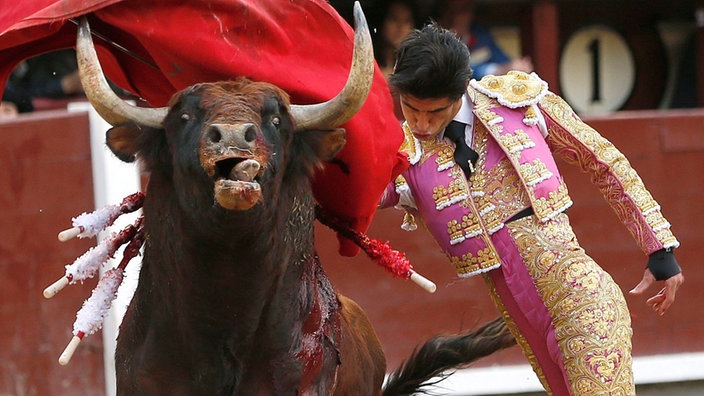
No to aid for the cancellation of the bullfighting season!
🐃All bullfights in March were canceled. Madrid, Valencia, Castellón, Murcia, Arnedo … 21 bullfights are already affected and 120 bulls saved because of it
Now the bullfighting sector is asking the government for support to save the season.
The Toro de Lidia Foundation and the Minister of Culture José Manuel Rodríguez Uribe requested an emergency meeting.
We will not let it happen!
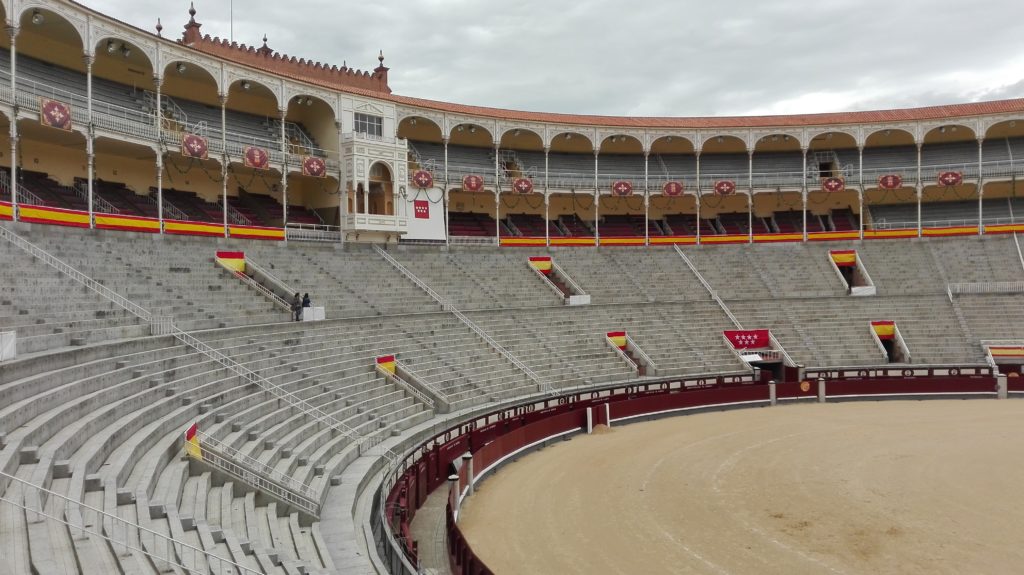
The bullfighting sector, devastated: fairs suspended, thousands of tickets to return, San Isidro in the air … As has been done with sports events and schools, the bullring is being considered places of risk of contagion.
Thus, Madrid, Valencia, Castellón, Murcia and Arnedo have already canceled all the celebrations scheduled for March.
There are already 21 bullfights affected, and 120 bulls that, for the moment, are saved!But the bullfighting sector, which is beginning to recognize that the coronavirus is going to be a severe blow to bullfighting, especially for bullfighters, ranchers and bullfighting entrepreneurs, it has begun to react: the Toro de Lidia Foundation has already requested the Minister of Culture, José Manuel Rodríguez Uribe, an emergency meeting “to be able to study the possibility of starting contingency, recovery and support plans for the industry as soon as possible.” We will not allow it!
Now or never! Let’s use the opportunity to eradicate animal abuse once and for all. Join the petition to the Minister of Culture,José Manuel Rodríguez Uribe, so that he does not allocate a single euro from public coffers to financially help the bullfighting sector.
The European Central Bank recognizes that the economic crisis that is going to trigger the coronavirus may have the magnitude of thegreat financial crisis of 2008.
Public administrations across the country need to develop a package of measures so that companies do not suffer from liquidity problems due to the cessation of activities. Help for families has also been announced.
We need your help to demand that the government prioritize and not allocate funds to finance the bullfighting rescue. To do this, we ask that you dedicate less than two minutes of your time to perform the following action.
Send a letter to the Ministry of Culture and Sports – In this link is the petition-letter.
And I mean …those are the unexpected damages of the Omnipotent Corona Virus.
Nobody expected them, not even those who created it.
No bullfights, no environmentally harmful world trips, maybe no safaris, and soon there will be no more animal transports.
An animal friendly virus … this corona …
Everyone stays at home and waits for better times. The environment and animals benefit greatly from it.
WHO speaks of an extremely dangerous pandemic!!
Confirmed cases 80,754, including active infections 17,721, cured cases 59,897, deaths 3,136.
With 7, 75 billion human animals … 3000 deaths are the doom of the world.
Posted on March 11, 2020 by Serbian Animals Voice (SAV)
It’s Mark’s birthday today.
He kept it secret, only his animal comrades knew that
And today they gave him an extra portion of love and tenderness.
We wish him all the best! that he remains healthy and active and continues to be our campaigner for animal rights
Posted on March 11, 2020 by Serbian Animals Voice (SAV)
Shock for the animal torturers of Bad Iburg, Oldenburg-Germany!! Now 71 prosecutors are targeted by the prosecutor.
Image: SOKO Tierschutz
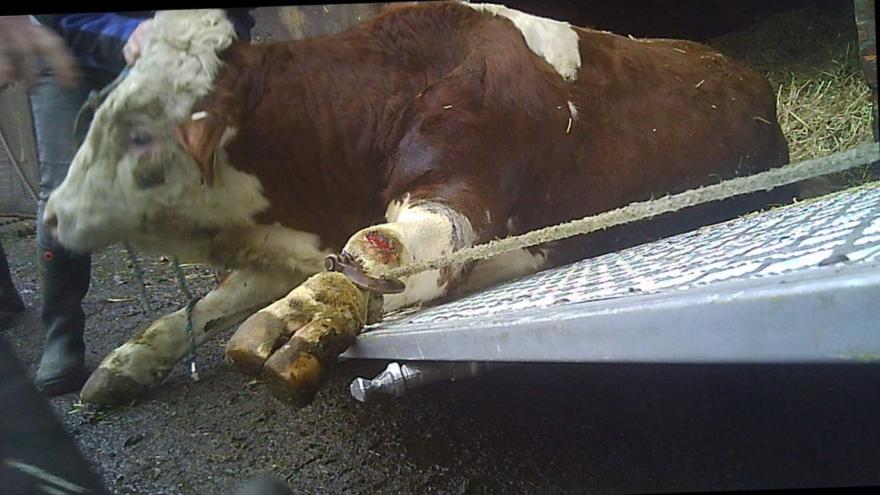
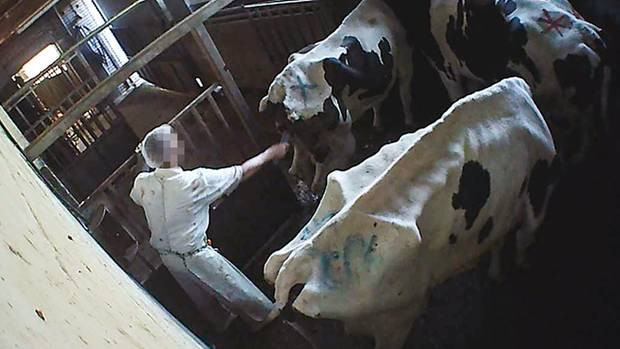
The horror of Bad Iburg, the slaughterhouse that had seriously ill and dying cows dragged to their deaths from all over Germany, will have serious consequences for dozens of animal transport drivers and numerous farmers. So far, authorities have focused only on butchers and veterinarians.
Now and after alleged animal welfare violations in this slaughterhouse, the public prosecutor’s office in Oldenburg has expanded its investigations to include animal owners and drivers.
The agency is now investigating 71 people, as spokesman for the Oldenburg prosecutor, Thorsten Stein, said on Tuesday.
Image: SOKO Tierschutz
There have been new allegations against 14 farmers, against 38 drivers and ten responsible transport companies. The reason for the expansion of the investigation is the evaluation of video recordings made by animal rights activists from the SOKO animal protection organizationin the slaughterhouse.
The accused animal owners are accused of not properly examining injured or sick animals by the veterinarian and having them transported to the slaughterhouse despite their condition.
The drivers are accused of knowing about the injuries or illnesses of the animalsand nevertheless having transported them. The police in the Osnabrück district are responsible for the questioning of the accused.
In addition to the new suspects, the public prosecutor’s office is investigating the two slaughterhouse operators, a veterinarian man and a veterinarian woman and five former employees of the company.
It is currently unclear when the investigation will be concluded.
In autumn 2018, activists from the “SOKO Welfare Organization”documented the conditions in the slaughterhouse with secret filming and informed the Ministry of Agriculture.
This filed a criminal complaint.
According to the animal rights activists, cattle were sometimes pulled from the transporter with a kind of winch, tortured with electric batons and beaten. The district of Osnabrück closed the slaughterhouse after the video recordings have been published.
Things are going in the right direction.
But SOKO animal protectionalways called for the dismantling of the entire network.
The animal rights activist Friedrich Mülln, chairman of the SOKO animal protection, shows with the pictures that the company has systematically slaughtered sick and seriously injured animals. –
Image: SOKO Tierschutz
Friedrich Mülln:If anyone asks me what was the cruellest thing I’ve ever seen, it wasn’t not China’s fur farms, it wasn’t Hungary’s live plucking or France’s foie gras factories, but an unassuming building in the small town of Bad Iburg in Lower Saxony.
Image: SOKO Tierschutz
The cows were mostly walking skeletons. The animals were so emaciated that you could really see every bone and vertebra. In about 200 cases, we documented that the general condition of the animals was so bad that they could not even walk.
The flap of an animal transporter opens and the entire floor is full of completely destroyed animals. These animals were then systematically, hundreds of times, with full consciousness dragged out of there with the cable winch or with electric shocks on their knees.
Bad Iburg was hell of the cattle. I want to see this case in court”!
And I mean…Before we Germans put a finger on the Chinese or others, we should check our own stables, most of which are apparently hell for the animals, although we supposedly have the best animal welfare laws in the world!