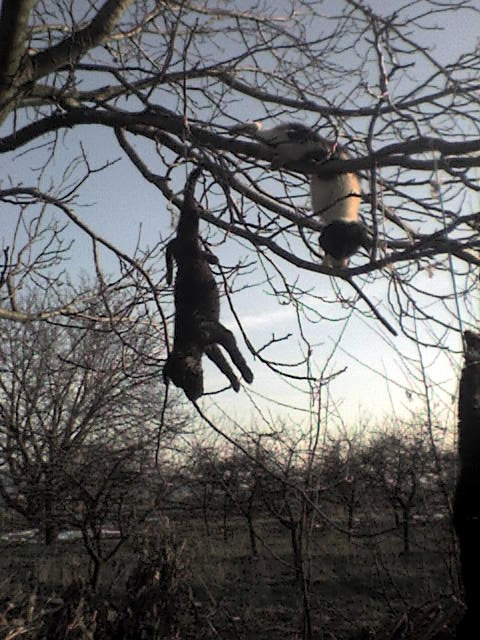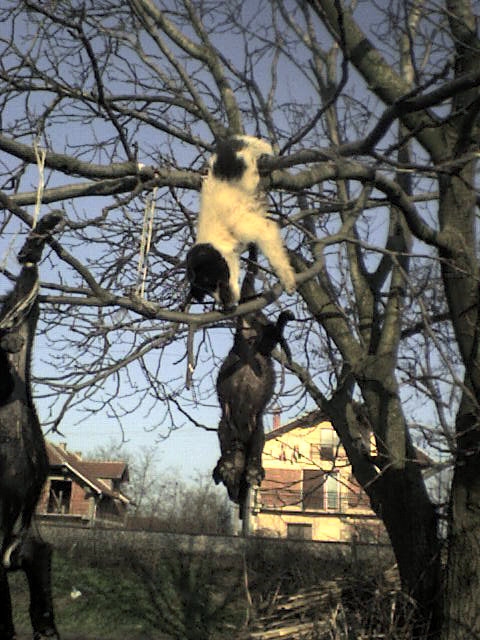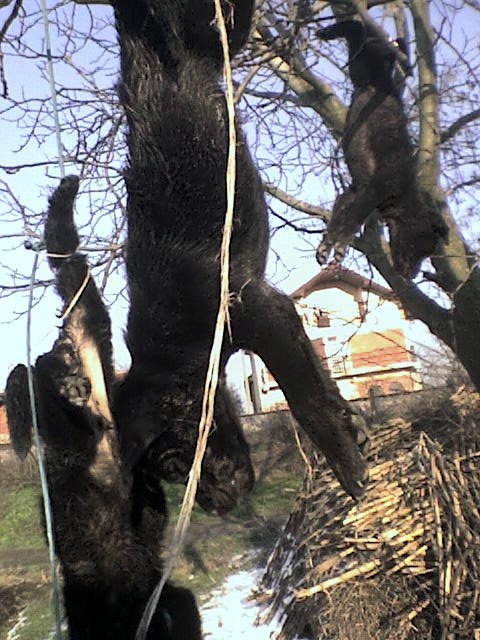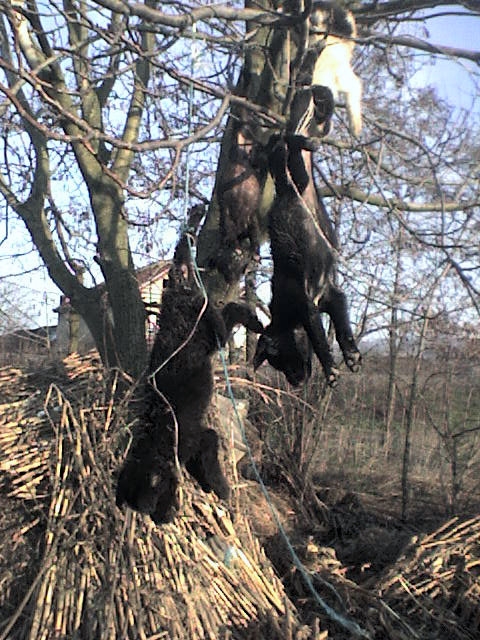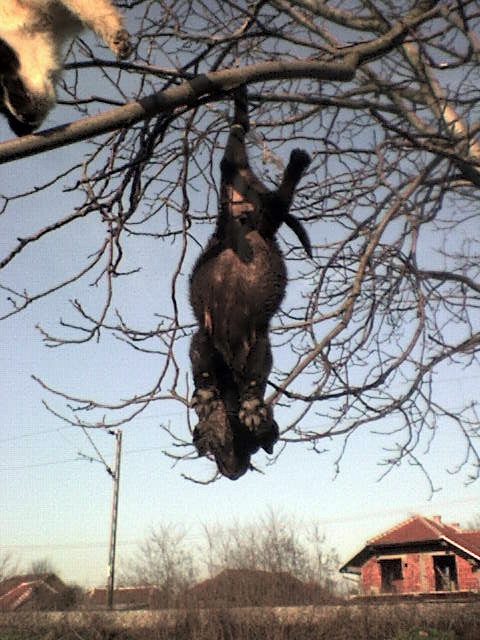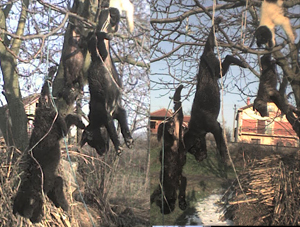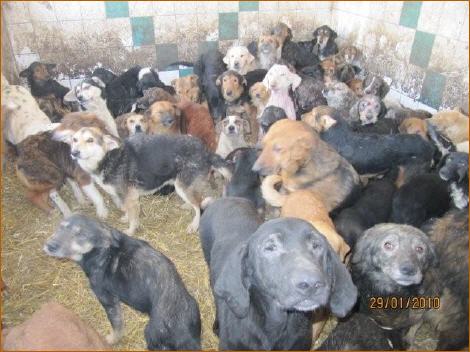
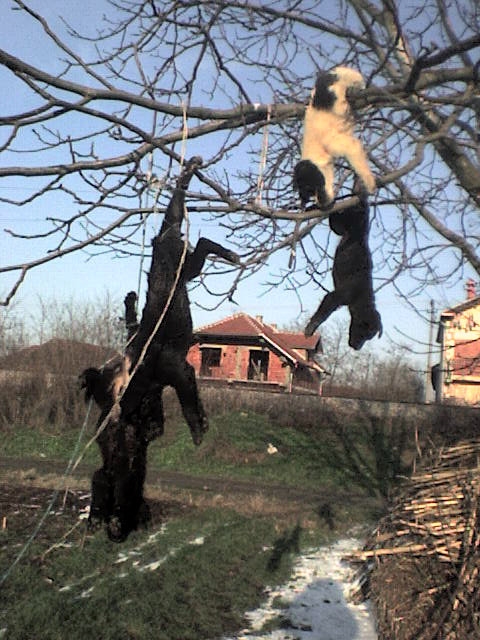
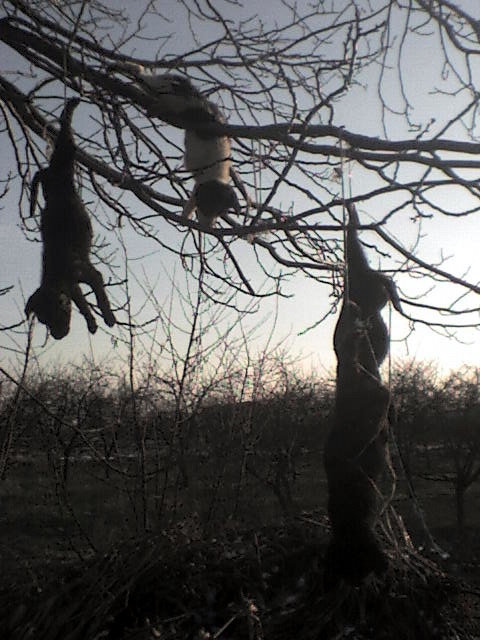
Serbia (14/03/10): More Photographs of the Dog Killings at NIS City. Protest Now – Sample Letter Provided.


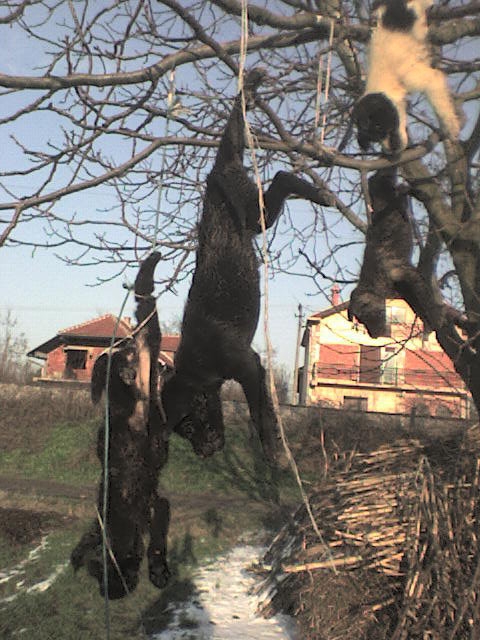
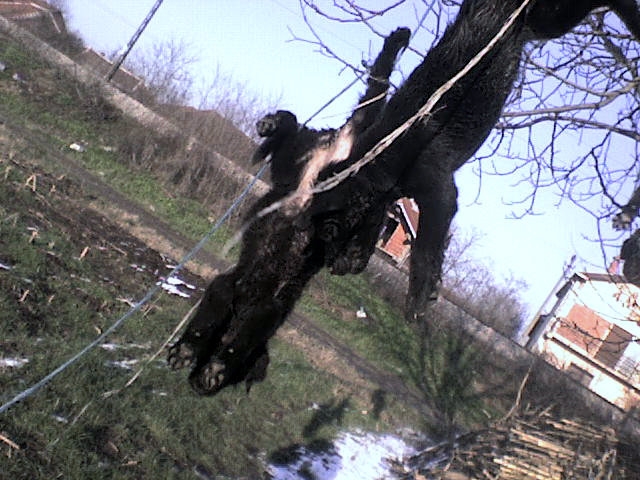
Further to our post of 12/03/10 we now have additional photographs of the dogs which were hung in the City of Nis, Serbia.  We understand that the dogs may have been drowned prior to being hung in the trees.

Link to post of 12/03:

https://serbiananimalsvoice.wordpress.com/2010/03/12/serbia-120310-illegal-spring-clean-of-stray-dogs-by-government-and-authorities-nis-city-dogs-hung-from-trees-whilst-shinters-go-killing-more-dogs-in-other-cities-and-towns/

We now have a sample letter (provided below) which we would ask you to copy and sen to the Mayor of Nis city.  Copies of this letter can also be mailed to others in the Serbian government / ministries.  Their contact details are given in the (CC to) block listing below.

We are currently working on very early plans aimed at a major, and EU approved, official drive which would give EU strays and Balkans strays more protection should any Balkans states become members of the EU.  Your help and input in contacting the EU consulting organisation working on behalf of animal welfare issues will be required in the coming months.  As said, it is very early days now, but we are working at this moment on a strategy aimed at EU animal welfare changes over the next decade; and this will mean that EU strays are paramount on the list as far as many EU animal welfare organisations are concerned; and that includes us.

We may also have other very interesting news relating to the policies of some of the major animal welfare organisations within europe when it comes to stray animals.

For the immediate, if you wish to send a letter of protest to the Mayor of Nis and other Serbian officials, then please copy the sample letter below and send to the addresses given.

Disgusted by these photographs ? – then please copy and send the sample letter to all the addresses given below.

Thanks – SAV.
————————————————————————–

Please send the sample letter given below to the following addresses:

To:      mayor@ni.rs

CC to: 

muprs@mup.gov.rs,  vetincpno@nadlanu.com,   zoran.micovic@minpolj.gov.rs,     goran.milosev@minpolj.gov.rs,   office@minpolj.gov.rs,   zoran.marinkovic@minpolj.gov.rs;  muprs@mup.gov.rs;  kabinet.zpv@gov.rs;  f.diaz@oie.int,   scientific.dept@oie.int,    

SAMPLE LETTER –  SAMPLE LETTER –  

Mayor Simonovic,

I am gravely disturbed to learn of the deliberate torture of dogs in Nis, as
perpetrated in the presence of children. These dogs were deliberately hung
on tree branches and killed in a blatantly cruel manner. This is not an
isolated incidence and factually represents an indefensible, ongoing
campaign conducted by communities to address the growing population of
homeless animals. Indeed, given the transparent nature of these killings and
the seeming lack of official intervention and termination, it is alleged
that municipal approval has been extended to sanction this. As such, I am
demanding immediate intervention to protect these animals and criminalize
the people responsible for such cruelty.

Allow me this moment to elaborate. Animals are sentient creatures who, as
humans, experience joy, loneliness, fear, and pain. As humans, we
unethically elevate ourselves to a status of superiority over all other
beings, thereby rationalizing the brutality to which we subject them. We
embrace this position as an elite class of six billion individuals, adopting
euphemistic descriptions and apathetic banalities to justify this inequity.
Speciesism, the discrimination of other beings, is a dangerous precept on
which to stand, as immoral as sexism and racism; when human animals allow
the exploitation and killing of 60 billion non-human animals globally and
annually, we have become a group willingly complicit in such brutality,
apathetic and selfish, disguising such maliciousness as excusable necessity,
which is not only grossly unjust and immoral, but it is also exceedingly
wrong.

Ours is not a challenge to be regarded as humans against humans but rather
as a welcomed obligation, indeed privilege, to maintain an international
attitude of compassion and justice to our non-human animal friends. We do
not gain power or control by degrading animals but rather we desensitize
ourselves to all cruelty and victims become mere numbers, statistics, or
unethical financial means. Objectifying animals by condoning their abusers’
violent acts or rejecting animals as undeserving of empathy and respect only
erodes our capacity for humaneness towards all living creatures.

It is impossible to contemplate supporting any country, via tourism or
commerce, that excuses such blatant animal cruelty
; as a direct consequence,
the global community, refusing to defend this maliciousness, will condemn
any further exploitation through personal boycotts
. Ours is not an ambiguous
request; you should understand that further killing will prove not only
socially unacceptable but also financially irresponsible. As such, please
provide immediate relief for these innocent animals and instead be a
representation of animal compassion and strive to foster an ideal whereby
animals are respected and empathized by your citizens.

Allocate resources to construct shelters; implement sterilization and vaccination programs to
prevent homeless populations and colony disease outbreaks; accept local and
international advice and assistance; implement laws addressing current legal
vulnerabilities; and enforce existing laws establishing animal cruelty as
criminal.

I hope this letter finds you willing to scrutinize both your own involvement
in the intentional exploitation of animals and your desire to therefore
protect, rather than harm, them.

Thank you for your attention to this urgent issue.

Name:
Nationality:

———————————————————————


Serbia: Take Action (Petition) for Shelter Dogs NOW – or they Will be Killed By End of March.


 SUPPORT SERBIAN SHELTER STRAYS NOW.

 Please, please sign the following petition.

Also watch the excellent video about stray animals and the suffering they endure.

Petition Link:  

http://www.thepetitionsite.com/2/stop-euthanasia-in-dog-shelter-in-serbia 

Petition Outline:  

PROTEST against EUTHANAZIA EUTHANAZIA FOR  70 DOGS
IN THE SHELTER OF BECEJ, SERBIA.

If we don’t gather for action, 70 dogs will die.

WE CAN NOT ACCEPT THAT :

Becej shelter has a welcoming capacity for 120 dogs. Today, despite a huge effort for massive sterilisation, the number of dogs has increased and got to 187 dogs, which led the municipality to order the following action : before the end of march 2010, 70 dogs will be killed.

Seeing the efforts from the international volunteers and investment of associations in the shelter to improve everyday the condition of dogs in this shelter, and according to the more and more numerous people interested in this cause, to the increasing number of adopted dogs abroad, we determine that killing the dogs is not a solution to street dogs and surpopulation in shelters.

Hand the efforts from the international volunteers and associations of investment in the shelter everyday to Improve the condition of dogs in this shelter, and according to the more numerous and more people interested in this case to the Increasing number of dogs adopted abroad, we determined that killing the dogs is not a solution to street dogs and overcrowding in shelters.

Official demand towards the mayor of Becej : Official demand towards the mayor of Becej:

WE REFUSE THIS MASSIVE EUTHANAZIA 

We want more means and more employees

We want to pursue the sterilization instead of killing

We want to spare these 70 lives thanks to adoptions

For this, we promise to pursue the adoption effort throughout the whole European Union and to keep helping financially the shelter and the sterilization.

Sterilization and adoptions, YES.
Euthanazia, NO.

http://nobodysdog.e-monsite.com/accueil.html 
  
*** MUST WATCH *** –   Video Link – 
http://dailymotion.virgilio.it/video/k14jqMlSCDOLQR15RFT 
 
Thanks to Paola for providing this information.


Serbia (12/03/10): Illegal ‘Spring Clean’ of Stray Dogs by Government and Authorities ? – Nis City – Dogs Hung From Trees Whilst Shinters Go Killing More Dogs in Other Cities and Towns ?


The city of Nis in Serbia.

It is understood at the moment that dog catchers (Shinters) from Nis are going to other towns to catch dogs for money.

Serbian Animal welfare advocates should come together and bring a criminal charge against the authorities ?

We are all aware of the Constitutional Court announcement relating to strays from 2005:

https://serbiananimalsvoice.wordpress.com/2010/01/25/serbia-constitutional-court-of-serbia-says-that-the-killing-of-stray-dogs-and-cats-in-serbia-is-forbidden-from-02102005/ 

–     the killing of stray dogs and cats in Serbia is forbidden from 02/10/2005.

Also in Nis, dogs are being hung from trees as is shown in the ‘Kurir’ newspaper article of 12th March:

http://www.kurir-info.rs/clanak/vesti/kurir-12-03-2010/zverstvo 

We are not being provided with any updates or further news about this situation.

The EU cannot currently act to enforce legislation in a non EU nation such as Serbia.  But non compliance of its own national legislation by a future (possible EU member state such as Serbia) would not be welcome within the EUWe will do all we can to present to the EU authorities the situation of national non compliance of legislation for animals by the Serbian government / authorities.

The changes need to come from within Serbia.

Serbian Animal welfare advocates should come together and bring a criminal charge against the authorities ?

Only when this is done can the evidence of the Serbian authorities non compliance with their own legislation be used as a reason for their non accession of the EU.  A requirement of EU legislation is for states applying for membership (accession) to show enforcement of the national ‘rule(s) of law’.  This is not being done, and should prevent EU membership.

EU campaigners will support Serbian welfare advocates by presenting evidence obtained by them to the EU.  But the campaign to get existing national Serbian legislation enforced and making crimal charges because of the non-enforcement must start from within Serbia, not from EU welfare campaigners.

Other recent posts about Serbia:

https://serbiananimalsvoice.wordpress.com/2010/03/10/serbia-has-a-national-rabies-outbreak-been-invented-as-the-only-legal-way-to-now-kill-stray-animals-it-appears-that-the-oie-have-not-been-informed-of-these-outbreaks/

https://serbiananimalsvoice.wordpress.com/2010/03/09/serbia-many-cases-of-rabies-throughout-the-country-but-is-the-serbian-government-reporting-this-to-the-oie-world-organisation-for-animal-health-as-they-should-maybe-not/ 

Do we have here lots of evidence of Serbian national / OIE legislation non-compliance ? – Serbian Animal welfare advocates should come together and bring a criminal charge against the authorities ?

Only then will EU welfare campaigners have something to support Serbian campaigners with at the EU.

Serbia: Has A National Rabies Outbreak Been ‘Invented’ As the Only Government Approved ‘Legal’ Way to Now Kill Stray Animals ? – It Appears That the OIE (World Animal Health) Have NOT Been Informed of These Outbreaks by Serbia; so are they REAL ?

There is some very disturbing news now arriving from within Serbia.

Please refer to our recent post regarding the alleged cases of Rabies which are happening all over the country:

https://serbiananimalsvoice.wordpress.com/2010/03/09/serbia-many-cases-of-rabies-throughout-the-country-but-is-the-serbian-government-reporting-this-to-the-oie-world-organisation-for-animal-health-as-they-should-maybe-not/

It is declared by campaigners that all the locations and cases given in the above post are simply an attempt by the government and authorities to undertake a mass killing spree of unwanted stray dogs and cats. 

Because the Serbian Constitutional Court declared that from 02/10/2005, the new Veterinary Law Article 168 effectively destroyed everything that was written in old, previous legislation, Pravilnik 29/94; with the 2005 law demanding the care of animals.

Pravilnik 29/94 was overwritten by Article 168, the result being that all killing of animals was forbidden apart only from cases for Rabies infected areas, which were covered by application of Articles 64 and 65 of the Veterinary Law.  Our recent post gives more information on the court declaration:

https://serbiananimalsvoice.wordpress.com/2010/01/25/serbia-constitutional-court-of-serbia-says-that-the-killing-of-stray-dogs-and-cats-in-serbia-is-forbidden-from-02102005/

So the situation is now, has the government ‘invented’ mass Rabies outbreaks throughout Serbia in order that a mass killing can be undertaken ?

The most important point with all of this is that the World Organisation for Animal Health, the ‘OIE’; who publish new data every week on animal disease outbreaks across the world, do NOT appear to have been informed by the Serbian government of any of these alleged Rabies outbreaks in Serbia.

The weekly global disease outbreak report / notification published by the OIE, and which can be viewed at:

http://www.oie.int/wahis/public.php?page=weekly_report_index&admin=0 

DOES NOT SHOW that there have been any official notifications by the Serbian authorities to the OIE to ‘provide actual evidence’ that there are in fact Rabies outbreaks in these regions of Serbia.

If the OIE have not been informed of Rabies outbreaks, and the Serbian Constitutional Court has declared that from 02/10/2005 there must be care of animals, which includes all stray animals, it has to be asked if this process is something which has simply been invented by the Serbian autorities as a way of killing off the now protected stray animals of Serbia ? – ie. is this corruption ?

If Rabies is valid across Serbia, then why has the OIE not put the imnformation onto its weekly database ? – most probably because the OIE has not been informed by Serbia, possibly because in reality, the Rabies outbreaks DO NOT ACTUALLY EXIST !!

Our previous post shows all the areas of Serbia which are allegedly having Rabies problems:

https://serbiananimalsvoice.wordpress.com/2010/03/09/serbia-many-cases-of-rabies-throughout-the-country-but-is-the-serbian-government-reporting-this-to-the-oie-world-organisation-for-animal-health-as-they-should-maybe-not/ 

And yet the OIE do NOT appear to be aware of these outbreaks.

An ‘official’ Rabies outbreak is now the only way that Serbian authorities could undertake the killing of stray animals.  Pravilnik 29/94 was overwritten by Article 168, the result being that all killing of animals was forbidden apart only from cases for Rabies infected areas, which were covered by application of Articles 64 and 65 of the Veterinary Law.

So we ask again, has the Serbian government invented these rabies outbreaks so that they:

  • Can undertake a mass kill of stray animals, and appear to look as if they are complying with the legislation – Articles 64 and 65 of the Veterinary Law ?
  • Make a futile attempt to reduce stray animal numbers by yet more killing rather than undertake a managed and humane programme of stray animal control as we have always provided evidence for during the last five years.

In the Serbian city of Zajecar, a vet named Vladimir Videnovic will be paid by the autorities to undertake the mass killing of dogs and cats.

Vet Vladimir Videnovic is also a member of the city authority; the very same authority which decides on what actions are to be taken; such as the killing of animals in ‘Rabies outbreaks’ within the region !!

Is this simply a coincidence or part of something much more involved – devised by the government ?

Zajecar city will be starting their mass killings of animals within the next 24 hours.  Veterinarian Videnovic will be one of the main players in this process of animal killing.  He is also a hunter, and the local hunters have been called in to help with this mass animal slaughter.

It appears that no foxes have been provided to date showing that they have the rabies infection.  There are allegations that a ‘stock’ of Rabies virus is kept refrigerated so that positive results can be found when the hunters provide dead fox carcases to the veterinarians ? ! ? !

Is this simply a coincidence or part of something much more involved ?

Information on this very disturbing case of the alleged Serbian Rabies outbreaks has been provided to the OIE.  Information is also being provided to EU MEPs associated with the Animal Welfare Intergroup, who will be asked to further investigate.

If the Serbian government and authorities have nothing to hide, then we call on them to meet up with campaigners and provided them with all their evidence of Rabies outbreaks.  We would ask for witness support by the EU Intergroup, or MEPs as necessary.

To become an EU member, implementation of the ‘rule of law’ is a requirement.  We have to ask if the law is being enforced here, or invented by those in authority to actually AVOID implementing Serbian national legislation ?

The case continues.

——————————————

UPDATE 10/03/10:

“vode ih na Popovoj plazi tamo ima kontejneri koji nisu po zakonu opremljeni ubijace ih  sinteri  po nalogu videnovica veterinara
Translation:

Shinetrs of Zajecar  carry  all dogs to place named Popova plaza , there are big containers, there  dogcatcher  will kill them  and  vet  Videnovic  (mentioned above) will be present .


And, just for the record, and especially for Serbian politicians, …….


http://www.animalsasia.org/index.php?UID=NM26EGPJMP6

The use of indiscriminate dog culling as a method of rabies control has long been discredited.

According to the World Health Organisation, Killing of dogs has not been shown to make any difference in the epidemiology of rabies (Rabies elimination in South-East Asia, WHO project ICP BCT 001, 2005),

There is evidence that mass culling of dogs within a defined area can result in the explosion in populations of rats and other rodents, and a consequent increased risk of diseases such as leptospirosis (“Weil’s disease”), murine typhus (Rickettsia species), and plague (Yersinia pestis)”.


http://www.wspa.org.uk/wspaswork/dogs/strayanimals/ahumanealternative.aspx 

“An estimated 75% of the world’s dog population are strays.  Managing them presents a problem in many countries, and has serious implications for public health and animal welfare.

Lack of animal welfare education and resources mean the methods used to limit stray populations are often horrifically inhumane – poisoning, shooting and electrocution are all common

But killing street dogs randomly is not effective, because it does not address the cause of the problem.

Without resources for treatment and education about responsible pet ownership, the roaming dog population will keep growing”.


Serbia: Many Cases of Rabies Throughout the Country, but is the Serbian Government Reporting This to the OIE (World Organisation for Animal Health) As They Should ? – Maybe Not !


 OIE Link:  http://www.oie.int/eng/en_index.htm 

OIE The World Organisation for Animal Health (OIE)

8.3.2010.

Honored Gentemens/Ladies

Let us  we say to you that  thare are too many cases of rabies in Serbia country , but as we can see about no one was sent report to OIE.

How is it possible ?

If these  reports of serbian Ministerium of Agriculture are true, then  we all in Europe in very big danger are,  because  ,although all these cases  have happend ,  there is no one case of per oral vaccination of wild animals in whole Serbia , and  we ask your help .

If  these reports –  please see below – are not true , then these people who gave  these false  reports, gave   frauds to the  serbian public, and we ask your help .  

We  wrote  to serbian authorities  many time, but  with no success , they do the same things , some  games  with rabies – but  because rabies  is extrmly danheg antropozoonosys  it is not acceptable any games with its.

Thank you dear madams /sirs  for  your  time and attention, and please answer us and please help us.

Look at these below , there are here   too many areas  contaminated by rabies  in very short time  and these  egzist whole year every  year all over Serbia but just in new and new area . We want  know : are we- citizens of Serbia in real danger , or there are  here some  unacceptable games, but they are also danger . Latest case is  rabies in area of  Zajecar, Serbia ,   and many other cases are  even now not on this list because  they  just happend and list will be under correction by add  a many  new cases  :

http://www.minpolj.gov.rs/index.php?stranica=kom_clanak&naredba=prikaz&id=1359&br_stranice=0&sortiranje=&id_kategorija=39&id_menu=0

Areas  Contaminated with  Rabies  in  Serbia  –  Područja zaražena besnilom

26.02.2010 Područje u poluprečniku od najmanje 3 km od žarišta u naseljenom mestu Trubarevac, u opštini Sokobanja, i u lovištu „Bukovik”, proglašava se ZARAŽENIM od zarazne bolesti životinja BESNILA
25.02.2010 Područje u poluprečniku od najmanje 3 km od žarišta u naseljenom mestu Mačvanski Prnjavor, u opštini Šabac, i u lovištu „Dobrava”, proglašava se ZARAŽENIM od zarazne bolesti životinja BESNILA.
23.02.2010 Područje u poluprečniku od najmanje 3 km od žarišta u naseljenom mestu Srpski Itebej, u opštini Žitište, i u lovištu „Stari Begej”, proglašava se ZARAŽENIM od zarazne bolesti životinja BESNILA.
12.02.2010 Područje u poluprečniku od najmanje 3 km od žarišta u naseljenom mestu Petrovac, u opštini Petrovac, i u lovištu „Trest”, proglašava se ZARAŽENIM od zarazne bolesti životinja BESNILA.
12.02.2010 Područje u poluprečniku od najmanje 3 km od žarišta u naseljenom mestu Jasenovo, u opštini Bela Crkva, i u lovištu „Nera”, proglašava se ZARAŽENIM od zarazne bolesti životinja BESNILA.
12.02.2010 Područje u poluprečniku od najmanje 3 km od žarišta u naseljenom mestu Veliko Laole, u opštini Petrovac, i u lovištu „Krilaš”, proglašava se ZARAŽENIM od zarazne bolesti životinja BESNILA.
12.02.2010 Područje u poluprečniku od najmanje 3 km od žarišta u naseljenom mestu Novi Kneževac, u opštini Novi Kneževac, i u lovištu „Veliki  Siget”, proglašava se ZARAŽENIM od zarazne bolesti životinja BESNILA.
08.02.2010 Područje u poluprečniku od najmanje 3 km od žarišta u naseljenom mestu Takovo, u opštini Gornji Milanovac, i u lovištu „Takovo”, proglašava se ZARAŽENIM od zarazne bolesti životinja BESNILA.
08.02.2010 Područje u poluprečniku od najmanje 3 km od žarišta u naseljenom mestu Kučevo, u opštini Kučevo, i u lovištu „Pek”, proglašava se ZARAŽENIM od zarazne bolesti životinja BESNILA.
03.02.2010 Područje u poluprečniku od najmanje 3 km od žarišta u naseljenom mestu Stogazovac, u opštini Knjaževac, i u lovištu „Tresibaba”, proglašava se ZARAŽENIM od zarazne bolesti životinja BESNILA.
02.02.2010  Područje u poluprečniku od najmanje 3 km od žarišta u naseljenom mestu  Vojvoda Stepa u opštini Nova Crnja, i u lovištu „Koštanac”, proglašava se ZARAŽENIM od zarazne bolesti životinja BESNILA
02.02.2010 Područje u poluprečniku od najmanje 3 km od žarišta u naseljenom mestu  Jošanička Banja u opštini Raška, i u lovištu „Jošanica”, proglašava se ZARAŽENIM od zarazne bolesti životinja BESNILA.
25.01.2010. Područje u poluprečniku od najmanje 3 km od žarišta u naseljenom mestu  Tinsert rov
opola(varoš) u opštini Topola, i u lovištu „Kamenica”, proglašava se ZARAŽENIM od zarazne bolesti životinjaBESNILA.
   
25.01.2010. Područje u poluprečniku od najmanje 3 km od žarišta u naseljenom mestu  Torak u opštini Žitište, i u lovištu „Stari Begej”, proglašava se ZARAŽENIM od zarazne bolesti životinjaBESNILA.
   
25.01.2010. Područje u poluprečniku od najmanje 3 km od žarišta u naseljenom mestu Aleksandrovo u opštini Nova Crnja, i u lovištu „Koštanac”, proglašava se ZARAŽENIM od zarazne bolesti životinjaBESNILA
   
25.01.2010. Područje u poluprečniku od najmanje 3 km od žarišta u naseljenom mestu  Lipolist u opštini Šabac, i u lovištu „Miloševica”, proglašava se ZARAŽENIM od zarazne bolesti životinjaBESNILA
   
25.01.2010. Područje u poluprečniku od najmanje 3 km od žarišta u naseljenom mestu  Banatsko Višnjićevo u opštini Žitište, i u lovištu „Stari Begej”, proglašava se ZARAŽENIM od zarazne bolesti životinja BESNILA
   
28.12.2009. Područje u p oluprečniku od najmanje 3 km od žarišta u naseljenom mestu Susek(vikend naselje Koruška), u opštini Beočin, i u lovištu „Čot“, proglašava se ZARAŽENIM od zarazne bolesti životinja BESNILA
   
28.12.2009. Područje u poluprečniku od najmanje 3 km od žarišta u naseljenom mestu Melenci, u opštini Zrenjanin, i u lovištu „Begej“, proglašava se ZARAŽENIM od zarazne bolesti životinja BESNILA
   
28.12.2009. Područje u poluprečniku od najmanje 3 km od žarišta u naseljenom mestu Ruma, u opštini Buđanovci, i u lovištu „Srem“, proglašava se ZARAŽENIM od zarazne bolesti životinja BESNILA
   
28.12.2009. Područje u poluprečniku od najmanje 3 km od žarišta u naseljenom mestu Kaona, u opštini Lučani, i u lovištu „Dragačevo“, proglašava se ZARAŽENIM od zarazne bolesti životinja BESNILA
   
16.12.2009. Područje u poluprečniku od najmanje 3 km od žarišta u naseljenom mestu Pećani-Umka, u opštini Čukarica, i u lovištu „Topčiderska Reka“, proglašava se ZARAŽENIM od zarazne bolesti životinja BESNILA
   
16.12.2009. Područje u poluprečniku od najmanje 3 km od žarišta u naseljenom mestu Sečanj, u opštini Sečanj, i u lovištu „Vučjak“, proglašava se ZARAŽENIM od zarazne bolesti životinja BESNILA
   
11.12.2009. Područje u poluprečniku od najmanje 3 km od žarišta u naseljenom mestu Kravlji Do, u opštini Malo Crniće , i u lovištu „Orlovača“, proglašava se ZARAŽENIM od zarazne bolesti životinja BESNILA
   
11.12.2009. Područje u poluprečniku od najmanje 3 km od žarišta u naseljenom mestu Davidovac, u opštini Kladovo , i u lovištu „Ključ“, proglašava se ZARAŽENIM od zarazne bolesti životinja BESNILA
   
09.12.2009. Područje u poluprečniku od najmanje 3 km od žarišta u naseljenom mestu Sibač, u opštini Pećinci , i u lovištu „Obedska Bara“, proglašava se ZARAŽENIM od zarazne bolesti životinja BESNILA.
   
03.12.2009. Područje u poluprečniku od najmanje 3 km od žarišta u naseljenom mestu Aleksandrovac, u opštini Aleksandrovac , i u lovištu „Župa“, proglašava se ZARAŽENIM od zarazne bolesti životinja BESNILA
   
03.12.2009. Područje u poluprečniku od najmanje 3 km od žarišta u naseljenom mestu Culine, u opštini Mali Zvornik , i u lovištu „Podrinje“, proglašava se ZARAŽENIM od zarazne bolesti životinja BESNILA
   
02.12.2009. Područje u poluprečniku od najmanje 3 km od žarišta u naseljenom mestu Alibunar, u opštini Alibunar , i u lovištu „Srednji Banat“, proglašava se ZARAŽENIM od zarazne bolesti životinja BESNILA
   
02.12.2009. Područje u poluprečniku od najmanje 3 km od žarišta u naseljenom mestu Gornje Jarušice, u opštini Kragujevac , i u lovištu „Lepenica“, proglašava se ZARAŽENIM od zarazne bolesti životinja BESNILA
   
02.12.2009. Područje u poluprečniku od najmanje 3 km od žarišta u naseljenom mestu Manđelos, u opštini Sremska Mitrovica , i u lovištu „Srem-Mačva“, proglašava se ZARAŽENIM od zarazne bolesti životinja BESNILA
   
02.12.2009. Područje u poluprečniku od najmanje 3 km od žarišta u naseljenom mestu Gonje, u opštini Sjenica , i u lovištu „Caričin Grad“, proglašava se ZARAŽENIM od zarazne bolesti životinja BESNILA
   
02.12.2009. Područje u poluprečniku od najmanje 3 km od žarišta u naseljenom mestu Korenita, u opštini Loznica , i u lovištu „Jadar“, proglašava se ZARAŽENIM od zarazne bolesti životinja BESNILA
   
30.11.2009. Područje u poluprečniku od najmanje 3 km od žarišta u naseljenom mestu Pilatovići, u opštini Požega , i u lovištu „Miloševo“, proglašava se ZARAŽENIM od zarazne bolesti životinja BESNILA
   
30.11.2009. Područje u poluprečniku od najmanje 3 km od žarišta u naseljenom mestu Krušedol, u opštini Irig , i u lovištu „Gornje Polje“, proglašava se ZARAŽENIM od zarazne bolesti životinja BESNILA
   
17.11.2009. Područje u poluprečniku od najmanje 3 km od žarišta u naseljenom mestu Krajišnik, u opštini Sečanj , i u lovištu „Vučjak“, proglašava se ZARAŽENIM od zarazne bolesti životinja BESNILA
   
09.11.2009. Područje u poluprečniku od najmanje 3 km od žarišta u naseljenom mestu Sutjeska, u opštini Sečanj , i u lovištu „Vučjak“, proglašava se ZARAŽENIM od zarazne bolesti životinja BESNILA.
   
09.11.2009. Područje u poluprečniku od najmanje 3 km od žarišta u naseljenom mestu Vrdnik, u opštini Irig, i u lovištu „Gornje Polje“, proglašava se ZARAŽENIM od zarazne bolesti životinja BESNILA.
   
09.11.2009. Područje u poluprečniku od najmanje 3 km od žarišta u naseljenom mestu Banatsko Karađorđevo, u opštini Žitište, i u lovištu „Trnovica“, proglašava se ZARAŽENIM od zarazne bolesti životinja BESNILA.
   
09.11.2009. Područje u poluprečniku od najmanje 3 km od žarišta u naseljenom mestu Lenovac, u opštini Zaječar , i u lovištu „Kraljevica“, proglašava se ZARAŽENIM od zarazne bolesti životinja BESNILA.
   
09.11.2009. Područje u poluprečniku od najmanje 3 km od žarišta u naseljenom mestu Popovac, u opštini Paraćin, i u lovištu „Crnica“, proglašava se ZARAŽENIM od zarazne bolesti životinja BESNILA.
   
09.11.2009. Područje u poluprečniku od najmanje 3 km od žarišta u naseljenom mestu Kikinda, u opštini Kikinda , i u lovištu „Varoški Rit“, proglašava se ZARAŽENIM od zarazne bolesti životinja BESNILA.


16.10.2009. Rešenje o proglašenju besnila kod životinja u naseljenom mestu Junkovac, u opštini Lazarevac
   
29.09.2009. Rešenje o proglašenju besnila kod životinja u naseljenom mestu Gorovič u opštini Topola
   
29.09.2009. Rešenje o proglašenju besnila kod životinja u naseljenom mestu Šume u opštini Topola
   
29.09.2009. Rešenje o proglašenju besnila kod životinja u naseljenom mestu Lepena u opštini Knjaževac
   
29.09.2009. Rešenje o proglašenju besnila kod životinja u naseljenom mestu Gornja Trnava u opštini Topola
   
14.09.2009. Rešenje o proglašenju besnila kod životinja u naseljenom mestu Gornje Nedeljice u opštini Loznica
   
09.09.2009. Rešenje o proglašenju besnila kod životinja u naseljenom mestu Pambukovica u opštini Ub
   
09.09.2009. Rešenje o proglašenju besnila kod životinja u naseljenom mestu Jarkovac u opštini Sečanj
   
04.09.2009. Rešenje o proglašenju besnila kod životinja u naseljenom mestu Ševica u opštini Kučevo
   
04.09.2009. Rešenje o proglašenju besnila kod životinja u naseljenom mestu Čestobrodica u opštini Požega
   
03.09.2009. Rešenje o proglašenju besnila kod životinja u naseljenom mestu Ploče u opštini Aleksandrovac
   
27.08.2009. Rešenje o proglašenju besnila kod životinja u naseljenom mestu Lazarevo u opštini Zrenjanin
   
27.08.2009. Rešenje o proglašenju besnila kod životinja u naseljenom mestu Buljane u opštini Paraćin
   
14.08.2009. Rešenje o proglašenju besnila kod životinja u naseljenom mestu Tomaševac u opštini Zrenjanin
   
12.08.2009. Rešenje o proglašenju besnila kod životinja u naseljenom mestu Sušica, opština Valjevo
   
29.06.2009. Rešenje o proglašenju besnila kod životinja u naseljenom mestu LJig
   
25.06.2009. Rešenje o proglašenju besnila kod životinja u naseljenom mestu Cerje
   
24.06.2009. Rešenje o proglašenju besnila kod životinja u naseljenom mestu Pribojska banja
   
22.06.2009. Nadležnosti i postupak kontrole bezbednosti hrane na graničnim prelazima
   
18.05.2009. Rešenje o proglašenju besnila kod životinja u naseljenom mestu Družetići

Do authorities of Serbia have obligation to act in agreement to this list-below , and  to send  report about every of rabies case  to OIE ,   or not , –  and what like is  position and official suggestion of  OIE  in metter of peroral vaccination of wild animals if  all these cases are true   :

Updated: 04/01/2010

OIE Listed diseases


Multiple species diseases

  • Anthrax
    · Aujeszky’s disease
    · Bluetongue
    · Brucellosis ( Brucella abortus 
    · Brucellosis ( Brucella melitensis 
    · Brucellosis ( Brucella suis 
    · Crimean Congo haemorrhagic fever 
    · Echinococcosis/hydatidosis
    · Epizootic haemorrhagic disease
    · Equine encephalomyelitis (Eastern) 
    · Foot and mouth disease 
    · Heartwater 
    · Japanese encephalitis 
    · Leptospirosis 
    · New world screwworm ( Cochliomyia hominivorax 
    · Old world screwworm ( Chrysomya bezziana 
    · Paratuberculosis 
    · Q fever 
    · Rabies
    · Rift Valley fever
    · Rinderpest
    · Surra (Trypanosoma evansi
    · Trichinellosis
    · Tularemia
    · Vesicular stomatitis
    · West Nile fever
Cattle diseases

  • Bovine anaplasmosis
    · Bovine babesiosis
    · Bovine genital campylobacteriosis
    · Bovine spongiform encephalopathy 
    · Bovine tuberculosis
    · Bovine viral diarrhoea
    · Contagious bovine pleuropneumonia 
    · Enzootic bovine leukosis
    · Haemorrhagic septicaemia
    · Infectious bovine rhinotracheitis/infectious    pustular vulvovaginitis
    · Lumpky skin disease
    · Theileriosis
    · Trichomonosis
    · Trypanosomosis (tsetse-transmitted)
 
Sheep and goat diseases

  • Caprine arthritis/encephalitis
    · Contagious agalactia
    · Contagious caprine pleuropneumonia
    · Enzootic abortion of ewes (ovine chlamydiosis)
    · Maedi-visna
    · Nairobi sheep disease
    · Ovine epididymitis (Brucella ovis)
    · Peste des petits ruminants
    · Salmonellosis (S. abortusovis)
    · Scrapie
    · Sheep pox and goat pox
Equine diseases

  • African horse sickness
    · Contagious equine metritis
    · Dourine
    · Equine encephalomyelitis (Western)
    · Equine infectious anaemia
    · Equine influenza
    · Equine piroplasmosis
    · Equine rhinopneumonitis
    · Equine viral arteritis
    · Glanders
    · Venezuelan equine encephalomyelitis
Swine diseases

  • African swine fever
    · Classical swine fever
    · Nipah virus encephalitis 
    · Porcine cysticercosis
    · Porcine reproductive and respiratory syndrome
    · Swine vesicular disease
    · Transmissible gastroenteritis
Avian diseases

  • Avian chlamydiosis
    · Avian infectious bronchitis 
    · Avian infectious laryngotracheitis
    · Avian mycoplasmosis (M. gallisepticum)
    · Avian mycoplasmosis (M. synoviae)
    · Duck virus hepatitis 
    · Fowl cholera
    · Fowl typhoid
    · Highly pathogenic avian influenza and low pathogenic avian influenza in poultry as perChapter 10.4. of the Terrestrial Animal Health Code
    · Infectious bursal disease (Gumboro disease)
    · Marek’s disease
    · Newcastle disease
    · Pullorum disease
    · Turkey rhinotracheitis
Lagomorph diseases

  • Myxomatosis
    · Rabbit haemorrhagic disease
Bee diseases

  • Acarapisosis of honey bees
    · American foulbrood of honey bees
    · European foulbrood of honey bees
    · Small hive beetle infestation (Aethina tumida
    · Tropilaelaps infestation of honey bees
    · Varroosis of honey bees
Fish diseases

  • Epizootic haematopoietic necrosis
    · Infectious haematopoietic necrosis
    · Spring viraemia of carp
    · Viral haemorrhagic septicaemia
    · Infectious salmon anaemia 
    · Epizootic ulcerative syndrome 
    · Gyrodactylosis (Gyrodactylus salaris)
    · Red sea bream iridoviral disease
    · Koi herpesvirus disease 
Mollusc diseases

  • Infection with Bonamia ostreae
    · Infection with Bonamia exitiosa
    · Infection with Marteilia refringens
    · Infection with Perkinsus marinus
    · Infection with Perkinsus olseni
    · Infection with Xenohaliotis californiensis
    · Infection with abalone herpes-like virus
Crustacean diseases

  • Taura syndrome 
    · White spot disease 
    · Yellowhead disease 
    · Infectious hypodermal and haematopoietic necrosis
    · Crayfish plague (Aphanomyces astaci)
    · Infectious myonecrosis
    · White tail disease 
Amphibians

  • Infection with Batrachochytrium dendrobatidis 
    · Infection with ranavirus
Other diseases

  • · Camelpox 
    · Leishmaniosis


Thanks for your time and attention. We are waiting for your answer  with your suggestions .

 MD Slavica Mazak Beslic on behalf of

Friend-EPAR/OIPA Serbia /Alliance for  nonhuman and human Animals Rights


Serbia: ‘Firbin’ Shelter Campaign – EuroP.A.S. – Help Required

A call for help for animals at Serbian shelter “Firbin” is now on the EuroPas website:

http://www.euro-pas.de/0000009c78098c101/03fb1f9d0f130db09/index.html

They are asking for material and money donations (to the same account as before; just stating use of money as “Firbin” for this campaign, not “Smederevo” as covered recently).

Primarily they need medical supplies including:

treatments against Demodex
– Vitamin supplements
– Worm treatments
– Antibiotics
– Vaccines

Is anyone, anywhere able to help please ? – can your local vet give a donation of treatments free of charge ?

Photos – EuroPAS

The EuroPAS ‘Smederevo’ campaign is also still running

http://www.euro-pas.de/22500098ac0e77402/03fb1f9d070fa4516/index.html

There are several ways to assist – either with a money donation, or by having something (feed or otherwise) sent from

http://www.zooplus.com/

Germanyhttp://www.zooplus.de
Ukhttp://www.zooplus.co.uk/

ZooPlus runs several other international sites:

Netherlands – http://www.zooplus.nl/

France – http://www.zooplus.fr/

Belgium – http://www.zooplus.be/

Ireland – http://www.zooplus.ie/

Poland – http://www.zooplus.pl/

Italy – http://www.zooplus.it/

Spain – http://www.zooplus.es/

Czech Republic  – http://www.zoohit.cz/

Direct order and delivery of items to EuroPAS are also available through the German http://www.zooplus.de are sent from Germany .. that is, within the country)

Dogs houese are always urgently needed, especially in this weather:

http://www.zooplus.co.uk/shop/dogs/dog_houses_flaps

as is feed:

http://www.zooplus.co.uk/shop/dogs/dry_dog_food

(NOTE – most of these items are current special offers, and hence reduced)

As concerns money donations –

These are to be sent to:

Beneficiary: Euro-P.A.S. e.V.
Account no.: 312 599 22
Bank code: 700 530 70
Bank: Sparkasse Fuerstenfeldbruck

Please state intended use of donation: ‘Firbin’ or ‘Smederevo’

For international transfers you will need this information too:

IBAN: DE87 7005 3070 0031 2599 22
BIC: BYLADEM1FFB

Serbia: ** VERY IMPORTANT **- Constitutional Court of Serbia Says That the Killing of Stray Dogs and Cats in Serbia is Forbidden From 02/10/2005

The Constitutional Court of Serbia says that the killing of stray dogs and cats in Serbia is forbidden from 02/10/2005.

Prior to the Veterinary Law of 02/10/2005, there was an old law dating from 1991 for the health protection of animals. 

In agreement with the old law of 1991, the authorities produced their own other ‘underlaw’ (extra law) regulation – named ‘Pravilnik 29/94’, which was intorduced to allow the killing of animals after they were held in pounds for 3 to 7 days.

From 02/10/2005, the new Veterinary Law Article 168 effectively destroyed everything that was written in Pravilnik 29/94, because the 2005 law demanded the care of animals.

Pravilnik 29/94 was overwritten by Article 168, the result being that all killing of animals was forbidden apart only from cases for Rabies infected areas, which were covered by application of Articles 64 and 65 of the Veterinary Law.

By continuing to undertake the killing of animals after 3 to 7 days in accordance with regulation Pravilnik 29/94, the authorities were then in a situation where they were working in opposition to the actual existing law.  Underlaw regulations (Pravilnik 29/94 also) have less power than the actual legal legislation, and they must certainly be in written agreement with the actual legislation, because if they are not in agreement, then the underlaw is simply not valid legislation.

But it is very much the case, even up to the present day, where authorities are still using Pravilnik 29/94 as a reason for the killing of animals.  But in reality, Pravilnik 29/94 became nonexistent on 02/10/2005 with the introduction of the new Veterinary Law (Article 168).  Hence there should be no killing, but animal care instead.

Whatever, Pravilnik 29/94 is only an ‘underlaw’ (extra law) regulation, has very less power than the actual law, and most importantly, must be in agreement with the existing law.  Pravilnik 29/94 was valid originally (1991 on) to protect animal health but is now in opposition to the new and current animal law – the new Veterinary Law Article 168 of 02/10/2005.

Serbian campaigners have written to the Constitutional Court saying that it is unlawful for Shinters (Dogcatchers) and also veterinarians to kill stray dogs and cats only after they have been held for three (3) days, as this is now old and outdated legislation.  Killing is forbidden under the new Veterinary law.

In an area where Rabies is present, then killing of animals is allowed (by Articles 64 and 65 of the Veterinary law), but an additional 18 other (Rabies control) regulations must also be complied with if an area (region) is to be protected from a Rabies outbreak.

Campaigners have now heard from the court in writing, and they say that no analysis of the case is necessary for Pravilnik 29/94 as it has been replaced by the new Veterinary Law Article 168 (02/10/2005).  This is exactly what the campaigners had said, ie. that the old ‘underlaw’ (extra law) of Pravilnik 29/94 was still being used when it fact it has been overwritten by the new Veterinary Law Article 168 of 02/10/2005.

In addition, Article 46 of the new Veterinary Law (02/10/2005) states that the killing of stray cats and dogs is forbidden and that instead they should be provided with care.

In effect, from 02/10/2005 under the Serbian Constitutional (law) Court, animals should be provided with care and not be killed.

It would appear that all of the public firms responsible for garbage collection in Serbian cities are still working to, and effectively using Pravilnik 29/94 rather than Article 46 (168) of the new Veterinary Law.  In effect, by still working to this now non existent law, these public firms who collect and kill strays are undertaking illegal work – they should be working in accordace with the new Veterinary Law Article 46 (168) of 02/10/2005 which demands care for the animals.

This is the reason why Serbian campaigners have now taken this case to the court of human rights in Strasbourg – an EU court.  The case – Garbage collectors in Serbian cities are still working using the (now) non existent Pravilnik 29/94 rather than Article 46 (168) of the new and current Veterinary Law of 02/10/2005 which demands care.  In addition, campaigners have requested justification be presented for all the animal killings by the authorities from 02/10/2005 right up to the present day.

So the situation currently is that if Article 46 of the new Veterinary Law (02/10/2005) has been complied with, which states that the killing of stray cats and dogs is forbidden and that instead they should be provided with care; then there should be many, many (thousands) dogs currently in municipal, city shelters (from 02/10/2005).  But Serbian campaigners actually have documented the numbers of animals which were collected and taken to city shelters; many of which have then been (illegally) killed thereafter.

A situation which now someone in authority should have to answer; where are all the dogs and cats that should be in the shelters under existing Serbian law ? – the constitutional court declares that killing is banned from 02/10/2005.

And as another case, if the authorities say that they have NOT killed the animals due to the law and they are now in shelters, but the animals are NOT able to be seen in the shelters as they may have been killed, then where has all the public money gone which has been given to the firms and collectors who should be rounding up stray dogs and cats ?

They may say that the dogs have been found new homes with new owners and that is why they are not in the shelters.  If this is the case, then it should be documented as proof what animals were microchipped and what the address of the new owner has logged under the microchip information, as the new Veterinary law declares that it is necessary to microchip and vaccinate after they have been caught; and that un-marked and un-vaccinated dogs are not allowed. 

A new Criminal charge is currently being considered due to non compliance of existing law by many authorities throughout Serbia.  If this happens and someone who has responsibility for regulation enforcement is punished because of this, it is hoped that the punishment will make other authorities change to a no kill sterilisation strategy.

There are no excuses for a crime such as this. 

Serbian authorities  and officials are responsible for ensuring the correct laws are implemented are:

  • Mrs. Sanja Čelebićanin  -Chief of  Veterinary Inspection
  • Mr. Zoran Mićović – Director of Veterinary Department
  • Mr. Radivoje Kaurin – Chief of  Hunting – Forests Inspection.

Please look at the pictures in the following link:

http://zivotinjsko-carstvo.com/forum/index.php?showtopic=9592&st=0&start=0

These pictures all show the consequence of the non implementation of existing valid laws by the Serbian authorities.  The Mayors of Serbian cities are directly responsible for the standard of animal shelters within their region.  They are the very people who can introduce the mechanisms of change and stop much of the animal suffering.

It is not acceptable for the state and authorities simply to use Rabies as an excuse for the mass killing of both wild and stray animals right across Serbia.  Rabies will not and cannot be controlled simply by killing animals.  And the paramount point is that if the authotrities think that mass killings are the way to eliminate Rabies, then why is there a situation where Rabies exists in several parts of the country. ?

There have been many years of killing animals because of Rabies, and it has not solved the problem; Rabies has not stopped !.  And so other and better solutions to Rabies have to be considered by the authorites, solutions above and beyond killing.

We have to question why the authorities are NOT giving oral Rabies vaccination to all wild and stray animals; a vaccination which gives an immunity for approximately three (3) years.

It would appear that many / all Serbian authorities are not implementing the most recent and current legislation which would give protection to animals in shelters, but are instead using old and outdated, non existing legislation (Pravilnik 29/94) as justification for the continued killing of animals held in shelters.  In addition, Rabies is also being used as a reason for the mass killing of wildlife and stray animals in some regions, which to date appear to have very little impact on a reduction of rabies cases reported across the country.  Furthermore, authorities seem very reluctant to introduce oral rabies vaccination to both wild and stray animals; a solution considered most sensible and appropriate by animal welfare NGOs.

Maybe the taxpayers of Serbia need to be made more aware of how their money is being spent and wasted using old and outdated regulations, and old and outdated methods of rabies control.

Another very important factor here is that what has been happening since 02/10/2005 is that existing Serbian law (legislation) has not been implemented throughout the country in relation to animal welfare.

And the proof of the implementation of the ‘Rule of Law’ is a paramount requirement for any nation wishing to become a future member of the EU !