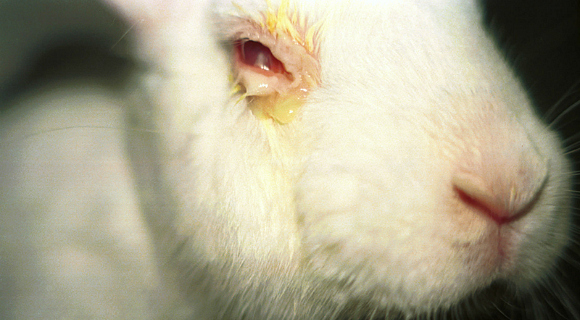
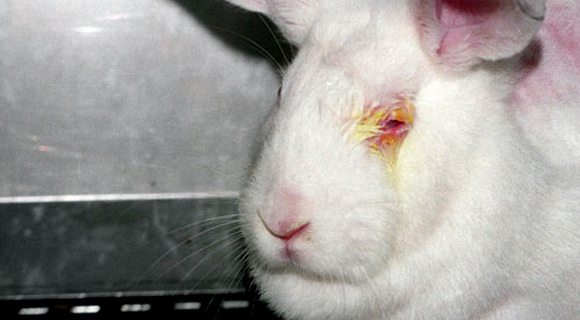
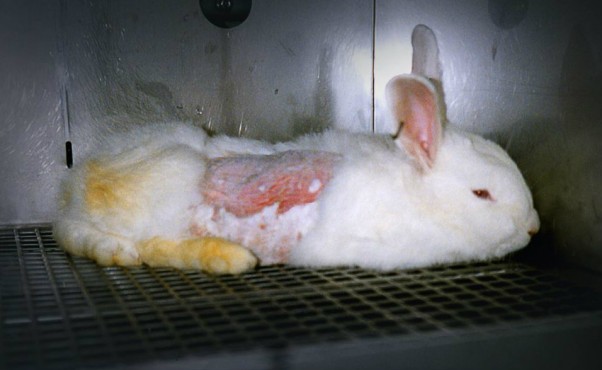
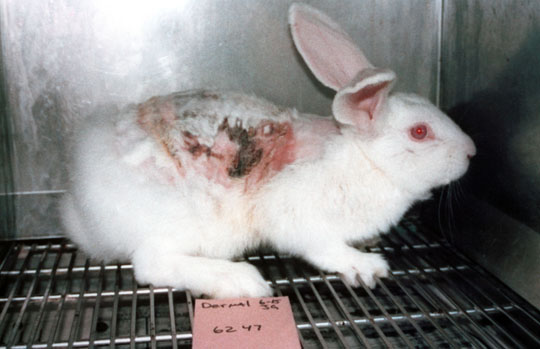
China requires that almost all imported cosmetic and personal care products be tested on animals, which means that companies that sell beauty products in the country are paying for these cruel tests—even if they don’t pay for testing in the U.S. market.
One of these brands is Avon, which was cruelty-free but then decided to increase its profits at the expense of animals, which PETA uncovered in 2012.
Avon didn’t need to change its policy on animal testing—China is the one that needs to change. But instead of encouraging the country to rise above cruelty, the company sank to its level.
Let Avon know that it’s not dragging us down with it, because we won’t buy any of its products until it stops selling them in countries that require animal testing.
Posted on December 27, 2016 by Serbian Animals Voice (SAV)
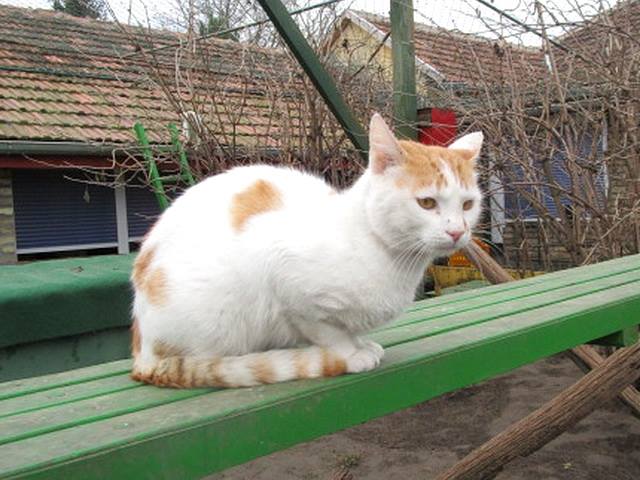
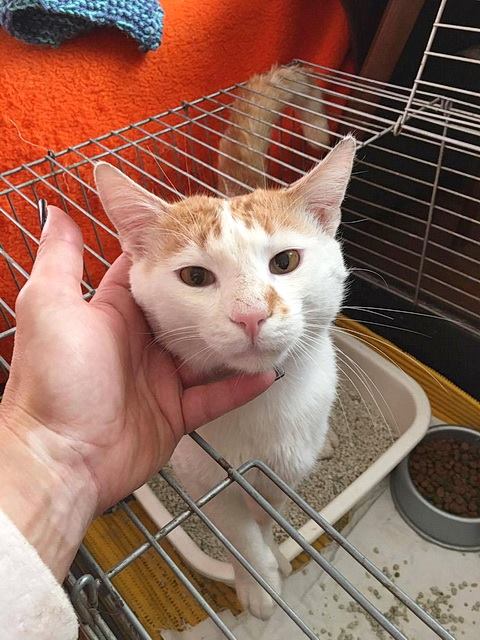
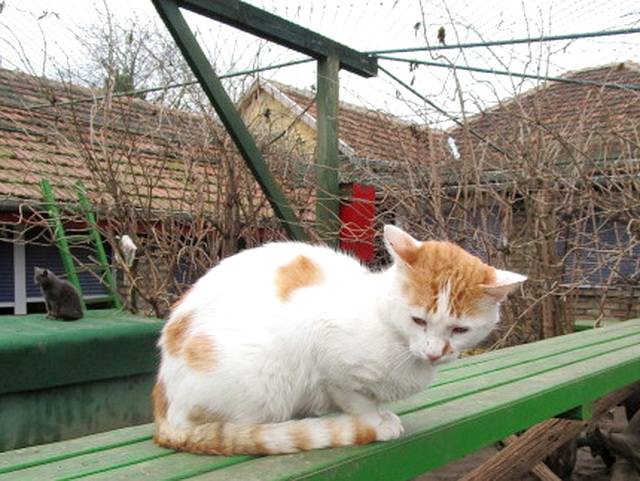
Liam’s life story is kind of sad, like the stories of stray cats usually are. He was born on the streets, probably as an unwanted baby kitten to an unwanted mother. He was forced to fend for himself and somehow managed to survive long enough to learn how to find scraps of food and how to flee from a potential danger.
He soon found out that he could use his inner sweetness and get at least one meal a day plus some petting or cuddling from cat-loving humans and he began to live in front of a boutique, where the employees took care of him the best they could. They even let him inside every now and then to warm up little.
However, his more or less carefree life came to an end shortly and his entire world turned upside down when the boutique he considered to be his home had to move to another location. He was left behind and he was spending most of his time just sitting quietly in front of the locked door, expecting to be fed and petted, waiting day after day for friends that would never come. Instead some unknown humans were shouting at him and wanting him to leave, even though he had nowhere to go.
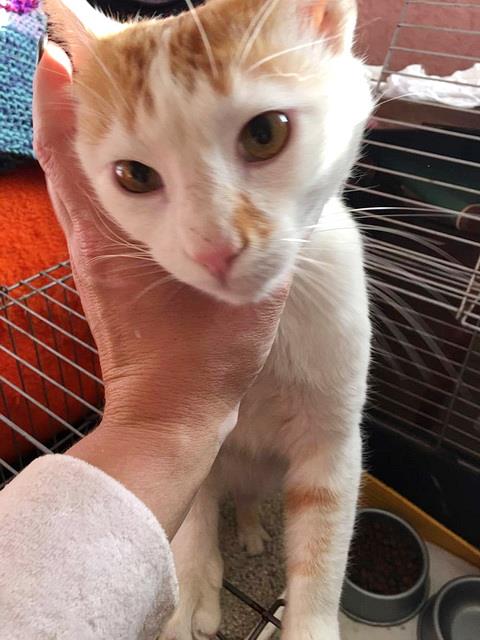
When we heard of him, we knew that if we didn’t take him in, no one would, so he was brought to my empty apartment in Belgrade until I came to pick up him up along with Arthur, and after a trip of 200 km, we arrived at the shelter together. Liam is neutered, FIV and FeLV negative, dewormed and deflead, completely healthy and he usually spends his days in the yard when the weather is nice, although he prefers to rest on the warm radiators and eat like a horse.
Hopefully now he has a chance to make up for everything he has missed so far.
Liamova priča je tužna i uglavnom liči na priče svih uličnih mačaka 😦 Rođen je na ulici kao neželjeno mače neželjene majke, uspeo je da preživi dovoljno dugo da počne sam da se hrani i shvatio je da umiljavanjem može da obezbedi sebi bar poneki obrok i porciju maženja. Imao je sreće da se nastani ispred jednog butika odakle ga, za divno čudo, nisu terali. Ponekad su ga puštali da udje da se ogreje, dobijao je obroke i bar ga nisu tukli i maltretirali. Medjutim, kako za ulične mačke sreća uglavnom vrlo kratko traje, Liamov svet se okrenuo naopačke kada je butik preseljen na drugu lokaciju, a on je ostao sam. Sedeo je ispred svog nekadašnjeg utočišta i očekivao hranu, zagrljaj i da ga ponekad puste da se ogreje, ali su ga, na njegovo veliko čuđenje, terali i vikali na njega, a stomak mu je sve češće bio prazan. Morao da ode odatle, ali nije imao kuda. Videli smo njegovu priču i jasno nam je bilo da ga niko neće uzeti ako mi to ne uradimo, tako da je donet u moj prazan stan u Beogradu, ostao je tamo dok nisam došla po njega i Artura I posle putovanja od 200 km stigli smo u azil zajedno :). Liam je kastriran, pregledan kod veta, FIV i FeLV negativan i potpuno zdrav; izlazi napolje isključivo kad je vreme lepo, najviše voli da se odmara na toplim radijatorima i jede kao ala. Konačno je dobio šansu da nadoknadi sve što je do sada propustio ❤
Felix – Felinološko društvo
355-1070729-96
Svrha uplate: uplata građana
Devizni račun:
Felix – Felinolosko drustvo
SWIFT/BIC: VBUBRS22 (Vojvodjanska banka a.d. Novi Sad)
IBAN: RS35355000320003120311
War-Torn Yemen Is Letting Its Zoo Animals Starve to Death
The 265 animals in Yemen’s Taiz Zoo, including rare leopards, haven’t been fed for days. The government is rejecting proposals to save them.
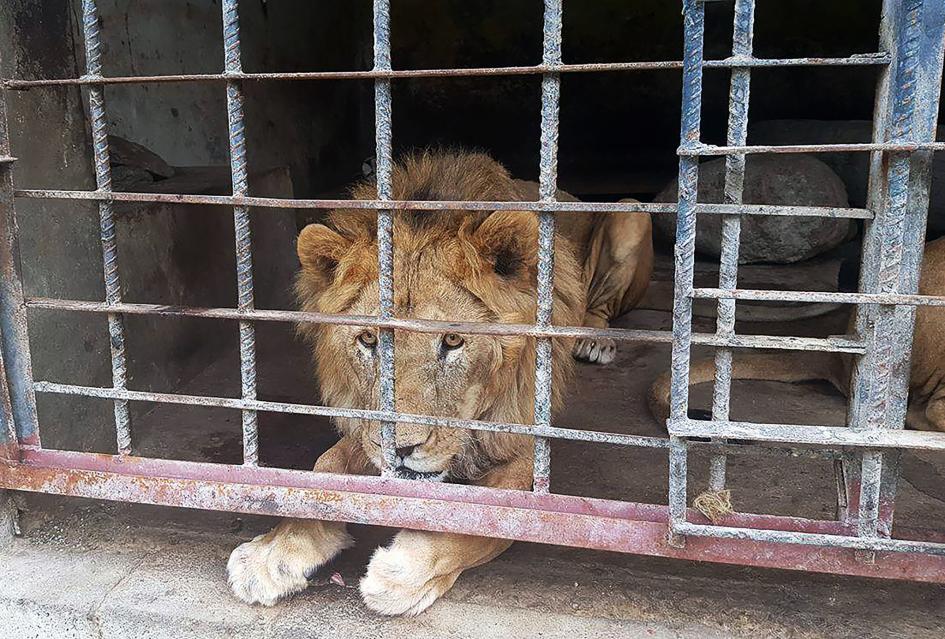
A malnourished lion stares out of a blood- and urine-soaked cage. Eleven lions died of starvation after they were abandoned at Yemen’s Taiz Zoological Gardens in early 2016.
Photograph by Mercury Press, Caters News
By Natasha Daly
PUBLISHED December 21, 2016
War births refugees. Streaming out of blasted-out cities, civilians are forced to flee their homes, sometimes their families, away from the bombs, into the unknown.
What happens when you can’t leave? That’s the story of abandoned zoos in wartime. It’s the story unfolding now for the animals in Yemen’s Taiz Zoological Gardens, neglected in the cross fire of the country’s civil war. Here 28 Arabian leopards, critically endangered in the wild, haven’t eaten in six days. They and nearly 240 other animals face imminent death if they aren’t fed very soon.
The story began early this year when the Yemeni government, which runs the zoo, stopped paying the staff and abandoned the facility in the face of escalating violence. In February, after a media flurry drew international attention to the deteriorating conditions at the zoo, SOS Zoo and Bear Rescue—a rescue organization established on Facebook by Chantal Jonkergouw—began raising funds to cover the cost of food, water, and care for the animals. According to Jonkergouw, who lives in Sweden, SOS has raised more than $125,000 from individual donors during the past ten months.
On November 30 she made the agonizing decision to stop feeding the animals until the government agrees to release them to rescuers. She says they’re still getting fresh water every day.
A local Good Samaritan then stepped in to bring the leopards and other meat eaters food, but he hasn’t been seen since December 16—the last time the carnivores were fed. The zoo’s herbivores have been subsisting on a rapidly diminishing supply of rotten vegetables. According to Bassam Al-Hakimi, SOS’s project manager in Taiz, many of the animals are showing signs of extreme weakness.
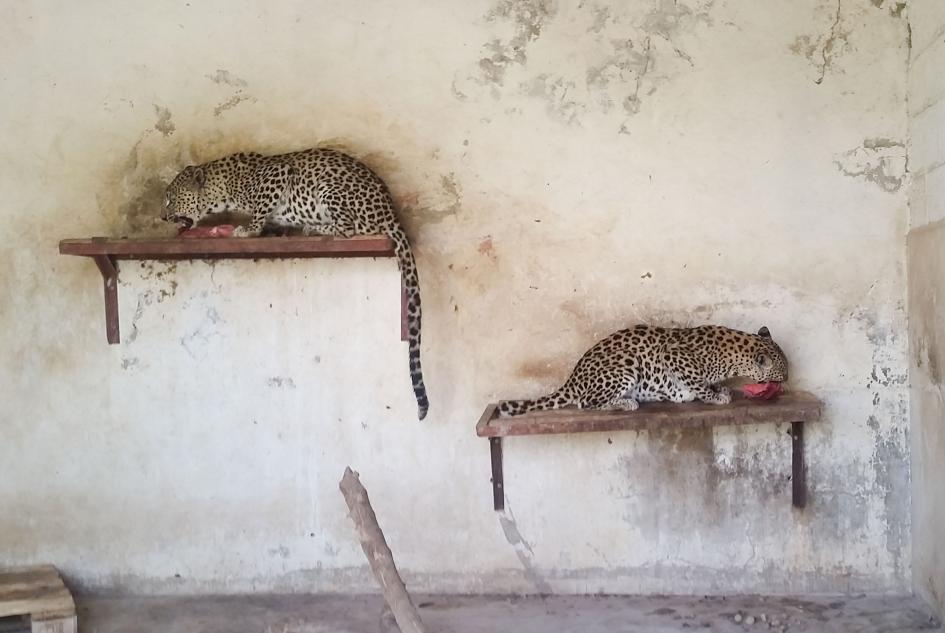
These Arabian leopards, critically endangered in the wild, haven’t been fed since December 16.
Photograph by Mercury Press, Caters News
“As they grow hungrier, the stronger ones might prey on the weaker ones,” Jonkergouw says. “Especially the big cats. Stress also can have a very negative effect on the animals’ behavior. Personally, I think that most of them will lie down and die slowly.”
Taiz, considered Yemen’s cultural capital, has been a flashpoint in the country’s ongoing civil war, a clash between Shia Muslim Houthis and Saudi-backed forces loyal to the nation’s pre-war government. The Taiz zoo became an overlooked casualty of the war after the government lost control of the city and many zoo workers fled the bombings and food shortages that have plagued the region.
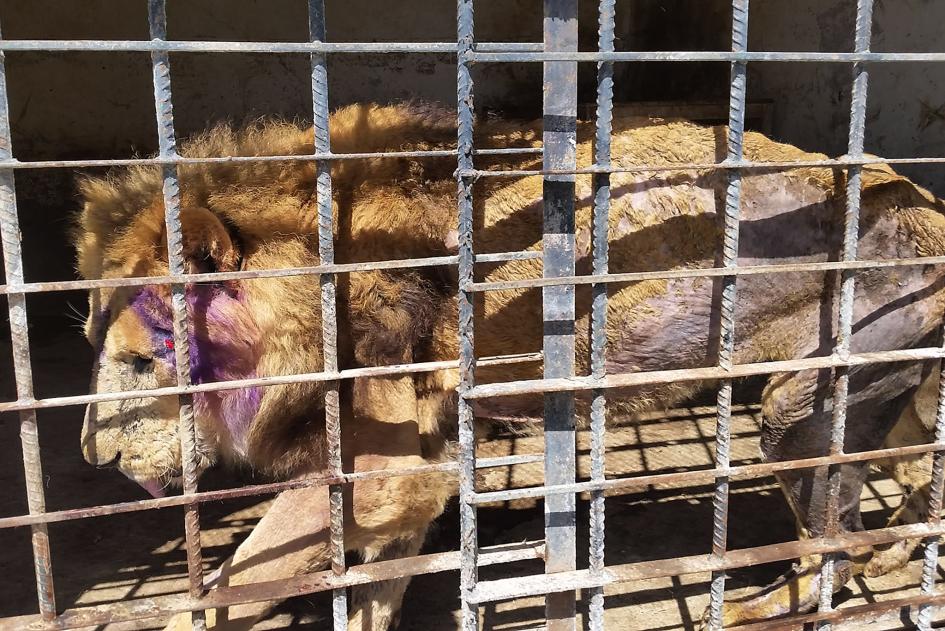
A lion wastesaway, abscesses ravaging its body. Facilities in the United Arab Emirates and Jordan have offered to rescue the zoo’s animals, but the Yemeni government refuses to allow their evacuation.
Photograph by Mercury Press, Caster News
According to Jonkergouw, before SOS intervened on February, 11 lions and six Arabian leopards had starved to death. “One leopard had eaten its female companion,” she says. The surviving animals were found living in squalor on bare concrete, bloodied, with festering abscesses, feces everywhere. One drastically malnourished lion was found with his hip bone jutting through his skin. Emergency surgery saved his life, barely.
Other animals in the zoo include hyenas, monkeys, birds, porcupines, baboons, and guinea pigs. Many of the creatures have displayed signs of severe zoochosis—a condition that often afflicts animals kept captive in artificial environments and is characterized by obsessive, repetitive behaviors. The din and detritus of war may compound the suffering: In mid-December a nearby building was bombed, spraying shrapnel into the zoo’s grounds.
The proximity of the fighting complicates rescue efforts: Other than the SOS-funded Tamdeen Youth Foundation, a local group that has provided all food, care, and water for the animals, no other organization has been involved on the ground—it’s too dangerous.
The Yemeni government, which now has limited sway in Taiz, has denied the transfer permits that might at least give the animals a chance of being extracted from Houthi territory and brought to another country where they would have hope for long-term survival.
SOS has kept the animals alive at a cost of $4,000 a week, covering food and care and modest salaries for a small staff of six, Jonkergouw says. SOS had just $10,000 left when at the end of last month she decided to cut off the food supplies.
“Without [the Yemeni government] being cooperative towards finding a real solution, I don’t think it’s acceptable any longer” for SOS to provide the funding and care that the government won’t, she says. “They need to feel it. The problem is, it’s at the expense of the animals, but there’s no other option. Whatever we do, the animals will suffer.”
Evacuating so many captive animals from the heart of a war zone would present the Yemeni government with a dangerous logistical challenge, but offers of safe havens have been made.
The Princess Alia Foundation in Jordan and the Breeding Centre for Endangered Arabian Wildlife in the United Arab Emirates, in conjunction with that country’s Al Ain Zoo, have both said they’d take the animals. It could cost up to $500,000 USD to evacuate the zoo, which would require armed guards to ensure safe exit. Jonkergouw is confident that her organization and others could raise the money with aid from NGOs but emphasizes that Yemen first needs to agree to facilitate an evacuation. The International Union for Conservation of Nature, the body that monitors the conservation status of species, has actively been trying to broker an agreement between Yemen and the UAE-based rescue facilities, to no avail yet.
Yemeni government officials have told Jonkergouw that they won’t entertain either offer. “They replied that they will never let the animals out of Yemen and that the animals were well cared for and doing fine. And then I really got pissed,” Jonkergouw says. “I said, why are they fine? I raised $125,000 and paid most of that into this project without getting any real cooperation on a sustainable solution for these animals. So I’m fed up with this. I will stop.”
The Yemeni government, which now has limited sway in Taiz, has denied the transfer permits that might at least give the animals a chance of being extracted.
An official from Yemen’s Environment Protection Authority, which has represented the government in talks with Jonkergouw, did not respond to a request for comment.
The Leopard Factor
There are likely only about 80 wild Arabian leopards left on the planet. The Taiz Zoo has 28, including two cubs born in September. Jonkergouw believes Yemen is reluctant to send the cats to another country, even temporarily, because Arabian leopards, as the national animal, are a source of deep pride.
Any loss of Arabian leopards is devastating, given how rare the species is. Four cubs disappeared from the zoo shortly after SOS stepped in. Zoo officials at the time said they were probably eaten. Jonkergouw raises the possibility that they were stolen and sold on the black market. (The Arabian peninsula has a sizable black market for exotic cats as pets.) After that incident she arranged for a full-time armed guard for the leopards.
Now the very thing keeping the leopards trapped in Taiz—their prized status in Yemen—could be the key to their salvation. If the leopards begin dying of starvation, Jonkergouw hopes the government may relent and allow the transfer of the leopards and all the other animals. “Probably more leopards have to die before they realize that they have to evacuate them,” she says.
She intends to start feeding the animals again as soon as Yemen signs a letter of intent permitting rescue by the facilities in Jordan or the UAE, or outlining an alternative plan. She would rather see the animals euthanized than face death by starvation but doubts that will happen. “I don’t think the zoo will cooperate with euthanizing them,” she says.
Where To Go From Here
The situation is getting more dire by the day. With only two of the original six workers still at the zoo, there aren’t enough hands to keep the cages clean, though starvation will likely kill the animals before sepsis does. No one is currently guarding the leopards.
Gail A’Brunzo, Animal Rescue Manager at the International Fund for Animal Welfare (IFAW), a U.S.-based NGO that rescues and protects animals and their habitats around the world, commends what SOS Zoo and Bear Rescue has been doing to keep the animals alive. She acknowledges that there seems no recourse other than “to cease operations in a last-ditch effort to try and persuade the government to step up. A heartbreaking decision on their part, I’m sure.”
Jonkergouw says she is often asked how she can justify wanting to save animals in a war zone when people are dying and suffering. “It’s humans who put these animals there,” she says. “They’re our responsibility. There’s so much human suffering in the world, and there will be much more in the future. If you take that as the starting point, then you’ll never get to the welfare of the animals. It’s always an excuse to not [act]. It’s our responsibility.”
Posted on December 24, 2016 by Serbian Animals Voice (SAV)
Crusades for animal renaissance!
Every year this day, when others enjoy their holiday table with pieces of slaughtered animals on their plate and shoot expensive fireworks in the air to say “good bye” to the last night of year, I make my own celebration.
I have not many guests, we are still a few.
We are those who in this year rescued an animal, rescued many animals, those who rescued the hope of life. We are those who do not believe that the Three Kings will bring a better future, we believe in action and fight.
We are those who continue our crusades in the name of those who have no right to live, in spite of despair and sorrow, despite mass murders and terrible crimes against our animal companions, despite this horrible routine which has even surpassed the Hell of Dante.
Because we are those who love and protect the life, we are the pioneers of animal renaissance!
To all my guests, in my country and all over the world, all those who demonstrate daily courage, nerves, sensitivity in the fight for a better future for our animal companions, I send warmest wishes for the best in the future, my support, my respect.
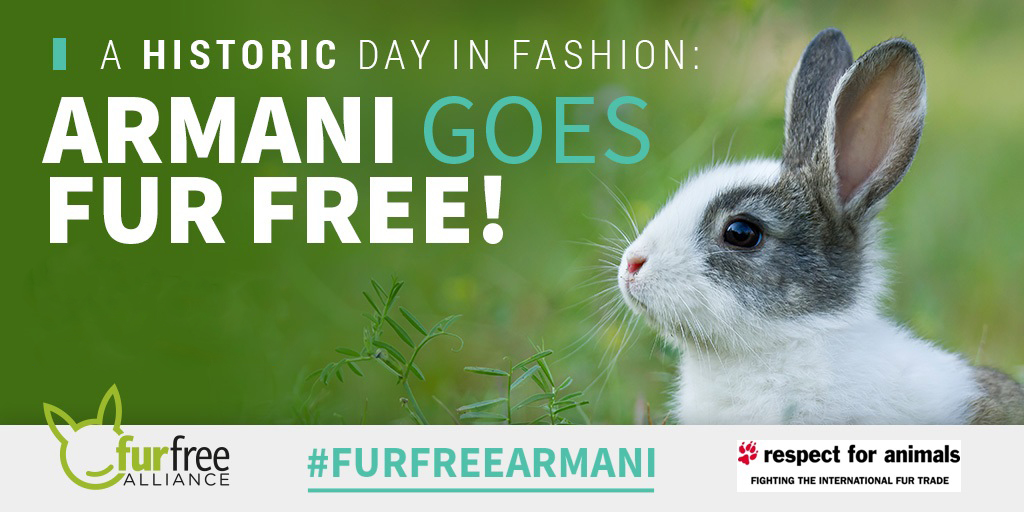
We were all celebrating when world-renowned luxury brand Armani agreed to officially go fur free.
We were delighted that such an influential brand in the fashion industry as Armani decided to end the use of real fur- what a blow to the fur trade!
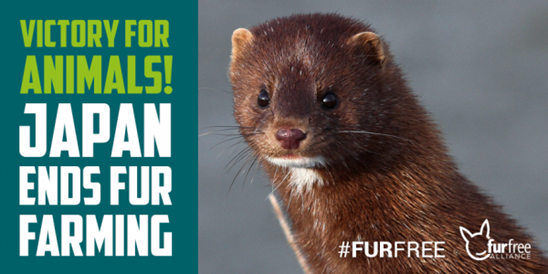
Mink farming ended in Japan!
The breeding of mink for their fur in Japan is over after the country’s last remaining fur farm shut down.
We were celebrating a few weeks ago as the Dutch Supreme Court upheld the ban on fur farming.
The Court ruled that the ban on fur farming is NOT in breach of the European Convention on Human Rights.
The fur trade was desperate to overturn the ban and this victory was a win for animal lovers everywhere.
One day fur farming will be banned everywhere.
The fur trade took a hit with a big drop in global mink fur production.
One of the largest fur auction houses, Kopenhagen Fur, reported that the production of mink pelts had fallen by 25%- from 72 million to 54 million year on year.
This was largely due to the collapse in the price of pelts, which followed high levels of over production as many new fur farms opened in order to cash in on a big rise in demand for fur several years ago (particularly in China).
International experts discussed fur farming ban legislation
Respect for Animals attended and co-organised an international seminar in Prague to discuss legislation that could lead to a ban on fur farming in the Czech Republic and elsewhere across Europe.
Among the speakers was the globally recognised expert on foxes Professor Stephen Harris, who co-authored Respect for Animals’ recent comprehensive scientific report into the welfare of mink and foxes on fur farms (read it here). Also in attendance was the Labour MP Maria Eagle, who introduced the Private Members Bill to ban fur farming in the UK, backing Respect for Animals’ national campaign.
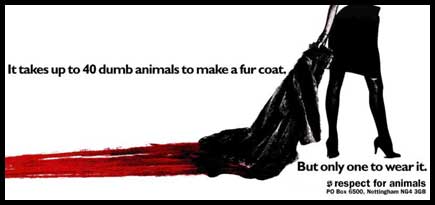
Ricky Gervais backed Respect for Animals’ #SayNoToFur online campaign. Our #SayNoToFur social media storm was launched by cricketing legend Jason Gillespie who was soon joined by many of our social media supporters, who dowloaded our anti-fur poster and sent us your picture. Celebrities Ricky Gervais and Jane Fallon got in on the act too!











 Serbian Animals Voice (SAV)