Posted on December 23, 2020 by Serbian Animals Voice (SAV)
The sad life of the last wild-caught dolphin in Duisburg Zoo, Germany has come to an end after 45 years of imprisonment: Dolphin “Orinoko”, who was mainly called “Baby”, is dead.
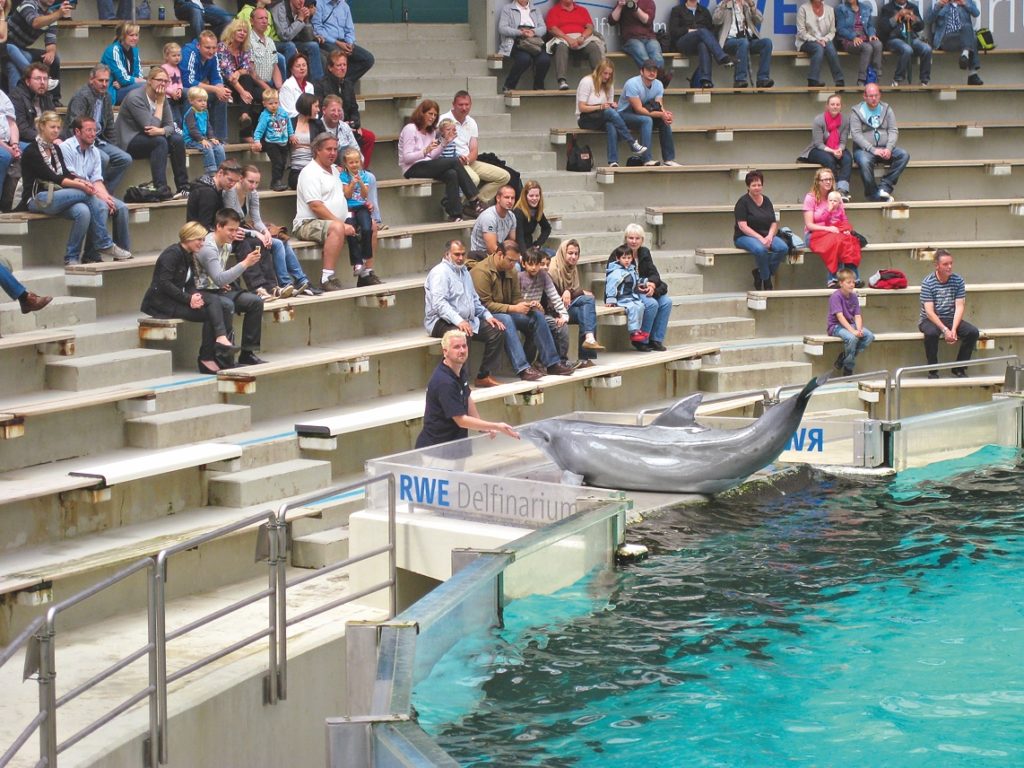
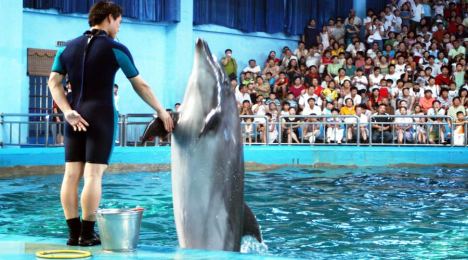
 For a handful of fish, dolphins are forced to entertain the paying audience.
“Baby” was the last captive river dolphin outside of South America. His death marks the end of an era full of suffering and loneliness.
A look at “babies” tragic life proves: Dolphins do not belong in zoos and dolphinariums!
River dolphin “Baby”: Torn from nature and put to sleep after almost 46 years in captivity
“Baby” was originally born in freedom: He comes from the South American Amazon region.
In 1975 he and other conspecifics were torn from their natural environment as wild-caught and brought to Germany.
That was 45 years and nine months ago – that is how long “Baby” has lived in Duisburg.
He has also been all alone for 14 years: as the last of his kind in the local dolphinarium, he ekes out a lonely and monotonous existence in a small pool.
Now the Duisburg Zoo announced that “Baby” had to be put down after an illness.
He no longer wanted to eat and reacted increasingly cautious.
In addition, wound infection was diagnosed. As his condition worsened, “Baby” was put to sleep.
At the time of his death, he was the longest river dolphin in captivity in the world – a sad record that was accompanied by much agony and privation for the animal.
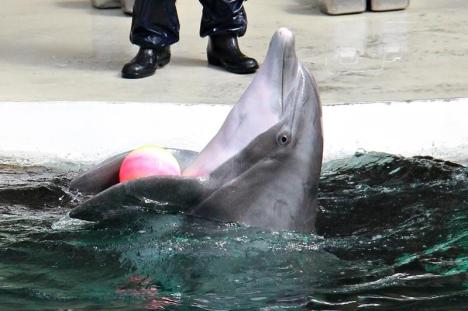
Dolphins suffer massively in captivity
It doesn’t matter how big and modern the tanks are – for dolphins captivity always means animal suffering. In captivity, marine animals have little opportunity to express their natural behavior – but this is often used as an argument in favor of keeping dolphins, orcas, etc. in zoos.
However, no general knowledge can be derived from animals in captivity. In addition, zoos do not make any contribution to species protection: not a single dolphin living in Duisburg Zoo has ever been returned to nature.
“The captivity of dolphins always means animal suffering, no matter how large and modern the tanks may be. With robot dolphins, on the other hand, things are different. In July, PETA asked the zoo to transfer the bottlenose dolphins to managed marine reserves and invest in a ‘Robotic Dolphin’. “
(Marine biologist Dr. Tanja Breining, specialist librarian for fish and marine animals at PETA Germany).
Nach 45 Jahren eingesperrt im Zoo Duisburg: Flussdelfin „Baby“ ist tot
And I mean… To make one thing clear: the reality of the life of the dolphins who are always “smiling” (because that is their natural mouth shape and not because they are in such a good mood) and squeaking (because that is their language and not an expression of their mood) is different than in ” Flipper “was shown, it is a tragic one which is used to amuse and entertain stupid visitors.
Amazonian dolphins have been kept in aquariums since 1975 – outside of Venezuela – only in Duisburg Zoo.
Under “kept” is to be understood completely unnatural conditions where they have to wait. This can go as far as the suicide of the animals due to depression – because no dolphin willingly jumps through rings and live happily in a “bathtub”!
Buying and trading with the dolphins drive a completely different, extremely dirty business, as we have already reported: the dolphin massacre in Taiji.
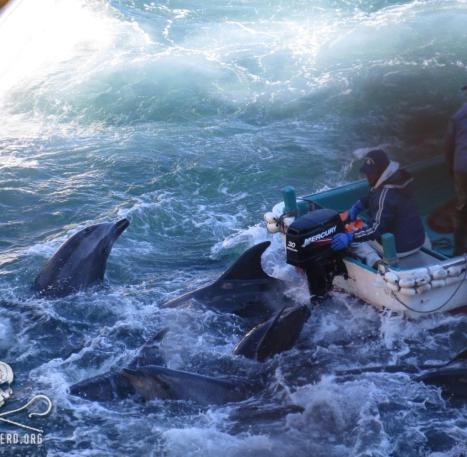
In a Japanese coastal town, whole schools of dolphins are regularly driven into a bay by fishermen.
In front of the dolphin family members, some animals are stabbed alive and cut up. The bay turns red with the blood of agony.
In between, young, small dolphins swim, chosen by the men and later sold to dolphinariums.
Completely traumatized, these animals end up in shows and are supposed to entertain children – what a morbid act!
Now the Duisburg Zoo is moaning in the media and is playing a comedy of emotions that only idiots or the unsuspecting can convince.
“Baby” was a character animal in our zoo.
The loss affects employees and visitors alike and makes us very sad.
With “Baby” we have lost a symbolic animal that represented its endangered conspecifics in South America and the shrinking of the tropical rainforest.”
That is why the rainforest and its rare animals will disappear! because of such predators, animal abusers, unscrupulous criminals who see both animals and nature as only means to their economic ends.
My best regards to all, Venus
Filed under: GENERAL NEWS - International / National / Regional | Leave a comment »
Posted on December 22, 2020 by Serbian Animals Voice (SAV)
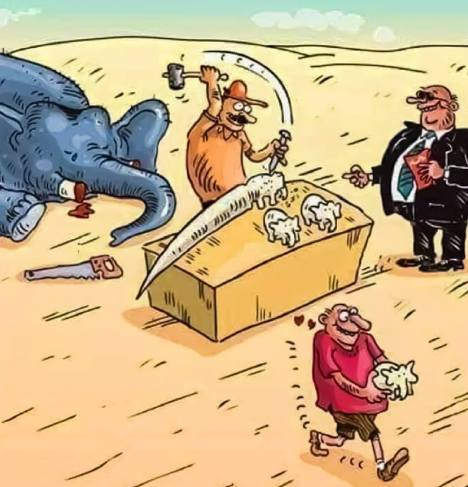
And we say...Whoever takes this fascist right to decide about the life and rights of other species is a pathetic monster and has in no way earned anything like his own human rights.
Regards and good night, Venus
Filed under: GENERAL NEWS - International / National / Regional | Leave a comment »
Posted on December 22, 2020 by Serbian Animals Voice (SAV)
Disturbing footage from Japan: fishermen crowd dolphins into a bay, corner them and capture dozens of animals. At least 85 dolphins were caught
It’s a kind of casting, a terrible selection – according to the Life Investigation Agency (LIA), the whole thing happens to select dolphins for animal parks and aquariums.
At least 85 animals have been torn from their conspecifics in the past few days, reports the “”ladbible” portal.
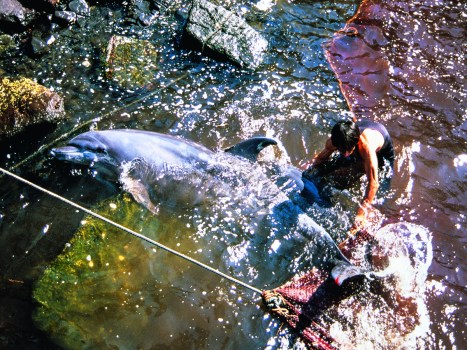 In Taiji / Japan a dolphin is demarcated. This animal is not slaughtered but sold (Photo: Zhukovandr / Stock.Adobe.com).
According to observers, numerous young animals have also been separated from their mothers.
At least one dolphin was killed.
LIA director Ren Yabuki told Australian broadcaster 9news that many of the animals were desperately trying to fight back.
“They were very stressed and many of them hit the surface of the water with their tail fins.”
They also communicated with each other with clicks and whistles. “It was very sad to hear them screaming together,” Yakubi said, according to the report.
He has years of experience with dolphins, “but I’ve never heard them scream like that.”
The incidents took place in the infamous bay of Taiji, a small coastal town in Wakayama Prefecture.
It achieved notoriety through the Oscar-winning documentary “The Bay”.
There are regular massacres of dolphins there.
And I mean...Capturing or killing a single dolphin can have catastrophic effects on the entire population.
Dolphins are very social animals.
They have a culture and pass on knowledge within the group. The removal of a single animal can be a heavy blow for smaller herds.
But the big money comes from the dolphins caught alive.
The most beautiful and, from a trainer’s point of view, the most “promising” specimens are then given the dubious honor of spending a life in captivity at unit prices of up to the US $ 200,000 after they have been sold to dolphinariums around the world.
Almost all the dolphins found in dolphinariums or therapy centers come from Taiji.
Japan leads the world with 50 dolphinariums.
But Turkey, Egypt, Dubai, Tunisia, Russia, North and South America, Spain, and of course Germany is also involved in the cruel business.
The demand from tourists, including Germans, fuels greed for money.
The stress that animals are under in aquariums is enormous.
Triggered primarily by noise. Dolphins and orcas can perceive sounds from 150 to 200,000 vibrations.
In humans, this hearing range is between 20 and 20,000 vibrations.
In addition to the noise emissions of a dolphinarium such as applause, cheers, and loudspeaker announcements, the animals are also exposed to the noise of the constantly running water pump.
This noise stresses the animals to the limit.
Therefore, the fish that are fed to them are filled with sedatives.
Animal rights activists and researchers demand personal rights for dolphins and orcas – they should, like us humans, have a fundamental right to undisturbed freedom.
Unfortunately, we are still a long way from that.
Tourism is booming and dolphinariums are billions of dollars.
Canada set a good example just a few weeks ago: captivity and breeding of whales and dolphins is now prohibited by law there.
Hopefully, other countries will follow suit.
My best regards to all, Venus
Filed under: GENERAL NEWS - International / National / Regional | Leave a comment »
Posted on December 22, 2020 by Serbian Animals Voice (SAV)
The best chefs in the world serve them, in delicatessen shops, in markets, and in fish departments, they are the figureheads – and embody the “fruits of the seas” like no other animal.
Especially in time for Christmas and New Year’s Eve, the advertising echoes: It’s lobster season!!
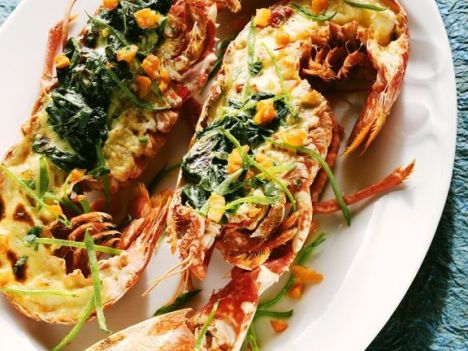
To ensure that their meat is as fresh as possible, lobsters, unlike most fish, which are killed immediately after being caught and then placed on ice for further processing, are offered for sale alive.
Doomed to motionlessness with tied scissors, the animals lie behind the glass panes of the small basins – often stacked on top of each other and without food – for weeks and months, that is nothing more than cruelty to animals.
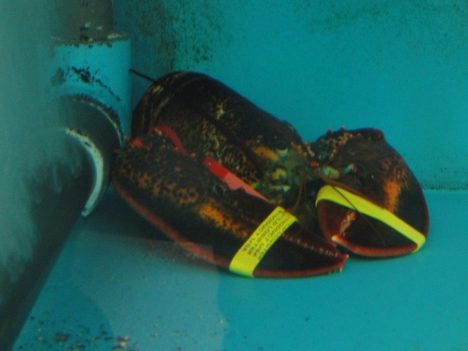
But the suffering of the animals begins several months before and finally ends in an unimaginably cruel way.
The habitat of the European lobster ranges from Norway to the Mediterranean. Until that one day when man deprives them of their freedom and imposes their destiny as food, lobsters live solitary and sedentary.
The animals prefer cooler waters with a rocky bottom, where they hide during the day and hunt at night.
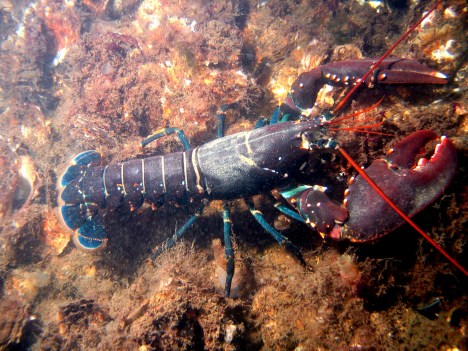
They live in caves, crevices, and piles of stones, move around their home within a radius of up to five kilometers and a depth of 50 meters, and defend this against conspecifics. The highest in the lobster ranking has the right to the best hiding place and thus the best starting position for mating.
When the female is ready to mate, the male takes her into his hiding place and hands him the sperm packet, which the female keeps in his seminal vesicle over the winter. Fertilization does not take place until the following summer when the female lays up to 40,000 eggs and attaches them under her tail.
Depending on the water temperature, it then takes another ten to twelve months for the lobster larvae to hatch, swim freely in the water for 14 days and then begin their life on the ground.
In order to grow, lobsters molt regularly throughout their lives.
Another wonder of nature: If lobsters lose individual limbs, for example in a fight with enemies, they grow back within several molts.
Lobsters feed mainly on mussels, sea urchins, crabs, bristle worms, and carrion. Unlike many other animals, they do not have teeth in their mouths, but rather six pairs of mouthparts with which they can only tear the food into small pieces.
Their back color is also adapted to the ground on which they live and ranges from blue to green-blue to black-violet, while their sides and undersides are usually brown to orange-yellow with dark speckles.
Their characteristic claws not only help them to get food but are also effective defensive weapons that they can turn in all directions underwater.
In old animals, the claws can become so large that they make up more than half the body weight.
In general, lobsters can reach a length of up to 75 centimeters, weigh six or more kilograms, and live up to 100 years.
If it weren’t for the human-animal with its barbaric appetite, which is only too happy to eat its flesh.
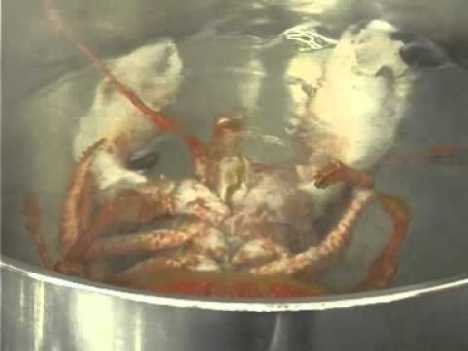
The main fishing season for European lobster is summer.
The lobster fishermen sink baskets and traps loaded with bait in the coastal waters and catch the animals.
And I mean…The practices in keeping the lobster can hardly be reconciled with our animal welfare.
The Animal Welfare Act requires in Section 2:
Whoever keeps, looks after, or has to look after an animal,
1. must feed and care for the animal appropriately and suitably accommodate its species and needs,
2. must not restrict the animal’s ability to move around in such a way that it causes pain or avoidable suffering or damage,
3. must have the knowledge and skills required for adequate nutrition, care, and behavior-appropriate accommodation of the animal.
The lobster experiences great torture just by tying his claws together.
The animals are no longer fed after they are caught so that their excrement does not pollute the water. This means that they usually have to survive without food for weeks until they finally end up in a saucepan.
This is a violation of Section 2 of our Animal Welfare Act.
It is actually legal to toss lobsters alive into boiling water.
Because for a long time it was believed that lobsters and other crustaceans could not feel pain.
Scientists, however, have proven several times that lobsters and other crustaceans do feel pain. They thrash around and try to escape as soon as they are cut up or thrown alive in the saucepan, and that is anything but painless.
And until a lobster is really dead, it usually has to endure several minutes in boiling water.
This is also a violation of Section 2 of our Animal Welfare Act.
In a civilized society, such practices have no place and must be banned.
It cannot be that today every consumer can simply buy a live lobster and even have it sent by post and sentient creatures are left in the hands of laypeople who are allowed to kill the animals themselves.
Otherwise, we can throw our animal welfare in the garbage can.
My best regards to all, Venus
Filed under: GENERAL NEWS - International / National / Regional | Leave a comment »
Posted on December 21, 2020 by Serbian Animals Voice (SAV)
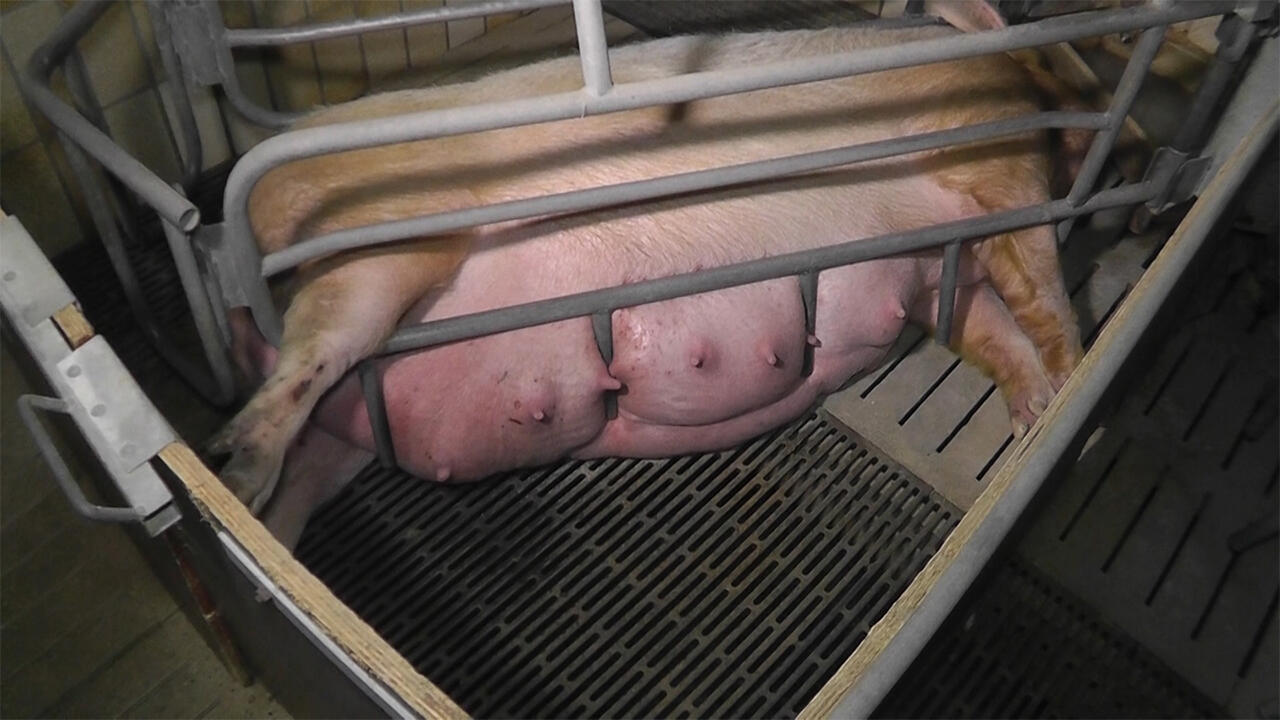
“The pig must be freed and the abuser sent immediately to a closed facility, where ideally he should be kept in such a metal frame to encourage compassion for his victims.
With good behavior, i.e. without annoying whining and complaining, he can return to his home stable after 6 months and continue to amortize the mother sow’s frame with his forced lying in it.
After a further 6 months, he can be released back into the wild with lifelong animal husbandry and hunting ban”.
(Text by Hanspeter Niederer)
We agree!
This is the only way to free psychopaths, animal abusers, and animal exploiters from their perverse inclinations
Regards and good night, Venus
Filed under: GENERAL NEWS - International / National / Regional | Leave a comment »
Posted on December 21, 2020 by Serbian Animals Voice (SAV)
Millions of fox, mink, raccoon dogs, and chinchillas spend their entire lives trapped in tiny wire cages before being killed and skinned for so-called fashion.

Not only do these battery cage systems cause immense animal suffering, but they are also now proven to present a serious public health risk. The cramped conditions, poor hygiene, stress, injuries and disease, minimal veterinary care, and lack of genetic diversity all mean that fur farms create ideal conditions for viruses to be transmitted.
 (To see the video click on the picture)
Twenty countries have already acted to ban the farming of animals.
In light of new evidence that fur farms can also act as reservoirs for deadly viruses, as well as create new viruses, we call on all countries to ban fur farms.

End cruel and deadly fur farming worldwide!
Sign now to end the cruel and deadly fur trade before it causes the next pandemic!
This petition is part of a global campaign initiated by “Fur Free Alliance”.
And I mean…Every year more than 700,000,000 animals are slaughtered for their meat. In Germany.
There are 60,000,000,000 animals worldwide.
In addition, there are 100,000,000 to 300,000,000 living things that are used and killed as experimental animals every year.
And for fluffy fur collars, over 60,000,000 mink and 12,000,000 foxes give up their miserable lives every year, as do around 2,000,000 dogs and cats.
Wasn’t it a matter of time before it took its revenge?
Because we humans don’t care about animals anyway (otherwise we wouldn’t lock them up in wire cages for an expendable fashion accessory and slaughter them), we come straight to the explosive part of the story: the mink variant of the virus is apparently against Covid-19 antibodies more resistant in the human body, which means that it could spread among people who are already immune or vaccinated.
In other words, and in this case: the previous efforts to produce a vaccine would have been in vain.
The WHO warns of excessive concern, but the Danish government recognized the risk immediately and has shut down the industry completely and in these days had all 17 million minks in Denmark culled immediately.
Since the beginning of the pandemic, we have been looking down on the Chinese and their virus-contaminated “wet markets”, where domestic and exotic animals are traded live and slaughtered on site –
“Something uncivilized!” we say- and wonder why the Chinese government did not regulate these hygienic death zones a long time ago.
In the meantime, we continue to shred or gas male chicks (40 million in Germany alone), buy cheap pork, even though we know what happens to the piglets and how their mothers are suffering, and we ignore the mass murder of pigs because of swine flu.
Even if the particularly gruesome pictures come from the fur farms in China, the photos from the fur farms here, in Europe, are also a horror.
Practically, all farms look the same, no matter which country they are in. All show the same bleak, cruel picture that allows only one conclusion: fur is suffering, pain, and contradicts any moral progress in our society, and therefore it has to be prohibited!
In the future no lockdowns will help, only a new morality based on the liberation of animals from their slavery.
My best regards to all, Venus
Filed under: GENERAL NEWS - International / National / Regional | Leave a comment »
Posted on December 21, 2020 by Serbian Animals Voice (SAV)
Thanks to Stacey at Our Compass for supplying this info.
There are lots of terrible photos on this link; so it is best you are directed there rather than we download all the photos and text.
Regards Mark
Photographers Capture Powerfully Moving Images of Animal Exploitation Around the World | Our Compass (our-compass.org)
Please remember that all animals exploited for human use suffer, no matter the country; animal suffering is not limited to certain locations or areas, an animal whose body is used, manipulated, taken from, and violently killed, is an animal who is abused, no matter the conditions endured prior to vicious, terrifying slaughter, but that 99% of all animals in the United States, and >90% globally, are “produced” in extremely confined, CAFO/Factory Farm conditions. The ONLY humane is vegan. SL
Filed under: GENERAL NEWS - International / National / Regional | 1 Comment »


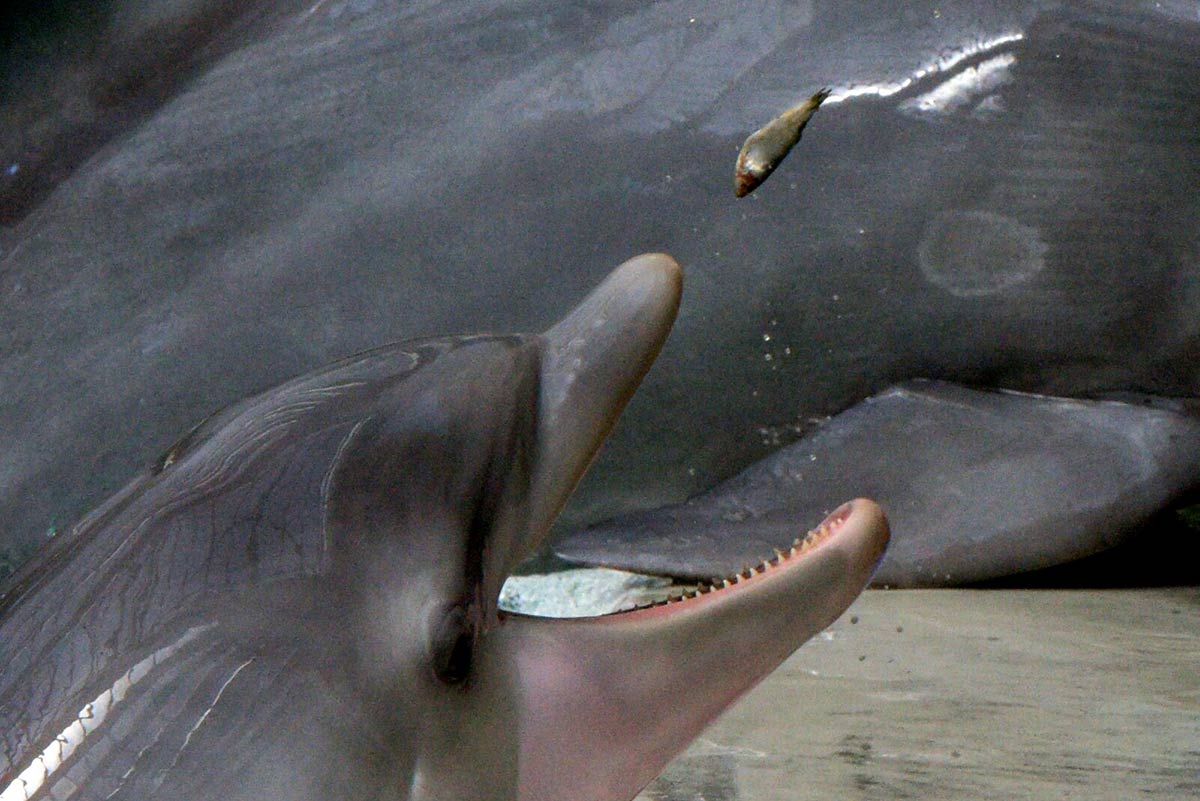 For a handful of fish, dolphins are forced to entertain the paying audience.