
When You Have An EU Animal Crisis, Do Not Hope For Responses or Action From The EU ‘Crisis Management’ Team !

Please add your voice to the Anna Maria petition at petition: Nearly 2,500 cows are sick and dying after having been stranded at sea for 2 months and counting, demand help! (thepetitionsite.com) and leave a comment on this in the box – thank you.

WAV Comment:  we have been attempting to give the latest updates on the situation of the stranded and abused cattle for a few weeks now.


See Search Results for “karim allah” – World Animals Voice  for Karim Allah

See Search Results for “elbeik” – World Animals Voice  for Elbeik

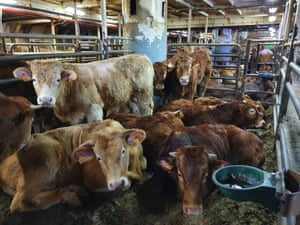
There is an old saying which goes “a picture says a thousand words”.  Have a look at these 2 pictures of the ‘Karim Allah’: are they not fairly indicative of the majority of the live animal transport maritime situation now ? – rust bucket ships that should have been scrapped years ago still transporting innocent, sentient beings to their (often) barbaric deaths the world over.

Have a look at this picture – this is Mr Bernard Van Goethem.

Bernard Van Goethem (@VanGoethemB) | Twitter

Here below is the structural chart for the Commission of Health and Food Safety – Sante.  Mr Van Goethem is the ‘leader’ responsible for ‘Crisis Preparedness in Animals’, which includes ‘section G2 – Animal Health’.  You can see all of this on the right hand side of the chart.

Health and Food Safety Organizational chart link – https://ec.europa.eu/info/sites/info/files/organisation_charts/organisation-chart-dg-sante_en.pdf 

Further; on the Health and Food Safety site they make the following statement; and we include the link as proof:

https://ec.europa.eu/food/animals/welfare/practice/transport_en  – it says:

Animal welfare during transport

In 2015, the European Commission launched a three-year Pilot Project aiming at improving animal welfare during transport by developing and disseminating Guides to Good and Best Practice for the transport of the main livestock species.

In September 2017, the contractor of the project published five extensive guides to good practices (only in English) as well as 17 technical fact sheets focusing on the most practical information in A4 format. Fact sheets are available in eight EU languages (English, French, German, Greek, Italian, Polish, Romanian and Spanish).

This publication is followed by a road show in eight Member States and presenting the guidelines to the professionals concerned (transporters, drivers, farmers, official veterinarians, etc.). The project will also produce five videos (one per species in eight languages).

For more details please visit the Project website.

See the final report

Council Regulation EC 1/2005 defines the responsibilities of all actors involved in the transport chain of live animals entering or leaving the EU. It lays down efficient monitoring tools and stricter rules for the transport and for the specific checks to be carried out by officials. It also provides for non-discriminatory inspections of animals, means of transport and accompanying documents.

EU countries are required to submit to the Commission, by 30 June each year, an annual report for the previous year on the non-discriminatory inspections together with an analysis of the major deficiencies. Click here to access the annual reports.

In order to reduce the administrative burden on EU countries, Commission Implementing Decision 2013/188/EU, which came into force on 1 January 2015, established an harmonised model form for the annual reports.

We at WAV, as of 28/2/21, make the following statement:  Is the situation where hundreds of live EU animals have been stranded in the Mediterranean on 2 different ships not a ‘crisis’ ? – and should we have not seen intervention by the EU ‘Crisis Preparedness in Animals’ team, led Mr Mr Van Goetyhem, on this issue several weeks ago ?  If this is not a crisis, then what is ?

If the EU crisis team are not going to get involved and take action at times of a crisis, then what is the point of them even existing ?

As you can see from the various EU links above; they at EU Commissions are specialists at blowing their own trumpets; leading the reader / web site visitor all over the place to find information (or maybe confuse them !) on their highly constructed, expensive, and detailed website; (at EU taxpayers expense); in some wildly bland attempt to make the reader think that they are completely and utterly in charge of the situation when it comes to controls and regulations for the welfare of animals in transport. 

Well they are not – the website and all the sub sections and statements are simply massive smokescreens because they, the EU Commission, are utterly incapable of having any controls over the international situation of ensuring live animals welfare during transport throughout the EU, and way beyond into third countries such as Turkey and Libya.

In the past, and going back more than a decade, we have called for the resignation of Mr Bernard Van Goethem – Mr Van Goethem Resign Now !! | Serbian Animals Voice (SAV) 

This was in relation all those years ago to the EU having no control of the welfare of animals during transport; here is a video produced at the time to show that:

Here are a few other links we published on this issue at the time:


https://serbiananimalsvoice.com/2016/06/06/the-eu-excuses-get-more-pathetic-by-the-day-contact-mr-van-goethem-and-show-your-disgust/


https://serbiananimalsvoice.com/2016/06/17/uk-map-proves-uk-is-ready-to-wave-eu-goodbye-van-goethem-and-others-have-failed-the-animals/


https://serbiananimalsvoice.com/2016/06/07/eu-must-ensure-animal-welfare-or-mr-van-goethem-will-get-you-and-the-next-joke-is/

So what changes over all these years at the EU ? – very little it seems.  Plenty of waffle; plenty of PR; plenty of web news; people are doing this, and people are doing that; when in reality, nothing actually changes for animals in transport.

As you can see in the above links, in the past we have called for the resignation of Mr Van Goethem; we think that with these terrible situations over the last few months and not a whisper from the EU on the crisis from the crisis management section of the EU Commission; maybe it is time to get another petition underway calling for resignations due to incompetence.  When we get this organised we will publish.

Regards Mark
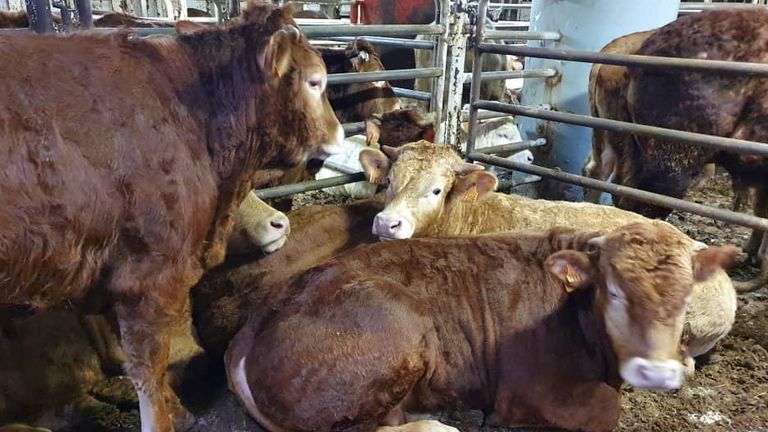
The cows, who have spent days without food, have suffered during the journey and should be killed, vets say
Cattle on the Karim Allah in Cartagena

Latest news:

Saturday 27/2/21:

More than 850 cows that have spent two months at sea on a ship crossing the Mediterranean are facing slaughter, following a report from Spanish vets.

The cattle have suffered “hellish” conditions, according to animal rights activists.

The Karim Allah vessel originally left the Spanish port of Cartagena to deliver the cattle to Turkey but were refused entry due to fears over bluetongue.

The insect-borne bovine virus causes lameness and haemorrhaging among cattle but does not affect humans.

After being turned away from Turkeyowners failed to find a new buyer for the animals.

The ship was subsequently rejected by several more countries, even to replenish animal feed, leaving the cows to go several days with just water.

The ship became a pariah vessel and it has now returned to its starting point in Cartagena.

The confidential report by Spanish government veterinarians and seen by Reuters says the animals have suffered from the long journey and should be killed.

While it did not confirm whether the animals were suffering from bluetongue or not, it said they should not be allowed into the EU.

Ownership of the cattle is unclear.

Animal rights activist Silvia Barquero, director of the Igualdad Animal NGO, called the crossing “hellish” for the cattle and questioned what had happened to the waste produced by the cows during the crossing.

“We are sure they are in unacceptable sanitary conditions.”

Twenty-two cows are believed to have died at sea, and while 20 of the corpses have been chopped up and thrown overboard, two dead cows remain on board.

A lawyer representing the ship owner Talia Shipping Line, which is registered in Lebanon, said he believes the slaughter will now definitely go ahead.

Meanwhile, a second ship, the ElBeik, which also set sail from Spain in December with a cargo of nearly 1,800 cows, is currently moored off the Turkish Cypriot port of Famagusta.

The agriculture ministry has been approached for comment

Over 850 cows on pariah ship in Mediterranean facing slaughter after bluetongue fears | World News | Sky News

illusions…

Reality would ruin our life if we didn’t have the illusion.
Illusions work better than pills

regards and good night, Venus


India and its cruel fishing industry

A new investigation from Animal Equality exposes the abuses and crimes of India’s fishery and aquaculture sector and shows the inefficient use of precious resources, like water and land.

THE DETAILS: Animal Equality investigated several Indian fish and shrimp farms, hatcheries, and fish markets from Feb 2019 to May 2020 in West Bengal, Andhra Pradesh, Tamil Nadu, and Telangana, which are known for their fish production.

The cycle of cruelty seems to never end, with our team witnessing fish suffering in a variety of ways.

One particularly brutal practice is “fish milking,” an extremely painful process in which the eggs from a female fish are squeezed out by hand.

In another, farmed fish are killed by asphyxiation as workers pull them from the water and put them on ice to slowly and agonizingly suffocate to death. Our investigators also found:

-Thousands of fish bred in small, overcrowded ponds, which are prone to disease spread.

-Many fish crushed to death by the weight of other fish when they’re caught in nets and dumped into containers.

-Workers cutting the gills of fish without prior stunning, resulting in the animals bleeding to death.

-Some species of fish, like catfish, are slaughtered and sold at unsanitary markets.

-Conscious catfish clubbed several times in an effort to slaughter them.

-Children were seen slaughtering fish, which violates child-employment laws.

WASTED RESOURCES: Fish farms need an exorbitant amount of water for operation and pump out large quantities of groundwater, which comes from nearby rivers, leading to drastic reductions in the region’s water table. In addition, fishery and aquaculture farms require large tracts of land in areas with an abundance of water, reducing the agricultural yield from these sectors.

Continue reading

Spain: Cattle stranded at sea ‘face immediate slaughter’ if ship docks in Spain, says manager.

This is just a test post as we have had some computer problems – but it is very latest news and current – Regards Mark

Cattle stranded at sea ‘face immediate slaughter’ if ship docks in Spain, says manager | Environment | The Guardian


Cattle stranded at sea ‘face immediate slaughter’ if ship docks in Spain, says manager

Livestock company still hopes to find a buyer for animals on board ship for two months, after rejection by Turkey and Libya

The manager of a ship that has spent months at sea with hundreds of cattle on board has accused Spanish officials of failing to answer his call for help and of threatening to kill all the livestock if the ship enters port.

The Karim Allah is one of two vessels that left from different ports in Spain before Christmas to deliver cargoes of young bulls, but were refused entry by various countries including Turkey and Libya, owing to suspected outbreaks of the bovine disease bluetongue onboard both ships.

The vessel is owned by Khalifeh Livestock Trading and managed by Talia Shipping Line, both based in Lebanon, while the cattle are owned by a third party. The ship took 895 male calves on board at the Spanish port of Cartagena in mid-December and sailed for Turkey.

However, the Karim Allah’s manager told the Guardian that a mistake on the Spanish government’s animal health paperwork led Turkey to reject the cattle, fearing they may be infected with bluetongue.

Attempts to sell the animals to buyers in Libya also failed and the Karim Allah eventually travelled back to Spain. The ship has been docked just outside Cartagena since Sunday. Only 15 animals are dead, the manager said, and the rest are in good health.

“We remain at anchor outside Cartagena port because first the Spanish authorities told us we could not enter. That was on Sunday or Monday,” said Majed Eid, Talia Shipping Line director.

“Then the Spanish authorities said we could enter [the port] but that all the cattle – they are all bulls about seven to eight months old – must be slaughtered,” said Eid. There has been no mention of vets inspecting the ship or testing for bluetongue, he added.

“We do not want to slaughter the healthy animals. That is the proof of the good care we have taken, only 15 dead after more than 60 days at sea. We expected people to thank us, not criticise us,” he said. “We are crying out for help but the Spanish government is not helping us. No one is helping us.”

Eid said the cattle shipment first ran into problems in Turkey due to an error in the Spanish authorities’ paperwork. “That was why the cattle were not accepted in Turkey or Libya, due to fears they might have come from a bluetongue area.”

Eid said the priority was to test the cattle so healthy animals can be certified and new buyers found. “We want to do blood tests to prove they are free of bluetongue then we can find a buyer. We don’t want to kill healthy animals. We expected Spain would want to help us with the blood tests but they are not helping, it’s very complicated.”

Miquel Masramón, a lawyer for Talia Shipping, said that blood samples were taken by a private company from some cattle on the ship on Wednesday evening. “According to the vet team no symptoms of bluetongue were found and test result will be known in 24 to 48 hours,” he said.

Legal documents, received last week by Masramón from the Spanish Animal Health Authority and seen by the Guardian, say the cost of slaughtering cattle re-entering Spain in this situation must be borne by the companies involved.

Masramón estimates the cost of slaughter and carcass disposal will be more than €1m (£860,000). “This should be added to the losses already suffered with unpaid demurrage [a charge payable to the owner of a chartered ship on failure to load or discharge the ship within the time agreed] and expenses which we estimate now at another €1m,” he said.

Maria Boada Saña, a vet with the NGO Animal Welfare Foundation, said it was good news that so many cattle were still alive. But she said it was unlikely the animals were in good health. “They might not have bluetongue, but that does not mean they are healthy,” she said.

Boada Saña said she believed slaughter, rather than another attempted sale involving further sea transport, was a better option for the cattle. “We are calling directly for euthanasia. They have been adrift for two months. The [animal] transports we see might take a week or so and that already means the animals arrive in poor condition, so imagine two months.”

On Thursday, a spokesperson for Spain’s agriculture ministry said the Karim Allah was free to enter Cartagena if it wished, but would not comment on the legal documents sent to Talia Shipping indicating the cattle would have to be immediately slaughtered.

A second livestock ship, Elbeik, which left the Spanish port of Tarragona carrying 1,776 animals on the same day as the Karim Allah, is at anchor in Turkish waters off the coast of Cyprus. It too was turned away by Turkey and Libya due to bluetongue fears.

On Tuesday, a spokesperson for Spain’s agriculture ministry described the ships’ plight as a “failed operation by a Spanish exporter, who was going to sell the animals in Turkey, then tried unsuccessfully to sell them in Libya”.

The spokesperson added that the Karim Allah, “now arriving in Cartagena, left Spain with animals that had the corresponding health certificates and which were from areas free of bluetongue. The animals therefore left the port of Cartagena in good health.”

Masramón told Spanish media that the certificates noted that some of the cattle were from Aragon, one of the regions that saw an outbreak of bluetongue late last year. As it couldn’t be shown that the cattle came from a place that was more than 150km from the source of infection, the cargo had been rejected. He confirmed they had been able to obtain fodder for the animals in Sicily, but not unload them.

The ministry has said the Elbeik was also carrying cattle from bluetongue-free areas.

In a second statement on Thursday, the agriculture ministry said: “The master of the vessel Karim Allah has been requested to take appropriate measures to allow inspectors to board the vessel safely. This request has not been complied with by the captain of the ship by the deadline, which was today, 25 February, at 11am.”

It added that Spanish maritime officials have now, “prohibited the ship Karim Allah from leaving the port until the appropriate inspections and actions have been carried out on the vessel.”


In New Zealand applies: Animals, like humans, are “sentient” beings!

In 2016, the New Zealand government passed a law amending its constitution: henceforth, all animals are recognized as sentient beings. This is accompanied by groundbreaking changes for the animal world within the country’s borders.

Mankind has always argued whether animals are capable of feeling emotions just like us.

Anyone who has already had an intimate relationship with an animal friend would undoubtedly answer this question in the affirmative.

The complex social behavior that animals display cannot possibly be based on instincts alone.

Image: pixabay.com

Research confirms the emotional world of many animal species

In the meantime, research has advanced to the point where many animal species have feelings.
Laboratory mice are used not least to test antidepressants because it has been discovered that they can suffer from depression.

It is well known that elephants mourn their deceased family members.
New Zealand serves as a model for all states!

By ensuring that all animals are recognized as sentient beings in New Zealand’s constitution, the government is following not only common sense but also what is scientifically proven.

This change in the law will mean groundbreaking changes for all wildlife within New Zealand’s state borders.
The change in the law will facilitate the criminal prosecution of animal abusers and the ban on animal testing in research.

Animal rights activists celebrated the decision that went into effect in February 2016!

Continue reading

‘Slaughter’ horses: the EU’s lucrative business

Animals’ Angels e.V.

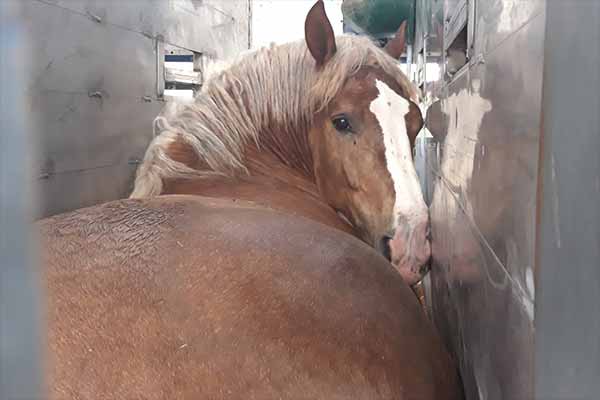
ANDA and Animals ‘Angels report animal welfare violations during the transport of ‘slaughter’ horses in Spain

On February 23, ANDA and Animals’ Angels filed a complaint against Spain because the regulations for the protection of horses during transport are regularly not observed there.
The complaint initially relates to the transport route from Spain to Italy.

The NGOs have been monitoring the conditions of horse transport on this route since 2007.

In 14 years we have noticed the same violations again and again.
To this day, the responsible regional and national authorities in Spain are not doing anything to stop them sustainably.

The EU Animal Welfare Transport Regulation stipulates that horses that are not used to a halter may not be transported for more than eight hours.
Still, the vast majority of horses transported from Spain to Italian slaughterhouses have never worn a halter in their short life.

In addition, the regulation stipulates that horses must be transported in individual boxes on long journeys. This rule is not observed when transporting horses between Spain and Italy, as they are almost always transported in groups.

Continue reading

Spain, Catalonia: pig farm of horrors

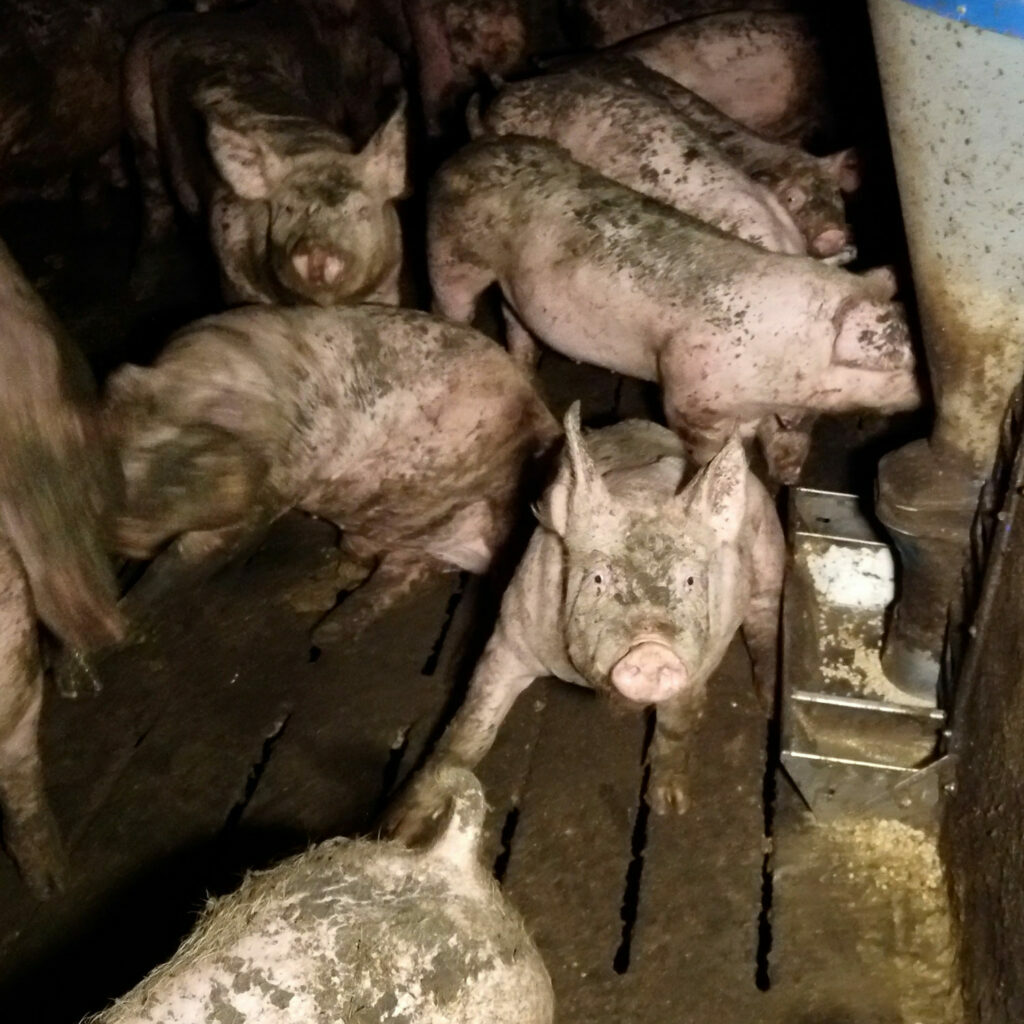
In our latest investigation, Animal Equality has brought to light distressing scenes from a “farm of horrors” located in Catalonia, Spain, where the highest concentration of intensive pig farms is located.

THE DETAILS: The investigation’s footage shows the farm’s non-compliance with Spanish regulations for the protection of pigs in the country, with evidence found of sanitation irregularities, animal abuse, and possible environmental crimes.

https://youtu.be/rcA9rWf-hJA

Our investigative team filmed:

-Pigs living amongst excrement, as well as eating food and drinking water contaminated with feces.

-Overcrowded living conditions that lacked natural stimuli, causing the pigs to stress and compelled them to bite each other’s tails and ears.

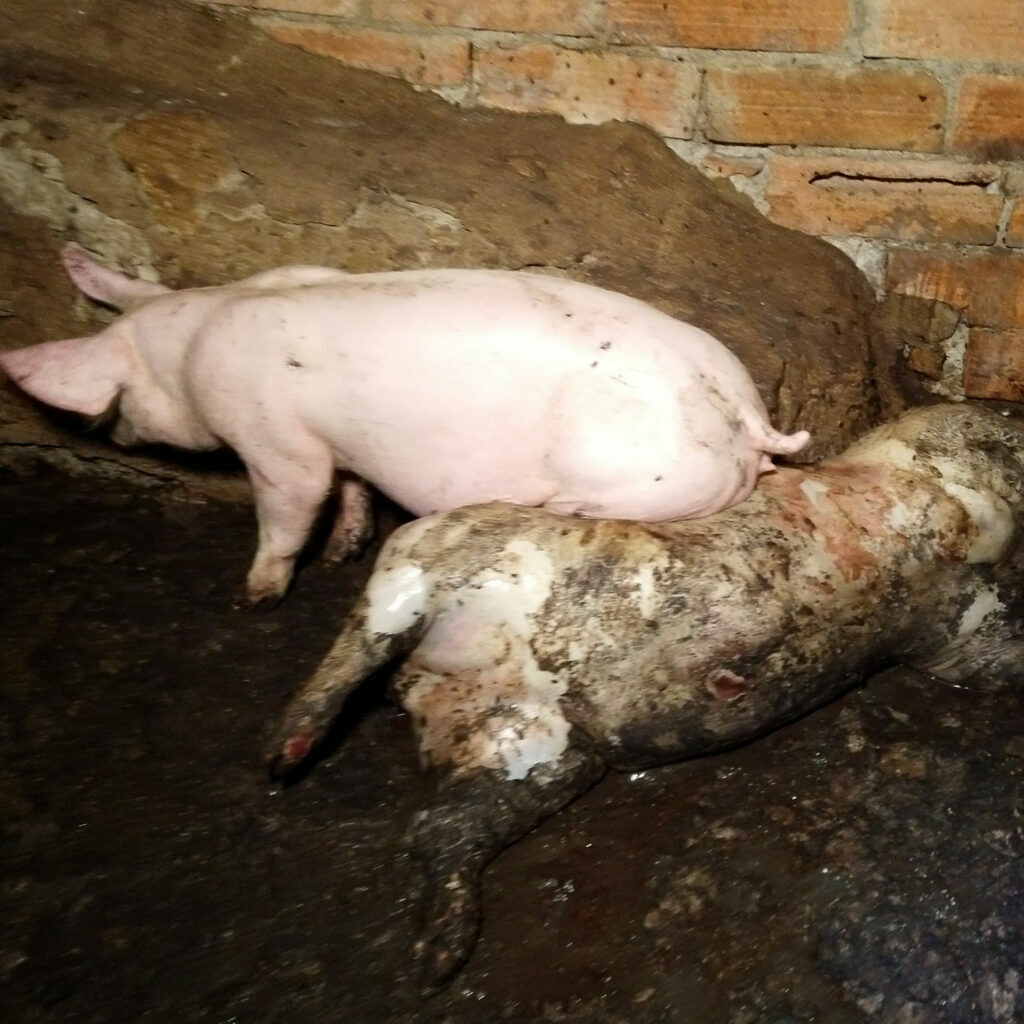
-Injured pigs, with some only able to crawl, while others who didn’t have the strength to move were left to die without veterinary attention.

-Pigs living with the rotting carcass of one of their companions, risking potential disease transmission to the rest of the animals.

The illegal dumping of slurry, which is a possible environmental crime.

For more…at https://worldanimalsvoice.com/2021/02/25/spain-catalonia-pig-farm-of-horrors/


And I mean...In July 2020 the German Animal Welfare Office also documented the horror conditions in a pig farm in Germany, which is the supplier of the German pig baron Tönnies.

The video shows a similarly serious violation


The strategy of governments, vet offices, authorities, ministers … is always the same: first of all, close the farm until the public has calmed down.
Then it goes on as before.

Several such cases, like the one in Catalonia, were reported years ago in Germany, and everywhere the perpetrators were hardly or not at all molested by the authorities.

There will probably never be a trial in Catalonia, too. The perpetrators will live on without punishment and as innocent citizens.
And they will continue to torture animals.

And the stupid consumer still believes the jubilant nonsense that such crimes in factory farming are only “isolated cases”.

With the governments and all these amateurish EU officials with whom we are “blessed”, the worst crime in human history, the animal holocaust, will continue.

My best regards to all, Venus