Japan: The Clinically Clean Hi Tec Killing Machine That Is The Japanese System – More Than 204,000 Pets — 82 Percent of the Total Taken Into Public “Animal Shelters” Are Killed With High Tec Disregard Each Year.

Japan

The Cruel Japanese doing what they know best – killing vast numbers of animals in such a clean, electronic controlled, brain dead workmen type fashion.

Animals gassed using high tech systems that ends up showing scores of newly gassed dogs and cats simply being emptied out of crates like the weeks rubbish.

This is the squeaky clean method of Japanese animal abuse – shame on them !

If you wish to contact your national Japanese embassy about what you have seen here in the videos, then please use the following link(s) – copy and send a link to this article if you wish:

http://www.mofa.go.jp/about/emb_cons/mofaserv.html 

http://www.mofa.go.jp/about/emb_cons/protocol/

https://www.facebook.com/notes/save-japan-dolphins/japanese-embassies-global-list/446594295377742


WARNING – VERY GRAPHIC FOOTAGE.


The first video –  dog killing.

Second – kitten and cat killing.

Video footage is shown in the following link:

http://www.fellbeisser.net/news/automatische-vergasungssysteme-in-japanischen-tierheimen

 ‘Hiroyuki Satake, deputy director of the Tokyo metropolitan government’s Animal Protection and Consultation Center in Setagaya Ward, says it is an uphill battle convincing the public to adopt abandoned pets, although things have improved slightly in recent years.

“Japanese people are in the habit of going to a pet shop and buying a puppy. In Tokyo there are no puppies brought to the pound and so we only have adult dogs to re-home. People don’t want an adult dog — they want to get a dog when it is still young.”

The following article from the ‚Japan Times’ explains more about this issue and the video footage linked above:


http://www.japantimes.co.jp/community/2013/02/19/issues/millions-of-dogs-cats-coddled-200000-gassed-each-year-in-pet-mad-japan/#.UkLxXH9jFOR 

Millions of dogs, cats coddled, 200,000 gassed each year in pet-mad Japan

82% of animals that end up at public shelters face ‘distressing’ death by carbon dioxide

by Simon Scott

Cast in bronze, Hachiko sits in a position of prominence befitting a storied daimyo or prime minister, right next to the busiest intersection in Japan, if not the world.

As the oft-told story goes, the famed golden-brown Akita would greet his master, professor Hidesaburo Ueno of Tokyo University, outside Shibuya Station at the end of every day as he returned from work.

After the professor died suddenly in 1925 of a stroke, Hachiko continued to wait patiently outside the station for his master day in, day out for another nine long years, until his own demise.

This enduring loyalty earned Hachiko the respect and affection of the Japanese public and led eventually to his immortalization in bronze in Shibuya and in modern Japanese folklore, as the embodiment of the unbreakable bond between man and his best friend.

Hachiko was also a dog for his time. Born into 1920s Japan, he lived through the prewar period when Japan’s leaders were busy whipping up a nationalistic storm about fealty to the Emperor and nation to support their military aims in Asia. Hachiko came to symbolize this “dogged” and blind loyalty.

By the standards of the Shibuya pooches of today, who daintily walk in his comparatively very large footsteps, Hachiko would probably be a long way from being considered even remotely kawaii.

Photos from back in the day reveal him to be a mangy-looking mutt with lopsided ears and a grumpy, forlorn face (perhaps understandably, considering his predicament). Yet he was loyal, and that was enough — at least back then.

Today, it is unlikely Hachiko would survive nine hours wandering around Shibuya crossing on his own, let alone nine years. If he managed to avoid being run over by an impatient taxi driver, he would likely be promptly picked up by Tokyo’s animal control division. And then his chances of survival would be very, very slim.

More than 204,000 pets — 82 percent of the total taken into public “animal shelters” that year — were euthanized in 2010, according to the latest available government figures. Just under 52,000 of these animals were dogs; the majority were cats.

In that same year, less than 29,000 abandoned pets — 11 percent of arrivals — were successfully re-homed.

In the U.K., in contrast, just over 7,000 dogs were euthanized in 2011, even though more than 126,000 were abandoned — a rate of less than 6 percent. The euthanasia rate for animals in Canada based on responses from just over half of the country’s shelters in 2010 was 36 percent.

Such comparisons highlight Japan’s very low rehoming rate and beg the question of why so many pets end up being put down.

Hiroyuki Satake, deputy director of the Tokyo metropolitan government’s Animal Protection and Consultation Center in Setagaya Ward, says it is an uphill battle convincing the public to adopt abandoned pets, although things have improved slightly in recent years.

“Japanese people are in the habit of going to a pet shop and buying a puppy. In Tokyo there are no puppies brought to the pound and so we only have adult dogs to re-home. People don’t want an adult dog — they want to get a dog when it is still young.”

Satake adds that even out of the small number of dogs that are successfully rehomed, the majority are not taken in by members of the public as family pets, but are mostly picked up by volunteers working for any number of Japan’s private animal shelters.

One such shelter is ARK (Animal Rescue Kansai), established by Briton Elizabeth Oliver in 1990. One of most well-known and respected animal shelters in Japan, ARK has been something of a trailblazer in the field of animal rights in Japan. Oliver was awarded an MBE (Member of the British Empire) by the queen last year for her services to animal welfare and civil society in Japan.

ARK currently houses about 180 cats and a similar number of dogs at its sanctuary in Osaka Prefecture, with around 30 more animals staying in ARK-registered foster homes in the Tokyo area.

A large number of the animals the shelter takes in are handed over by older people who are no longer able to look after them, Oliver says. “We get a lot of dogs from people in their 60s and 70s. Often they have to go into hospital and can’t take their dog with them.”

Oliver believes the root of this problem lies with the pet shops, which will only sell puppies. “I’m not against older people adopting animals, but if they go to a pet shop, the only animal you can get is one which is very young. If they come here [to ARK], we would say, ‘Well, take a dog which is 6 or 7 years old.’ ”

Oliver adds that in her native England the pet culture is very different and it is common for people to adopt older animals.

“People are more realistic in the U.K. If you are a certain age, you would be thinking to adopt something older. I think in Japan people just see cute puppies.”

ARK also takes in a lot of dogs from hoarders and what she calls “balcony breeders” — amateurs trying to make some quick yen breeding from home but who fail to sell the dogs.

Animal hoarders are people who keep an abnormally large number of domestic pets in their home despite lacking adequate space to house the animals or the ability to feed or look after them properly.

Hoarders are often mentally ill people who have an unhealthy, obsessive attachment to their pets and are unable to comprehend the suffering they are causing.

Recently six miniature pinschers were brought to the ARK shelter after the owner was apprehended by the authorities.

“She was a hoarder type and she had abused the dogs. The animals hadn’t been properly fed,” Oliver explains. “Amongst those six, two have died already. One, a so-called puppy, was about 8 months, but looked about 1 month. It weighed only 560 grams — the weight of a kitten.”

Walking the streets of Tokyo, you could be forgiven for thinking Japanese pets are the luckiest in the world. In many cases, they probably are.

Veterinarian Midori Wada from Daktari Animal Hospital in Tokyo says she is often impressed with how conscientious and devoted most pet owners in Japan are.

“From personal experience interacting with patients and their respective owners, a pet is family, not a family pet,” she says. “If an animal has an incurable disease, Japanese owners tend to be very devoted and they will do whatever they can to prolong the pet’s life rather than euthanize, so they can be together for one more day.

“We have patients who are hospitalized for months. The owners come to visit on a daily basis and I experience the strong human-animal bond and medical miracles that come from not giving up in our hospital.”

Wada adds that the responsible attitudes of many pet owners also make it possible to administer preventative treatment. Even people with completely healthy pets will diligently pay for vaccinations every year, as well as general health checks that include a variety of tests from a physical exam to a blood test — and even a CT scan.

Yet Wada also believes Japanese pet owners can at times go too far and overindulge their pets, which can create problems down the road.

“We have many pet owners who treat animals too much like people, making them good parents to their pets, maybe, but becoming too obsessed with them at the same time,” she says. “I’m used to seeing Louis Vuitton carriers, baby strollers, and a dog’s diet including Kobe beef and Yubari melons, which cost upwards of $50 per fruit.”

Wada says that sometimes this over-the-top treatment can result in serious medical issues for the animals. Forcing dogs into clothes in the very hot summer months can cause matted fur and skin problems, for example, and an imbalanced diet can lead to obesity.

As with any other fashion craze in Japan, ground zero for this pooch-pampering obsession is trendy Shibuya and neighboring Harajuku. Boutiques selling designer doggie clothes and accessories are now almost as common a sight as high school girls dressed up as “gothic Lolitas.”

Dare to imagine it and these shops have probably got it: ripped designer jeans for the Chihuahua, a heavy-knit English duffle coat to keep the Pomeranian warm in winter, or a Buzz Lightyear costume for the miniature dachshund — because, of course, he loved the film.

There are doggie necklaces, bracelets, hats, bootees, socks, carry bags, push chairs, nappies — even a bandana with a built-in gel cooling pad for those scorching summer months. And if money is no object, Chanel, Dior, Hermes and Gucci now have luxury dog product lines in Japan.

Then there are the service industries — pet theme parks, restaurants, cafes, hotels, swimming lessons, grooming sessions, manicures, massages, facials, and even special pet-only spa resorts. One can’t help but wonder who is enjoying themselves here — the dog or the owner?

And if old, noble Hachiko was raised from the dead and ambled once more through his old stomping ground, what would he make of the spoilt brand of toy dogs that crowd the area today? Would he even recognize them as being of the same biological order, let alone species, as himself?

For better or worse, Japan is in the throes of a pet boom and there is serious money to be made. In a climate of general economic stagnation, the industry is proving to be remarkably recession-proof, with the pet business estimated to be worth over ¥1 trillion a year and growing by the day. The nation’s total pet population is now a staggering 22 million — that’s over 5 million more than the number of children under 15 in Japan today.

No one can complain about an industry doing well, and a pet — just like a human — loved too much is better off than one not loved at all. But sadly, as the pet population grows, so does the number of animals that fall through the cracks.

For some pets that end up in the Animal Protection and Consultation Center in Tokyo, rehoming is not even attempted and they are sent to their death after only seven days.

“We observe the animals and decide if the chance of rehoming is high or low,” says Satake, the center’s deputy director.

Factors taken into consideration are the health, age and character of the animal, such as whether or not it is overly aggressive.

“If the odds of re-homing are good we keep it here for a long time, but if they are low then we quickly destroy the animal,” says Satake.

“The decision is ultimately made by one of our staff and it is hard for that person. They must themselves decide on life or death for the pet. This is a heavy burden for them to carry.”

In cases where animals are put down, the method of euthanization is one which has largely been abolished in the West: gassing by carbon dioxide.

The World Society for the Protection of Animals (WSPA) strongly criticized the use of carbon dioxide to put down animals in a recent report, citing the suffering it inflicts.

“Concerns over the humaneness of CO2 stem from its association with breathlessness and hyperventilation,” the report says. “At high concentrations, CO2 dissolves in the moisture of the animal’s airways producing carbonic acid that causes irritation and pain in the animal’s nose. Induction to unconsciousness is accompanied by escape attempts, licking, sneezing and increased movement or agitation indicating exposure is distressing.”

Satake says that carbon dioxide gas is still used in Japan because in the past the number of stray animals was even higher. This made it impractical to euthanize animals individually, such as by lethal injection, whereas with gas a large number can be killed simultaneously.

Satake acknowledges that the system currently in place is not ideal, but says changing to a more humane method would cost a lot of money.

“The truth is the most current method is not carbon dioxide but anesthetic gas,” he says. “There is a machine available which uses this gas, but it is very, very expensive. We want to buy this machine and change to this method, but it’s too costly.”

Currently, Shimonoseki city in Yamaguchi Prefecture is the only municipality in Japan that euthanizes its animals using anesthetic gas.

Another option for euthanizing unwanted pets would be to give them an intravenous injection of a barbiturate or anesthetic agent, inducing death through an overdose.

The WSPA regards an IV injection of a 20-percent pentobarbital solution (a barbiturate) as the most humane method of euthanizing cats or dogs as it induces “rapid loss of consciousness” and causes no “distressing side effects.”

Pentobarbital is also commonly used in conjunction with other drugs for the execution of criminals for capital crimes in some U.S. states.

However, Satake sees obstacles to such a hands-on method being introduced in Japan.

“In the case of giving an injection to each animal, well, it can lead to mental problems for the individual who has to do the killing, so we want to avoid direct methods such as injection,” he says. “In the case of a machine, well, the person can avoid directly handling the animals.”

Tucked away in a corner of the car park at the Animal Protection and Consultation Center — the place where the unwanted pets of Tokyo are processed before being sent to the gas chambers in Jonanjima on the outskirts of the city — is a small shrine.

Here, the staff of the center from time to time burn sticks of incense and say a prayer for the souls of those pets who never found a home — pets who never got to roam, free but lonely, like mangy Hachiko through the crowded streets of Shibuya to bum a stick of yakitori or a pork bun from a friendly passer-by.

Those interested in adopting a pet or donating to ARK should visit www.arkbark.net or email ark@arkbark.net. Send comments on this issue and story ideas to community@japantimes.co.jp .

Three-quarters of euthanized pets in Japan are cats

Of the more than 204,000 pets euthanized in Japan in 2010, around 152,000, or 75 percent, were cats, according to the latest available government figures.

The high proportion of cats being put down reflects a massive decrease in the number of puppies being abandoned, especially in large urban areas, rather than an increase in the number of cats, says Hiroyuki Satake, deputy director of the Tokyo metropolitan government’s Animal Protection and Consultation Center.

For example, in the Tokyo metropolitan area only two puppies were brought to the Animal Control Center in 2011 compared to 1,736 kittens.

Satake says this positive trend for dogs can be attributed to an increase in neutering rates and the urban Tokyo lifestyle.

“Everyone gets their dog spayed nowadays. In the past they didn’t due to the prices, perhaps, or they felt sorry for the animal,” he says.

“Also, in Tokyo everyone keeps their dogs inside their house rather than outside so there is no chance for them to breed.”

Cats, on the other hand, are more likely to roam free and so the risk of an unspayed female getting impregnated is a lot higher, he added.

Are ‘No Action On Issues’ EU Politicians Any Better Than The Corrupt Romanian Government Currently Supporting A Lynch Mob Frenzy On Stray Dogs?

RMNA0001

SAV Comment

– So after years and years of ignoring the NGO requests that sterilization and a government controlled programme of stray animals management is the long term solution to the situation, we are now promised by President Traian Basescu  that “After we bring the canine population to a manageable number, we can also think of another way of dealing with the problem””.

The way to deal with the problem is to stop the political corruption that is a never ending problem in Romania – and this is the real problem that President Traian Basescu needs to address – or is he one of them anyway ?

Does the Romanian government actually think about anything other than feathering their own nests from EU taxpayer finances which are given for stray animal controls ?

We suggest that it is the corruption in the political system which is the real problem in Romania, and despite his promises to do something positive, we suggest that for the future nothing will actually happen regarding stray animal management; instead, corrupt politicians will continue to line their pockets with the cash meant for the animals.

Sort that problem out Basescu and then other Europeans will consider that your nation does have some morals.  At the moment you are considered the lowest of the low – and will continue to be all the time this lynch mob frenzy goes on killing animals.  You are not worthy of being an EU member state – you belong in the dark ages.

The EU should act; but what do we get ? – no action from a useless EU Commission and Parliament, who can do nothing because it is a national issue.  So, what do we require MEPs and the European Parliament for if they do nothing ???

Maybe the EU is as corrupt as the Romanian government – pockets lined with gold but in the way of action; very little for its citizens.

Possibly the UK would do best as many UK citizens now think and pull the plug at the EU, get out and let them all continue with their self importance opinions – those who in reality do nothing. 

Where is the stray dog EU action plan for Europe ?? – exactly; nowhere – our question answered !!

DARK AGES + NO GOVERNMENT ACTION PLAN = ROMANIA

As a comment left on the site says today:

“Those people come from the dark ages of witches and killing what they do not understand,”

– and yet they are welcomed by EU politicians with open arms !


 Romania guiltyRomania 4

RMNA0001

http://www.rri.ro/en_gb/romanias_stray_dogs_and_the_constitution-6551

The issue of Romania’s community dogs has not ceased to divide Romanian society these days, since on the one hand there are those who want dogs to be euthanized straight away, while on the other side there are those who want a long-lasting solution.

As many as 29 senators from all Romania’s’ parliamentary parties have submitted an official notification to Romania’s Constitutional Court, deeming the Parliament’s bill on stray dogs unconstitutional. As a result, the Constitutional Court on September 25th will analyze the law on stray dogs.

The Parliament’s Chamber of Deputies, the decision-making body in this case, has voted with a vast majority in favor of the bill. We recall that recently a four-year old boy has been fatally bitten by dogs nearby one of Bucharest’s parks. The law stipulates that aggressive animals, or those that are declared fatally ill shall be euthanized straight away.

The law also grants an extension of the deadline from 7 to 14 days in the case of the dogs from a dog shelter to be claimed or adopted. If those involved fail to meet that deadline, the local authority is entitled to decide the euthanization of dogs, or it may even extend their time in the shelter, provided they have enough financial resources for the paddocks’ maintenance.

In Bucharest alone, the estimated number of stray dogs stands at 65 thousand. That is an outcome of the authorities’ lack of reaction over dozens of years. We recall that in the early 1980s Romania’s former dictator Nicolae Ceausescu ordered the demolition of a sizeable number of buildings, which is considered the starting point of the stray dogs’ plight, since in lots of neighborhoods houses were replaced by blocks of flats, which led to a growing number of stray dogs being left with no master.

Romania’s President Traian Basescu, a former mayor of Bucharest, said he would have no restraint promulgating the stray dogs’ law, in the form the Parliament had passed it. “It is just as I think things should happen. After we bring the canine population to a manageable number, we can also think of another way of dealing with the problem. But right now it is a danger for kids, for the elderly, for people in general”, President Basescu said.

Those opposing the law say they want a European solution to the problem, so that no single stray dog should be found in Romania’s streets, that can jeopardize people’s lives. At the same time, however, these people do not want Romania to be rated as a country with people with no soul. Protesters on both sides have pointed their fingers at the relevant NGOs. In recent years, those responsible with the problem of stray dogs have had hefty sums of money at their fingertips, but the results of their action in this respect are barely visible.

Meanwhile, prosecutors continue the hearings in the file that has been opened following the death of the four-year old boy. The Head of the Authority for Animals’ Monitoring and Protection, subpoenaed to the General Prosecutor’s Office announced he had increased the number of dog catchers in Bucharest. 11 crews made of at least two employees are on the ground, as compared to the number of three members of such crews so far.

Romania: 23/9/2013 – The Situation Is Dire With German Run Shelters Being Targetted To Act By 1/10/13 – Please Send Sample Letter Given Below to All E Mail Addresses Given In Block Listing Also Provided.

RMNA0001

Romania guilty

London rom 15

IMGP7944

23/9/13 – The situation in Romania for stray animals is dire – the following provides a link (and copied text) direct from the German organisation who have run a shelter for 13 years but who have now been given just 1 week (by the 1st of October) to find new homes for all their animals – an impossibility !

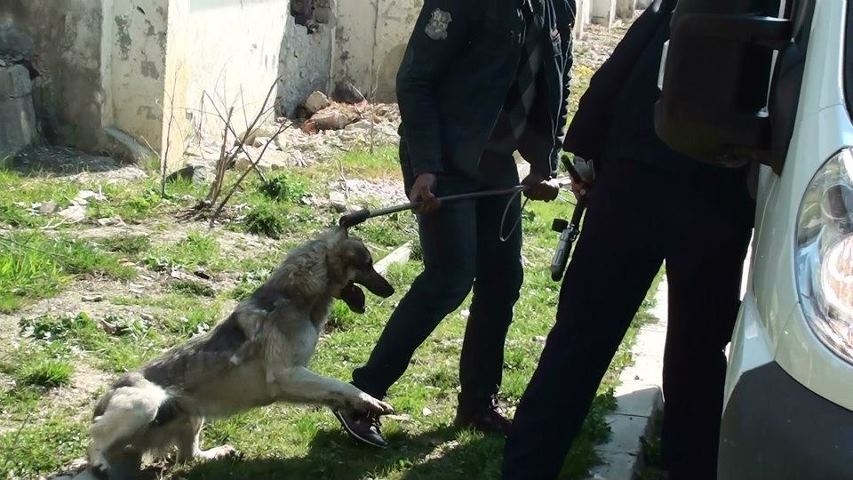
An 8 man team of dogcatchers are waiting outside of the shelter to capture and kill any animals – regardless of them being spayed or neutered.

Mayor Tudor Pendiuc is a complete and utter disgrace to the human race – he is corrupt and lining his own pockets with money given by the EU for the sterilization of animals.

Mayor Tudor Pendiuc is a disgrace to Romania, who given their animal welfare track record, we consider should not even be allowed to belong to the EU – Romania is led by corrupt officials such as Mayor Tudor Pendiuc – Romania is a disgrace to what is the EU. 

Go to the end of this post and see how Romania has ‘taken care’ of its young children over the years; the suspicious death of a child recently which has started this animal killing frenzy by the Romanian government – and yet they are doing very little to provide care for their orphans also.

In the following you will find a sample letter and many e mail addresses which we ask you to copy and send the sample letter to.

And what in reality is the EU really doing about this situation ?

– we have contacted the EU Parliament in London this morning (23/9) to find out what exactly the EU (external to Romania) is actually doing about this.  London assures us it is going to provide us with information, and so now we sit and wait to see exactly what this amounts to.

In the meantime, please click on the following link for information – we have repeated some of it below, but there is much more: You can translate using the top tab if necessary.

http://www.tierhilfe-hoffnung.com/


On 19.09.2013 was an official messenger of the town hall Arges Pitesti, represented by Mayor Tudor Pendiuc, pass the following letter our shelter line Ana-Maria Voicu:

The undersigned, Mayor Tudor Pendiuc, asks us in writing, the contract on 01.05.2013 taken by our Administration municipal shelter (300 meters next to our existing thirteen years Smeura) to vacate until the 01.10.2013!

Despite the current legal situation, which is currently being examined by the Constitutional Court that the killing of tens of thousands, of defenseless Romanian street dogs should be legalized, Mayor Tudor Pendiuc plans to 01.10.2013 in Pitesti and county Arges an eight-person dog catcher team in two vehicles through the streets Pitestis send to every street dog – whether spayed or neutered – capture to host in his “shelter” and after 14 days ‘lull’.

But the reality is clearly cruel, brutal and sadistic look: in the urban shelter against the Smeura to be killed by freezing Mayor Tudor Pendiuc!

THAT WE DO NOT ALLOW:

Dear friends, dear Sponsors Tierhilfe Hope eV

Most of you know our work since the very beginning, therefore, for thirteen years, know about the progress, the troubles and hardships of the Animal Welfare Association with their hopes and their Smeura street dogs know. Please help the animals with your protest letters, please send them by fax, by mail, by mail, by SMS and, if possible by telephone in German, English or Romanian.

In this unjust, brutalized and uninhibited time, we must occur together strong, pull together and constantly protesting against the barbaric machinations of an EU country!

Please use our sample letter or a self-written version and write at the following addresses:

Mr / / D nl.
mayor / / Primary
Pendiuc Tudor
St Victoriei no.24
RO-110017 Pitesti jud. Arges
Romania / / Romania

Tel: 0040-248-220088 City Hall
Fax :0040-248 212 166 Town Hall.
Mobile: 0040-744-501 655 T.Pendiuc
mail:
cabinetprimar@primariapitesti.ro

 Romania guiltyIMGP7942

*** BLOCK E MAIL CONTACT ADDRESSES ***

Please DO A BOMBARD protest to the following email addresses:

cp01@cdep.rocp02@cdep.rocp03@cdep.rocp04@cdep.rocp05@cdep.ro;  
cp06@cdep.ro;   cp07@cdep.rocp08@cdep.rocp10@cdep.ro
cp11@cdep.rocp12@cdep.rocp13@cdep.rocp14@cdep.romarin.almajanu@cdep.ro;   
laurentiu.nistor@cdep.romarcelciolacu@clicknet.rohubert.thuma@cdep.rozgonea@cdep.robogdan.ciuca@cdep.ro
viorelh@cdep.rodan.motreanu@cdep.roioan.oltean@cdep.ro
enicolicea@cdep.rocristian.buican@cdep.ro
adriandiaconu@cdep.roniculae.mircovici@cdep.romircea.draghici@cdep.ro
ionelpalar@cdep.ro  ioan.balan@cdep.ro  denes.seres@cdep.rooffice@ansvsa.ro
office@cmvro.rosrp@cdep.ropresa@cdep.ropetitii@mai.gov.roamr@amr.ro;  
CJD@bucuresti-primaria.ro;   procetatean@presidency.roccr@ccr.ro
office@agerpres.rostiri@agerpres.romediafax@mediafax.ro
peti-secretariat@europarl.europa.euaxel.voss@europarl.europa.eubarbara.lochbihler@europarl.europa.eubernd.lange@europarl.europa.eubernhard.rapkay@europarl.europa.eubirgit.schnieber-Jastram@europarl.europa.eu;   birgit.sippel@europarl.europa.eubritta.reimers@europarl.europa.euburkhard.balz@europarl.europa.eudagmar.roth-behrendt@europarl.europa.eudieter-lebrecht.koch@europarl.europa.eudoris.pack@europarl.europa.euelmar.brok@europarl.europa.euevelyne.gebhardt@europarl.europa.eufranziska.brantner@europarl.europa.eufranziska.keller@europarl.europa.eu;

Please protest to the following fax numbers:

Parliament: 00 40 21 3120828

Parliament: 00 40 21 3146934

Parliament: 00 40 21 3139846

Animal Welfare Association shelter hope Smeura Pitesti / Romania

Referring to the terrible fatal incident of last Tuesday, in which the four-year Ionut Anghel had to lose his life, we want as patrons Tierhilfe Hope eV in our function and our thirteen years working in the caring and effective relief and solution to the stray dog ​​problem in Romania beginning our deepest sympathy condolences, and there is hardly a worse loss than losing a child!

We would not go into the dubious descriptions and reports about the events leading up and the questionable supervision of small Ionut, because it changes this tragedy never!

However, any clear-thinking people with heart and mind must be aware that the barbaric killing and capture and slaughter of the desultory already partially castrated dogs can no longer make any solution brings and also the small Ionut alive!

Rather, one should corrupt politicians, always and constantly interested in the own full pocket mayors and county deputies questions and accuse, why both EU and taxes are collected annually in vast sums the question of guilt, is proclaimed great, you take the problem in hand , we solve the problem civilized and reasonable time by “animal shelters” (= Romanian version of a barbaric killing station). Theoretical: technically correct euthanasia of a dog. Practical: beaten to death with a spade or diletantisch injected with anti-freeze to death)

But nothing is effectively nothing done, but want you can let the German animal protection organizations solve the stray dog ​​problem.

The animal protection organizations are alone, without the aid of this most disinterested criminal and ignorant rulers at the political level, not the master of disaster, because: who is doing nothing for decades, can not wait to have solved in the shortest time any grievance!

A simple calculation with sustainability and civilized Zeitgeist would be: All in Romania located ligand stray dogs around to castrate 5oo-8oo.ooo to leave them after the natural way on the road to be old without it continues to increase, 10-15 years in Romania would be freed from the street dogs!

Without massacres and barbaric killing methods without. But when the country’s government and its top politicians anew prefer every year, to invest the appropriate funds into dark channels or in their own interests, to German animal protection groups make only a drop in the said ocean, – and Ionut does not remain the only victim tangled politics of inefficient management, corruption and naked brutality against likewise also the pain and joy sentient creatures!

The Animal Welfare hopes eV derives from April 2000 on location in Pitesti, Mosoaia-Smeura, county Arges, 110 km north of Bucharest / Romania, the largest animal shelter in the world-a title which should not-but sound great reflects the indictment of a country in the EU !

Because if he was dragged from the beginning together, city councils, mayors, politicians and animal welfare organizations were already gone full effectiveness of the calculated thirteen fifteen years!

“If it is not across generations, zeitgeist accordingly and clearheaded traded, and will not be used humanely and effectively for the only solution, namely the widespread castration with registration, vaccination and written capture all stray animals, as well as a rethinking of the mentality regarding the farm dogs by their owners takes place, Romania stands with his back to the wall and shows once again that they are capable of killing other than barbaric, sadistic murder and horizon-less mindless stupidity for nothing else! “

On Tuesday, September 10, 2013 was negotiated in Bucharest in front of the Parliament, and enacted the killing Act 2012 passed again, a clear decision of the current situation is to 06 October 2013 to expect!

In addition to demonstrations, educational work among the population and also in schools, we save pursued dogs throughout the county Arges, castrate up to 52 dogs a day to complete castration contracts with uncooperative mayors of smaller towns and larger cities and are as effective and well in our work Continue as possible.

The population is currently in a panic situation! To perfusion with diesel and then lighting a frightened adult dog in the city center there was already so far! Before the shelter since last Tuesday Smeura were 756  dogs exposed or exposed in the forest before our Smeura.

“Animal welfare concerns us all”!!

The Animal Welfare Association is hoping with its currently just 4ooo dogs on location in Romania and asks for your help in the form of letters of protest, education, and donations to further activity!

On September 10, 2013 was set at temporary injunction that Romania’s stray dogs can be killed. Please help urgently to stop this massacre by your letter of protest.

On 06 October is a further vote or the final legislation will be announced in writing by the Constitutional Court in Bucharest. The current hour, the Romanian population is due to expire manipulated media influences and not reflected sense to no empathy in the position and in a kind of murder.

Within Romania killing the dog has now become a national sport of different people who are currently beyond the cruelty done to the dogs any ideas!

We are currently using two vehicles traveling around the clock to try to solve conflicts within the population, catch dogs and give them an extra in our Smeura, we also castrate without interruption!

Why not recognize Romania’s politicians that only bring the widespread neutering a sustainable and effective solution!

Tierhilfe Hope eV
Matthias Schmidt (1.Vors.)
Black Hau Weg 7
72135 Dettenhausen

+49 (0) 7157/61341 @ m.schmidt animal assistance-hoffnung.de www.tierhilfe-hoffnung.de

Account for donations: 2.48046 million, BLZ: 641 500 20, Tübingen Savings Bank
IBAN: DE47 6415 0020 0002 4804 60
BIC: SOLADES1TUB

http://www.tierhilfe-hoffnung.com/

IMGP7926

IMGP7964

IMGP7995

Romania guilty 

*** Sample Letter ***

(send to the block e mail addresses provided in the Block listing provided above):


For the attention of the Romanian Authorities:

We regret the tragedy of the child killed by dogs. Such dramas Should not repeat. But if you insist in applying the same methods of dog mass murder did has been Conducted in Romania for 20 years and did has not resolved the problem-in the streets, this risk Will Remain permanent.
We do not understand the interests of the Romanian Authorities to continue or implement Implements again did a method has proven over the world to be failed, expensive, but immoral as well, shameful.

We do not understand why, despite all the evidence:

  • the benefits of dog sterilization
  • the results Obtained in Oradea, where, by the sterilization and return programs, the number of stray dogs Decreased from 5000 to 300
  • the outcomes of the World Health Organization’s study (under taken between 1981 and 1988) Concluding did “the euthanasia program or incarceration Which are both inefficient and expensive”
  • the experiences of other countries that, after years of mass murder without effect, implemented mass sterilization laws having noticeable effects,

You do not accept to implement Implements the only solution for managing the dogs, did is the sterilization and return of the gentle and healthy stray dogs, compulsorily Accompanied by the sterilization of dogs with owners did are the main source of street dogs by Abandoning mass. Approximately 5 million puppies are born in Romania in rural areas every year, some of them being killed by their owners and the others being abandoned in the street. . So long as the dogs with owners will not be sterilized, through coherent program, the streets will never be free of dogs
We therefore remind you:


  • the Constitutional Court of Romania DECIDED (Decision 1/2012) did euthanasia is ILLEGAL stray dogs as a management method until all other solutions have been applied Properly, with Uniformly and responsibility by Local Authorities
  • The Lisbon Treaty (art. 13 TFEU) states did the “animals are sentient beings”
  • the European Parliament Resolution of 4 April 2012 on the establishment of an EU legal framework for the protection of pets and stray animals (2012/2670 (RSP)


We ask you for an URGENT & STERILIZATION LAW OF RETURN ALL OWNED AND STRAY DOGS
Romania is Already known by animal cruelty.
, Please, be advised if did the killing of dogs starts, we will show to the Entire world the reality of the dog camp we will notify worldwide about the financial interests behind the business of killing dogs, we will withdraw any support givenName did we have so far to your country, we will boycott Romanian products and tourism, as no one will want to associate with a corrupt, cruel and immoral country.

Name ……………..

Country ………………….


http://www.tierhilfe-hoffnung.com/

Romania guilty

 Overview – Romanian orphans

http://en.wikipedia.org/wiki/Romanian_orphans

http://www.bbc.co.uk/news/magazine-22987447

http://news.bbc.co.uk/1/hi/8425001.stm

http://www.romanianorphanministries.com/the-orphans-of-romania/

http://www.dailymail.co.uk/news/article-2301404/Documentary-filmmaker-saved-Romanian-orphans-KILLED-neighbor-argument-SHRUBBERY.html


Romania: Demostrations In Brussels, Belgium, and Also London, England, About Romanian Stray Dog Killings.

RMNA0001

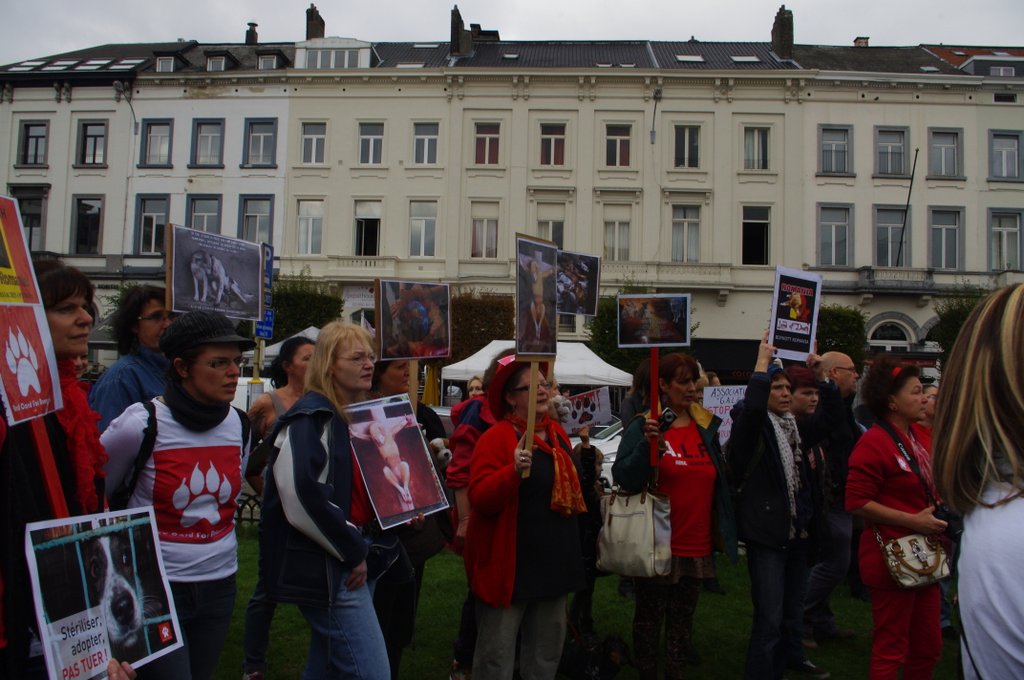
BRUSSELS, BELGIUM

Pictures just in from Brussels, Belgium.

A demonstration took place in Brussels on 21/9/13 against the mass killing of stray animals in Romania.

Here are the pictures:

IMGP7926

IMGP7927

IMGP7939

IMGP7942

IMGP7944

IMGP7948

IMGP7955

IMGP7956

IMGP7964

IMGP7982

IMGP7995 

LONDON.

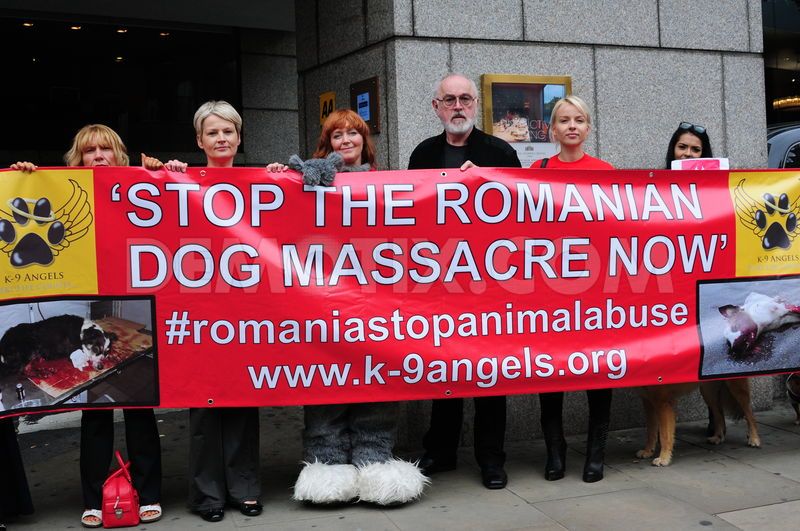
Also a demonstration in London, England.

London rom 5

London rom 15

Loads of images – to see them all, click on the following link to see all of the pictures:

 http://www.demotix.com/photo/2748938/london-demonstration-against-romanian-dog-slaughter

K9 Angels Facebook = https://www.facebook.com/K9Angels

Action for Romanian Animals Facebok =

https://www.facebook.com/pages/Action-for-Romanian-Animals/205984499441311

Independent Balkans News Agency = http://www.balkaneu.com/romanian-lawmakers-stray-dogs-euthanasia/


England Time Out.

England


http://www.youtube.com/watch?v=DVg2EJvvlF8

http://www.youtube.com/watch?v=im3AUiCGqnk

http://www.youtube.com/watch?v=sfR_HWMzgyc

http://www.youtube.com/watch?v=z0DAnu5Sq6k

http://www.youtube.com/watch?v=2NL_5p3NFwg

siouxsie 

Above – ‘Siouxsie’

Below – Siouxsie and Morrissey sing ‘Interlude’

http://www.youtube.com/watch?v=TG_K0XtDaxw


Serbia: EU Parliamentary Question Raised About Shelters and Impact of Animal Welfare Conditions on EU Membership.

Serbian  Flag

EUUN0001

Parliamentary questions

source: http://www.europarl.europa.eu/sides/getDoc.do?pubRef=-//EP//TEXT+WQ+E-2013-006942+0+DOC+XML+V0//EN

14 June 2013

Question for written answer
to the Commission
Rule 117
Oreste Rossi (EFD)

Subject:  Situation of animal rights in Serbia

Since 1 March 2012, Serbia has officially been a candidate for accession to the European Union. Despite the significance of the European Council’s approval, it is right to comment on the situation to date regarding the protection of animal rights in Serbia.

A number of local voluntary associations have denounced the current state of the system of catching and holding stray animals: specifically, they describe the circumstances in shelters in two Serbian towns, Temerin and Subotica. In the first of these, activists maintain that there is a clear and serious failure to comply with the laws in force in Serbia regarding the protection of animals. According to the reports, in the Temerin shelter, strays caught in the neighbouring areas are looked after for just three to seven days before being put down in accordance with former regulation No 29 of 1994 although, as the volunteers point out, this was replaced by the 2005 veterinary law a few years ago. More specifically, Article 168 of the law in question prohibits the slaughter of animals, unless they have been caught in areas where there is a rabies epidemic. For these reasons, I believe that the Temerin shelter not only fails to comply with the law, but can also be identified as a place where abandoned animals are kept for a few days before being slaughtered. As regards the Subotica kennels, which house over 1 000 dogs and has for two years been managed by local volunteers, the local authorities have recently stated that it will be closing due to a failure to comply with the rules governing its operation. According to the volunteers, although the complaints made by the authorities may be correct, there are no other places in Serbia where conditions are better, and closure will only lead to the resumption of the very widespread practice of slaughtering stray dogs in the area.

In view of the above:

Can the Commission state whether it is aware of the conditions in which animals in Serbia are kept?

Does it intend to draw the attention of the Serbian authorities to the need for better protection of animal rights?

Will it take this situation into account when negotiating on the EU acquis, and might this constitute a condition for Serbia’s accession to the European Union?

ANSWER

EN

E-006942/2013

Answer given by Mr Füle

on behalf of the Commission

(3.9.2013)

In line with Article 13 of the Treaty on the Functioning of the European Union, the European Commission attaches great importance to animal welfare. A considerable body of Union legislation has already been adopted for the protection of animal welfare, which however does not concern the protection of stray animals. The EU’s ability to legislate only relates to specific policy areas such as agriculture, internal market, health and consumer protection.

In relation to Serbia, the management of animal shelters and populations of stray animals by the national competent authorities remains under the remit of the Serbian government and is as such not covered by the accession process.

Nevertheless, the Serbian government has informed the Commission that, following complaints regarding the situation in dog shelters in Temerin and Subotica, the Serbian Veterinary Inspectorate has carried out several inspections in the two shelters and is preparing a report on the results of those inspections.


——————————————————————————————————————————————————

v\:* {behavior:url(#default#VML);}
o\:* {behavior:url(#default#VML);}
w\:* {behavior:url(#default#VML);}
.shape {behavior:url(#default#VML);}

Normal
0

Parliamentary questions

10 July 2013

E-008288-13

Question for written answer
to the Commission
Rule 117
Jill Evans (Verts/ALE)


 Subject:  Treatment of dogs in Serbia

 Answer(s) 

The appalling conditions at the Naš Dom state dog shelter in Požega, Serbia, and the treatment of the dogs there has been brought to my attention by one of my constituents. This treatment not only contravenes EU animal welfare laws but also Serbia’s domestic laws.

From the information I received it was reported that the dogs suffer cruelty at the hands of the workers: they are starved to death and beaten to death with clubs in an attempt to save money by reducing the number of dogs that are killed by the expensive toxin T61. They are brutally sterilised by unqualified veterinary assistants and many die as a consequence of this butchery. The conditions are filthy and many of the dead dogs are left in the same cage as other dogs. Due to this brutal abuse, it is reported that the dogs are extremely nervous and scared.

Over the past few months, there have been a number of discussions regarding the process of accession of potential future Member States of the EU, including Serbia. It would seem that much positive action will be needed on their part in order to fulfil the acquis for consideration in the area of animal welfare.

Does the Commission condemn the state’s treatment of dogs?

— Does the Commission agree that action must be taken in response to the contravention of EU animal welfare laws?

What steps will the Commission take to ensure that positive action is taken by the Serbian state to improve these conditions and hold those responsible accountable for their actions with regard to the state’s potential accession to the EU?


Last updated: 25 July 2013


E-008288/2013

Answer given by Mr Füle

on behalf of the Commission

(3.9.2013) 


The Commission refers the Honourable Member to its reply to written question
E-005695/2013[1].

Serbia: Some Great News From Danica – September ‘Felix’ Shelter News.

Serbian  Flag

FELIX

DSC06421_resize

DSC06788_resize

Hi all;

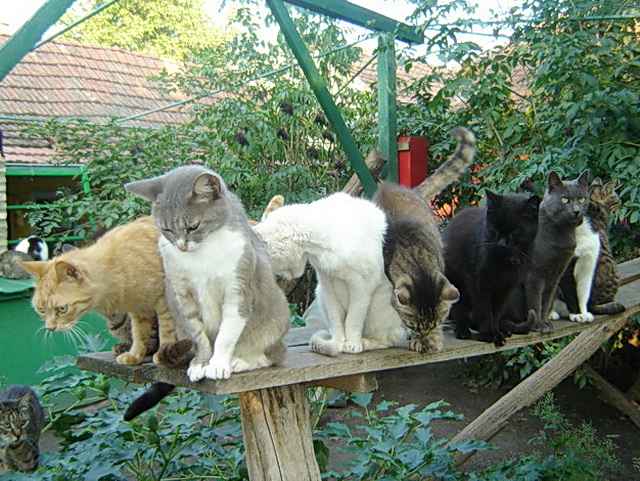
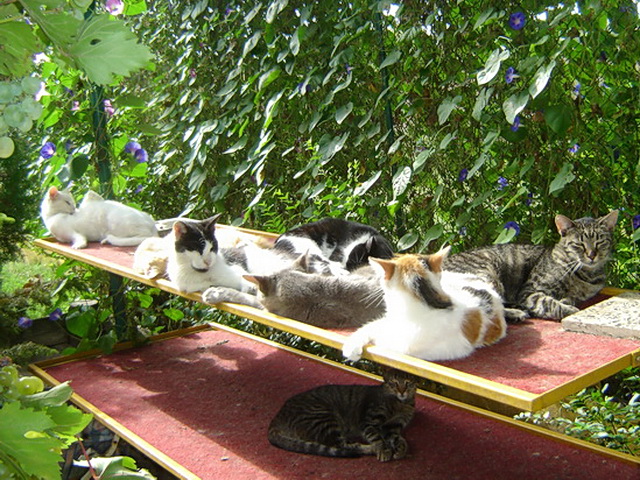
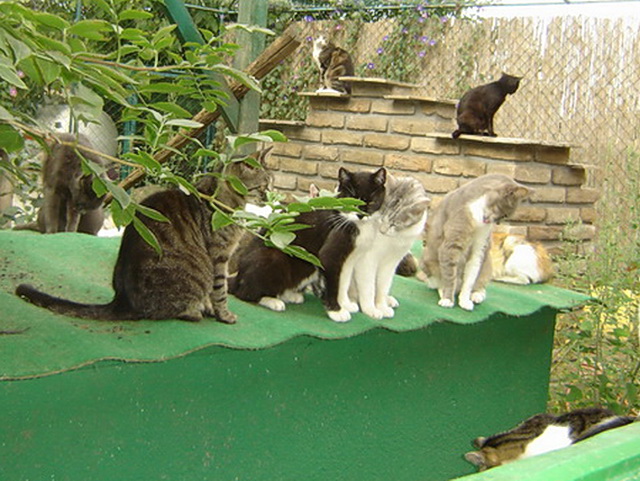
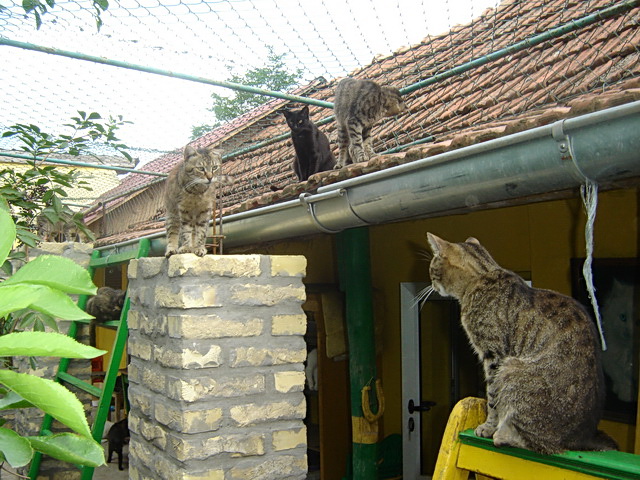
Here below you will find the latest (September) information from Danica at shelter ‘Felix’ in Serbia, which provides a forever home to cats which originally endured a life on the streets as strays.  This is a message of hope and generosity, and it proves that despite all the animal abuse stories which we unfortunately attempt to inform people about – good people, better people, there are sometimes silver linings to dreams – and this is one such (in the words of Danica) “futile and hopeless” situation which now, via a more than kind donation by a supporter, somewhere (who wishes to remain anonymous) – the entire rof at the shelter can now be replaced.  Now the cats will have somewhere safe and warm to spend their winter this year.

We cannot thank the generosity of this anonymous donor enough in bringing the shelter back from the brink, as you will see in Danica’s letter below.  So a massive ‘Thank You’ to whoever the good Samaritan is, someone who has literally saved so many lives.

I love the statement by Danica at the end of her message:

“‘It’s impossible’, said pride. ‘It’s risky’, said experience. ‘It’s pointless’, said reason.

‘Give it a try’, whispered the heart.”

Even if you have tried and your work brings you back no dividends, you have given ‘it’ a try – and that is the main thing.

Remember the words of Edmund Burke – “Evil Flourishes When Good Men Do Nothing?”

Enjoy Danica’s message of hope and very good people;

Mark – SAV Founder.

DSC06405_resize

————————————————————————————————————————–

FELIX

DANICA’S MESSAGE For September:

Enjoy watching all the cats in the following videos:

http://www.youtube.com/watch?v=q4bIEwc11r8

http://www.youtube.com/watch?v=8BWuPPDz8Fc

http://www.youtube.com/watch?v=gZ5Tqg9lPAk

http://www.youtube.com/watch?v=43Zb32dEtNo

http://www.youtube.com/watch?v=F4EcdmUCp4s

http://www.youtube.com/watch?v=qH1dDl6cPXU

http://www.youtube.com/watch?v=zKqsDvb-ge4

http://www.youtube.com/watch?v=arVkRRgQ4nk

http://www.youtube.com/watch?v=tTbJkGoe-Hc

http://www.youtube.com/watch?v=KXbc-HWt_a0

DSC05812_resize

DSC05848_resize

DSC05966_resize

Frankly, a couple of weeks ago, when we published our latest update on the shelter repairs desperately pleading for help, things were bad to say the least and the overall situation seemed rather futile and hopeless. With 117 living beings to take care of every single day, with many sick kitties in need of vet care, medicine, special food, with a pile of unpaid bills and living under the shadow of the constant threat of the roof caving in, we literally hit the wall and there were no solutions to our problems anywhere in sight.  We were already giving up hope that the horribly damaged roof of the auxiliary cat rooms would be replaced before the onset of winter, as raising the $4,000 needed for the roof replacement sounded like science fiction, no matter what we tried.

When nothing goes as planned, I guess that people inevitably begin to question themselves.

Did we bite off more than we could chew? Is the idea of maintaining a cat sanctuary in Serbia totally unrealistic?

What are we doing wrong? Is there a point to posting yet another appeal for help if dozens of similar ones have passed almost unnoticed?

DSC06924_resize

Watching all of the shelter kitties lying around, carefree and relaxed, blissfully oblivious to the dangers ahead was truly heartbreaking.  Lulled into a false sense of security in their home, they had no idea that their fairytale existence could be cut short at any time and I somehow felt I had betrayed them, offering  and promising them safety I obviously could not provide.  I’ve been at my wit’s end for months now trying to find a way to get all of the kitties plus the shelter through another winter unharmed, but time was running short and each new day was just bringing bigger worries…

And then, when things were at their darkest and there was almost no hope left, a gift of incredible kindness and generosity from the other end of the world restored my faith in humanity. I’m thrilled to share the best news ever, the news that stunned me and left me breathless – a wonderful lady who wishes to remain anonymous sent us the entire amount of money needed to replace the roof!

The massive repairs will begin as soon as the weather permits and with a little luck, all of the Felix kitties will be warm and dry this winter!

They will still need food and vet care, and we’ll have to raise funds to buy gas for central heating, but our new roof, once finished, will certainly be able to bear the weight of snow and endure the upcoming winter and many more winters ahead. What a huge relief!

DSC06263_resize

DSC06332_resize

There are no words to express our immense gratitude to this wonderful lifesaver of the Felix kitties, but also to all of our supporters who appreciate our work, share our appeals for help, contribute with their donations whenever they can and caringly show they believe in us! A huge thank you to all of you who are helping our dreams become a reality!

It takes a village to make a difference, I know, but with true friends like you, the sky is the limit!

And yes, we might be dreamers, but dreamers of a better future!

“‘It’s impossible’, said pride. ‘It’s risky’, said experience. ‘It’s pointless’, said reason.

‘Give it a try’, whispered the heart. “

 DSC06368_resize

DSC06372_resize

DSC06383_resize

DSC06405_resize

DSC06421_resize

DSC06446_resize

DSC06558_resize

DSC06590_resize

DSC06831_resize

DSC06858_resize

If you can give anything in the way of a donation to help with food or veterinary costs it will be very much appreciated.

Here are other links associated with the shelter:

PayPal button is on our blog:

http://novisadcats.blogspot.com/

and our website:

http://catshelterfelix.com/

Webshop:

http://www.cafepress.co.uk/catshelterfelix

Dinarske uplate: Felix-Felinolosko drustvo  355-1070729-96


 FELIX